Snow Removal Equipment Rental: A Seasonal Business That Makes Year-Round Money
When the temperature drops and winter blizzards sweep across the country, everyday commerce relies entirely on immediate, heavy-duty clearance. For local governments, property management groups, and independent landscaping contractors, waiting for roads or commercial parking lots to clear naturally is not an option. This time-sensitive urgency creates a massive surge in the snow equipment rental business landscape every single year.
While many entrepreneurs view winter as a slow period, savvy asset managers recognize it as a goldmine for predictable, high-margin revenue. By operating a specialized snow plow rental usa network, you can capture elite winter equipment rental income during the year’s harshest months. The secret to transforming a seasonal rental business into a highly lucrative entity lies in asset versatility, structuring your fleet so your primary machinery generates consistent revenue across all four seasons.
The Economics of Winter Equipment: Why Renting Wins
Buying heavy construction and clearing machinery requires an immense amount of upfront capital. For a commercial snow removal contractor, purchasing a fleet of brand-new wheel loaders, skid steers, and industrial snow blowers rarely makes sense when those assets are only operational for three to four months out of the year. The cost of year-round storage, specialized off-season maintenance, and steep asset depreciation quickly eats away at their seasonal profit margins.
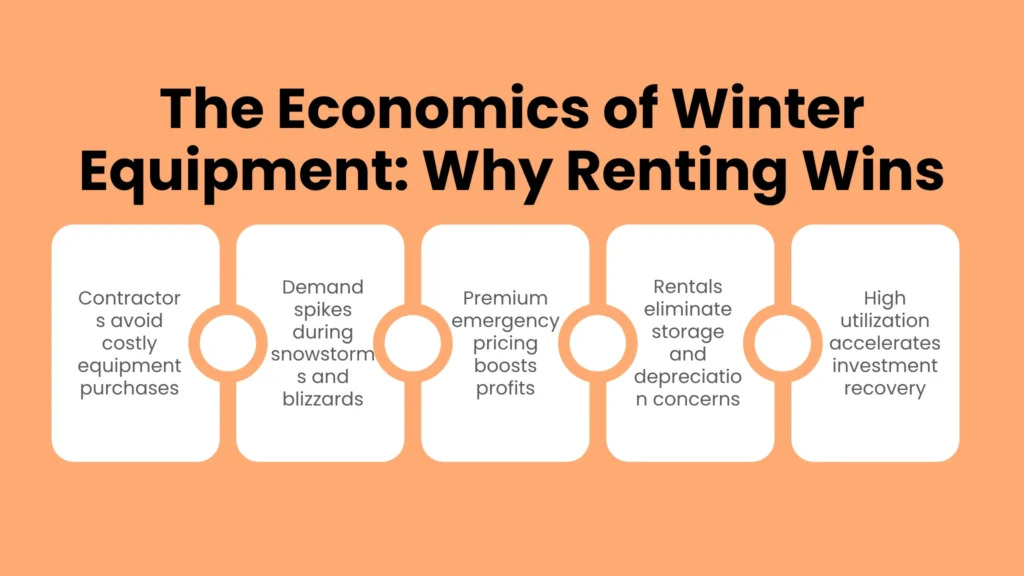
This operational dilemma is exactly why contractors rely heavily on third-party suppliers during major winter weather events. Because winter weather is inherently unpredictable, a rental provider can implement premium, time-sensitive pricing models. During major blizzards or severe ice storms, asset utilization sky-rockets, allowing well-positioned rental operations to completely recover an item’s wholesale acquisition cost within a single, high-demand winter season. Building this type of seasonal rental business requires clear planning but delivers incredible cash flow when the snow starts falling.
Building a Four-Season Fleet: The Dual-Use Architecture
The most common mistake an early-stage snow removal startup makes is purchasing highly specialized single-use assets, such as standalone dedicated snowmelt trucks or permanently mounted plow vehicles. When spring arrives, these expensive machines sit completely idle in a warehouse, tying up your working capital and generating zero return on investment.
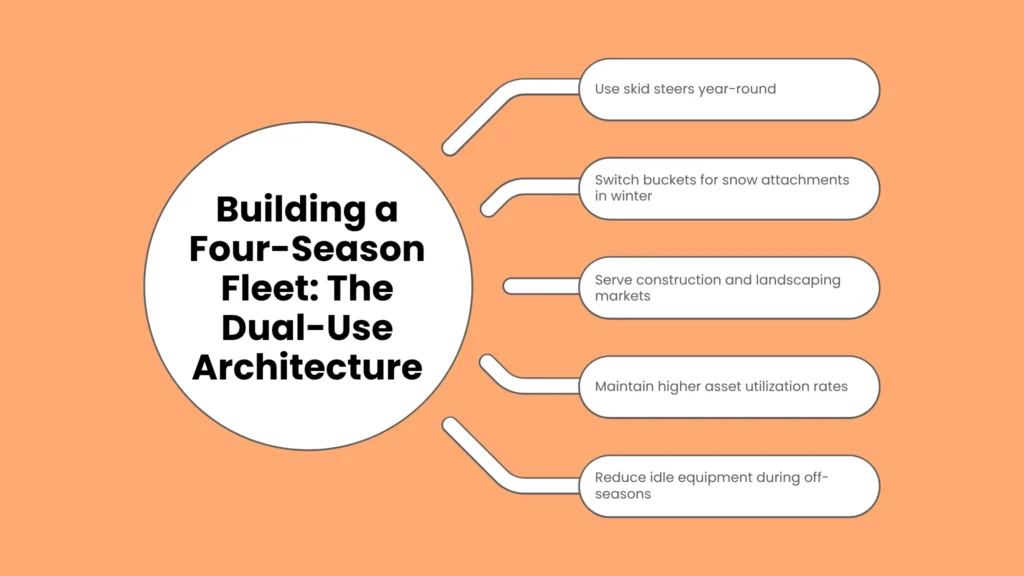
Instead, industry-leading rental platforms utilize a smart dual-use asset strategy. The core of your inventory should consist of highly versatile, commercial-grade machinery that serves the construction and landscaping sectors during the summer, but easily transitions into winter workhorses using specialized modular attachments.
By stocking high-flow skid steers, compact track loaders, and heavy-duty wheel loaders, your primary machinery never stops moving. When the ground freezes, your warehouse team simply detaches the traditional dirt buckets and equips the machinery with professional-grade hydraulic snow plows, heavy-duty V-blades, high-capacity snow pushers, or industrial snow blowers. This approach keeps your asset utilization rates consistently above 70% all year long. This same dual-use logic applies broadly across the rental industry, as we outline in our complete guide on how to start an equipment rental business covering everything from farming machinery to landscaping tools.
Action Blueprint to Launch Your Rental Operation
Transforming heavy machinery into a systematic, recurring revenue engine requires strict operational coordination. If you are establishing a new regional deployment hub, following a disciplined setup sequence ensures your fleet remains fully operational when the first blizzard hits the ground.
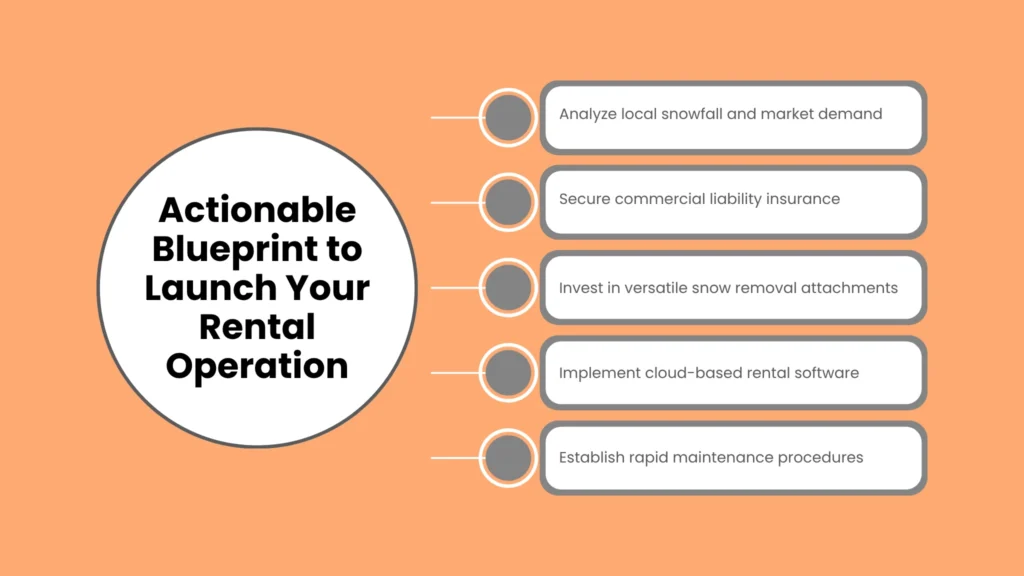
The 5-Step Operational Method
Analyze regional snowfall historical data and target niches: Audit local municipal weather patterns over the past decade to calculate average annual accumulation levels. Identify your primary target customer segment, whether you are serving independent residential plowers, commercial property maintenance groups, or industrial logistics hubs.
Secure high-risk general commercial liability insurance: Acquire specialized, comprehensive insurance protection covering property damage, equipment failure, and operational liability. Because clearing heavy snow carries an inherent risk of hidden obstacle impacts or accidental pavement damage, having bulletproof policy terms is mandatory.
Acquire high-demand commercial-grade attachment systems: Partner directly with premium industrial attachment manufacturers. Secure a diverse inventory of durable rubber-edged snow pushers, articulating angle plows, hydraulic salters, and high-efficiency power sweepers that integrate seamlessly with your core loader fleet. To meet safety baselines, verify all parts align with the American National Standard for Snow Removal Safety rules.
Deploy dynamic, cloud-based asset tracking software: Implement a specialized rental logistical dashboard equipped with real-time digital reservation calendars and electronic contract signing capabilities. Your software must support dynamic pricing modifiers, allowing you to easily execute storm-surge or premium emergency booking rates.
Establish an elite, rapid-turnaround maintenance protocol: Train your mechanical team to execute rigorous, multi-point technical inspections between every single rental cycle. Keep a robust stock of highly vulnerable wear items—including heavy-duty shear pins, replacement auger belts, cold-weather fluid blends, and extra steel cutting edges—directly on your warehouse shelves.
Diversifying Beyond the Blades: High-Margin Winter Essentials
While massive hydraulic plows and track loaders grab the most attention, a highly profitable snow equipment rental business maximizes its revenue by surrounding its core heavy machinery with smaller, essential winter support assets. Contractors frequently look to secure complete, one-stop logistical packages when preparing for an impending storm.
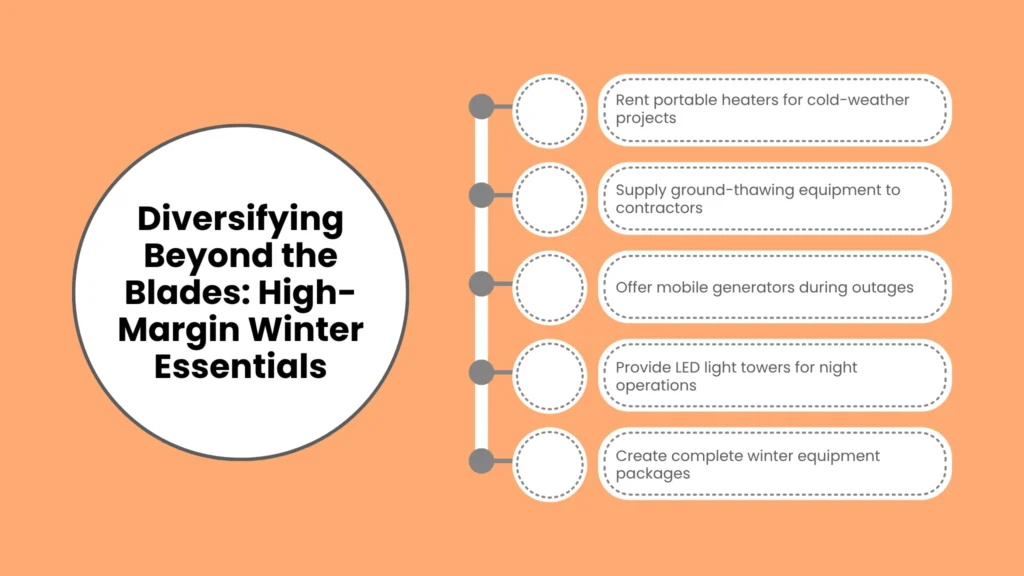
Industrial Portable Heating Equipment
Construction projects, masonry operations, and structural repairs do not stop completely during the winter, but they require strict temperature controls to ensure safety and material integrity. Renting out high-output indirect-fired heaters, portable propane salamanders, and heavy-duty ground-thawing systems commands incredible premium daily rates with minimal ongoing maintenance requirements.
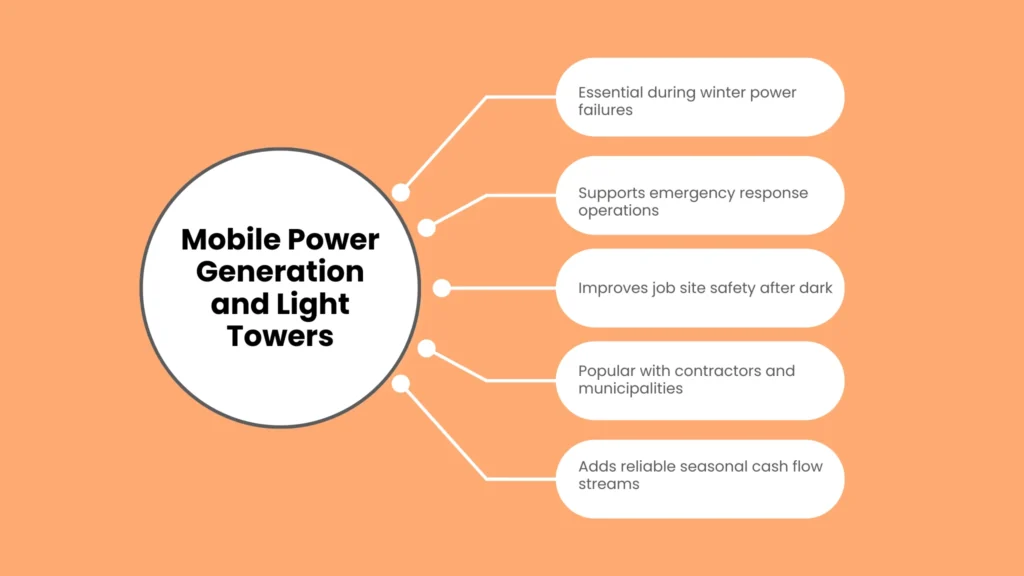
Mobile Power Generation and Light Towers
Winter storm systems frequently cause widespread electrical grid failures, turning commercial-grade towable generators into critical, lifesaving assets. Additionally, because winter days feature significantly fewer hours of natural daylight, industrial job sites, emergency response centers, and municipal clearing crews require towable mobile LED light towers to maintain safe working conditions through the night. Securing this premium winter equipment rental income helps balance out your winter margins perfectly.
Conclusion
Building a high performing enterprise within the seasonal asset economy requires shifting your perspective away from single use machinery toward highly flexible, multi-season fleet architecture. Investing in high durability loaders and surrounding them with specialized modular attachments allows you to easily capture premium returns without taking on the burden of idle summer inventory. When you build a scalable model based on fleet versatility, you insulate your company from economic volatility and unlock a highly predictable, year-round path to wealth.
Maximizing asset profitability in the modern industrial sector requires utilizing data-driven logistics, robust tracking software, and proactive maintenance frameworks. For more comprehensive software analyses, step-by-step equipment business breakdowns, and actionable operational strategies designed for elite asset managers, check out the latest resource guides over at Reliablestartup to scale your business with absolute confidence.
Frequently Asked Questions
What is the standard pricing model for winter equipment rentals?
Most operators follow the 1-2% industry baseline rule for daily rentals (charging 1% to 2% of the asset’s total market value per day). However, during verified winter storm warnings, providers regularly implement an additional 20% to 30% storm-surge premium due to immediate localized demand.
How do rental operators handle severe machine damage caused by hidden obstacles?
Lease agreements typically mandate a comprehensive physical inspection before checkout and require the client to purchase a structural damage waiver, or provide a certified commercial insurance certificate naming your facility as an additional insured party.
Can compact track loaders operate efficiently on ice and heavy snow?
Yes, but standard rubber dirt tracks can experience significant slippage on packed ice. For dedicated winter rental cycles, it is highly recommended to equip the undercarriage with specialized non-marking snow tracks or durable multi-bar rubber treads to maximize surface traction.
How early should a rental company begin marketing its winter inventory?
Commercial accounts, corporate property managers, and municipal clearing contractors typically finalize their winter logistics plans in September and October. To secure high-volume seasonal contracts, your winter landing pages and booking options should be active before the first frost.
Where can I find more technical asset management tutorials for fleet businesses?
You can keep pace with the latest industrial machinery releases, cloud tracking tools, and high-yield fleet optimization strategies by reviewing the step-by-step operational updates available at reliabledesign.com.