Bounce House Rental Business Plan: Cost, Pricing & Profit Roadmap
The family entertainment industry is booming right now. People everywhere want unforgettable, high-energy celebrations. In this guide, we break down a complete bounce house rental business plan. You will learn exactly how modern entrepreneurs build highly profitable rental companies using a step-by-step roadmap.
The consistent demand for children’s entertainment makes this a lucrative marketplace. Backyard parties, school festivals, and corporate field days need interactive entertainment. By choosing a weekend-focused service model, you can secure incredible profit margins. Data across the kids party rental usa landscape proves this point. A dedicated operator can easily secure a steady part-time income that scales cleanly over time.
The Economics of an Inflatable Rental Operation
The rapid expansion of the modern bounce house startup model stems from a shifting events industry. Party hosts no longer want passive decorations. They want interactive, physical experiences that keep young guests fully engaged for hours. A bounce house operation is just one corner of a much bigger opportunity, and if seasonal entertainment isn’t the only avenue you’re considering, our roundup of easy rental business ideas covers several other low-overhead models worth exploring.
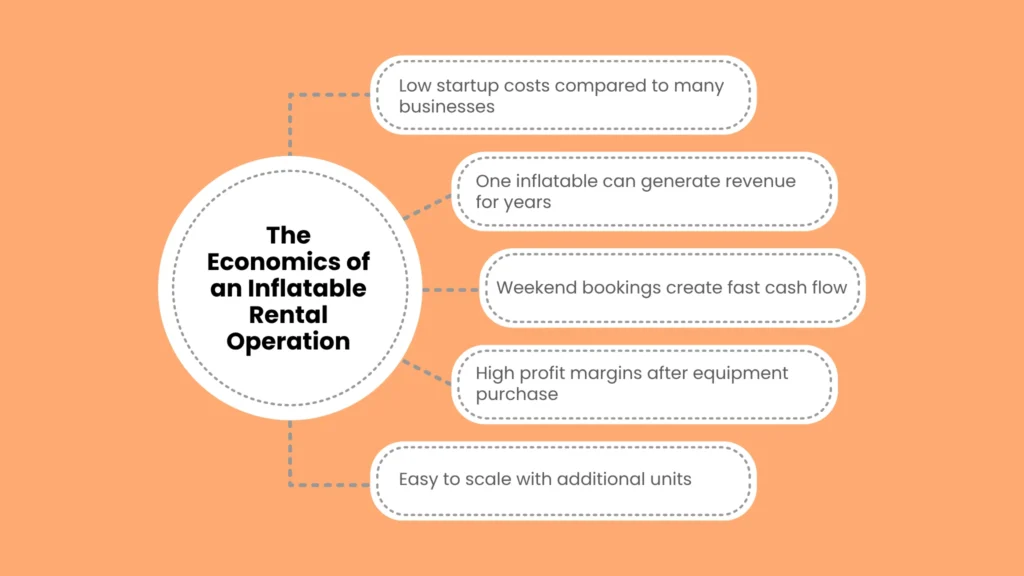
A professional inflatable serves as the ultimate centerpiece for any backyard birthday celebration. The financial magic of this business layout lies in its asset-light design. Once you purchase your initial commercial-grade inflatables, your physical inventory sits safely in storage, moving only when a client books a calendar date.
Analyzing the Low-Overhead Service Model
The ongoing expenses required to maintain a weekend bounce house operation are remarkably low. Unlike retail shops, you do not face monthly commercial property leases or large staff payroll obligations. Your primary variable costs for an active booking are minimal, consisting of vehicle fuel, vinyl sanitation supplies, and heavy-duty extension cords. This lean operating structure protects your cash flow, meaning a massive percentage of every single contract goes straight into your pocket as pure profit.
Scalability and Growth Potential
Building a reliable, highly profitable event company requires fewer bookings than most beginners realize. A single high-quality commercial jumper can easily service up to 50 events per year. As your local reputation spreads among parent networks, your business will grow. You can slowly buy extra inventory out of your ongoing business profits. This method allows you to deploy multiple setups simultaneously on a single busy Saturday afternoon, multiplying your bounce house income without increasing your personal weekday labor hours.
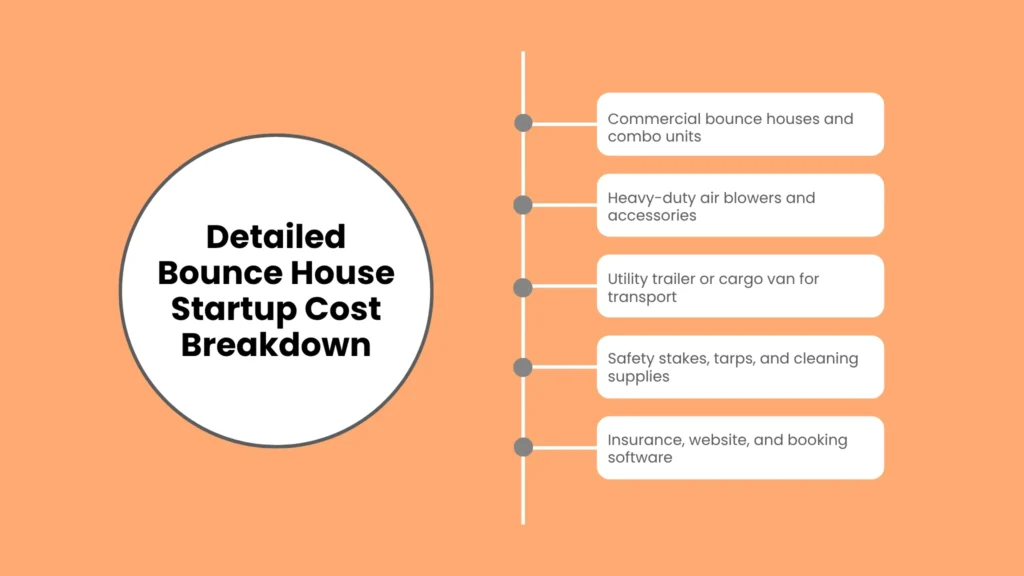
Detailed Bounce House Startup Cost Breakdown
Getting your new party service company off the ground requires a strategic approach to equipment acquisition. Keep your initial expenses manageable and focus entirely on high-utility, commercial-grade components that maximize your immediate booking rates.
Never make the mistake of buying cheap, residential-grade nylon units from big-box retail stores. These residential models cannot withstand the rigorous wear-and-tear of constant public use, and they will fail safety inspections. Investing in heavy-duty, commercial-grade PVC vinyl ensures your inventory lasts for years while keeping your clients completely safe.
The Essential Setup Inventory Checklist
A strategic allocation of your startup capital allows you to acquire premium equipment without overspending. The list below highlights exactly how to budget your initial funds for an optimized, professional launch.
Core Commercial PVC Bounce Houses (2 Units): $2,500 to $4,000
Heavy Duty Inflatable Air Blowers (1.5 HP to 2 HP): $400 to $700
Heavy Duty Open-Face Utility Trailer or Cargo Van: $2,000 to $5,000
Safety Anchor Stakes, Tarps, and Ratchet Straps: $200 to $400
Industrial Vinyl Sanitizing Kits and Air Dollies: $300 to $500
Initial Commercial Liability Insurance and Website Setup: $600 to $1,200
Focus on a mix of a standard castle jumper and a highly popular wet/dry combo unit. This balance helps you capture multiple types of event requests. Combo units feature a jumping area alongside a small climbing wall and slide, commanding significantly higher rates in the modern marketplace.
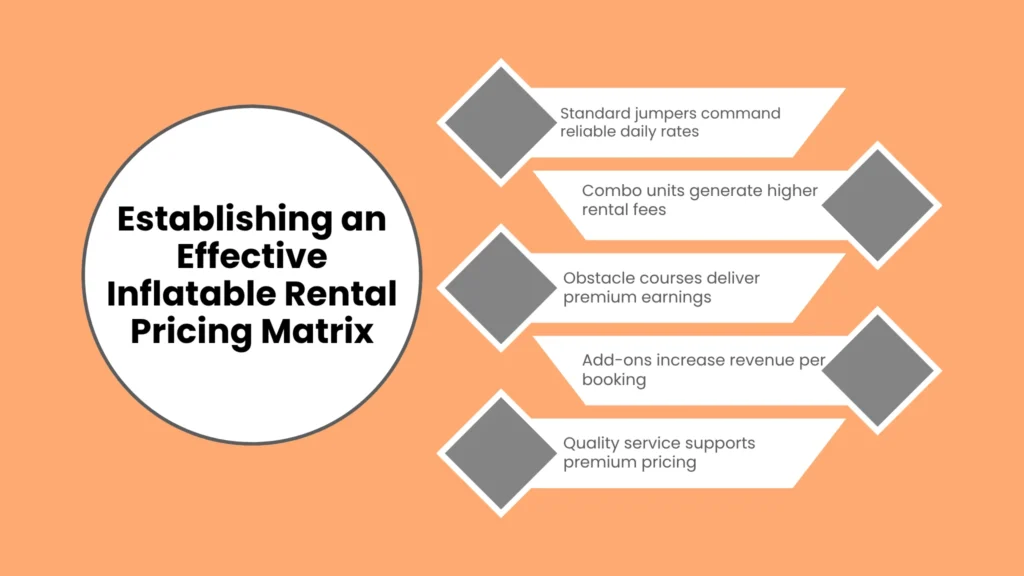
Establishing an Effective Inflatable Rental Pricing Matrix
Setting your local rates requires a careful analysis of your local market demographics. Developing a competitive yet highly profitable inflatable rental pricing structure ensures you maximize your asset utilization.
Avoid the temptation to compete purely on having the lowest prices in town. Undercharging for your services limits your growth and stops you from investing in proper commercial insurance, premium cleaning supplies, and reliable delivery vehicles. Instead, position your brand around absolute punctuality, spotless sanitation, and top-tier customer support.
Structuring Packages for Maximum Return
Standard four-hour or full-day weekend packages command excellent base rates in suburban and metropolitan areas. The profit margins improve significantly when you offer personalized add-on services that require minimal extra physical effort.
| Inflatable Unit Type | Average Daily Rental Fee | Average Acquisition Cost | Estimated Payback Timeline |
| Standard 13×13 Castle Jumper | $150 to $225 | $1,200 to $1,600 | 7 to 8 Bookings |
| Character Themed Bounce House | $175 to $250 | $1,400 to $1,800 | 8 to 9 Bookings |
| Wet / Dry Combo Slide Unit | $275 to $400 | $2,200 to $3,200 | 8 to 10 Bookings |
| Giant Obstacle Course (40ft+) | $450 to $700 | $3,500 to $5,500 | 9 to 11 Bookings |
You can significantly increase your overall revenue per event booking with simple upgrades. Charge extra fees for overnight rentals or specialized generator deliveries for park setups. You can also offer themed vinyl banners that attach directly to the front of your jumpers.
Mapping Out Your Long-Term Revenue Goals
Predicting your future earnings requires looking at real-world utilization rates and seasonal weather patterns. A balanced, realistic roadmap accounts for peak summer demand while planning for slower winter months.
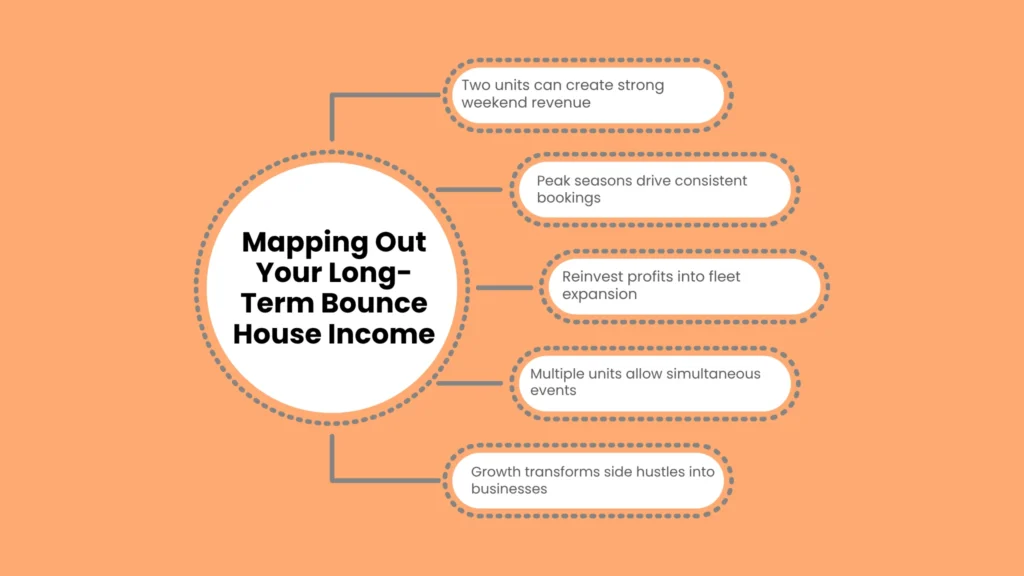
During the peak spring and summer party seasons, a lean two-unit operation can easily generate substantial weekly revenue. You simply book out both units on Saturday and Sunday. As you expand your inventory to five or ten units, your business naturally transitions from a casual side hustle into a massive regional enterprise.
Navigating Safety, Liability, and Maintenance
Operating a successful business across the entertainment landscape requires strict adherence to safety protocols. Every piece of hardware returning to your warehouse must undergo a thorough, multi-stage cleaning process. Use industrial decontaminants and a deep pressure washer to maintain absolute hygiene. For formal grounding and tie-down safety rules, your operational steps should align perfectly with the U.S. Consumer Product Safety Commission Guidelines.
Your operational team must keep detailed records logging the history of every individual serial number. Track each sanitization, anchor check, and vinyl repair patch meticulously. This detailed documentation protects your enterprise and builds deep trust with corporate event planners, church committees, and school boards. These premium clients require strict proof of safety compliance before signing contracts.
Action Steps for a Successful Launch
Launching a viable commercial venture requires a deliberate balance between physical logistics management and digital visibility. You must establish a smooth operational flow before buying your initial batch of physical inventory.
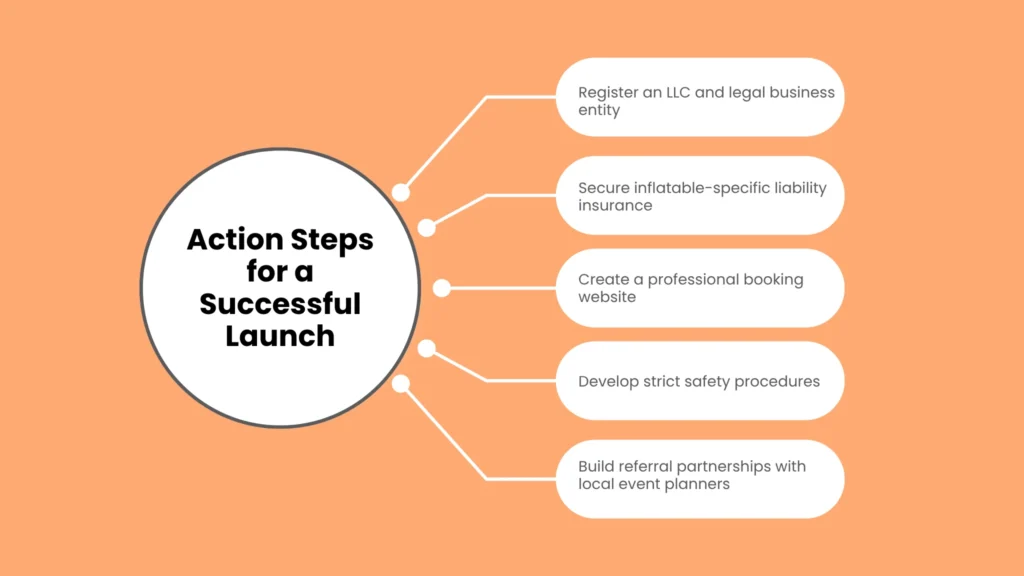
Register Your Business Structure: If your startup budget is tighter than the equipment list above suggests, it’s worth browsing our guide to small business ideas under $500 before committing to a full inflatable inventory purchase. Set up a formal corporate entity like an LLC. This protects your personal assets and establishes a professional footprint.
Secure Specialized Liability Insurance: Obtain a comprehensive general commercial liability policy. Ensure it specifically covers inflatable operations and public event risks.
Build a Fast Digital Booking Space: Create a clean website that displays high-resolution sample photos, real-time calendar availability, and automated payment processing.
Develop a Strict Safety Checklist: Implement standard operating procedures for monitoring wind speeds, anchoring into different soil types, and training clients.
Cultivate Local Referral Pipelines: Reach out to local event planners, wedding coordinators, and park management offices. Get added to their official preferred vendor lists.
Digital Fleet Tracking Infrastructure
The backbone of a modern rental company is its underlying inventory management software platform. Your internal tracking system must monitor active unit locations, automated deposit collection, delivery route optimization, and weather alerts in real time.
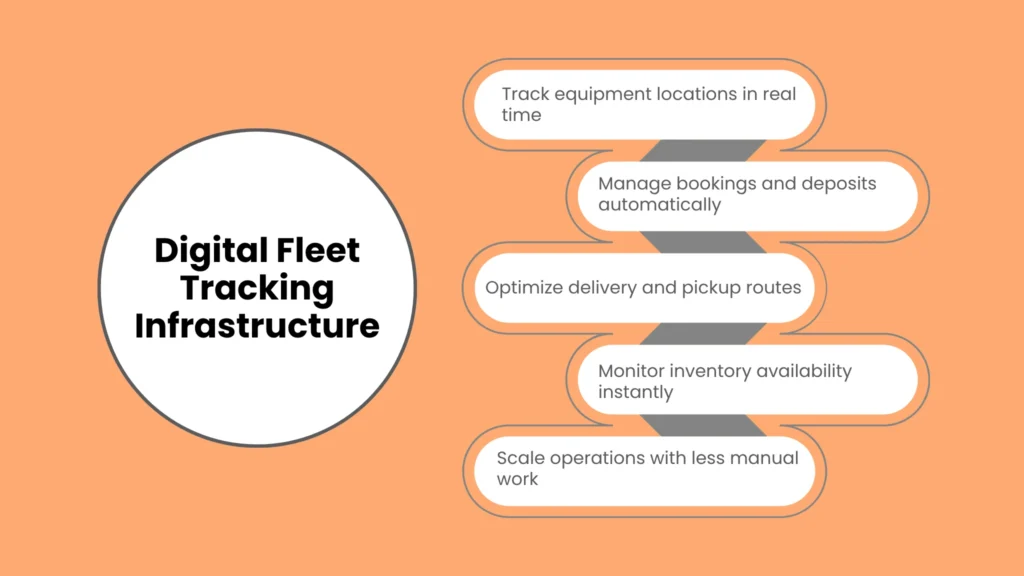
Integrating high-quality automated delivery routes helps save massive amounts of time and fuel expenses during busy weekend drop-off runs. This technological integration allows your business to scale up its delivery volume smoothly without needing to hire extra administrative staff.
Strategic Summary for Future Founders
The combination of low ongoing operating overhead, incredible consumer demand, and excellent profit margins makes this sector an exceptional opportunity. Reinvest your early booking revenue into upgraded commercial assets. This discipline allows you to scale a basic initial purchase into a massive event enterprise.
Maintaining absolute physical consistency, safety discipline, and exceptional customer service requires focused effort. However, the path toward securing exceptional returns is entirely attainable. Position your brand around premium aesthetics, absolute safety compliance, and strong local industry connections to lock in high profit margins for years to come. To explore deeper tactical playbooks on launching automated supply ventures and mastering modern logistical business frameworks, explore the entrepreneurial strategies available on Reliablestartup.
Frequently Asked Questions
What specific type of insurance is required to run an inflatable rental business safely?
You need a dedicated commercial general liability insurance policy. It must explicitly include a rider for inflatable operations. Most standard corporate event spaces, city parks, and schools will require a formal certificate of insurance naming them as an additionally insured party before allowing you to set up your equipment on their property.
How do you handle high wind speeds and unexpected weather updates during an event?
Safety rules dictate that commercial inflatables must be immediately deflated if sustained winds or gusts exceed 15 miles per hour, or if heavy rain begins to fall. Your standard rental contract should feature a clear, comprehensive weather policy that outlines terms for rescheduling or refunding deposits during dangerous storm conditions.
Can a single person operate a delivery and setup route independently?
Yes, a single healthy individual can handle standard 13×13 jumpers and combo units by utilizing a specialized heavy-duty air dolly and proper rolling techniques. However, for massive obstacle courses or heavy water slides that weigh over 400 pounds, having a two-person team is highly recommended to ensure safe loading and unloading.
How long does it typically take to set up a standard commercial bounce house at a venue?
A standard commercial setup takes approximately 15 to 20 minutes from the moment you park your vehicle. This includes unrolling the heavy-duty protective tarp, positioning the vinyl unit, connecting the industrial air blower, driving the steel ground stakes, and conducting a final interior safety and cleanliness inspection.