Section 179 and Depreciation on Rental Equipment
Managing capital assets effectively drives long-term profitability for equipment rental businesses, construction firms, and commercial operators. Equipment purchases require significant upfront capital. Fortunately, the Internal Revenue Code offers powerful tax incentives that help businesses recover these costs faster than traditional schedules allow.
Understanding how Section 179 and bonus depreciation apply to rental equipment can transform major purchases into immediate tax savings. Whether you buy machinery for a rental fleet or lease equipment for daily operations, using the right write-off strategy lowers your net cost of acquiring income-producing assets.
What Is Section 179?
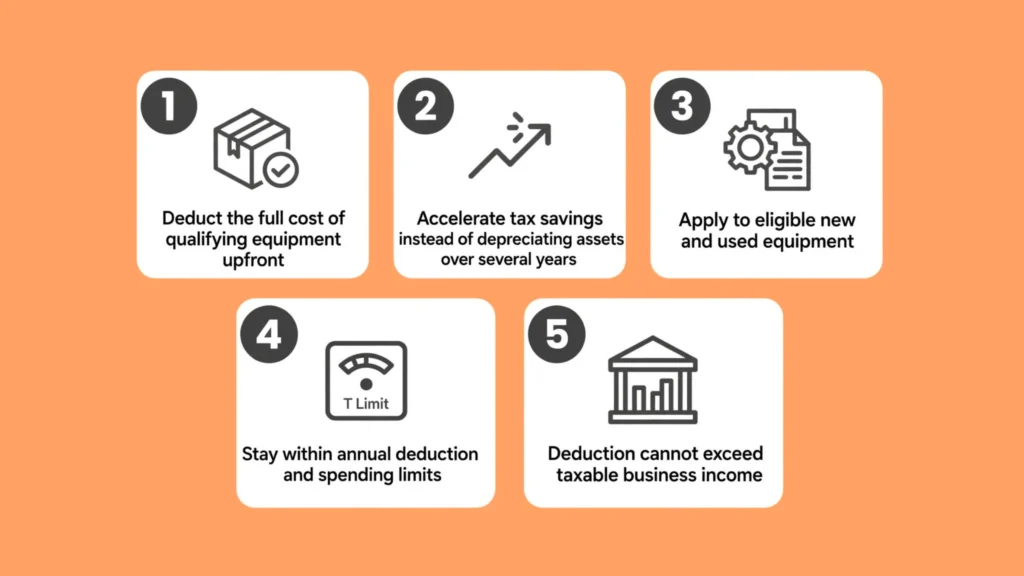
Section 179 of the Internal Revenue Code is an expense deduction. It allows businesses to deduct the full purchase price of qualifying equipment during the tax year you place it in service. You do not have to depreciate the asset slowly over its useful lifespan.
Standard MACRS rules force you to depreciate heavy machinery, tools, and commercial vehicles across 5, 7, or 15 years. Section 179 accelerates this process by treating qualifying equipment purchases as immediate operational expenses. Beyond tax planning, investing in equipment rental management software can help businesses track fleet assets, monitor equipment utilization, and manage maintenance schedules more efficiently.
Key Rules and Limits
Purchase Spending Cap: The total amount of equipment a business can buy before the Section 179 deduction phases out dollar-for-dollar.
Maximum Deduction Limit: The maximum dollar amount a business can write off in a single tax year.
Taxable Income Limit: Your Section 179 deduction cannot exceed your net taxable business income for the year. It cannot create or increase a net operating loss.
Can Equipment Rental Businesses Use Section 179?
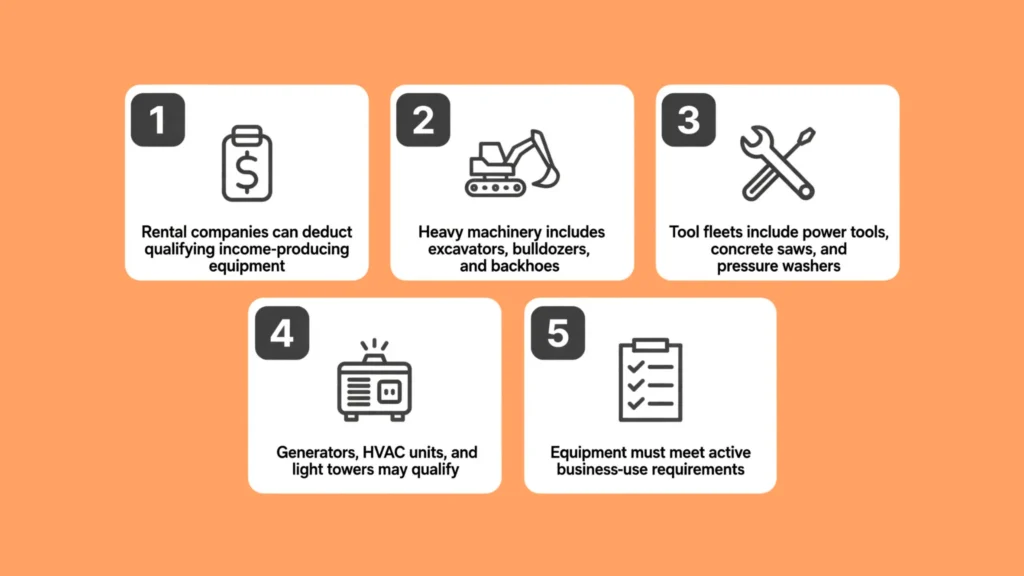
Yes, equipment rental companies can take full advantage of Section 179 deductions. Your assets must simply meet specific operational criteria. Because rental companies acquire machinery and tools specifically to generate revenue, these assets qualify as active business property.
Qualifying Types of Rental Equipment
Heavy Construction Machinery: Excavators, skid steers, backhoes, and bulldozers rented out to contractors.
General Tool Fleets: Power tools, small compaction units, concrete saws, and pressure washers.
Power and Event Gear: Portable generators, temporary HVAC units, light towers, and air compressors.
Vehicles and Transport Gear: Trailers, specialized delivery trucks, and material handlers used in daily operations.
Rental vs. Leased Property Rules
Tax rules depend heavily on whether you rent equipment out to customers or lease equipment for internal business use.
Renting Equipment Out (Fleet Owners): Equipment held in rental inventory and rented to customers on a short-term basis qualifies for Section 179. You must use the property in an active trade or business.
Leasing Equipment In (Lessee): If your business leases equipment from a vendor, your lease structure determines your eligibility:
Capital / Finance Leases: These contracts often qualify for Section 179 if they transfer ownership or include a nominal buyback option (like $1) at the end of the term.
Operating / Non-Capital Leases: These contracts do not qualify for Section 179 because you do not own the asset. Instead, you write off monthly lease payments as standard operating expenses.
Bonus Depreciation vs. Section 179
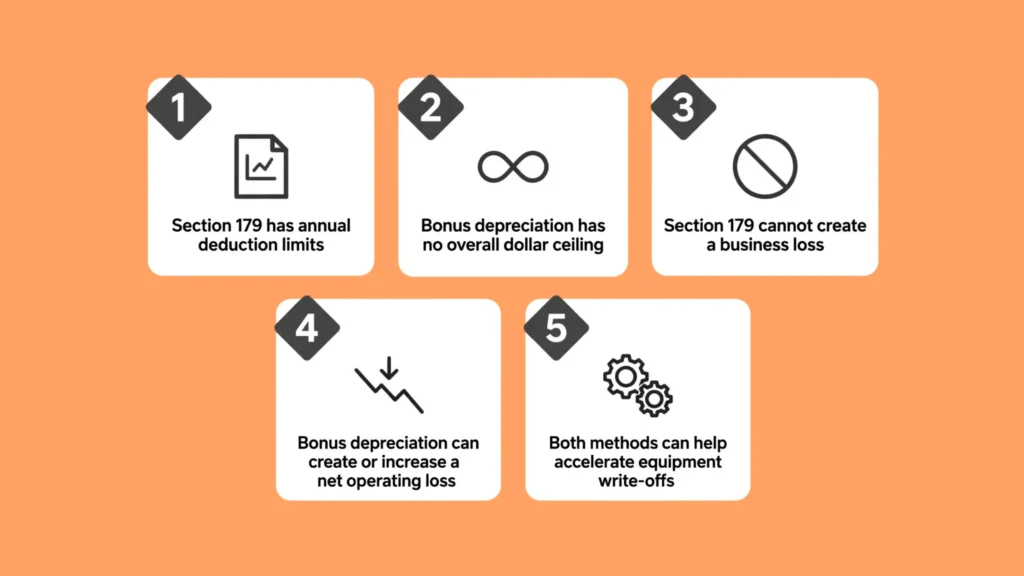
Both Section 179 and bonus depreciation offer accelerated tax relief, but they function differently. Many rental businesses combine both methods in the same tax year to maximize savings.
| Feature | Section 179 | Bonus Depreciation |
| Deduction Limit | Subject to annual dollar caps | No overall dollar ceiling |
| Taxable Income Limit | Cannot exceed net taxable income | Can create or increase a Net Operating Loss |
| Asset Flexibility | Applied asset-by-asset up to the cap | Applied across entire classes of property |
| Property Status | New and used qualifying equipment | New and qualifying used equipment |
How Bonus Depreciation Complements Section 179
When an equipment rental company buys fleet assets that exceed the annual Section 179 cap, bonus depreciation can cover the remaining balance. Because bonus depreciation lacks income limits, it provides essential flexibility during high-growth years when expansion outpaces annual earnings.
Practical Examples of Equipment Write-Offs
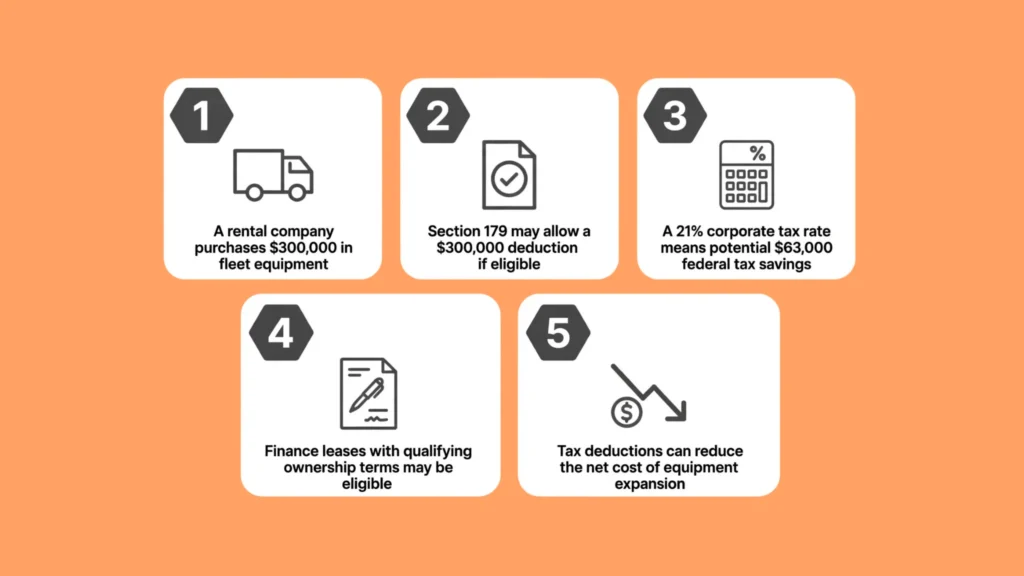
Two common real-world scenarios show how these tax deductions lower taxable income. Understanding rental business startup costs can also help business owners plan their equipment purchases, estimate initial capital requirements, and prepare for long-term operating expenses.
Scenario 1: Equipment Rental Business Expanding Its Fleet
An independent rental company buys $300,000 worth of new mini-excavators and scissor lifts. It places them into service during the tax year.
Total Purchase Price: $300,000
Section 179 Deduction Claimed: $300,000
Taxable Income Impact: Reduces taxable income by $300,000 in Year 1.
Net Cash Savings: Assuming a 21% corporate tax rate, the business saves $63,000 in federal income taxes during the first year. This savings directly offsets your upfront capital outlay.
Scenario 2: Contractor Combining Section 179 with Finance Leases
A commercial contractor enters into a capital finance lease for a $150,000 earth-moving machine with a $1 buyout option.
Capitalized Asset Value: $150,000
Section 179 Claimed: $150,000 (claimed in the year placed in service)
Result: The contractor writes off the full $150,000 asset value in Year 1 while making monthly finance payments across a multi-year schedule.
Common Mistakes to Avoid
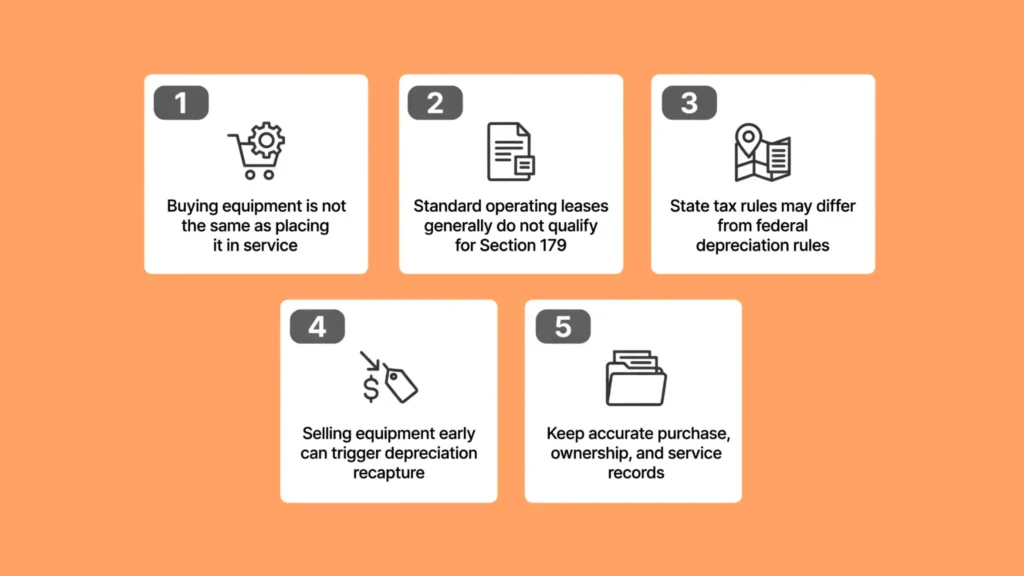
Confusing ‘Placed in Service’ with Purchase Date: You must deliver, set up, and ready your equipment for rental use by midnight on December 31. Buying equipment on December 30 that arrives on January 5 pushes the write-off into the next tax year.
Attempting Section 179 on Operating Leases: Claiming Section 179 on standard rental or operating leases leads to audit adjustments because the lessor retains ownership. Verify that your contract qualifies as a capital finance lease first.
Ignoring State-Level Tax Discrepancies: Federal rules allow generous Section 179 limits and bonus depreciation. However, several states do not conform to federal limits. Check local state tax laws to calculate tax obligations accurately. Business owners should also evaluate their overall equipment rental business expenses to understand how equipment purchases, maintenance, insurance, and other overhead costs affect profitability.
Overlooking Recapture Rules: If you sell, trade, or convert equipment to personal use before its recovery period ends, the IRS may require you to pay back a portion of your tax savings through Section 179 recapture.
Frequently Asked Questions
Can I write off equipment I rent to others under Section 179?
Yes. Machinery, tools, and commercial equipment held in inventory and rented to customers on a short-term basis qualify for Section 179 deductions. You must actively use the equipment in your business.
Can I use Section 179 if I rent equipment for my own business?
Standard short-term operating leases do not qualify for Section 179 because you do not own the asset. However, you can write off 100% of your rental payments as ordinary business expenses. If you hold a capital finance lease with ownership transfer terms, Section 179 usually applies.
Does used equipment qualify for Section 179?
Yes. Both new and used equipment qualify for Section 179. The equipment must simply be “new to you” and acquired through an arm’s-length transaction from an unrelated party.
What happens if my Section 179 deduction exceeds my business income?
Section 179 cannot reduce your taxable business income below zero. You can carry forward any unused Section 179 deduction to future tax years.
What is the deadline to qualify for Section 179 in a given tax year?
You must purchase and place the equipment in service (delivered and ready for use) between January 1 and December 31 of that tax year.
How do I report Section 179 deductions on my tax return?
You elect and calculate Section 179 deductions using IRS Form 4562 (Depreciation and Amortization) and attach it to your business tax return.
Final Thoughts
Combining Section 179 with bonus depreciation provides equipment rental companies and fleet operators with a powerful financial strategy. Accelerating tax deductions preserves working capital, boosts cash flow, and lowers the net cost of expanding operational capacity.
Evaluate your fleet acquisitions early in the tax year and consult a qualified CPA specializing in commercial equipment taxation to maximize your tax savings while remaining compliant.
About The Author