Juice Bar Business Guide: How to Start and Succeed
Key Takeaways
High demand for quick, healthy options
Low entry barrier with good profit margins
Strong focus on location and equipment
Clear business plan drives fast growth
Ever walked past a busy beverage shop and wondered how hard it really is to launch your own? Starting a juice bar business is actually one of the most rewarding ways to turn a passion for health into a profitable venture.
To start a juice bar business, you need to define your brand concept, calculate startup costs, build a detailed menu, secure proper licenses, and choose a high-foot-traffic location. In this guide, we will break down every single step in simple terms so you can build a thriving store without getting overwhelmed.
A juice bar business sells fresh juices, smoothies, and wellness shots to health-conscious consumers. Starting one requires research, licensing, commercial equipment, and strong marketing. Initial startup costs generally range from $25,000 to $100,000 depending on location and size. Focus on high-foot-traffic areas, source fresh ingredients, and craft a unique menu to build a loyal customer base and stand out.
Is a Juice Bar Business Right for You?
Before jumping into equipment lists and lease agreements, take a moment to look at the big picture. Why are food and beverage business ideas popping up on almost every corner these days? People are busier than ever, but they also care deeply about what they put into their bodies.
A juice bar business offers high gross margins around 60% to 70% and features a simple operational model that makes training staff straightforward. It creates a recurring routine for health-conscious customers and can easily scale from a simple kiosk or food truck to a full storefront.
A juice bar business bridges the gap between fast food and healthy living. You do not need to be a trained chef to succeed in this industry. All it takes is a reliable system, quality produce, and a welcoming brand identity. At Reliablestartup, we often see first-time entrepreneurs succeed quickly because the core operational model remains wonderfully simple.
Estimating Your Juice Bar Startup Cost
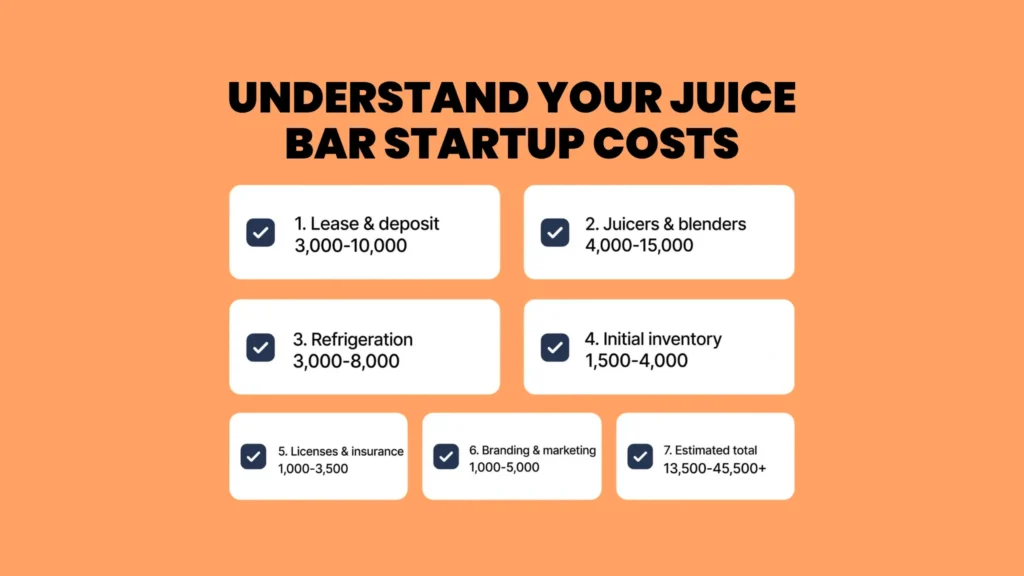
Let’s discuss numbers, as budget planning can make or break your new enterprise. What does a real juice bar startup cost break down to in practice?
| Expense Category | Typical Cost Range | Notes |
| Lease & Location Deposit | $3,000 – $10,000 | Depends on square footage and city area |
| Commercial Juicers & Blenders | $4,000 – $15,000 | Heavy-duty equipment is non-negotiable |
| Refrigeration & Storage | $3,000 – $8,000 | Walk-in or commercial display fridges |
| Initial Inventory & Produce | $1,500 – $4,000 | Organic fresh fruits, vegetables, cups, lids |
| Licensing, Permits & Insurance | $1,000 – $3,500 | Health department permits & business licenses |
| Branding & Marketing | $1,000 – $5,000 | Signage, menu boards, website, local ads |
| Total Estimated Startup Cost | $13,500 – $45,500+ | Based on available data for small setups |
Your total juice bar startup cost will vary depending on location size and equipment choices. A lean cold-pressed juice startup operating out of a shared commercial kitchen can launch for much less. Meanwhile, a prime retail store in a major city will require significantly higher upfront capital. Planning carefully through reliablestartup.com can help you keep unnecessary costs under control.
If you want to explore business opportunities with different investment requirements, compare these easy businesses to start before deciding where to invest your money.
Understanding Your Concept and Niche
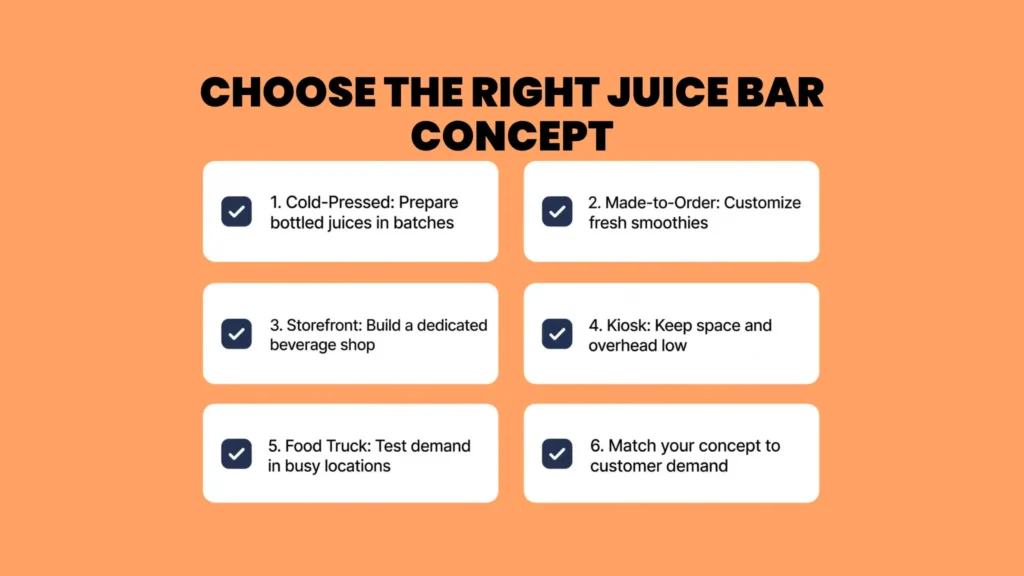
Not all beverage spots are created equal. Before spending a single dollar, decide what kind of store you want to run.
Cold Pressed vs. Made-to-Order
Will you squeeze fresh beverages right in front of the customer, or bottle them ahead of time? A cold-pressed juice startup model lets you prepare bottles in batches during off-peak hours. This cuts down on customer wait times during morning rushes. On the other hand, made-to-order smoothies offer interactive fun and customization for visitors.
Storefront vs. Mobile Kiosks
Are you planning a cozy sit-down cafe, a tiny grab-and-go kiosk, or a food truck? Smaller spaces naturally keep overhead low while testing out demand in busy downtown districts.
How to Build a Winning Smoothie Bar Business Plan
A solid smoothie bar business plan serves as your roadmap to success. It helps you define your brand, analyze competitors, set menu prices, organize daily operations, and estimate startup costs. If you need more guidance, learn how to write a business plan step by step to prepare your smoothie bar for a successful launch.
Your smoothie bar business plan should outline your target audience, pricing structure, and competitor analysis. It is also the exact document banks or investors will ask for if you seek funding. Having a clean smoothie bar business plan ensures you stay focused on profitability rather than guessing your next move.
Essential Equipment You Will Need
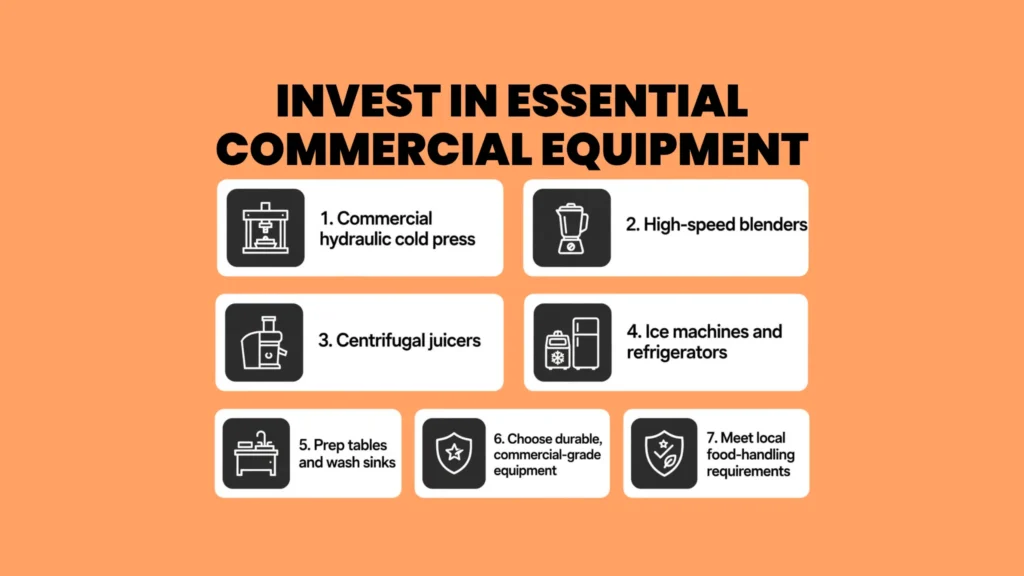
To run a fast-paced kitchen, commercial-grade equipment is mandatory. Residential blenders simply will not survive back-to-back orders during lunch hour.
Commercial Hydraulic Cold Press: Crucial if you are running a cold-pressed juice startup focused on long shelf-life bottles.
High-Speed Blenders: Essential for smooth, creamy textures in smoothies and bowl bases.
Centrifugal Juicers: Great for fast, made-to-order vegetable and fruit drinks.
Ice Machines & Refrigerators: Keep produce crisp and fresh throughout the daily shift.
Prep Tables & Wash Sinks: Must meet local health department regulations for food handling.
Investing in durable tools early saves you money on constant repairs later.
Sourcing Fresh Ingredients and Managing Waste
Your drinks are only as good as the produce you buy. Establishing strong relationships with local produce distributors ensures daily fresh deliveries. To protect profit margins, maintain a direct line with local suppliers, standardize prep station recipes, and implement smart waste reduction strategies.
Freezing portion-controlled fruit for smoothie bases or composting unused pulp keeps food waste extremely low. Fresh produce spoils quickly, so inventory management is key to protecting profit margins. Standardize every recipe down to the exact ounce to control costs. Freeze excess fruit for smoothie bases to eliminate unnecessary food waste.
Crafting a High-Margin Menu
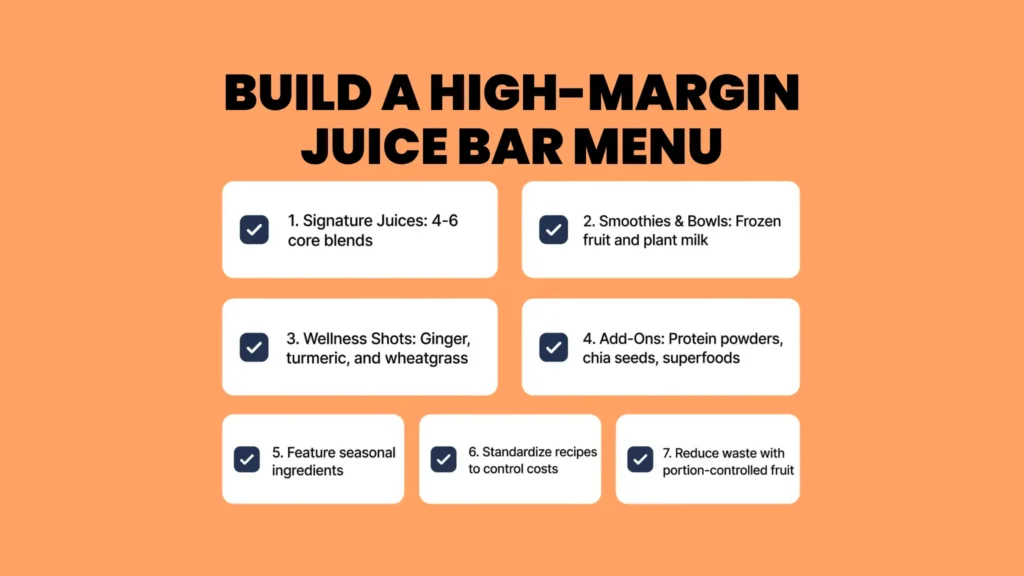
A giant menu with fifty items will overwhelm customers and slow down service. Keep your menu clear, concise, and profitable.
Signature Juices: Offer 4–6 core blends focusing on popular benefits like detox, immunity, and energy.
Smoothies & Bowls: High-margin items that use frozen fruit and plant milk bases.
Wellness Shots: High-profit mini drinks like ginger, turmeric, or wheatgrass.
Add-Ons: Protein powders, chia seeds, and superfood boosts that increase average order value.
Focus on seasonal items to keep ingredient costs manageable year-round.
Licensing, Permits, and Regulations
Food safety is paramount when serving unpasteurized fresh juices. Health regulations vary widely depending on your local region. Generally, you will need a general business license, a health department permit, and food handler certifications for staff.
If you plan to sell wholesale bottles from a cold-pressed juice startup, extra HACCP safety guidelines may apply. Check with local authorities early to prevent operational delays.
Finding the Ideal Location
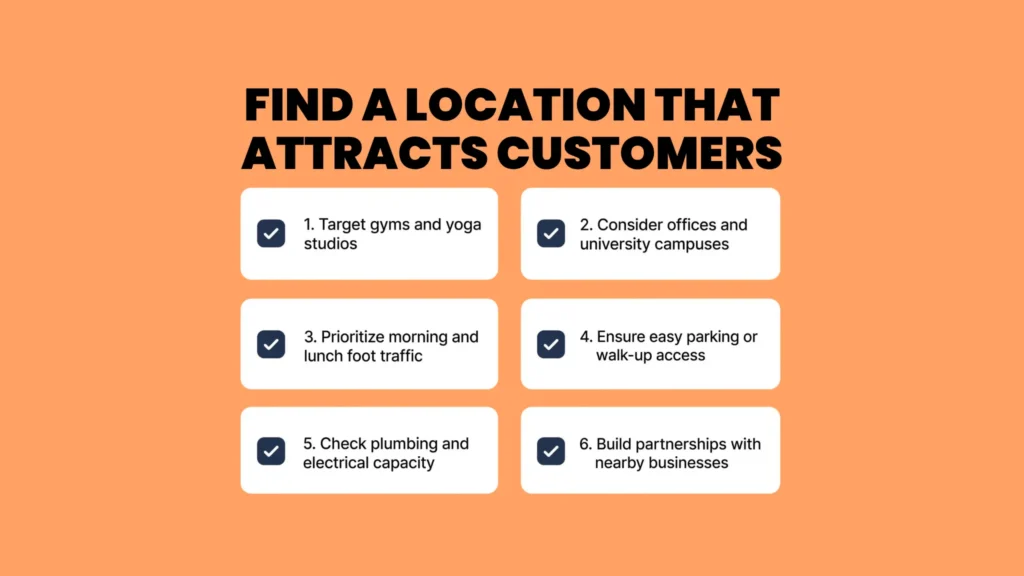
Location can single-handedly determine the success of your juice bar business. Where do your ideal customers hang out during the day? Look for spots near gyms, yoga studios, business centers, or university campuses.
Make sure your target area hits every item on your checklist: verify high foot traffic during morning and lunch peaks, ensure easy customer parking or walk-up access, partner with complementary neighbors like gyms or offices, and confirm the facility has adequate plumbing and electrical power. Foot traffic is crucial because fresh beverages are often impulse purchases. Ensure the space has adequate electrical capacity and water lines for heavy equipment.
Marketing Your Juice Bar Business
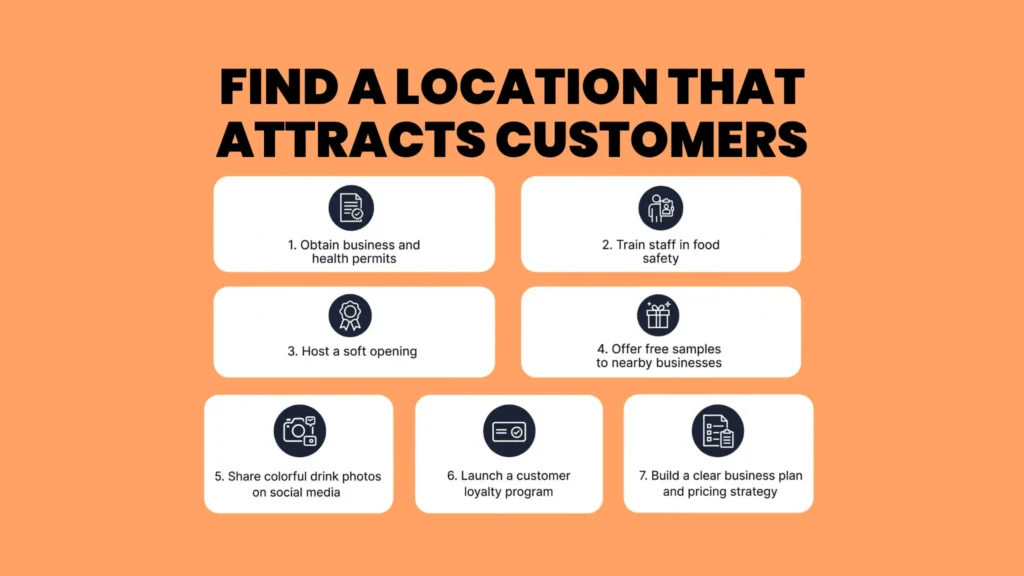
How do you stand out in a competitive town? Building an exciting local brand starts long before opening day. A successful promotion cycle starts with a soft opening for practice, followed by distributing free drink samples to neighboring gyms, creating vibrant social media content on Instagram and TikTok, and launching a local loyalty program to convert first-time visitors into daily regulars.
Pass out free drink samples to nearby fitness studios, offices, and retail shops. Share vibrant photos of colorful drinks and fresh ingredients on social media platforms. Host a soft opening to test kitchen operations before launching publicly. Resources on reliablestartup.com can help guide your early promotional campaigns.
Conclusion: Juice Bar Business
Launching your own store takes effort, but following a clear blueprint makes the entire process manageable. Focus on building a practical smoothie bar business plan, keeping your initial juice bar startup cost realistic, and choosing a high-visibility location. With dedication and quality ingredients, your new venture will quickly become a favorite local health spot.
Frequently Asked Questions
How much does a juice bar owner make a year?
In most cases, store owners earn between $40,000 and $100,000 annually, depending on overall revenue and local operating expenses.
Is a juice bar business profitable?
Yes, generally beverage concepts enjoy raw product margins between 60% and 75%, making them highly profitable with steady foot traffic.
How much space do you need for a juice bar?
A small kiosk or grab-and-go shop can operate efficiently in as little as 200 to 600 square feet of space.