How to Start a Food Truck Business in 2026: Complete Step-by-Step Guide
The mobile food industry has transformed from a niche culinary trend into a multi-billion-dollar enterprise. Operating a mobile kitchen offers aspiring restaurateurs lower overhead costs, geographic mobility, and unprecedented creative freedom compared to traditional brick-and-mortar establishments.
However, understanding how to start a food truck business requires far more than a passion for cooking. It demands a structured approach to licensing, financial planning, vehicle outfitting, menu engineering, and local marketing. This comprehensive guide breaks down every step required to learn how to start a food truck, calculate your food truck startup cost, secure your food truck license, and write a winning food truck business plan to turn your culinary vision into a profitable mobile enterprise.
Why Launch a Food Truck Business in 2026?
Modern consumer habits favor quick-service, high-quality, artisanal dining experiences. Mobile food concepts fit perfectly into this landscape by bringing specialized menus directly to high-density commercial hubs, outdoor events, and residential neighborhoods.
Advantages of the Mobile Food Model
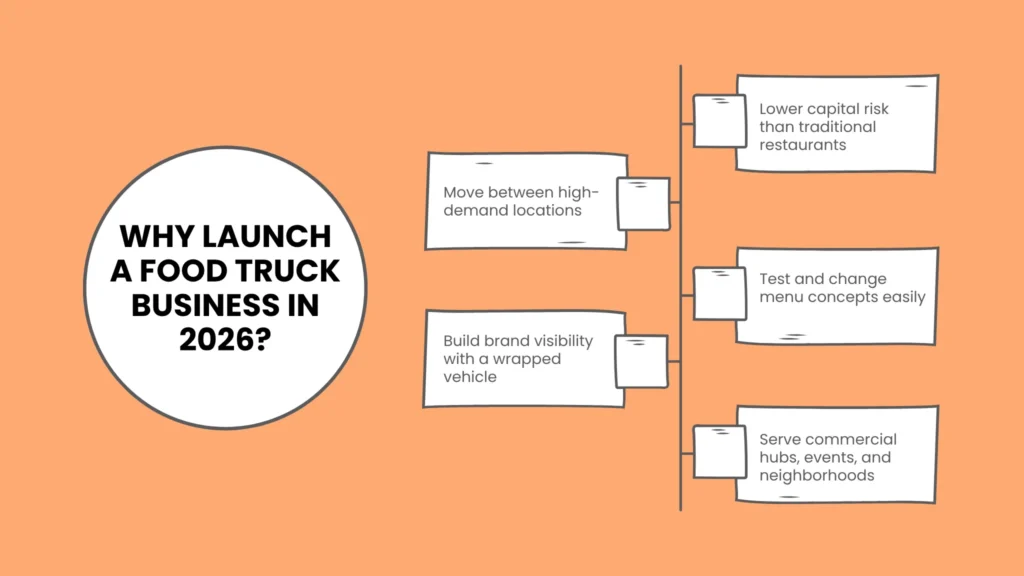
Lower Capital Risk: A traditional restaurant lease, dining room buildout, and physical infrastructure can easily cost upwards of $500,000. A mobile kitchen drastically reduces entry barriers.
Geographic Flexibility: If a specific street location or parking park yields low sales, you can adjust your schedule and move to higher-volume locations.
Menu Agility: Testing new dishes, adapting to seasonal ingredients, or pivoting your concept based on customer feedback is vastly simpler on a smaller, adaptable menu.
Direct Brand Building: A distinctively wrapped vehicle acts as a rolling billboard, building brand visibility everywhere you drive.
1. Conduct Market Research and Define Your Niche
Before spending money on equipment, you must validate your culinary concept within your target market. A successful mobile venture balances unique flavors with ultra-fast operational speed.
Analyzing Your Local Food Scene
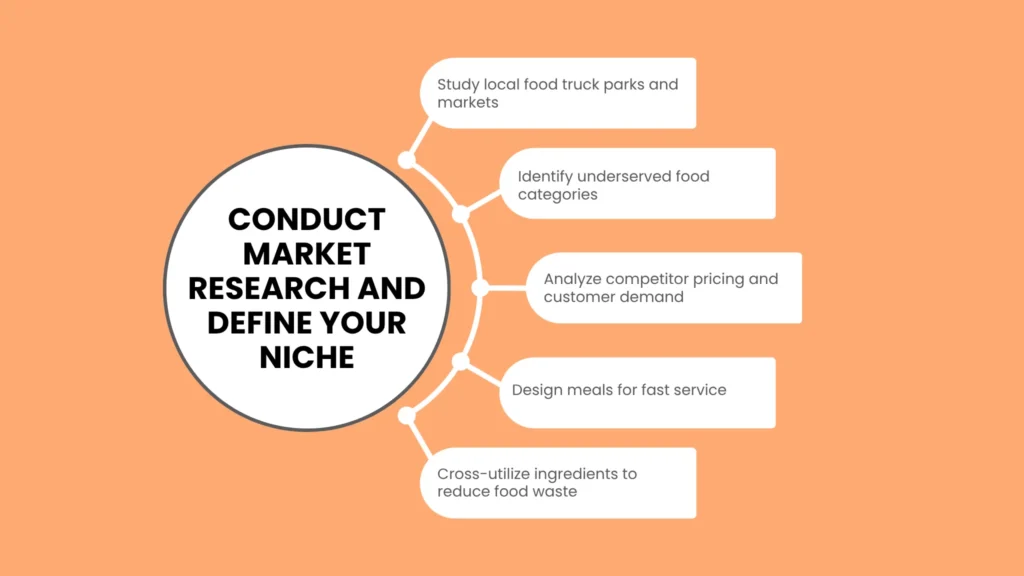
Visit existing food truck parks, weekend markets, and downtown lunch zones. Take detailed notes on which vendors generate long lines, what price points customers accept, and which food categories are over-saturated (such as standard burgers or tacos) versus under-served (such as gourmet breakfast items, global street food, or specialized vegan concepts).
Menu Engineering for Speed and Efficiency
Space inside a truck is strictly limited. Design your menu around three fundamental principles:
Speed of Assembly: Choose menu items that can be assembled and served in under three minutes during peak lunch rushes.
Cross-Utilization of Ingredients: Use core proteins, sauces, and produce across multiple menu items to minimize food waste and optimize refrigeration space.
Portability: Ensure your food holds up well in takeaway containers without getting soggy or cold during transit.
2. Write a Comprehensive Food Truck Business Plan
A structured food truck business plan serves as your operational blueprint and is mandatory when applying for bank loans, equipment financing, commercial leases, or investor capital.
Core Sections of Your Business Plan
Executive Summary: A clear, engaging overview of your mobile concept, target market, competitive advantage, and long-term expansion goals.
Company Description: Legal structure (e.g., LLC or Partnership), ownership details, and an overview of your management team’s experience.
Market & Competitor Analysis: Detailed demographic research proving local demand, competitive positioning, and target customer profiles.
Operations & Logistics Plan: Kitchen specifications, commissary kitchen agreements, supplier networks, and vehicle maintenance schedules.
Marketing & Sales Strategy: Digital marketing tactics, social media location tracking, festival bookings, and corporate catering outreach.
Financial Projections: Comprehensive cash flow forecasts, income statements, break-even analyses, and startup budget breakdowns for the first three years of operation.
3. Calculate Your Food Truck Startup Cost
Accurate financial planning prevents cash flow shortages during your launch phase. Your total food truck startup cost will vary depending on whether you buy a new customized rig, purchase a used vehicle, or lease an existing truck.
Comprehensive Cost Breakdown
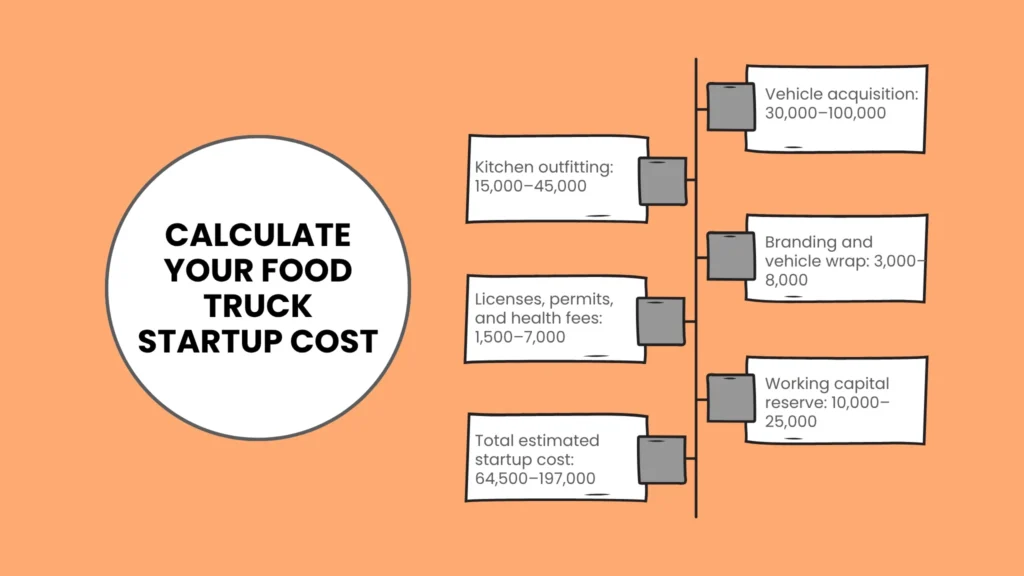
Vehicle Acquisition: $30,000 to $100,000 (Varies based on used step-van vs. brand-new custom vehicle)
Kitchen Outfitting & Upgrades: $15,000 to $45,000 (Commercial griddles, deep fryers, refrigeration)
Vinyl Vehicle Wrap & Branding: $3,000 to $8,000 (Partial decal vs. full custom graphics wrap)
Licensing, Permits & Health Fees: $1,500 to $7,000 (Varies widely based on city regulations)
Point of Sale (POS) Hardware: $500 to $2,000 (Card readers, receipt printers, kitchen display screens)
Initial Inventory & Packaging: $2,000 to $5,000 (Raw food ingredients, eco-friendly disposables)
Insurance (Auto & Liability): $2,500 to $5,000 (Vehicle coverage, general business liability)
Working Capital Reserve: $10,000 to $25,000 (Emergency fund for early months of operation)
Total Estimated Startup Cost: Range between $64,500 and $197,000 total initial financial commitment.
4. Secure the Necessary Food Truck License and Permits
Navigating local bureaucracy is one of the most critical stages when learning how to start a food truck. Operating without proper legal documentation can result in immediate shutdowns and heavy financial fines.
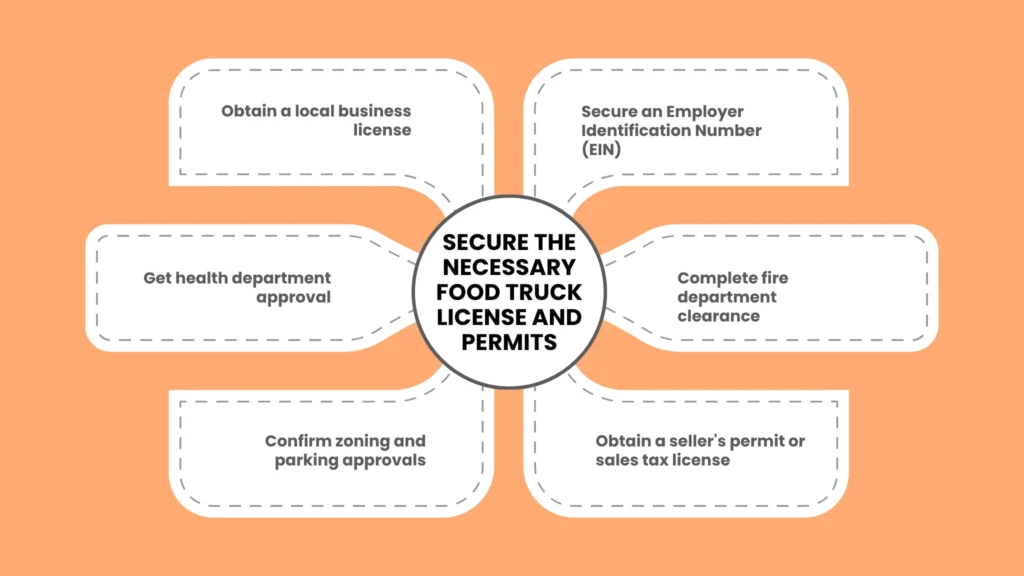
Essential Regulatory Clearances
Business License: General municipal operating license for your corporate entity (LLC or Corporation).
Employer Identification Number (EIN): Federal tax ID assigned by the IRS for banking, hiring, and state tax filing.
Health Department Permit: Food handler certificates, food manager credentials, and mobile food facility inspection certificates.
Fire Department Clearance: Inspections verifying propane gas lines, fire suppression hoods, emergency exits, and gas shut-off safety systems.
Zoning and Parking Approvals: Permits authorizing where, when, and for how long your vehicle can park legally to sell food.
Seller’s Permit / Sales Tax License: State-level authorization required to collect and remit retail sales tax on meal sales.
5. Source Your Vehicle and Outfitting Equipment
Your vehicle is both your primary capital asset and your daily workspace. Deciding between buying a new vehicle, purchasing a used step-van, or leasing affects your initial capital expenditure and ongoing maintenance risks.
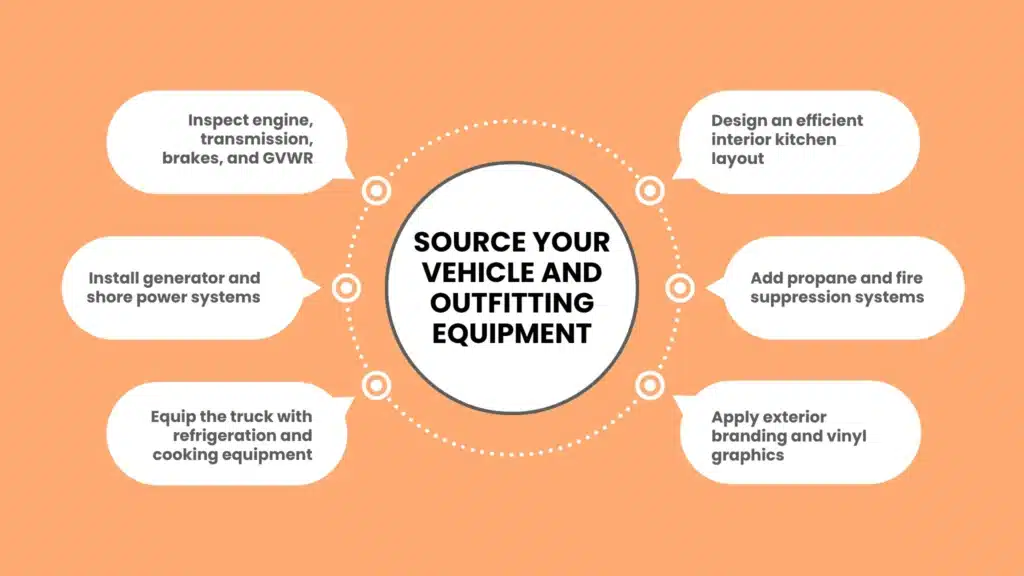
Vehicle Outfitting Stages
Chassis Selection & Mechanical Inspection: Verify engine health, transmission, brakes, and Gross Vehicle Weight Rating (GVWR) capacity.
Interior Layout Design & Ergonomics: Map prep lines, cooking stations, refrigeration units, and window assembly areas to prevent staff workflow crossovers.
Utility Installation & Fire Safety: Install generator power, shore power hookups, propane tanks, and automated fire suppression hood systems.
Commercial Equipment Outfitting & Exterior Wrap: Mount refrigeration, fryers, griddles, and apply exterior vinyl wrap graphics.
6. Secure a Licensed Commissary Kitchen
Most municipal health codes prohibit mobile vendors from prepping raw food, storing food inventory, or dumping waste liquids at a private residence. Instead, cities require food trucks to operate in partnership with an authorized commissary kitchen.
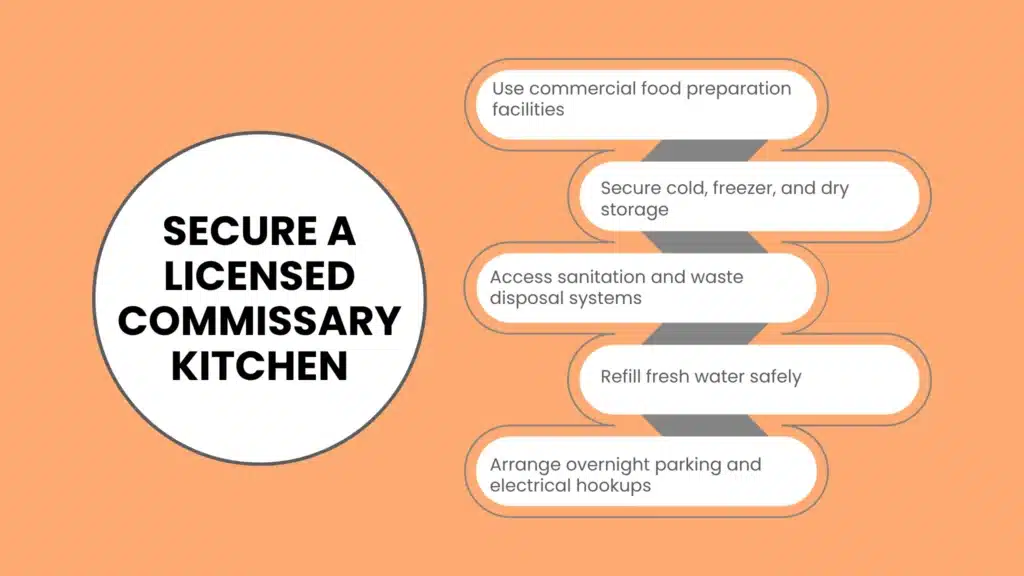
What a Commissary Kitchen Provides
Food Prep Facilities: Commercial prep tables, vegetable sinks, slicers, and heavy-duty mixers for batch prepping.
Cold & Dry Storage: Dedicated walk-in cooler shelves, freezer space, and dry storage racks for bulk inventory.
Sanitation & Waste Disposal: Commercial dishwashers, grease trap disposal stations, and fresh water refilling ports.
Overnight Parking & Power: Secure parking space with electrical hookups (shore power) to run truck refrigeration units overnight.
7. Build Your Brand and Launch Strategy
A great menu requires a proactive marketing push to attract customers during your opening weeks. Building an audience before your official launch date ensures steady foot traffic from day one.
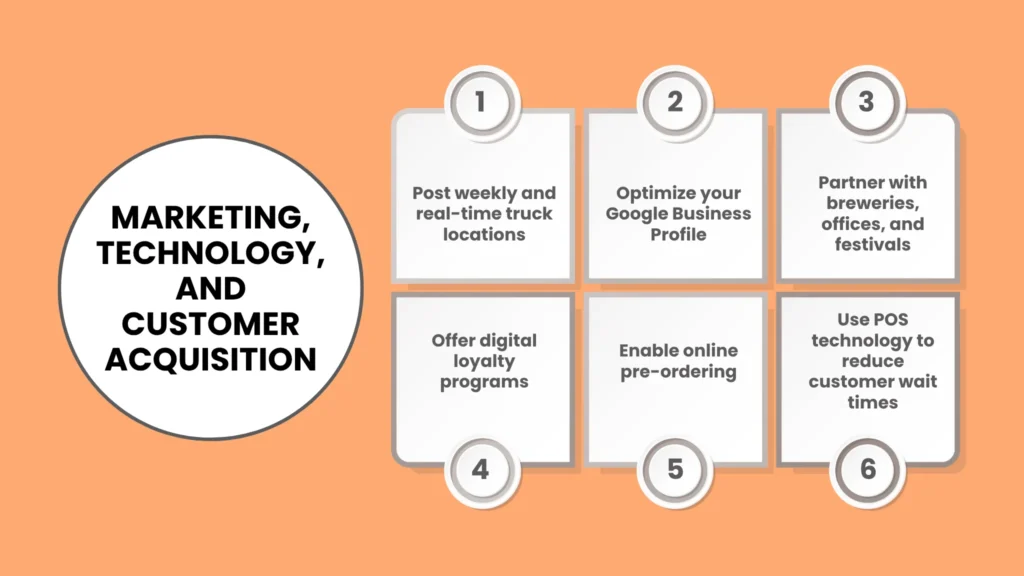
Essential Marketing Tactics for New Mobile Vendors
Social Media Location Tracking: Post weekly location schedules and real-time pin locations on Instagram, Facebook, and X so fans always know where to find your vehicle.
Google Business Profile Optimization: Register your business name to capture local search queries like “food truck near me” or “best lunch downtown.”
Partnering with Local Breweries and Events: Establish regular parking partnerships with local craft breweries, corporate office parks, and weekend festivals that do not serve their own hot food.
Loyalty and Digital Ordering Systems: Implement a POS system that offers SMS receipts, digital loyalty points, and online pre-ordering to reduce wait times during busy lunch rushes.
Financial Management: Protecting Operating Margins
Long-term success relies on maintaining strict operational margins across food, labor, and overhead costs.
Target Financial Breakdown
Food & Beverage Costs: 28% to 32% of total revenue. Maintain this by buying ingredients in bulk and establishing strict portion controls.
Labor Costs: 25% to 30% of total revenue. Keep labor efficient by cross-training staff for prep, cooking, and cashier duties.
Overhead & Fuel Expenses: 15% to 20% of total revenue. Includes commissary rent, vehicle fuel, propane, and insurance.
Net Profit Margin: 15% to 22% of total revenue. Reinvest net profits into equipment upgrades, marketing, or adding a second truck.
Managing these ratios carefully ensures your business remains resilient against seasonal weather changes, shifting fuel prices, and fluctuating ingredient costs.
Final Thoughts: Taking Action on Your Mobile Vision
Learning how to start a food truck business opens up an exciting pathway to culinary independence, lower overhead risks, and direct customer engagement. By writing a solid food truck business plan, budgeting accurately for your food truck startup cost, securing every necessary food truck license, and building a memorable brand, you can build a thriving mobile enterprise.
Take action today: refine your core menu concept, audit your local market for under-served niches, and schedule meetings with local commissary kitchens to start your journey. To explore more operational guides, business financial models, and growth strategies, visit reliablestartup.
Frequently Asked Questions
How long does it take to start a food truck business from scratch?
On average, launching a mobile food business takes between 3 to 9 months. This timeline accounts for market research, business plan development, securing financing, sourcing and outfitting the vehicle, and obtaining required health and fire department permits.
Is starting a food truck cheaper than opening a traditional restaurant?
Yes. Opening a traditional brick-and-mortar restaurant typically requires between $250,000 and $500,000+ in capital. In contrast, starting a food truck requires between $65,000 and $195,000, with significantly lower ongoing overhead costs for rent and utility bills.
What is the average profit margin for a food truck?
Well-managed mobile food businesses typically achieve net profit margins between 15% and 22% after factoring in food costs, labor, fuel, insurance, and commissary rent.
Can I park and sell food anywhere I want?
No. Cities enforce strict zoning laws, parking regulations, and proximity limits near brick-and-mortar restaurants. Always verify municipal parking rules, commercial park permissions, and private property agreements before setting up for service.