Running a Farmers Market Stall as a Real Business
Turning a passion for local products into a full-fledged enterprise starts at the local market square. Running a farmers market stall business is one of the most accessible ways to launch a retail or food brand, allowing you to test products, interact directly with customers, and generate immediate revenue.
However, many vendors treat their setup like a casual weekend hobby rather than a commercial operation. Shifting your mindset from vendor to business owner requires careful planning around inventory, pricing structures, regulatory compliance, and operational efficiency. When you manage your market presence with strategic intention, a simple wooden table can turn into a viable, recurring revenue stream.
1. Laying the Business Foundation: Permits and Licensing
Before purchasing inventory or designing your display, you must address the legal and regulatory framework governing local commerce. Operating legally protects your brand and ensures you can secure spots at reputable markets.
Securing Farmers Market Permits
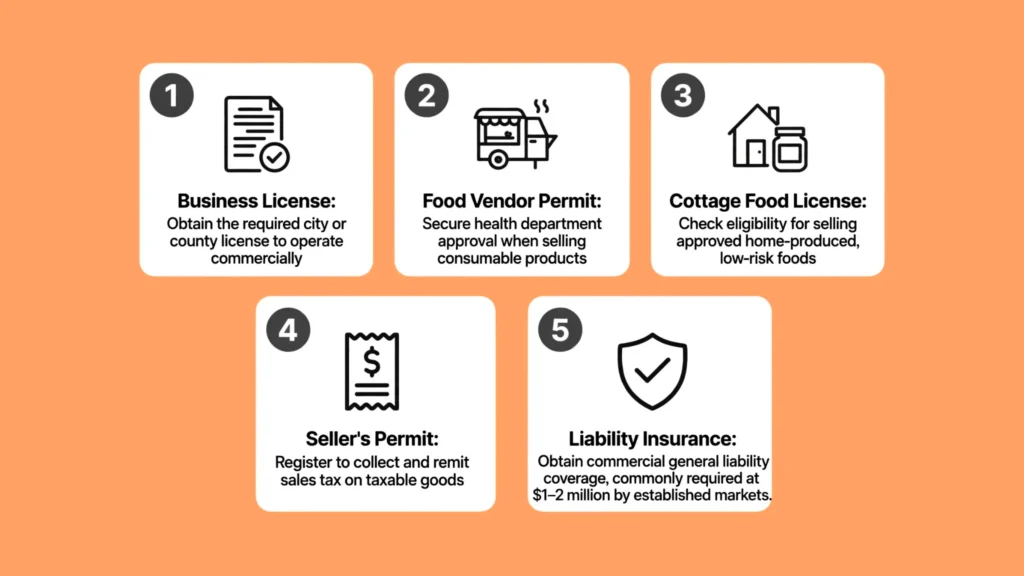
Every local municipality and market organization maintains specific compliance standards. Depending on what you sell, such as raw produce, baked goods, artisan crafts, or hot prepared meals, you will likely need a combination of key licenses. A general business license is issued by your city or county to operate a commercial entity within the region. A temporary food event or vendor permit is usually issued by the local health department for vendors selling consumable items.
If you make products at home, a cottage food license enables home cooks and bakers to sell low-risk food items made in a non-commercial kitchen, subject to sales limits and specific labeling requirements. Finally, a seller’s permit or sales tax identification allows you to collect and remit sales tax on taxable goods sold at your booth.
Liability Insurance
Never operate without commercial general liability insurance. Most established market managers require a minimum of 1 million to 2 million dollars in liability coverage before approving your application. Policy coverage protects your business against claims arising from slip-and-fall injuries around your space or accidental foodborne illness.
2. Managing Costs: Navigating Booth Fees and Initial Capital
Financial management separates hobbyists from profitable entrepreneurs. Understanding your overhead helps you establish pricing models that cover your expenses while generating a healthy return.
Understanding Booth Fees
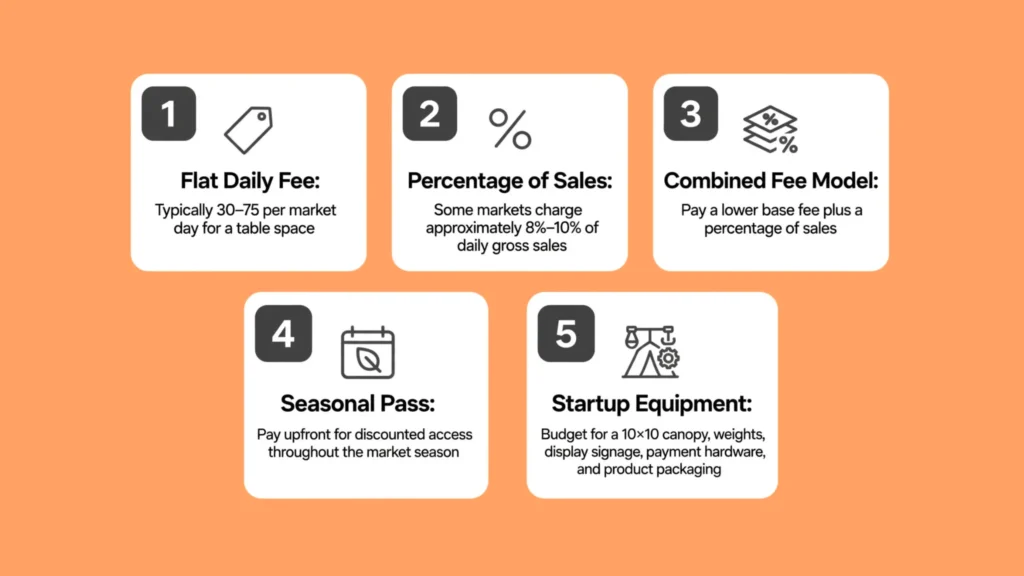
Booth fees represent your primary recurring real estate cost. Markets structure these charges in several common ways depending on their size and location. Under a flat daily rate model, vendors pay a fixed fee charged per market day, typically ranging from 30 to 75 dollars per table space. This structure works best for consistent sellers with predictable sales volumes.
Some markets use a percentage of sales arrangement, where the market takes a percentage of your total gross sales for the day, usually between 8 percent and 10 percent. This model is ideal for new vendors testing demand or selling high-variability products.
Other venues use a flat rate plus percentage model, combining a lower base fee with a small percentage of sales, which is common in established markets with heavy foot traffic. Lastly, a seasonal pass offers a discounted upfront payment covering the entire season, perfect for committed vendors looking to reserve prime spots for the long term.
Upfront Capital Requirements
Vendors planning to expand beyond a market stall into a larger food operation should also evaluate potential food business startup costs, including kitchen space, equipment, ingredients, packaging, and insurance.
In addition to booth fees, factor in your initial capital outlay for equipment:
Canopy and weights using commercial-grade 10×10 tents and heavy leg weights like sandbags or concrete weights for safety.
Display setup and signage including professional banners, table covers, risers, and clear price tags.
Point of sale hardware such as card readers, cash drawers, and backup battery banks.
Product packaging like eco-friendly bags, containers, and clear brand labels.
3. Maximizing Market Stall Profit
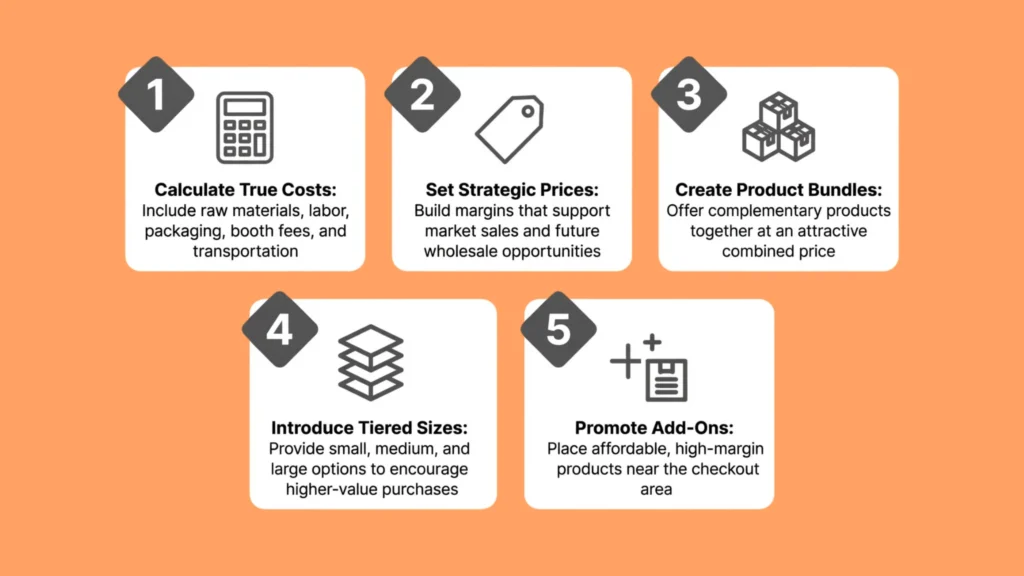
Sustaining a business over time requires focusing directly on profitability rather than just revenue. Boosting market stall profit relies on optimizing inventory, pricing strategically, and maximizing customer transaction values.
Strategic Pricing Models
Don’t price your items based solely on what competitors are charging nearby. Calculate your cost of goods sold by factoring in raw materials, direct labor, packaging, booth fees, and transport costs. Multiply your core costs to build in a margin that supports both retail market sales and potential wholesale opportunities down the line.
Understanding food business profit margins can also help vendors evaluate how ingredient costs, equipment expenses, and daily operating overhead affect the long-term profitability of their products.
Increasing Average Order Value
To earn more from the same volume of foot traffic:
Offer bundles by packaging complementary products together at a slight discount, such as buying three items for twenty dollars or offering a complete breakfast kit.
Create tiered sizes by providing small, medium, and large options to anchor prices and encourage customers to upgrade to the higher-margin larger size.
Promote impulse add-ons by placing low-cost, high-margin accessories or small treats right next to the checkout point.
4. Booth Setup, Merchandising, and Customer Engagement
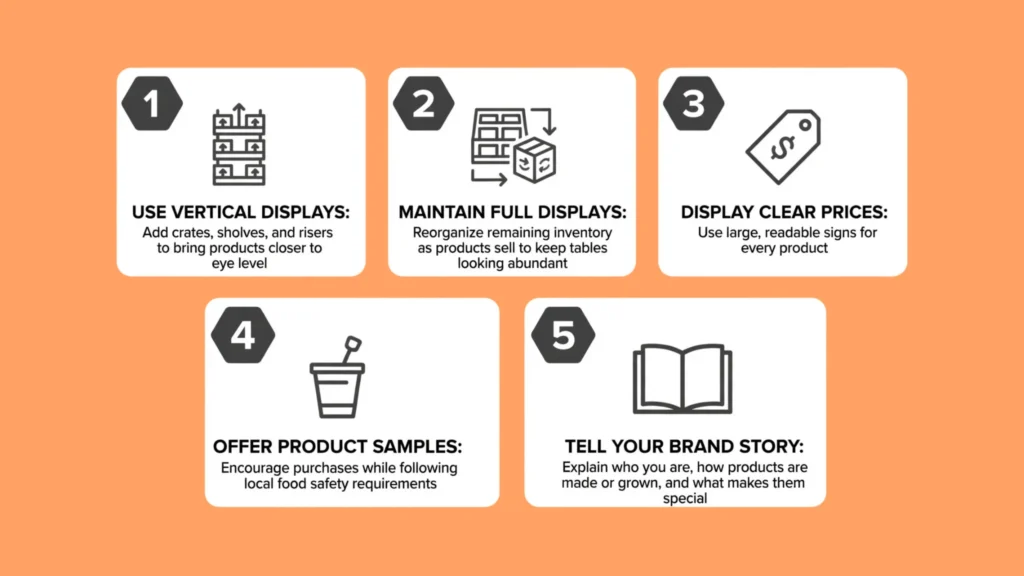
Your booth visual presentation acts as your retail storefront. A clean, inviting space naturally draws shoppers away from surrounding vendors.
Effective Merchandising Principles
Vertical display techniques use crates, shelving, and risers to bring products to eye level rather than laying everything flat on a table.
The abundance rule ensures fully stocked tables look vibrant and desirable. As inventory sells down, condense your displays to keep shelves looking full.
Clear pricing helps because shoppers often walk away rather than ask how much an item costs. Use large, legible price signs for every product line.
Active Customer Engagement
Offer samples where allowed, as direct sampling is one of the fastest ways to drive conversions for food and beverage vendors. Ensure compliance with local health codes for safe hygiene practices.
Tell your story by displaying a concise sign explaining who you are, how your items are grown or made, and why your process matters.
Train your staff so whoever mans the booth is standing, welcoming, knowledgeable, and prompt when managing payments.
5. Common Operational Mistakes to Avoid
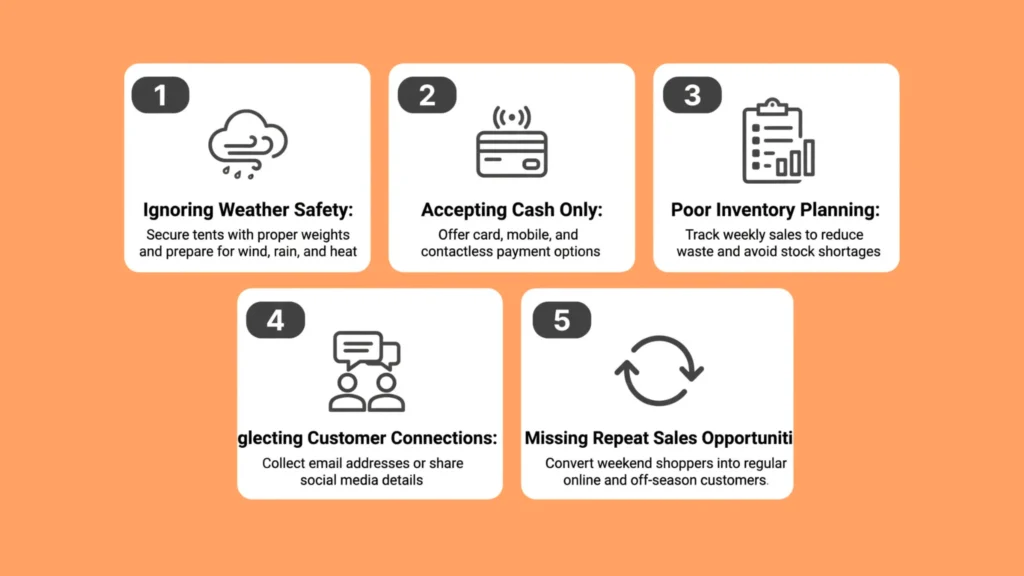
Avoiding operational pitfalls helps preserve your margins and keeps your business running smoothly throughout the market season.
Underestimating weather and logistics leads to safety hazards and damaged goods when tents are not secured with adequate weight. Always monitor weather forecasts and bring proper protection for wind, rain, or heat.
Cash-only operations limit your total sales volume. Modern market shoppers expect card, mobile, and contactless payment options.
Ignoring inventory control leads to waste when bringing too much perishable stock, while bringing too little leaves money on the table. Track sales data weekly to refine production forecasts.
Failing to build an off-market connection wastes an opportunity. Treat your market booth as a customer acquisition channel, collecting email addresses or distributing social cards to convert weekend shoppers into regular online or off-season customers.
Frequently Asked Questions
Is a farmers market stall business profitable?
Yes, a farmers market stall can be very profitable if you manage overhead closely, price for real profit margins, and focus on high-demand, high-margin products. Long-term profitability relies on converting market visitors into recurring customers outside of market hours.
How much do farmers market permits typically cost?
Permit costs vary widely depending on location and product type. General seller permits or basic health permits often range from 50 to 300 dollars annually, while specialized permits for prepared food can cost more depending on county regulations.
How do I calculate my booth fees into product pricing?
Treat booth fees as a fixed operating expense. Total your estimated market fees for the season, divide that by your projected total sales units, and factor that per-unit overhead cost into your baseline pricing formula alongside materials and labor.
What equipment do I need for my first market day?
Essential equipment includes a sturdy 10×10 canopy, heavy tent weights, folding tables, professional tablecloths, vertical display risers, clear price signage, a point of sale card reader, a cash box with change, and sanitizing supplies.
How can I accept payments at a farmers market without reliable Wi-Fi?
Use a point of sale system that supports an offline mode to process card payments locally and sync them once you re-establish an internet connection. Alternatively, use a mobile hotspot or cellular-enabled tablet.
How much inventory should I bring to a market?
Analyze foot traffic data provided by market organizers or visit the market beforehand as a buyer. As a general rule for new vendors, target an inventory volume that yields 3 to 5 times your daily booth fee cost in prospective sales.
Final Thoughts
Building a profitable farmers market stall business requires balancing craft or agricultural passion with sound business discipline. By obtaining necessary permits, tracking booth fees, designing an attractive display, and pricing for real profit margins, you create a scalable brand rooted in your local community. Focus on delivering quality, engaging customers warmly, and refining your operations every week to build a sustainable commercial enterprise.
About The Author