Buying Used Rental Equipment: What Is Worth It and What Is Not
Purchasing used rental equipment is one of the most effective ways for contractors, farmers, and business owners looking to expand an existing fleet or establish an equipment rental business without paying top-dollar retail prices. Because major rental companies regularly sell off units to make room for newer inventory, high-grade machinery frequently enters the secondhand market at a massive discount.
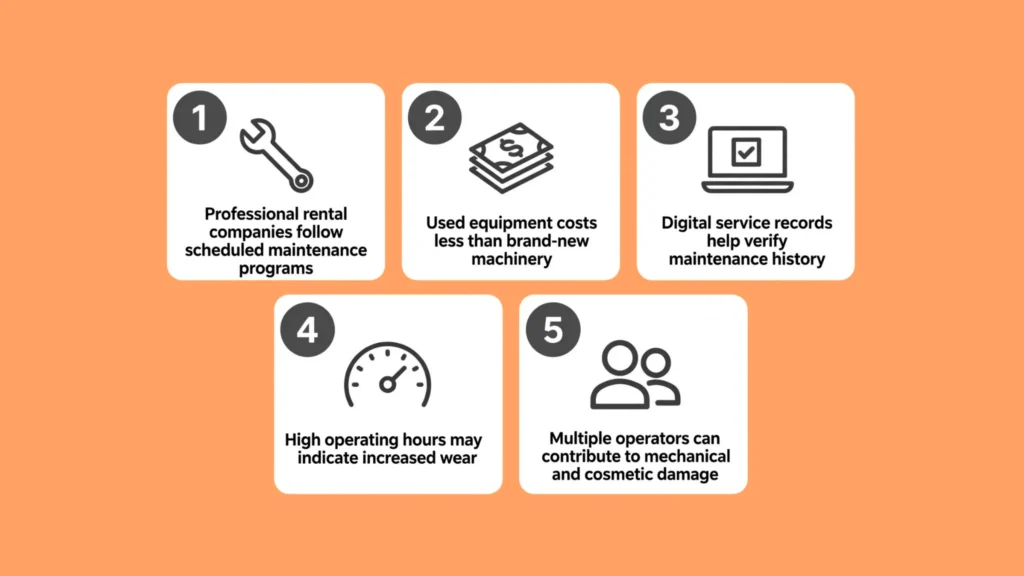
However, buying heavy machinery or tools from a rental fleet comes with distinct tradeoffs. While rental units typically benefit from strict, professional service schedules, they are also handled by dozens of different operators some far less careful than others. Knowing which machines hold their value and which ones carry hidden liabilities is the key to making a profitable investment.
Why Buy from a Refurbished Rental Fleet?
When rental companies decommission equipment, the units are usually sold through direct sales, dealer trade-ins, or used equipment auctions, creating opportunities for businesses to reduce their initial fleet acquisition costs. Understanding how these machines were treated helps evaluate whether a specific unit fits your operations.
The Advantages of Rental Fleet Units
Rigorous Preventive Maintenance: Commercial rental agencies follow strict OEM service intervals. Fluid changes, filter replacements, and mechanical inspections are routinely documented to protect the company’s capital assets. Proper equipment maintenance also plays an important role in preserving machinery value and reducing long-term operating costs.
Lower Initial Depreciation: Brand-new heavy machinery loses a significant percentage of its resale value in the first two to three years. Buying a retired rental unit lets the original owner absorb that steep initial loss.
Detailed Maintenance Logs: Unlike private sellers who may lose service receipts, corporate rental fleets generally maintain complete, digital maintenance records from day one.
The Tradeoffs to Consider
High Operating Hours: Rental units often accumulate operating hours much faster than privately owned equipment.
Variable Operator Care: Machines are driven by operators with varying skill levels, leading to cosmetic wear, minor cosmetic body damage, or aggressive engine usage.
What Is Worth Buying?
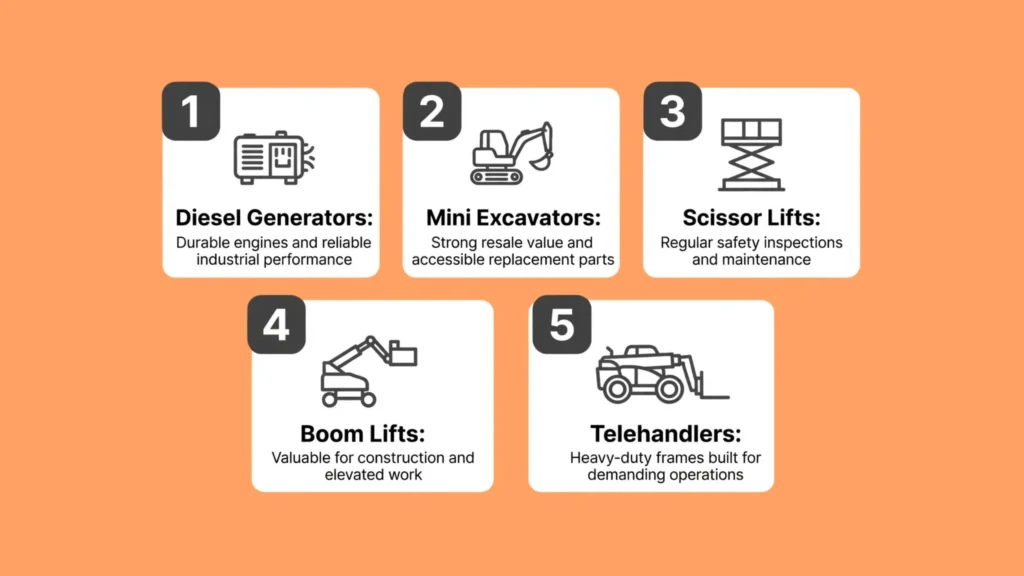
Certain categories of machinery thrive in rental environments because they are engineered for extreme durability, simple operation, and easy component replacement.
| Equipment Type | Why It Is Worth Buying | Key Inspection Focus |
| Diesel Towable Generators & Air Compressors | Built with heavy-duty industrial engines designed for continuous operation; minimal mechanical complexity. | Hour meter integrity, load-bank performance, enclosure corrosion. |
| Mini Excavators & Compact Track Loaders | High resale demand, accessible replacement parts, and exceptionally durable hydraulic systems. | Undercarriage wear, track tension, boom and arm play, hydraulic leaks. |
| Scissor & Boom Lifts | Subject to strict OSHA and ANSI inspection standards, ensuring consistent safety maintenance. | Battery bank condition, hydraulic hoses, platform controls, tilt sensors. |
| Telehandlers & Forklifts | Heavy frame construction built for demanding load capacities; long operational lifespan. | Mast wear, boom extension chains, hydraulic cylinders, tire condition. |
Heavy Diesel Machinery
Units powered by reliable diesel engines—such as excavators, wheel loaders, and large generators—are prime candidates for purchasing second-hand. These engines are designed to run for 10,000 hours or more when properly maintained. If a rental company can provide documented oil analysis reports alongside complete service logs, a high-hour diesel unit can deliver years of reliable service at a fraction of the original cost.
Aerial Work Platforms
Scissor lifts and boom lifts are strictly regulated by safety standards. Because rental companies face severe liability if aerial equipment fails, these assets receive prioritized safety checks, tilt sensor calibrations, and structural inspections. Purchasing a retired lift often nets a well-maintained, job-ready asset.
What Is Better to Avoid?
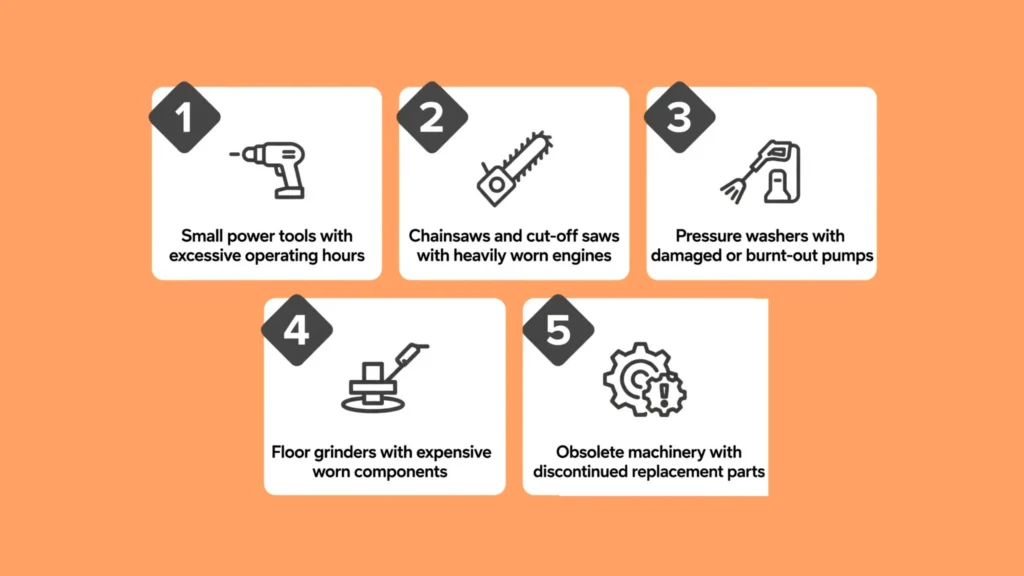
Not every tool in a rental yard is worth buying. Smaller, highly portable tools or machinery with complex wear points often cost more to repair than they are worth.
Small Engine & Surface Preparation Tools
Chainsaws, cut-off saws, plate compactors, pressure washers, and floor grinders endure brutal wear relative to their cost.
Operator Abuse: Small tools are often run at maximum RPM by untrained users, frequently using improper fuel mixtures (e.g., plain gasoline in two-stroke engines).
Cost of Repair vs. Replacement: Rebuilding a scored cylinder on a small saw or replacing a burnt-out pump on a commercial pressure washer can quickly exceed the unit’s remaining value.
Highly Specialized or Obsolete Machinery
Avoid buying niche equipment or older models from manufacturers that have gone out of business or discontinued parts support. Finding replacement hydraulic valves, electronic control modules (ECMs), or custom tracks for obsolete units can result in lengthy downtime and expensive custom fabrication.
Equipment Condition Checklist
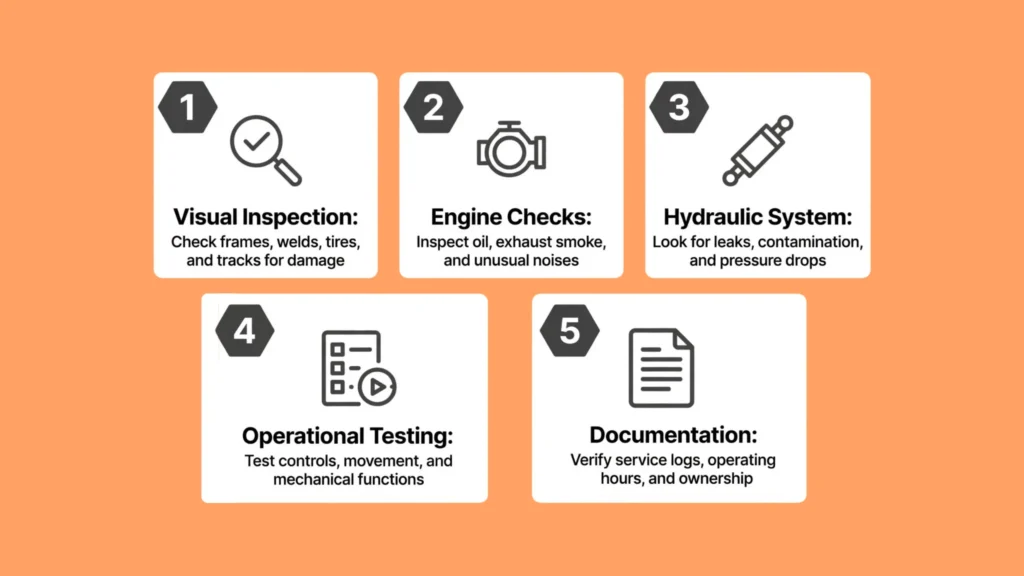
Before committing to a purchase whether buying directly from a rental dealer or bidding at used equipment auctions use this equipment condition checklist to evaluate the unit’s true physical state.
1. Visual & Structural Inspection
Check the chassis, frame, and boom welds for cracks, stress fractures, or fresh paint masking structural repairs.
Examine the body panels for deep impact damage, structural rust, or frame misalignment.
Inspect tracks or tires for uneven tread wear, sidewall cracks, or missing rubber lugs.
2. Fluid & Engine Checks
Inspect the engine oil for milkiness (indicating coolant contamination) or heavy sludge build-up.
Check the hydraulic fluid for a burnt odor, milky appearance (water intrusion), or metallic flakes.
Look for active leaks around valve banks, cylinders, hose fittings, and radiator cores.
3. Operational & Hydraulic Tests
Start the engine cold to check for excessive exhaust smoke (black, white, or blue) and engine knocking.
Warm up the machine and operate all hydraulic functions to maximum extension to test for pressure drops or hesitation.
Check center pins, bushings, and swing bearings for excessive play or looseness.
4. Records & Documentation
Verify the hour meter reading against pedal, seat, and control lever wear to spot potential meter tampering or replacement.
- Review complete maintenance logs, checking for consistent oil change intervals and major component overhauls. Rental companies also use fleet management software to organize equipment maintenance records, track asset conditions, and monitor servicing schedules.
Run a title and lien search to verify the seller holds clear ownership.
Tips for Navigating Used Equipment Auctions
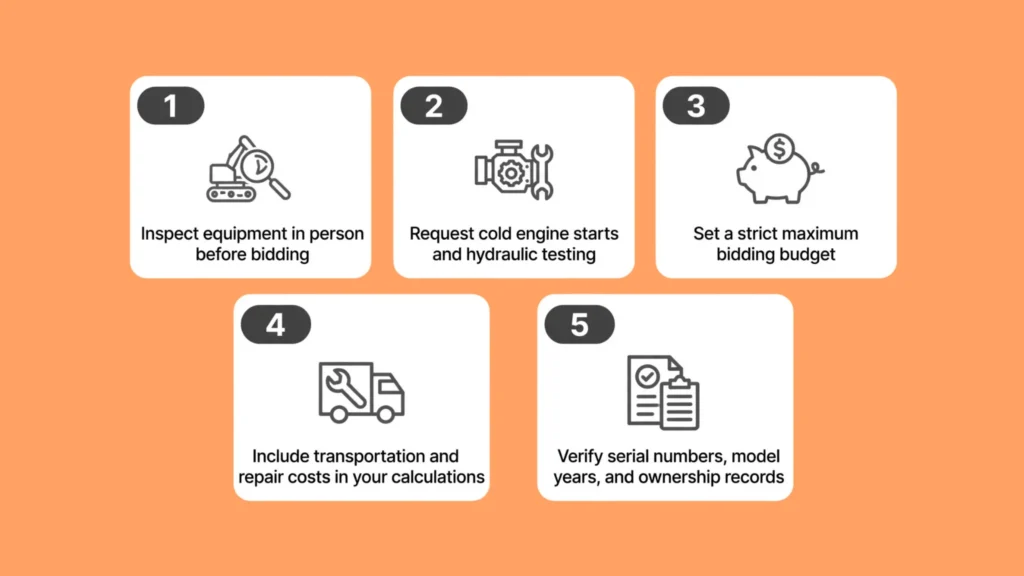
Unreserved equipment auctions offer some of the lowest purchase prices, but they carry an “as-is, where-is” risk.
Inspect in Person Whenever Possible: Never rely solely on online auction photos or short video clips. Attend pre-auction inspection days to perform cold engine starts, run hydraulics, and test drivetrains.
Set a Strict Bidding Ceiling: Factor transport costs, immediate service needs, fluid flushes, and potential tire or track replacements into your total budget before bidding starts.
Check the Serial Number: Verify the unit’s PIN/serial number with local dealers to confirm the exact model year, manufacturing specs, and warranty history.
Frequently Asked Questions
Is buying a used rental machine better than buying from a private seller?
It depends on your priorities. Rental units generally feature consistent, professional maintenance records and standardized servicing, whereas private sellers may lack complete service documentation. However, private machines often have lower total operating hours and less cosmetic wear.
How many hours are too many for used rental equipment?
Ideal hour limits vary by machinery type. For compact diesel equipment (like mini excavators or skid steers), 2,000 to 4,000 hours is considered a moderate range. Large diesel machinery can operate well beyond 8,000 hours if properly maintained. Conversely, gas-powered utility tools are often near the end of their usable life past 1,000 hours.
Can I buy warranties on retired rental equipment?
Yes, many major rental companies and equipment dealers offer short-term powertrain warranties or certified pre-owned programs for late-model equipment. Third-party equipment protection plans may also be available depending on the age and condition of the unit.
How do I verify maintenance records on rental equipment?
Ask the seller for the machine’s unit number and complete service report. Reputable rental agencies track all scheduled maintenance, repairs, and parts replacements in centralized fleet management software and can easily provide digital printouts.
What is the most common hidden cost when buying used heavy machinery?
Undercarriage wear on tracked machines (excavators, track loaders) and hydraulic system contamination are the two most expensive hidden costs. Replacing a complete track undercarriage can cost thousands of dollars, quickly wiping out any initial savings.
Final Thoughts
Buying used rental equipment offers an excellent balance between affordability and performance when approached with proper due diligence. Prioritize machinery categories known for structural longevity, such as diesel excavators, telehandlers, and aerial lifts, while skipping high-wear small power tools.
By thoroughly reviewing service records, conducting a comprehensive hands-on inspection, and factoring minor repair costs into your budget, you can reliably secure high-performing machinery that delivers strong return on investment for years to come.
About The Author