GPS Tracking Rental Equipment: Prevent Theft & Recover Fleet Assets
Heavy machinery and specialized tools sitting on unmonitored construction sites represent a major financial vulnerability for rental fleet operators. Every year, millions of dollars in excavators, skid steers, generators, and scissor lifts vanish from job sites without a trace. Beyond the cost of replacing the asset, theft leads to project delays, ballooning insurance premiums, and lost rental revenue while waiting for replacement units.
Implementing robust GPS tracking rental equipment protocols transforms raw fleet visibility into an active line of defense. Modern tracking systems do far more than drop a pin on a digital map; they provide the actionable intelligence and automated alerts needed to intercept unauthorized movements before an asset crosses state lines or gets sold for parts. Safeguarding a rental fleet requires a clear understanding of equipment theft prevention technology, asset trackers, and stolen rental recovery workflows.
GPS tracking for rental equipment combines real-time location monitoring, geofencing, and telemetry to protect fleet assets from theft and unauthorized use. By utilizing ruggedized asset trackers, rental companies receive immediate alerts when equipment moves past digital perimeters or operates off-schedule. These systems provide precise tracking data and engine-disable capabilities, drastically improving stolen rental recovery rates, lowering insurance costs, and maintaining continuous operational uptime.
Key Takeaways
High-value rental machinery is a prime target for organized job site theft due to easy transport and high resale value.
Advanced telematics combine real-time GPS tracking with remote disabling to disrupt unauthorized movement immediately.
Modern asset trackers utilize dual-technology location reporting (cellular plus satellite) to locate stolen equipment in dead zones.
Establishing automated geofencing rules and rapid recovery protocols significantly increases asset retrieval rates.
Implementing robust tracking solutions reduces fleet insurance premiums and minimizes revenue losses from operational downtime.
The Rising Challenge of Equipment Theft in the Rental Industry

Equipment theft remains one of the most persistent financial drains on rental businesses. Construction job sites are inherently open environments, making them easy targets for opportunistic thieves and organized crime rings alike. Unlike passenger vehicles, heavy machinery often lacks standardized ignition locks or complex anti-theft security built in at the factory level, which makes unauthorized operation remarkably simple for bad actors.
The financial loss extends far beyond the physical value of a missing skid steer or boom lift. When a rental unit is stolen, the business experiences an immediate loss of daily rental income. If the machine was booked for subsequent weeks, client relationships suffer, and your reputation for reliability takes a hit. Business owners planning an equipment rental business should consider asset protection, fleet security, and insurance expenses when developing their operational strategy.
Insurance claims offer a financial cushion, but frequent claims drive up deductible rates and annual premiums across your entire fleet. Without dedicated asset trackers continuously transmitting location and ignition status, the odds of recovering stolen machinery drop drastically after the first twenty-four hours.
How Modern GPS Tracking Transforms Fleet Security
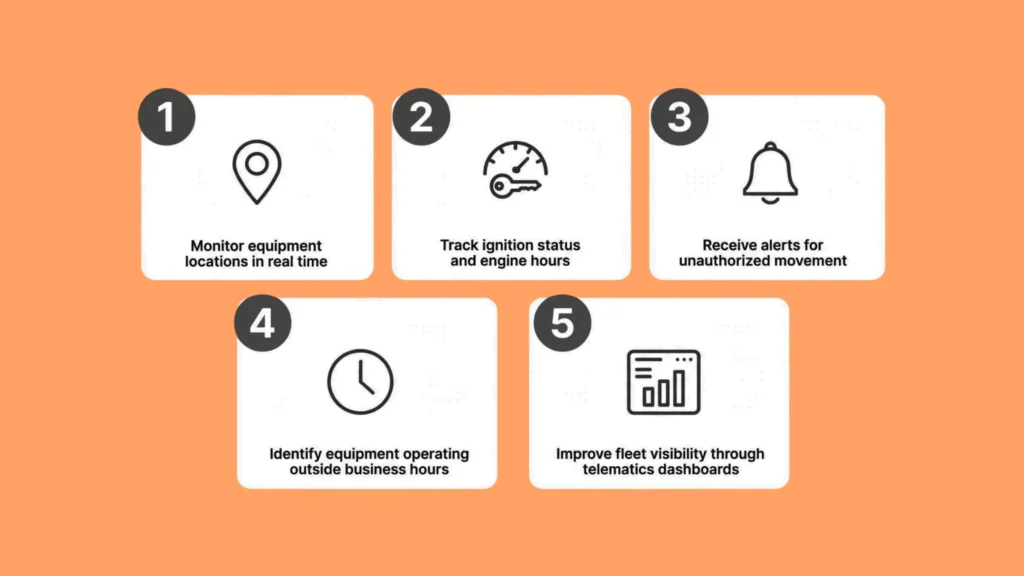
Traditional anti-theft methods relied heavily on physical locks, steering wheel clamps, and security fences. While these physical barriers still serve as basic deterrents, they do little to stop determined thieves equipped with power tools and transport trailers. Modern security relies on active telematics that monitor machinery state, location, and operational parameters continuously.
Real-Time Location and Telematics Reporting
Today’s gps tracking rental equipment solutions utilize high-frequency ping rates and low-power hardware designed specifically for harsh operating environments. Installed discreetly inside the machine’s engine bay or structural chassis, these tracking units report current coordinates, battery voltage, ignition state, and engine hours directly to a central management dashboard.
Fleet operators can instantly view every active asset on an interactive map, verifying whether a machine is sitting idle on a verified customer site or moving down a highway outside of business hours. Integrating GPS tracking with reliable equipment rental business software also helps fleet operators manage inventory, monitor equipment availability, schedule maintenance, and coordinate rental operations from a centralized platform.
Geofence Automation and Movement Alerts
Geofencing allows rental managers to draw virtual boundaries around job sites, customer storage yards, or city limits. If a rented generator or excavator crosses the designated geofence perimeter without prior approval, the system triggers immediate alerts via SMS, email, or mobile app notifications.
Perimeter Breach Notifications: Triggers instantly when equipment leaves an authorized operating zone.
After-Hours Movement Alerts: Flags engine starts or motion detected outside agreed-upon rental hours.
Power Disconnect Alerts: Notifies fleet managers if a thief attempts to tamper with or disconnect the equipment’s primary battery source.
Services like reliablestartup.com help rental businesses streamline their software integration, organizing real-time telematics feeds into actionable fleet intelligence so operational teams can respond to breaches without delay.
Core Features of Modern Asset Trackers
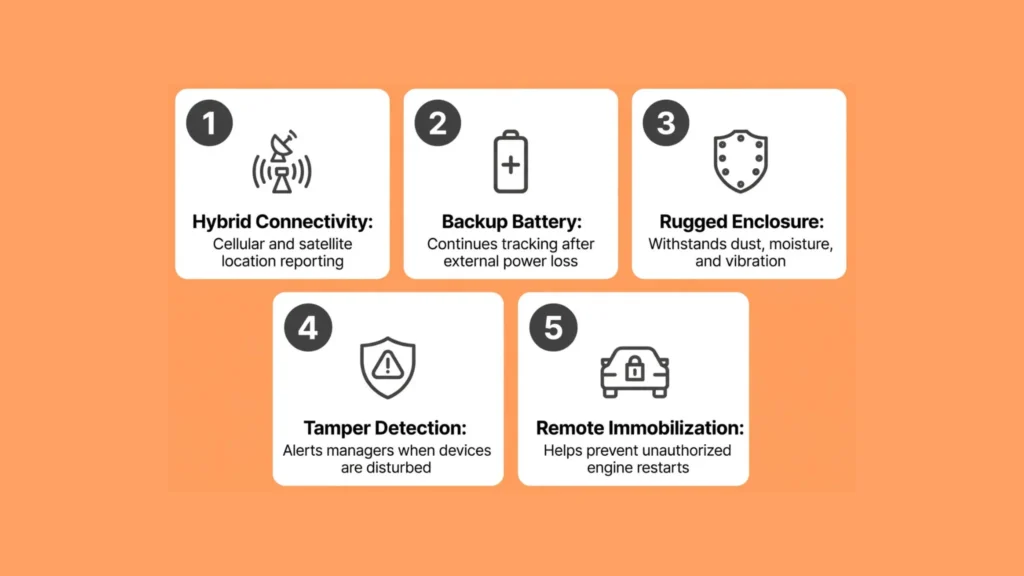
Not all tracking hardware is built for heavy construction equipment. Machinery experiences severe vibration, extreme temperature fluctuations, high moisture exposure, and prolonged periods in remote areas with limited cellular coverage. To ensure reliable performance during a recovery situation, asset trackers must incorporate specialized features.
Hybrid Connectivity: Uses LTE-M, NB-IoT, and satellite backup to ensure location updates continue uninterrupted even on rural or off-grid job sites.
Internal Backup Battery: Features a long-life rechargeable or primary battery that keeps transmitting location data for days or weeks after main power is cut.
Ruggedized Enclosure: Built inside IP67 or IP68 weather-resistant housing to withstand high-pressure washing, mud, dust, and severe weather conditions.
Tamper Detection: Uses optical sensors or physical tamper switches to alert dispatch immediately if the tracking unit is removed or unmounted.
Remote Engine Immobilization: Connects via relay to the starter or fuel pump so authorized managers can prevent engine restarts safely.
Stolen Rental Recovery: A Step-by-Step Response Strategy
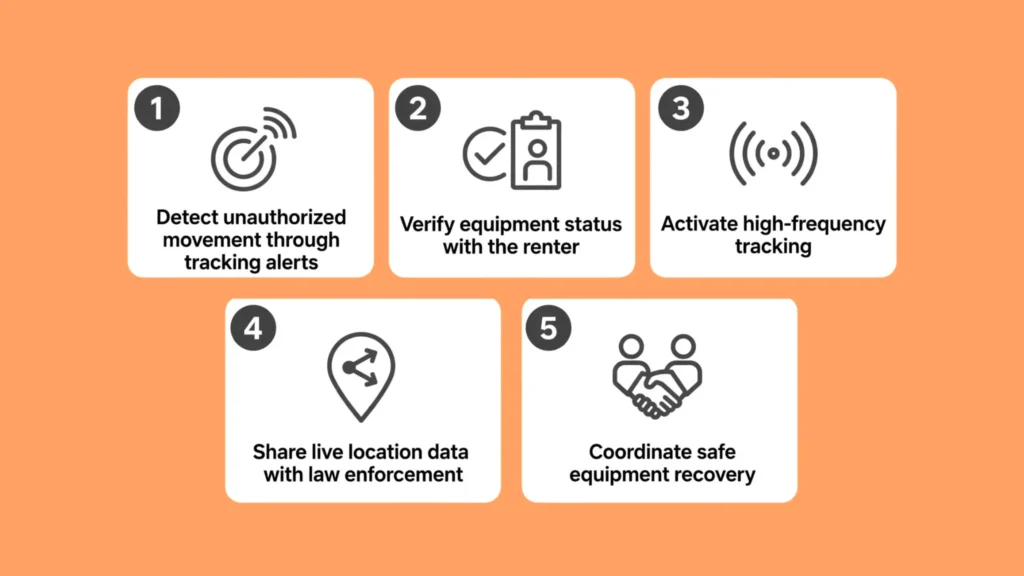
When theft occurs, time is the single most critical factor. The probability of retrieving stolen equipment drops significantly with every passing hour as thieves move machinery into enclosed shipping containers, chop shops, or unmonitored storage facilities. Having a standardized stolen rental recovery protocol prevents panic and accelerates law enforcement intervention.
Theft Alert Triggered: The tracking unit detects unauthorized movement, an after-hours engine start, or a geofence breach.
Verification and Immediate Alerting: Fleet coordinators verify the machine’s status on the dashboard and contact the renter to confirm no authorized overtime took place.
Remote Immobilization and High-Frequency Tracking: System administrators trigger high-frequency tracking mode and issue a remote disable command so the engine cannot restart once turned off.
Law Enforcement Collaboration: Dispatch generates a secure, temporary live-tracking link and provides it directly to local police or state troopers.
Asset Retrieval: Authorities locate and secure the target machine safely, allowing the rental company to inspect and recover the unit.
Integration platforms available through reliablestartup.com allow fleet dispatchers to easily share these temporary tracking views with local authorities during active recovery operations.
Financial and Operational Impact of Fleet Telematics

Investing in comprehensive tracking technology delivers returns far beyond basic theft recovery. While equipment theft prevention remains the primary driver for adoption, fleet managers quickly uncover secondary operational advantages that boost bottom-line performance.
Insurance Premium Discounts
Insurance underwriters recognize the risk reduction associated with real-time location monitoring and active recovery capabilities. Many commercial fleet insurers offer substantial policy discounts for rental assets equipped with verified gps tracking rental equipment systems.
In many cases, the monthly insurance savings cover a significant portion of the telematics hardware and subscription fees. Beyond insurance premiums, rental operators should also account for tracking hardware, software subscriptions, equipment maintenance, and security expenses when calculating their overall rental business startup costs.
Maintenance Accuracy and Usage Verification
The same hardware monitoring location also tracks actual engine run-time hours. Instead of relying on manual customer reporting or estimation, rental companies can schedule preventive maintenance based on accurate engine usage data.
Additionally, if a customer rents a machine under a standard 8-hour daily limit but operates it for 16 hours continuously, telemetry data provides transparent proof for legitimate overage billing.
Overcoming Key Implementation Challenges
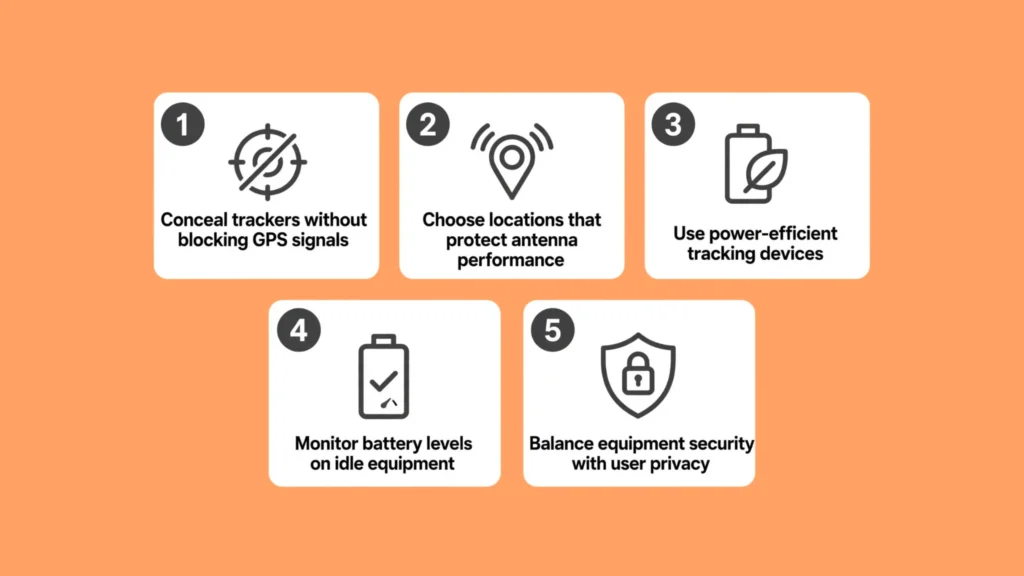
Deploying tracking technology across hundreds or thousands of rental assets comes with practical challenges. Fleet managers must carefully consider hardware concealment, power management, and user privacy to maximize return on investment.
Concealment vs. Antenna Line-of-Sight
If a tracker is easily visible, thieves will quickly rip it off and discard it. However, placing a device deep inside a dense metal chassis can block GPS satellite signals and cellular transmission. Installers must find optimal locations such as under fiberglass engine covers, inside plastic light assemblies, or hidden behind non-metallic trim panels that protect antenna performance while concealing the device.
Managing Power Drain on Idle Assets
Trailer-mounted equipment, towable generators, and attachments often sit unused in storage yards for months without an external power source. Selecting trackers with intelligent power-management modes that sleep during periods of inactivity and wake up periodically or upon motion detection prevents internal battery depletion and guarantees operational readiness when the asset goes out on rent.
Reliable operational management through reliablestartup.com simplifies equipment tracking by providing clear battery status monitoring across all unpowered fleet units.
The Future of Rental Fleet Security
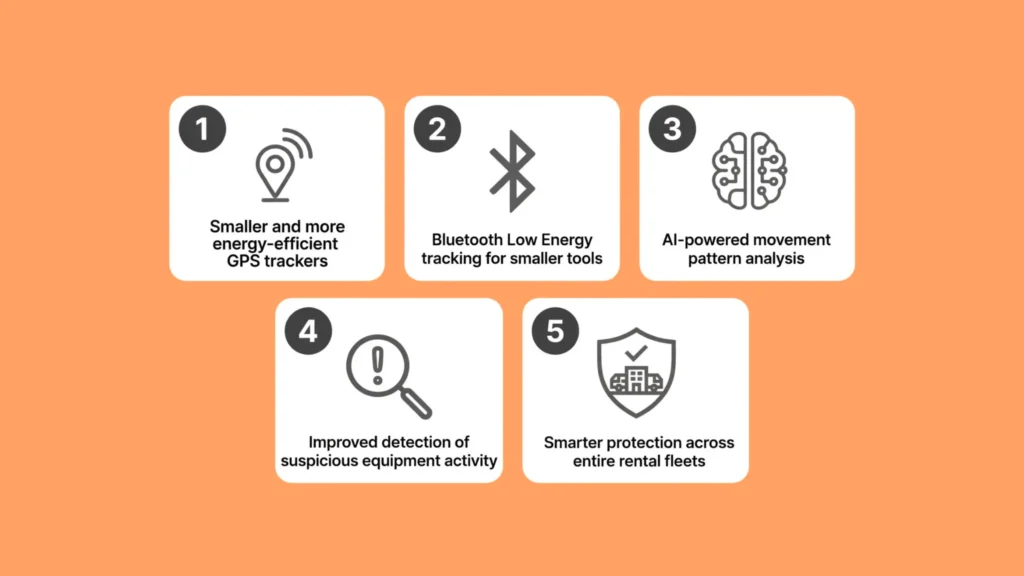
As tracking hardware becomes smaller, cheaper, and more energy-efficient, the scope of asset tracking is expanding from high-value machinery down to small power tools and non-powered attachments.
Emerging developments include Bluetooth Low Energy (BLE) beacon networks, where larger machines act as mobile gateways to track smaller hand tools, buckets, and augers stored nearby. Furthermore, AI-driven motion analytics are learning to distinguish between normal transport vibration on an authorized trailer and erratic movement patterns characteristic of a theft in progress.
Implementing modern tracking workflows today ensures rental operators stay ahead of theft techniques while maintaining complete operational control over their distributed fleet.
Frequently Asked Questions
Will a GPS tracker work if thieves disconnect the machine’s battery?
Yes. Quality asset trackers feature internal rechargeable lithium-ion backup batteries. If a thief cuts external power lines, the device immediately sends a power-disconnect alert and continues broadcasting location updates using its internal power reserve.
Can signal scanners detect GPS asset trackers?
While sophisticated thieves use radio-frequency scanners to locate trackers, modern telematics hardware minimizes detection by operating in stealth mode. The devices remain passive and silent, transmitting short burst pings at randomized intervals rather than maintaining continuous RF broadcasting.
How does geofencing help prevent rental equipment theft?
Geofencing creates a virtual boundary around job sites or storage yards. The system triggers immediate alerts to fleet administrators via text or email whenever an asset moves outside the designated area, allowing rapid response before equipment travels far.
What is the typical battery life for unpowered asset trackers?
Unpowered asset trackers equipped with internal batteries can operate for 3 to 5 years, depending on the ping frequency. Configured to transmit location updates once or twice daily while stationary, they preserve battery life until motion is detected.
Can telematics lower my rental fleet insurance costs?
Yes. Most commercial fleet insurance providers offer discounted policy rates or reduced deductibles for equipment protected by verified GPS tracking devices, as telematics systems significantly increase the recovery rate of stolen assets.
Conclusion
Securing a rental fleet requires shifting from passive reliance on insurance policies to proactive, real-time protection. Integrating robust gps tracking rental equipment technology gives fleet managers the visibility, remote control, and data needed to stop theft in its tracks and recover stolen assets rapidly.
By combining automated geofencing, rugged hardware, and structured recovery protocols, rental operators protect their revenue streams, lower insurance expenses, and preserve customer trust in an increasingly competitive marketplace.
About The Author