Equipment Rental Business Software: Best Features, Tools, and Systems for Managing Rentals
Managing a fleet of heavy machinery, tools, or event gear requires precise tracking, maintenance scheduling, and smooth customer management. As a result, relying on manual spreadsheets often leads to double-booking, missed billing cycles, and unmaintained gear. Choosing the right equipment rental business software is essential for scaling your rental operations smoothly.
Modern platforms unify your front-office bookings with back-office inventory control. Consequently, investing in dedicated rental management software keeps your fleet running at maximum efficiency. In this comprehensive guide, you will learn how to evaluate equipment rental software, compare top feature sets, and select the best equipment rental management system for your business.
Executive Summary: Streamlining Rental Operations
An equipment rental management system serves as the operational central command for your fleet business. Whether you rent heavy construction machinery, event staging gear, or specialized tools, automated workflows eliminate human error and protect profit margins.
Implementing unified rental inventory software delivers four main business benefits:
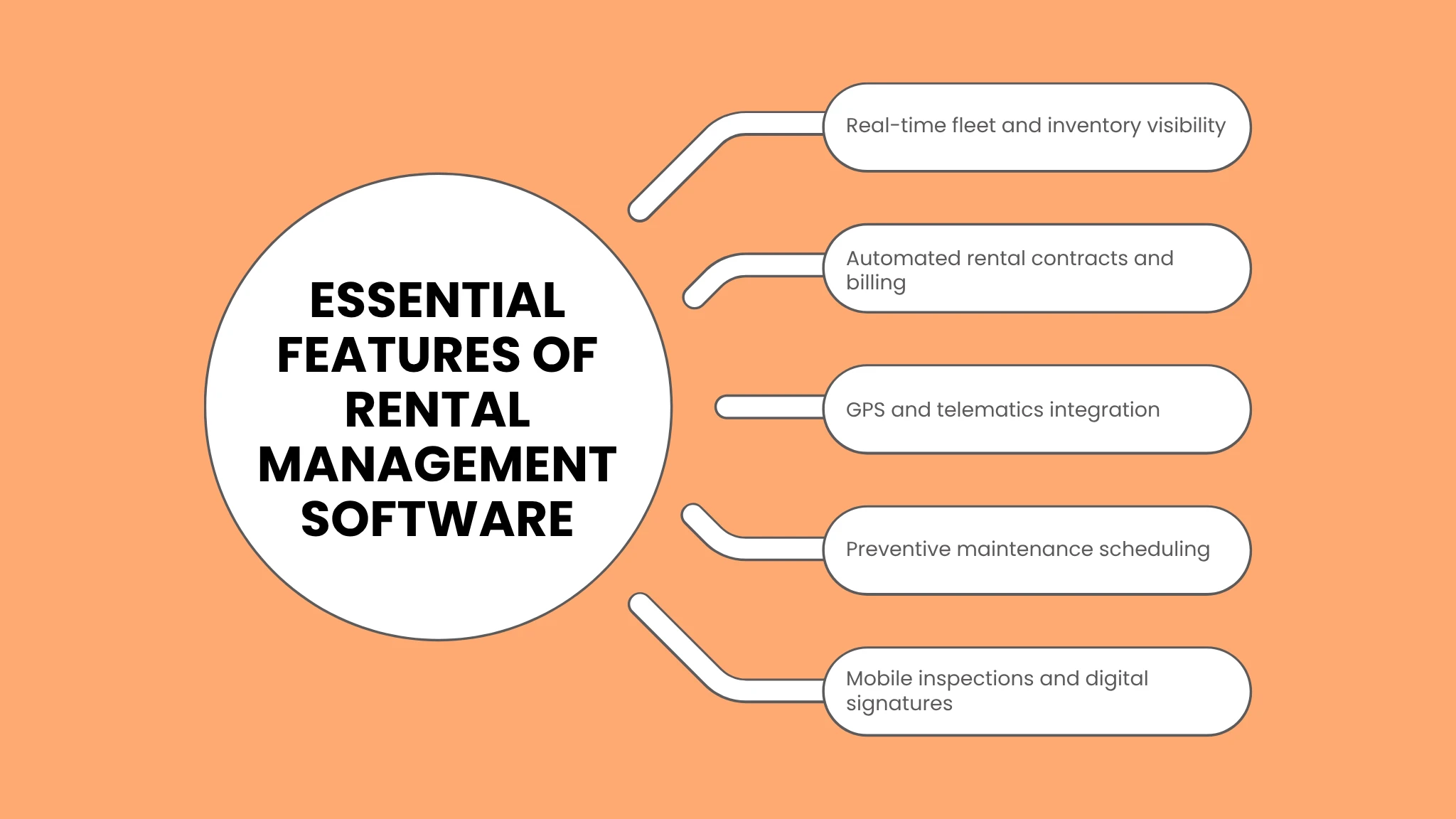
Real-Time Fleet Visibility: Track gear availability, location, and condition across multiple yards simultaneously.
Automated Contract Management: Generate digital rental agreements, collect e-signatures, and handle recurring invoicing seamlessly.
Preventive Maintenance Tracking: Schedule routine servicing based on hours used or miles driven to reduce downtime.
Optimized Asset Utilization: Identify your most profitable gear while phasing out low-performing equipment.
Adopting modern systems establishes a reliable foundation that supports steady long-term growth.
The Operational Challenges of Manual Fleet Management
Running an equipment rental operation without specialized software creates severe bottlenecks across your entire organization. Many business owners start by tracking gear on paper logs or basic spreadsheets. However, as your inventory grows, these manual systems quickly break down under the weight of daily bookings.
When yard workers use paper checklists, critical information gets lost between the shop floor and the front office. Consequently, sales teams accidentally rent out machinery that is currently undergoing repairs. Furthermore, manual billing systems often fail to charge for extra usage hours, missing late fees, or unreturned accessories. Upgrading to automated management software eliminates these costly human errors and keeps every department connected in real time.
Essential Features of Top Equipment Rental Software
Selecting the right software platform requires matching specific system features to your daily operational bottlenecks. Excellent software choices must include core tools that streamline both customer service and yard management.
Key Capabilities to Look For
Dynamic Inventory & Asset Tracking: High-quality tools track individual serial numbers, maintenance history, and current reservation status across all locations.
Automated Recurring Billing: Easily process flexible daily, weekly, or monthly billing rates alongside damage waivers and security deposits.
Integrated GPS & Telematics: Connect software to onboard telematics to monitor equipment hour meters, battery levels, and live location data.
Mobile Yard App: Enable field staff to handle check-ins, record machine hours, take photo damage logs, and collect digital signatures on tablets.
Comparing Leading Rental Management Systems
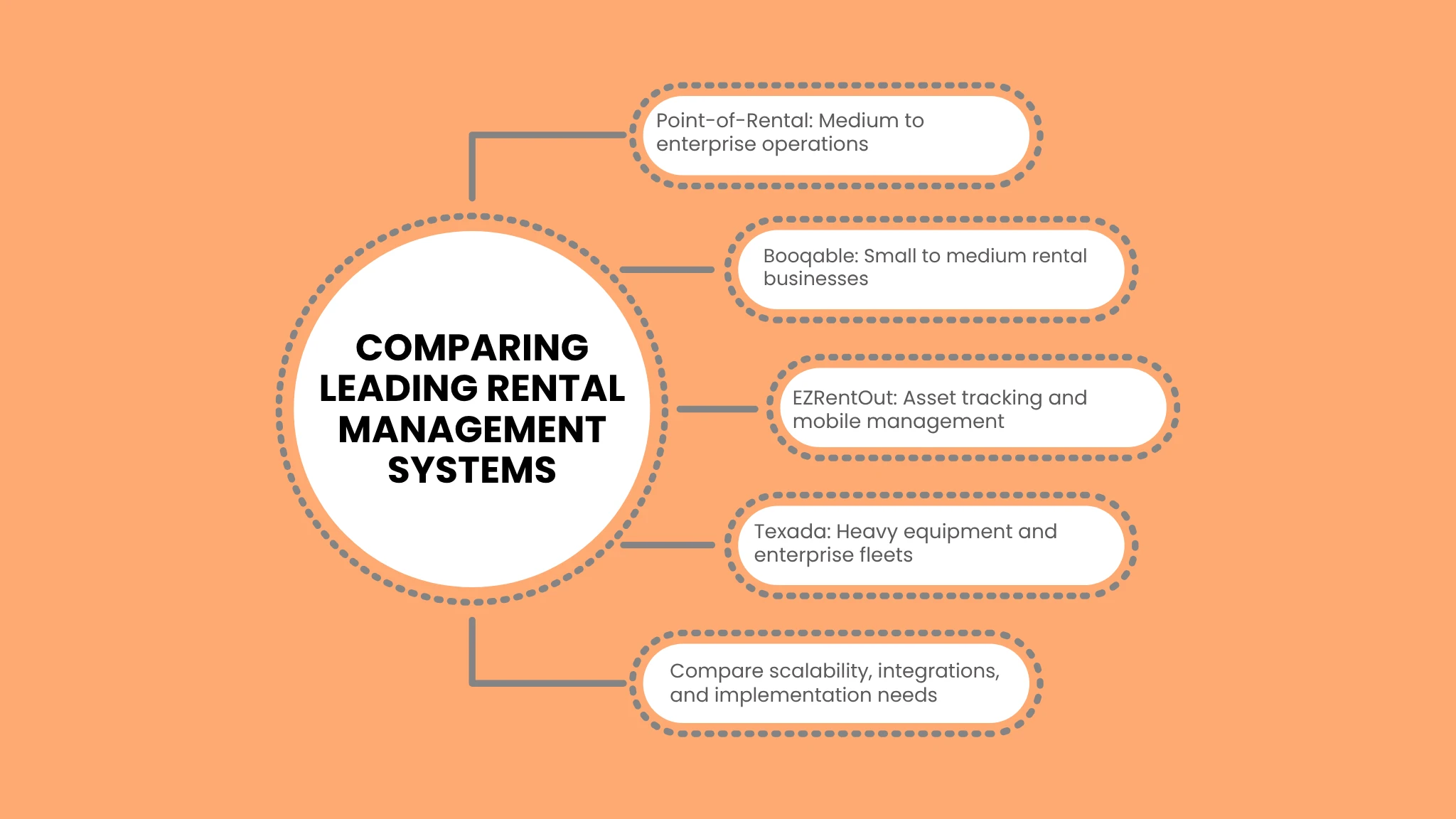
Different rental platforms serve distinct business scales and equipment niches. Therefore, comparing popular market options helps you find the right fit for your budget and fleet size.
| System Name | Ideal Business Size | Core Strengths | Key Considerations |
| Point-of-Rental | Medium to Enterprise | High scalability, extensive dispatching, deep reporting | Steep learning curve for new staff |
| Booqable | Small to Medium | Easy online bookings, user-friendly interface, quick setup | Limited heavy machinery telematics |
| EZRentOut | Small to Mid-Enterprise | Strong asset tracking, barcoding support, mobile app focus | Advanced accounting requires integrations |
| Texada (Infor) | Enterprise Fleet Operations | Advanced telematics, deep maintenance logs, heavy equipment focus | Higher upfront implementation investment |
Deep Dive into Core Feature Sets
To maximize the return on your software investment, you must understand how individual features impact your daily operating workflows. Let us explore the critical modules every modern system should offer.
1. Advanced Reservation and Scheduling Engines
A robust booking engine acts as the heartbeat of your rental office. When a customer calls or requests a quote online, your staff must immediately know whether an asset is available for those exact dates.
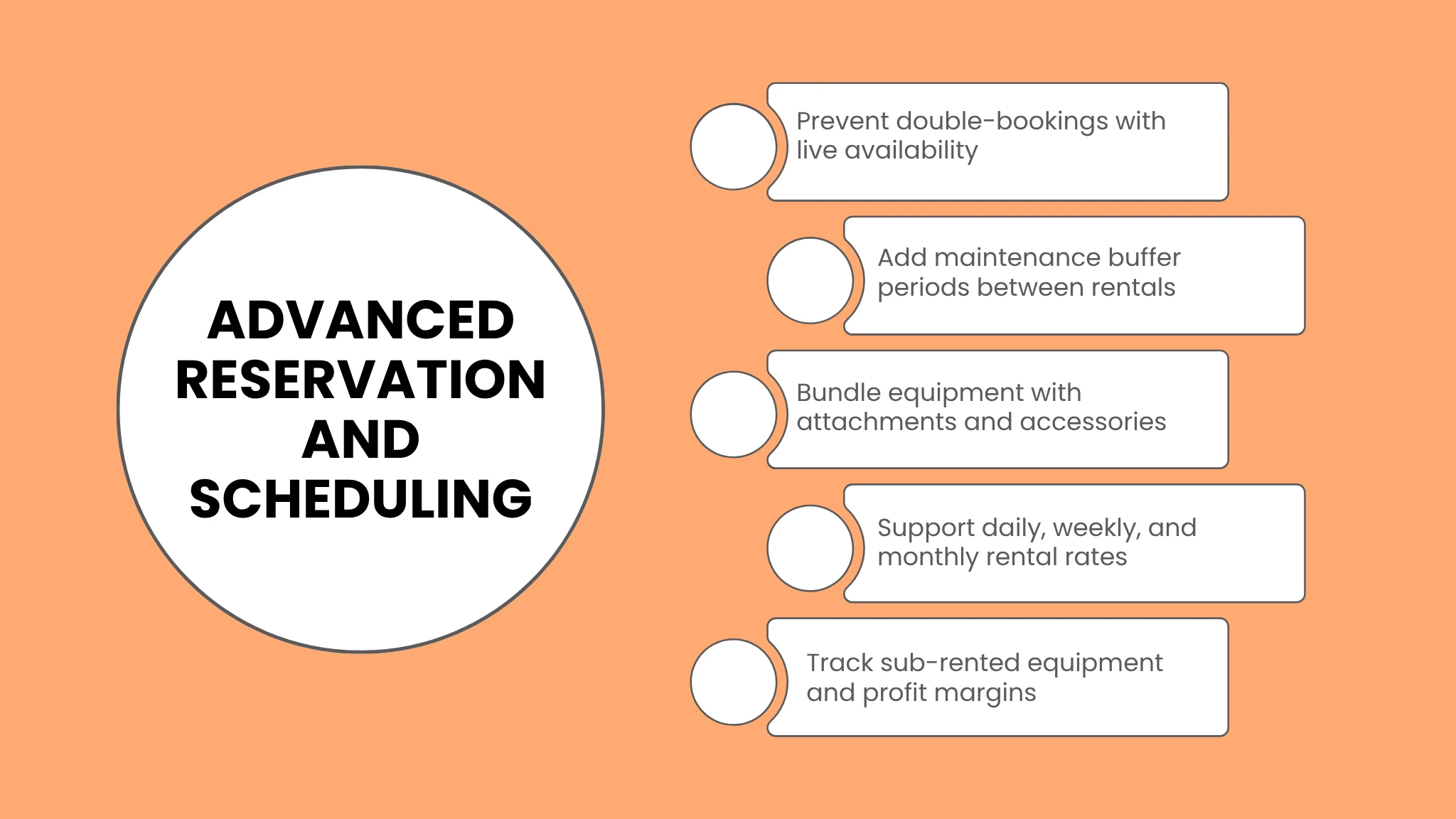
Buffer Times for Maintenance: Smart systems automatically add buffer periods between bookings. This gives your mechanics time to inspect, wash, and service equipment before the next customer pick-up.
Kitting and Bundling: Group complementary items together (such as renting an excavator alongside specific buckets, trailers, and safety gear) so counter staff never forget essential accessories.
Sub-Renting Capabilities: If a preferred customer needs gear you do not currently have in stock, advanced systems allow you to sub-rent equipment from partner suppliers while tracking your profit margin.
2. Digital Contracts and Mobile Inspections
Paper contracts create filing headaches and slow down customer check-outs. Modern cloud software digitizes your entire intake and return process.
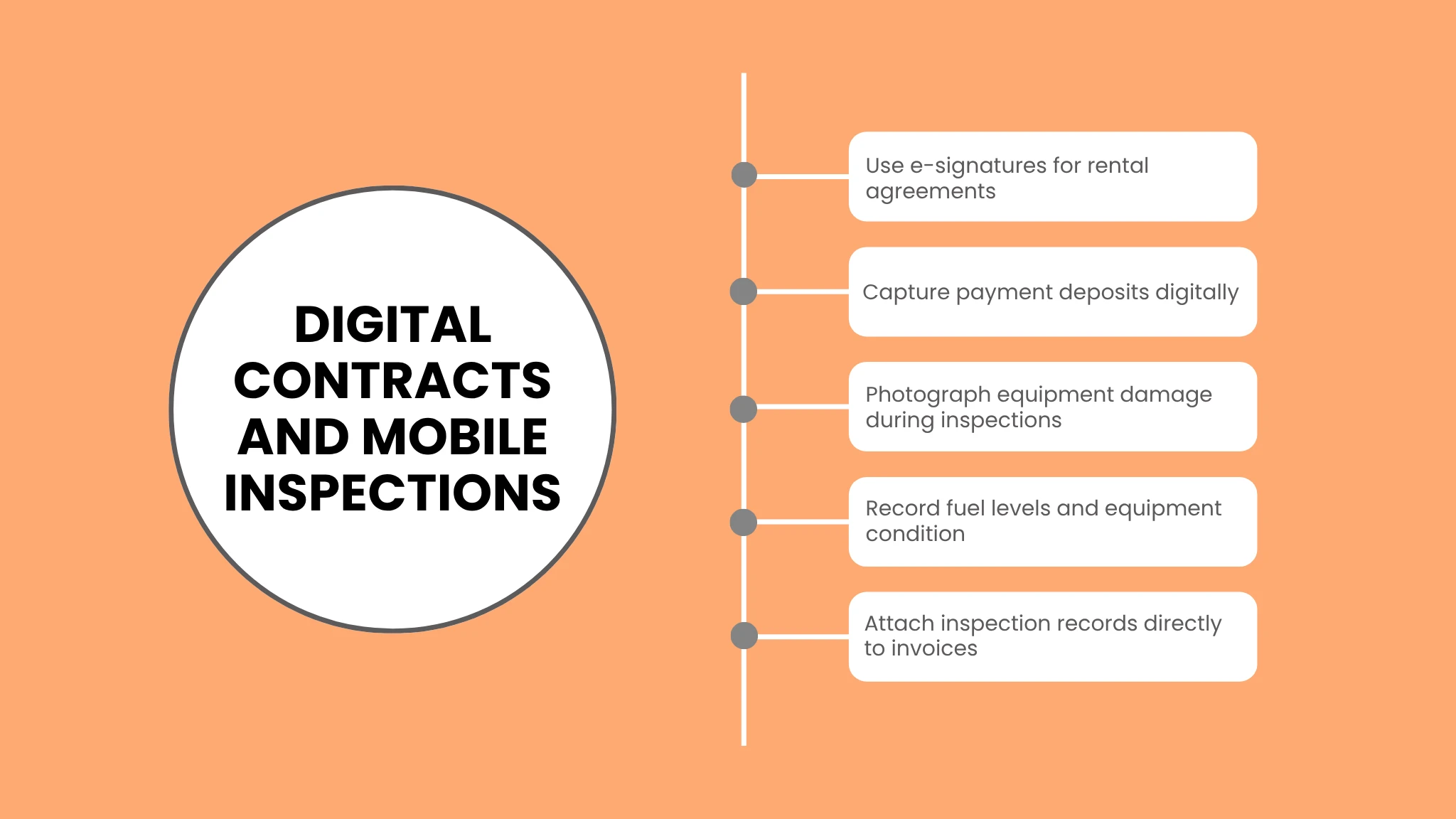
E-Signatures and Payment Pre-Authorizations: Customers can sign agreements and authorize credit card deposits on their mobile phones before arriving at your yard.
Photo Damage Documentation: Yard workers can snap photos of scratches, dents, or fuel levels using a tablet app during check-in. The software attaches these photos directly to the digital invoice, preventing deposit disputes.
Condition Reporting: Generate digital inspection certificates that prove equipment was delivered in fully functional, safe condition.
Financial Impact and ROI of Rental Inventory Software
Upgrading from spreadsheets to specialized equipment rental software requires an upfront financial investment. However, the operational savings and reduced asset loss quickly generate a strong return on investment.
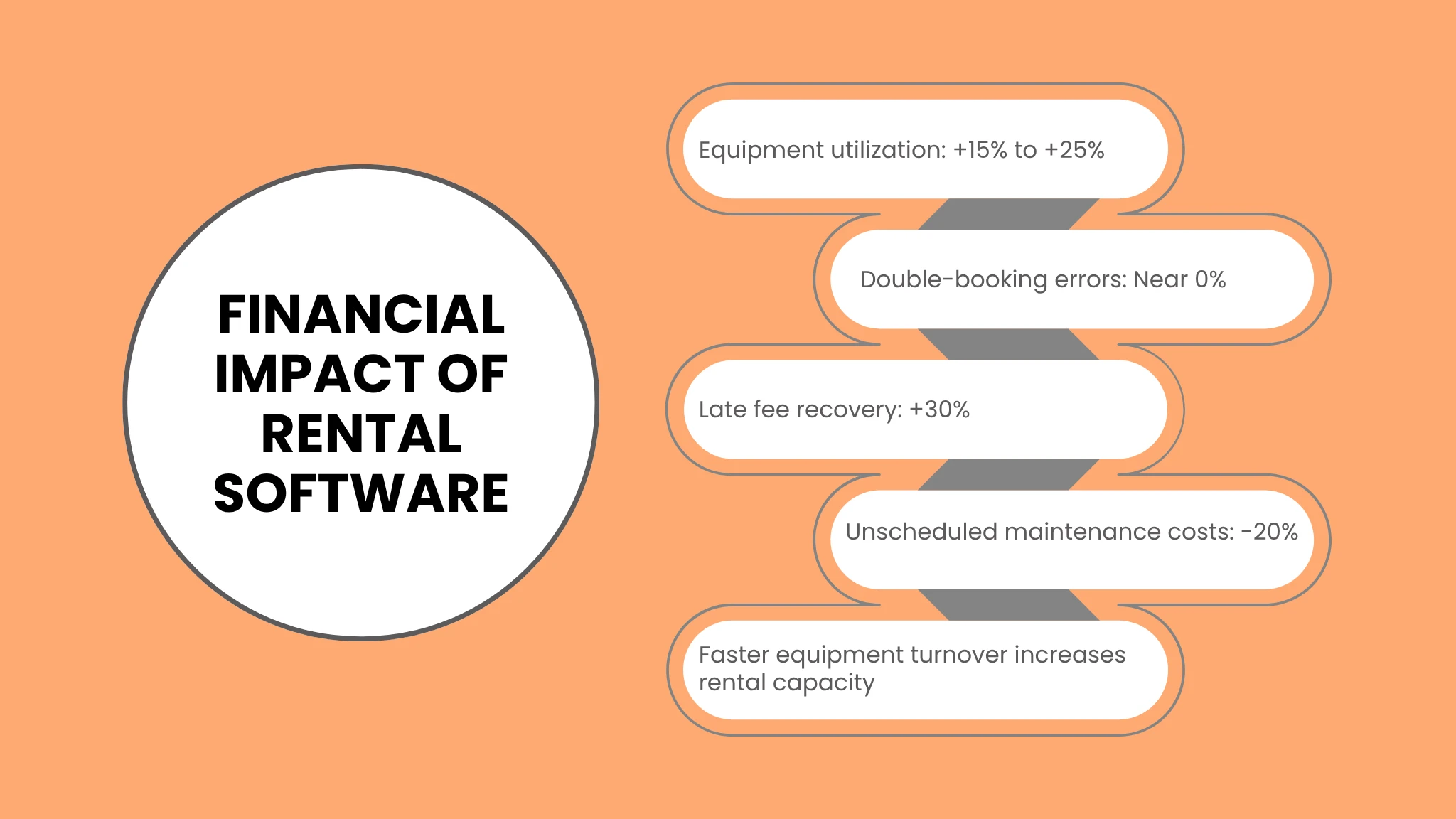
Driving Growth with Asset Data
Reduced Lost Revenue: Automated availability calendars prevent turned-away customers by displaying precise gear availability instantly.
Lower Equipment Downtime: Automated maintenance alerts prevent costly breakdowns by forcing regular service checks during downtime.
Faster Turnover Times: Digital mobile check-ins let yard workers inspect, clean, and re-list gear for rent in minutes.
Implementation and Workflow Setup
Migrating your entire fleet to a new rental inventory software system requires careful planning. Following a structured setup timeline ensures zero disruption to ongoing customer orders.
Step-by-Step System Rollout
Audit and Clean Inventory Data: Import accurate serial numbers, purchasing costs, current hour meter readings, and maintenance records.
Configure Flexible Rental Rates: Set up tier pricing models for daily, weekly, and monthly rentals, along with custom deposit amounts.
Train Yard and Sales Staff: Run practice order scenarios covering quotes, bookings, returns, and damage documentation using mobile devices.
Launch Digital Customer Portal: Connect your rental software to your website to accept direct online booking requests and payment deposits.
Best Practices for Managing Fleet Maintenance
Equipment maintenance directly controls the lifespan and resale value of your fleet assets. Without systematic upkeep, machinery deteriorates rapidly, leading to expensive emergency repairs and unhappy customers.
Preventive vs. Reactive Servicing
Relying on reactive servicing—fixing machines only after they break down on a job site destroys your profit margins. Specialized rental management systems transition your business into a proactive, preventive maintenance model.
Meter Hour Tracking: Modern software logs engine hours automatically through telematics or manual check-in prompts. When a machine hits 100 or 500 operating hours, the system creates a work order automatically.
Part and Inventory Management: Track spare parts stock (such as filters, fluids, tires, and hydraulic hoses) within your software. This ensures your mechanics always have required supplies on hand for routine servicing.
Safety Inspection Logs: Keep digital records of every safety check to remain fully compliant with regional workplace safety regulations and insurance requirements.
Final Thoughts on Scaling Your Rental Business
Scaling a fleet business requires robust operational control, accurate fleet tracking, and automated client workflows. By choosing the right equipment rental business software, you eliminate booking errors, protect machinery value, and build a highly profitable rental operation.
Take action today: evaluate your current fleet bottlenecks, test software demos, and choose a system that grows with your business. To explore more operational guidebooks, technology frameworks, and business management tools, visit reliablestartup.
Frequently Asked Questions
What is equipment rental business software?
Equipment rental business software is a specialized platform that manages fleet inventory, customer reservations, rental contracts, maintenance logs, and recurring billing in one system.
How does rental inventory software prevent double-booking?
Rental inventory software updates fleet availability in real time across online portals and in-store counters. Consequently, when an item is booked, the system automatically removes it from available inventory for those specific dates.
Can equipment rental software track maintenance schedules?
Yes, modern rental management software tracks equipment usage hours, mileage, and service history. Furthermore, it sends automated alerts when gear requires routine maintenance or safety inspections.
Is cloud-based rental software better than desktop software?
Cloud-based software is generally better because it allows field workers, yard staff, and managers to access real-time inventory and customer contracts from mobile devices anywhere.
What is the average cost of an equipment rental management system?
Costs vary based on fleet size and user seats. Basic cloud platforms start around $50 to $150 per month, while enterprise heavy-equipment systems cost several hundred dollars per month.