SaaS Startup Churn Rate: What’s Good and How to Reduce It
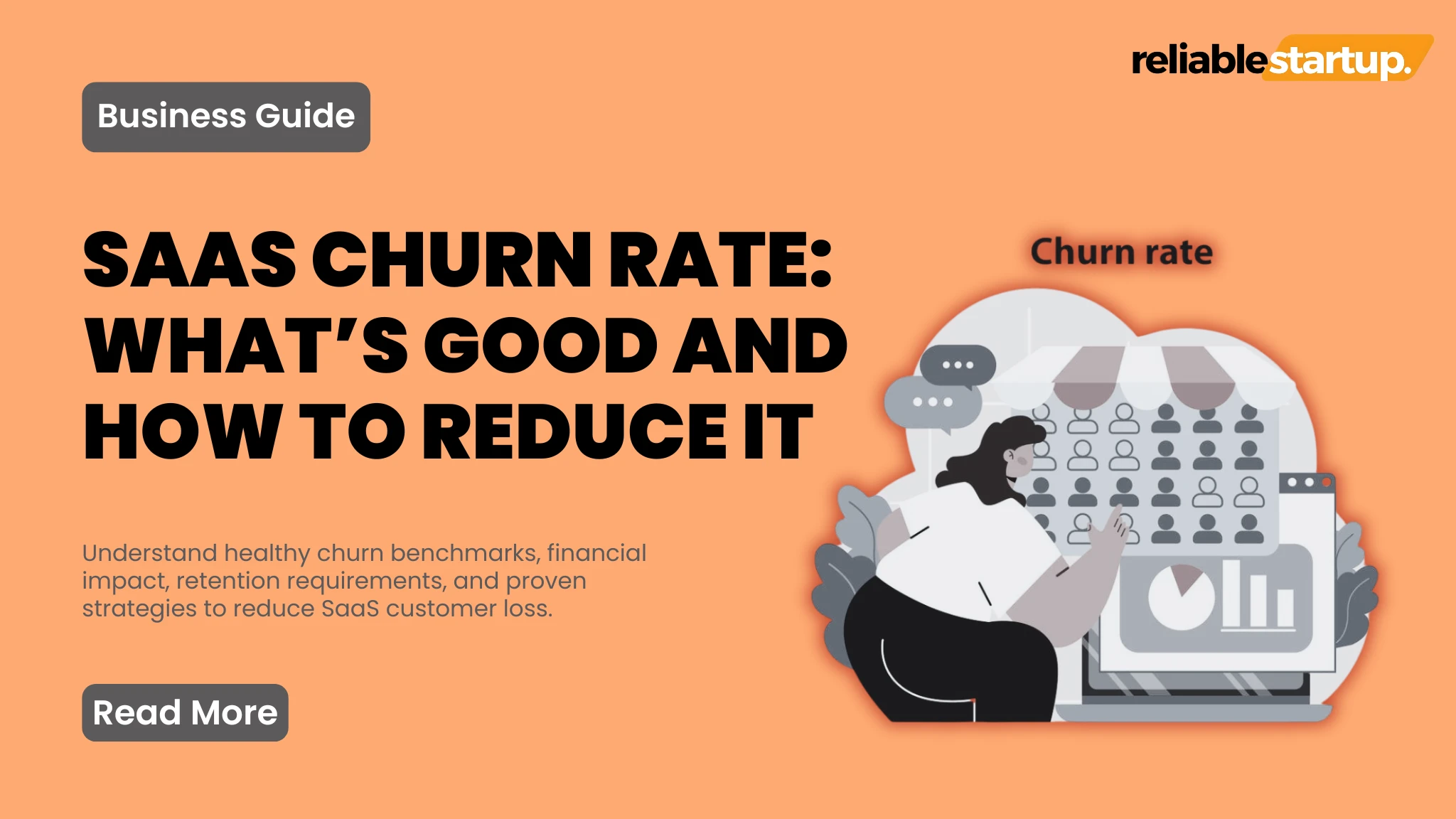
Understanding your saas churn rate is one of the most vital health checks for any software startup. High customer turnover silently drains monthly recurring revenue (MRR) and makes sustainable scaling almost impossible. Even if your sales team brings in dozens of new accounts each week, losing active subscribers behind the scenes creates a leaky bucket problem that wastes capital and damages valuation.
Knowing what counts as a healthy benchmark allows founders to protect revenue, improve retention, and build long-term enterprise value. This practical guide breaks down average benchmarks, financial impacts, key requirements, and seven proven ways on how to reduce saas churn for early and growth-stage companies.
What Is a Good SaaS Churn Rate?
A good saas churn rate depends heavily on your customer segment, contract structure, and average revenue per user (ARPU). What is considered normal for small business software would be an immediate crisis for an enterprise platform.
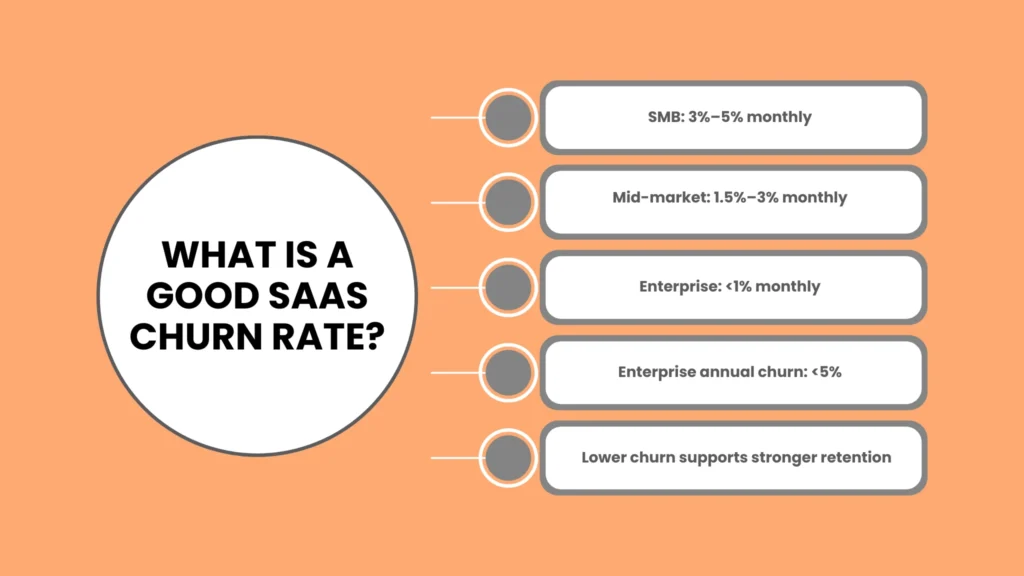
For B2B software companies, industry data shows clear retention benchmarks across target market tiers:
SMB Segment (ACV under $10,000): A monthly churn rate of 3% to 5% is common due to higher small business failure rates and price sensitivity.
Mid-Market Segment (ACV $10,000 to $100,000): A monthly churn rate of 1.5% to 3% represents healthy retention.
Enterprise Segment (ACV over $100,000): Top-performing companies keep monthly churn under 1% (or under 5% annually) due to long contracts and high switching costs.
The True SaaS Churn Rate Cost
Measuring your saas churn rate cost involves much more than counting lost monthly subscriptions. When a customer cancels, you lose their prospective lifetime value (LTV) while still having paid the full customer acquisition cost (CAC) to sign them.
When churn runs high, your team spends most of its budget replacing lost users rather than expanding market share. If your CAC is $500 and a customer cancels after two months on a $50 monthly plan, you suffer a net loss of $400 on that single account.
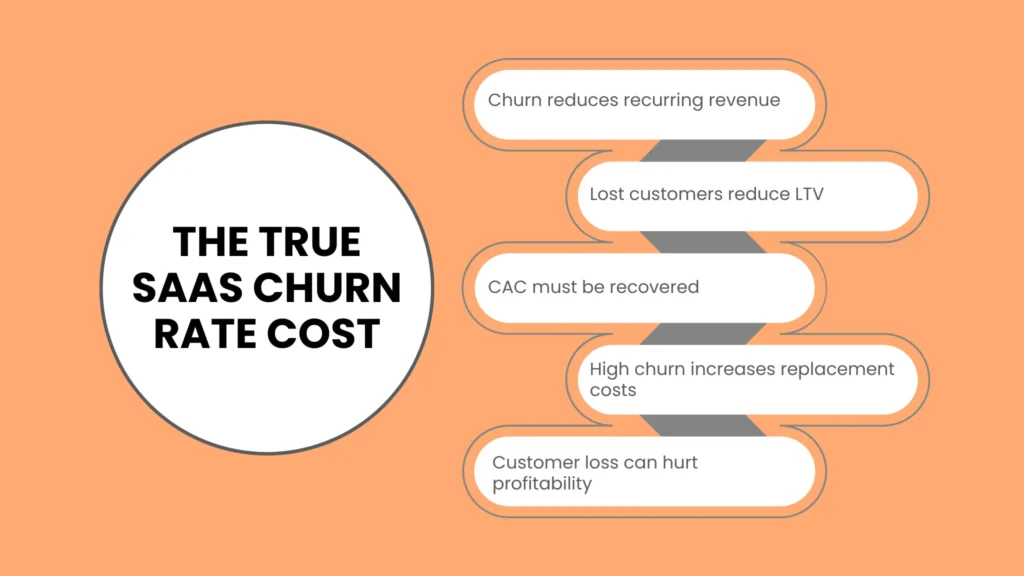
In addition to direct financial losses, high customer turnover increases support workloads, hurts team morale, and generates negative word-of-mouth feedback in competitive software markets.
Monthly vs. Annual Churn Impact Comparison
To understand how monthly cancellations compound over a full year, review this calculated loss model based on an initial cohort of 1,000 active subscribers:
| Monthly Churn Rate | Compounded Annual Churn | Retained Customers (Out of 1,000) | Lost Revenue Impact Level |
| 1.0% per month | 11.4% annually | 886 retained | Low (Best-in-Class) |
| 2.0% per month | 21.5% annually | 785 retained | Moderate (Healthy) |
| 3.5% per month | 35.0% annually | 650 retained | High (Warning Zone) |
| 5.0% per month | 46.0% annually | 540 retained | Severe (Critical Leak) |
Is SaaS Churn Rate Profitable?
Founders asking is saas churn rate profitable are usually trying to figure out how much retention loss a business can absorb while remaining cash-flow positive. Simply put, churn itself is a cost center, but maintaining a controlled rate is essential to protecting your overall profitability.
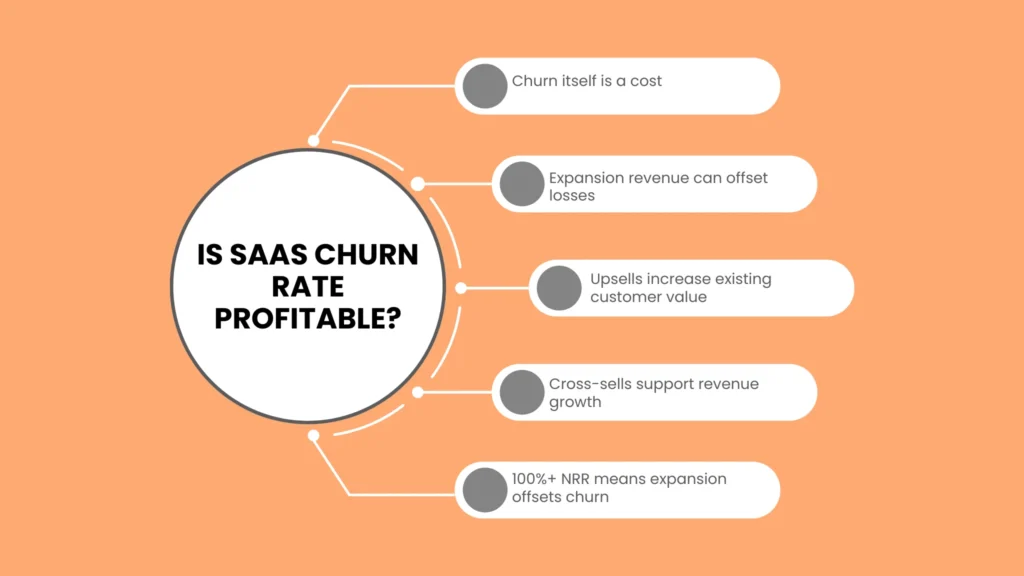
A software business remains profitable as long as your expansion revenue (upsells, seat upgrades, cross-sells) exceeds your gross churn losses. This state is known as negative net revenue churn or high net revenue retention (NRR).
When existing customers spend more over time than canceling accounts take away, your company grows organically even before spending money on new marketing campaigns.
SaaS Churn Rate Profit Margin Impact
Your saas churn rate profit margin connection is direct and immediate. Software companies carry high upfront costs for sales, marketing, and onboarding, but enjoy high gross margins (often 75% to 85%) once a customer is retained.
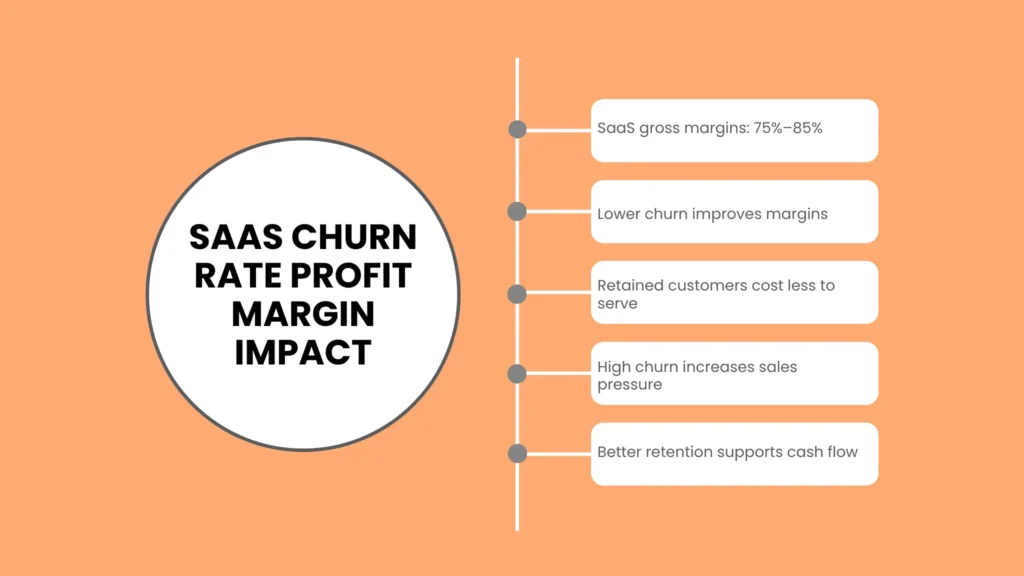
If customer retention is strong, your profit margins expand rapidly over time because serving an existing user costs a fraction of acquiring a new one. Conversely, when monthly churn exceeds 4%, your sales team must work twice as hard just to keep total revenue flat.
A lower retention loss directly improves gross margins and operational cash flow, allowing you to reinvest capital into product development, engineering, and customer support.
Core SaaS Churn Rate Requirements
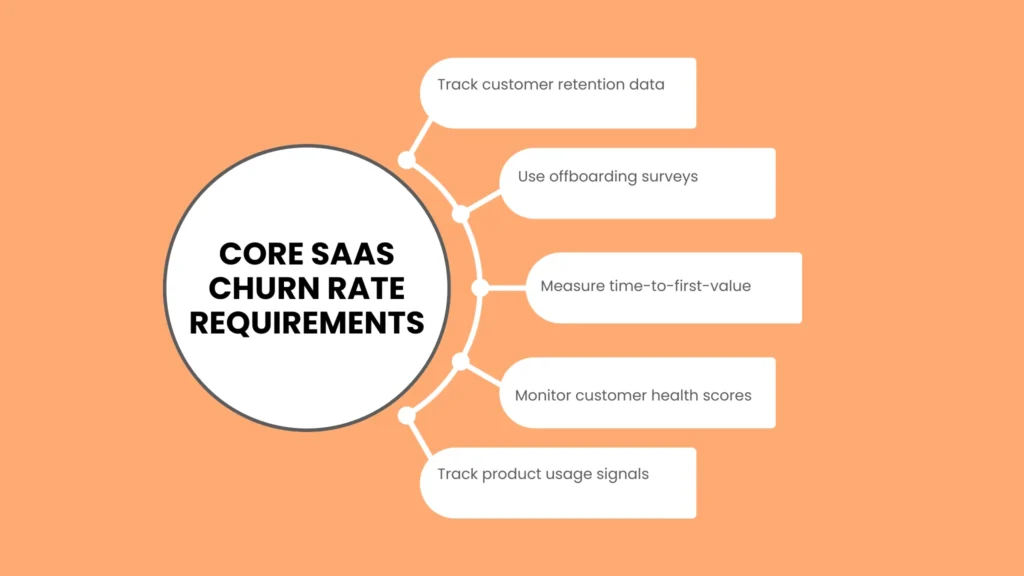
To manage customer retention systematically, your software startup must establish clear operational standards. Meeting these saas churn rate requirements ensures you can track, diagnose, and fix cancellation drivers before they ruin your balance sheet.
1. Accurate Data Tracking Infrastructure
You need automated analytics tools integrated with your billing system to separate voluntary cancellations from involuntary payment failures. Tracking cohort retention curves shows exactly when users drop off during their lifecycle.
2. Standardized Offboarding and Feedback Surveys
Never let a user cancel without asking why. Mandatory one-question offboarding surveys capture actionable feedback regarding missing features, pricing issues, or product bugs.
3. Clear Time-to-First-Value (TTFV) Metrics
Customers churn when they fail to see quick value. Your product team must measure how fast new signups complete core onboarding tasks and reach their first key success milestone.
4. Proactive Health Score Monitoring
Track product usage frequency, feature adoption, and support ticket trends. A sudden drop in daily active usage is the earliest warning sign that a account is preparing to cancel.
7 Actionable Ways on How to Reduce SaaS Churn
Implementing targeted operational changes can quickly improve user retention. Here are seven effective strategies on how to reduce saas churn across your organization:
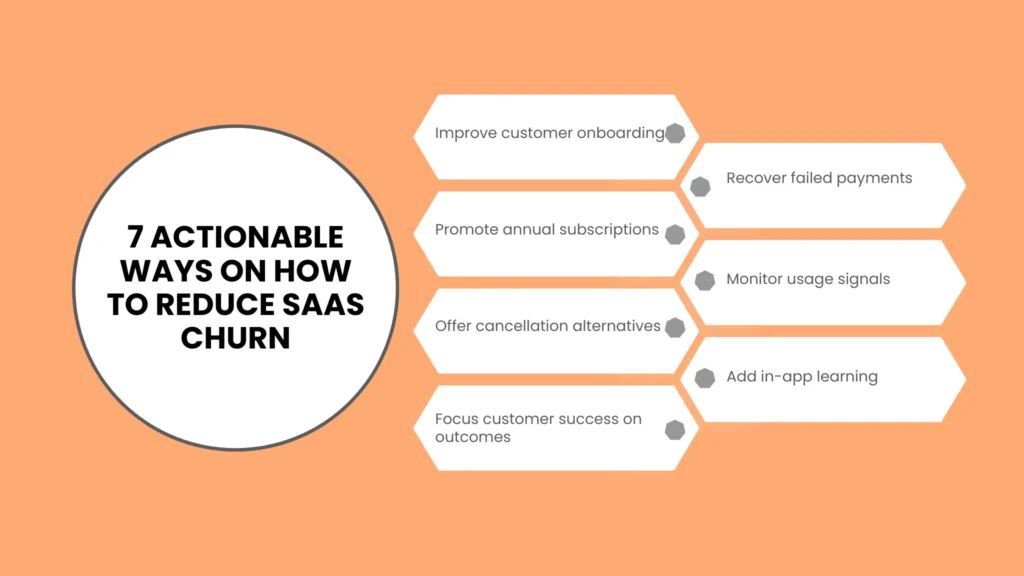
Strategy 1: Optimize the Onboarding Experience
Over half of voluntary customer cancellations occur within the first 90 days. Simplify your sign-up workflow, eliminate unnecessary configuration steps, and guide new users directly toward core features that deliver immediate utility.
Strategy 2: Fix Involuntary Payment Failures
Up to 30% of total churn is involuntary, caused by expired credit cards, bank blocks, or failed billing updates. Set up automated email reminders, in-app billing alerts, and retries using smart payment routing tools to recover lost revenue without human intervention.
Strategy 3: Shift Users Toward Annual Contracts
Customers on annual contracts cancel at significantly lower rates than those on month-to-month plans. Offer a modest discount (such as two months free) to encourage users to lock in annual billing, giving your team a full year to demonstrate ongoing product value.
Strategy 4: Act on Product Usage Signals
Set up automated alerts when account usage drops below normal thresholds over a 14-day window. Assign customer success managers to contact inactive accounts proactively, offering free training or setup assistance before the cancellation request arrives.
Strategy 5: Introduce Flexible Cancellation Holds
When a user clicks cancel, offer choices like pausing the account for 30 to 90 days or downgrading to a lower pricing tier. Giving customers flexible alternatives keeps your brand installed and retains user data until their budget or project needs recover.
Strategy 6: Provide In-App Self-Service Learning
Integrate interactive tooltips, video micro-tutorials, and searchable knowledge bases directly inside your software dashboard. When users can solve minor issues independently, product adoption rises and frustration drops.
Strategy 7: Tie Customer Success to Outcomes
Align your support and success teams around customer goals rather than ticket closing speed. Regular quarterly business reviews (QBRs) with mid-market and enterprise clients ensure your software continues to solve real business challenges as customer needs evolve.
Overcoming Retention Roadblocks
Improving customer retention requires constant refinement and focus. Here is how to handle typical retention challenges:
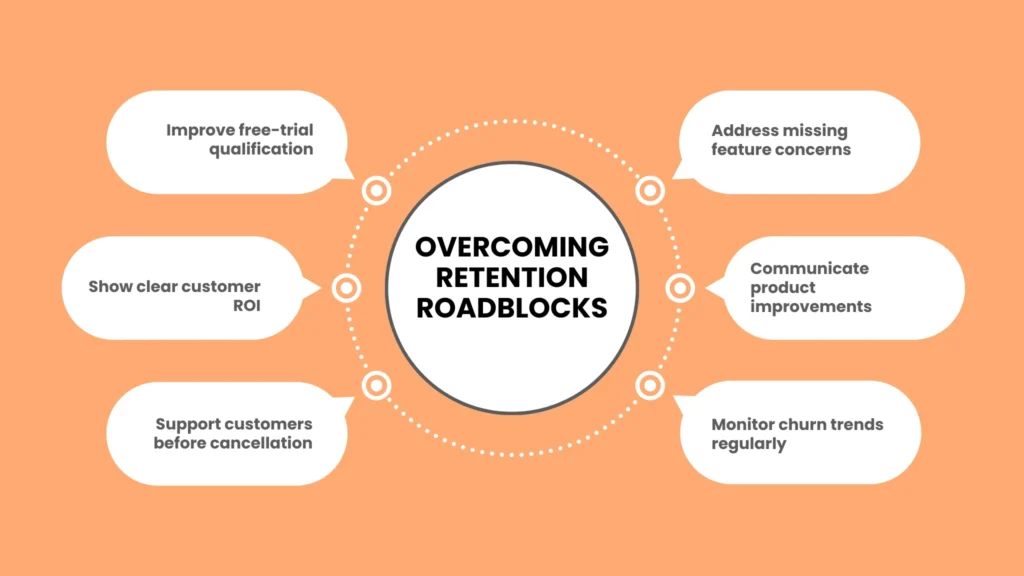
High Churn from Free Trial Conversions: Users upgrade during sales pushes but drop off shortly after. Solution: Tighten qualification criteria during trial signups so you focus resources on ideal customer profiles (ICPs).
Missing Feature Complaints: Customers leave because your product lacks specific functionality. Solution: Maintain a public product roadmap, communicate upcoming releases clearly, and offer workaround integrations where possible.
Price-Sensitive Account Losses: Users cancel due to budget tightening. Solution: Demonstrate clear return on investment (ROI) by sending automated monthly summary emails showing hours saved or tasks completed using your tool.
Final Thoughts: Protecting Your Software Revenue Engine
Building a resilient software business requires balancing user acquisition with long-term retention. Keeping your overall saas churn rate low protects profit margins, lowers customer acquisition pressure, and gives your sales team a solid foundation for compounding revenue growth.
Focus on speeding up initial time-to-value, fixing payment recovery workflows, and monitoring user activity signals continuously. Small, consistent improvements in customer retention compound over time into massive gains for your company’s valuation and runway. For additional SaaS growth strategies, financial projection calculators, and startup execution guides, check out the resources available at reliablestartup.com.
Frequently Asked Questions
What is the difference between logo churn and revenue churn?
Logo churn measures the percentage of individual customer accounts lost during a specific period. Revenue churn measures the total dollar value of lost subscription revenue. Revenue churn accounts for account downgrades and expansion upsells from remaining clients.
Why is involuntary churn dangerous for SaaS startups?
Involuntary churn occurs when active, happy customers cancel unintentionally due to billing errors or expired credit cards. It drains revenue silently without indicating any flaw in your product value or customer satisfaction levels.
How often should a SaaS startup calculate its churn metrics?
Early-stage startups should calculate monthly churn rates to spot immediate retention trends, while reviewing quarterly and annual retention curves to evaluate long-term unit economics and customer lifetime value.
What is considered a good net revenue retention (NRR) score?
For B2B software companies, an NRR score above 100% means expansion revenue offsets gross cancellations. Best-in-class enterprise SaaS companies achieve NRR scores between 110% and 130%.