How Long to Get Startup Funding: The Complete Timeline Guide
Securing capital is one of the most critical milestones for any growing company. Every founder wants to know: how long to get startup funding from start to finish? On average, the fundraising process takes anywhere from 3 to 6 months for early-stage rounds, while later-stage venture capital can take 6 to 9 months or longer.
The exact duration depends heavily on your startup stage, your industry, the type of capital you seek, and how prepared you are before entering the market.
Understanding this journey helps you manage cash runway, set realistic growth expectations, and avoid running out of capital before money hits your bank account. In this guide, we break down every stage, cost, and requirement involved in raising capital for your business.
Understanding the Typical Startup Funding Timeline
Raising capital is rarely an overnight event. It requires structured preparation, active investor outreach, extensive due diligence, and legal closing procedures.
To give you a realistic picture, here is a detailed breakdown of the average time required across different financing stages based on available market data.
1. Pre-Seed Stage (1 to 3 Months)
Pre-seed capital usually comes from founders, personal networks, friends and family, or early angel investors. Because these decisions rely heavily on personal trust rather than audited financial statements, approvals happen relatively fast.
Focus: Concept validation, minimal viable product (MVP) development, and early team building.
Average Check Size: $10,000 to $500,000.
Timeline Drivers: Quick term sheet reviews and simple agreement for future equity (SAFE) structures speed up this round.
2. Seed Stage (3 to 6 Months)
Seed funding brings in professional angel syndicates, micro-VCs, and startup accelerators. At this point, investors expect clear proof of customer interest, a working prototype, and early market traction.
Focus: Product-market fit, customer acquisition strategy, and core team expansion.
Average Check Size: $500,000 to $3 million.
Timeline Drivers: Pitching multiple angel groups and completing basic financial background checks add time to this stage.
3. Series A Stage (4 to 6 Months)
Series A is the first major institutional venture capital round. Institutional investors perform rigorous operational, legal, and technical due diligence before transferring capital.
Focus: Scaling customer acquisition, expanding product features, and building market presence.
Average Check Size: $3 million to $15 million.
Timeline Drivers: Extensive partner meetings, term sheet negotiations, and formal legal drafting extend the approval schedule.
4. Series B and Beyond (6 to 9+ Months)
Growth-stage rounds demand extensive operational history and verified financial records. Late-stage venture firms, private equity funds, and corporate investors conduct deep audits before writing checks.
Focus: Market dominance, international expansion, strategic acquisitions, or preparing for an exit.
Average Check Size: $15 million to $50+ million.
Timeline Drivers: Complex investor syndicates, board approvals, and detailed regulatory compliance take significant time.
Startup Funding Timeline Summary Table
The table below provides an estimated overview of timeframes, primary investor types, and primary goals for each major fundraising round.
| Funding Stage | Average Timeframe | Primary Investor Types | Key Milestone / Goal |
| Pre-Seed | 1 to 3 Months | Founders, Friends, Angels | Idea validation and MVP |
| Seed | 3 to 6 Months | Angel Syndicates, Micro-VCs | Product-Market Fit & Early Revenue |
| Series A | 4 to 6 Months | Venture Capital Firms | Proven Business Model & Rapid Growth |
| Series B+ | 6 to 9+ Months | Institutional VCs, Growth Funds | Market Expansion & Profitability |
| Bank Loans / SBA | 2 to 4 Months | Traditional Banks, Credit Unions | Working Capital & Equipment Purchase |
Core Stages of the Fundraising Process
To understand why asking how long to get startup funding yields a range rather than a single fixed date, it helps to break down the actual steps every founder must navigate.
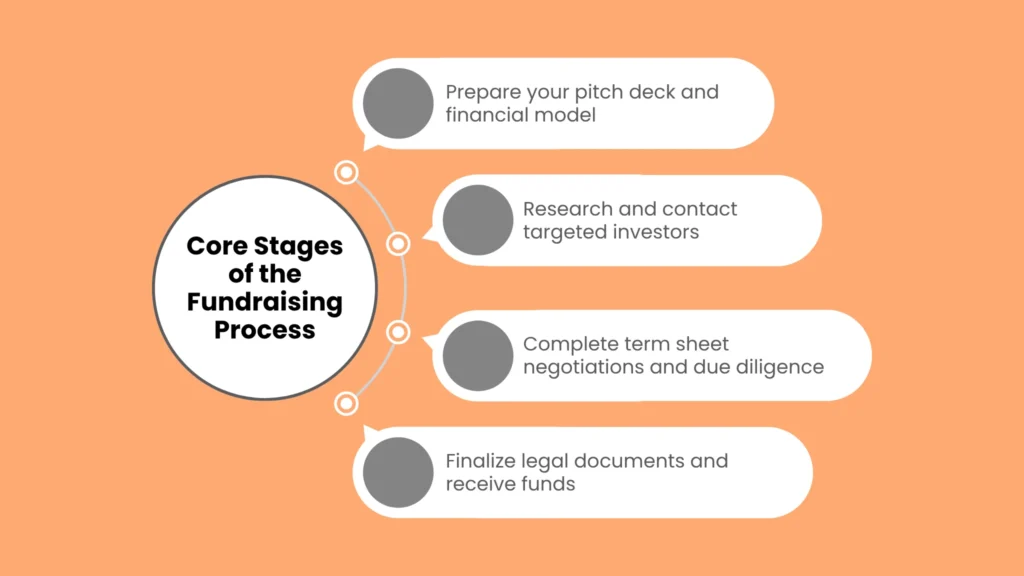
Phase 1: Preparation (2 to 4 Weeks)
Before sending a single pitch email, you must prepare your documentation. Rushing this stage often leads to long delays later on. If you need help structuring these slides properly, our step-by-step guide on how to write a startup pitch deck walks through exactly what investors expect to see.
Crafting an engaging pitch deck (10 to 15 slides).
Building a 3-year to 5-year financial model with clear growth assumptions.
Organizing a clean virtual data room containing legal documents, cap tables, and customer contracts.
Phase 2: Investor Outreach and Pitching (4 to 8 Weeks)
Once your materials are ready, the active fundraising push begins. This stage requires continuous follow-up and multiple meetings. First-time founders often struggle most at this stage — our detailed guide on how to pitch VC investors as a first-time startup founder covers the common mistakes to avoid
Researching and curating a targeted list of 50 to 100 relevant investors.
Securing warm introductions through mutual network connections.
Conducting initial partner calls and presenting pitch presentations.
Phase 3: Term Sheet and Due Diligence (3 to 6 Weeks)
Receiving a term sheet is a major milestone, but it does not mean the money is in the bank yet.
Negotiating valuation, liquidation preferences, and board seat allocations.
Submitting financial, technical, and legal records for investor review.
Background checks on founding team members.
Phase 4: Legal Documentation and Wire Transfer (2 to 4 Weeks)
The final stage involves legal counsel drafting final binding contracts.
Finalizing definitive legal documents like voting agreements and stock purchase contracts.
Collecting signatures from all existing and new investors.
Bank account verification and final capital transfer.
Financial Requirements, Costs, and Profit Margins
Founders frequently evaluate how financial commitments and operational parameters impact capital raising. Understanding the long to get startup funding requirements helps ensure your business remains compliant and attractive to potential backers.
What Are the Essential Long to Get Startup Funding Requirements?
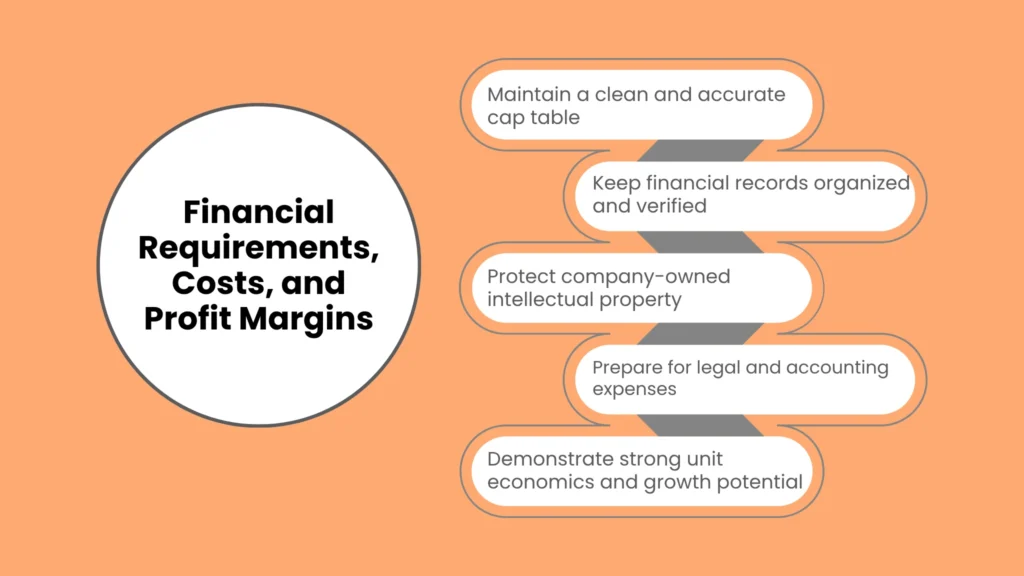
Investors expect founders to meet strict baseline standards before committing capital. Meeting these requirements early shortens your approval timeline significantly.
Clean Cap Table: An organized capital structure showing clear ownership percentages without legal disputes.
Verified Financial Records: Accurately maintained profit and loss statements, balance sheets, and tax filings.
Intellectual Property Protection: Clear ownership patents, trademarks, or copyright assignments assigned directly to the corporate entity.
Corporate Governance: Proper incorporation documents (such as Delaware C-Corp status for venture-backed entities) and board minutes.
Analyzing the Long to Get Startup Funding Cost
Raising money is not free. Many first-time entrepreneurs underestimate the long to get startup funding cost associated with securing investment capital.
Legal Fees: Corporate lawyers charge between $5,000 and $30,000 to draft and finalize investment rounds.
Financial Audits: Accounting firms may charge $3,000 to $15,000 to verify financial statements for institutional checks.
Platform and Software Fees: Data room software, cap table management tools, and investor research databases add to overhead.
Opportunity Cost: Founder time spent fundraising is time away from product development and active sales.
Based on available industry data, total transactional costs typically average 2% to 5% of the total round size.
Evaluating Long to Get Startup Funding Profit Margin Metrics
Investors inspect your operational efficiency closely during due diligence. A healthy long to get startup funding profit margin demonstrates long-term viability and growth potential.
Gross Margin Expectations: Software startups are often expected to demonstrate gross margins above 70% to 80%, whereas hardware or e-commerce ventures typically operate around 30% to 50%.
Contribution Margin: Investors want to see that each customer generates positive unit economics after covering direct acquisition and fulfillment costs.
Path to Net Profitability: While early-stage companies often burn cash to grow quickly, having a clear timeline to net profitability reduces investor risk perception and accelerates term sheet approvals.
Is Long to Get Startup Funding Profitable for Founders?
A common question among early entrepreneurs is: is long to get startup funding profitable over the long run compared to bootstrapping?
The answer depends on your market dynamics. Raising capital dilutes founder ownership, but it provides the financial fuel required to capture market share rapidly. If fast execution allows you to dominate a multi-billion dollar market, taking investment capital creates significantly higher net value than holding 100% of a slow-growing business. However, if your business model does not require heavy upfront research or rapid scaling, bootstrapping may keep overall profits higher for the original owners.
Factors That Delay Your Funding Approval
Several common bottlenecks can slow down your capital approval timeline by weeks or even months. Recognizing these friction points allows you to proactively solve them.
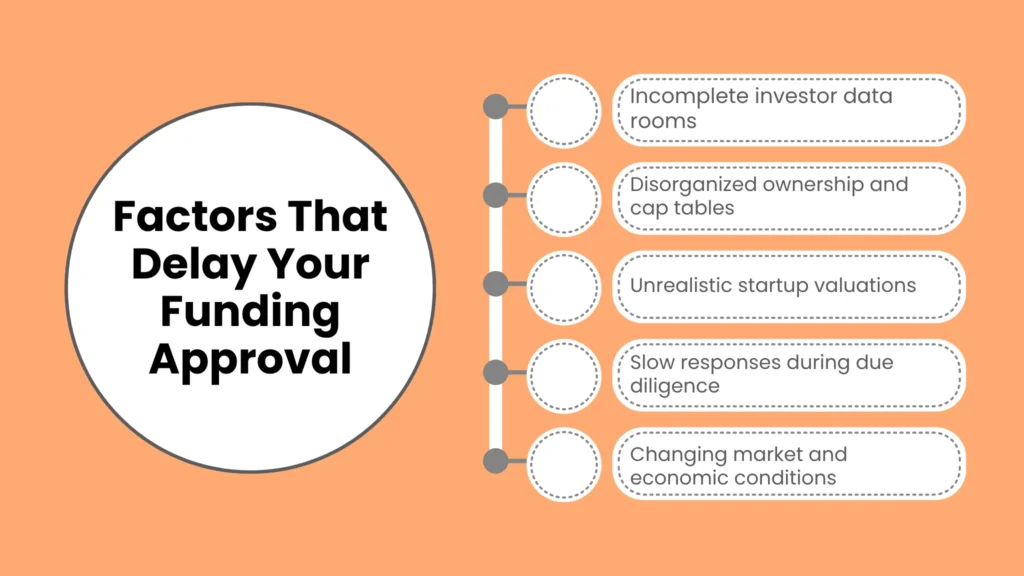
1. Incomplete Data Rooms
Investors move quickly when information is readily available. If an investor asks for customer churn metrics or legal contracts and has to wait two weeks for a response, momentum stalls.
2. Disorganized Cap Tables
Unclear equity splits, unrecorded advisor shares, or lingering promises to former co-founders raise red flags during legal due diligence. Clean up your cap table before reaching out to investors.
3. Valuation Mismatches
Setting unrealistic valuation expectations delays negotiations. Unrealistic pricing often leads to prolonged back-and-forth discussions or forced down-rounds that reset the entire timeline.
4. Market and Economic Conditions
Broader economic shifts, interest rate changes, and sector-specific downturns cause investors to slow their investment pace and perform stricter due diligence.
Actionable Tips to Accelerate Your Funding Approval
If you want to secure investment faster, implement these proven strategies before launching your round:
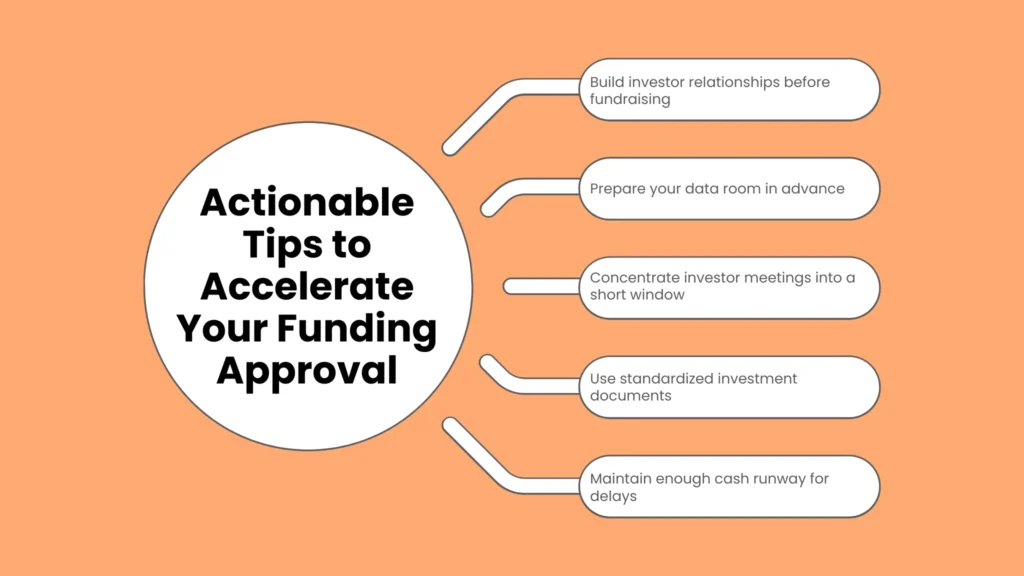
Build Investor Relationships Early: Do not wait until you need money to contact investors. Share quarterly update emails with potential backers 6 to 12 months before pitching them formally.
Pre-Assemble Your Data Room: Have your corporate incorporation documents, customer references, financial statements, and cap table organized in a secure cloud folder.
Create Competition and Urgency: Schedule pitch meetings within a concentrated 2-week window. Simultaneous investor interest creates natural urgency and speeds up term sheet offers.
Use Standard Legal Documents: Utilizing standardized investment agreements like Y Combinator SAFE notes or NVCA templates minimizes customized legal drafting delays. Utilizing standardized investment agreements like Y Combinator SAFE notes or NVCA templates minimizes customized legal drafting delays.
Conclusion
Determining how long to get startup funding depends on your funding stage, investor type, and level of preparation. While pre-seed rounds can close in as little as a few weeks, seed and institutional Series A rounds typically require 3 to 6 months of focused effort.
By organizing your data room in advance, understanding your financial metrics, and setting realistic expectations, you can navigate the process efficiently and secure the capital your business needs to thrive.
For more expert guides on startup operations, business formation, legal frameworks, and financial optimization, explore our comprehensive resources at reliablestartup.
Frequently Asked Questions
How long does it usually take to receive startup money after signing a term sheet?
After signing a term sheet, it generally takes 2 to 4 weeks to complete final legal documentation, sign binding agreements, and receive the wired funds in your corporate bank account.
What is the fastest way to get startup funding approved?
The fastest sources of startup capital are angel investors using standardized SAFE agreements, business accelerators, and revenue-based financing platforms. These channels can approve and transfer funds in as little as 2 to 4 weeks.
Why do venture capital funds take so long to approve investments?
Venture capital firms take longer because they must evaluate complex market risks, conduct background checks, present deals to an investment committee, negotiate terms, and verify financial and legal compliance.
How much runway should a startup have before starting to fundraise?
Founders should ideally start fundraising when they have 6 to 9 months of cash runway remaining. This ensures you do not run out of funds during unexpected delays in the negotiation process.