Buying an Existing Business vs Starting: Which Path Is Right for You?
Dreaming of running your own company is an exciting milestone, but deciding how to get there can feel overwhelming. One of the biggest decisions entrepreneurs face is buying an existing business vs starting a new one from the ground up. Should you build everything yourself, or take over something already up and running?
When weighing buying an existing business vs starting a brand-new one, the right choice depends on your risk tolerance, budget, and personal goals. Buying gives you immediate operations and existing customers, while starting from scratch offers complete creative freedom and lower upfront costs. Both paths have distinct advantages depending on your skills.
When comparing buying an existing business vs starting, the choice comes down to cash flow versus creative control. Buying an existing business gives you immediate revenue, trained staff, and established customers, though it requires higher upfront capital. Starting fresh costs less initially and offers total freedom, but takes longer to become profitable. Understanding business valuation basics helps you evaluate existing companies fairly.
Key Takeaways
Immediate cash flow vs starting completely from scratch.
Higher upfront costs versus gradual initial investment.
Existing operational history simplifies business valuation basics.
Seller financing options can make purchasing far more accessible.
Brand awareness available on day one versus building trust slowly.
Why the Choice Matters for New Entrepreneurs?
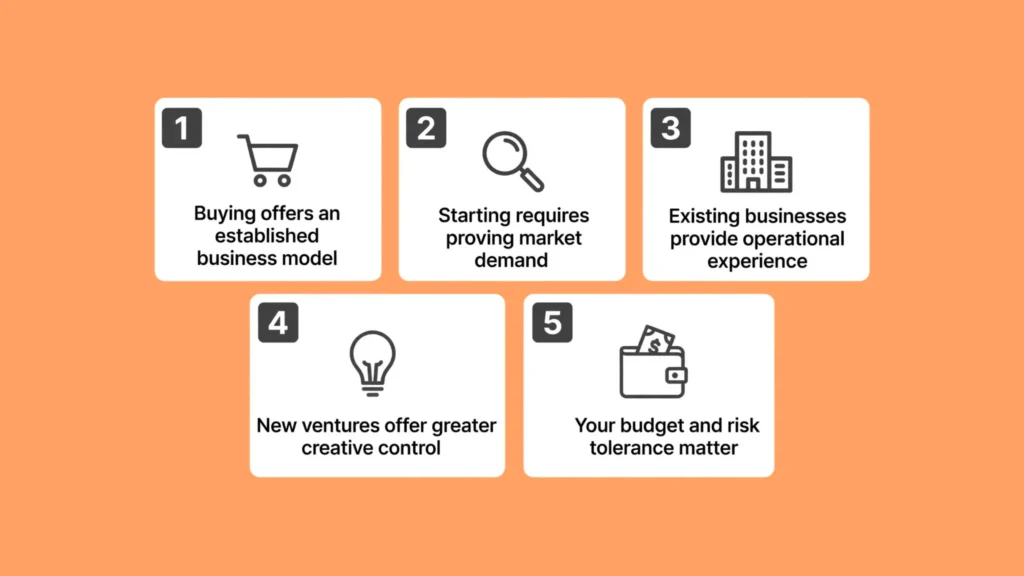
Stepping into the business world is a massive step, and your entry strategy sets the tone for your entire journey. Every entrepreneur brings a unique mix of capital, skills, and patience to the table.
Risk Profiles Compared
Building a brand from zero means testing unknown waters without a safety net. You have to prove that customers actually want what you are selling.
On the flip side, when you buy a small business, you acquire a concept that has already been validated in the market. The operational risks are lower because the customer base already exists, but financial risk can be higher due to initial purchase debt.
Speed to Market and Cash Flow
Starting a new venture requires months or even years of prep work before you see your first dollar of profit. You have to build a brand, find suppliers, and hire a team.
Purchasing an established entity means you take over revenue on day one. You skip the grueling setup phase and jump straight into managing operations and scaling existing cash flow.
The Pros and Cons of Buying an Existing Business
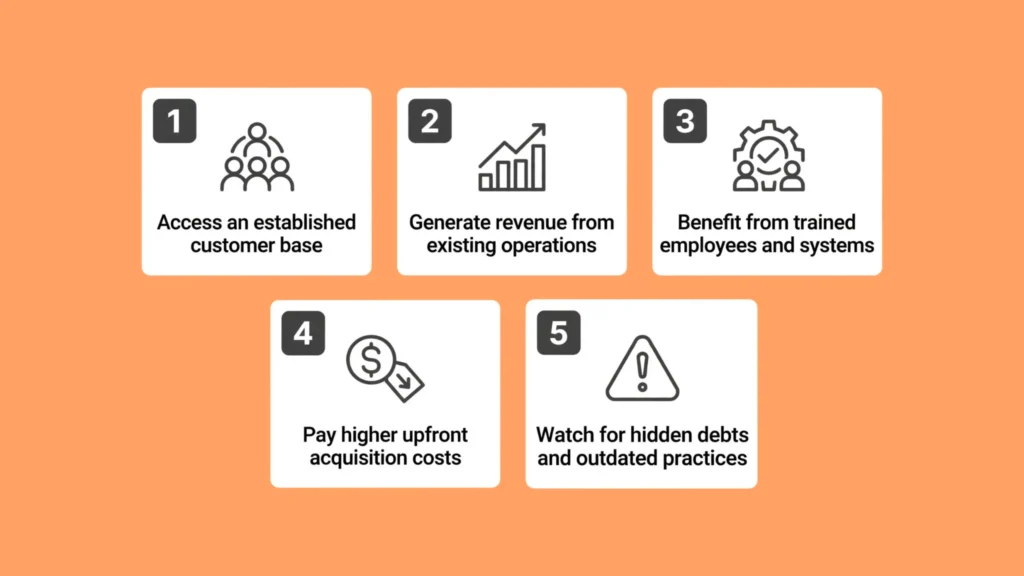
Taking over an active enterprise feels like buying a house that is already built and furnished. You can move right in, but you are also living with someone else’s past choices.
| Feature | Buying an Existing Business | Starting From Scratch |
| Initial Upfront Cost | Higher purchase price required | Lower initial capital needed |
| Immediate Cash Flow | Yes, existing revenue streams | No, takes time to generate sales |
| Brand Recognition | Established customer base | Must build trust from zero |
| Operational Effort | Refining existing systems | Creating all processes from scratch |
| Financing Options | Seller financing & SBA loans | Bootstrapping & personal savings |
The Upside of Established Operations
When you purchase an active operation, you get an intact foundation right away. The building is leased, the software is set up, and the employees already know their daily tasks.
Most importantly, you gain an active customer list that trusts the brand. This existing momentum provides immediate cash flow, which helps cover operating expenses and debt payments from your first month.
The Hidden Downsides to Watch For
Inheriting an ongoing operation also means inheriting its legacy issues and outdated habits. You might face bad company culture, unhappy staff, or hidden debts that were not clear early on.
Changing bad habits inside an old company is often harder than teaching new habits from scratch. You must inspect past records thoroughly so you do not buy hidden problems.
The Pros and Cons of Starting a Business from Scratch
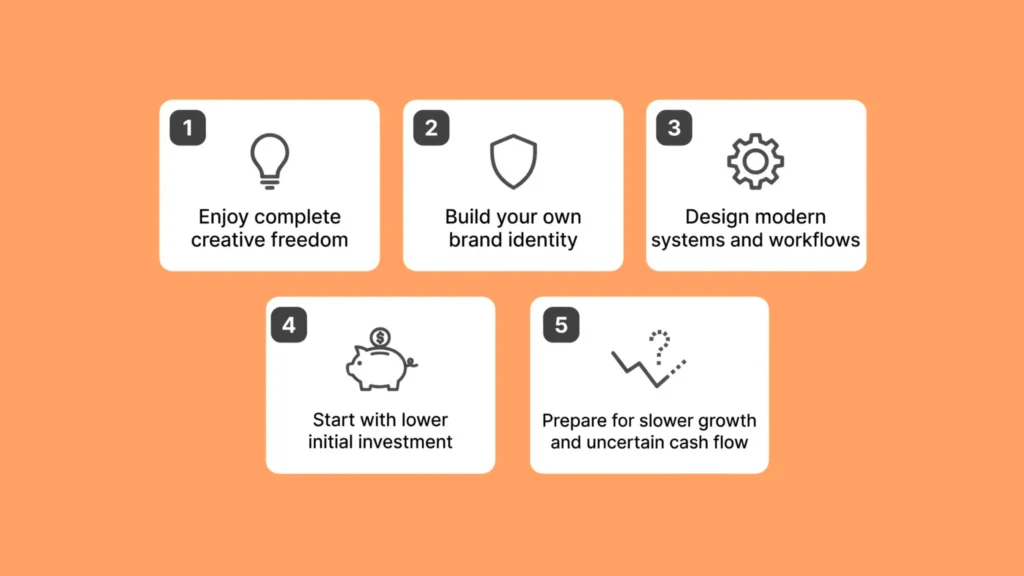
Creating a company from a blank slate is the ultimate entrepreneurial dream for many visionaries. It gives you complete control over every single detail of your organization.
A well-structured plan can help turn your business vision into an actionable strategy, and learning how to write a business plan makes it easier to organize your goals, finances, and operational priorities.
Ultimate Creative Freedom
Starting fresh lets you shape the culture, brand identity, and product lines without any legacy baggage holding you back. You do not have to fix someone else’s past mistakes.
You can adopt modern tech and flexible workflows right away. This freedom allows you to build a lean, modern company tailored exactly to your personal vision.
The Reality of Slow Initial Growth
The early days of a launch can feel lonely, quiet, and financially stressful. You will spend significant time and capital educating the market about your offer before making steady sales.
In most cases, cash flow remains negative during the initial months or years. You must have sufficient runway to survive until your brand reaches its break-even point.
Understanding Business Valuation Basics
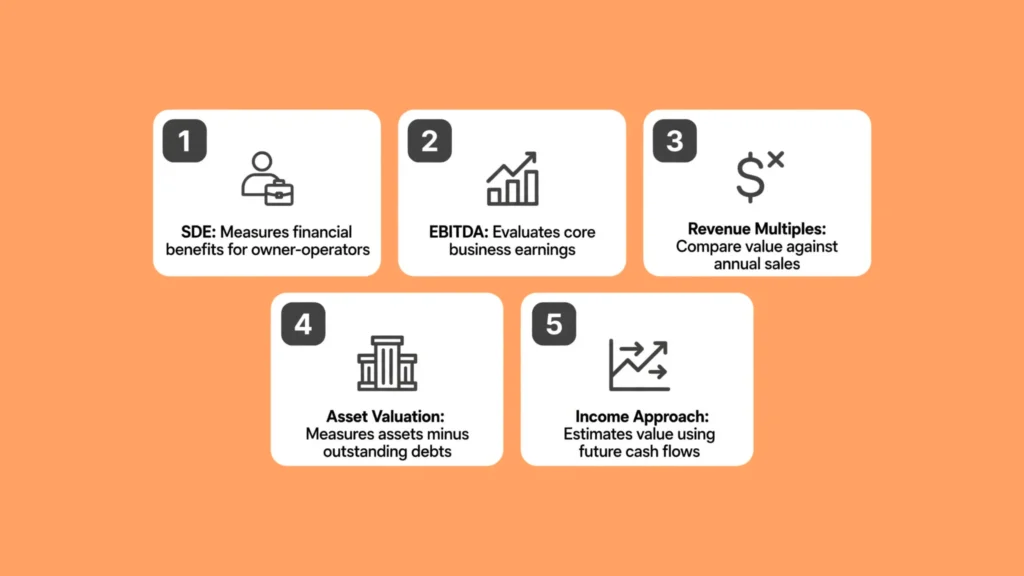
Before making an offer on a company, you need to understand what it is actually worth. Getting a firm grip on business valuation basics protects you from overpaying for a weak asset.
Key Financial Metrics to Evaluate
Valuation is not just a random guess; it relies on solid financial metrics and reliable accounting practices. Buyers typically look at Sellers Discretionary Earnings (SDE) or EBITDA to measure true profitability.
Sellers Discretionary Earnings (SDE): Measures total financial benefit generated for a single owner-operator.
EBITDA: Used for larger operations to evaluate core earnings before interest, taxes, and depreciation.
Revenue Multiples: Industry benchmarks that scale price based on annual gross sales figures.
Asset Valuation: Calculating the net worth of physical equipment, inventory, and real estate holdings.
Common Valuation Approaches
Appraisers generally rely on three main methods to determine a fair market price for an ongoing enterprise.
The income approach estimates future cash flows and discounts them back to present value. The market approach compares the company to similar businesses recently sold in the area. Finally, the asset-based approach simply totals up physical and intangible items minus outstanding debts.
Financing Your Decision: Cash, Loans, and Seller Financing
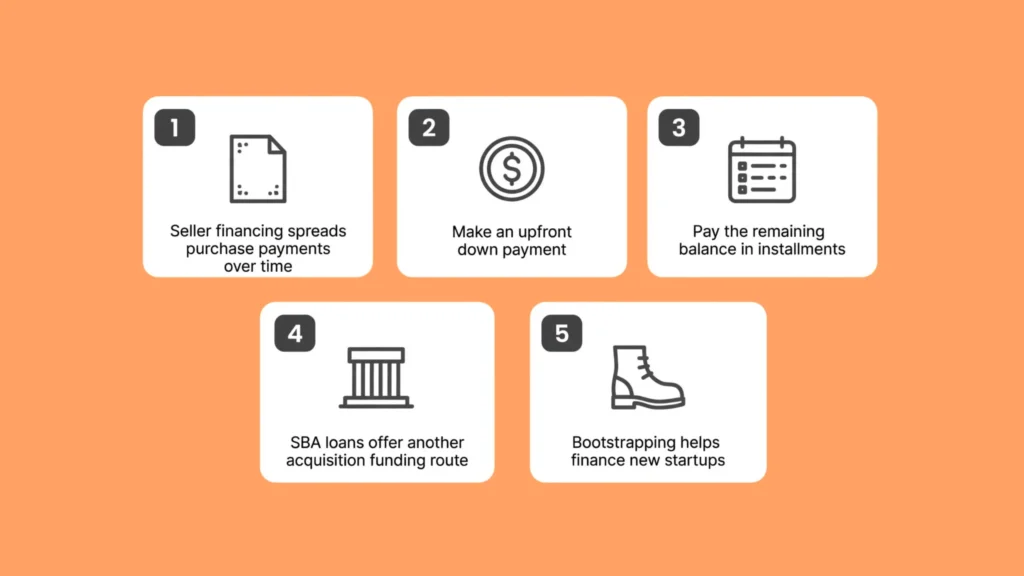
Finding the funds for your venture is often the biggest hurdle you will face. How you structure your funding impacts your financial stability for years down the road. For entrepreneurs exploring external financing, understanding the startup funding process can help them prepare realistic financial expectations and identify suitable funding opportunities.
How Seller Financing Works
One of the best advantages when you buy a small business is the availability of seller financing. In this setup, the previous owner acts as the bank for a portion of the purchase price.
You pay a down payment upfront and cover the remaining balance through monthly payments over time. This proves the seller believes in the company’s future, as their payoff depends directly on your continued success.
Alternative Funding Routes
If seller financing is not an option, traditional SBA loans provide long payback terms and competitive interest rates for qualified buyers. Banks like to see historical financial statements, which makes existing acquisitions easier to fund than raw startups.
If you choose to start from scratch, bootstrapping with personal savings or small credit lines is generally the standard path. Resources like reliablestartup.com can guide you toward smart funding strategies suited for early-stage founders.
Key Questions to Ask Before Making Your Decision
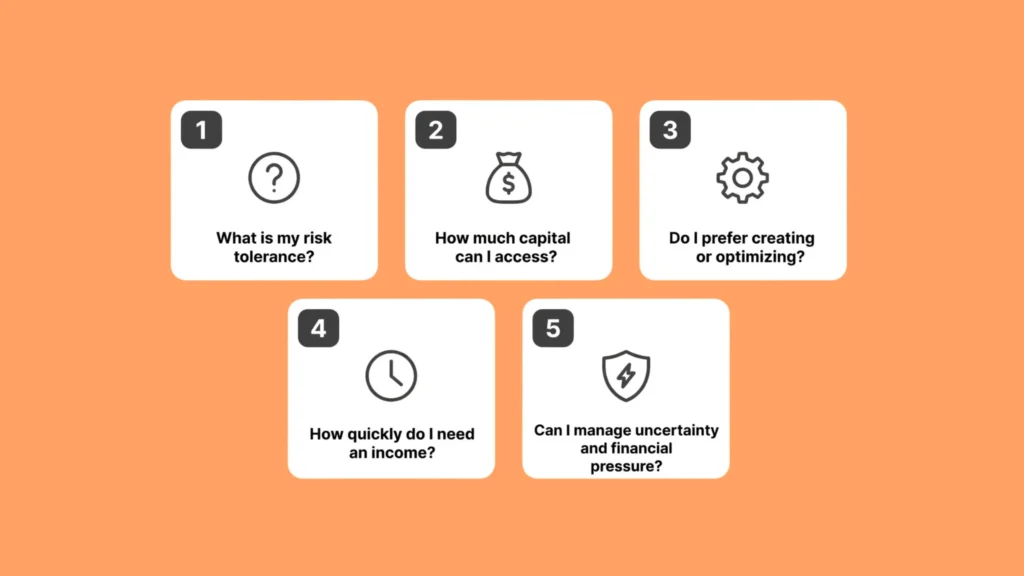
To figure out whether buying an existing business vs starting fits your style best, you need to conduct an honest self-assessment. Ask yourself these core questions before jumping in:
What is my risk tolerance? Are you comfortable with absolute uncertainty, or do you prefer proven business models with established income?
How much capital do I have access to? Do you have enough funds for a substantial down payment, or do you need to start small and grow organically?
Do I prefer creating or optimizing? Do you enjoy building processes from zero, or excel at refining and growing existing systems?
How fast do I need to earn an income? Do you need immediate salary draws to cover living costs, or can you wait for future returns?
FAQs
What is the primary difference between buying an existing business vs starting one?
The biggest difference is immediate cash flow and proven market demand. Buying an existing business offers active operations and instant sales on day one. Starting from scratch requires lower initial capital, but takes much longer to build customer trust, brand awareness, and consistent monthly revenue.
How does seller financing benefit someone looking to buy a small business?
Seller financing reduces the amount of bank debt needed to complete a purchase. The seller agrees to receive payments over time with interest. This structure aligns the seller’s financial interests with your success, ensuring a smoother transition and providing better terms than traditional lenders.
What are business valuation basics every buyer should know?
Business valuation basics revolve around analyzing historical earnings, cash flow trends, and net assets. Common metrics include Sellers Discretionary Earnings (SDE) and EBITDA multiplied by industry standards. A proper valuation helps you make an accurate offer without overpaying for estimated future growth.
Is it cheaper to buy a business or start one from scratch?
Starting from scratch is usually cheaper initially because you avoid paying a high upfront purchase price. However, funding long-term operating losses until reaching break-even can close that gap quickly. Buying costs more on day one, but existing revenues help pay off debt faster.
Conclusion
Choosing between buying an existing business vs starting one comes down to your personal goals, budget, and appetite for risk. Buying offers an established path with immediate revenue, trained staff, and valuable historical data. Starting from scratch grants total creative control, letting you build a brand completely on your own terms.
Take the time to evaluate your finances, master business valuation basics, and explore options like seller financing. No matter which road you choose, thorough preparation is your best tool for long-term success. Trust your instincts, do your research, and rely on trusted resources like reliablestartup.com to help build your entrepreneurial vision.
About The Author