How to Choose the Best State to Form an LLC for Your Business
Starting a new business brings a long checklist of structural decisions, but few carry as much long-term administrative weight as choosing where to register your legal entity. If you have spent any time browsing business forums, you have likely seen glowing endorsements for forming a Limited Liability Company in states like Delaware, Wyoming, or Nevada.
However, following blanket online advice can lead to unnecessary compliance hurdles and double filing fees. Selecting the best state to form an llc depends entirely on where your business physically operates, how you plan to raise capital, and your long-term ownership goals.
Choosing the best state to form an llc usually comes down to physical presence and growth goals. For 90% of small business owners, forming an LLC in your home state is the smartest and most affordable option. Forming out-of-state in business-friendly hubs like Delaware or Wyoming often results in double registration, extra fees, and added compliance complexity through foreign qualification requirements.
Key Takeaways
For most small business owners, your home state is the most cost-effective and practical choice for forming an LLC.
Registering out-of-state often triggers foreign qualification requirements, doubling your administrative burden and annual fees.
Popular jurisdictions like Delaware, Wyoming, and Nevada primarily benefit venture-backed startups or businesses requiring specialized legal protections.
State filing fees and ongoing maintenance costs vary wildly across the country, making long-term operational planning essential.
The Home State Rule: Why Simplicity Usually Wins
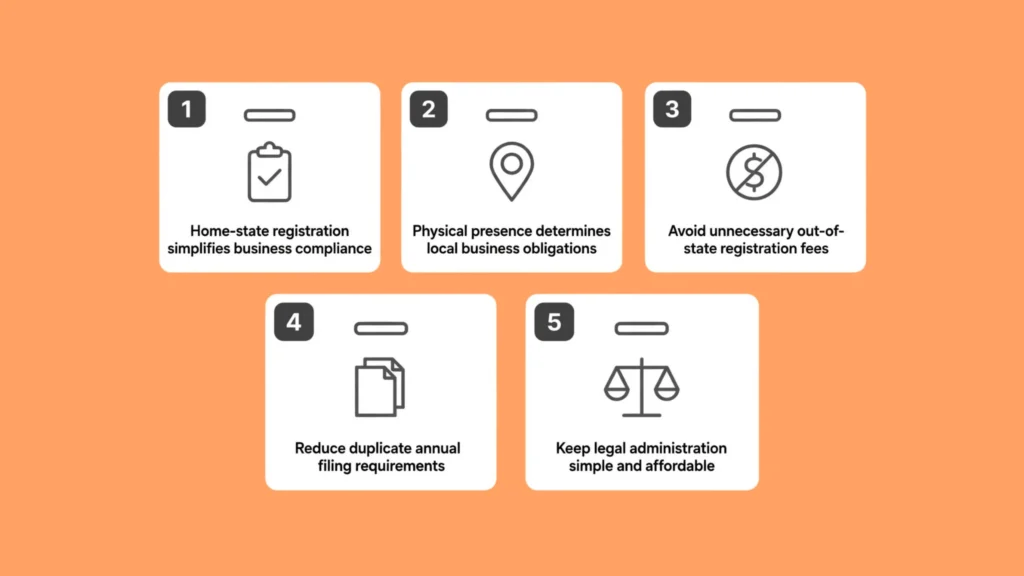
A common misconception among first-time founders is that an LLC registered in a low-tax state magically exempts their business from local taxes. In reality, state tax laws are governed by physical presence and income sourcing, not just where your articles of organization are filed.
If you operate out of a physical office, warehouse, or storefront in your home state or if you reside there while performing services your home state considers you to be conducting local business.
Registering your entity in another state does not erase your domestic obligations. Instead, it forces you to register as a foreign entity in the state where you actually live and work, making it important to understand how to register an LLC and meet local legal requirements.
At reliablestartup, we frequently see founders fall into the trap of registering in a state with zero income tax, only to realize they still owe state taxes where their work is actually performed. For the vast majority of local service providers, e-commerce brands, and independent freelancers, forming your LLC in your home state eliminates redundant paperwork, avoids duplicate annual fees, and keeps legal management simple.
Understanding Foreign Qualification and Double Registration
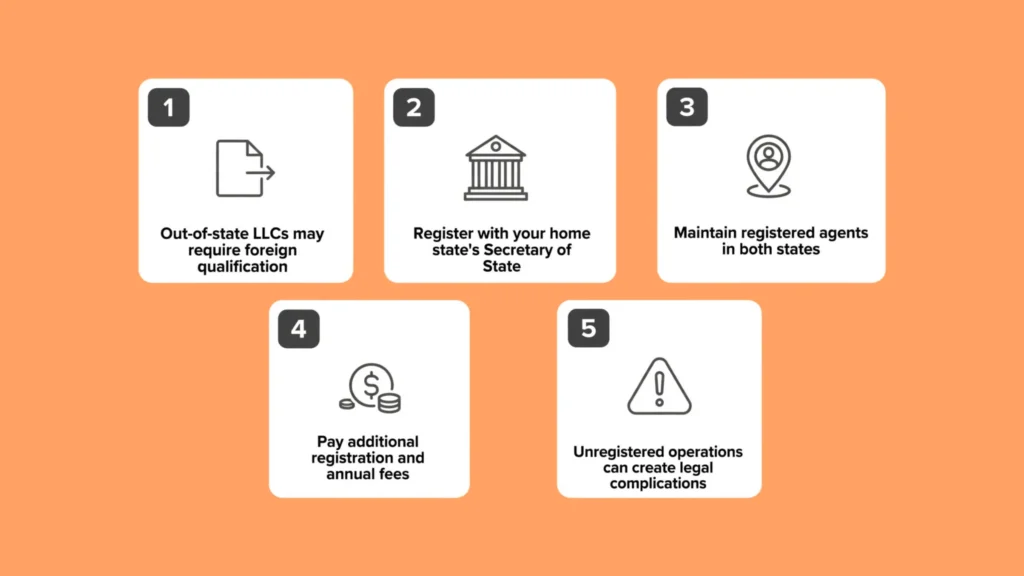
When you form an LLC in a state other than the one where you physically conduct business, your home state classifies your company as a “foreign LLC.” To legally operate within your home state, you must complete a process known as foreign qualification.
Foreign qualification involves registering your out-of-state entity with your home state’s Secretary of State, paying a registration fee, and maintaining a registered agent in both jurisdictions. This means you will be managing two sets of filings, two registered agents, and potentially two sets of annual report fees. Consider a practical example:
Scenario: A consultant living and working in California forms an LLC in Wyoming to take advantage of low state fees.
The Reality: California requires any business operating within its borders to register as a foreign LLC and pay the state’s mandatory annual tax. The consultant now pays Wyoming filing fees, Wyoming registered agent fees, California foreign qualification fees, and the California annual tax.
Understanding these legal requirements early in the startup process can help founders avoid unnecessary penalties, maintain compliance, and protect their business operations.
Unless your business model specifically requires an out-of-state formation, foreign qualification usually undermines the exact cost savings you sought in the first place.
Comparing the “Big Three” Business-Friendly States
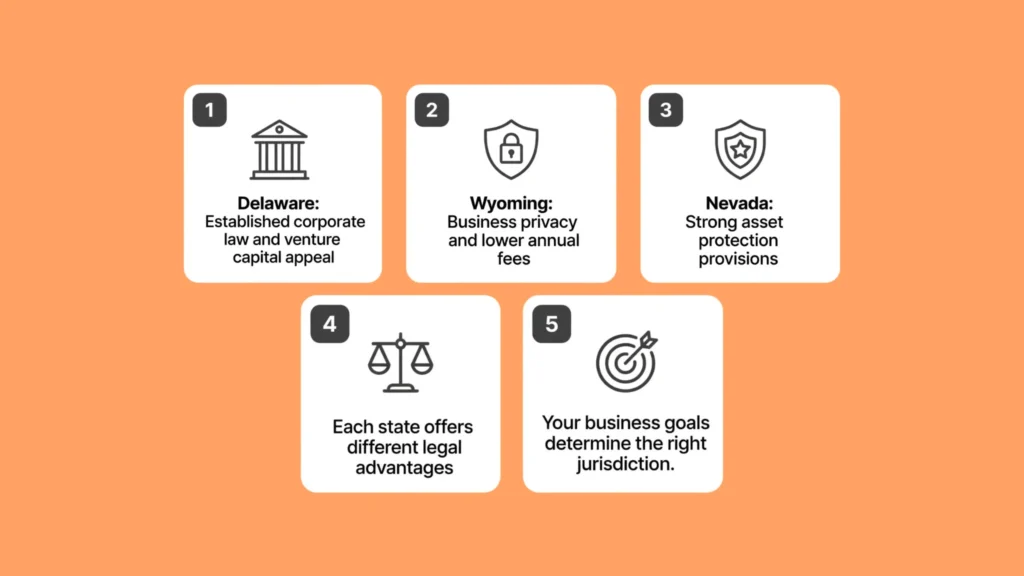
Certain states have built international reputations by catering to corporate entities. While these jurisdictions offer real advantages, those benefits target specific types of commercial operations.
Delaware: The Venture Capital Gold Standard
Delaware is the undisputed leader for venture-backed corporations and complex business structures. The state’s Court of Chancery focuses exclusively on corporate law, providing predictable, judge-decided legal precedents without jury trials.
Best For: Companies planning to seek institutional venture capital, issue multiple classes of equity, or eventually go public.
Drawback: Delaware imposes an annual franchise tax and requires non-resident businesses to pay for local registered agent services.
Wyoming: Cost-Effective Privacy and Simplicity
Wyoming created the first US LLC structure in 1977 and remains a favored option for privacy-conscious business owners. It boasts no state corporate income tax, low annual reporting fees, and strict privacy protections for members and managers.
Best For: Real estate holding companies, digital asset managers, and non-US residents who do not have a physical presence in any US state.
Drawback: Operating in another state still requires foreign qualification, neutralizing privacy benefits if your home state mandates public member disclosures.
Nevada: Aggressive Asset Protection
Nevada offers robust liability shields for corporate officers and directors, alongside zero state corporate income tax or personal income tax. It also maintains no formal information-sharing agreements with the IRS.
Best For: High-net-worth investors prioritizing maximum corporate veil protection.
Drawback: Nevada charges significantly higher initial filing fees and annual business license costs compared to Wyoming or Delaware.
Evaluating Filing Fees and Maintenance Costs
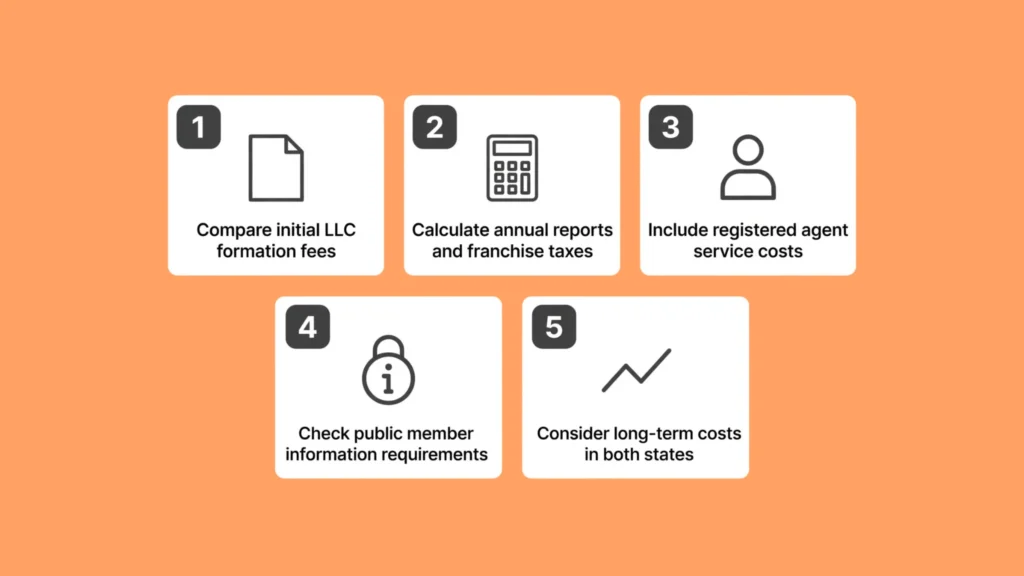
The initial cost to form an LLC varies dramatically depending on the jurisdiction. When choosing where to file, evaluate both the upfront fee and the recurring annual or biennial maintenance costs.
| State | Initial LLC Formation Fee | Annual Report / Franchise Fee | Public Member Information Required? |
| Delaware | ~$110 | $300 flat annual tax | No |
| Wyoming | $100 | $60 minimum (based on assets) | No |
| Nevada | ~$425 (includes business license) | ~$350 annual total | Yes |
| California | $70 | $800 minimum annual tax | Yes |
| Florida | $125 | $138.75 annual report | Yes |
| New York | $200 | $9 biennial fee + publishing costs | Yes |
Note: Statutory fees are subject to legislative adjustments. Always confirm current rates with the respective Secretary of State.
Before deciding on an out-of-state filing to save money, add up the ongoing maintenance costs for both states. Working with advisors at reliablestartup can help you map out these recurring obligations before submitting your initial paperwork.
Deliberate Use Cases for Out-of-State Formation
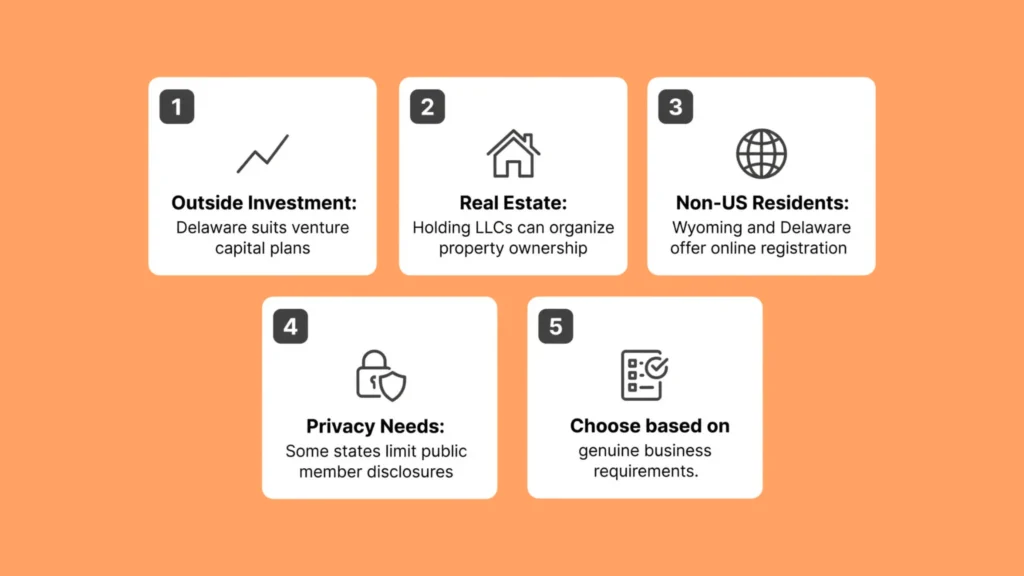
While home-state formation makes sense for most, specific business strategies justify forming an LLC in an external jurisdiction:
Raising Outside Investment: If you plan to raise institutional capital, investors may insist on a Delaware entity. Most investors prefer Delaware’s established legal framework, even if your founders live elsewhere.
Holding Entities for Real Estate: Investors acquiring real estate across multiple states often set up a parent holding LLC in Wyoming or Delaware, with individual child LLCs holding each property locally.
Non-US Residents: Foreign entrepreneurs launching a US business without a physical presence in any specific state frequently choose Wyoming or Delaware due to streamlined online processing and low administrative barriers.
Anonymous LLC Needs: Business owners with legitimate safety or privacy concerns may use states that do not publish member names on public databases, provided their home state does not override that protection during foreign registration.
Step-by-Step Decision Framework
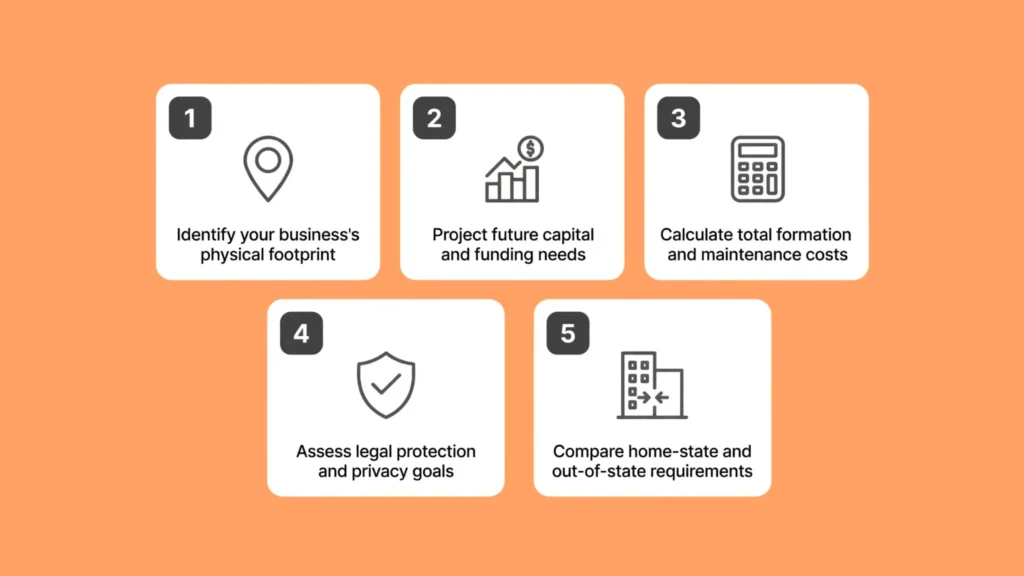
To determine the ideal state for your business, follow this operational checklist:
Identify Your Physical Footprint: List where you have offices, employees, physical inventory, or resident founders. If all operations are concentrated in one state, that state is almost certainly your best choice.
Project Your Capital Needs: Are you bootstrapping, taking out local bank loans, or pitching Silicon Valley venture funds? Venture capital pushes you toward Delaware; bootstrapping favors your home state.
Calculate Total Cost of Ownership: Add up the formation fees, annual reports, registered agent costs, and potential foreign qualification fees for both scenarios (Home State vs. Out-of-State). A well-structured business plan can help you organize these expenses, evaluate your operational requirements, and make informed decisions before officially registering your company.
Assess Legal Risk and Privacy Goals: Determine whether standard limited liability protections are sufficient, or if your industry requires specialized asset protection statutes.
Navigating structural choices can feel complex, but focusing on operational reality over legal trends keeps your business compliant and financially lean. Consulting resources at Reliablestartup provide clarity as you finalize your formation strategy.
Frequently Asked Questions
Is Delaware really the best state to form an LLC?
Delaware is the top choice for companies seeking venture capital or planning an eventual IPO due to its specialized legal system. However, for standard small businesses operating elsewhere, Delaware registration often leads to duplicate fees and extra administrative work through foreign qualification.
What happens if I do not register my LLC as a foreign entity?
Operating in a state without registering as a foreign LLC can lead to civil penalties, back taxes, and unpaid state fees. Crucially, your business may lose access to state courts, preventing you from enforcing contracts or defending against legal claims in that jurisdiction.
Can I change my LLC state later if my business grows?
Yes, you can transfer your LLC to another state through a process called domestication, or by merging your existing entity into a newly created entity in the target state. Keep in mind that domestication requires state approval and comes with legal filing fees.
Do I need a registered agent in every state where I operate?
Yes, you must maintain a physical address and a registered agent in your state of formation and in every state where your LLC is registered as a foreign entity. Registered agent services can provide local physical addresses to meet these statutory requirements.
Will forming an LLC in a state with no income tax save me money?
Not necessarily. Business income is generally taxed in the state where it is earned or where the business owners physically reside. Forming an LLC in a tax-free state does not relieve you of income tax obligations in your home state.
Conclusion
Choosing where to file your articles of organization comes down to balancing administrative simplicity against your strategic growth goals. While Delaware, Wyoming, and Nevada offer specialized legal and tax environments, domestic registration in your home state remains the most efficient, cost-effective path for the majority of small businesses.
By avoiding unnecessary foreign qualification fees and duplicate reporting, you keep your compliance overhead low and focus your resources on growing your operations.
About The Author