House Cleaning Services Business Plan: Complete Guide to Starting and Growing a Profitable Cleaning Company
Starting a residential cleaning company is one of the most accessible and lucrative paths to business ownership today. The low cost of entry, combined with high ongoing demand from busy households, makes it an exceptionally attractive commercial opportunity. However, turning a basic bucket and mop into a thriving, predictable six-figure enterprise requires far more than just hard work and attention to detail. It requires a detailed house cleaning services business plan. Without a clear operational roadmap, many new business owners quickly find themselves trapped by paper-thin profit margins, scheduling chaos, high staff turnover, and unsustainable work schedules.
A thorough business plan maps out your launch costs, target market, pricing model, customer acquisition channels, and long-term scaling strategy. Building a structured strategy lets you systematically turn one-off clients into predictable recurring revenue. In this complete guide, you will discover exactly how to draft an actionable house cleaning business plan that drives real growth, protects your bottom line, and turns your startup into a valuable market leader.
Executive Summary: Mapping Your Residential Cleaning Business
An executive summary gives investors, partners, and lenders a quick look at your business model. Even if you self-fund your launch out of pocket, writing this section forces you to define your core focus and establish measurable milestones before spending a single dollar.
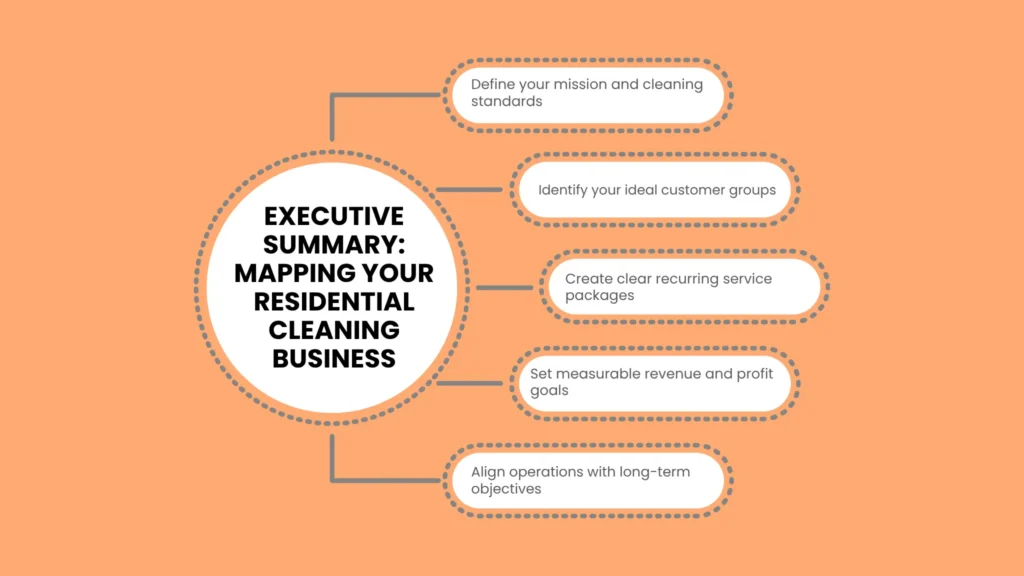
Your executive summary needs to cover a few essential elements:
Mission Statement: A clear statement describing who you serve, the core values of your team, and what sets your cleaning standards apart from local competition.
Target Audience: The main client base you plan to serve, such as busy dual-income families, elderly residents, or short-term vacation rental hosts.
Core Services: The primary offerings you provide, including standard recurring cleaning, intensive deep cleaning, or move-in and move-out service packages.
Financial Goals: Your projected revenue targets, expense limits, and gross profit margins for your first three years of active operations.
Setting these foundational points early helps guide every operational decision you make down the line, ensuring that your daily actions align with your overarching financial objectives.
Market Research and Competitor Analysis
Before launching a residential cleaning business, you need to understand your local market dynamics. Demand for home cleaning remains high, but standing out in a crowded market requires sharp positioning and clear messaging. Look for structural gaps where they fall short, such as poor customer communication, unpunctual arrivals, hidden fees, or inconsistent cleaning quality, our guide on reviews and reputation management for cleaning companies explains how to turn those gaps into your competitive advantage.
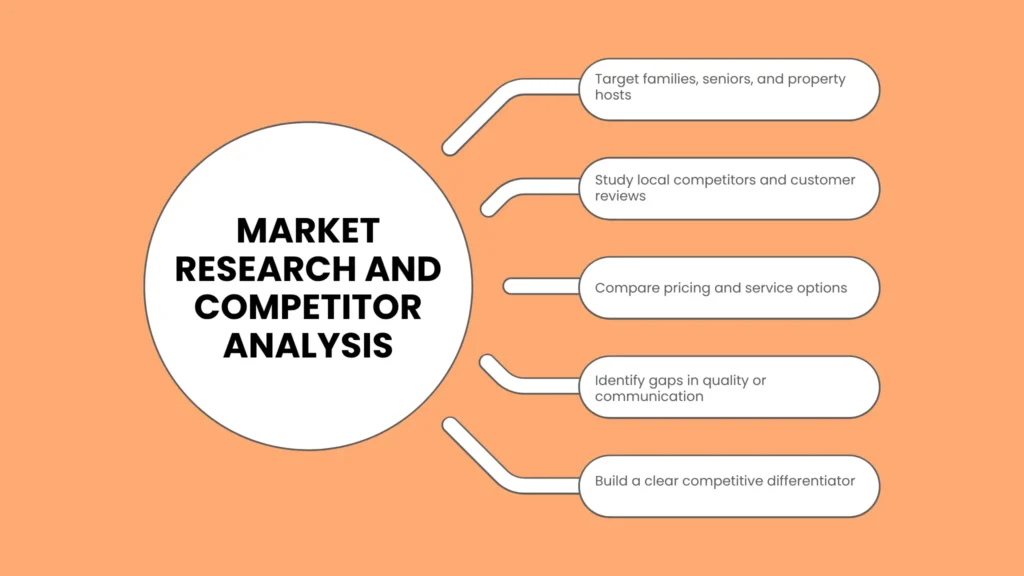
Start by identifying the main customer groups in your local community. Residential clients generally fall into three core categories:
Dual-Income Families: Busy working parents who value getting their time back on weekends and need consistent, weekly or bi-weekly maintenance cleanings.
Property Owners and Hosts: Real estate agents, landlords, and vacation rental hosts who need fast, thorough, and highly reliable turnover services between occupants.
Seniors: Elderly homeowners who prefer outside help with heavy household chores and value friendly, trustworthy, and recurring support.
Next, conduct a deep dive into your local competitors. Examine their online customer reviews, pricing models, service options, and response times. Look for structural gaps where they fall short, such as poor customer communication, unpunctual arrivals, hidden fees, or inconsistent cleaning quality. You can then position your company to fill those exact gaps, giving prospective customers a compelling reason to choose your team over established alternatives.
Defining Services and Strategic Pricing
Your cleaning company business plan must outline distinct service levels alongside a profitable pricing structure. Avoid competing solely on low prices, as discounting your services erodes profit margins and makes it difficult to hire quality staff later.
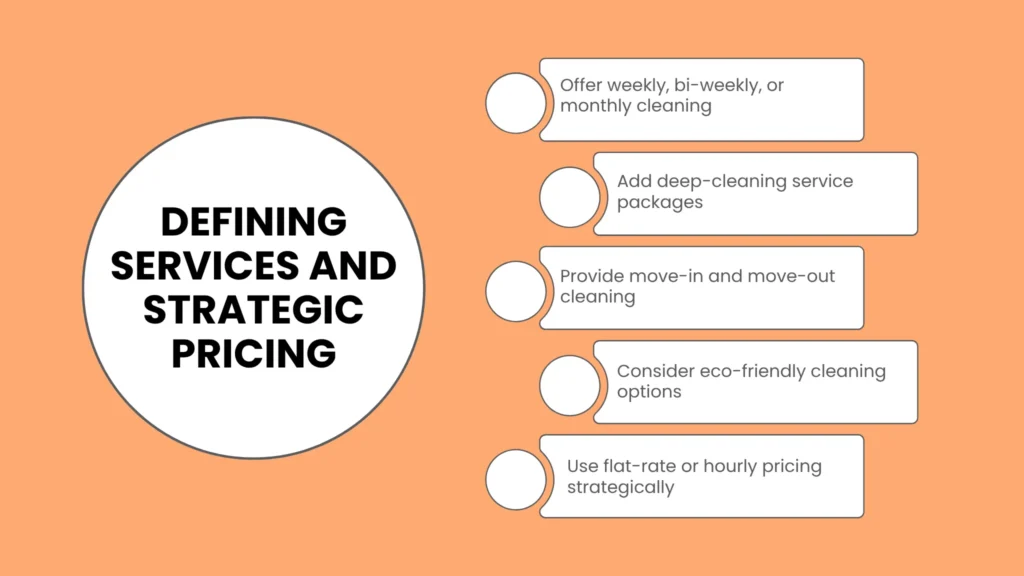
Popular Cleaning Service Packages
Structuring your service offerings clearly helps customers choose the right plan while making it easy for your field technicians to follow standardized procedures:
Standard Recurring Cleaning: Regular maintenance cleaning offered on a weekly, bi-weekly, or monthly schedule. This service focuses on high-traffic areas, surfaces, dust removal, and basic sanitation.
Deep Cleaning: An intensive, detailed top-to-bottom clean that targets neglected areas, including baseboards, door frames, inside appliances, and heavy tile grout.
Move-In / Move-Out Cleaning: Specialized, highly detailed end-of-tenancy cleanings designed to help tenants secure deposit refunds and help property managers prepare units for new occupants.
Eco-Friendly Green Cleaning: Specialty cleaning options using non-toxic, hypoallergenic, and plant-based products for health-conscious clients, families with pets, or individuals with allergies.
Flat Rate vs. Hourly Pricing Strategy
Choosing the right pricing model keeps your operations profitable while offering total clarity to clients. Each pricing strategy carries distinct trade-offs that impact your daily bottom line.
| Pricing Model | Average Industry Rate | Major Advantages | Primary Risks |
| Hourly Rate | $30 – $60 per hour / cleaner | Covers unexpectedly messy homes; simple to estimate for new crews | Clients may worry about slow pacing or inflated hours |
| Flat Rate (Per Job) | $120 – $300 per home | Yields high profits for efficient teams; easy for clients to budget | Underestimating labor time on heavily soiled homes |
| Square Footage | $0.10 – $0.20 per sq. ft. | Highly objective and predictable billing model | Ignores complex room layouts, heavy clutter, and specialized requests |
Operational Plan: Licensing, Gear, and Software
Running a successful service company requires organized back-office administration, commercial equipment, and clear workflow automation. Setting up proper operational workflows early keeps daily operations running smoothly as your client roster grows.
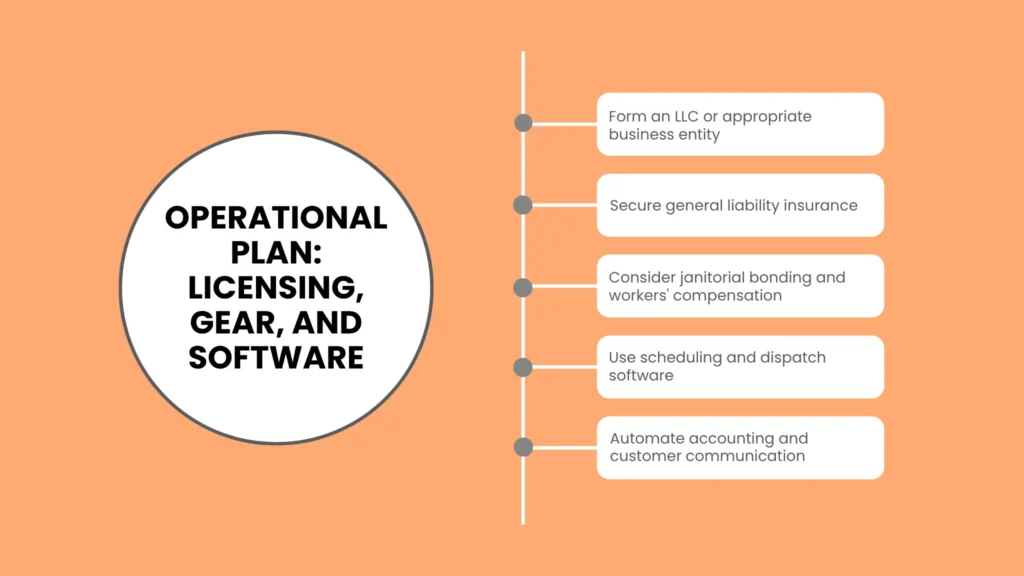
Legal Structure and Insurance Coverage
Registering your business properly protects your personal assets from commercial liability while building immediate credibility with potential clients:
Business Entity: Form a Limited Liability Company (LLC) or corporate structure to separate your personal financial liabilities from commercial debts and legal claims, a process the U.S. Small Business Administration outlines in detail for first-time business owners.
General Liability Insurance: Protects your enterprise against accidental property damage, breakage, or personal injury occurring on client property during a job.
Janitorial Bonding: Protects your client relationships against potential employee theft claims and reinforces overall trust.
Workers’ Compensation: Mandatory in most jurisdictions as soon as you hire employees, covering medical costs and lost wages if a worker is injured on the job.
Operational Software Stack
Modern field service software saves dozens of administrative hours each week by automating manual booking, dispatching, and accounting tasks. Modern field service software saves dozens of administrative hours each week by automating manual booking, dispatching, and accounting tasks for a deeper comparison, see our guide on the best CRM software for cleaning businesses.
Scheduling & Dispatch: Specialized platforms like Jobber, Housecall Pro, or ZenMaid streamline route planning, client tracking, and team scheduling.
Accounting & Payroll: Cloud-based software like QuickBooks Online simplifies tax preparation, expense logging, and automatic payroll distribution.
Customer Communication: Automated SMS and email updates confirm upcoming appointments, provide arrival windows, and collect instant feedback after each visit.
Financial Projections and House Cleaning Startup Costs
Understanding your upfront house cleaning startup costs helps you manage cash flow effectively during your initial launch period. Most home cleaning startups require relatively modest capital outlays compared to brick-and-mortar retail businesses or traditional franchises.
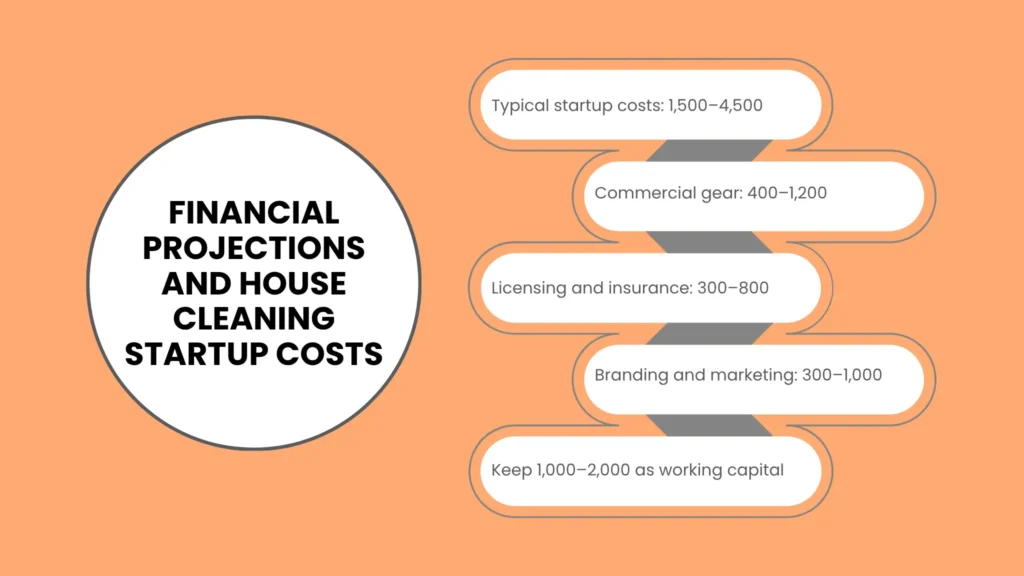
Estimated startup expenses typically range between $1,500 and $4,500 based on standard industry averages.
Initial Equipment and Supply Checklist
Investing in durable, commercial-grade equipment improves cleaning efficiency and ensures professional results every time:
Commercial HEPA Vacuum: A high-filtration upright or ergonomic backpack vacuum designed to pull deep dust from carpets ($200 – $500).
Color-Coded Microfiber Towels: Dedicated microfibers categorized by room (e.g., blue for glass, pink for bathrooms) to prevent cross-contamination ($50 – $100).
Mops and Dusters: Commercial flat mop systems with reusable microfiber pads alongside extendable dusters for ceiling fans ($50 – $120).
Professional Cleaning Products: Concentrated multi-surface cleaners, heavy-duty bathroom disinfectants, and streak-free glass sprays ($100 – $200).
Caddies and Safety Gear: Portable carry caddies, heavy-duty rubber gloves, knee pads, and protective masks ($50 – $100).
Marketing and Customer Acquisition Strategy
Acquiring recurring residential clients requires building local community trust. Focus on cost-effective local marketing channels to gain traction quickly and generate steady word-of-mouth referrals.
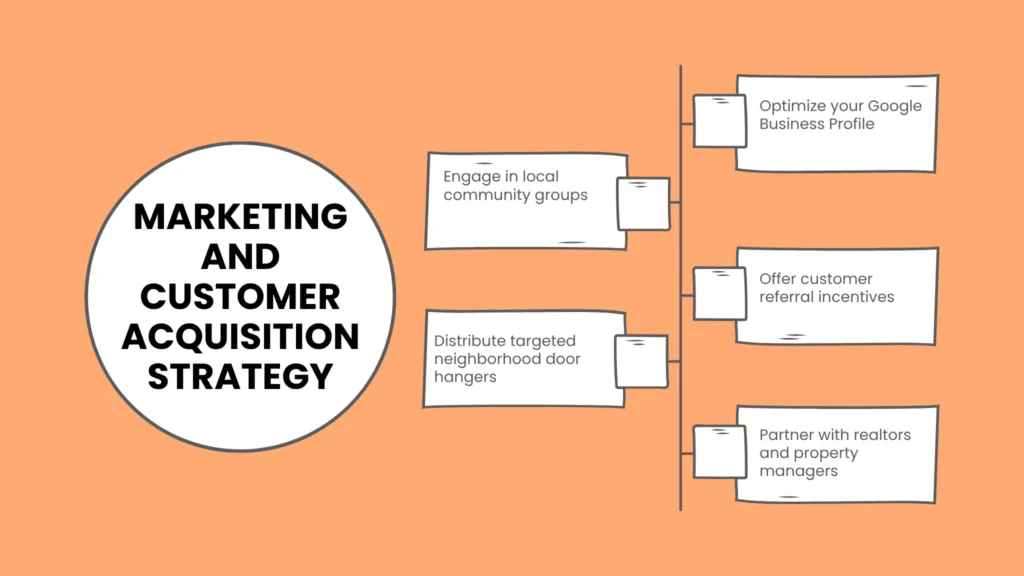
Winning Local Marketing Tactics
Optimize Your Google Business Profile: Create and optimize your free profile to capture local search intent. Gather positive customer reviews to improve your ranking on local Google Map packs.
Engage in Local Community Groups: Share helpful maintenance tips and answer home care questions in local Facebook groups and Nextdoor communities.
Launch a Customer Referral Incentive: Encourage existing clients to advocate for your brand by offering a $25 credit on their next clean for every neighbor or friend they refer.
Distribute Targeted Door Hangers: Drop clean, professional flyers in high-density residential neighborhoods where you already service existing clients.
Partner with Local Real Estate Professionals: Establish relationships with realtors, property managers, and interior designers who frequently need reliable cleaning services for their clients.
Recruitment, Training, and Quality Control
As your schedule fills up, transitioning from a solo operator to managing a team becomes essential for scaling. Hiring reliable workers and maintaining consistent quality standards is often the single biggest challenge in the cleaning industry.
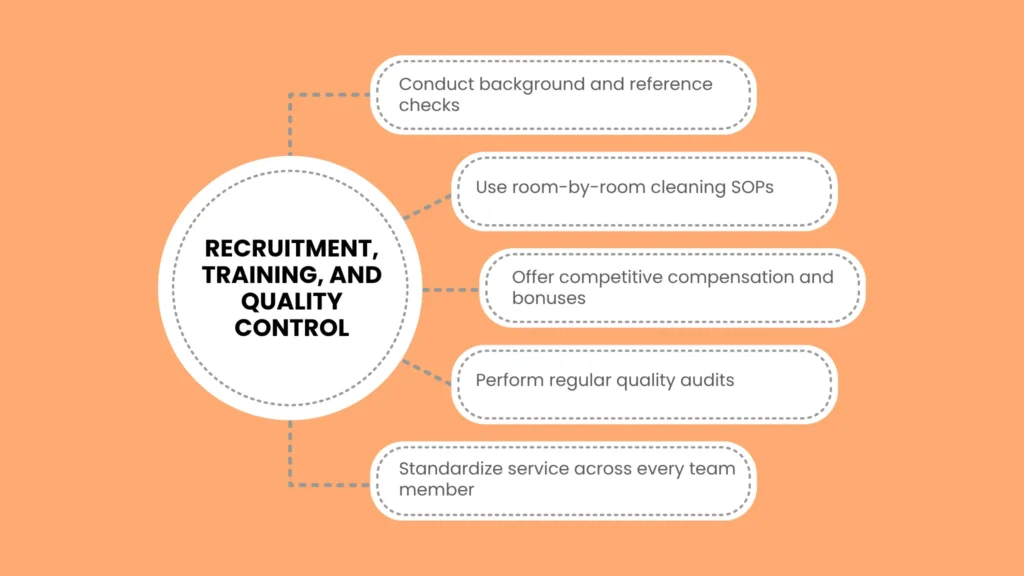
Building a Scalable Hiring System
Structured Vetting: Conduct background checks, check personal references, and run hands-on trial cleans to evaluate attention to detail.
Standard Operating Procedures (SOPs): Create detailed, room-by-room cleaning checklists so every team member cleans to the exact same standard.
Competitive Compensation: Pay above minimum wage and offer performance bonuses tied to positive client reviews to reduce staff turnover.
Quality Audits: Perform unexpected spot checks on completed jobs to ensure safety protocols and quality guidelines are consistently met.
Final Thoughts on Launching Your Cleaning Business
Building a profitable residential cleaning company requires systematic planning, consistent service quality, transparent pricing, and strong client relationships. Following a comprehensive roadmap helps you minimize unexpected expenses, target high-value customers, and build operational momentum.
Focus on taking systematic steps: clarify your legal structure, build your service menu, acquire initial commercial gear, and execute targeted local marketing campaigns. To discover more business growth frameworks, operational templates, and entrepreneurship blueprints, visit reliablestartup.
Frequently Asked Questions
How much does it cost to start a house cleaning company?
Starting a basic residential cleaning setup costs between $1,500 and $5,000 based on local market factors. That covers essential commercial supplies, business registration fees, general liability insurance, and initial marketing campaigns.
Is a house cleaning service business profitable?
Yes, residential cleaning businesses regularly generate gross profit margins between 30% and 50%. Overhead remains exceptionally low, especially when operating from home and utilizing personal transport during the initial growth phase.
Should I offer flat-rate or hourly pricing for home cleaning?
Flat-rate pricing is generally more profitable for residential cleanings. Clients appreciate predictable costs, and as your team grows more efficient, your business earns a higher effective hourly rate per job.
How do I win my first residential cleaning clients?
Start by offering discounted introductory cleans to friends, family members, and neighbors in exchange for honest online reviews. Combine those early testimonials with an optimized Google Business Profile to attract local search leads.
Do I need insurance before taking my first cleaning job?
Yes, having liability insurance is crucial before stepping into any client’s home. It protects your business against costly accidental damage claims and reassures clients that their property is in safe hands.