Food Product Liability Insurance: A Practical Guide to Coverage, Costs, and Protection
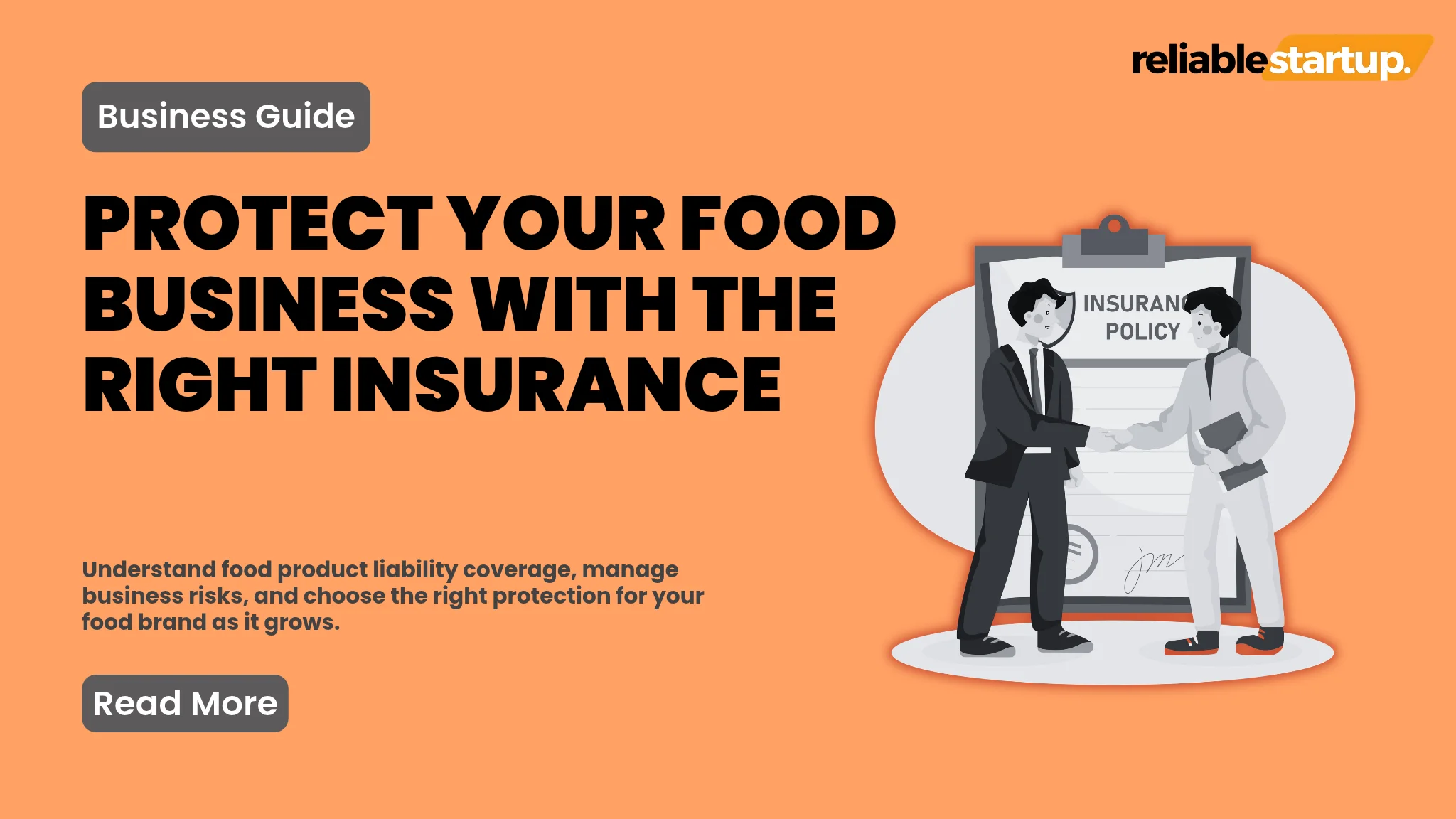
Food product liability insurance protects food manufacturers, bakers, caterers, beverage makers, and restaurant owners from financial loss if a product they sell, make, or distribute causes illness, allergic reaction, injury, or property damage to a consumer. Even with strict hygiene protocols and rigorous quality control, a single contaminated batch or mislabeled allergen can trigger medical claims, legal fees, and settlements capable of shutting down an otherwise healthy operation.
For food entrepreneurs, securing proper liability cover for food is both a financial safeguard and a commercial requirement. Grocery chains, farmers’ markets, commercial kitchens, and online retail platforms routinely require proof of coverage before allowing vendors to sell. Understanding how policies work and where standard coverage stops—ensures your business is protected from the farm or kitchen all the way to the customer’s table.
What Is Food Product Liability Insurance?
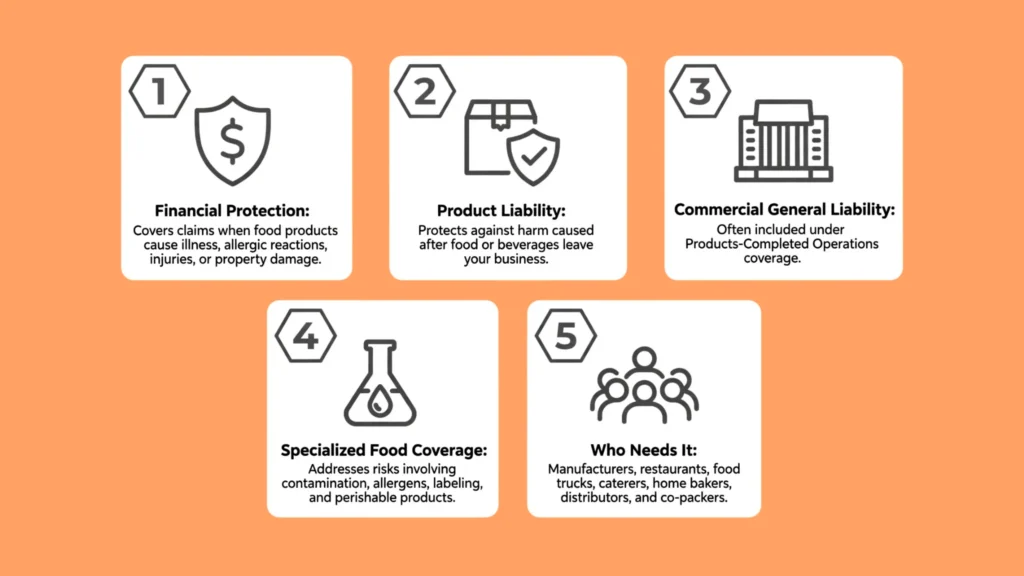
Food product liability insurance is a specialized form of commercial coverage designed to handle claims arising from bodily injury or property damage caused by consumable goods. While general liability insurance covers everyday operational risks such as a customer slipping on a wet floor at your storefront product liability focuses specifically on harm caused after a food or beverage item leaves your possession.
In most standard commercial insurance packages, product liability is bundled within a Commercial General Liability (CGL) policy under “Products-Completed Operations” coverage. However, food businesses face unique biological, chemical, and labeling hazards that standard retail policies do not always address adequately. Specialized food policies tailor policy limits, definitions, and endorsements to reflect the realities of perishable goods and supply chains.
Who Needs Liability Cover for Food?
Any business involved in the lifecycle of an edible product faces exposure to product liability claims. Under strict product liability laws in many jurisdictions, a company can be held financially responsible for a defective food item even if it took every reasonable precaution during preparation. Businesses that rely on this coverage include:
Packaged Food and Beverage Manufacturers: Brands producing sauces, snacks, baked goods, supplements, or bottled drinks for retail or wholesale distribution must understand their insurance obligations before expanding their food product distribution through grocery chains and other retail channels.
Restaurants, Cafes, and Food Trucks: Restaurants, cafes, and entrepreneurs operating a food truck business need protection against customer claims arising from contaminated meals, undeclared allergens, or improperly prepared food served on-site or through takeout.
Cottage Food Producers and Home Bakers: Small-scale entrepreneurs selling jams, pastries, or specialty goods at farmers’ markets or local pop-ups.
Caterers and Event Food Vendors: Businesses preparing and transporting large volumes of food to off-site venues.
Food Distributors, Importers, and Co-Packers: Intermediaries who store, repackage, or distribute food made by third parties, as liability can extend across the entire supply chain.
What Does Food Product Liability Insurance Cover?
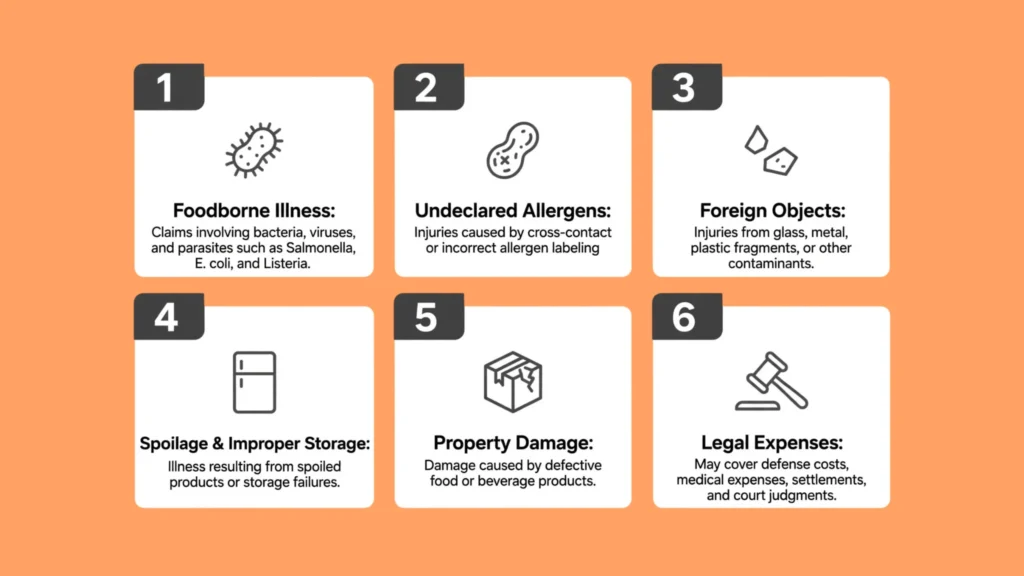
Severe allergic reactions caused by cross-contact in the kitchen or inaccurate ingredient labels failing to disclose major allergens like peanuts, tree nuts, dairy, soy, wheat, eggs, fish, or shellfish can trigger expensive liability claims. Following proper food allergen labeling requirements helps businesses reduce these risks.
Common Covered Scenarios
Foodborne Illness and Contamination: Claims resulting from bacteria, viruses, or parasites such as Salmonella, E. coli, Listeria, or norovirus present in ingredients or introduced during preparation.
Undeclared Allergens: Severe allergic reactions caused by cross-contact in the kitchen or inaccurate ingredient labels failing to disclose major allergens like peanuts, tree nuts, dairy, soy, wheat, eggs, fish, or shellfish.
Foreign Object Injuries: Physical harm, such as a broken tooth or internal injury, caused by glass, metal shavings, plastic fragments, or stones accidentally ending up in a finished product.
Spoilage and Improper Storage: Illness caused when temperature-sensitive goods spoil due to packaging defects or storage failures before reaching the consumer.
Property Damage: Rare but covered instances where a defective food or beverage product damages a customer’s property for example, a fermented beverage bottle exploding in a buyer’s pantry or retail display.
Product Liability vs. Recall Insurance: Understanding the Gap
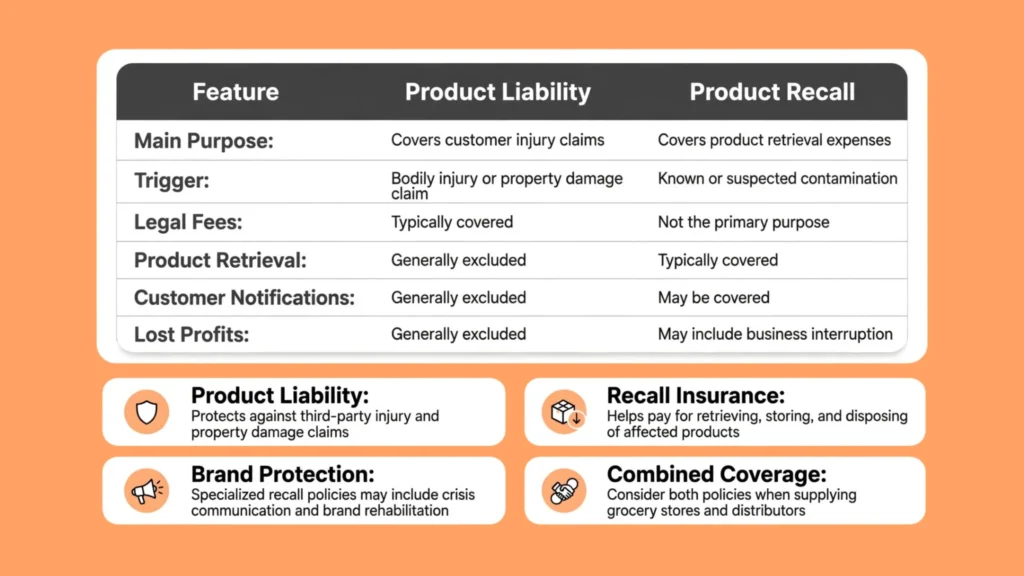
One of the most common and costly misconceptions among food business owners is assuming that food product liability insurance pays for the cost of pulling defective products off store shelves. In almost all cases, it does not.
Product liability insurance covers third-party bodily injury and property damage, meaning someone must get sick or suffer harm before the policy responds. Recall insurance (also known as product contamination or malicious tampering insurance) covers the first-party expenses your business incurs to prevent harm once a defect or contamination is discovered.
| Feature | Food Product Liability Insurance | Product Recall Insurance |
| Primary Purpose | Pays for customer injuries, illnesses, and legal defense | Pays for the operational costs of retrieving unsafe products |
| Trigger Event | A consumer files a claim for bodily injury or property damage | A known or suspected contamination, mislabeling, or FDA/regulatory recall |
| Covered Expenses | Medical bills, legal fees, court settlements, judgments | Customer notifications, shipping/retrieval, disposal, warehouse storage, crisis PR |
| Lost Profits & Brand Rehab | Generally excluded | Often included via business interruption and brand rehabilitation endorsements |
| Policy Structure | Usually included in CGL or Business Owner’s Policy (BOP) | Typically purchased as a standalone policy or specialized endorsement |
For packaged food brands selling through distributors or grocery stores, combining liability cover for food with recall insurance is critical. Retailers frequently include indemnification and recall-reimbursement clauses in vendor agreements, requiring the manufacturer to pay for shelf removal, logistics, and lost retail revenue if a batch is recalled.
Factors That Influence Food Business Insurance Cost
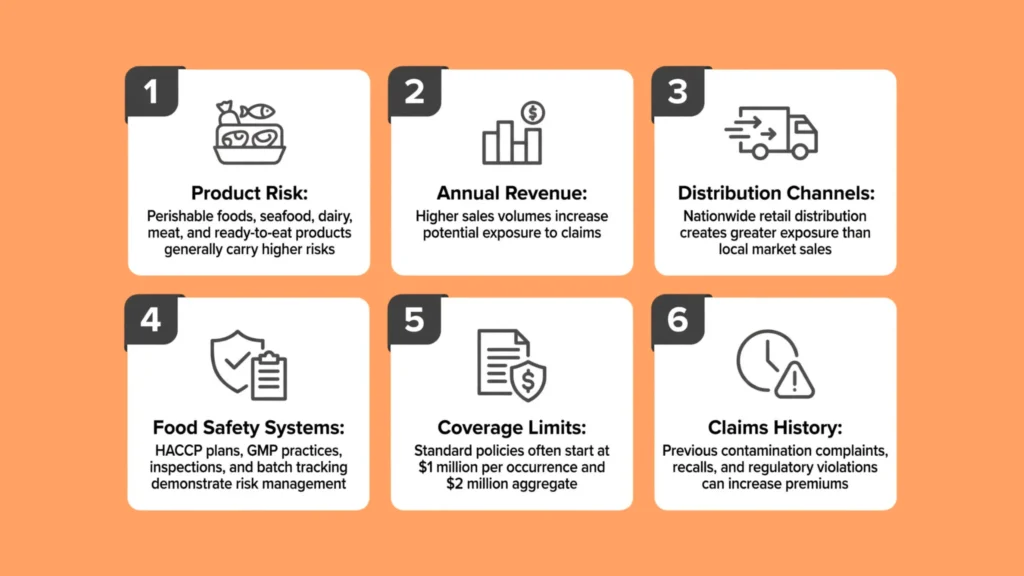
Food business insurance cost varies widely depending on the size of your operation, the types of ingredients you handle, and how your products reach consumers. Underwriters evaluate risk based on both the likelihood of contamination and the potential scale of a claim if something goes wrong.
Key Pricing Drivers
Product Risk Profile: High-moisture, ready-to-eat, raw, or perishable foods—such as dairy, seafood, meat, unpasteurized juices, and prepared salads—carry higher bacterial growth risks than shelf-stable dry goods like roasted coffee, dried pasta, or hard candies.
Annual Gross Revenue and Sales Volume: Higher sales mean more units consumed by the public, increasing overall exposure. Insurers typically calculate premiums based on projected annual revenue.
Distribution Channels: Selling locally at a single farmers’ market presents far less exposure than distributing nationwide through major supermarket chains, where a single tainted batch could affect thousands of shoppers simultaneously.
Food Safety Protocols and Certifications: Documented Hazard Analysis Critical Control Point (HACCP) plans, Good Manufacturing Practices (GMP), third-party kitchen inspections, and batch-tracking systems demonstrate lower risk and can help secure better rates.
Coverage Limits and Deductibles: Standard policies often start at $1 million per occurrence and $2 million aggregate, while major retailers frequently mandate $2 million to $5 million or more in coverage. Higher limits and lower deductibles increase annual premiums.
Claims History: Businesses with prior foodborne illness complaints, regulatory violations, or recalls face higher premiums or stricter underwriting requirements.
Typical Cost Expectations
While exact pricing depends on individualized underwriting, small-scale cottage food businesses and low-risk vendors often pay several hundred dollars per year for basic liability coverage. Mid-sized food manufacturers, caterers, and multi-channel brands typically spend between $1,000 and $5,000 annually for comprehensive general and product liability packages, with standalone recall insurance adding to the total based on batch sizes and distribution reach.
Essential Add-Ons and Related Coverages for Food Brands
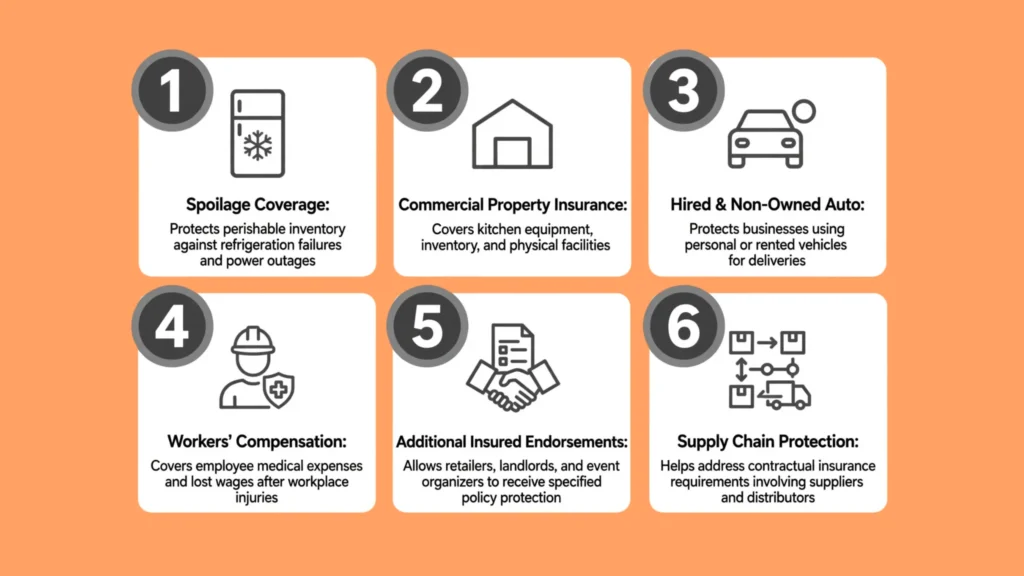
Building a resilient risk management program usually requires pairing product liability with complementary policies tailored to food operations:
Spoilage Coverage: Reimburses the cost of perishable inventory lost due to refrigerator or freezer breakdowns, power outages, or equipment failure.
Commercial Property Insurance: Protects your kitchen equipment, ovens, mixers, inventory, and physical workspace against fire, theft, or severe weather.
Hired and Non-Owned Auto (HNOA): Essential for caterers, food trucks, and businesses delivering orders using personal or rented vehicles.
Workers’ Compensation: Covers medical expenses and lost wages if kitchen or warehouse staff suffer burns, cuts, slips, or repetitive strain injuries on the job.
Vendor Endorsements (Additional Insured): Allows you to name grocery stores, landlords, event organizers, or distributors as additional insureds on your policy—a standard contractual prerequisite before signing wholesale or venue agreements.
How to Choose the Right Policy for Your Food Business
Selecting the right insurance policy requires matching your coverage terms to how you actually produce and sell food. Following a structured review process prevents costly gaps:
Audit Your Contracts and Venue Requirements: Before requesting quotes, check the insurance requirements listed in your commercial kitchen lease, farmers’ market application, or retail distributor agreement. Note required per-occurrence limits, aggregate limits, and additional insured wording.
Work With a Food-Experienced Broker: General commercial brokers may overlook food-specific exclusions. Look for an independent broker or insurer specializing in food and beverage manufacturing or hospitality.
Inspect Exclusions Carefully: Review the policy fine print for exclusions related to specific ingredients (such as raw milk, hemp/CBD, or imported spices), communicable diseases, or punitive damages.
Verify Supply Chain and Co-Packer Coverage: If you use a co-packer or private-label manufacturer, clarify who holds primary product liability responsibility and require certificates of insurance from your suppliers.
Update Your Policy as You Scale: Notify your insurer whenever you launch new product lines, add wholesale accounts, expand into new states, or significantly exceed your projected annual revenue.
Common Mistakes Food Entrepreneurs Make With Liability Insurance
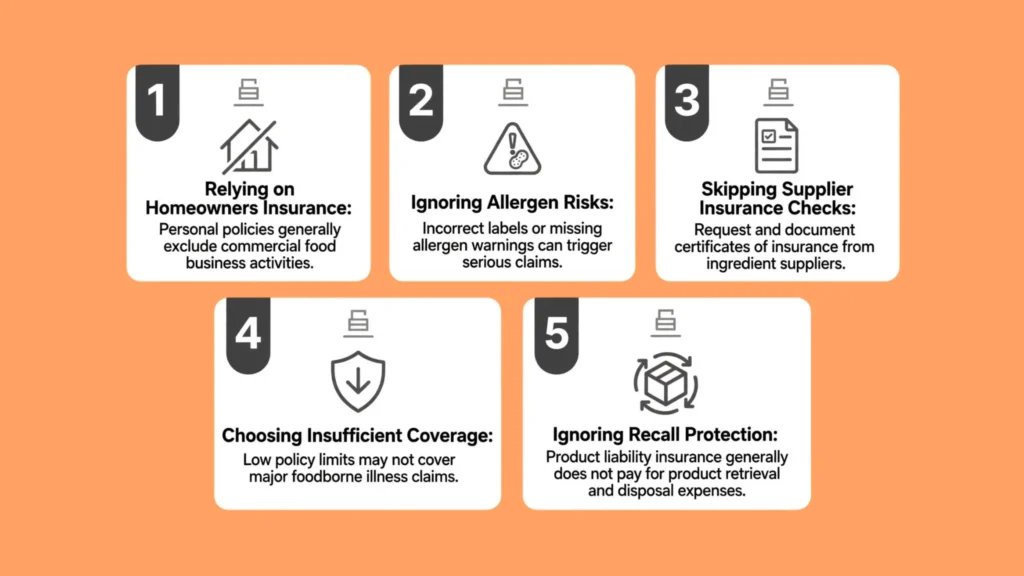
Relying on Homeowners or Renters Insurance: Personal policies explicitly exclude business activities. Selling homemade baked goods or sauces without commercial coverage leaves personal assets completely exposed.
Underestimating Allergen Labeling Risks: Even if your kitchen is spotless, a simple packaging error such as putting the wrong lid on a container or omitting a trace allergen warning can trigger severe medical claims.
Skipping Vendor Certificates of Insurance: If a bulk ingredient supplier provides contaminated flour or spices, your insurer may seek subrogation against them—but only if you documented their insurance coverage beforehand.
Assuming Minimum Limits Are Enough: Carrying $500,000 in coverage might satisfy a local market, but a single hospitalization or multi-person food poisoning outbreak can easily exceed low policy caps.
Frequently Asked Questions
Is food product liability insurance legally required?
In most jurisdictions, food product liability insurance is not strictly mandated by federal or state law in the same way workers’ compensation or commercial auto insurance is. However, it is practically mandatory for doing business, as commercial kitchens, event organizers, distributors, and grocery retailers almost universally require proof of insurance before working with you.
Does general liability insurance automatically include food product liability?
Many Commercial General Liability (CGL) policies include basic products-completed operations coverage, which covers product liability. However, standard retail CGL policies may have low sub-limits or exclusions for certain food risks, so food businesses should verify that their policy explicitly covers food and beverage manufacturing or preparation.
Do I need product liability insurance if I use a co-packer?
Yes. Even if a third-party co-packer manufactures and packages your product, your brand name is on the label. Consumers and retailers will name your company in any lawsuit, making it essential to carry your own policy alongside requiring insurance from your co-packer.
How much food product liability coverage does a small food business need?
Most small food businesses start with at least $1 million per occurrence and $2 million in general aggregate coverage, which satisfies the baseline requirements of most farmers’ markets, commercial kitchens, and independent retailers. Larger national grocery chains often require $2 million to $5 million in total coverage, sometimes achieved through an excess or umbrella policy.
Are cottage food operators covered if they sell from home?
Cottage food operators are not covered by standard homeowners insurance. Home-based bakers and food makers need a dedicated cottage food liability policy or a small business commercial liability policy tailored to home-based food production.
Does food liability insurance cover bad reviews or reputational damage?
Standard product liability insurance covers bodily injury and property damage, not reputational harm from negative reviews. However, specialized product recall and contamination policies often include crisis management and brand rehabilitation coverage to pay for public relations support following a safety incident.
Final Thoughts
Launching and growing a food business demands constant attention to recipes, sourcing, and customer experience, but protecting your brand against unforeseen safety incidents is equally foundational.
Food product liability insurance shields your company from the severe financial fallout of foodborne illnesses, allergen mistakes, and accidental contamination, while opening the door to retail shelves and commercial partnerships.
By pairing strong food safety documentation with properly sized liability limits, and adding recall coverage as your distribution grows, you can scale your culinary business with confidence.
About The Author