Rent to Own: Adding a Purchase Path to Your Rental Business
Understanding the fundamentals of an equipment rental business can help operators identify opportunities to improve fleet utilization and generate additional revenue through alternative ownership models. A rent to own rental business model removes that ceiling by giving customers a clear path from short-term utility to long-term ownership.
By adding a lease to own model alongside your standard rental offerings, you capture high-intent customers who want asset ownership without upfront capital burdens, while unlocking higher conversion revenue and predictable cash flow for your operation.
Understanding the Rent to Own Rental Business Model
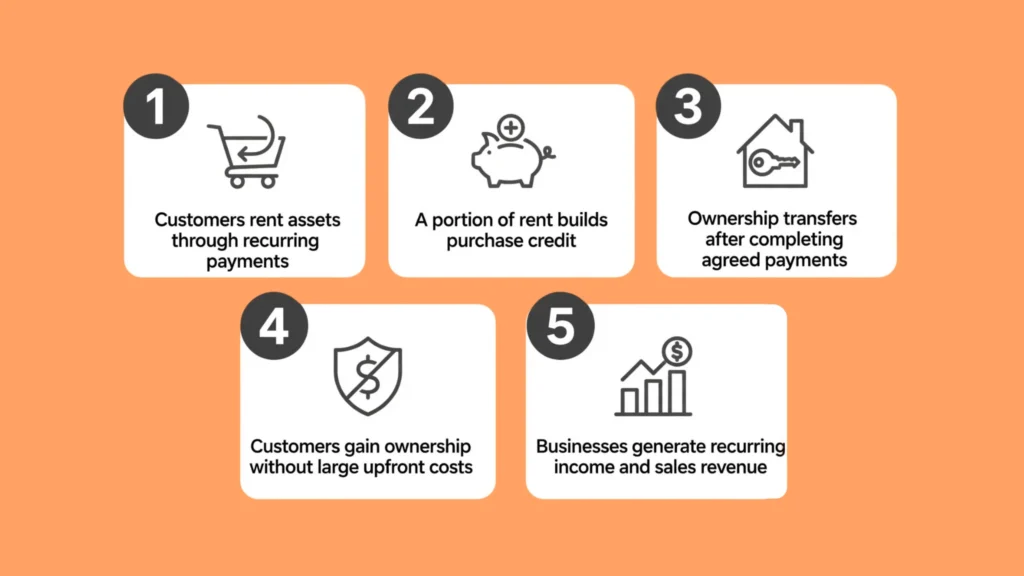
At its core, a rent to own rental business combines short-term flexibility with long-term sales financing. Customers rent an asset, such as construction equipment, heavy tools, vehicles, specialized machinery, electronics, or home furnishings, for a recurring fee. A portion of each payment is applied toward the ultimate purchase price of the asset.
Unlike traditional equipment financing or direct vehicle leases, a lease to own model allows the customer to opt out or return the item under specified contractual conditions. If they complete the full payment term, ownership transfers seamlessly to them.
Comparing Options: Standard Rentals vs. Rent to Own vs. Traditional Leases
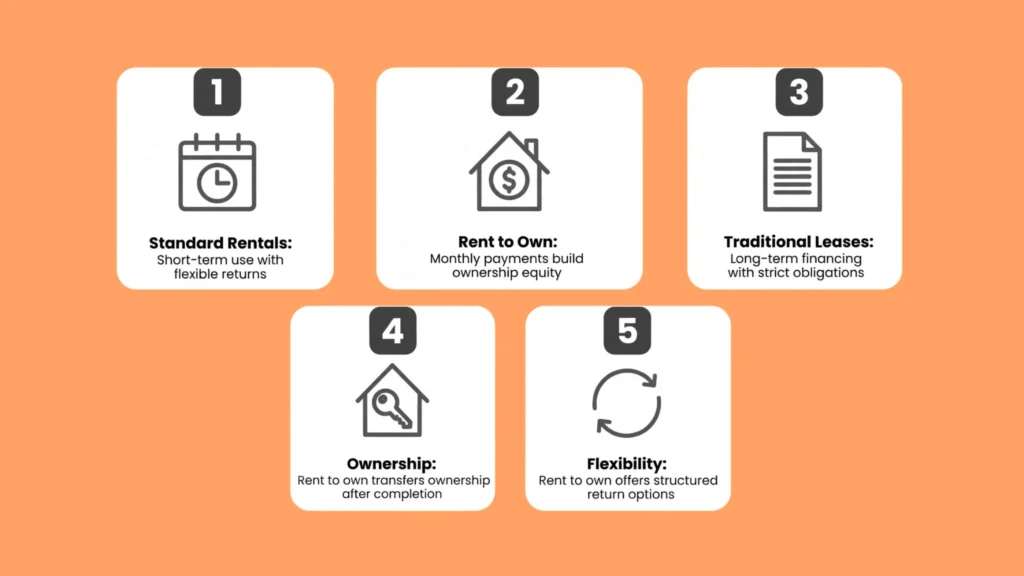
Standard rentals focus on short-term usage, typically ranging from days to months. The primary goal is immediate utility with high return flexibility, but zero equity is built toward ownership, and maintenance remains entirely with the operator.
Rent to own models balance short-term trial with eventual ownership over 12 to 48 months. They allow partial to full payment equity accumulation while offering moderate to high return flexibility depending on the contract terms.
Traditional financial leases target long-term asset financing over 36 to 60 months or more. The customer assumes full balance obligations and ongoing maintenance, but early termination carries severe financial penalties.
The Business Benefits of Adding a Purchase Path
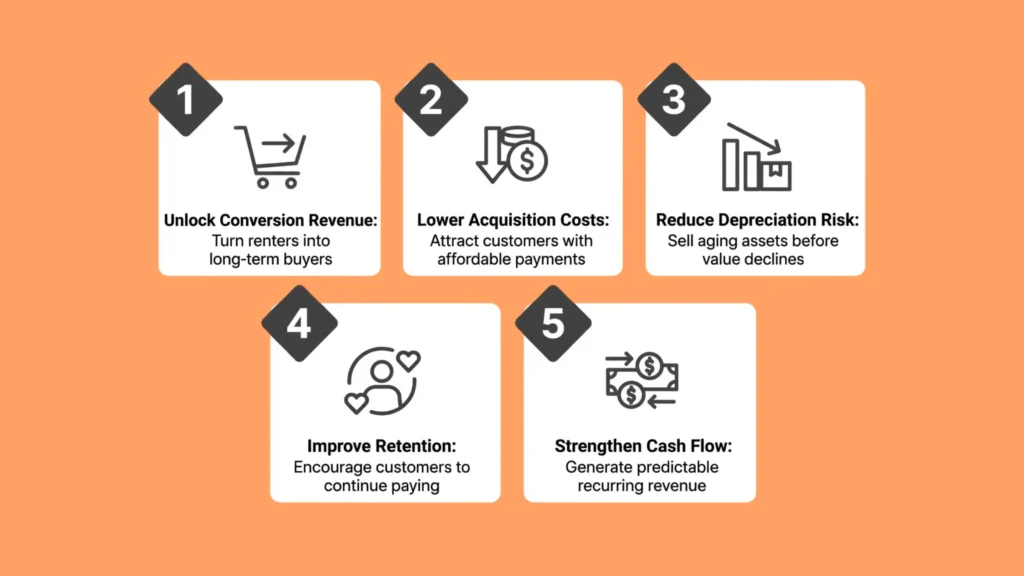
Integrating purchase paths into your rental operations delivers distinct financial and operational advantages over single-use or fixed-term rental structures.
1. Unlocking Conversion Revenue
Standard rentals rely on high asset utilization rates to maintain profitability. When items sit idle in your warehouse or lot, revenue drops to zero. With rent to own contracts, customer retention skyrockets because renters are actively building equity toward ownership. This transition creates steady conversion revenue, capturing the full retail margin of the asset over time rather than relying solely on rental yields.
Understanding equipment rental business profit margins can also help operators evaluate how purchase conversions affect overall profitability and long-term asset returns.
2. Lowering Customer Acquisition Costs
Many buyers hesitate at steep initial price tags, particularly for industrial machinery, specialized tools, or high-end technology. Offering a low-barrier monthly payment opens your pipeline to budget-conscious businesses, startups, and individuals who would otherwise walk away from an outright purchase.
3. Reducing Fleet Depreciation Risk
Inventory aging is a primary risk for rental companies. As assets age out of prime rental condition, their resale value drops significantly. A lease to own structure continuously offloads aging assets directly to end users, stabilizing asset value recovery before items become obsolete.
How Rent to Own Contracts Work?
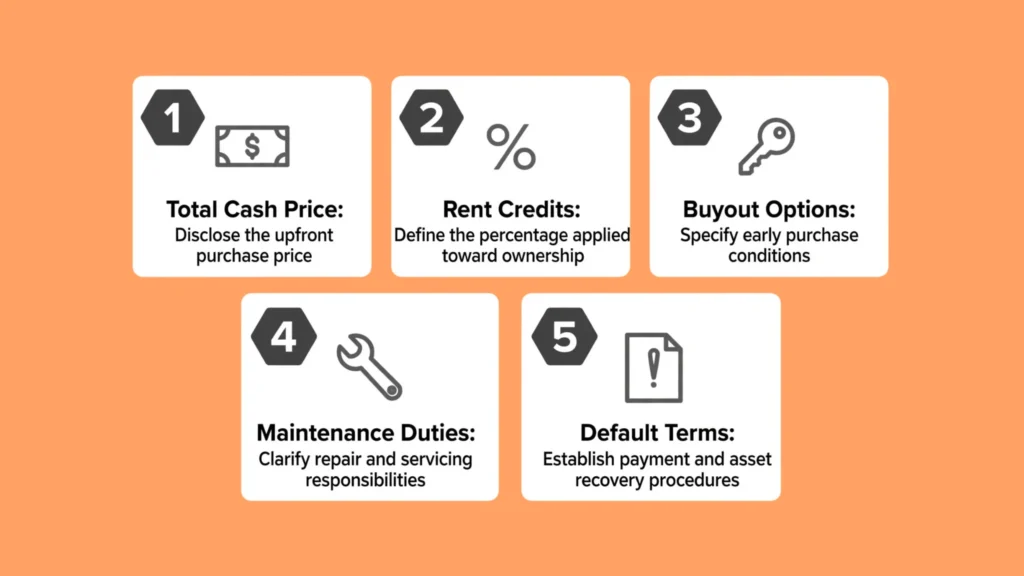
Structuring air-tight, transparent rent to own contracts is critical to protecting your asset investment while ensuring legal clarity for the customer. A well-designed agreement addresses five core components:
Total Cash Price vs. Total Lease Cost: Clear disclosure of the item’s immediate cash purchase price alongside the cumulative cost under the rental term.
Rent Credit Percentage: The specific portion of each rental payment credited toward the final purchase price, such as 75% of monthly rent applied to purchase.
Buyout Option Timing: When and how the renter can trigger an early buyout, often featuring a discounted remaining balance.
Maintenance Responsibilities: Explicit boundaries defining who covers routine servicing, wear-and-tear, and major breakdowns during the rental period.
Default and Recovery Terms: Clear procedures for late payments, asset recovery, or contract cancellation.
Transparent terms prevent consumer friction and contract defaults. Always ensure your agreements adhere to local credit, lease, and consumer protection laws.
Operational Roadmap: Implementing Lease to Own Options
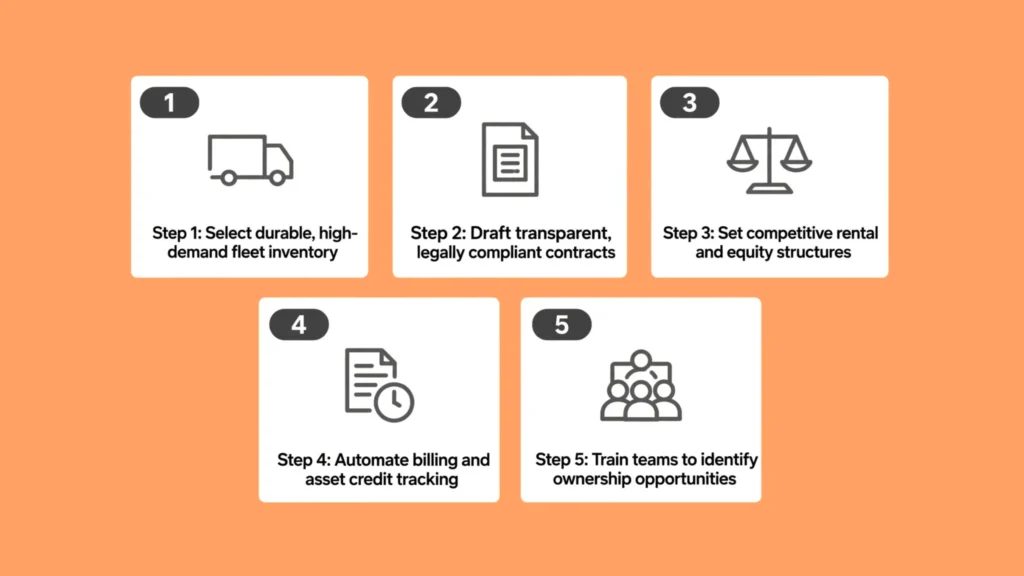
Transitioning your existing rental business to support purchase paths requires structured operational adjustments across your inventory and sales processes.
Step 1: Select the Right Fleet Inventory
A comprehensive equipment rental business plan can help you evaluate inventory requirements, target customers, initial investments, and potential revenue before expanding your fleet.
Step 2: Draft Standardized Legal Contracts
Work with legal counsel specializing in commercial leasing to draft clear rent to own contracts that delineate ownership boundaries, liability, credit terms, and default terms.
Step 3: Adjust Pricing and Equity Structures
Before finalizing your pricing structure, review typical rental business startup costs to understand the financial commitments involved in acquiring equipment, maintaining inventory, and managing daily operations.
Step 4: Upgrade Billing and Asset Management Systems
Choosing the right equipment rental business software can simplify payment tracking, inventory management, maintenance scheduling, and customer account management.
Step 5: Train Sales and Support Teams
Train your staff to identify rental customers who express long-term operational needs and position the rent to own model as a practical financing alternative.
Common Mistakes to Avoid
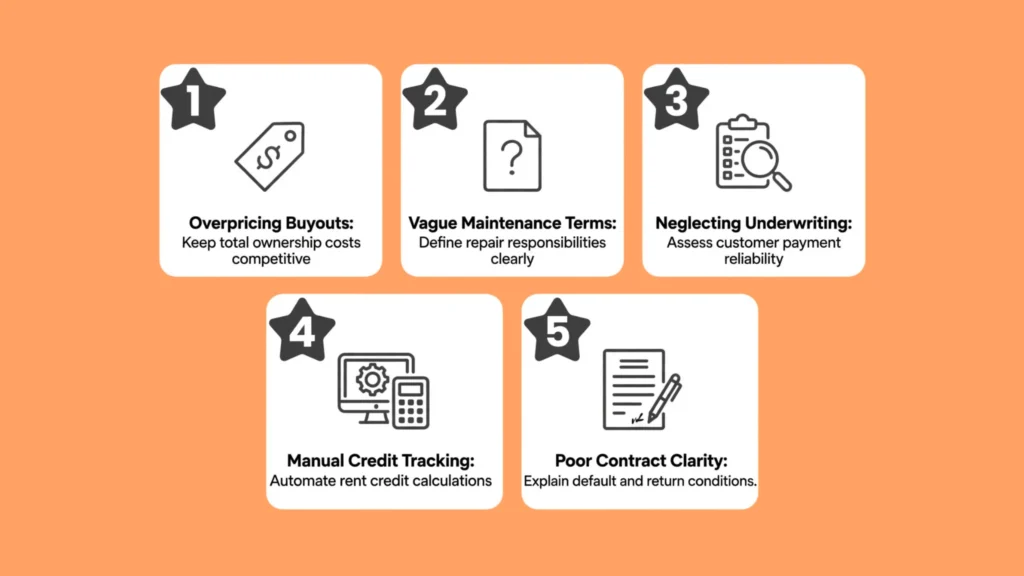
Overpricing the Total Buyout Cost: Setting cumulative rental prices too high creates buyer remorse and leads to high return rates before ownership completion.
Vague Maintenance Clauses: Ambiguity over who pays for repairs during the rental window leads to dispute during contract cycles.
Neglecting Underwriting: Failing to verify customer creditworthiness or operational stability increases asset recovery costs and payment defaults.
Failing to Automate Tracking: Manually tracking rent credits across hundreds of inventory items leads to accounting errors and customer distrust.
Frequently Asked Questions
What is a rent to own rental business?
A rent to own rental business allows customers to hire equipment or products on a recurring rental basis with an option to purchase the asset. A portion of the rental payments made over time is applied toward the final purchase price.
How does a lease to own model differ from traditional financing?
Unlike traditional bank financing or strict equipment leases, lease to own models typically offer greater return flexibility, lower initial credit hurdles, and allow the customer to return the item if their long-term operational needs change.
What is conversion revenue in rent to own operations?
Conversion revenue is the income earned when a standard rental customer converts into a full owner by completing a buyout or finishing their payment plan, allowing the operator to realize total product margins.
Who is responsible for equipment maintenance during the rental period?
Maintenance obligations depend on the contract terms. In many commercial setups, routine maintenance is managed by the rental business during early months, shifting to the customer as purchase equity increases.
What assets work best for a rent to own business?
High-value, durable goods with low wear rates, such as construction tools, commercial appliances, trailers, medical equipment, and electronics, are ideal for rent to own models.
What happens if a customer defaults on payments?
If a customer defaults, the rent to own contract typically stipulates that the business retains ownership of the asset and has the right to repossess it while retaining previously collected rental fees.
Final Thoughts
Adding a purchase path to your rental business bridges the gap between short-term rentals and outright asset sales. By implementing clear rent to own contracts, selecting durable inventory, and offering transparent equity structures, you convert casual renters into permanent buyers.
This model stabilizes cash flow, protects your fleet from steep depreciation, and unlocks a consistent stream of conversion revenue that powers long-term business expansion.
About The Author