Equipment Rental Business Plan: A Free Template Walkthrough
The global event and construction sectors are growing rapidly today. Therefore, entering the equipment market offers a reliable and lucrative business opportunity for new entrepreneurs. Think about it realistically. Homeowners, contractors, and event planners rarely want to spend thousands of dollars buying specialized machinery or party assets for a single weekend project. Instead, they look for a dependable local supplier to rent from.
For an ambitious entrepreneur, drafting a strategic equipment rental business plan makes perfect sense. Starting with a clear operational roadmap forces you to keep your launch overhead exceptionally low. Consequently, this organized approach allows you to fund your future fleet expansion entirely out of your actual customer revenue. In this comprehensive template walkthrough, we will break down exactly how to write equipment rental business plan frameworks. Additionally, we will dive deep into the real-world equipment rental business plan cost, and we will look closely at the math to answer the big question: is equipment rental business plan profitable?
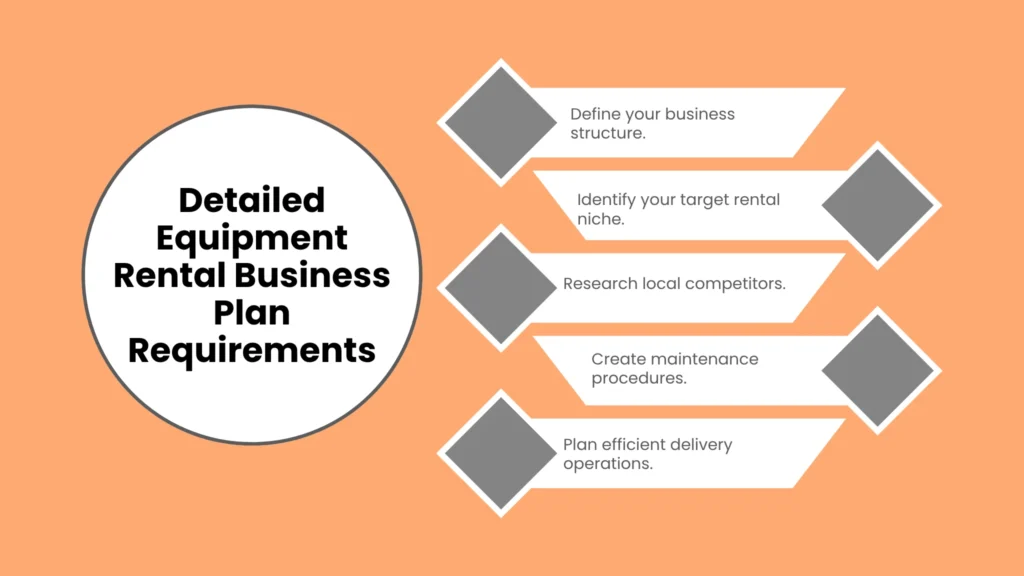
Detailed Equipment Rental Business Plan Requirements
You do not need an expensive consulting firm to draft your operational strategy right away. Similarly, you do not need a background in corporate finance to structure your financial projections. However, you must meet a specific set of foundational document guidelines. Skipping the market research or cash flow mapping to save time early on is a dangerous trap. A poorly prepared plan will fail to secure funding, and it can easily end your business before it even starts. To operate with confidence, you must satisfy a few basic equipment rental business plan requirements to protect your brand and impress local lenders.
1. Executive Summary and Company Description
Before you spend a single dollar on inventory, you must establish a legitimate corporate identity on paper. Most successful equipment rental operators choose to form a Limited Liability Company (LLC) to protect their personal assets. Your business plan must clearly define this structure in the opening sections. If an accident occurs on a client’s job site, your personal home, car, and savings remain completely insulated.
After your plan outlines your legal entity, you must specify your target market niche. For example, your document should clearly state whether you will focus on construction tools, party supplies, or heavy machinery. Doing this keeps your company completely aligned with local consumer demand.
2. Detailed Market Analysis and Competitor Review
You absolutely cannot skip out on comprehensive local market research when writing your business plan. In the tool and asset leasing industry, understanding your local competition is a daily reality. A competitor might dominate the heavy earthmoving space, leaving a highly profitable opening for compact backyard landscaping tools.
Therefore, your plan must include a dedicated local competitor analysis section. Fortunately, gathering this data by reviewing local rental rates and delivery areas is quite easy. Additionally, having formal demographic data in your document is mandatory because commercial bankers will completely reject your funding application if you cannot prove a clear regional demand for your fleet. For more on building this out, see our guide to construction equipment rental ideas targeting local demand.
3. Clear Operational and Maintenance Strategies
Your daily operational framework stands as the most important behind-the-scenes part of your entire plan. You need an organized written protocol to inspect and service every asset before it goes out on a new delivery. This section must include tracking equipment hours, logging routine maintenance, and managing inventory software.
Furthermore, you should include a clear logistics strategy for deliveries and drop-offs. This section ensures that your team knows exactly how to handle heavy transport schedules without burning up your profit margins in fuel costs.
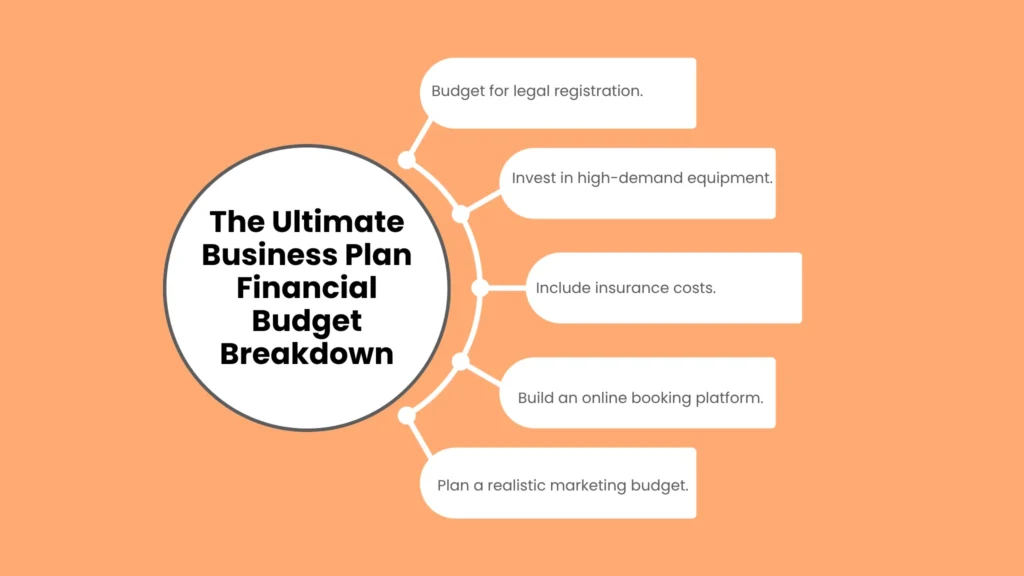
The Ultimate Business Plan Financial Budget Breakdown
How much capital do you realistically need to allocate for your initial launch expenses? The total volume depends entirely on your product strategy and document prep methods. If you hire an expensive agency to write your plan, your upfront costs will surge.
However, if you utilize a free template walkthrough, your initial planning expenses can easily stay near zero. Let’s take a look at a realistic financial breakdown of your estimated first-year startup costs based on a solid plan.
Estimated Startup Capital and Fleet Expenses
| Expense Category | Lean Tool Rental Startup | Mid-Range Fleet Startup | Who You Pay |
| Business Plan & Software Setup | $0 to $150 | $200 to $500 | Template Providers & Planning Apps |
| Legal Entity & Licensing Fees | $200 to $500 | $500 to $1,200 | Secretary of State & City Clerk |
| Initial Rental Equipment Inventory | $5,000 to $15,000 | $40,000 to $90,000 | Wholesale Equipment Manufacturers |
| Commercial General Liability (Annual) | $800 to $1,800 | $2,500 to $6,000 | Small Business Insurance Broker |
| Digital Booking Platform & Website | $100 to $300 | $400 to $1,200 | Web Hosts & Rental SaaS Providers |
| Local Launch Marketing Campaigns | $150 to $400 | $800 to $2,500 | Social Media & Regional Print Ads |
| Total Estimated Initial Budget | $6,250 to $18,150 | $44,400 to $101,400 | Total Startup Capital Needed |
Based on available industry data from successful bootstrapped operators, starting on the lean end of this spectrum allows you to achieve profitability incredibly fast. By avoiding unnecessary premium assets early on, you ensure that every single rental dollar goes toward paying off your initial equipment rental business plan cost.
Is an Organized Equipment Rental Business Plan Profitable?
Prospective entrepreneurs frequently look at the cost of commercial machinery and ask: is equipment rental business plan profitable over the long haul? The answer becomes obvious once you look at the math behind asset utilization and strategic planning.
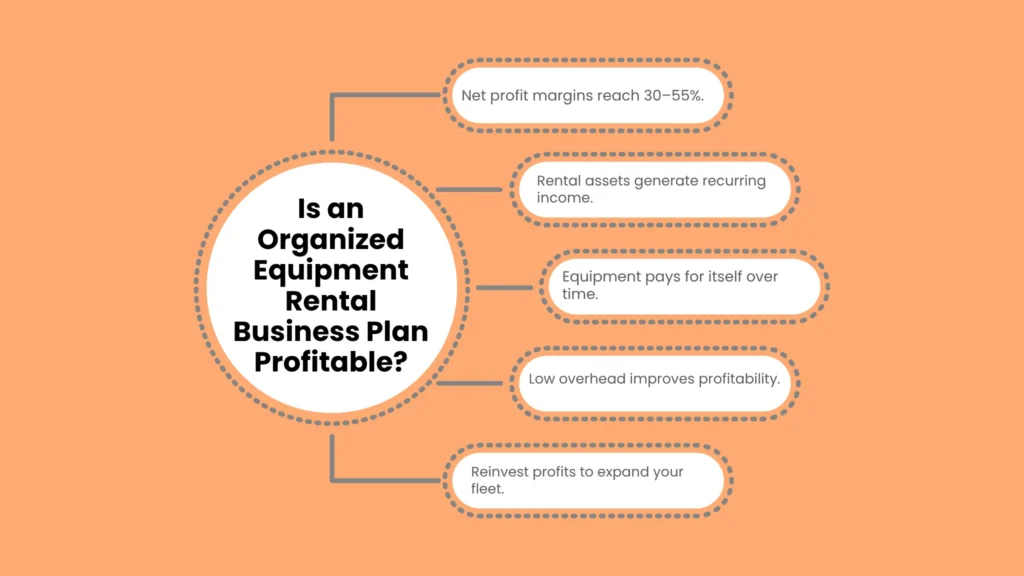
Unlike a traditional retail store where you buy inventory, sell it once, and make a small margin, an asset-leasing business allows you to monetize the exact same machinery hundreds of times over its long operational lifespan. For a category comparison, check our breakdown of rental business profit margins across different equipment types.
Your Expected Equipment Rental Business Plan Profit Margin
A well-run rental company can achieve an outstanding net equipment rental business plan profit margin of 30% to 55%. If you outline a lean home-based storage strategy in your plan and handle early deliveries yourself, your overhead remains virtually nonexistent. This allows your net profit margins to surge even higher.
Most baseline rental tools like commercial pressure washers, towable boom lifts, and mini-excavators completely pay for themselves within their first 15 to 25 bookings. Once an asset clears that initial financial floor, every future rental generates pure profit, minus a tiny fraction for routine replacement parts and fuel.
Real-World Revenue and Scaling Projections
Let’s look at a simple, real-world example of a lean tool package. Suppose you buy three commercial-grade hydraulic log splitters for a total cost of roughly $4,500. If your plan projects renting these units out for $90 per day with a conservative 35% occupancy rate, you will generate roughly $1,134 per month. Consequently, you will completely recover your initial equipment investment in less than five months.
As your local reputation grows, you can easily reinvest that cash into high-margin additions. These upgrades include utility trailers, skid steers, or specialized party tents. A single independent operator working part-time can realistically generate $25,000 to $60,000 in gross annual revenue. As you scale to a dedicated commercial yard and a larger fleet, the business can easily expand into a full-time operation pulling in six figures.
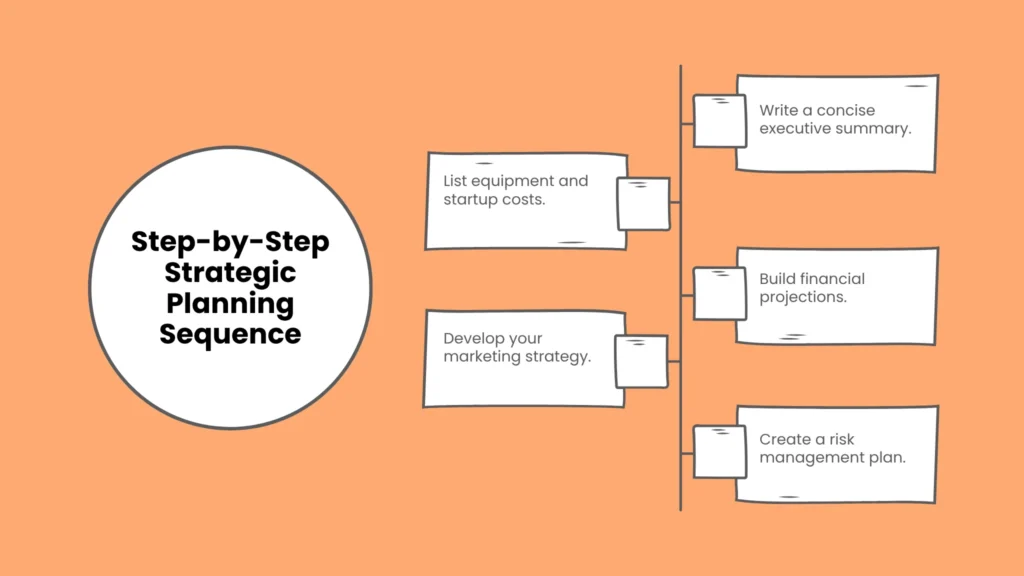
Step-by-Step Strategic Planning Sequence
To draft your operational blueprint without making costly financial mistakes or getting overwhelmed by variables, follow this clear chronological order to secure a flawless document structure.
Common Rental Planning Pitfalls to Avoid
The biggest mistake new operators make is neglecting depreciation calculations in their business plans. You do not need to be a certified accountant right away, but you must have a reliable replacement timeline. Many beginners successfully underestimate equipment wear and tear. If you fail to budget for eventual tire blowouts or mechanical engine failures, your cash reserves will vanish within months, which can destroy your assets and destroy your brand reputation.
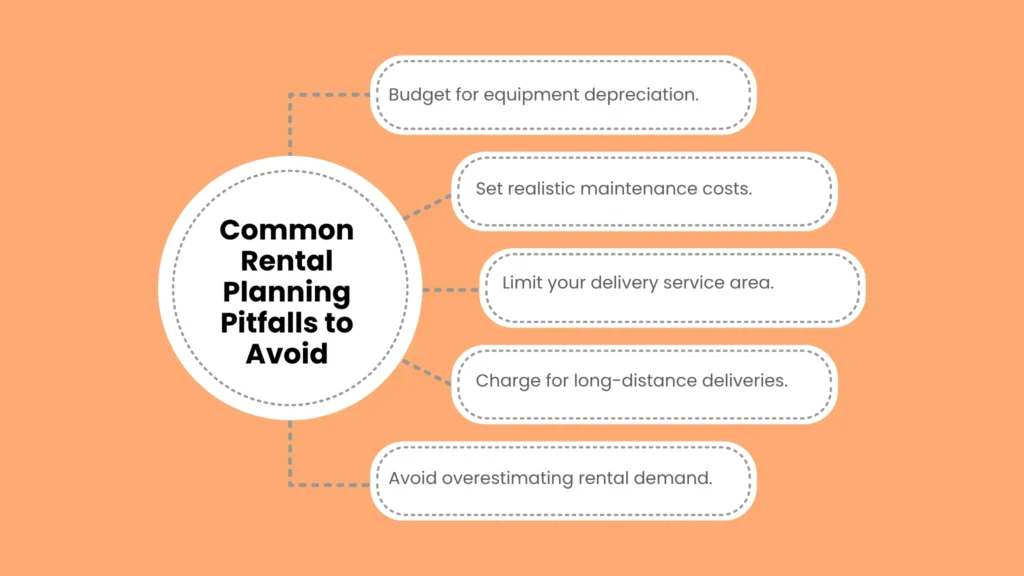
Another critical error is failing to enforce a strict geographic delivery boundary in your plan. Offering free delivery 50 miles away for a low-cost tool rental will completely erase your profit margin in fuel costs and lost labor time. Therefore, you must establish a strict local service radius, such as 20 miles from your storage yard. Additionally, outline a clear per-mile delivery fee for any project outside that primary zone.
Closing Thoughts on Finalizing Your Document
Launching an equipment leasing service remains one of the most accessible, high yielding paths to independent entrepreneurship. By narrowing your focus to a high-demand core asset list, keeping your storage overhead low, and using a structured business plan to manage your finances, you can build a highly resilient company. Focus on providing flawless equipment quality and maintaining strict safety standards. Consequently, your inventory will naturally generate the revenue required to scale your venture.
If you are looking for practical startup checklists, downloadable business plan templates, and operational blueprints to grow your service company, explore our complete start up library at reliablestartup.
Frequently Asked Questions
What are the most profitable items to include in an equipment rental plan?
While heavy machinery commands large single-day dollar amounts, mid-sized utility trailers, commercial floor sanders, and mini-excavators offer the highest long-term return on investment for beginners. They are highly affordable to purchase, incredibly durable, simple to transport, and experience non-stop year-round demand from both homeowners and local contractors.
How should my business plan address damaged or unreturned equipment?
Your business plan must clearly state that customers are financially responsible for any gear that is lost, stolen, or structurally damaged during their rental window. To protect your fleet, plan to collect a refundable security deposit at checkout. Alternatively, implement a mandatory credit card authorization hold that you can legally charge if the machinery requires professional repair or total replacement.
Is the equipment rental industry highly seasonal?
Yes, the demand for outdoor construction and landscaping gear spikes significantly during the spring and summer months. To keep your cash flow strong during the slower winter season, shift your marketing focus toward indoor renovation tools, floor care equipment, portable heaters, and holiday event supplies.
Should my plan focus on buying brand new gear or used items?
When you are operating on a tight launch budget, sourcing high-quality used commercial equipment from closing rental companies, corporate liquidations, or reputable dealers is an excellent move. However, your plan must allocate funds to inspect every item carefully before buying. Avoid machinery that shows signs of severe engine wear, and reject frames with significant structural rust.