Equipment Rental Business: Startup Guide, Costs and Ideas (2026)
The US equipment rental industry is undergoing a massive transformation, with market valuations projected to reach $58.49 billion by 2029. In today’s economy, the “Access over Ownership” model is no longer a trend it is a financial necessity for contractors and homeowners alike. By launching an equipment rental business, you are entering a sector defined by high-value assets that generate recurring revenue with relatively low labor costs.
Whether you are looking to start a localized tool rental business or a heavy-duty construction equipment rental firm, the blueprint for success lies in fleet utilization and strategic pricing. In this guide, we will explore the essential machinery rental ideas, startup costs, and legal frameworks required to thrive in the 2026 market.
At Reliable Startup, we have broken down every step so you can launch with confidence and capture a piece of this multi-billion dollar industry.
US Rental Market Overview
| Factor | Details |
| Projected Market Size (2029) | $58.49 Billion |
| Initial Investment Range | $60,000 – $200,000 |
| Target Profit Margin | 25% – 45% |
| Legal Structure Recommendation | LLC (Limited Liability Company) |
| Standard Pricing Benchmark | 3–5% of MSRP per day |
| Primary Customers | B2B Contractors (50%) & B2C Homeowners (35%) |
| Essential Insurance | General Liability + Inland Marine |
| Annual Sector Growth Rate | 4–5% Average |
What Is an Equipment Rental Business and Why Start One in 2026?
An equipment rental business involves purchasing high-demand machinery or tools and leasing them to clients for a set duration usually daily, weekly, or monthly. The beauty of this model is its sustainability: a single excavator or industrial generator can pay for itself multiple times over its operational lifespan, continuing to produce pure profit long after the initial investment is recovered.
Why the Equipment Rental Business Is Booming Right Now
In 2026, several macroeconomic drivers are creating a perfect storm for rental entrepreneurs:
Capital Preservation: US contractors are increasingly hesitant to lock up millions in equipment debt. Renting allows them to keep their balance sheets lean.
Infrastructure Investment: Federal and state spending on US roads, bridges, and green energy projects has created a localized vacuum for specialized machinery.
The Prosumer DIY Era: High labor costs for contractors mean more homeowners are renting mini-excavators or power tools to perform their own renovations.
Inflationary Pressures: As the retail price of new machinery rises, the cost-benefit analysis for renting becomes even more attractive to end-users.
Top Machinery Rental Ideas to Choose Your Niche
Selecting your niche is the most critical decision you will make. It dictates your storage requirements, your transport logistics, and your target marketing strategy.
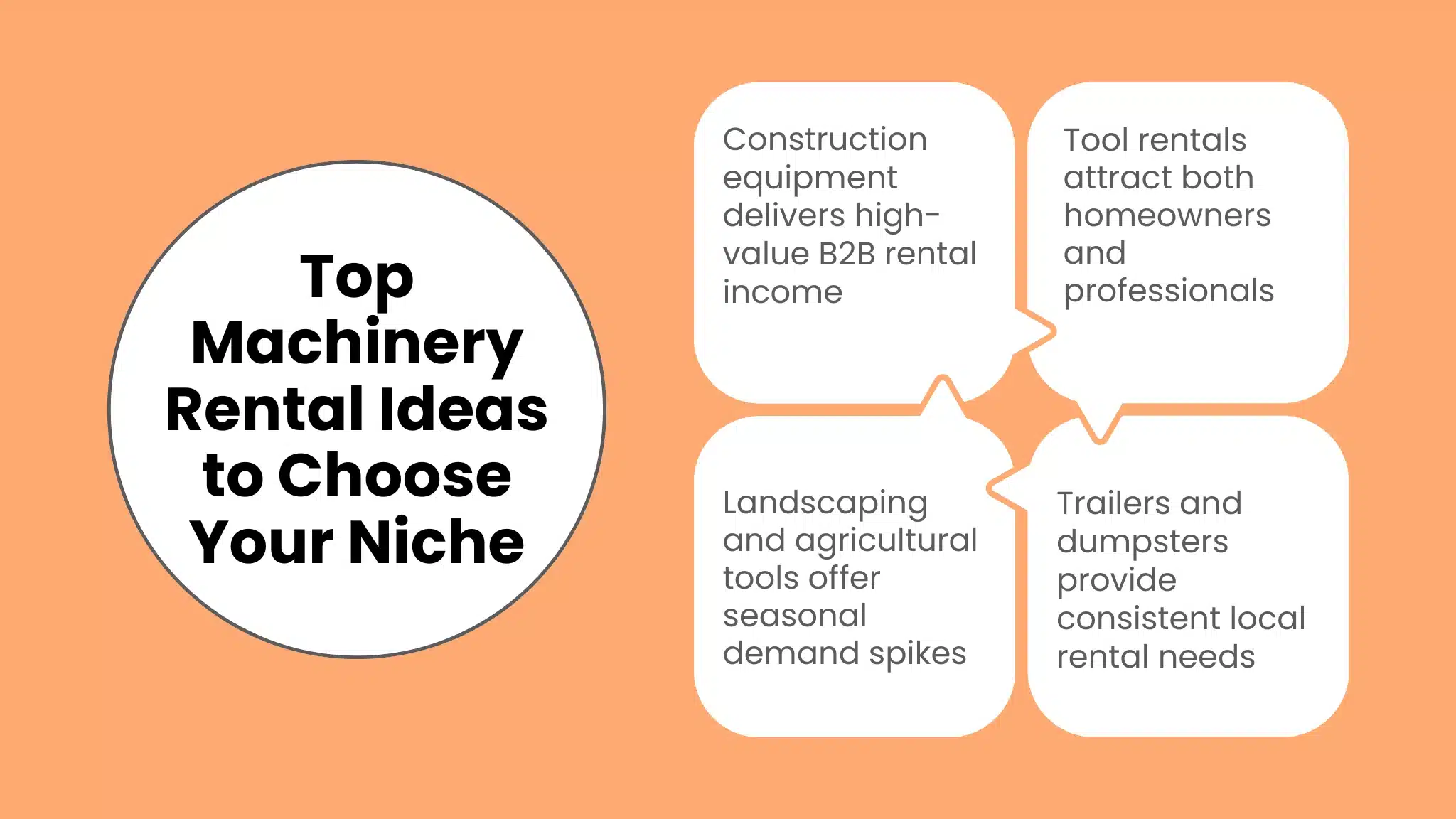
Construction Equipment Rental
Serving the professional B2B sector, this niche offers the highest revenue per transaction.
Core Inventory: Mini-excavators, skid steers, scissor lifts, and telehandlers.
Profit Potential: High-demand items like a 1-2 ton mini-excavator can rent for $250–$400 per day in the US market.
Target Audience: General contractors, plumbers, and landscaping firms.
Tool Rental Business
A tool rental business focuses on high-turnover, smaller-scale items that appeal to a broader demographic.
Core Inventory: Jackhammers, floor sanders, pressure washers, and industrial blowers.
Market Advantage: These items are easier to transport and can often be housed in a standard commercial storefront rather than a massive industrial lot.
ROI Factor: Smaller tools often have shorter payback periods (sometimes as low as 6 months).
Other Profitable Machinery Rental Ideas
Agricultural & Landscaping: Stump grinders, wood chippers, and hydraulic log splitters are seasonal goldmines during Spring and Autumn.
Material Handling: Forklifts and pallet jacks for warehouse overflow or short-term event setups.
Dumpster & Trailer Rentals: Utility trailers and 14ft dump trailers are in constant demand for waste removal and DIY moving projects.
Equipment Rental Business Startup Costs: Full Breakdown
To build a reliable business, you must account for both the visible costs of the iron and the hidden costs of operations and protection.
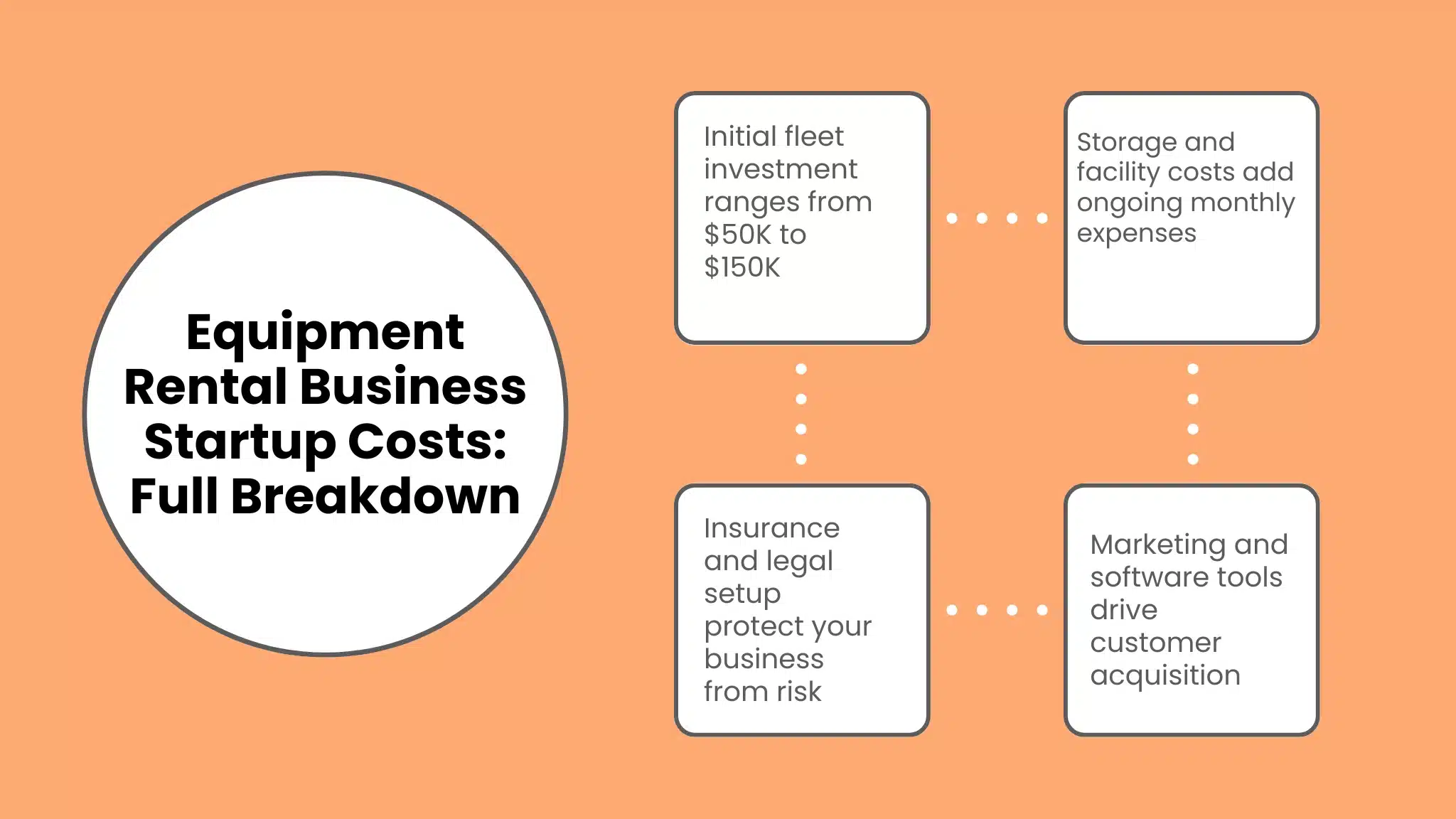
How Much Does It Cost to Start an Equipment Rental Business?
| Expense | Estimated Cost (USD) |
| Initial Fleet Acquisition | $50,000 – $150,000 |
| Facility / Storage Lot Lease | $2,000 – $5,000/month |
| General Liability Insurance | $5,000 – $10,000/year |
| Inland Marine (Equipment) Insurance | $1,500 – $3,000/year |
| Website, Booking Software, & SEO | $2,000 – $5,000 |
| Legal Formation (LLC) & Permits | $500 – $2,500 |
| Initial Marketing & Lead Gen | $2,000 – $5,000 |
| Total Estimated Launch Capital | $60,000 – $200,000 |
Pro Tip: Many successful US rental houses start with Floor Plan Financing. This allows you to place equipment on your lot with minimal cash down, paying the interest as the machine earns rental income. This preserves your cash for marketing and emergency repairs.
Legal Setup for Your Equipment Rental Business
In an industry where customers operate heavy, potentially dangerous machinery, your legal structure is your most important asset.
Business Structure, Licenses, and Permits
Forming an LLC is the standard for a US equipment rental business. This structure ensures that if a machine is involved in a job site accident, your personal assets (home, savings) are shielded from business liabilities. You will also need:
EIN: Your tax ID for hiring staff and opening commercial bank accounts.
Zoning Compliance: Ensure your lot is zoned for Light Industrial or General Commercial to avoid fines regarding noise or machinery storage.
Sales Tax Permit: Required to collect state sales tax on every rental transaction.
OSHA Compliance and Equipment Safety Rules
Under OSHA 1926 standards, rental providers are responsible for the safe condition of the machinery they provide.
Daily Inspection Logs: You must maintain records showing that every machine was inspected before being handed to a client.
The Safety Brief: It is a best practice to have customers sign a Statement of Competency and provide them with a digital or physical operation manual.
Tag-Out Systems: Any machine found with a hydraulic leak or safety defect must be physically tagged and removed from the rental pool until a certified technician clears it.
How to Price Your Equipment Rental Business for Profit
Your pricing must cover depreciation, maintenance, insurance, and your desired margin.
Equipment Rental Business Pricing Structure
The Daily Rate: This should be 3–5% of the machine’s retail price. If you bought a dump trailer for $8,000, your daily rate should be roughly $150–$175.
Weekly vs. Monthly: The industry standard is 4 days equals a week. If your daily rate is $100, your weekly rate should be $400. This encourages longer-term rentals which reduce your logistics labor.
Damage Waivers: Offer an optional 10–12% fee that covers accidental minor damage. This provides the customer peace of mind and adds a significant high-margin revenue stream to your bottom line.
How to Market Your Equipment Rental Business Online
In 2026, the battle for customers is won on the smartphone. If you are not visible on Google Maps when a contractor searches skid steer rental near me, you do not exist.
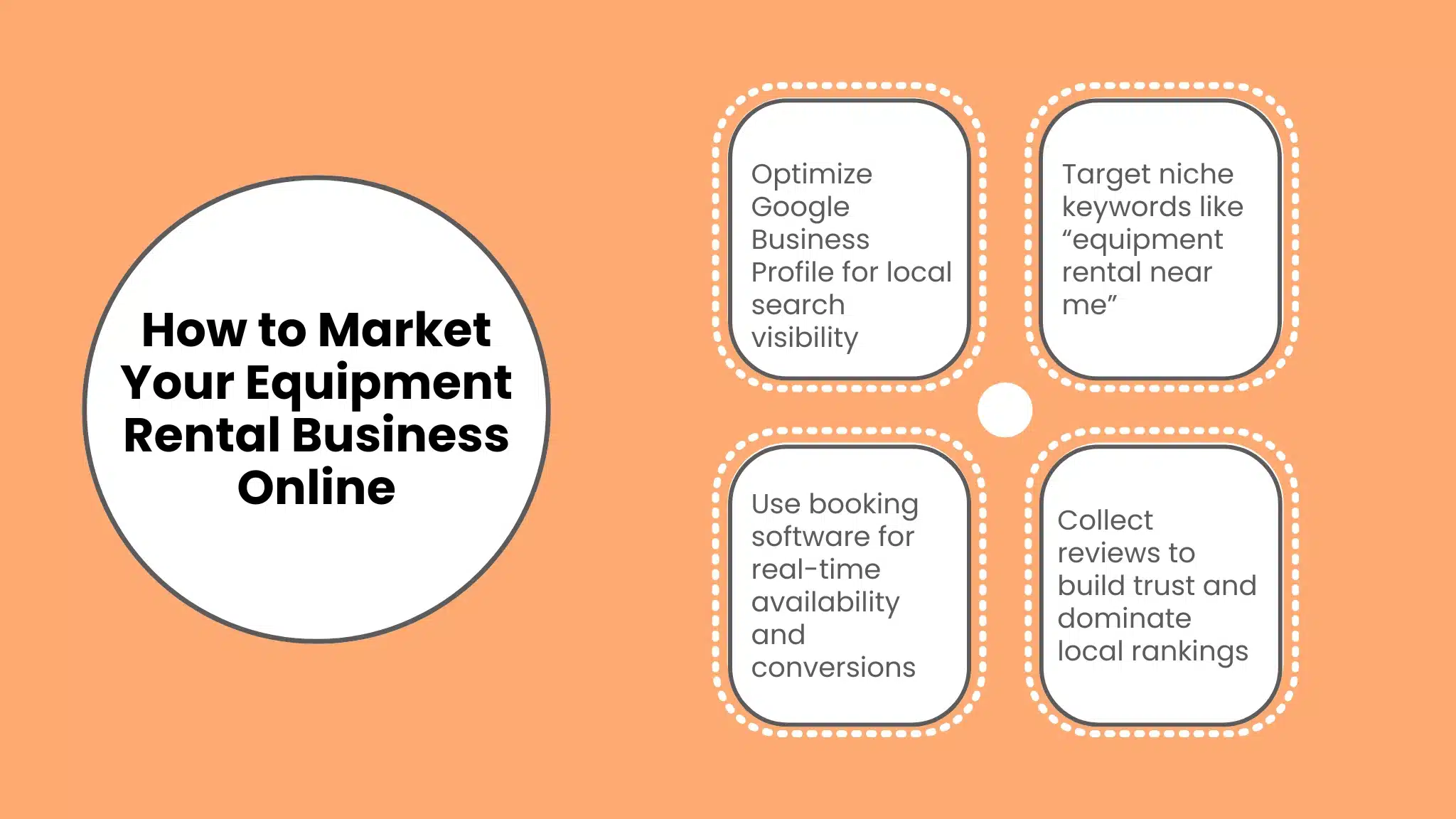
Local SEO and Digital Dominance
Google Business Profile: Optimize this with high-resolution photos of your clean, well-maintained equipment. Encourage customers to leave reviews specifically mentioning your reliability and clean machinery.
Search Terms: Focus on hyper-local keywords. Instead of just tool rental, target commercial pressure washer rental.
Booking Integration: Use software like Booqable or Rentman to allow customers to see real-time availability and book directly from their phone without calling you.
How to Run and Scale Your Equipment Rental Business
Operations are the heartbeat of the rental industry. Efficient maintenance cycles prevent dead days where a machine sits idle in the shop.
Equipment Maintenance and Inventory Management
Preventative Schedules: Don’t wait for a hose to burst. Schedule oil changes and hydraulic checks every 250 operational hours.
The Golden Resale Strategy: The most profitable rental houses sell their machines when they reach 50% of their expected lifespan (approx. 2,000–3,000 hours for heavy machinery). This allows you to sell at a high price on the used market and buy brand-new replacements with full warranties.
When to Scale
Scaling should be data-driven. When a specific category (e.g., mini-excavators) hits a 70% utilization rate for three consecutive months, it is a clear signal to add another unit to your fleet.
Conclusion
Starting an equipment rental business in 2026 is a sophisticated, scalable way to enter the US infrastructure and DIY economy. By focusing on high-demand machinery rental ideas, maintaining rigorous OSHA safety standards, and pricing for long-term fleet replacement, you can build a highly profitable enterprise.
The path to success requires a commitment to maintenance and a digital-first approach to customer acquisition. Ready to launch? Reliable Startup has the practical guides and financial breakdowns to help you turn your inventory into a high-yielding revenue engine. Build your fleet, serve your community, and start your journey toward a dominant rental empire today.
Frequently Asked Questions
Is an equipment rental business profitable in 2026?
Absolutely. With net profit margins often reaching 35–45% after expenses, it is one of the most stable real asset businesses you can start.
Can I start this business from home?
A tool rental business can occasionally start from a large home garage, but most construction equipment rental operations require a commercial lot to handle transport trucks and OSHA compliance inspections.
What is the most rented item in the USA?
Currently, skid steers and mini-excavators hold the highest demand in the B2B sector, while power washers and trailers lead the B2C market.
How do I handle equipment damage?
Always secure a credit card on file and use a comprehensive rental agreement that clearly defines the customer’s liability. A damage waiver program can also help mitigate these costs.