Tyre Recycling Business in Florida: Costs, Permits & Best Markets to Target
The volume of scrap tires piling up across Florida is staggering. Between our massive year-round population, the constant influx of tourists driving rental cars, and our sprawling commercial trucking corridors, the state produces millions of waste casings every single year. Launching a tyre recycling business florida operation allows you to capture a steady stream of raw material, keep it out of landfills, and process it into high-demand commodities like rubberized asphalt, playground infill, and storm-resistant landscaping mulch.
However, moving from a good idea to an operational plant requires navigating a tight web of state regulations, investing in the right machinery, and choosing the right markets. Building your corporate framework with a specialized corporate service like Reliablestartup ensures your business entity is properly structured right from the start, leaving you free to focus on logistics, site selection, and state environmental approvals.
1. What It Actually Costs to Start: A Realistic Financial Breakdown
This is not a business you can run out of the back of a pickup truck with a cheap utility shredder. Commercial tire processing is a heavy-industrial, high-wear operation that demands durable, specialized equipment capable of tearing through steel-belted radials day in and day out.
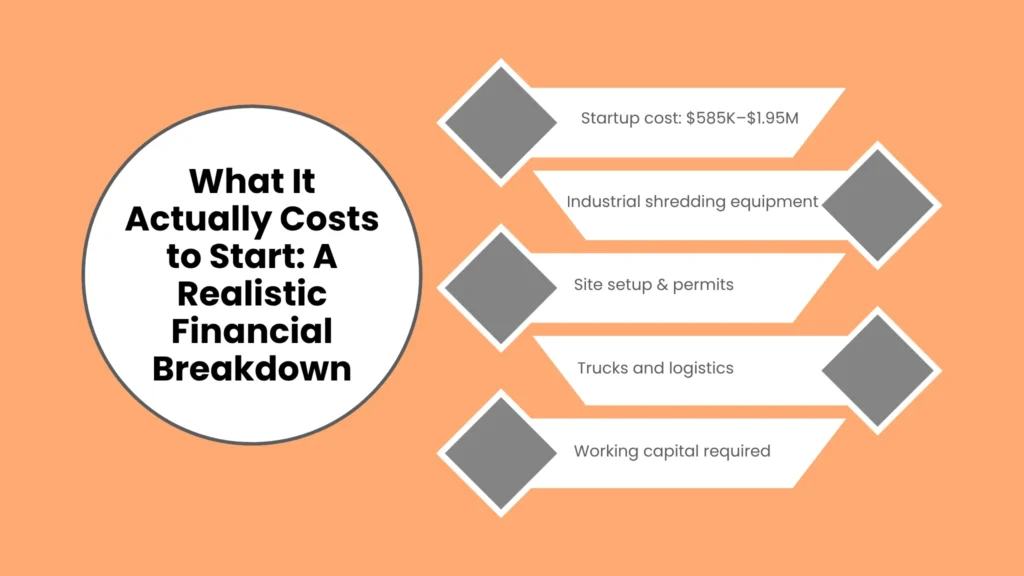
While you can start smaller by operating strictly as a collection and consolidation service, a true processing facility requires serious capital. Based on current industry data, the table below outlines the estimated startup costs you need to plan for:
| Expense Category | Estimated Cost Range (USD) | What It Actually Covers |
| Primary & Secondary Machinery | $350,000 – $1,200,000 | Heavy-duty industrial shredders, granulators, magnetic wire separators, and commercial bagging lines. |
| Site Prep & Industrial Lease | $40,000 – $150,000 | Securing a properly zoned heavy-industrial plot, pouring thick concrete pads, and installing fire suppression loops. |
| Permits, Legal Fees & Bonds | $15,000 – $50,000 | Environmental engineering plans, local zoning variances, and required state financial assurance mechanisms. |
| Logistics & Rolling Stock | $80,000 – $250,000 | Flatbed trucks, heavy-duty trailers for commercial drop-and-hook routes, and industrial forklifts. |
| Operational Working Capital | $100,000 – $300,000 | Cash runway to handle payroll, high utility bills, and machine maintenance before your first major invoice clears. |
| Total Estimated Initial Capital | $585,000 – $1,950,000 | The realistic investment required to launch a fully compliant, high-throughput facility. |
To get a precise corporate roadmap before investing this level of capital, launching your legal structure through Reliablestartup will save you from costly organizational reworks later down the line.
2. Navigating the Florida DEP and Permitting Maze
You cannot simply rent an industrial yard, buy a shredder, and start collecting tires. Because piles of scrap rubber present massive fire hazards and create breeding grounds for mosquitoes, Florida heavily regulates this industry. Staying compliant means knowing exactly who to talk to at both the state and local levels.
Staying on the Right Side of the Florida DEP Tire Program
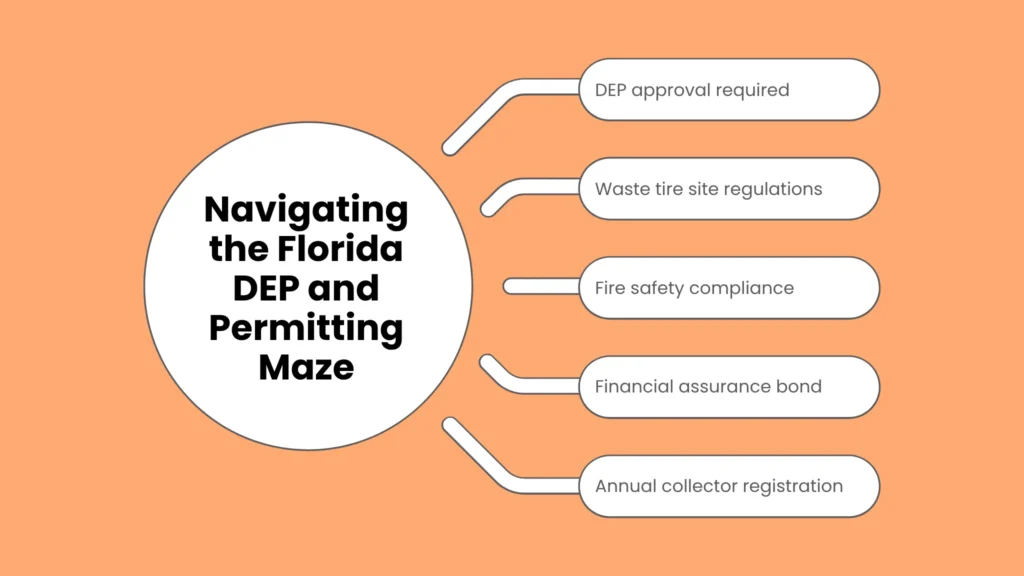
The regulatory backbone of the industry is the florida dep tire program, managed directly by the Department of Environmental Protection. The state monitors these operations closely to prevent illegal dumping and abandoned stockpiles.
The operational boundaries are very clear. For example, if your yard accumulates 1,500 or more waste tires at any single time, you are legally classified as a waste tire site. This triggers a series of mandatory safety measures under the rules of the state agency, including maintaining wide, unobstructed fire lanes, implementing strict vector control protocols to prevent standing water, and securing a financial assurance bond. This bond ensures that if your business goes under, the florida dep tire program has the funds to clean up the site rather than sticking taxpayers with the cleanup bill.
Getting Your Florida Tire Recycling Permit Approved
Securing your official florida tire recycling permit is an intensive process. You cannot just fill out a quick online form; you need to submit comprehensive engineering blueprints, detailed storm-water management plans, and a clear operational narrative explaining exactly how you will process the material to get your licensing issued.
Furthermore, compliance extends directly to the roads. If you plan to haul your own material, any vehicle carrying more than 25 scrap tires on public roads must register annually as a waste tire collector and display a valid compliance decal on the driver’s side door. Operating without the correct credentials can result in severe daily fines and an immediate closure order from state inspectors who check for active florida tire recycling permit documentation.
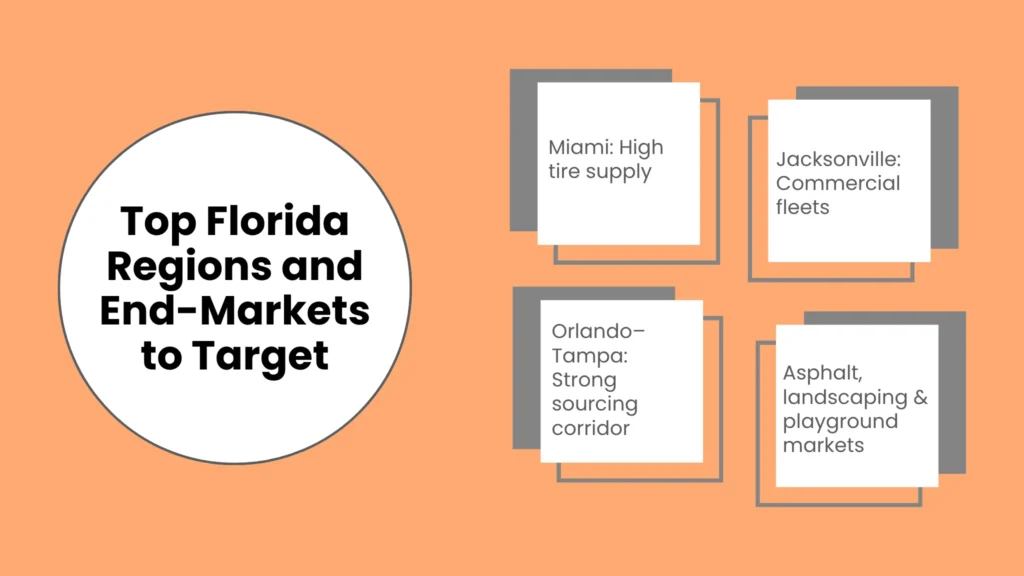
3. Top Florida Regions and End-Markets to Target
To make a profit, you need to solve two distinct logistical equations: where to source your raw material cheaply and where to sell your processed rubber for the highest return. Fortunately, Florida’s unique geography offers several highly lucrative regions for both sides of the business.
High-Density Inbound Sourcing Markets
Logistics can make or break your recycling facility. Sourcing your raw material near major population centers keeps your fuel and transport costs low:
The Southern Hub: If you set up operations to recycle tyres miami, you gain direct access to the state’s most densely populated metro area. The thousands of auto repair shops, car dealerships, and municipal fleets across Miami-Dade produce an endless supply of scrap passenger tires every single week. When you establish a collection loop across these regions, running a drop-and-hook trailer program with local mechanics guarantees a steady inventory pipeline. Ultimately, the choice to collect and process this specific urban volume helps clean up local landfills while supplying your processing plant with constant material.
The Northeast Gateway: Positioning your collection routes to recycle tyres jacksonville lets you tap into a massive logistics and shipping hub. Jacksonville’s deepwater ports and major interstate corridors mean your facility can source heavy commercial truck tires, which yield significantly more rubber and valuable steel wire than a standard passenger car tire. If you position your brand to capture these commercial freight accounts, you can build profitable long-term contracts. The logistics infrastructure makes it incredibly efficient to sort these heavy commercial vehicle loads because fleet trucks wear out their treads rapidly on the busy I-95 corridor.
The Central Corridor (Orlando to Tampa): The high concentration of rental car fleets, theme park transit vehicles, and construction machinery along the I-4 corridor provides an excellent source of steady, specialized scrap volume.
Finding Buyers for Your Finished Product
Once your shredders have reduced the tires down to clean crumb rubber and separated out the steel wire, you need reliable buyers. The strongest commercial markets in Florida include:
Infrastructure Development: The Florida Department of Transportation (FDOT) regularly uses rubberized asphalt mixes for major highway resurfacing projects because it handles our intense summer heat and heavy tropical downpours better than standard asphalt.
Commercial Landscaping: Rubber mulch is incredibly popular across Florida. Unlike wood mulch, it won’t rot, doesn’t wash away in heavy rainstorms, and doesn’t attract termites, making it an easy sell to local landscaping suppliers.
Recreational Infrastructure: Municipalities and private schools are constantly buying crumb rubber infill for synthetic sports fields, running tracks, and playground surfaces.
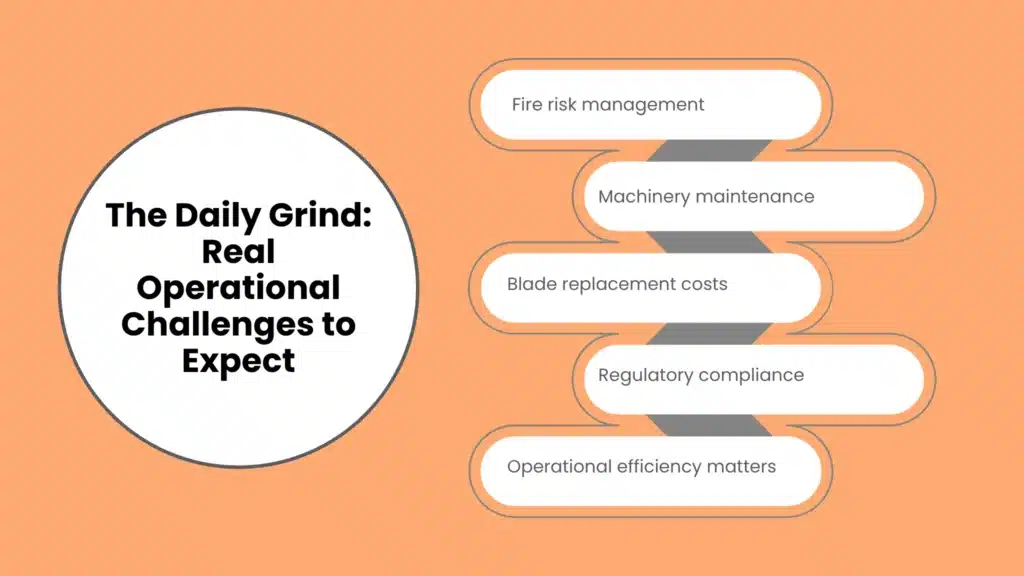
4. The Daily Grind: Real Operational Challenges to Expect
A tyre recycling business florida project sounds great on paper, but running a successful facility requires managing real daily challenges that go beyond paperwork. Setting up a fully compliant industrial blueprint means you must plan your facility layout to address the harsh realities of handling industrial waste materials in a tropical climate.
The Ever-Present Fire Risk
Tire fires are a nightmare scenario. Because tire casings naturally trap pockets of oxygen and rubber is essentially a solid petroleum product, a tire fire can burn for weeks, buried deep within a pile. Your yard layout must place fire prevention first, featuring wide fire lanes that allow local emergency vehicles to navigate easily between your stockpiles.
The Reality of Machine Maintenance
Shredding steel-belted radial tires is incredibly tough on machinery. The tool-steel knives inside your primary shredder will dull and chip over time. If you do not factor daily maintenance and regular blade-sharpening costs into your financial model, your operation will quickly suffer from unexpected downtime and lost production capacity.
Staying Ahead of Changing Regulations
Environmental laws change constantly. Updates regarding microplastic runoff, storm-water drainage, or crumb rubber processing can require unexpected changes to your facility’s daily workflow. Keeping your corporate structure flexible and compliant requires steady advice from professional business platforms like Reliablestartup, which helps you navigate corporate changes without disrupting your daily operations.
5. Key Takeaways for Launching Successfully
Invest in Machinery Early: Don’t skimp on shredding lines. Processing volume directly determines your profit margin, making industrial equipment reliability your primary operational asset.
Maintain Strict Compliance: Build a transparent workflow with regional DEP inspectors. Unpermitted accumulation of scrap material triggers severe daily financial penalties.
Optimize Fuel and Logistics: Keep your processing site within a tight geographical radius of high-density metropolitan zones to control fleet transportation costs.
Diversify Your End-Buyers: Avoid relying on a single contract. Establish distinct buyers across municipal roadway engineering, commercial landscaping, and athletic field installation.
Conclusion
Building a sustainable, highly profitable commercial infrastructure comes down to balancing strict environmental compliance with smart logistics. By securing your corporate foundations, operating cleanly under regional guidelines, and setting up your processing footprint near high-density sourcing hubs, whether your goal is to recycle tyres miami zones or build out routes to recycle tyres jacksonville loads, you can lock in a steady supply of raw material and turn it into consistent profits.
Focus on securing your inbound tire supply contracts with regional auto shops, and build strong relationships with commercial buyers who need your finished crumb rubber. When you are ready to handle the legal setup, structure your corporate entity, and lay a solid foundation for your new venture, visit Reliablestartup to get your business off the ground the right way.
Frequently Asked Questions
If you want to start a tire facility in Florida, you need straight facts on insurance, road regulations, collection fees, and state audits. Here are direct answers to the most critical operational questions:
What specific insurance policies does a Florida tire processing facility require?
You need three core commercial policies: general liability, commercial fleet insurance for transport trucks, and specialized environmental pollution liability. Additionally, the DEP requires you to put up a financial assurance mechanism, such as a formal performance bond or an irrevocable letter of credit, to cover potential cleanup costs if the business closes.
Is it legal to run a mobile tire shredding service instead of a permanent facility?
Yes. You can run mobile shredding units in Florida, but you aren’t exempt from state tracking. You must register your exact machinery with the DEP as a mobile waste tire processor and follow identical vector control, cargo manifest logging, and environmental reporting rules as fixed brick-and-mortar plants.
How much can I realistically charge local auto shops for scrap tire pickup?
Collection tipping fees fluctuate between $2.00 and $5.50 for a standard passenger car tire. For oversized heavy commercial truck tires, you can routinely charge between $10.00 and $25.00 per casing depending on the hauling distance, giving you upfront revenue before processing even starts.
How does the state verify that waste tires aren’t dumped in rural backroads?
Florida uses an airtight, mandatory manifest tracking system. Every registered collector must log the exact location of pickup, precise unit counts, and the delivery signature from the permitted disposal facility. State regulators audit these paper trails regularly to eliminate illegal dumping loops.