How Much Does It Cost to Recycle One Tyre? (Real US Numbers Per Ton)
Have you ever wondered what happens to your car tires after they wear thin and get replaced? Millions of scrap tires are discarded across the United States every year, turning tire disposal into a massive economic and environmental puzzle. If you are a business owner looking to break into the green energy sector, an auto shop manager, or a sustainability enthusiast, understanding the financial realities of processing rubber waste is critical.
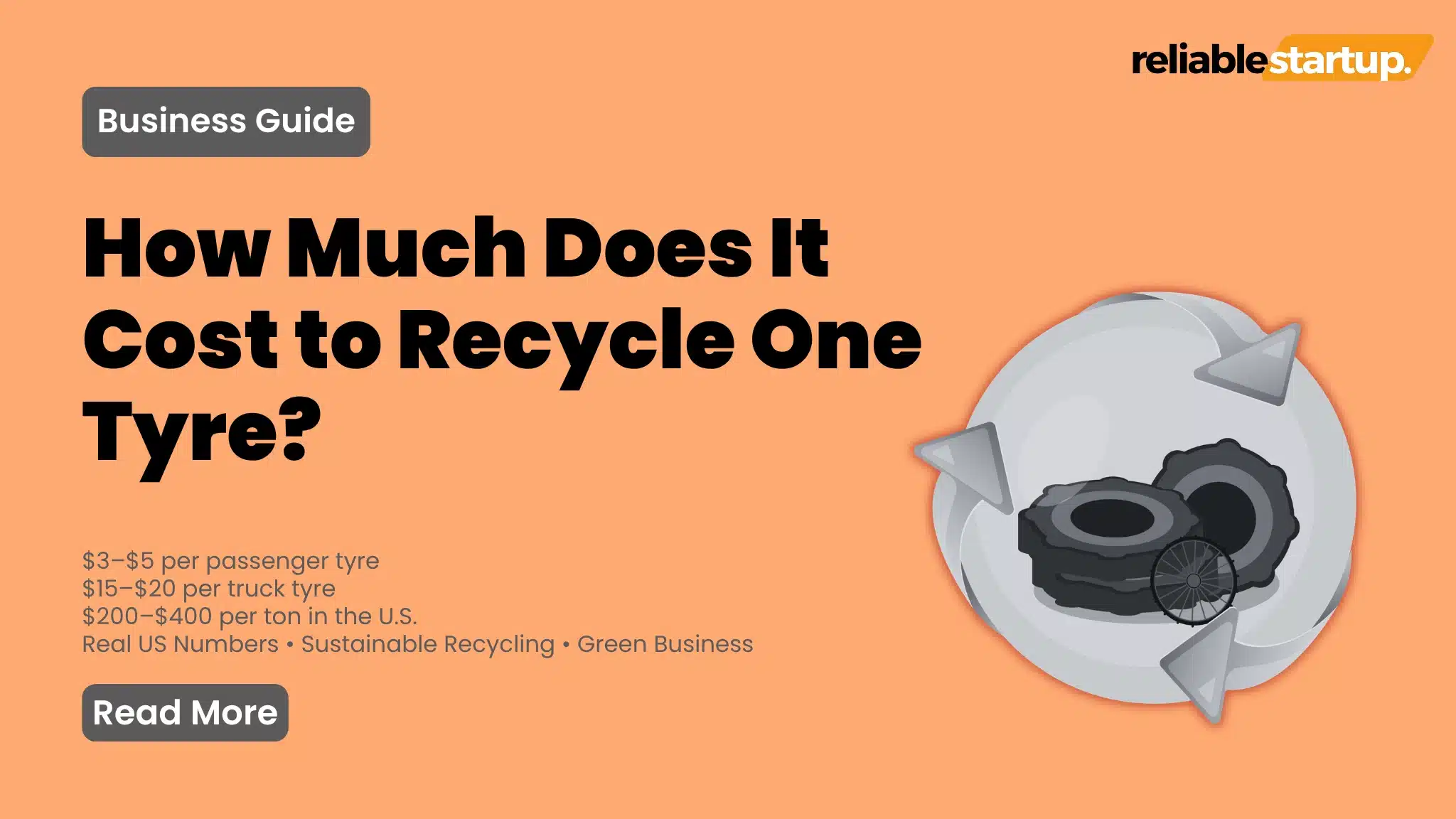
So, what is the cost to recycle one tyre? On average, commercial calculations show that processing ranges between $3 and $5 for a standard passenger car unit, while heavy industrial trucks can require anywhere from $15 to $20 each. When scaled up to industrial volumes, the estimated market processing budget sits between $200 and $400, depending heavily on regional tipping fees, processing methods, and local municipal regulations.
The Hidden Economics of Rubber Waste
Tires are engineered to be virtually indestructible on the road. Unfortunately, that same durability makes them incredibly tough to tear apart and repurpose. The complete recycling process requires heavily specialized machinery, intense energy consumption, and highly organized transportation networks.
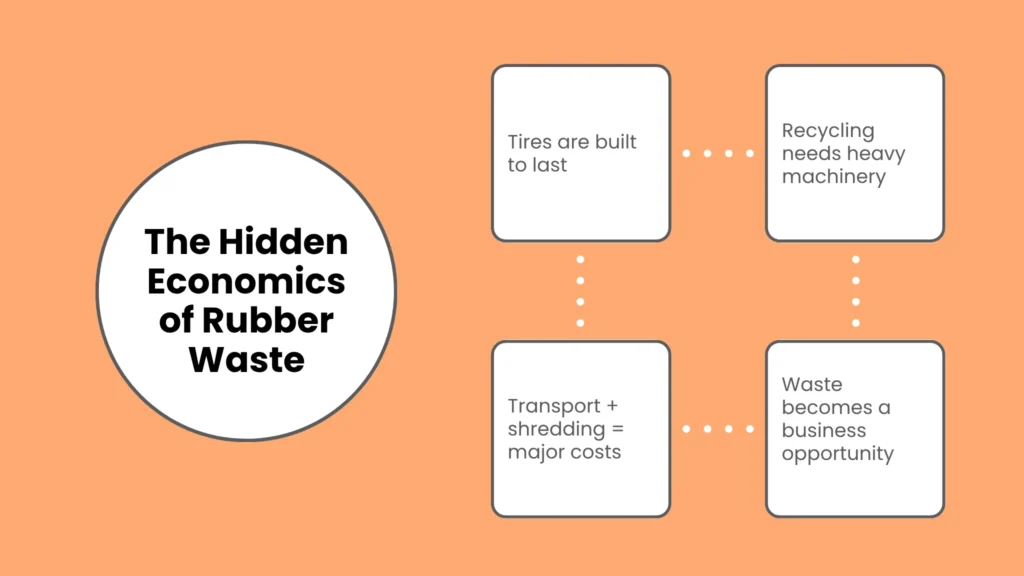
To map out these dynamics clearly, the financial structure of the tire processing industry can be split down the middle. There is the money a facility collects just to take the rubber off your hands, balanced against the heavy overhead costs required to shred, grind, and repurpose the material into something new. This balancing act is exactly what teams at Reliablestartup analyze when evaluating emerging eco-friendly businesses.
Understanding the Scrap Tire Disposal Fee
Before a tire ever touches a shredder blade, a financial transaction occurs at the collection point. When you purchase new rubber at a dealership, you will spot a scrap tire disposal fee added to your final receipt. This fee is often mandated by state laws to help fund local environmental programs, clean up illegal stockpiles, and subsidize registered processing facilities.
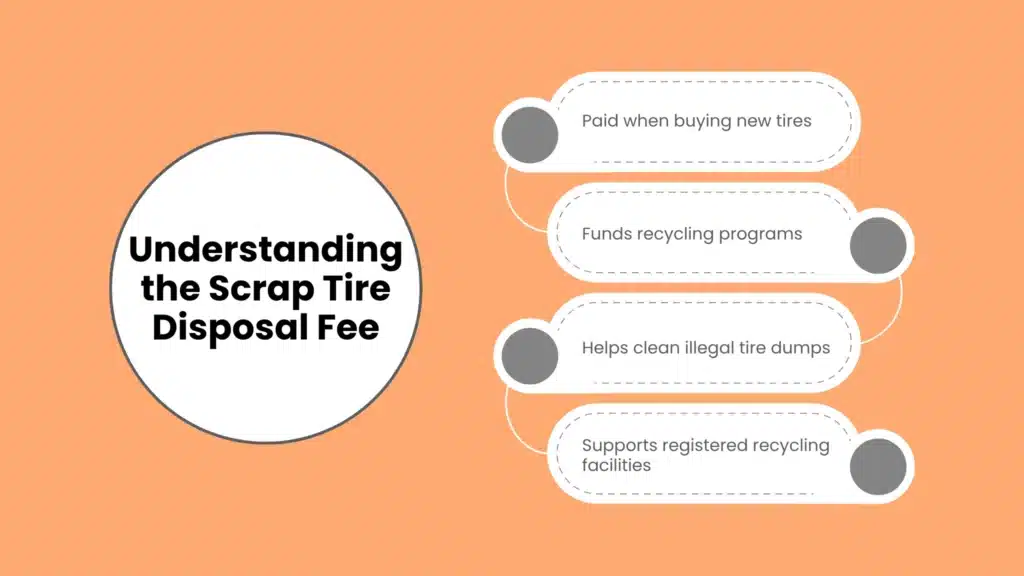
For everyday drivers, this initial collection fee is relatively small. However, if you manage an auto fleet or a construction firm, these individual charges scale up fast. The money collected from these fees helps bridge the financial gap between raw waste collection and consumer-ready recycled products. A typical state-level scrap tire disposal fee can vary wildly, but it provides the essential baseline liquidity that collection networks rely on to stay operational.
Industrial Costs: Breaking Down the Per-Ton Numbers
To get a realistic grasp of this industry, we have to look past individual units and examine bulk weights. Commercial processing facilities do not calculate their margins by single tires; they measure everything by the short ton (2,000 pounds).
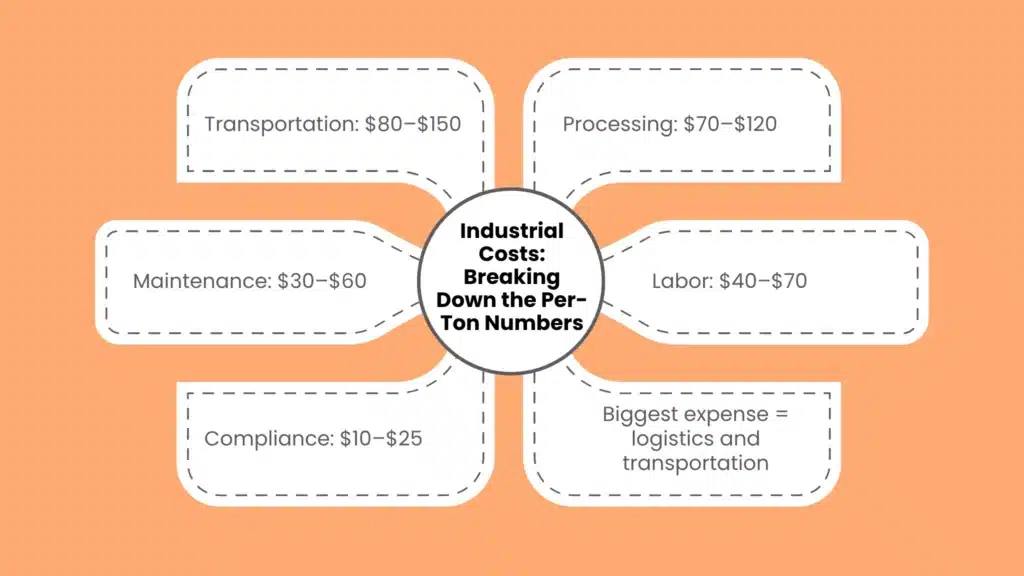
The table below provides an estimated recycling cost breakdown per ton across the United States, based on current market data.
| Cost Component | Average Cost Range (Per Ton) | Percentage of Total Budget |
| Logistics & Transportation | $80 – $150 | 35% – 40% |
| Shredding & Mechanical Processing | $70 – $120 | 30% – 35% |
| Facility Maintenance & Equipment Wear | $30 – $60 | 12% – 15% |
| Labor & Plant Operations | $40 – $70 | 15% – 18% |
| Regulatory Compliance & Licensing | $10 – $25 | 4% – 6% |
As shown in our data table, moving heavy, bulky rubber across state lines or even local counties is often the single most expensive part of the operation. Because tires take up a tremendous amount of physical space relative to their weight, filling a flatbed trailer with raw scrap is highly inefficient until those tires are crushed or roughly chopped. This logistics bottleneck directly impacts the net tyre recycling cost per ton.
Regional Variances in the Tipping Fee for Tyres
A major factor influencing the total bulk processing requirement is the local tipping fee for tyres. A tipping fee is the gate charge levied by landfills, transfer stations, or processing hubs to drop off waste materials.
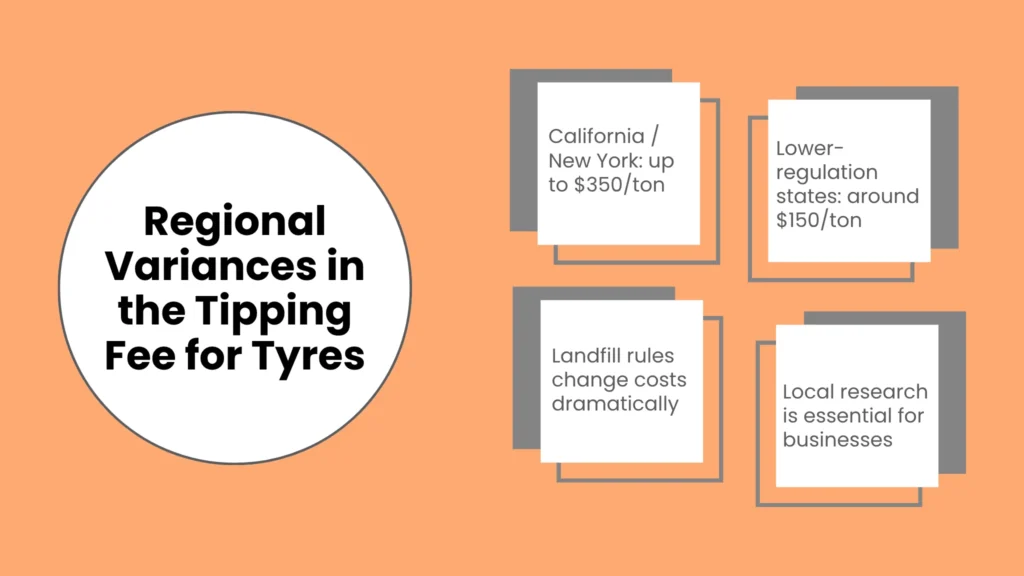
In states with strict environmental laws and limited landfill space, such as California or New York, the gate metrics can soar past $350 per ton. Conversely, in regions with vast open ground and fewer processing rules, you might find a localized tipping fee for tyres closer to $150 per ton. These wide regional swings make thorough localized research mandatory for any new business model featured on Reliablestartup.
Step-by-Step Recycling Cost Breakdown
The journey from a rolling safety hazard on the highway to a valuable raw material follows a strict, costly path. If you miss a step or cut corners on machine maintenance, the entire financial viability of the operation can collapse. A granular recycling cost breakdown reveals that power consumption and mechanical degradation represent ongoing financial leaks if not carefully optimized.
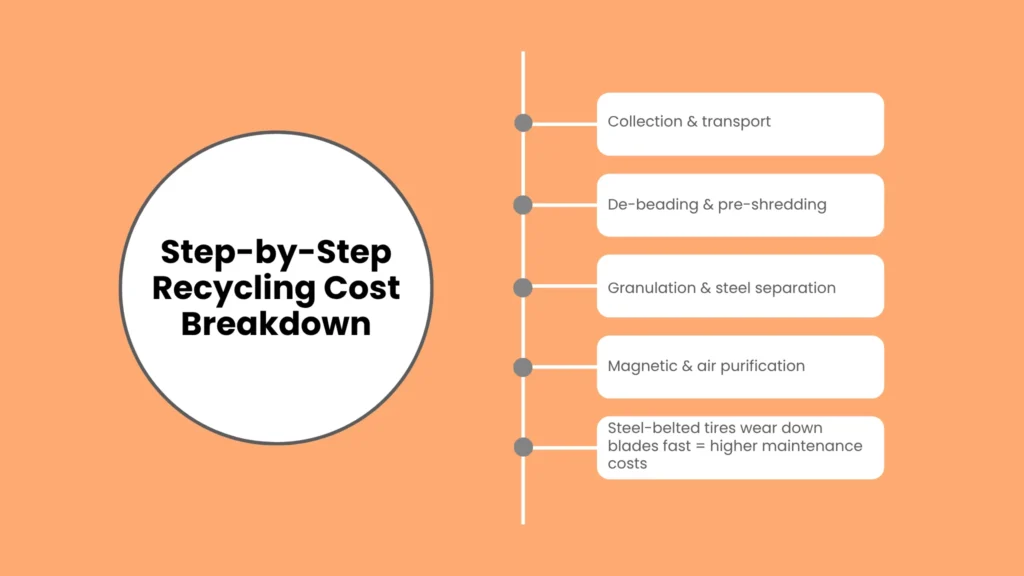
Collection and Consolidation: Variable Timing. Scrap rubber is gathered from retail centers, municipal dumps, and auto repair shops. It is hauled to a central hub using heavy freight trucks to build a consistent processing volume.
Primary De-beading and Pre-Shredding: First Mechanical Stage. Heavy machines slice through the tire to extract the thick, internal steel bead wires. The remaining rubber is passed through massive primary shredders that chop the tire into rough 2-inch to 6-inch chunks.
Secondary Granulation and Liberation: High-Energy Processing. The rough chunks pass into high-speed granulators. This stage grinds the chunks down into uniform crumb rubber while separating the fine steel wire mesh and textile fluff fibers from the clean rubber.
Magnetic and Air Separation: Purification Stage. Powerful industrial magnets pull away the valuable steel wire leftovers for metal recycling. Concurrently, air classifiers vacuum away light textile fibers, leaving behind pure, graded crumb rubber.
Note on Equipment Wear: Steel-belted radial tires are intentionally designed to resist puncture and tears. Processing them dulls heavy industrial blades incredibly fast, requiring frequent, expensive blade sharpening and replacement schedules that drive up production overhead.
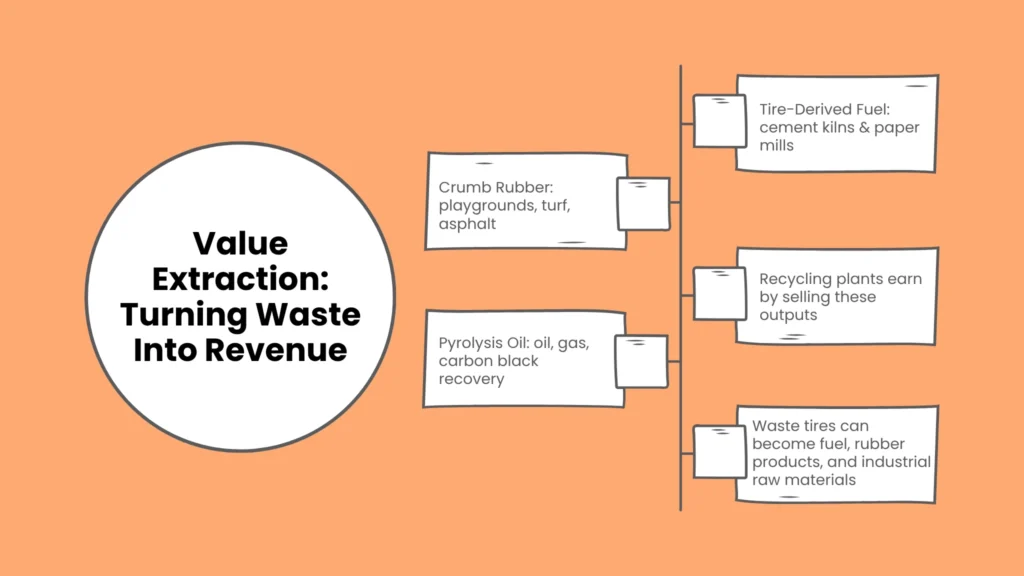
Value Extraction: Turning Waste Into Revenue
To offset the high tyre recycling cost per ton, processing plants rely heavily on selling the end products generated during mechanical breakdown. The financial health of a plant hinges on producing high-demand, reusable materials to recover the initial cost to recycle one tyre.
1. Crumb Rubber and Infill
Finely ground rubber granules are highly sought after for a variety of public works and consumer projects. This material is widely used as infill for synthetic sports fields, cushioning material for school playgrounds, and an elasticity additive for rubberized asphalt highways.
2. Tire-Derived Fuel (TDF)
Roughly shredded tires retain an incredibly high BTU (British Thermal Unit) heating value, matching or exceeding the energy output of high-grade coal. Paper mills, cement kilns, and industrial electric utilities frequently burn TDF as a supplemental fuel source to lower their raw energy bills.
3. Pyrolysis Oil and Recovered Carbon Black
Advanced facilities use chemical pyrolysis baking the rubber in an oxygen-free, high-heat chamber—to break down the material into liquid oil, combustible gas, and solid carbon black. This allows facilities to recoup their initial operating overhead by selling valuable chemical feedstocks back to industrial manufacturers.
Final Thoughts on Tire Recycling Costs
Managing the financial side of rubber processing requires balancing local regulatory fees against demanding mechanical realities. While the basic cost to recycle one tyre might look simple on paper, building a scalable business means mastering transportation logistics, minimizing machinery wear, and securing stable buyers for your extracted materials. For deep dives into sustainable business planning and emerging market analyses, keep tracking the updates on reliablestartup.com.
Frequently Asked Questions
Why do some facilities charge a scrap tire disposal fee if they sell the recycled rubber?
While processed crumb rubber and steel have market value, the revenue generated from selling these materials rarely covers the immense overhead costs of collection, transport, and heavy machinery maintenance. The initial scrap tire disposal fee ensures the facility can cover its basic operating expenses even when commodity market prices fluctuate.
Can I drop off old tires at a local landfill for free?
Almost never. Because scrap tires trap methane gases, tend to float to the top of landfill cells, and present severe fire hazards, most US municipal landfills either ban them completely or charge a steep, specialized tipping fee for tyres to manage them safely.
How many passenger car tires make up one full ton?
On average, a standard passenger car tire weighs around 20 to 22 pounds. This means it takes roughly 90 to 100 individual passenger tires to equal one short ton of scrap rubber.
What is the most expensive part of the tyre recycling cost per ton?
Logistics and transportation consistently rank as the highest expenses. Moving un-shredded tires is incredibly inefficient because their hollow shape wastes vast amounts of cargo space, meaning trucks hit their maximum physical volume long before they hit their legal weight capacity.