Mini Tyre Recycling Plant: Cost, Setup, and Profit Guide for 2026

A mini tyre recycling plant is a small system that turns waste tires into fuel oil, carbon black, and steel wire. Setup costs sit between $30,000 and $150,000. Daily output ranges from 500 kg to 3 tons. Most US operators see payback within 12 to 18 months.
A mini tyre recycling plant is one of the smartest low-cost green businesses you can start in 2026. The US throws away about 290 million tires every year. That waste pile is a goldmine for new investors who know where to look. At Reliable Startup, we guide first-time founders into profitable green ventures, and tire recycling sits near the top of our list.
This guide walks you through real cost numbers, step-by-step setup, permit rules most websites skip, and a profit table you can trust. So if you want a clear, no-fluff start, keep reading.
What Is a Mini Tyre Recycling Plant?
A mini plant is a small-scale unit that processes 500 kg to 3 tons of waste tires per day. Two main types exist. First, pyrolysis plants use heat to break tires into oil, carbon black, and steel. Second, mechanical plants shred tires into crumb rubber and granules.
These plants suit first-time investors, auto repair shop owners, and rural recyclers. You do not need a huge factory. In fact, a 1,500 sqft site works for most mini setups. A well-run mini tyre recycling plant can pay back its cost in just over a year.
Small Scale Tyre Recycling: Pyrolysis vs Mechanical Method
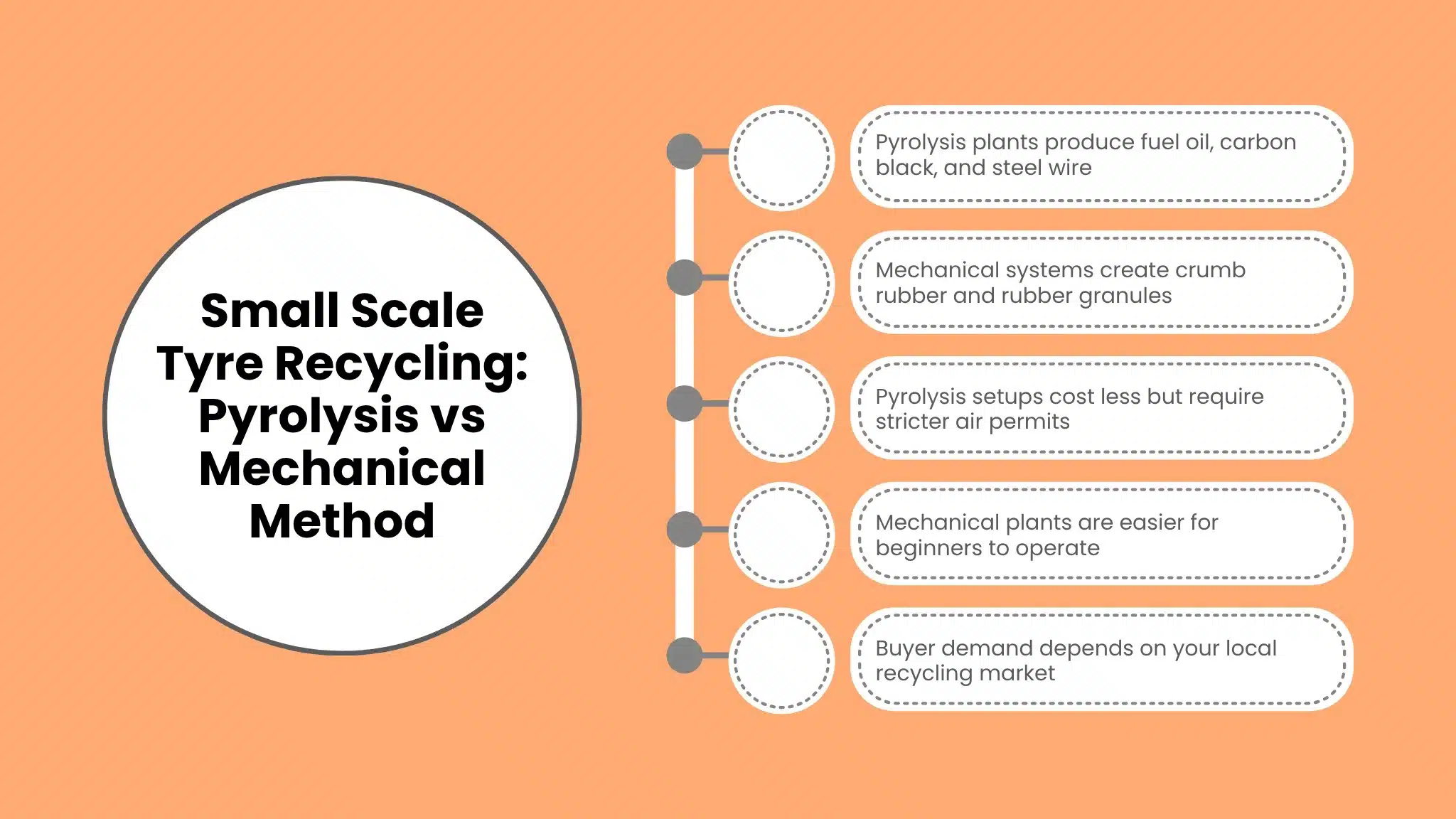
Picking the right method is the biggest decision you will make. Each one fits a different goal. Below is a side-by-side look at small scale tyre recycling options.
| Feature | Pyrolysis Plant | Mechanical Plant |
|---|---|---|
| End product | Fuel oil, carbon black, steel | Crumb rubber, steel, fiber |
| Startup cost (mini scale) | $30,000 – $80,000 | $50,000 – $150,000 |
| Daily capacity | 500 kg – 3 tons | 200 kg – 2 tons |
| Skill level needed | Medium-high | Low-medium |
| Space required | 1,500 – 3,000 sqft | 2,000 – 4,000 sqft |
| Best US buyers | Boiler plants, cement kilns | Playgrounds, asphalt, sports turf |
| Permit complexity | High (air quality) | Medium (solid waste) |
Pyrolysis wins on output value since fuel oil sells well to boiler and cement plants. On the other hand, mechanical setups are easier to run and need fewer permits. So pick based on your local buyers and skill comfort.
Small Tyre Recycling Plant Cost in the USA
Cost is where most beginners get confused. Suppliers love to quote machine prices and hide everything else. Let’s break it down clearly.
Equipment Cost Breakdown for a Small Tyre Recycling Plant Cost Plan
Here are real numbers for a 1-2 ton daily mini setup:
- Tire shredder (500 kg/hr): $50,000 – $100,000
- Pyrolysis reactor (mini, 1-2 ton): $25,000 – $60,000
- Magnetic separator: $3,000 – $8,000
- Cooling and condensation system: $8,000 – $15,000
- Dust control and safety devices: $5,000 – $12,000
Hidden Costs Most Buyers Miss
Then come the extras nobody talks about:
- Shipping from China: $4,000 – $12,000
- US import duty and customs: 2-5% of equipment value
- Installation and training: $3,000 – $8,000
- EPA permit filings: $500 – $5,000
- Land lease: $1,500 – $4,000 per month
Plan for these from day one. Otherwise, your budget will blow up before you start.
Mini Tire Recycling Setup: Step-by-Step Guide
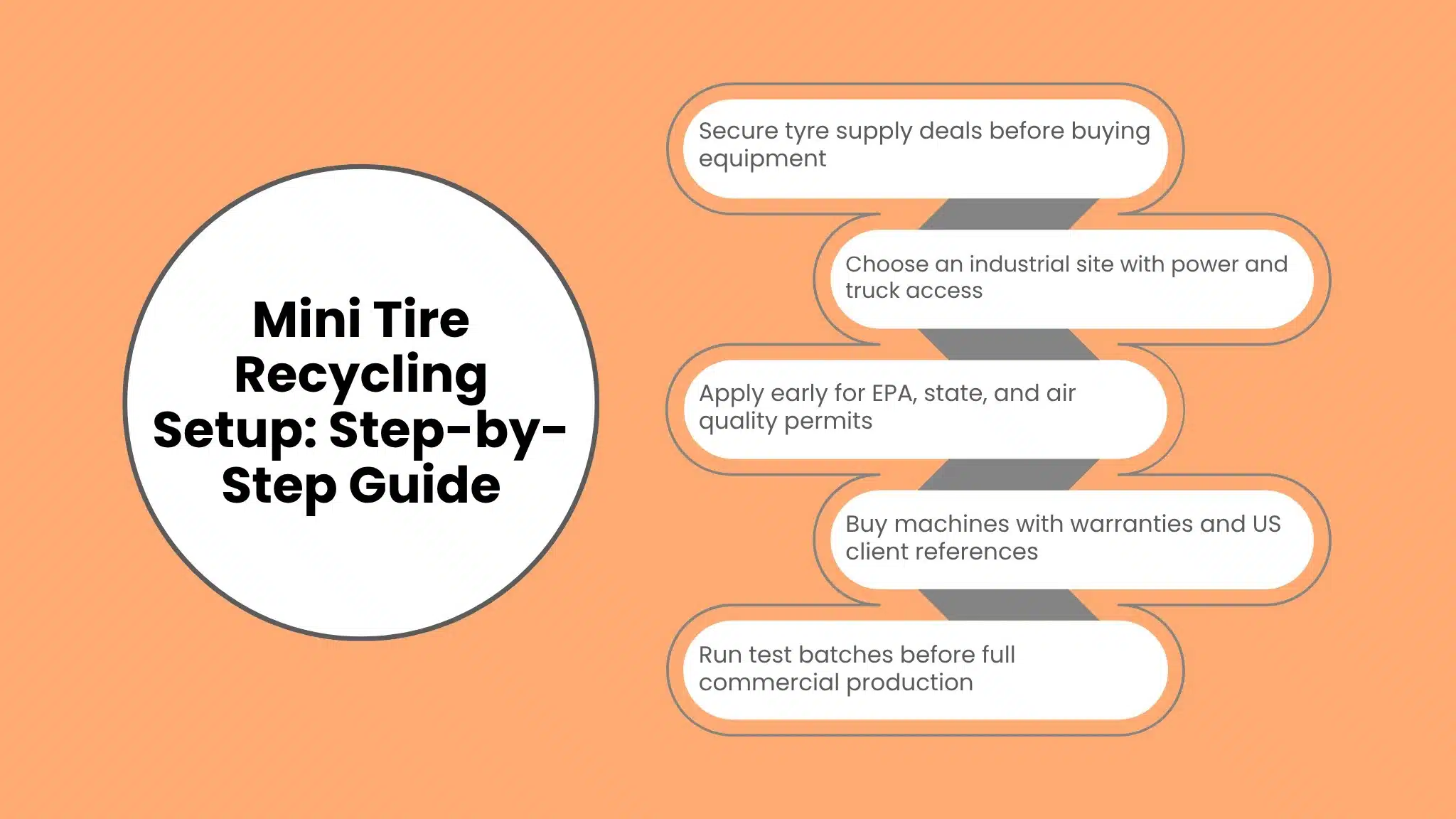
A clean mini tire recycling setup follows five steps. Skip any step and you will lose months later.
1: Find Your Tyre Supply Source
Start by calling local auto shops, tire retailers, and junkyards. Most pay you $1 to $3 per tire to take them away. Sign supply deals with three to five steady sources before you order equipment.
2: Pick the Right Site
Look for industrial-zoned land with truck access. Your site needs water, three-phase power, and fire safety clearance. Aim for at least 1,500 sqft of working space.
3: Apply for Permits
This is where competitors leave you guessing. In the US, you need an EPA RCRA Subtitle D filing, a state scrap tire processor permit, and Clean Air Act compliance if you run pyrolysis. Also, OSHA workplace rules apply to your staff. Start permit work early since it takes 60 to 120 days.
4: Buy and Install Your Mini Tyre Recycling Plant
Pick vendors with ISO certification, real US customer references, and on-site training. Always request a video of a working plant before paying. Also, ask for a one-year warranty in writing.
5: Test Run and Calibration
Run a small test batch first. Check oil yield (should hit 40-45%), carbon black purity, and dust levels. Fix issues now since fixes get expensive once you go full speed.
Tyre Recycling Plant for Home: Is It Possible?
Many beginners ask if a tyre recycling plant for home use is realistic. The short answer is no for pyrolysis. Home pyrolysis is illegal in most US states because of fire risk, EPA rules, and zoning bans.
However, small mechanical shredders are fine for home or garage use. These cost $2,000 to $8,000 and turn tires into mulch for landscaping or small DIY craft work. So if you want a real business, skip the home idea and lease a small industrial lot instead. It’s the safer and far more profitable path.
How Much Profit Can a Mini Tyre Recycling Plant Make?
Here’s where the mini tyre recycling plant business gets exciting. Below is a sample profit breakdown for a 1-ton-per-day pyrolysis setup in the US.
| Output | Volume Per Day | Selling Price | Daily Revenue |
|---|---|---|---|
| Pyrolysis oil (45%) | 450 kg | $0.45/kg | $202 |
| Carbon black (35%) | 350 kg | $0.30/kg | $105 |
| Steel wire (10%) | 100 kg | $0.15/kg | $15 |
| Total daily | $322 |
Run the plant 25 days a month and you’ll earn about $8,050 in gross monthly revenue. Subtract labor ($2,500), utilities ($1,200), maintenance ($500), and feedstock costs ($800). That leaves a net profit of around $3,000 to $3,500 every month. As a result, most mini plants break even in 12 to 18 months.
Top 5 Mini Tyre Recycling Plant Brands to Compare
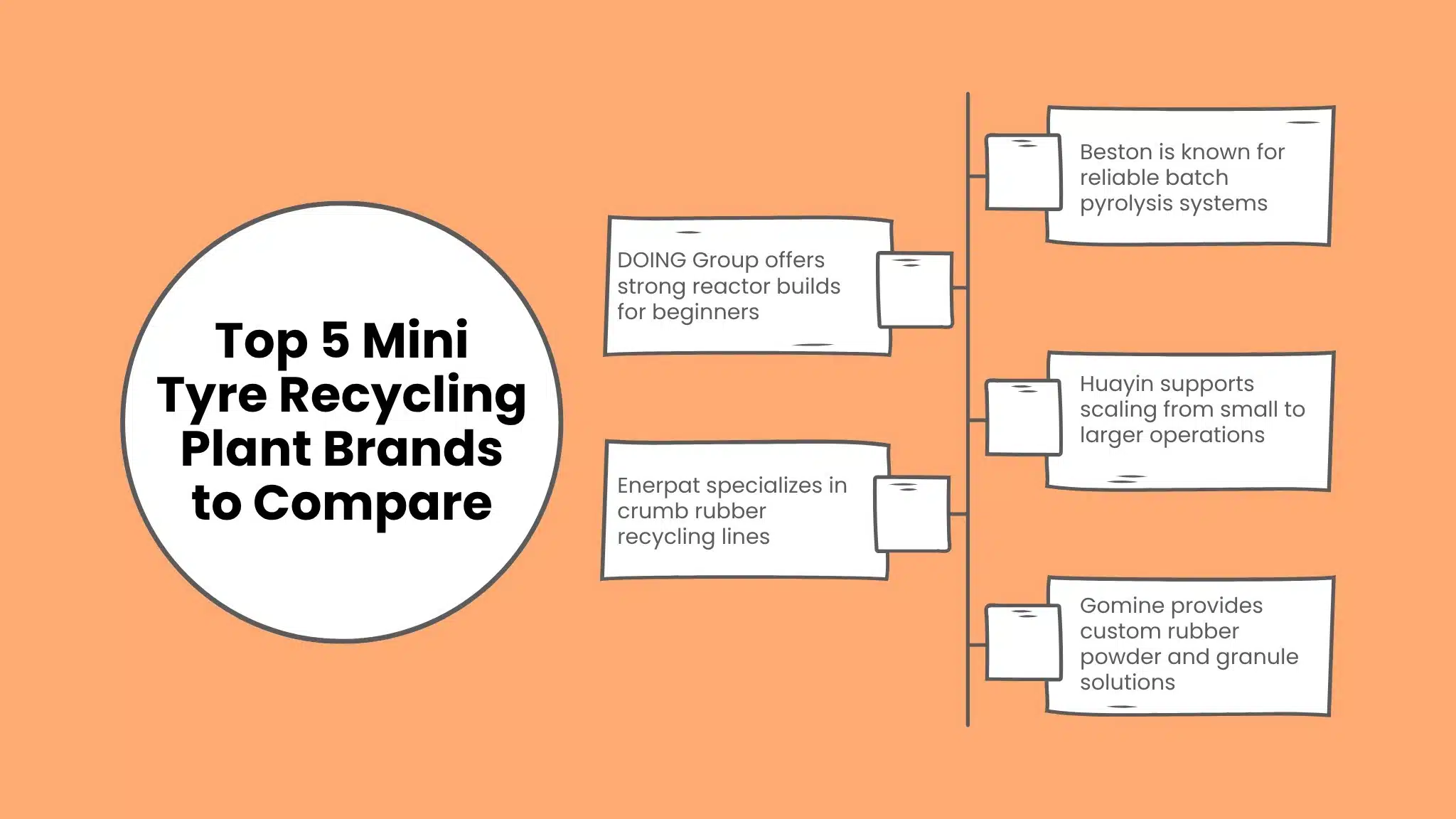
Do not rush your vendor choice. Below are five trusted names US buyers often shortlist:
- Beston (China): Strong batch pyrolysis units like the BLJ-6 and BLJ-10.
- DOING Group (China): Solid reactor build, great for auto repair shop owners.
- Huayin (China): Best for buyers who want to scale from 750 kg to 4 tons.
- Enerpat (UK/China): Leader in mechanical crumb rubber lines.
- Gomine (China): Custom solutions for rubber powder and granules.
Always ask for at least two US client references and a live video demo. Also, check if they offer parts shipping inside the US, since downtime kills profits fast.
Common Mistakes That Kill Mini Plant Profits
A lot of new owners trip on the same five mistakes:
- Skipping permits, then facing shutdowns and EPA fines
- Buying machines before lining up oil and carbon buyers
- Picking cheap reactors with oil yields below 40%
- Hiring just one worker when you really need two or three
- Storing too many tires on-site, which breaks fire code rules
Avoid these and your plant will stay profitable from month one.
Conclusion
A mini tyre recycling plant turns one of America’s biggest waste problems into a 12-month payback business. The numbers work, the demand is steady, and the entry cost stays low enough for new investors. So focus on permits, vendor quality, and your local buyer network before anything else. For more startup guides like this one, visit Reliable Startup. We help you launch green and growing businesses with clear, real-world advice you can act on today.
Frequently Asked Questions
How much does a mini tyre recycling plant cost?
A mini tyre recycling plant costs between $30,000 and $150,000 in the US. Pyrolysis units start around $30,000. Mechanical crumb rubber lines run higher, up to $150,000. Hidden costs like shipping, permits, and installation add another $10,000 to $25,000 to your total budget.
Is a mini tire recycling plant profitable in the USA?
Yes, it is. A 1-ton daily mini plant earns around $8,000 in monthly gross revenue. After labor, utilities, and feedstock, net profit lands at $3,000 to $3,500. Most US operators recover their full investment within 12 to 18 months of steady operation.
What permits do I need for small scale tyre recycling?
You need three main approvals. First, EPA RCRA Subtitle D registration for waste handling. Second, a state-level scrap tire processor permit. Third, Clean Air Act air quality clearance if you run pyrolysis. Also, OSHA worker safety rules apply to all your on-site staff.
Can I run a tyre recycling plant for home use?
Not really. Home pyrolysis is banned in most US states due to fire risk, EPA limits, and zoning rules. However, small mechanical shredders are legal for home garage use. These work fine for mulch or DIY crafts but would not run a real business.
How long does mini tire recycling setup take?
A full mini tire recycling setup takes 3 to 6 months. Permit approvals eat 60 to 120 days. Equipment shipping from China takes 30 to 60 days. Installation and test runs add another 2 to 4 weeks. Plan your supply contracts during this waiting period.