How to Get Tyres for Free for Your Recycling Business (Sourcing Guide)
Launching a sustainable rubber processing venture or a pyrolysis plant requires a steady inbound stream of raw materials. The biggest challenge for early-stage operators isn’t buying processing machinery, but mastering cost-effective logistics. If you are trying to minimize overhead, learning how to get free tyres for recycling is the fastest path to establishing an incredibly profitable business model.
In the commercial recycling landscape, scrap tires are treated as a strictly regulated liability. Because state laws aggressively ban whole tires from public landfills, businesses are forced to pay massive fees just to get rid of them. By stepping into this loop as a certified, solution-oriented partner, you can acquire massive wholesale volumes of raw inventory completely free of charge. In fact, many operations build a dual-revenue model where they are paid a tipping fee to accept the inventory, which they then process into highly valuable circular commodities.
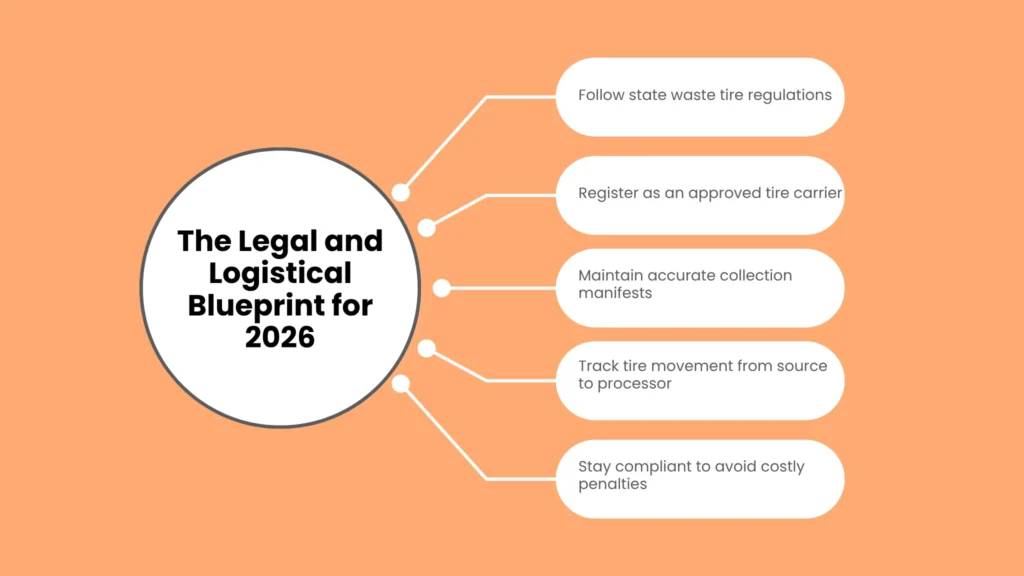
The Legal and Logistical Blueprint for 2026
Before driving out to collect inventory, you must understand the strict compliance frameworks that govern the commercial tyre sourcing for recycling industry. Regulatory bodies like the Environmental Protection Agency (EPA) and state-level Departments of Environmental Protection track the movement of rubber scrap very closely to prevent illegal dumping and fire hazards.
Navigating the 25-Tire Threshold
Regulatory bodies use a paper trail system to track waste rubber from the vehicle wheel to the final processing shredder. Under typical state guidelines, moving more than 25 waste tires in a single month automatically pushes your business into official record-keeping territory. The EPA maintains a comprehensive set of scrap tire management guidelines that outline carrier registration requirements and manifest obligations for every state.
To maintain compliance while seeking free scrap tires usa routes, you must:
Secure a Carrier Registration: If you haul scrap rubber for hire or as part of a commercial collection route, your trucks must be registered as official waste tire carriers.
Maintain Accurate Manifests: You must document the collection date, exact tire counts, the generator’s business address, and the driver’s signature for every single pickup.
Observe Site Storage Limits: Storing more than 1,500 scrap tires on an unpermitted piece of land transforms your yard into an illegal waste tire site, which can trigger massive daily financial penalties.
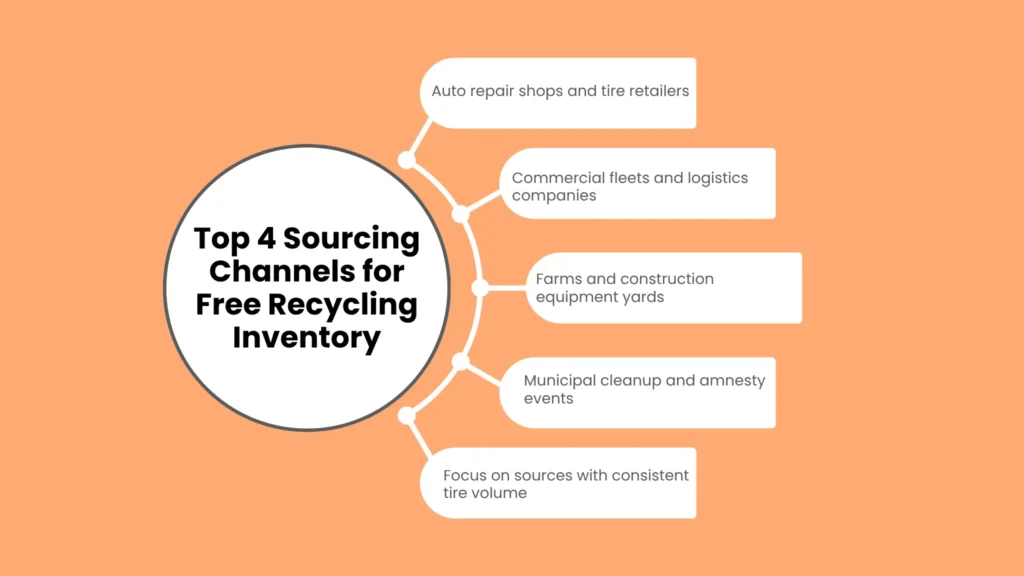
Top 4 Sourcing Channels for Free Recycling Inventory
To consistently fuel your processing machinery without spending money on raw materials, you need to target commercial sectors that generate continuous piles of rubber waste.
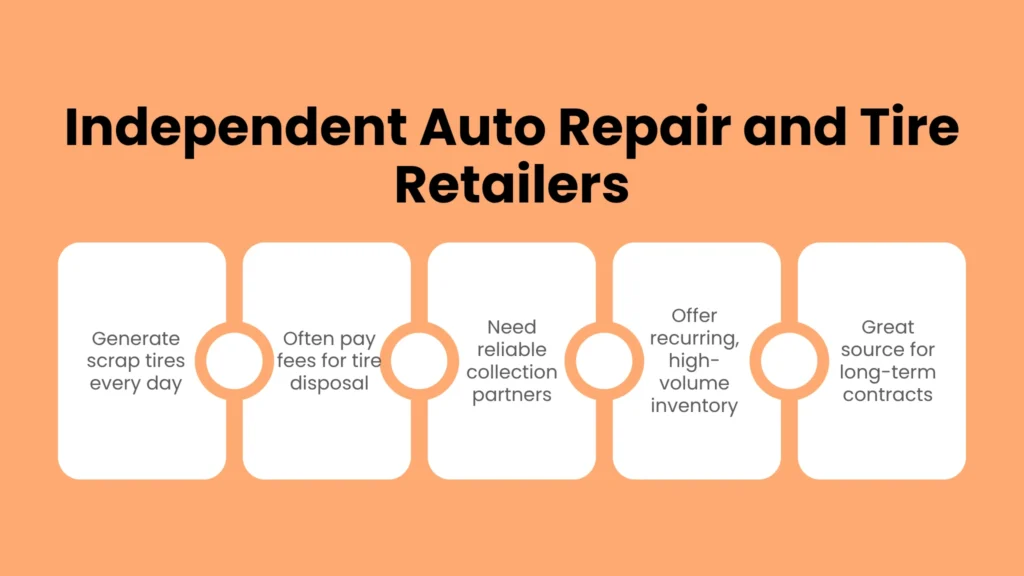
1. Independent Auto Repair and Tire Retailers
Local tire shops, major automotive service centers, and independent mechanics are the most reliable source for high-volume collection. When a consumer buys a new set of wheels, they leave their old, worn-out casings behind. Retailers typically pay regional waste management companies anywhere from $2 to $5 per passenger car tire to haul them away.
By offering a reliable, scheduled collection route, you can easily secure these contracts. If you are wondering where to collect old tyres efficiently, these retail clusters should be your very first stop. Entrepreneurs looking to expand beyond collection into a full-scale service operation may also explore how a dump truck business model can dramatically increase haul capacity and route profitability. You can outcompete traditional haulers by matching their reliability while providing a lower tipping fee, or offering completely free collection to secure long-term exclusivity.
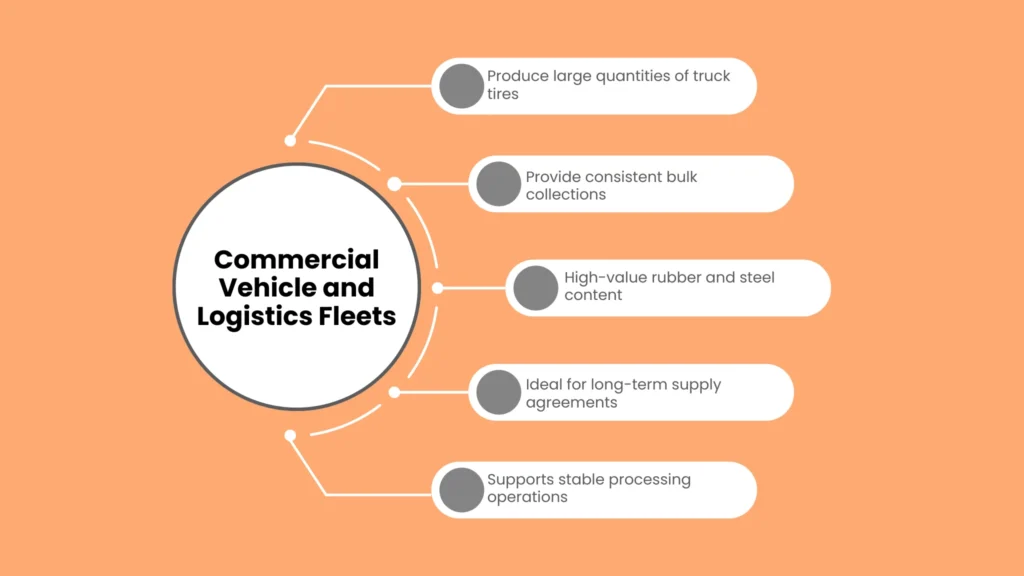
2. Commercial Vehicle and Logistics Fleets
Municipal transit systems, long-haul trucking operations, corporate delivery fleets, and waste management companies chew through heavy-duty commercial truck tires at an incredible pace. These industrial casings are massive, heavy, and expensive for logistics managers to dispose of properly.
Building strategic tyre collection partnerships with fleet maintenance managers gives you access to large-scale, uniform rubber inventory that contains exceptionally high amounts of premium synthetic and natural rubber compounds.
3. Agricultural Operations and Heavy Construction Yards
Farms, rural homesteads, and heavy construction equipment yards are excellent hidden locations for finding bulk inventory. Farmers frequently use old tractor and truck tires to weigh down protective tarps over silage pits, hay bale stacks, and equipment shelters.
When these agricultural operations modernize or clear out old fields, they are often thrilled to let a registered recycling business clear away hundreds of abandoned casings for free to restore their open land. This makes rural cleanups an underrated goldmine for local scrap rubber recovery operations.
4. Municipal Clean-Up Events and Community Amnesty Days
Local county governments and municipal waste authorities frequently host local environmental amnesty days to stop illegal dumping in forests, rivers, and abandoned city lots. During these public events, citizens are invited to bring a limited number of old wheels to a central collection point for free disposal.
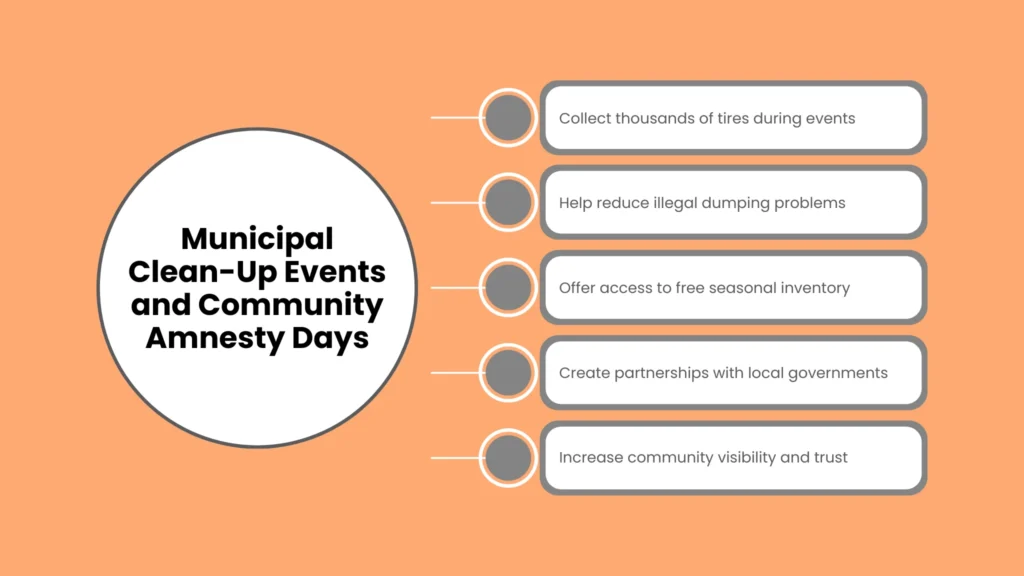
Municipalities rarely have the internal industrial machinery required to shred or process these stockpiles. When evaluating urban zones to map out exactly where to collect old tyres without competing with retail haulers, these public events are perfect. Partnering directly with local county waste directors allows you to position your recycling facility as the official drop-off point, securing thousands of clean tires completely free of charge.
Sourcing Feasibility Matrix
To help you optimize your logistics routes, this evaluation matrix compares the primary collection streams based on volume stability, equipment requirements, and hidden labor costs.
| Sourcing Channel | Volume Stability | Average Cost per Unit | Primary Logistical Challenge |
| Retail Tire Shops | Ultra-High (Weekly generation) | Free to negative (Tipping fees) | Requires consistent, scheduled weekly pickup routes. |
| Logistics Fleets | Medium (Cyclical maintenance) | Always Free | Requires heavy-duty lifting gear for large commercial truck sizes. |
| Farms & Rural Sites | Low (One-time cleanouts) | Always Free | High transportation costs due to remote, long-distance locations. |
| City Amnesty Days | High (Seasonal events) | Government subsidized | Requires managing mixed, inconsistent tire sizes and conditions. |
3 Rules for Establishing Profitable Collection Partnerships
Securing a reliable volume of free raw materials requires treating your collection routes like a premium, professional business-to-business service.
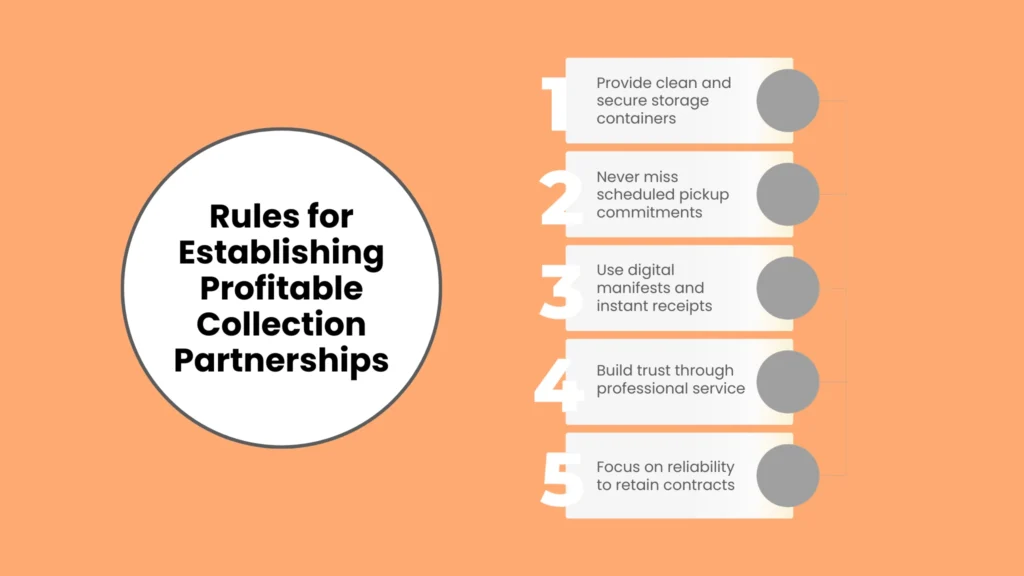
Rule 1: Provide Professional Storage Containers
Never expect an auto repair shop manager to stack loose scrap wheels neatly in an open dirt lot behind their service bays. Open piles collect rainwater rapidly, creating prime breeding grounds for dangerous mosquitoes and presenting severe fire hazards.
To win high-value accounts, supply your partners with clean, lockable, mesh-sided metal storage cages or enclosed trailers. This keeps their commercial property looking professional and highly organized while making your eventual loading process incredibly fast and efficient. This infrastructure is vital for establishing long-term, scalable sustainable business relationships.
Rule 2: Guarantee Absolute Schedule Reliability
The fastest way to lose a free collection contract is to miss a scheduled pickup date. Tire shops operate in high-density commercial zones with limited back-yard storage space. If their collection bins overflow, code enforcement officers will issue fines, forcing the shop manager to immediately replace you with a costly but reliable corporate waste management service. Treat your pickup calendar as an absolute, non-negotiable contract to maintain successful industrial networks.
Rule 3: Use Digital Manifest Systems
Modern business owners love clean digital paper trails. Use a mobile-friendly manifest app to log your collections electronically. Instantly text or email a digital receipt to the shop manager the second your truck is loaded. This builds a powerful layer of trust, proving to their corporate auditors that every piece of scrap rubber left their facility legally and arrived safely at a permitted, eco-friendly processing yard. This structural transparency is a core requirement when clearing out active local hauling routes.
Conclusion
Mastering the mechanics of how to get free tyres for recycling completely changes the financial model of a green startup. By shifting your perspective and viewing scrap rubber as a regulated corporate liability rather than a simple piece of garbage, you can build an inventory acquisition strategy that costs virtually zero dollars in upfront purchasing capital.
For industrial pioneers, environmental entrepreneurs, and forward-thinking logistics builders looking to minimize operational overhead, construct resilient supply chains, or scale green processing facilities, optimizing resource sourcing is the ultimate key to market dominance. If you are ready to build a bulletproof business plan, navigate complex environmental permits, or discover advanced manufacturing frameworks, visit Reliablestartup to explore strategic guides and blueprints designed to turn sustainable ideas into highly profitable realities.
Frequently Asked Questions
Is it completely legal to collect free scrap tires usa wide?
Collection is highly legal, provided you hold the correct state registrations. You cannot simply load random tires into a personal consumer vehicle and transport them across city lines. You must be registered as an official waste tire carrier with your state’s environmental protection agency and maintain proper tracking documents for every single route.
Why would a tire store give away inventory for free?
Retail stores give away old inventory because disposing of it through standard commercial waste management channels is incredibly expensive. Paying a private waste truck to empty an open tire bin costs shops thousands of dollars each month. Partnering with a free or low-cost recycler saves them direct bottom-line operational cash.
Where is the absolute best place to collect old tyres in bulk?
The highest volume and most consistent locations are concentrated cluster zones of independent tire dealerships, corporate auto service chains, and municipal bus transit maintenance yards. These high-density industrial hubs generate thousands of scrap casings every single week of the year.
Can I process tires that have heavy rims or metal internal cords?
Yes, modern recycling machinery is explicitly designed to handle steel-belted radial designs. Heavy-duty industrial shredders can chop through internal steel cords easily. Magnet systems then pull the valuable scrap steel out of the rubber crumb, creating a secondary revenue stream for your business.