Top 7 EPA Compliance Mistakes Tyre Recyclers Make (Avoid These in 2026)
Running a tire recycling facility can be a profitable and environmentally friendly business venture, but it comes with a massive web of regulatory responsibilities. If you want to keep your business profitable, understanding epa compliance tyre recycling is absolutely critical to avoid operational shutdowns and massive legal penalties. In the United States, the Environmental Protection Agency (EPA) classifies whole scrap tires as solid waste, meaning your facility must strictly follow federal and state guidelines to stay open.
The top seven tyre recycling compliance mistakes that business owners make include exceeding storage volume limits, ignoring mosquito vector controls, using unregistered haulers, skipping fire mitigation gaps, misclassifying waste materials, neglecting stormwater drainage, and keeping sloppy paperwork. Avoiding these operational errors will save your company from catastrophic recycling fines usa and ensure your facility meets all modern environmental standards.
1. Exceeding Maximum Permitted On-Site Storage Limits
Many business owners do not realize that the EPA and state environmental departments enforce strict caps on exactly how many tires you can keep on your property at any single time. A common pitfall for new and expanding facilities is hoarding thousands of end-of-life passenger and truck tires while waiting for processing equipment maintenance or a shift in market prices.
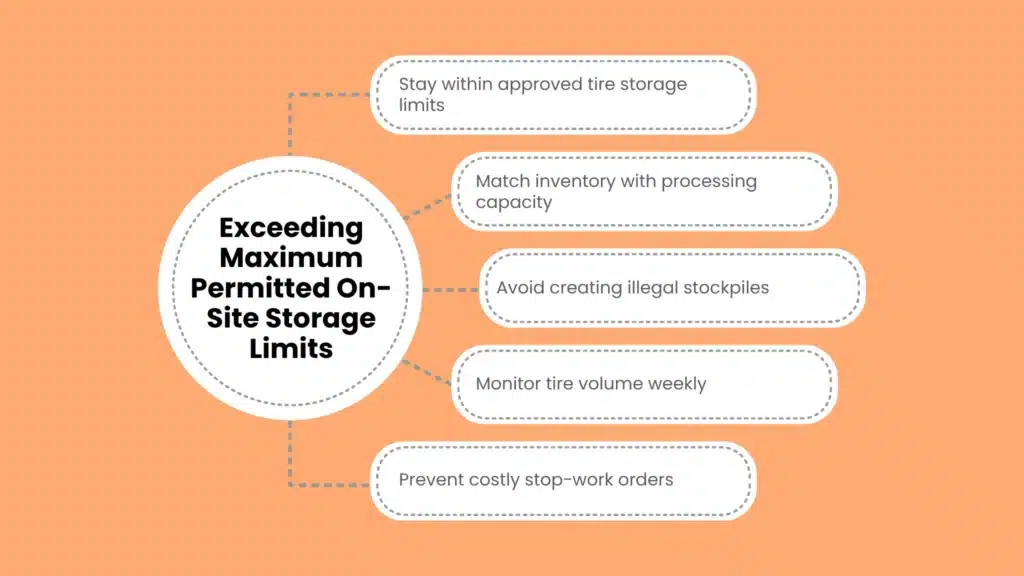
According to federal and state guidelines under the Resource Conservation and Recovery Act (RCRA), going over your approved tier limit instantly transforms your legal processing plant into an unpermitted dump site. In states like Florida, for instance, a facility cannot surpass a maximum of 1,500 tires across both indoor and outdoor areas without triggering advanced permitting rules.
When you exceed these volume thresholds, environmental agencies can issue immediate stop work orders and impose severe penalties. To protect your business, always match your incoming inventory flow with your weekly shredding or ambient grinding output capacity so your stockpile never breaches local limits. Managing these compliance responsibilities becomes significantly easier when you start with a well-structured tyre recycling business plan that accounts for storage capacity limits, environmental permits, and fire mitigation costs before your facility processes its first load.
2. Inadequate Vector Control and Mosquito Prevention
Scrap tire piles are the perfect breeding ground for disease-carrying pests, especially mosquitoes and rodents. Because of the shape of a tire, rain fills the inner rim cavity with stagnant, warm water that is incredibly difficult to drain naturally. This stagnant water creates an ideal incubator for mosquitoes that carry dangerous viruses like West Nile, Zika, and Dengue.
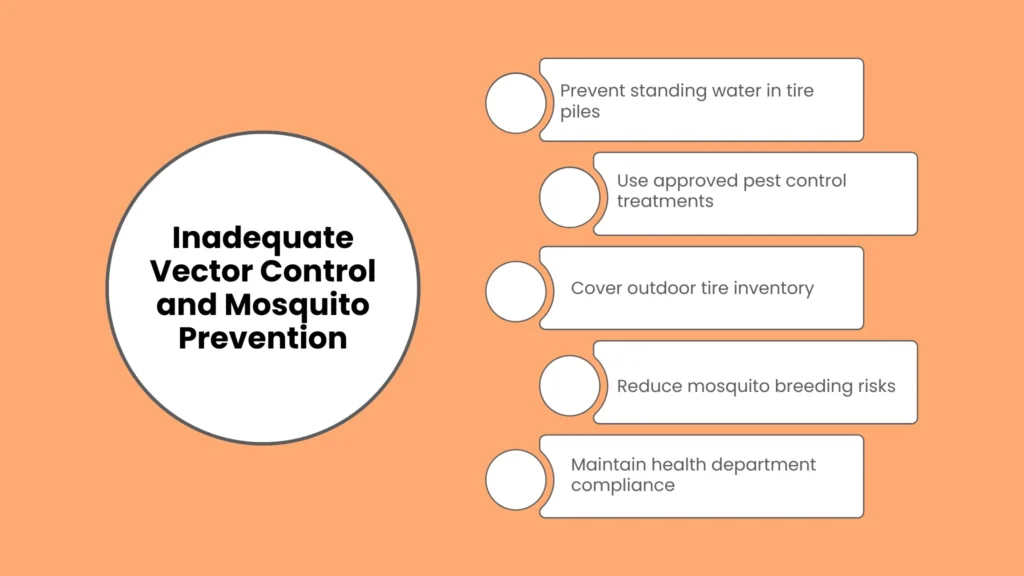
The EPA and local health departments require active vector control programs for any business managing scrap tire inventory. Failing to implement regular larvicide treatments or physical protection measures is one of the most common tyre recycling compliance mistakes caught during unannounced facility inspections.
To stay compliant, you must treat your outdoor stockpiles with approved chemical or biological pest control agents. Better yet, keeping tires under a permanent roof structure or investing in a heavy-duty tarpaulin system prevents rainwater from gathering in the first place.
3. Failing to Verify Hauler Registrations and Chain of Custody
You cannot simply hire any local truck driver with a flatbed trailer to transport your scrap tires or processed rubber crumbs. Under epa scrap tire rules, any entity transporting more than a specific number of tires (often as few as 25 tires at a time on public roadways) must be fully registered as a waste tire collector.
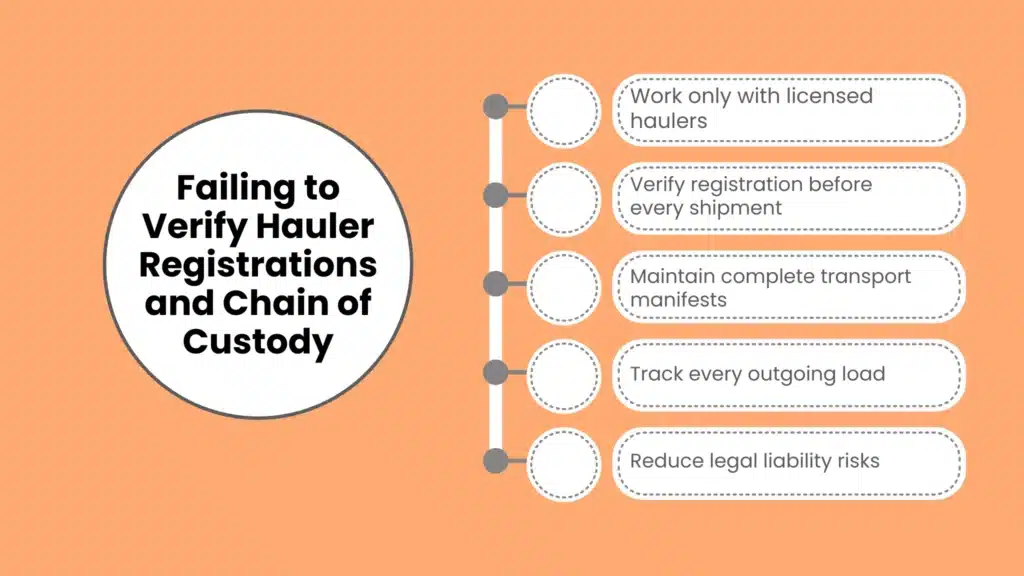
If you hand off your inventory to an unpermitted driver and they decide to illegally dump those tires in a rural ditch, your business is still legally liable. The EPA enforces a strict cradle-to-grave responsibility framework for solid waste management.
Every time a load leaves your facility, you must verify that the hauler has a current, valid registration decal affixed clearly to their vehicle door. You must also complete a comprehensive manifest document that names the source, the transporter, and the authorized end-use destination facility.
4. Poor Fire Prevention and Improper Stacking Disregard
Tire fires are an absolute nightmare for both local communities and business owners. When a massive pile of rubber catches fire, it burns at extremely high temperatures, is incredibly difficult to extinguish, and releases thick black smoke loaded with toxic air pollutants. Furthermore, tire fires produce a hazardous, oily residue that melts into the ground, causing severe soil and groundwater contamination.
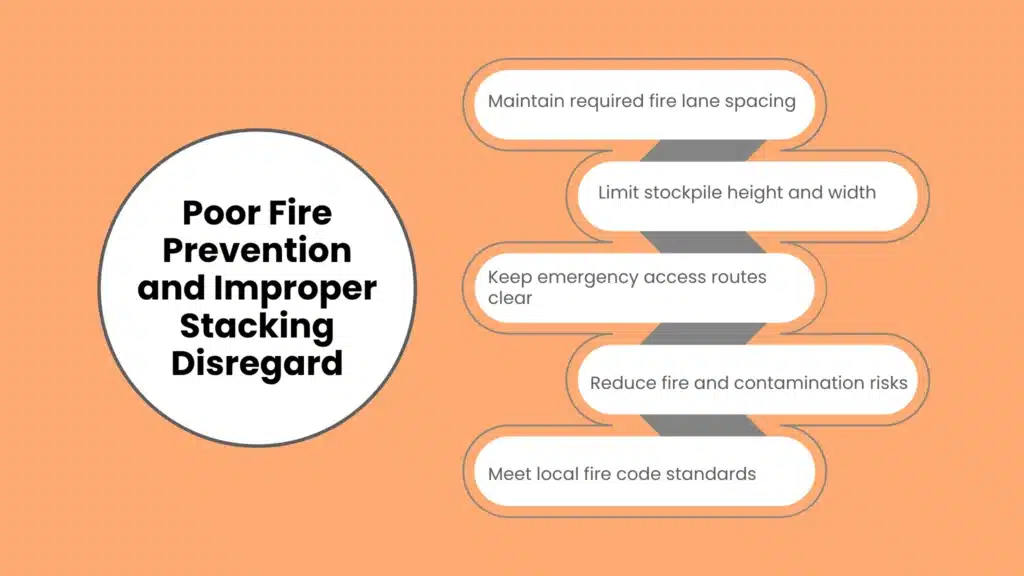
To mitigate this massive hazard, federal and state tire recycling regulations usa mandate strict spacing, stacking, and height restrictions for all outdoor storage. For example, tire piles must be kept at a maximum height and width, and they must be separated by wide, clear fire lanes.
These buffer zones allow emergency fire vehicles to navigate your yard if a fire erupts. Neglecting to maintain these clean fire breaks or stacking your processed crumb rubber too close to property lines will quickly trigger significant structural code violations and severe enforcement actions.
5. Misunderstanding RCRA Solid Waste vs. Non-Waste Fuel Rules
A major regulatory change emerged recently that directly affects how scrap tire materials are classified and utilized across industrial sectors. The EPA proposed updated rules under the Non-Hazardous Secondary Materials (NHSM) regulations regarding scrap tires combusted for energy recovery, such as in cement kilns.
Historically, tires that were discarded or abandoned were legally handled as solid waste, subjecting the burning facilities to incredibly rigid Clean Air Act standards. The updated guidelines aim to categorize certain recovered scrap tires as a non-waste fuel when managed through established collection programs.
If your facility processes tire-derived fuel (TDF), you must understand these exact definitions. Misclassifying your processed materials or selling TDF to a destination facility that is not permitted to burn solid waste can disrupt your entire supply chain and lead to massive federal joint-liability investigations.
6. Lack of Proper Stormwater Runoff and Drainage Management
When tires are stored outdoors, they are constantly exposed to sun, rain, and changing temperatures. Over time, heavy rainfall can wash away microscopic rubber particles, zinc compounds, and heavy oil residues from your outdoor piles directly into the local soil and nearby waterways.
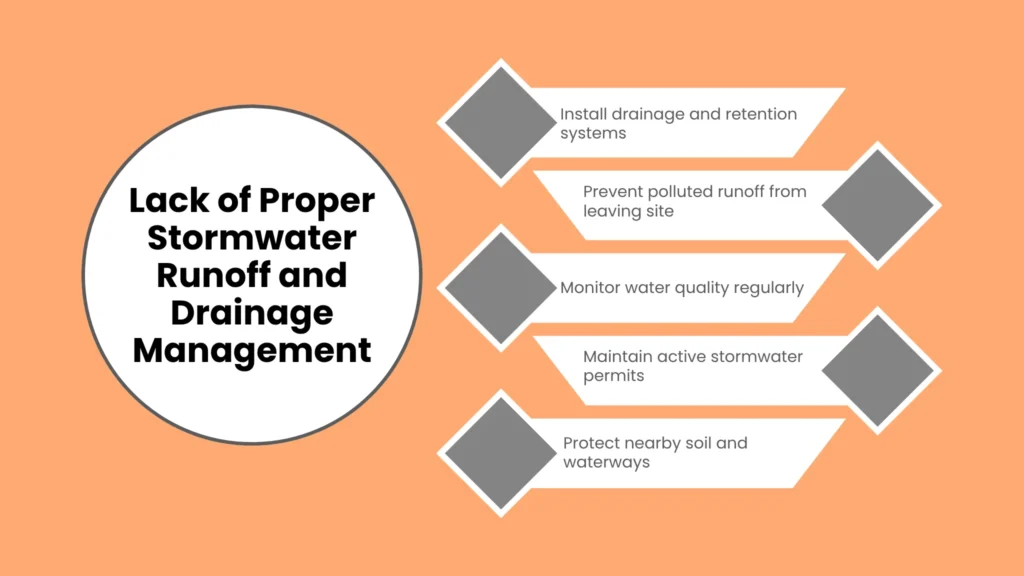
Every commercial tire recycling operation must have an active National Pollutant Discharge Elimination System (NPDES) stormwater permit. A major mistake is failing to design an engineered drainage system that catches and treats this operational runoff before it enters the public sewer or local streams.
Your facility needs concrete retention ponds, oil-water separators, or specialized filtration berms to capture heavy sediment. Regular water sampling and laboratory analysis are typically required to prove your runoff stays within safe, legal limits.
7. Neglecting Accurate Monthly Record-Keeping and Reporting
If the EPA or your state environmental protection division audits your recycling facility today, can you immediately produce the last three years of operational logs? Sloppy paperwork is the easiest way for an inspector to issue hefty fines, even if your physical yard is perfectly clean.
You must track every single tire that enters and leaves your property. This includes tracking incoming counts from auto repair shops, processing weights, and final manifests showing delivery to crumb rubber buyers, civil engineering projects, or asphalt manufacturing plants.
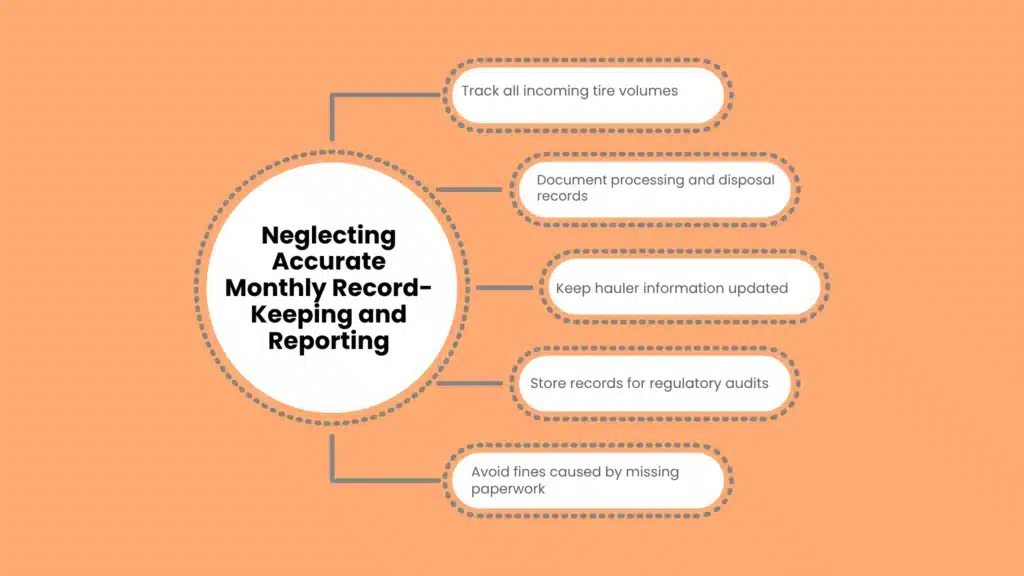
Most states require you to submit an extensive annual report that summarizes your total volume metrics. If your daily logs are incomplete, mismatched, or missing crucial hauler registration numbers, regulators will assume you are operating outside of compliance boundaries.
Breakdown of Key Regulatory Risks and Consequences
To help you visualize how these different violations impact a business, the table below outlines the primary risk areas, what regulators look for during an audit, and the estimated operational impacts based on available historical data.
| Compliance Risk Area | Common Operational Trigger | Estimated Business Impact |
| Storage Cap Violations | Accumulating more than 1,500 whole tires without a specialized solid waste permit. | Immediate stop-work orders, mandatory inventory reduction mandates, and daily fines. |
| Vector Control Failure | Allowing stagnant water pools to remain inside outdoor whole tire stockpiles. | Local health department citations, public nuisance lawsuits, and potential facility closure. |
| Unregistered Haulers | Loading waste tires onto trucks that lack active state environmental decals. | Permanent cradle-to-grave legal liability for any downstream illegal dumping incidents. |
| Fire Code Deficiencies | Stacking rubber piles too high or eliminating the required 50-foot clear fire lanes. | Major insurance policy cancellations, immediate local fire marshal citations, and high fines. |
| Stormwater Neglect | Operating an outdoor yard without sediment traps, retention ponds, or active NPDES permits. | Federal Clean Air and Clean Water Act investigations, remediation orders, and heavy penalties. |
Conclusion
Achieving and maintaining absolute epa compliance tyre recycling standards requires constant daily vigilance, clear corporate policies, and highly meticulous record-keeping. By keeping your on-site storage volumes well within legal limits, ensuring thorough mosquito vector controls, verifying your haulers, and maintaining wide fire breaks, you protect your company from crippling financial penalties. Navigating these dense environmental laws can be challenging for a new business owner, but building a solid foundation prevents costly legal errors down the road. For more expert business blueprints, industrial operational strategies, and comprehensive launch guides, visit reliablestartup to help scale your next commercial recycling venture safely and successfully.
Frequently Asked Questions (FAQs)
How many scrap tires can I legally store on my recycling property without a permit?
In most states, you can store up to 1,500 whole or used tires without needing a complex solid waste facility permit. However, some strict jurisdictions drop this unlicensed limit down to 400 or 1,000 tires, so you must verify your exact local municipal and state guidelines.
What are the financial penalties for violating EPA scrap tire rules?
Depending on the severity of the environmental hazard, federal and state recycling fines usa can range from $500 to more than $10,000 per day for every day the violation remains uncorrected. Serious cases involving hazardous tire fires or massive illegal dumping can even lead to criminal felony charges.
Do whole tires and shredded crumb rubber follow the same storage regulations?
No, whole tires and processed crumb rubber have different structural storage rules. Whole tires carry much stricter vector control regulations due to water retention, while processed crumb rubber focus heavily on dust containment, fire prevention spacing, and industrial stormwater runoff tracking.
How often do environmental regulators inspect tire recycling plants?
Permitted tire processing and recycling facilities face at least one comprehensive, unannounced inspection every single year. However, if your business receives a formal complaint from a neighboring property regarding mosquitoes, odors, or dust, local inspectors will visit your site immediately.