Generator Rental Business: How Hurricane & Construction Demand Drives Profits
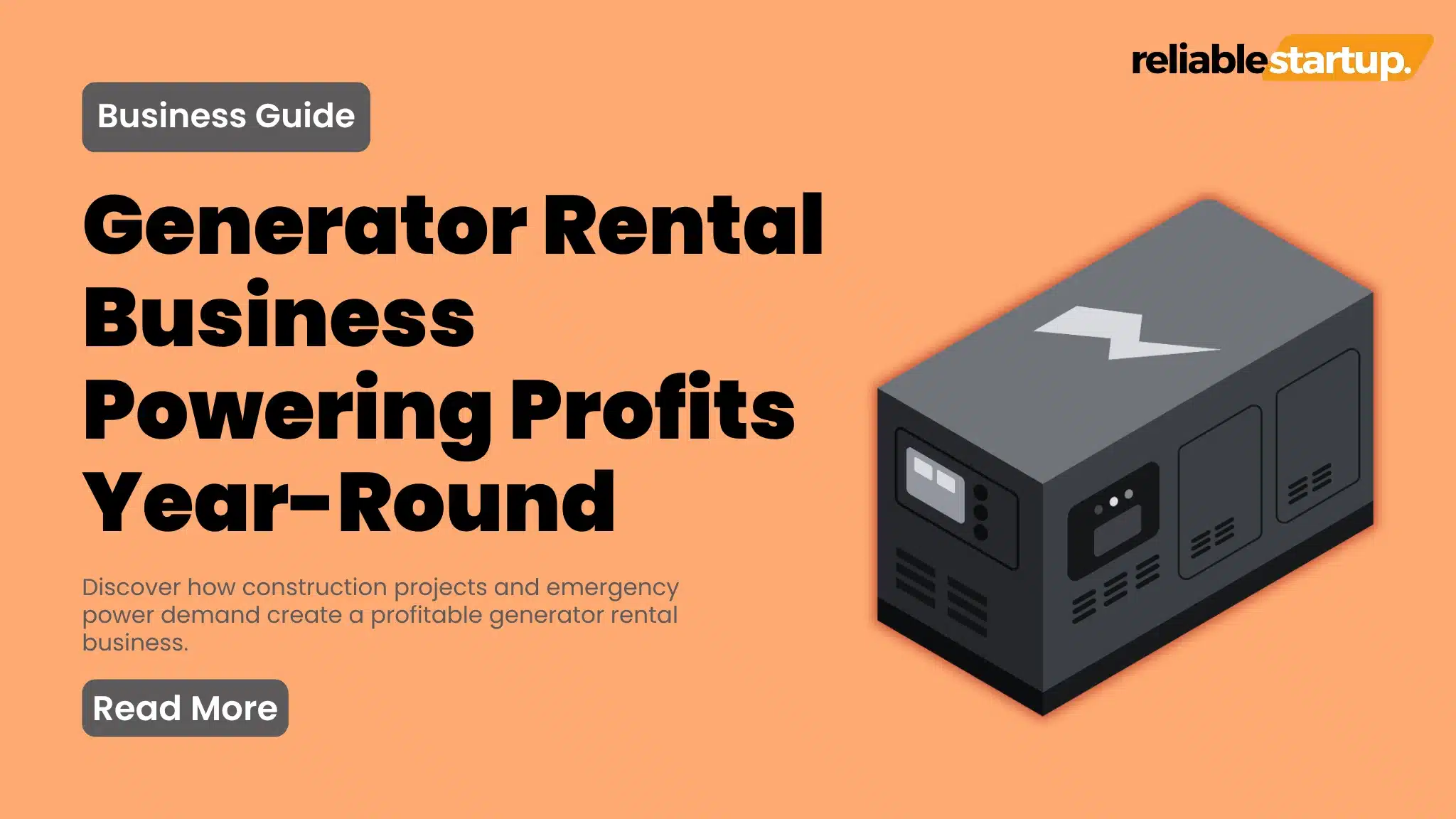
When the primary power grid suddenly fails, modern society requires an immediate source of electricity. Similarly, new building sites cannot function without a stable power connection. For entrepreneurs looking into resilient business models, launching a generator rental business stands out as a highly profitable choice. This specific industry relies on a simple truth. Businesses and communities cannot function without continuous power.
Therefore, by purchasing heavy-duty power assets and leasing them to commercial clients, rental operators can build a highly successful enterprise. Fortunately, the temporary power market thrives on two predictable drivers. Specifically, these are steady infrastructure growth and unpredictable weather emergencies. Understanding how to position your inventory to serve these distinct markets is the secret to maximizing your returns.
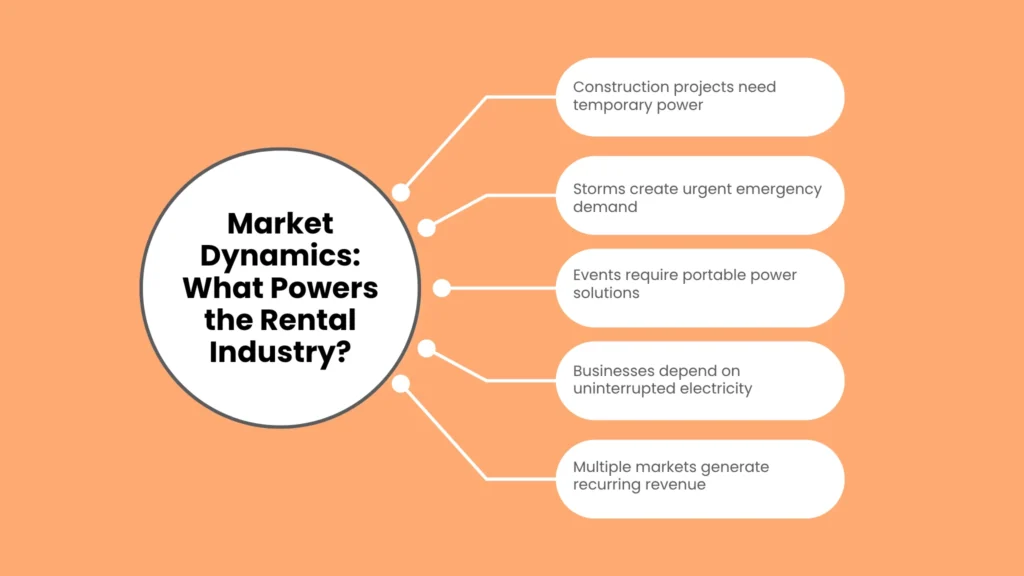
Market Dynamics: What Powers the Rental Industry?
The temporary power market operates across multiple tiers. These range from small portable units for local contractors to massive, containerized systems. To see how the market balances out, look at how different industries utilize these machines. The following table highlights the core segments that drive daily revenue in the modern equipment rental space.
| Market Segment | Primary Equipment Used | Typical Rental Length | Main Demand Driver |
| Commercial Construction | 75 kVA to 375 kVA Towable Diesel Units | 3 to 12 Months | New infrastructure and building projects |
| Disaster Response | High-Capacity Standby Industrial Systems | 1 to 4 Weeks | Hurricanes, severe winter storms, grid failures |
| Residential & Events | Small Portable Gas Inverter Systems | 2 to 7 Days | Local outdoor festivals, home backup needs |
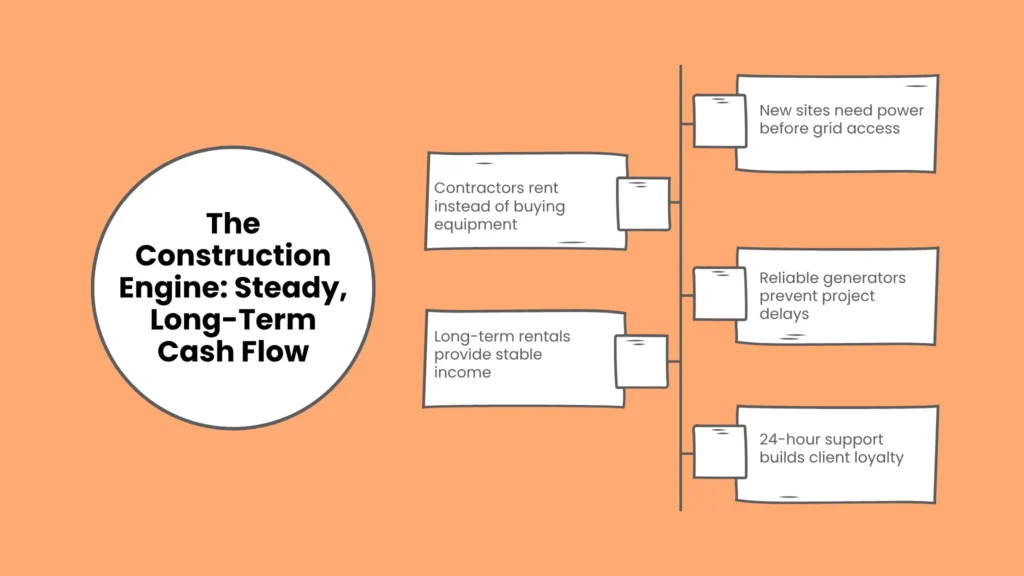
The Construction Engine: Steady, Long-Term Cash Flow
Natural disasters often capture the main headlines. However, daily construction site activities provide the steady financial baseline for the entire rental industry. Before a concrete foundation is poured, a site needs power. Local utility grids are rarely connected during the early phases of development. Consequently, a dedicated construction generator rental is absolutely mandatory for modern building crews.
Fueling Heavy Machinery Off the Grid
Large infrastructure projects often sit miles away from the nearest power pole. For example, highway expansions and bridge repairs operate in remote areas. Contractors rely entirely on medium sized diesel units to run their job site trailers. Additionally, they use them to power high voltage welding equipment and massive night lighting setups.
Moreover, developers face tight deadlines from their investors. If the power drops for even a single day, the entire project timeline stalls. This delay can cost the developer thousands of dollars in penalties. Therefore, they are willing to pay top dollar for premium, reliable machinery. They also demand rental companies that offer 24-hour support services. If a machine acts up, your technician must fix it immediately. This level of service builds deep trust with major construction firms. Consequently, those firms will continue to rent from you on every future project.
Eliminating Corporate Depreciation Hardships
Modern commercial construction companies prefer to avoid buying their own power fleets outright. This is because owning a large inventory of heavy machinery forces a contractor to handle expensive engine maintenance. Furthermore, they must invest in massive storage yards. They also have to deal with the financial reality of equipment depreciation.
Renting shifts this entire operational burden directly onto your rental company. Contractors are happy to pay a premium rental fee. After all, it allows them to keep their business balance sheets clean. Meanwhile, they can scale their power needs up or down depending on the exact job they are working on.
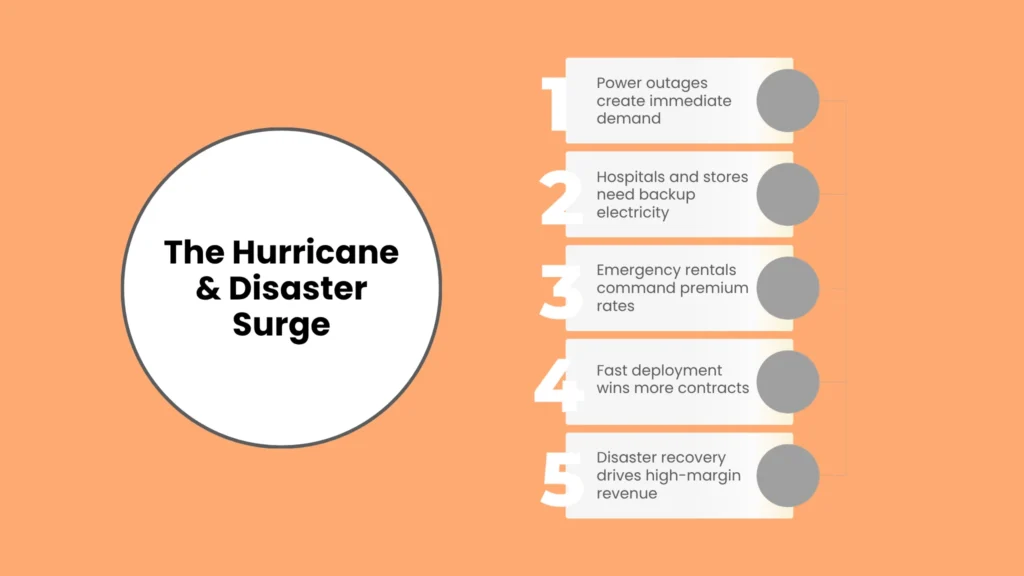
The Hurricane & Disaster Surge: High-Margin Emergency Demand
The construction sector provides your business with its baseline financial stability. On the other hand, the emergency response sector provides your sudden profit spikes. When natural disasters strike, the absolute necessity for temporary power overrides every other financial consideration.
Navigating the Logistics of Severe Storms
When a major storm knocks out local utility lines, chaos follows. Every supermarket, hospital, gas station, and water treatment facility scrambles to find emergency power. This creates an immediate surge in regional demand. Therefore, a portable generator rental usa network operators can deploy is vital to affected zones.
During these high-stress windows, rental companies that possess mobile, ready-to-ship machinery can command premium rental rates. Clients are no longer shopping around for the lowest price. Instead, they are looking for the fastest business that can drop a working machine on their property.
Maximizing Emergency Generator Rental Income
The emergency generator rental income generated during a two-week hurricane recovery window can be massive. In fact, it can sometimes match several months of standard construction usage. Facilities facing multi-day blackouts need heavy-duty standby power immediately. This power saves millions of dollars in perishable food inventory. Moreover, it keeps critical life-support systems active.
To capture this market safely, successful entrepreneurs cross-train their staff in emergency logistics. For example, you must know how to transport heavy machinery through storm damaged regions. You must also navigate around fuel shortages and maintain tight asset tracking when local communication systems go completely dark. It is a high stakes environment, but the financial rewards are substantial.
How to Build a Successful Generator Rental Startup
Starting a heavy machinery rental company requires careful capital allocation. You cannot simply buy a collection of retail hardware store units and expect to land major commercial accounts. Instead, you need a strategic approach to build a commercial-grade fleet. Launching a generator rental startup involves balancing equipment acquisition with customer relationship management. Before committing capital to your first diesel unit, reviewing the foundational steps of how to start an equipment rental business will help you select the right legal structure, build rental agreements, and understand niche targeting — all of which apply directly to the temporary power market.
1. Selecting Your Initial Fleet Inventory
Your initial capital should be spent on versatile, commercial-grade machines that match local industrial trends. Focus on multi-voltage diesel generators equipped with simple selector switches. These specialized machines allow your team to reconfigure a single asset easily. As a result, you can output different electrical currents depending on what a client needs on-site.
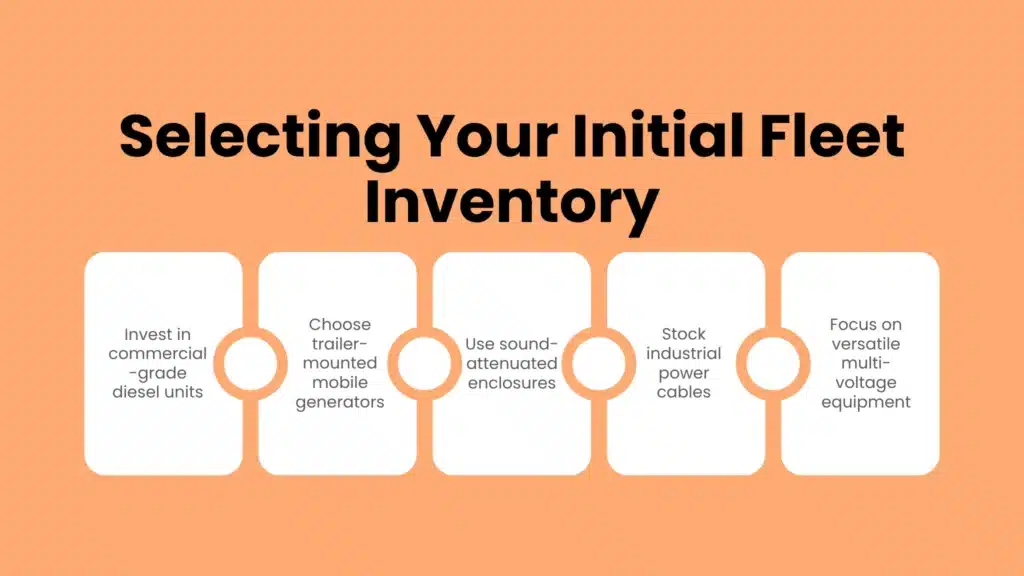
Prioritize mobile trailered units: Ensure your mid-sized engines are permanently mounted on road-ready trailers for instant delivery.
Invest in sound-attenuated enclosures: Select machinery protected by sound-proof metal covers. Consequently, this opens up lucrative opportunities to serve urban job sites with strict noise ordinances.
Stock up on heavy-duty distribution cables: Your clients will need hundreds of feet of thick, industrial power cables alongside the actual engine.
2. Implementing Rigorous Preventative Maintenance
A rental machine that fails on a job site destroys your company’s professional reputation overnight. Therefore, to build a highly profitable business, you must treat engine maintenance as a core internal discipline. Every machine returning from a customer deployment must undergo a complete multi point inspection.
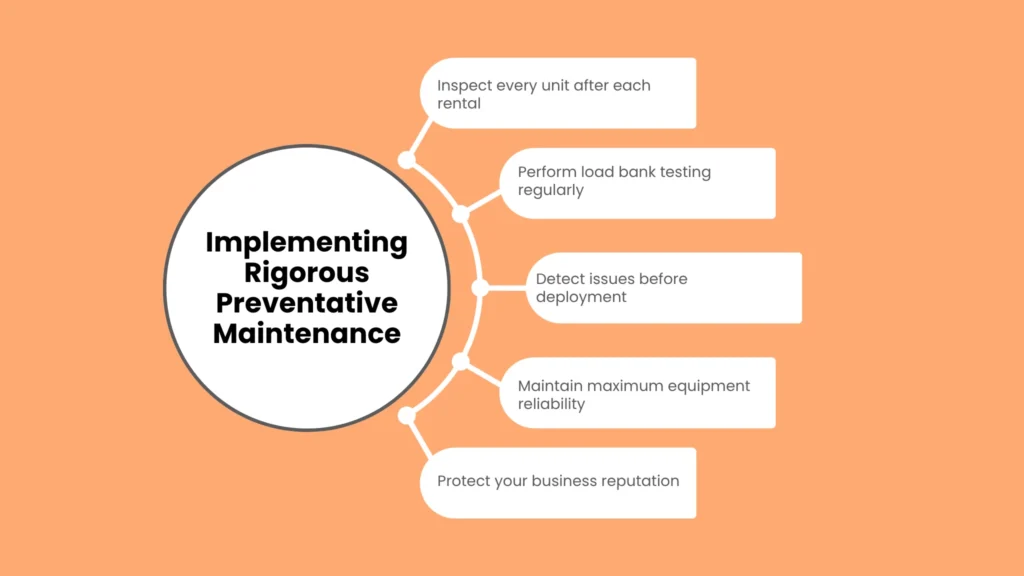
This process involves running the engine under a simulated electrical load. Mechanics use a specialized tool called a load bank to do this. Load banking forces the machine to operate at its maximum capacity in your shop. Thus, it allows your mechanics to spot cooling issues, fuel system clogs, or electrical alternator flaws before the unit ever leaves your warehouse yard.
3. Securing Long-Term Emergency Contracts
You want to avoid leaving your expensive emergency assets sitting idle during calm weather periods. To prevent this, you can market proactive first-response contracts to mission-critical local companies.
Under this setup, local businesses like data centers, private clinics, and large manufacturing hubs pay your company a recurring monthly retainer fee. In exchange for this steady payment, you guarantee that a specific size of backup power will be reserved for their exclusive use. Then, you deliver it directly to their property within a few hours of any major grid failure.
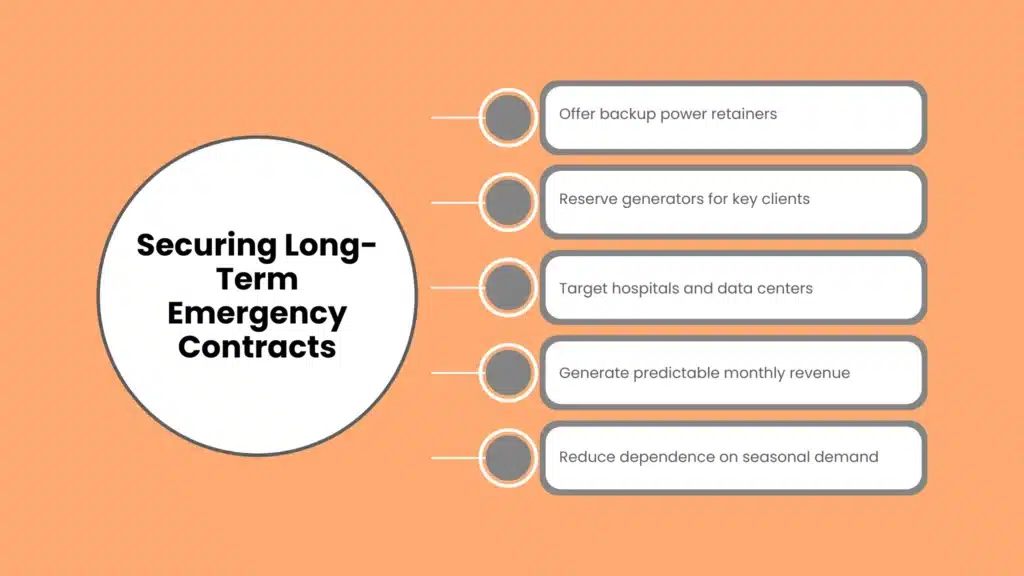
This subscription-style model transforms your unpredictable emergency income into steady, predictable revenue. Even if no storms hit your region for an entire year, these retainer contracts ensure your business remains highly profitable. It also gives your clients total peace of mind, knowing they are protected from sudden power grid failures.
Maximizing Your Operational Profits
Achieving long term financial success in this industry requires balancing your daily operations. You must balance the steady, everyday demand of local building projects with the high margin rush of emergency weather management. By building a versatile fleet of highly maintained machines, you can position your startup as an indispensable community partner.
To explore more comprehensive operational guides, financial tracking spreadsheets, and real-world fleet deployment blueprints designed specifically for growing equipment startups, dive into the business resources available over at reliablestartup.
Frequently Asked Questions
What type of fuel is best for a commercial rental fleet?
Diesel remains the undisputed king of the industrial rental market. Small residential systems often run on standard gasoline or propane. However, commercial construction crews and emergency response teams rely almost exclusively on diesel fuel. This is because diesel engines offer superior torque for handling heavy electrical spikes.
How much capital does a generator rental startup require?
Launching a commercial rental service is a capital-intensive project. For instance, buying a new, trailer-mounted 100 kVA commercial diesel machine can easily cost tens of thousands of dollars. Therefore, many successful entrepreneurs lower their initial entry costs by sourcing high-quality, re-certified used machines.
How do rental operators handle equipment transport and setup?
Most successful rental companies build delivery and installation charges directly into their standard customer contracts. To serve commercial clients effectively, your startup will eventually need a heavy-duty pickup truck or a flatbed delivery vehicle.
What insurance coverage does a machinery rental business need?
Operating an industrial rental business requires a comprehensive commercial insurance plan. Specifically, your coverage needs to include general liability insurance to protect against accidental property damage.