Tiny House Rental Business: Zoning Rules You Must Know
Starting a unique lodging business is an exciting journey, but you must first navigate a complex legal landscape. Specifically, you need to understand the local tiny house rental zoning rules before purchasing land or building your first unit. Many aspiring hosts jump directly into designing cozy interiors, only to discover later that their local government prohibits small-scale structures. Consequently, your success depends entirely on knowing which laws govern your specific geographic region.
To help you build a legally compliant and highly lucrative business, this comprehensive guide breaks down the essential legalities, hidden expenses, and potential profit margins of the industry.
Why Zoning Rules Dictate Your Tiny House Business
When you decide to launch a rental property, location is not just about beautiful views. On the contrary, location dictates which local codes will govern your business operations. Municipalities use zoning laws to control land development and protect safety. Therefore, if you build without proper permits, the city can fine you or even force you to demolish the structure.
Typically, zoning ordinances classify land into residential, commercial, agricultural, or industrial zones. Most tiny homes fall into a regulatory gray area because of their size. For instance, some towns have minimum square footage requirements of 1,000 square feet or more. As a result, a standard 300-square-foot tiny house cannot legally exist there as a standalone primary residence.
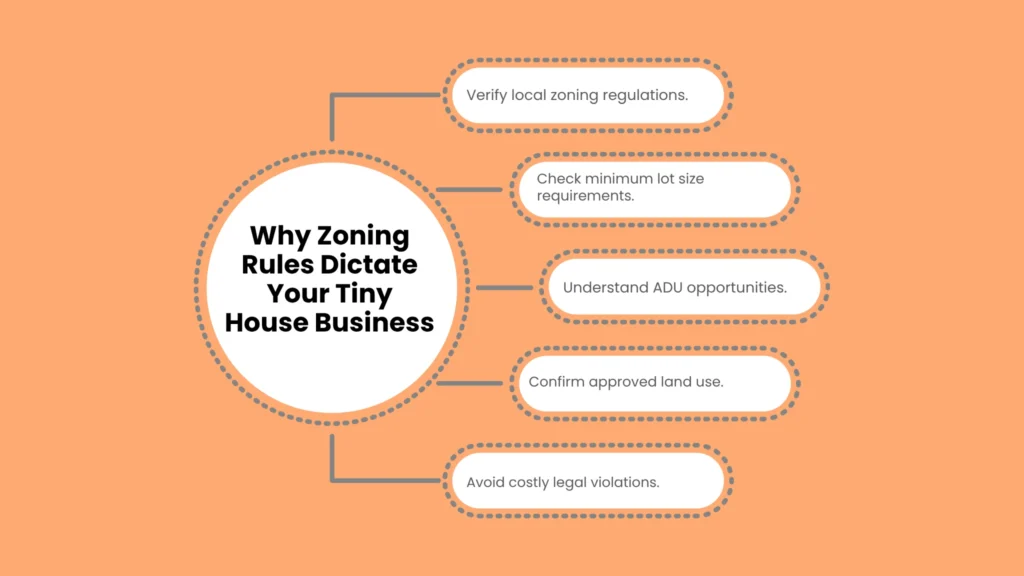
To bypass this issue, many hosts utilize Accessory Dwelling Unit (ADU) laws. An ADU is a secondary structure built on a property that already has a primary residence. Fortunately, many cities are updating their backyard rules to encourage these dense housing options a trend we also track in our tiny house rental business startup guide for hosts exploring this niche.
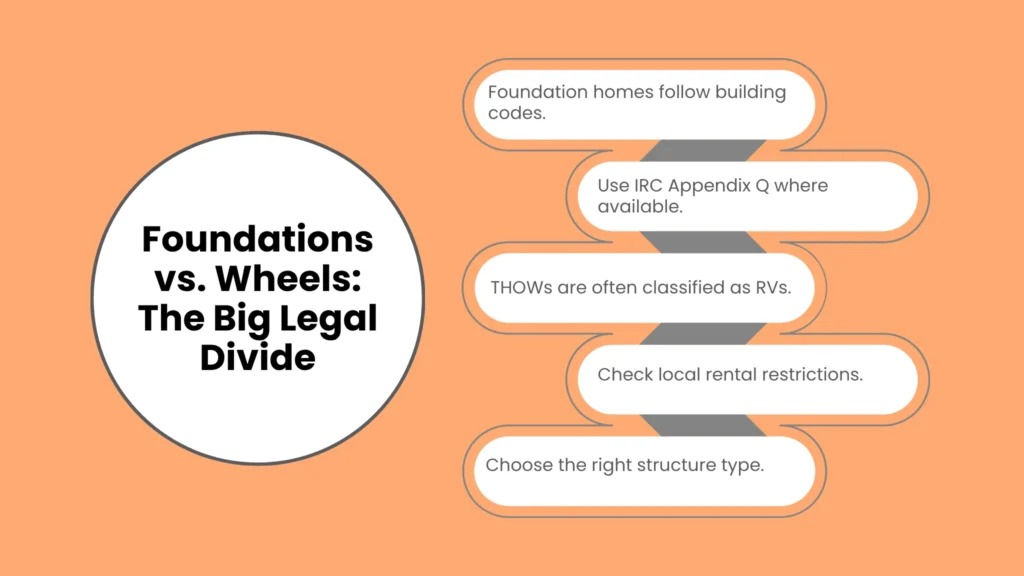
Foundations vs. Wheels: The Big Legal Divide
To understand tiny house rental business regulations, you must understand how your structure is classified. Generally, there are two distinct types of tiny houses, and each faces completely different legal paths.
Tiny Houses on Foundations
First, a tiny house built on a permanent foundation is treated as a traditional, real-property home. Because it is fixed in place, it must comply with standard local building codes. In the United States, this usually means adhering to the International Residential Code (IRC).
Furthermore, many progressive counties have adopted IRC Appendix Q. This specific amendment relaxes strict building rules for homes under 400 square feet. For example, it allows you to install steeper stairs and lower loft ceilings, which are necessary for small layouts.
Tiny Houses on Wheels (THOWs)
Second, a Tiny House on Wheels (THOW) sits on a trailer chassis. Because of this mobility, local authorities often classify them as Recreational Vehicles (RVs). Consequently, you cannot legally live in them or rent them out long-term on standard residential lots in most areas.
However, some progressive regions are beginning to change these rules. For instance, cities like Fresno, California, allow THOWs to serve as permanent backyard guest houses.
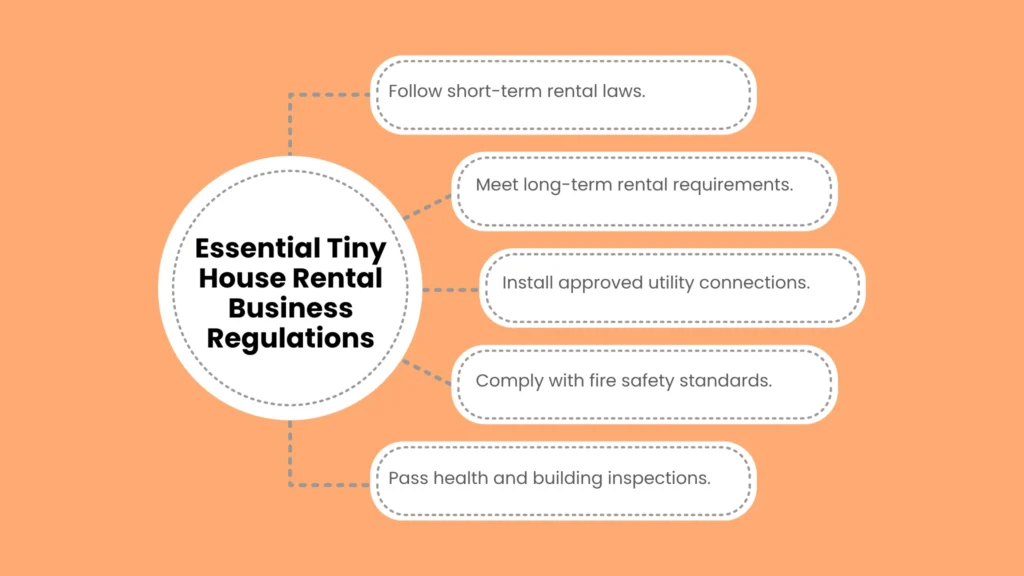
Essential Tiny House Rental Business Regulations
Operating a commercial hospitality business is very different from simply living in a tiny home yourself. When you rent a space to paying guests, you enter the realm of lodging and commercial zoning. Therefore, you must comply with a unique set of tiny house rental business regulations.
Short-Term vs. Long-Term Rental Rules
If you plan to rent your tiny space on platforms like Airbnb for less than 30 days, your local government will likely classify it as a short-term rental (STR). Many residential zones ban STRs entirely to preserve neighborhood quietness. Consequently, you must verify that your specific zone permits commercial hospitality uses.
Alternatively, if you rent your space to a tenant for more than 30 days, you must follow standard landlord-tenant laws. This path typically requires obtaining a long-term rental license and passing a safety inspection a distinction we break down further in our short-term rental vs long-term rental business comparison.
Fire, Health, and Safety Standards
Local health departments require that any commercial rental structure has a safe way to handle human waste. Specifically, you must connect your tiny home to a municipal sewer system or a permitted septic tank. Off-grid composting toilets are highly popular on social media, but many local health codes do not permit them for commercial rentals.
The Ultimate Zoning and Permit Requirements Checklist
To save you time and prevent legal issues, we have compiled the core tiny house rental zoning rules requirements. Before you purchase any building materials, make sure your project can satisfy the following conditions:
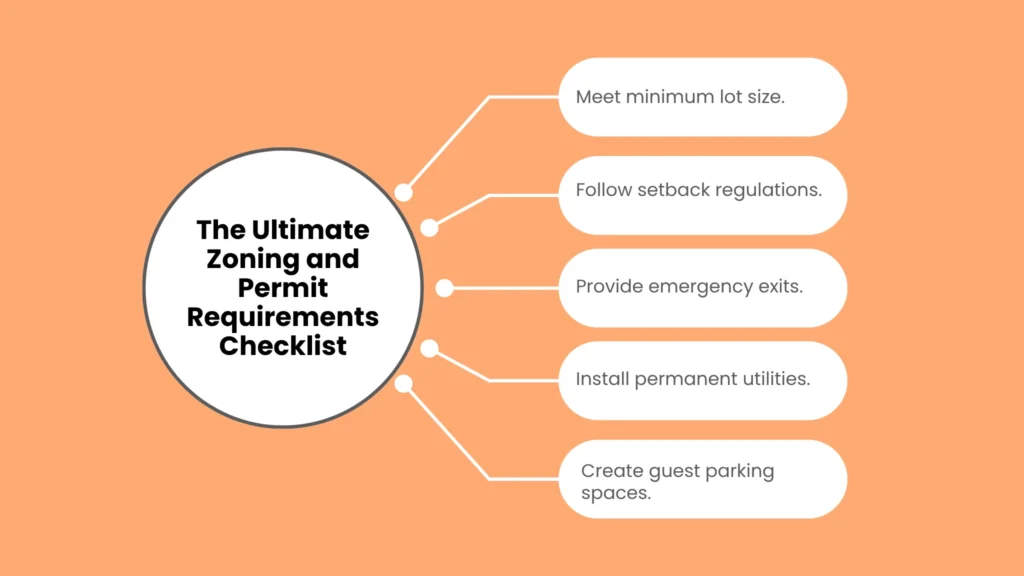
Minimum Lot Size: Your parcel must meet the minimum acreage or square footage rules for your zone.
Setback Limits: Your structure must sit a specific distance from your property lines, typically 5 to 15 feet.
Ceiling Height: Most building codes require at least 7 feet and 6 inches of height in habitable rooms.
Emergency Exits: You must have at least one standard door and emergency escape windows, especially in loft areas.
Utility Connections: Your design must include permanent, permitted electrical, water, and waste hookups.
Dedicated Parking: Many jurisdictions require you to provide designated parking spaces for your guests.
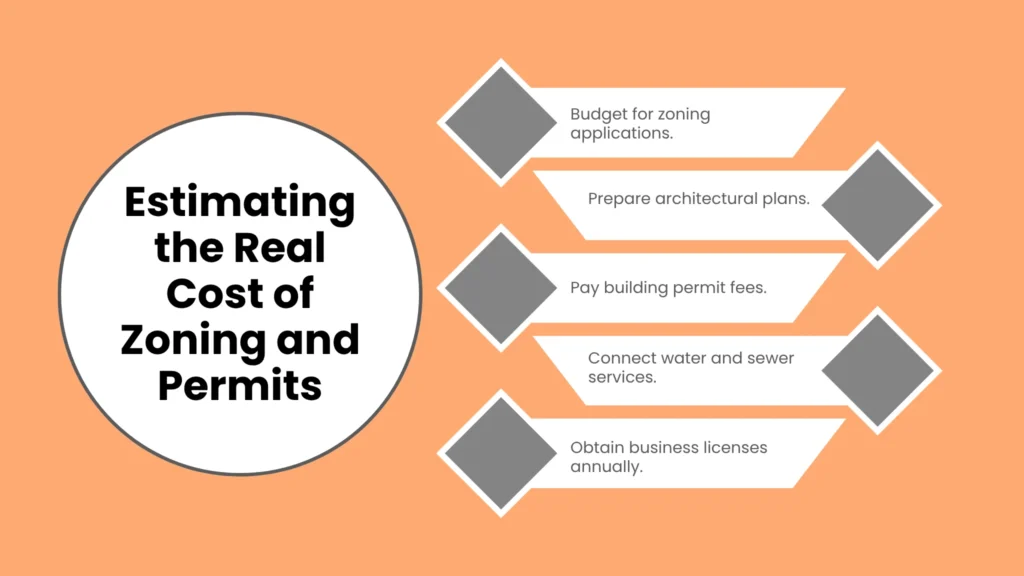
Estimating the Real Cost of Zoning and Permits
Getting legal permission to operate your rental is not free. In fact, many beginners fail because they underestimate the tiny house rental zoning rules cost. To give you a realistic idea of what to expect, we have compiled an estimated cost breakdown based on average municipal fees:
| Expense Category | Description of Fees | Estimated Cost Range |
| Zoning Review & Filing | Initial city application to review land use | $150 to $500 |
| Architectural & Site Plans | Professional drawings required for building permits | $1,000 to $3,500 |
| Building Permits | City fees for structural, electrical, and plumbing permits | $500 to $2,000 |
| Utility Connection Fees | Hooking into local power, water, and sewer grids | $2,000 to $8,000 |
| Septic Installation | Required if municipal sewer is unavailable | $5,000 to $12,000 |
| Business Licensing | Local commercial short-term rental license fee | $100 to $500 per year |
As you can see, the administrative and site preparation costs can quickly add up to $10,000 or more. Therefore, you must budget for these permits from day one. For a similar breakdown in a different rental niche, our equipment rental business plan template walkthrough follows the same cost-estimation approach.
Is a Tiny House Rental Business Profitable?
Despite the initial paperwork and expenses, many investors still wonder: is tiny house rental zoning rules profitable? The short answer is yes, as long as you thoroughly research your market and remain legally compliant.
Because tiny houses have a much lower starting cost than traditional vacation homes, your initial capital investment is relatively small. A beautiful, high-end tiny house costs between $50,000 and $100,000 to build or purchase. If you already own the land, your path to profitability is exceptionally fast.
Furthermore, unique stays are in incredibly high demand. Travelers actively seek out memorable, Instagram-worthy cabins over generic hotel rooms. Consequently, hosts can charge premium nightly rates, often matching the prices of much larger homes.
Understanding Your Potential Profit Margins
To evaluate the financial viability of this business, we must look closely at the typical tiny house rental zoning rules profit margin. Because your operating costs are low, the ongoing margins in this niche are incredibly attractive.
To illustrate, let’s look at a realistic financial example based on industry averages:
Average Nightly Rate: $150
Average Monthly Occupancy: 70% (equivalent to 21 booked nights per month)
Gross Monthly Revenue: $3,150
Monthly Operating Costs: $650 (includes utilities, insurance, platform fees, and cleaning supplies)
Net Monthly Profit: $2,500
Consequently, this setup yields an estimated profit margin of roughly 79%. Even when you factor in the initial permit costs, most hosts can completely recover their startup capital within 18 to 24 months of consistent operation.
Five Essential Steps to Secure Your Tiny House Permits
If you are ready to make your dream a reality, you must follow a logical, step-by-step path to ensure full compliance.
Final Thoughts on Launching a Legal Tiny Rental
Starting a tiny house business is a fantastic way to generate passive income while offering travelers a unique experience. However, ignoring the legal rules of your community is a recipe for financial disaster. By taking the time to understand your local land-use laws, securing the right permits, and budgeting for utility hookups, you can build a resilient, highly profitable business.
For more detailed guides, operational checklists, and tools to help you launch your business successfully, explore our resources at reliablestartup.com.
Frequently Asked Questions
Can I put a tiny house on wheels in my backyard and rent it out?
In most jurisdictions, you cannot legally use a tiny house on wheels as a long-term rental in a standard residential backyard. This is because cities often classify wheeled units as RVs, which are prohibited for permanent occupancy outside of designated parks. However, some progressive cities are relaxing these rules, so you must check your local zoning code.
What is the minimum square footage for a tiny house to be considered legal?
Under the International Code Council’s official IRC Appendix Q, a tiny house must typically have at least one room with 120 square feet of habitable floor space, and any additional rooms must be at least 70 square feet. Generally, standard building codes define a tiny house as a dwelling under 400 square feet.
Do I need a business license to rent out my tiny house?
Yes, in almost all municipalities, you will need a local business license or a short-term rental permit to host paying guests. Failing to obtain this license can result in heavy daily fines and the forced suspension of your rental listing.