Outdoor Adventure Gear Rental: Camping, Skiing & Hiking Rental Business Guide
The global outdoor recreation sector is experiencing a historic surge in consumer participation. Increasingly, modern travelers are choosing to rent technical equipment rather than investing thousands of dollars in premium gear they might only use once or twice a year. For this reason, launching an outdoor gear rental business has emerged as one of the most profitable pathways into the thriving circular economy. By shifting away from traditional retail setups and adopting an asset-sharing network, owners can build sustainable income models that cater to experiential travelers worldwide.
By shifting away from traditional retail models and adopting an asset-sharing framework, an agile adventure rental startup can generate exceptional profit margins. In fact, a single high-quality four-person tent or pair of premium alpine skis can comfortably return its entire original wholesale cost after just four or five weekend rentals. Consequently, this business model transforms durable equipment into a recurring, high-yield revenue stream. However, succeeding in this competitive market requires a deep understanding of seasonal inventory cycles, protective maintenance, and digital booking logistics.
The Economics of an Outdoor Gear Rental Business
To understand the financial viability of an outdoor gear rental business, one must analyze the stark contrast in margins compared to traditional retail. Standard outdoor brick-and-mortar storefronts operate on thin retail margins and are plagued by unsold seasonal inventory. On the other hand, a modern gear rental company capitalizes on high asset utilization rates, circulating the exact same piece of equipment dozens of times before liquidation. This circular asset reuse drastically drops overhead expenses. Entrepreneurs who are still evaluating which rental niche best suits their capital and location can explore a broader set of easy rental business ideas before committing exclusively to outdoor and adventure equipment inventory.
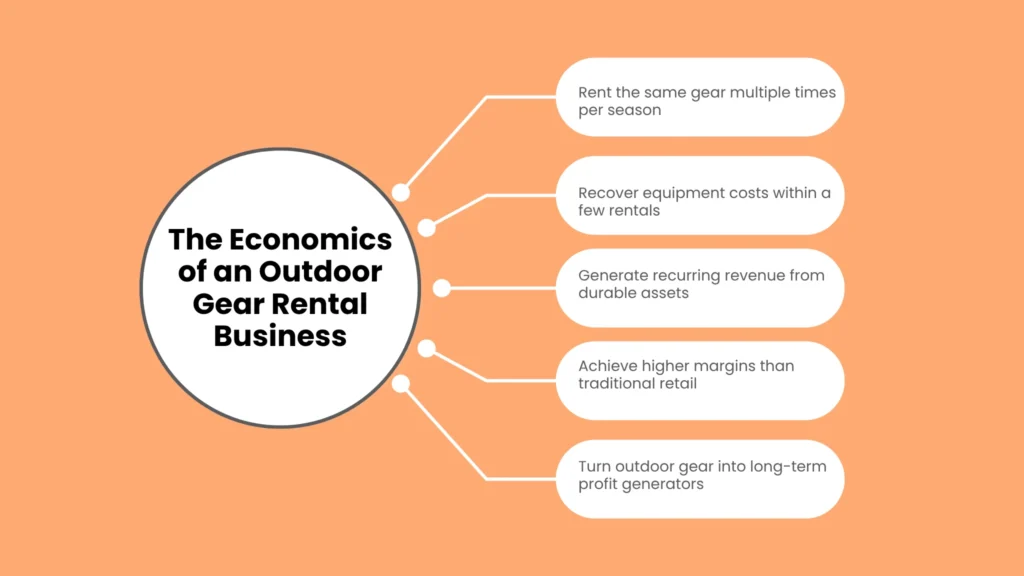
According to recent performance metrics from the hiking gear rental usa sector, a premium backpacking setup that costs $600 at wholesale can easily command a weekend rental fee of $85 to $120. Furthermore, when analyzing a ski rental business income, a single $700 demo ski package can generate up to $1,800 in gross revenue across a single winter season. As a result, your initial capital expenditures are quickly recovered, leaving the remaining lifecycle of the asset as pure profit.
Managing Seasonal Fluctuations
Meanwhile, your primary operational challenge will center around managing weather-dependent demand shifts. To maintain a steady cash flow year-round, your store must balance its inventory across distinct seasonal sports. For example, your warehouse should smoothly transition from hosting camping equipment rental kits in the summer to executing ski and snowboard adjustments the moment the winter snow season approaches. This proactive inventory rotation keeps your team profitable regardless of external weather patterns.
Seasonal Asset Allocation Matrix
Building a sustainable, year-round revenue engine requires a strategic mix of high-demand outdoor equipment tailored to specific seasonal activities.
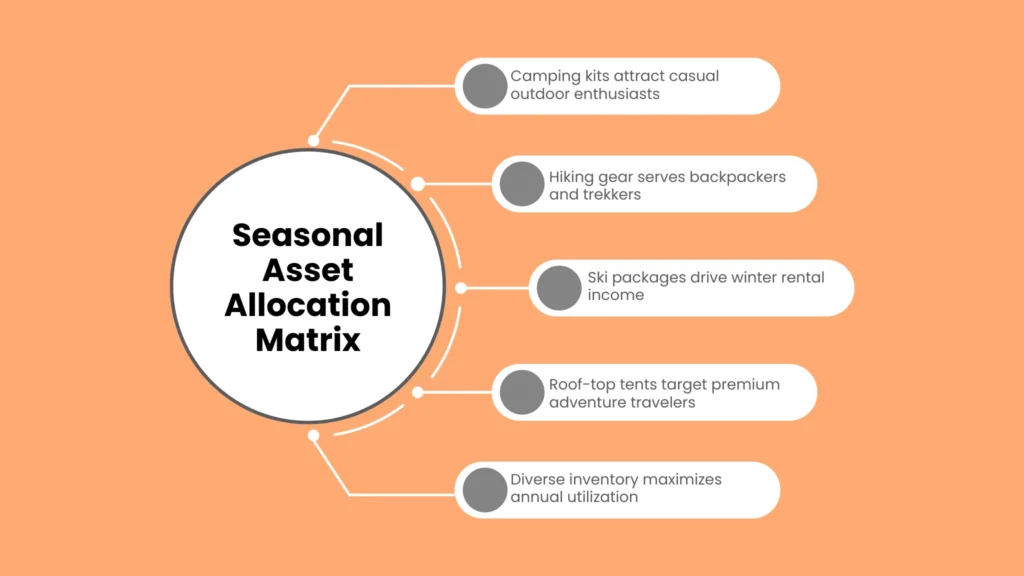
For this purpose, this operational matrix outlines the core equipment tiers, optimal sourcing costs, and realistic revenue yields across a standard calendar year.
| Inventory Classification | Primary Sourcing Strategy | Average Sourcing Cost | Target Weekend Rental Fee | Estimated Annual Yield (Per Unit) |
| Camping Equipment Rental | Direct manufacturer wholesale | $150 to $350 | $40 to $75 | $800 to $1,500 |
| Technical Hiking & Backpacks | Fleet buying partnerships | $120 to $250 | $35 to $60 | $700 to $1,200 |
| Premium Winter Ski Packages | Pre-season factory ordering | $400 to $750 | $90 to $150 | $1,800 to $3,200 |
| Overland Roof-Top Tents | Factory-direct distribution | $1,200 to $2,200 | $250 to $400 | $4,500 to $7,500 |
Pro Tip on Inventory: Never pay full retail prices when building your initial rental fleet. Instead, attend major outdoor trade shows or contact manufacturers directly to establish commercial wholesale accounts. Ultimately, this approach minimizes your upfront capital risk and significantly accelerates your path to profitability.
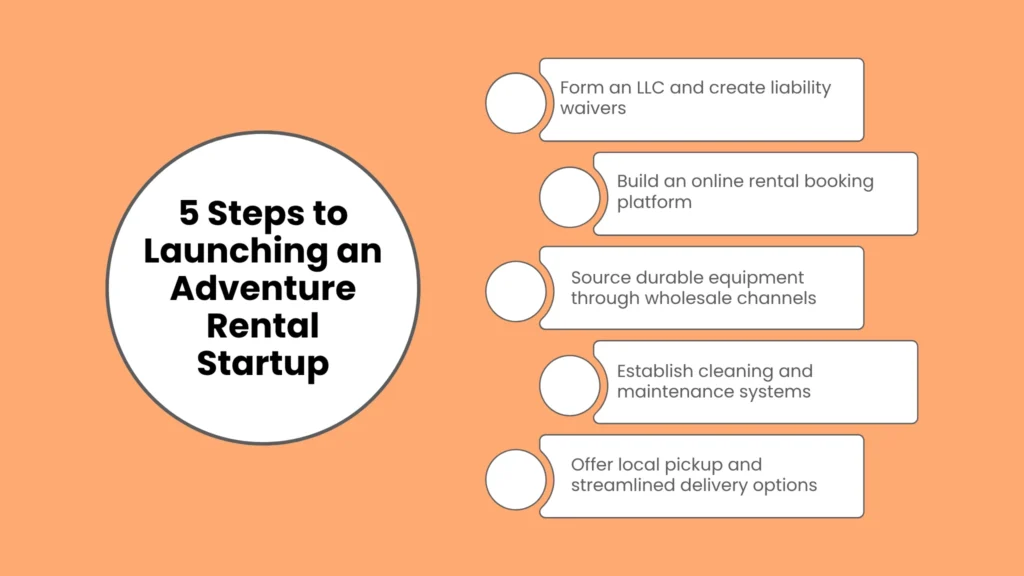
5 Steps to Launching an Adventure Rental Startup
Transitioning from a simple outdoor passion to a highly automated, asset-tracking digital brand requires setting up a specialized online and physical infrastructure. Following an organized implementation timeline helps clear away systemic friction.
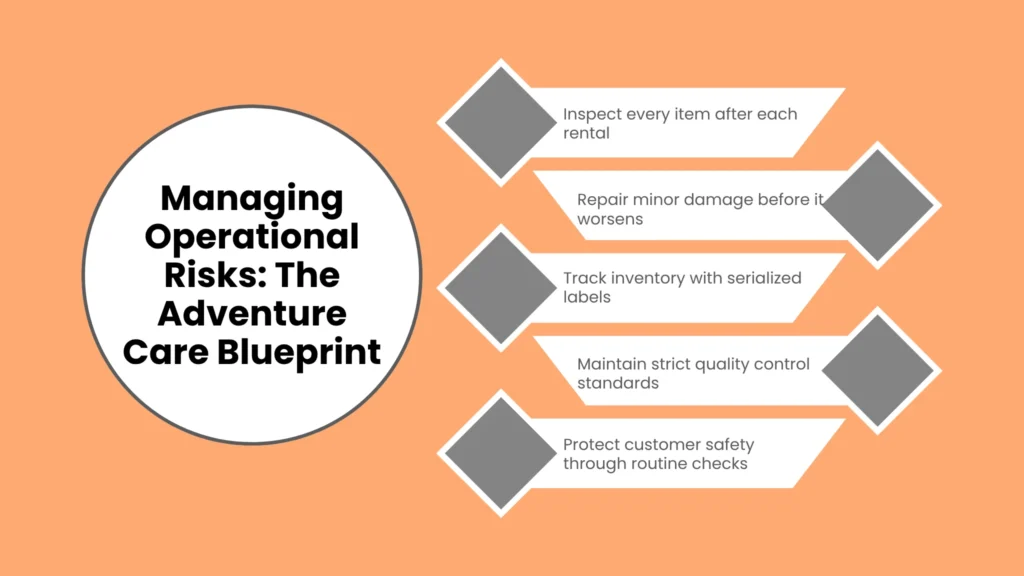
Enforce a Multi-Point Safety Inspection
The moment a piece of technical gear returns to your fulfillment hub, it must undergo a strict structural inspection. For instance, your staff must inspect tent rainflies for tears, check sleeping pads for microscopic air leaks, and test ski binding release mechanisms using calibrated tools. Catching minor fabric wear or loose hardware early allows your team to execute rapid repairs before small issues compromise user safety.
Streamline Your Sanitization Processes
In modern [circular economy models] and tech-enabled gear spaces, customer confidence relies entirely on pristine hygiene standards. To achieve this, clean all technical fabrics, sleeping bags, and apparel using medical-grade, biodegradable sanitizing agents that kill bacteria without stripping away waterproof coatings. Furthermore, utilize ozone sanitizing chambers to completely eliminate stubborn campfire smoke odors between rental bookings.
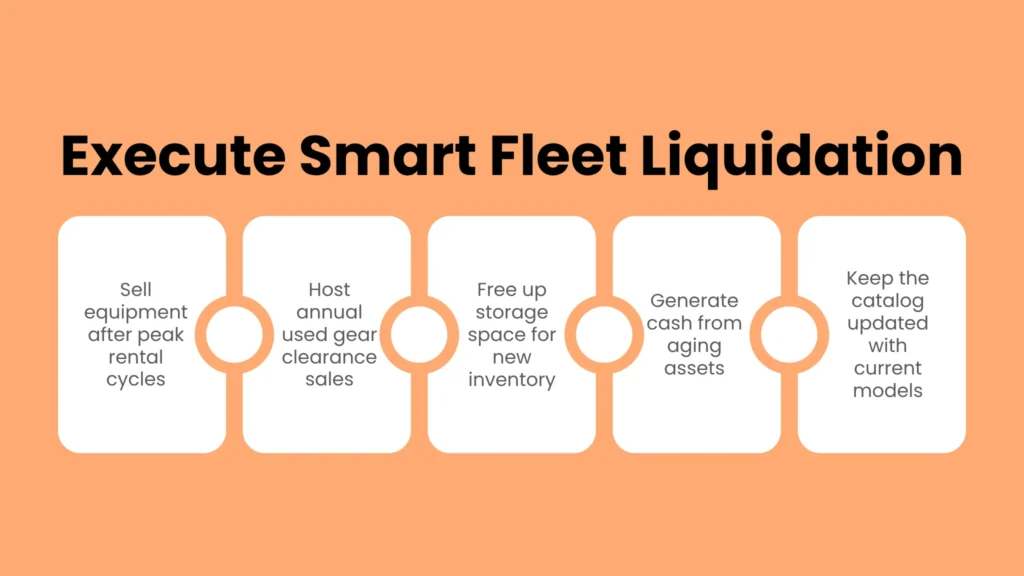
Execute Smart Fleet Liquidation
Every rental asset has a clear, optimal operational lifecycle before maintenance costs begin to eat into your margins. Once a specific tent or ski setup finishes its second full season of use, liquidate it through an annual end-of-season used gear sale on your website. Consequently, this strategy frees up warehouse space, generates rapid cash flow, and allows your brand to continuously offer the latest gear models.
Conclusion
o summarize, building a successful business combines a deep love for outdoor exploration with the highly predictable, high-margin mechanics of modern e-commerce asset sharing. By focusing on smart wholesale inventory sourcing, removing friction through seamless digital booking systems, and enforcing bulletproof sanitization loops, you can build a resilient brand that taps directly into the booming demand for sustainable, experiential travel.
For forward-thinking startup founders, lifestyle innovators, and ecommerce entrepreneurs looking to build highly profitable digital brands, mastering inventory logistics is the ultimate pathway to long-term scalability. If you are ready to refine your business plan, optimize your asset tracking workflows, or discover advanced startup blueprints, visit Reliablestartup to explore practical guides and resources built to scale your enterprise from the ground up.
Frequently Asked Questions
What happens if a customer severely damages or loses premium outdoor gear?
Minor wear like light dirt, scuffs, and small gear scratches are covered under a standard mandatory damage protection fee added at checkout. However, if an item is completely destroyed, submerged in water, or lost, your rental terms must clearly state that the customer’s credit card on file will be charged for the full retail replacement value.
How do I calculate a realistic ski rental business income projection?
To project your seasonal revenue, multiply the total number of ski units in your fleet by your weekend rental rate, assuming a conservative 65% utilization rate across a standard 16-week winter season. Deduct your upfront wholesale acquisition costs, seasonal tuning supplies, and storage costs to find your net seasonal yield.
Is it better to focus on a local market or offer national shipping loops?
For a beginner business, focusing on local or regional pickup models is highly recommended because it eliminates expensive shipping costs for heavy, bulky items like coolers or tents. Once your brand establishes strong cash flows, you can scale into national shipping for lighter, high-value gear like technical apparel and backpacking kits.
How should a new outdoor gear rental business handle sizing for footwear and apparel?
When launching your brand, minimize sizing headaches by focusing heavily on adjustable, one-size-fits-most equipment like backpacks, tents, camping stoves, and trekking poles. If you decide to offer specialized hiking gear rental usa options like boots, invest your initial budget strictly into mid-range sizing curves where the highest consumer demand exists.