Mobile Tyre Recycling Business: Step By Step Guide 2026
Key Takeaways
Low overhead setup with a mobile tyre recycling business truck
Strong local demand from auto shops and fleet owners
Two revenue streams: pickup fees and bulk recycling sales
Quick scaling by offering on-site tire collection service options
Ever seen a pile of old tires sitting behind a mechanic’s shop and wondered where they go? Most shop owners are desperate to get rid of them safely. That’s where you come in.
Starting a mobile tyre recycling business lets you solve a huge local headache while building a high-margin venture. Instead of sitting around waiting for customers to bring rubber to a warehouse, you take your gear directly to the source. You collect old scrap, charge a convenience fee, and transport the rubber to processing hubs. It’s practical, eco-friendly, and genuinely profitable from day one.
A mobile tyre recycling business collects waste tyres directly from auto shops, farms, and fleet operators. Using a dedicated mobile tyre recycling truck equipped with loading gear or portable shredders, you charge clients for an on-site tyre collection service. You then sell processed rubber or intact casings to manufacturing facilities. It’s an easy-to-scale tire pickup business with low entry costs and strong eco-friendly demand.
Why a Mobile Tyre Recycling Business Works Right Now?
Have you ever noticed how many cars and trucks are on the road every day? Every single one of them wears down rubber every mile they drive. Traditional recycling centers require people to haul heavy loads across town. Busy shop owners simply don’t have time for that hassle.
When you offer a direct on-site tire collection service, you save those business owners precious time and manual labor. They would much rather pay a reliable local operator to haul those scrap heaps away every week.
The process flows directly from the source to processing plants:
Auto repair shops, fleets, and farms pay you a pickup fee to haul away scrap rubber.
Your mobile tire recycling truck performs on-site collection, sorting, and compression.
You transport and sell the compressed bulk material to regional rubber recyclers and manufacturing plants.
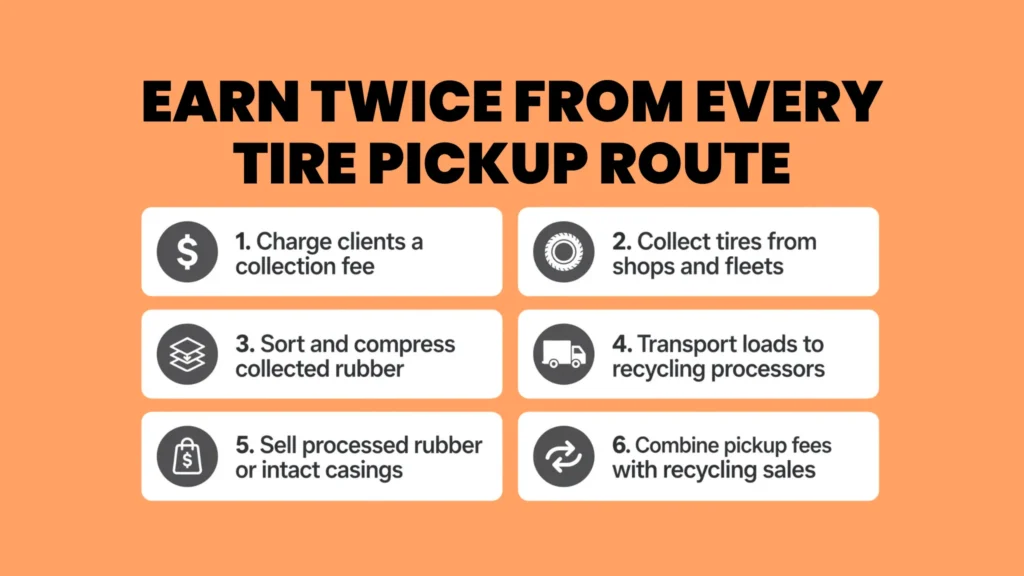
You get paid twice for the same run in most market setups:
First, you charge a collection fee from the shop owner.
Second, you sell the gathered rubber to regional recycling processors.
That double-dip income structure makes this model far safer than standard hauling options.
Setting Up Your Mobile Tire Recycling Business Truck

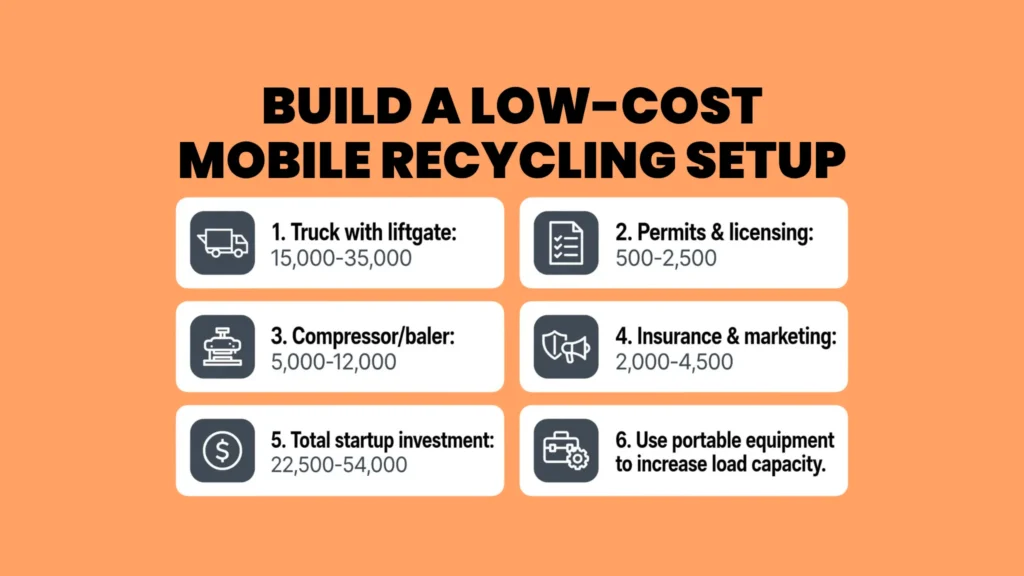
Your vehicle is the heart of your entire enterprise. You can’t run a serious hauling operation out of a standard family pickup truck. A typical setup includes a cab, a central portable hydraulic baler or shredder, and a rear liftgate with storage space.
| Equipment Type | Estimated Cost | Primary Advantage | Best Used For |
| Box Truck with Liftgate | $18,000 – $35,000 | Weather protection & security | Route-based tire pickup business |
| Trailer with Portable Baler | $12,000 – $22,000 | Compactor doubles load capacity | High-volume urban routes |
| Flatbed with Winch | $15,000 – $28,000 | Easy side-loading for oversized rubber | Agricultural & tractor tires |
If you compress rubber right inside your vehicle using a portable baler, you can haul three times as many units per trip. That saves you gas, time, and wear on your engine.
If you aren’t sure how to pick your vehicle or format your initial financial plan, resources over at Reliable Startup provide step-by-step guides on equipment sourcing for eco-focused service models.
How the On-Site Tire Collection Service Model Works?
So, what does a normal workday actually look like in this line of work? It’s much simpler than most people think. You set up weekly or monthly pickup routes with local auto repair stores, commercial fleets, and tire dealers. When your mobile tire recycling truck pulls up, your team loads the discarded rubber directly from their storage area.
The step-by-step daily routine includes:
Arriving on site with your specialized vehicle.
Inspecting the rubber to separate reusable casings from scrap.
Loading and compressing the batch using portable gear.
Collecting instant payment from the client.
Transporting the bulk load straight to the processing plant.
You calculate the bill based on total volume or per-casing counts before leaving the driveway. Because you provide an on-site tire collection service, clients pay you right on the spot via digital invoice or credit card. No waiting weeks for checks to clear.
5 Steps to Launch Your Mobile Tyre Recycling Business
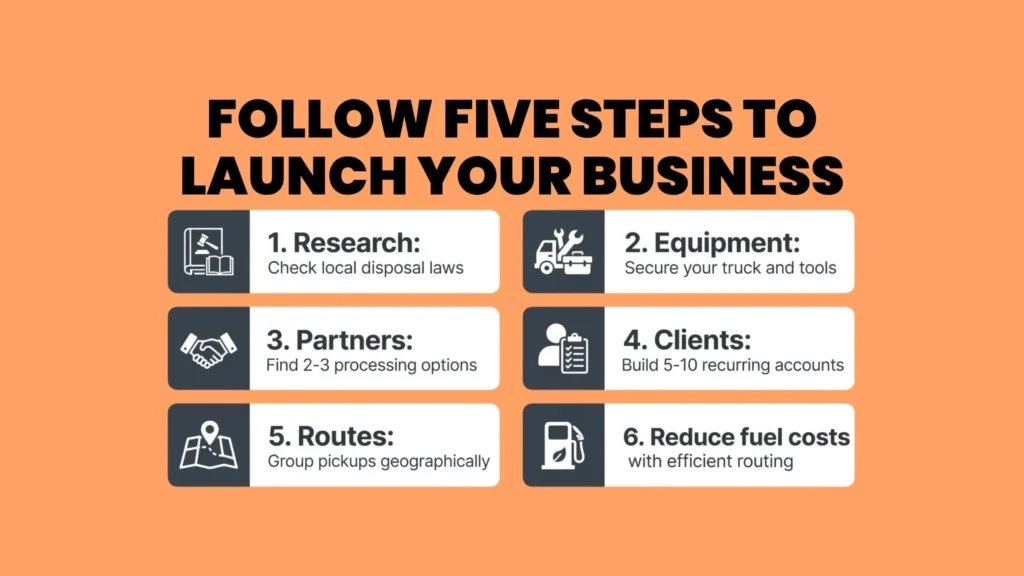
Here is the exact path to launch your new venture without wasting money on stuff you don’t need yet.
Step 1: Research Local Disposal Laws
Every state and city has strict regulations regarding waste rubber storage and transport. You usually need a specialized waste hauler permit before picking up your first load. Check with your local environmental protection agency to see what licenses are required.
Step 2: Secure Your Vehicle and Tools: Mobile Tyre Recycling Business
Get a sturdy mobile tire recycling truck that can handle heavy daily payloads without breaking down. Buy high-quality tie-down straps, heavy-duty gloves, a portable ramp, and a hydraulic bale compressor if your budget allows.
Step 3: Map Out Your Processing Partners
Before gathering rubber, you need a place to drop it off. Partner with rubber shredding facilities, asphalt producers, or civil engineering firms that buy crumb rubber. Having 2–3 processing options prevents bottlenecks when one buyer gets full.
Step 4: Lock In Commercial Clients
Visit local tire shops, auto dealerships, and farm equipment suppliers in person. Offer them a lower price or more reliable schedule than their current waste collector. Getting 5–10 recurring accounts creates steady weekly baseline revenue.
Step 5: Optimize Your Daily Route: Mobile Tyre Recycling Business
Group client pickups geographically so you aren’t driving back and forth across town. Efficient route mapping cuts down fuel costs and keeps your truck earning money every hour it’s on the road.
Startup Costs and Profit Potential: Mobile Tyre Recycling Business
How much money do you actually need to kick this off? Based on industry averages, most small operations start with reasonable capital.
| Expense Category | Typical Cost Range | Notes |
| Truck Purchase / Lease | $15,000 – $35,000 | Used box truck with liftgate |
| Permits & Licensing | $500 – $2,500 | Varies widely by state/region |
| Compressor / Baler | $5,000 – $12,000 | Optional initially, but recommended |
| Insurance & Marketing | $2,000 – $4,500 | Commercial auto & liability coverage |
| Total Estimated Initial Investment | $22,500 – $54,000 | Base operational startup |
Your daily profit margins depend on route density and local disposal rates. A single tire pickup business route servicing 8 to 12 repair shops daily can generate between $400 and $900 in collection fees alone. When you add the payout from selling bulk rubber to processing plants, monthly gross revenues can build up quickly. Tire shredding can further increase your revenue by turning collected scrap tires into valuable materials such as rubber, steel, and tire-derived fuel.
Looking to lower your upfront equipment expenses? The planning templates at reliablestartup help new business owners build lean financial roadmaps that keep initial costs under tight control.
Finding Paying Customers for Your Tyre Pickup Business
How do you get shop managers to switch over to your new service? You just need to solve their biggest pain points: mess and unreliability. Many big waste management companies drop the ball on pickup schedules. Discarded rubber stacks up outside, creating pest problems and fire hazards for the store.
When pitching prospective accounts, highlight these operational benefits:
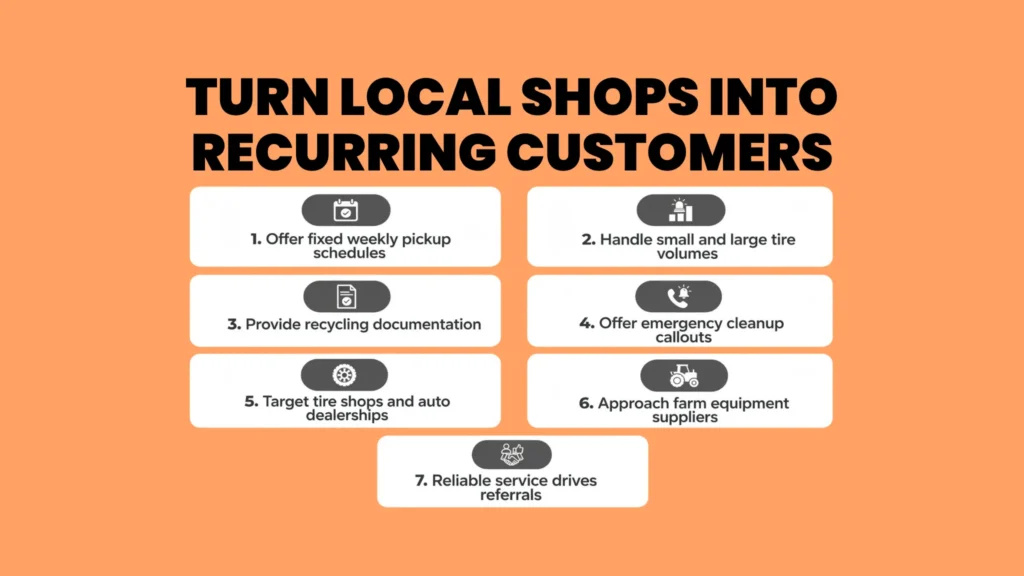
Guaranteed Pickup Schedules: Promise fixed weekly or bi-weekly pickup windows so rubber never piles up outside their shop.
Flexible Volume Capacity: Handle small 20-tire pickups or massive 300-tire clear-outs with equal speed.
Eco-Friendly Certification: Provide paper or digital receipts showing their scrap rubber goes straight to clean recycling channels.
On-Demand Emergency Callouts: Offer fast 24-hour cleanup responses for shop owners facing sudden municipal code inspections.
Position your mobile tyre recycling business as the friendly, fast, local alternative to giant corporate waste haulers. Word moves fast in the auto service industry, and satisfied shop managers will recommend you to other nearby locations.
Licensing, Environmental Rules, and Safety Requirements
You can’t just throw hundreds of old tires into a trailer and start driving around without proper paperwork. State and local authorities monitor rubber transport carefully to prevent illegal dumping.
Here is what you generally need to operate legally:
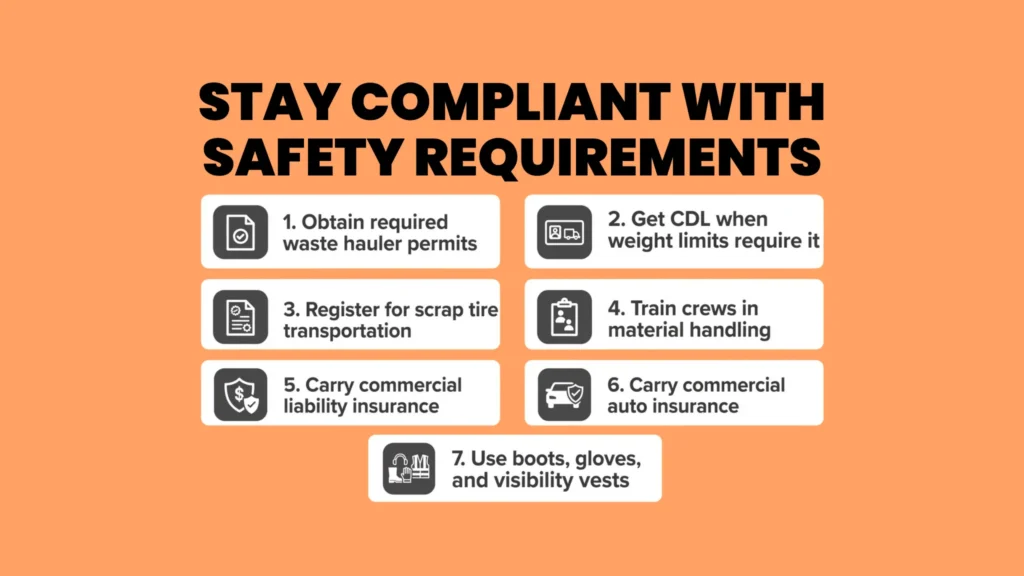
Commercial Driver’s License (CDL) if your loaded vehicle exceeds weight limits.
Scrap Tire Transportation Registration from your state environmental board.
Hazardous material handling awareness training for your crew.
Commercial general liability and commercial auto insurance policies.
Safety gear is equally vital on daily routes. Make sure everyone on your team wears steel-toe boots, puncture-resistant gloves, and high-visibility vests during every on-site tire collection service stop. Rubber casing wires can easily slice open hands if you handle scrap without heavy protection.
Key Challenges and How to Handle Them
Every business model runs into a few speed bumps along the way. Knowing what to expect makes overcoming them much easier.
Challenge 1: Fluctuating Scrap Rubber Prices
Processor payout rates for raw rubber move up and down depending on industrial demand.
Solution: Don’t rely solely on processor payouts. Structure your customer collection fees so your routes stay profitable even if rubber sales prices drop temporarily.
Challenge 2: Heavy Physical Strain in mobile tyre recycling business
Lifting hundreds of heavy rubber casings every single day leads to quick burnout or back injury.
Solution: Invest in hydraulic liftgates, mechanical winches, and portable ramp systems early. Let mechanical equipment handle the heavy lifting while you manage the vehicle.
Challenge 3: Weather Delays
Rain and snow turn outdoor tire piles into heavy, waterlogged messes that add useless weight to your load.
Solution: Encourage long-term commercial clients to keep their discarded rubber under covered overhangs or inside specialized storage racks.
Scaling Your Service Into a Regional Fleet
Once your primary mobile tire recycling truck is running at full capacity five days a week, it’s time to scale up. You don’t need to overcomplicate expansion. You simply duplicate what worked on your first route:
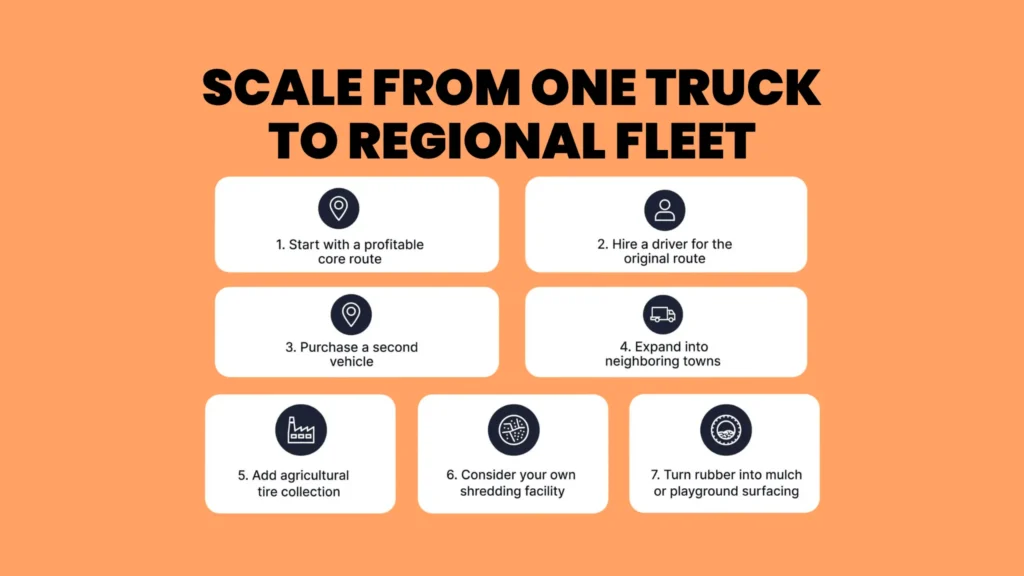
Hire a dedicated driver for your original route.
Purchase a second vehicle funded through your initial cash flow.
Target neighboring towns or industrial parks to expand your service territory.
Add specialized services like agricultural or heavy machinery tire collection.
Many founders building out a mobile tyre recycling business expand into processing their own rubber down the line. Buying a permanent shredding facility turns scrap into valuable rubber mulch or playground surfacing.
If you are aiming to grow a multi-truck operation, check out the operational scaling tools on reliablestartup to simplify hiring, fleet management, and client invoicing.
Conclusion
Starting a mobile tyre recycling business is one of the most practical, resilient commercial service opportunities available today. By providing an efficient on-site tire collection service with a well-equipped mobile tire recycling truck, you solve a real, constant problem for local businesses.
You get paid to collect waste and paid again when you deliver raw material to recyclers. Focus on setting up clean pickup routes, following local regulations, and delivering reliable service to every shop manager on your list. Lock in your first few commercial accounts today and start turning scrap rubber into long-term profit.
Frequently Asked Questions
Is a mobile tyre recycling business hard to start?
No, it requires basic permits, a reliable truck, and local auto shop clients to begin operating.
How much money does a tire pickup business make?
Earnings depend on route size, but established operators generally generate steady daily collection fees plus rubber sales income.
What equipment is needed for an on site tire collection service?
You need a heavy-duty truck with a liftgate, loading straps, safety gear, and optionally a portable baler.
How do you dispose of tires after collection?
You haul collected tires to regional shredding facilities, civil engineering sites, or rubber reprocessing plants for recycling.