Tyre Recycling Plant in a Shipping Container: The Modular Setup Trend Explained
Scrap tires present one of the most stubborn waste challenges on the planet today. Millions of tires end up in landfills every single year, where they create massive fire hazards and take up valuable space. Traditionally, recycling factories required giant plots of land, heavy concrete foundations, and millions of dollars in upfront capital.
Fortunately, a game-changing technology is completely disrupting the waste-to-energy sector. Entrepreneurs are now installing a complete modular tyre recycling plant inside a standard shipping container, creating a massive trend in the green business world. Consequently, this plug-and-play setup allows operators to process waste right where it accumulates. By eliminating massive transportation costs, business owners can scale up their operations quickly and easily.
What is a Modular Tyre Recycling Plant?
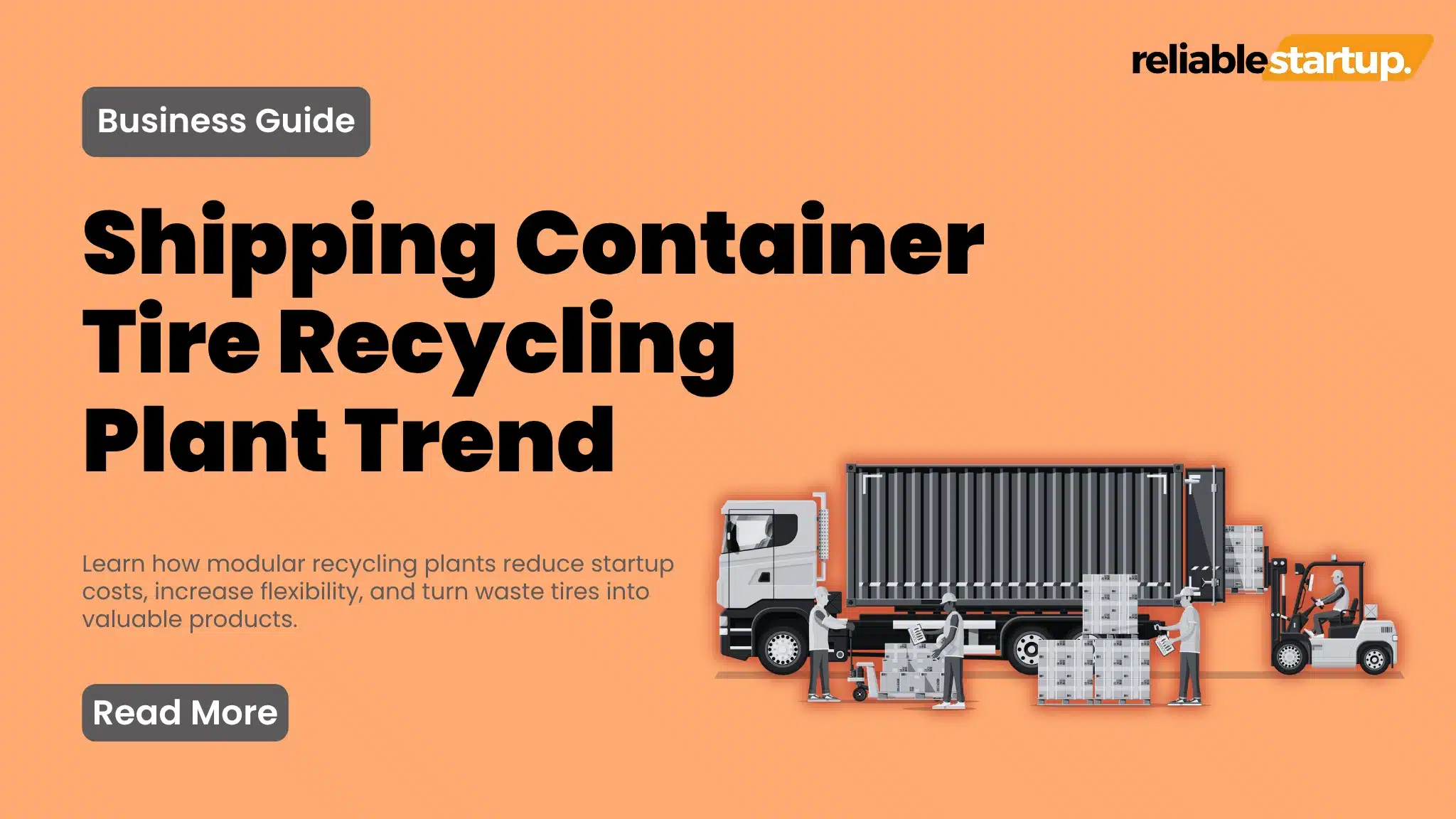
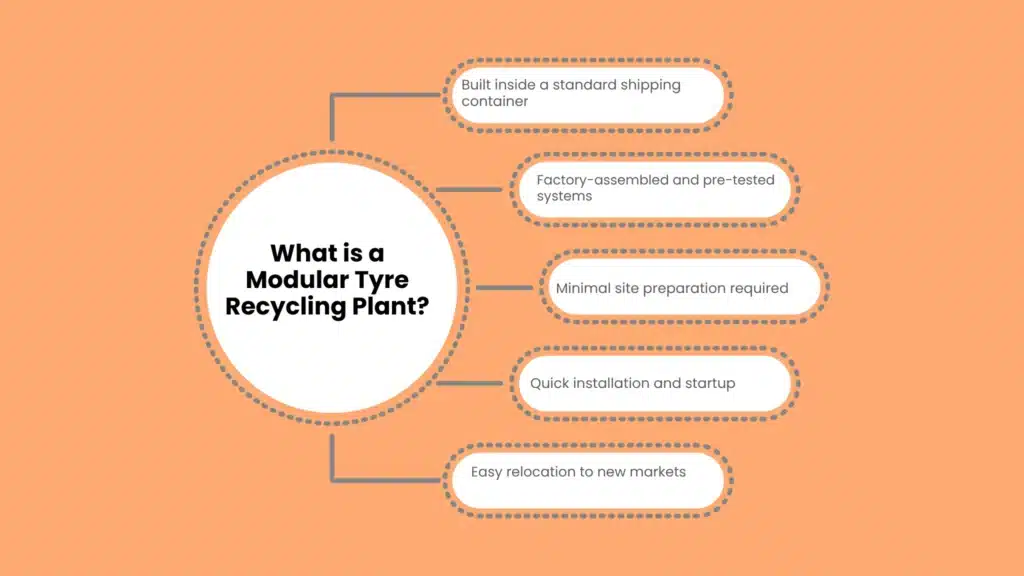
A modular tyre recycling plant is a compact, industrial-grade recycling system that manufacturers engineer to fit entirely within a standard 40-foot shipping container. Instead of building a permanent facility from scratch, the factory pre-assembles, wires, and tests the entire processing line before shipping it out to the client. Before investing in any containerized system, operators should first build a detailed tyre recycling business plan that maps out feedstock supply, daily throughput targets, and projected monthly revenue.
How the Containerized Setup Works
When a container tyre recycling unit arrives at your site, you only need to worry about minimal site preparation. For instance, you do not need to pour massive concrete foundations or construct complex housing structures. Instead, you can simply drop the system onto a flat gravel pad or an asphalt lot, hook it up to a power source, and start processing tires within a few days.
Why This Trend is Growing Fast
Industrial real estate costs money, and local zoning laws for permanent factories often take years to clear. Containerized systems solve this headache by dramatically shrinking the physical footprint of the operation. Furthermore, if your local supply of scrap tires runs dry, or if municipal regulations change, you can simply close the container doors, load the unit onto a flatbed truck, and move your entire business to a more profitable location. If you are still in the early research phase, a complete guide on how to start a tire recycling business will help you understand the full scope of investment, equipment, and market positioning before you commit to a modular setup.
The Technology Inside a Mobile Recycling Plant
Do not let the compact size fool you. These mobile units pack the exact same industrial processing power as traditional, stationary recycling facilities. Depending on your specific business goals, you can configure a mobile recycling plant for either mechanical shredding or advanced thermal processing.
Mechanical Crumb Rubber Production
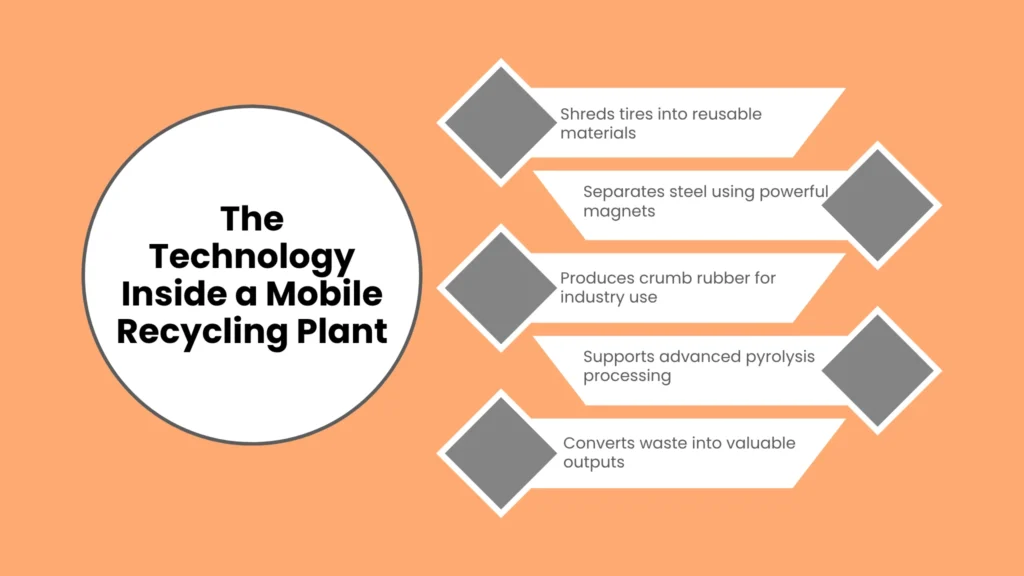
If you choose physical recycling, the manufacturer packs the shipping container with heavy-duty dual-shaft shredders, magnetic steel separators, and fine-granulating mills.
First, the system feeds whole passenger or truck tires into a high-torque primary shredder.
Next, powerful rare-earth magnets strip away the inner steel bead wires with incredible efficiency.
Finally, the granulator mills the remaining rubber down into various sizes, ranging from 50 mm alternative fuel chips to fine crumb rubber for playground surfaces and athletic tracks.
The Modular Pyrolysis Setup
The most exciting development in this space is the modular pyrolysis plant 2026 design. Pyrolysis is a clean thermal process that bakes rubber chips in an oxygen-free reactor at temperatures reaching roughly 400 to 500 degrees Celsius.
Because the reactor contains zero oxygen, the rubber cannot catch fire. Instead, the intense heat breaks down the complex rubber polymers into highly valuable industrial materials: high-grade pyrolysis oil, combustible synthetic gas, and raw carbon black.
Financial Breakdown: Costs and Income Potential
Investing in green technology requires clear data on unit economics. Luckily, a containerized system lowers the barrier to entry for the waste management sector because it cuts out heavy infrastructure costs entirely.
Upfront Capital Requirements
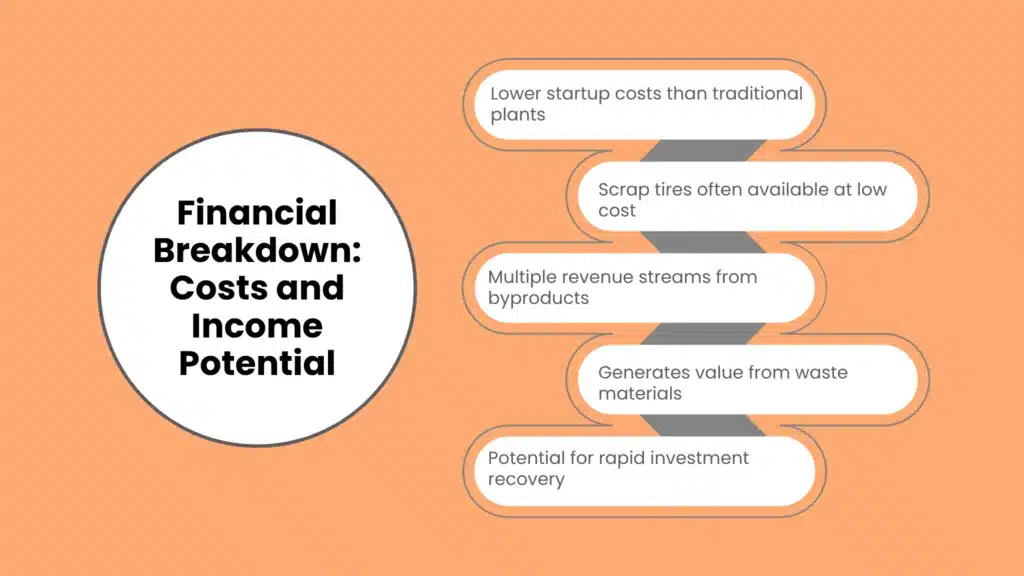
A traditional, stationary tire processing facility can easily cost upwards of $2 million to establish. In contrast, a fully configured, factory-tested portable tire recycling container unit ranges from an estimated $150,000 to $450,000. To reduce your initial financial burden, it is worth researching available tyre recycling grants and funding programs that specifically support green waste-to-energy businesses at the startup stage.Your final cost depends mostly on your daily throughput capacity and whether you choose mechanical shredding or a pyrolysis reactor.
Estimating Revenue from Byproducts
The true beauty of tire recycling lies in your raw material costs, since you can often get scrap tires for free or even collect disposal fees from local garages. Meanwhile, the finished outputs command high market prices across multiple global industries.
| Output Material | Average Yield by Weight | Primary Commercial Application | Estimated Market Value (Per Ton) |
| Pyrolysis Bio-Oil | 40% to 45% | Industrial furnace fuel, boiler heating, diesel blending | $350 to $500 |
| Carbon Black | 30% to 35% | Rubber manufacturing, plastics, black paint pigments | $150 to $250 |
| Scrap Steel Wire | 12% to 15% | Steel mills, scrap metal smelting, manufacturing | $100 to $180 |
| Combustible Gas | 10% to 12% | Recycled internally to heat the system reactor | Saves on external utility costs |
Based on available operational data, a single containerized system processing roughly 5 to 10 tons of scrap tires per day can achieve full capital payback within an estimated 8 to 14 months of continuous operation.
Core Advantages of Containerized Systems
Shifting from fixed infrastructure to an agile, modular model offers distinct competitive advantages that standard recycling operations simply cannot match.
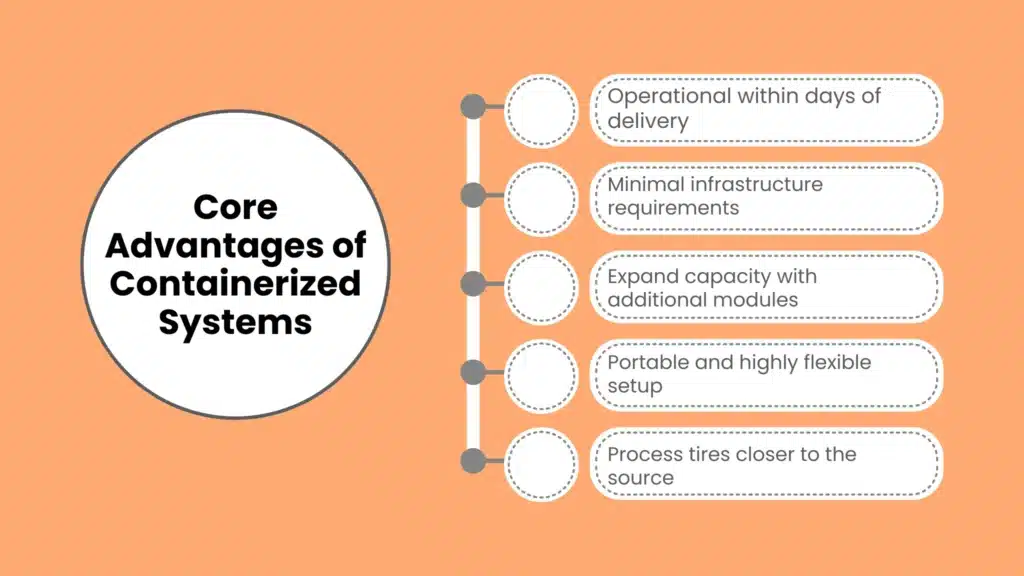
Rapid Deployment: Traditional plants take 6 to 12 months to construct and calibrate on-site. Containerized systems arrive pre-commissioned, which means you can begin generating revenue within 72 hours of delivery.
Lower Infrastructure Expenses: You save thousands of dollars on civil engineering, structural blueprints, and building permits because the shipping container acts as your permanent building envelope.
Easy Scalability: As your raw material supply grows, you do not need to redesign your facility. Instead, you simply place another container module alongside your original unit to instantly double your daily processing capacity.
Logistical Flexibility: Transporting scrap tires over long distances is highly inefficient because tires contain mostly empty space. However, bringing a portable tire recycling unit directly to a massive tire dump allows you to process the waste on-site, converting bulky tires into dense, easy-to-ship raw materials.
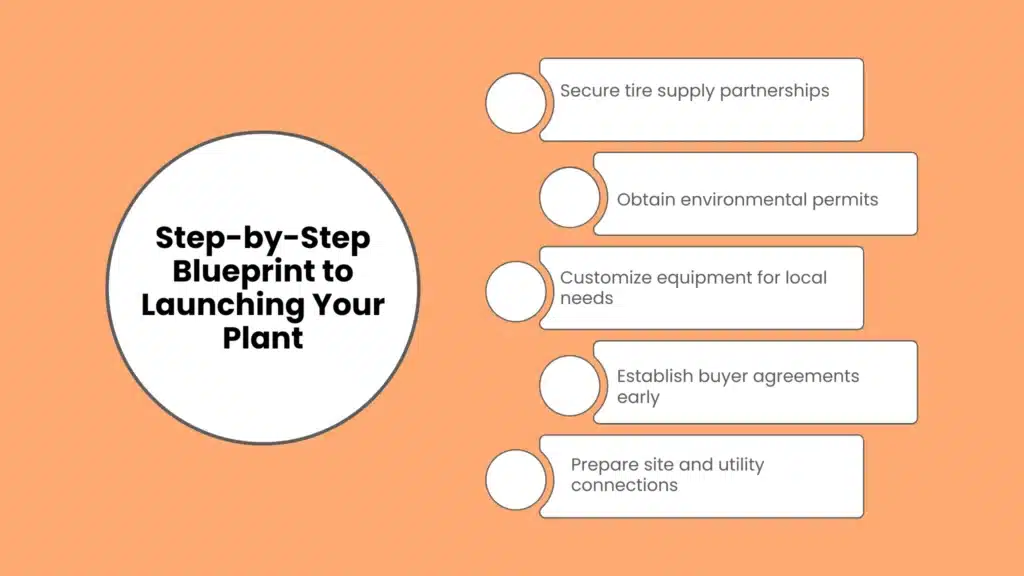
Step-by-Step Blueprint to Launching Your Plant
Operating a containerized recycling setup requires balancing technical execution with localized environmental regulations.
Navigating Regulatory Compliance and Environmental Safety
While the modular model offers unmatched mobility, environmental compliance remains a critical factor for long-term viability. Regulatory bodies closely monitor waste-to-energy projects; consequently, clean operations are absolutely non-negotiable.
Advanced Emission Controls
Modern container systems are incredibly clean. For example, the best setups feature built-in water-curtain dust catchers, gas-deodorization devices, and multi-stage desulfurization systems. These integrated technologies thoroughly scrub the combustion smoke, ensuring that any exhaust released matches strict national environmental standards.
Closed-Loop Resource Efficiency
The absolute efficiency of a modular pyrolysis plant 2026 setup lies in its self-sustaining design. During the heating process, the system pulls out the non-condensable synthetic gas, filters it, and routes it back directly into the reactor’s combustion chamber. As a result, the plant uses its own waste gas to keep the system hot, radically reducing your ongoing fuel expenses.
Operations and Daily Maintenance Protocols
To keep your machinery running smoothly and maximize your asset lifespan, your team must adhere to a strict daily maintenance routine.
Cleanliness and Safe Ash Discharges
Because the process handles carbon black, keeping the interior of the container clean prevents dangerous dust accumulation. Therefore, modern units use fully sealed, automatic discharging systems that drop the cooled carbon black directly into sealed bags. Ultimately, this keeps the air clean and protects your operators from inhaling fine particles.
Routine Mechanical Inspections
Inspect the primary shredder blades daily for dullness or chips caused by unexpected road debris embedded in the tires.
Check the hydraulic lines and pressure valves on the containerized power pack to ensure there are no fluid leaks.
Monitor the continuous water-cooling loop to guarantee the heat exchangers are condensing the oil vapors efficiently.
Clean the magnetic separation belt regularly to clear out trapped steel fragments and maintain pure rubber outputs.
Conclusion
The transition toward decentralized, modular recycling is a massive win for both environmental sustainability and industrial efficiency. By packing an entire processing facility into a highly mobile shipping container, operators can bypass traditional real estate hurdles, lower their initial capital risks, and process waste closer to the source.
If you want to study complete industrial blueprints, explore equipment launch checklists, and learn how to scale your eco-friendly business, visit reliablestartup to access everything you need to build a successful modern operation.
Frequently Asked Questions (FAQ)
What utilities are required to run a containerized tire recycling unit?
A standard containerized unit requires a stable industrial three-phase electrical connection or a dedicated industrial generator to run the high-torque motors. Additionally, you need a continuous, closed-loop water supply to feed the cooling heat exchangers that condense oil vapors during the recycling process.
Can a shipping container plant process massive mining or tractor tires?
Most standard containerized primary shredders are built to process passenger vehicle and commercial truck tires. Consequently, extremely large mining or agricultural tractor tires generally require a separate hydraulic bead-cutter to break them down into smaller pieces before they can enter the container processing line.
How safe are containerized pyrolysis plants from explosion risks?
Modern modular pyrolysis units are built to strict pressure-vessel engineering standards. Furthermore, they are equipped with automated safety monitoring systems, real-time pressure relief valves, and vacuum-sealed environments that completely prevent oxygen from entering the heating reactor, eliminating fire hazards.
Do I need a concrete foundation to place a mobile recycling plant?
No, you do not need a permanent concrete foundation. One of the biggest advantages of these systems is that the integrated structural steel frame distributes the weight evenly. As a result, you can safely operate the entire unit on a level gravel lot, compacted dirt pad, or industrial asphalt yard.