Commercial Real Estate Startup Ideas for First-Time Investors
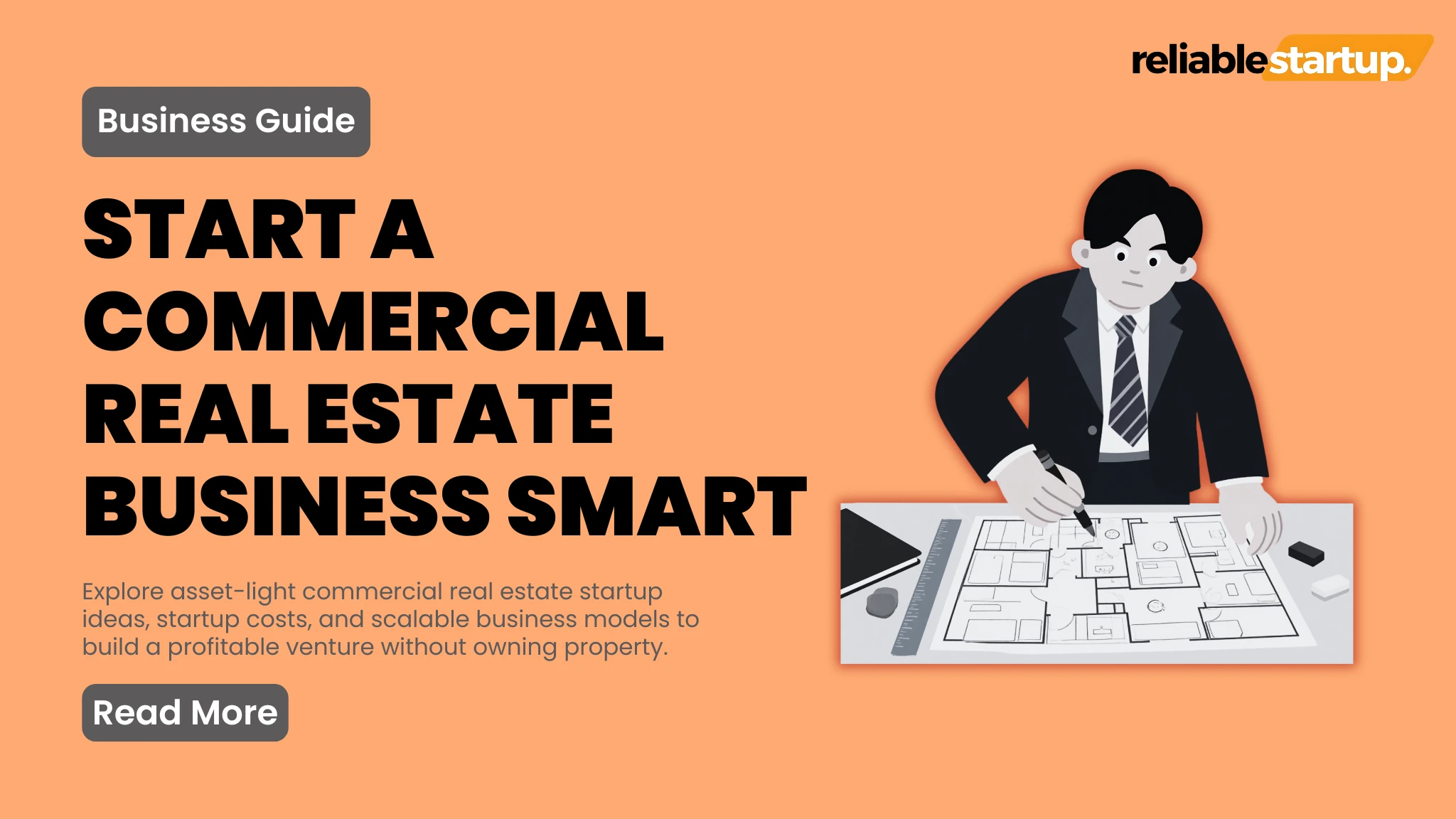
The commercial real estate (CRE) sector has long been viewed as an exclusive playground reserved for institutional funds and ultra-wealthy individuals. For decades, the sheer scale of purchasing office towers, retail strip malls, or massive logistics warehouses created an impossible barrier to entry for newcomers. However, technological innovations have thoroughly disrupted this ecosystem, opening up incredible opportunities for small-scale entrepreneurs.
Approaching commercial real estate for beginners through an asset-light, software-driven, or service-oriented lens allows you to capture massive corporate revenues without the risk of owning physical buildings. In this comprehensive guide, we will break down highly accessible commercial real estate startup ideas, map out core operational requirements, analyze setup costs, and outline a path to sustainable, high-margin profitability.
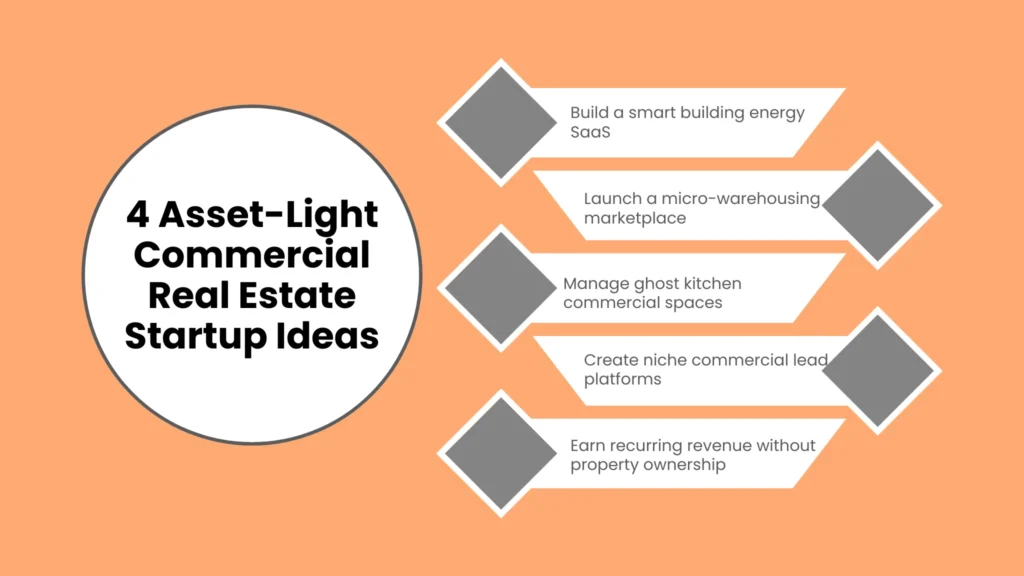
4 Asset-Light Commercial Real Estate Startup Ideas
To build a lucrative commercial property startup without massive capital reserves, you must shift your focus toward data aggregation, workspace optimization, and property operations.
Consider these highly profitable, zero-inventory business models designed specifically for modern entrepreneurs:
1. Smart Building ESG & Energy Optimization SaaS
Commercial property owners face massive regulatory pressure to reduce their carbon footprints and lower utility expenses.
The Model: You build a specialized software platform that connects directly to a commercial building’s automated HVAC, lighting, and water systems.
The Value: By using data analytics to optimize building performance, your software lowers energy consumption for corporate landlords, creating a highly stable, subscription-based recurring revenue stream. This ESG driven model sits at the intersection of proptech and the broader wave of climate tech startups gaining investor attention in 2026.
2. Micro-Warehousing and Hyper-Local Fulfillment Marketplaces
The exponential growth of e-commerce has triggered an urgent need for small, local storage nodes within major city centers.
The Model: You launch a digital marketplace that connects retail brands with local business owners who have unused basement space, empty storefronts, or vacant garages.
The Value: Your digital platform facilitates the entire booking, security, and payment workflow. Consequently, you capture a transaction fee on every square foot rented without holding any physical leases.
3. Ghost Kitchen Operations and Fractional Commercial Cooking Spaces
The food delivery industry relies heavily on optimized production facilities rather than premium, front-of-house restaurant real estate.
The Model: You partner with landlords of vacant commercial spaces to convert their properties into multi-tenant, delivery-optimized culinary spaces.
The Value: You manage the shared digital infrastructure, specialized kitchen equipment, and incoming delivery logistics, charging individual food brands a recurring fee or a percentage of their digital sales. If this model interests you, our detailed guide on cloud kitchen business opportunities breaks down setup, licensing, and delivery-partner logistics.
4. Specialized Commercial Niche Lead Aggregators
Independent commercial brokers and corporate tenants waste hundreds of hours trying to source highly specific properties, such as medical outpatient clinics, data centers, or urban laboratory spaces.
The Model: You build data-rich digital directories focused exclusively on one underserved property niche.
The Value: By executing smart local search marketing, you collect high-intent inquiries from corporate tenants and sell these premium leads directly to vetted commercial brokers for an upfront fee or a commission split at closing.
Technical and Operational Core Requirements
Launching a professional B2B commercial property startup requires a secure, high-credibility digital framework to win the trust of institutional players.
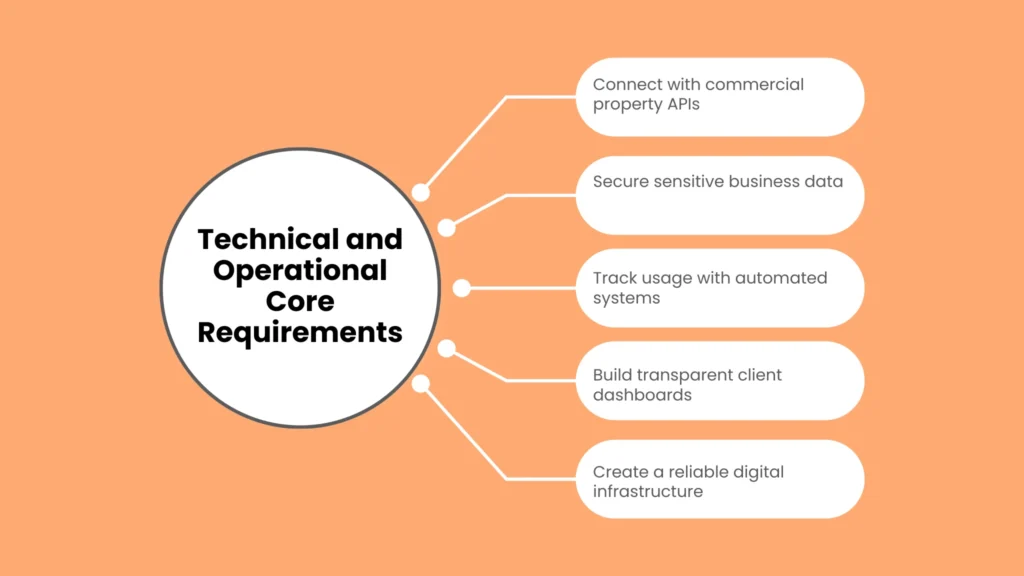
Ensure your operational baseline ticks all of these vital commercial real estate startup ideas requirements:
Seamless API Integrations: Your application must connect reliably with regional commercial databases and property management software.
Enterprise-Grade Security Protocols: Because you handle sensitive corporate financial records, your platform must feature robust data encryption and user access controls.
Automated Metering Frameworks: If you build energy or usage-based software, your system must track data points accurately in real time without causing lag.
Transparent Corporate Dashboards: Commercial clients expect precise reporting, meaning you must build clean user interfaces that display clear return-on-investment (ROI) metrics.
Financial Benchmarks: Setup Costs vs. Software Margins
Steering clear of physical commercial asset acquisitions completely reshapes your startup’s financial profile, turning traditional overhead into lean digital infrastructure.
The True Commercial Real Estate Startup Ideas Cost
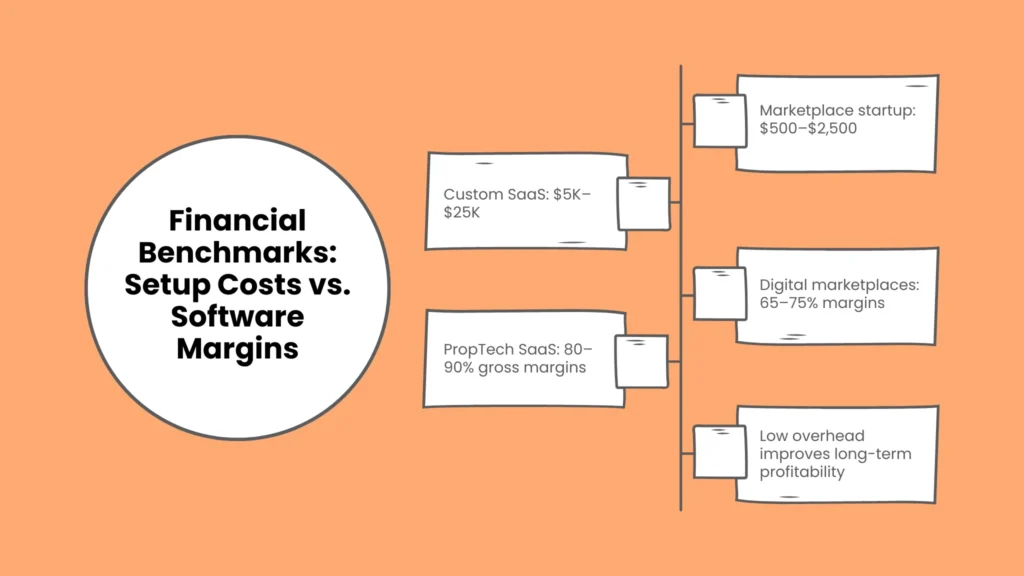
The initial commercial real estate startup ideas cost stays remarkably low because your funds are spent on software deployment rather than millions of dollars in brick-and-mortar down payments. If you choose to launch a niche lead marketplace or an operational agency using visual design platforms, your startup costs can drop to an estimated $500 to $2,500 for web hosting, marketing, and data tools. If you build a custom smart-building software tool or an advanced fractional marketplace, your initial development sprint will typically range from an estimated $5,000 to $25,000, depending on whether you utilize visual builders or hire software engineers.
Evaluating the Commercial Real Estate Startup Ideas Profit Margin
Because your startup completely bypasses building maintenance, commercial property insurance, and structural repairs, your operational metrics are incredibly efficient. A digital marketplace or data aggregation agency can achieve net operating margins of 65% to 75%. If you develop and scale a dedicated B2B proptech software platform, your commercial real estate startup ideas profit margin (gross margin) can regularly hit 80% to 90%, as your core ongoing costs are limited to cloud infrastructure.
Is an Asset-Light Commercial Real Estate Startup Profitable?
Yes, moving away from physical property ownership makes this sector exceptionally lucrative. So, is commercial real estate startup ideas profitable when you don’t own the underlying buildings? Absolutely. Traditional commercial developers are highly vulnerable to shifting interest rates and corporate office vacancies. In contrast, an asset-light proptech startup remains highly agile. By charging software subscriptions or transaction fees, you generate cash flow from market activity regardless of wider real estate market corrections.
B2B Commercial Proptech Models Compared
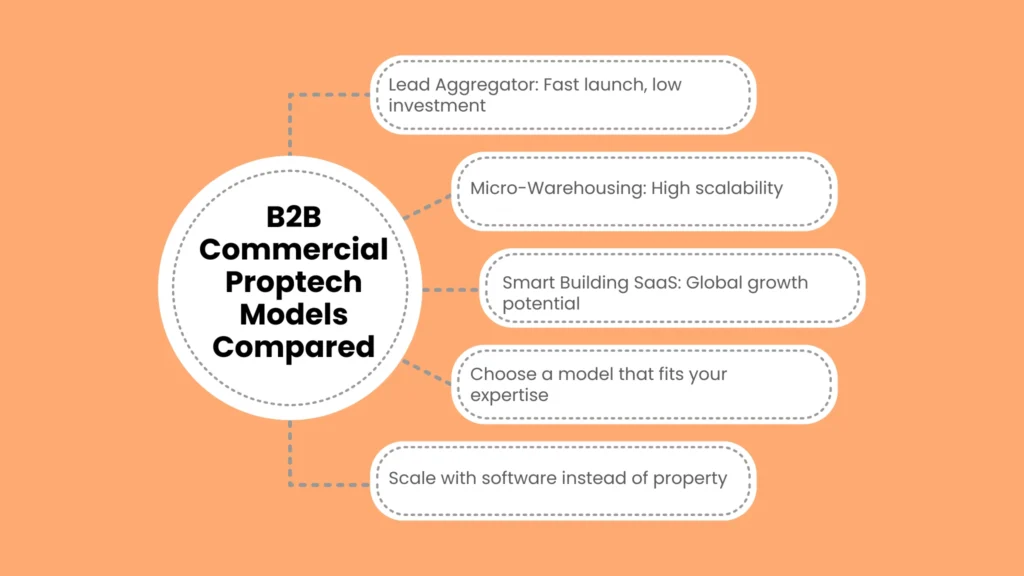
| Business Strategy | Upfront Capital Required | Average Time to Revenue | Long-Term Scale Potential |
| Niche Lead Aggregator | Low ($500 – $2,500) | Fast (2 to 4 weeks) | Moderate — Can expand into neighboring geographic cities easily. |
| Micro-Warehousing Portal | Low ($1,500 – $5,000) | Moderate (1 to 2 months) | Massive — Scales seamlessly across multiple target markets. |
| Smart Building ESG SaaS | Moderate ($5,000 – $25,000) | Slow (3 to 6 months) | High — Software can expand globally with minimal cost increases. |
3 Critical Anti-Patterns to Avoid When Launching
When building an asset-light commercial real estate brand, stay clear of these common operational traps that can quickly halt early progress:
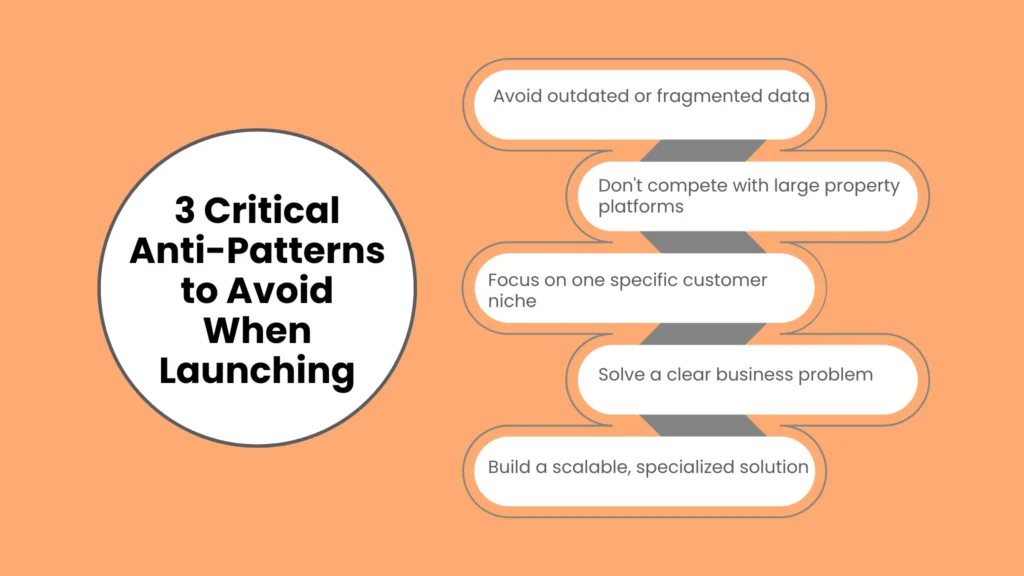
Avoid Relying on Outdated, Fragmented Data Feeds
Do not make the mistake of launching a platform powered by manual, slow data aggregation. Commercial real estate professionals demand precision. Ensure your data pipelines sync dynamically via automated webhooks, as messy or lagging information will quickly drive away corporate clients.
Beware of Trying to Compete with Institutional Software Giants
Never try to build a broad CRM or property listing directory designed to challenge massive, entrenched industry databases. You do not have the capital to compete with them directly. Instead, focus entirely on hyper-niche workflows—such as local dark-store delivery logistics or specialized solar integration calculations—where speed and deep localization give you a clear edge.
Do Not Target Multiple Diverse Audiences Simultaneously
When launch-testing your introductory B2B service, avoid marketing to “all commercial landlords.” This broad positioning dilutes your value. Instead, narrow your focus to an incredibly specific segment (e.g., “Automating carbon-tax compliance reporting for mid-sized medical office owners in the Northeast”), allowing you to demonstrate immediate, undeniable business value.
Conclusion
Building a successful commercial property enterprise requires a smart balance of lean product scoping, disciplined data management, and an acute understanding of corporate user workflows. By focusing on asset-light business models, automating your backend data pipelines, and solving concrete business headaches for active property professionals, you position your startup for exceptional long-term growth. If you are searching for step-by-step startup playbooks, interactive budget calculators, and founder toolkits, visit our platform at reliablestartup to build and launch your software venture today.
Frequently Asked Questions
Do I need a commercial real estate broker’s license to launch a proptech software tool?
If your platform focuses exclusively on pure software infrastructure, data optimization workflows, or digital advertising space, you generally do not require a license. However, if your platform directly collects real estate commissions, writes binding corporate leases, or manages escrow funds, you must check regional regulations or partner with a licensed broker.
How do I convince enterprise landlords to trust a new proptech startup?
Focus your entire pitch on their Net Operating Income (NOI). Demonstrate how your software or service directly slashes operating expenses, automates manual compliance drag, or unlocks new revenue from underutilized spaces. When you show clear, data-driven financial wins, commercial landlords will happily run pilot programs.
Can visual no-code systems handle complex commercial real estate tools?
Yes, modern visual builders easily process advanced geographic filtering, relational databases, secure user login authentication, and dynamic webhook automation. Utilizing no-code tools lets you build and test a fully functional commercial property platform in a fraction of the time, saving you thousands in engineering salaries.