Best Small Business to Start in 2026: 25 Profitable Ideas for Beginners
Starting a business in 2026 offers unprecedented advantages for aspiring entrepreneurs. With low overhead costs, accessible digital tools, and shifting consumer preferences toward specialized services, you can build a sustainable venture without risking your life savings.
However, finding the best small business to start requires balancing market demand, profit margins, and initial capital requirements. Whether you want to launch an online brand, offer local services, or productize your existing skills, choosing a model with predictable cash flow is key.
In this detailed guide, you will discover 25 profitable small business ideas, compare high-margin business models, and learn step-by-step strategies to validate and launch your startup in 2026.
Executive Summary: Small Business Trends in 2026
The small business landscape in 2026 favors operational agility and recurring revenue. Traditional business models with high physical overhead are giving way to digital-first, localized, and service-based operations.
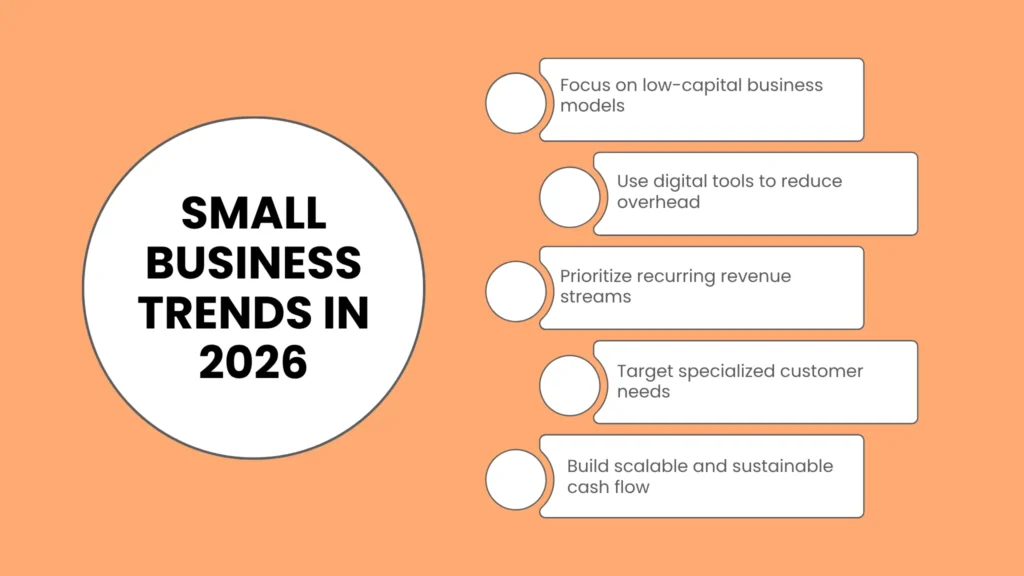
Beginners entering the market today benefit from three core advantages:
Lower Barriers to Launch: Modern software automates admin tasks, letting solo founders run operations that previously required a team.
Shift to Retainer Pricing: Clients and consumers increasingly prefer monthly subscription services over one-time purchases, ensuring steady cash flow.
High Demand for Specialized Skills: Niched operators who solve specific, acute problems command higher rates than generalists.
Aligning your initial business launch with these market trends maximizes your profitability while reducing financial risk.
Comparing Business Models for Beginners
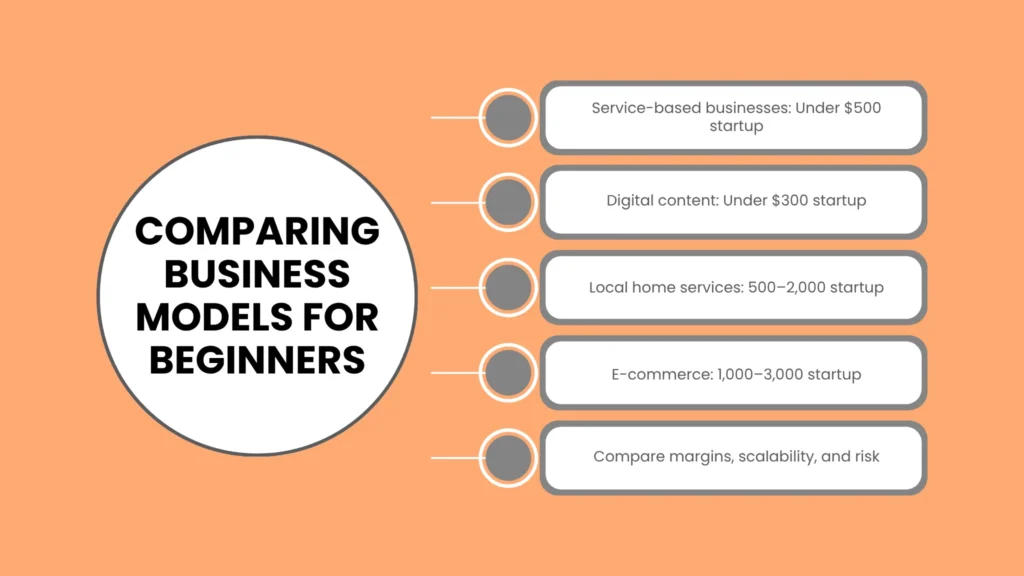
Selecting the right structure depends on your available budget, technical background, and risk tolerance. Service-based and digital businesses consistently rank among the best businesses to start for beginners due to minimal upfront risk.
25 Profitable Small Business Ideas for Beginners
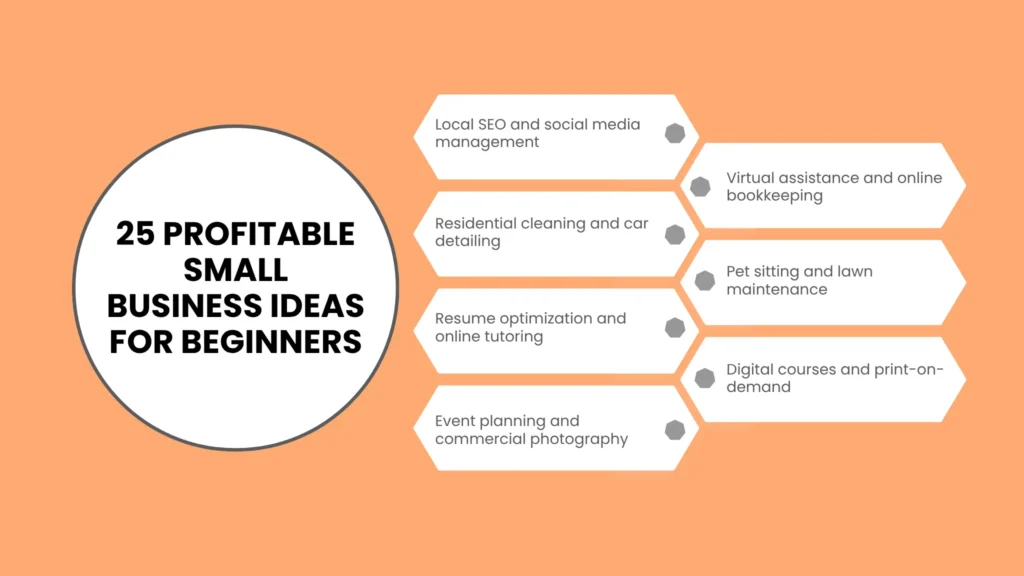
Here are 25 high-demand, low-cost businesses categorized by industry and operational model.
Digital & Online Services (Highest Margins)
Local SEO Consulting: Help brick-and-mortar stores rank higher on search engines and attract local buyers.
Social Media Management: Create content, schedule posts, and manage engagement for small brands on monthly retainers.
B2B Content Writing: Write specialized articles, whitepapers, and email campaigns for tech and financial firms.
Virtual Assistant Services: Provide inbox management, calendar scheduling, and customer support to busy executives.
Niche Web Design: Build modern, high-converting sites for local service providers using low-code platforms.
Online Bookkeeping: Manage monthly income, expense categorization, and reconciliation for small businesses.
Automation Consulting: Help traditional companies integrate software tools to streamline repetitive administrative tasks.
Newsletter Publishing: Build a focused email newsletter around a specific industry and monetize through sponsorships.
Local & Home-Based Services (Low Tech, High Demand)
Residential Cleaning: Offer recurring home cleaning on a weekly or bi-weekly subscription schedule.
Mobile Car Detailing: Travel to clients’ homes to clean and polish vehicles with portable equipment.
Pet Sitting & Dog Walking: Provide reliable pet care services with structured daily walk schedules.
Handyman Services: Perform basic home maintenance, light repairs, and furniture assembly for local homeowners.
Carpet & Upholstery Cleaning: Rent or purchase commercial extraction equipment to serve residential property managers.
Window Washing Service: Provide interior and exterior glass cleaning for retail storefronts and homes.
Event Equipment Rental: Purchase folding chairs, tables, and pop-up tents to rent for local parties and weddings.
Lawn Maintenance & Landscaping: Offer weekly mowing, edging, and seasonal property cleanups.
Specialized B2B & Skill-Based Ideas
Resume & LinkedIn Optimization: Help job seekers position their profiles to clear applicant tracking filters.
Online Tutoring & Test Prep: Teach specialized academic subjects or prepare students for professional certifications.
Affiliate Marketing Websites: Build review sites around specific product categories and earn commissions on sales.
Digital Course Creation: Package your professional expertise into step-by-step video courses.
Micro-SaaS or Tool Building: Solve a specific workflow problem by building a simple web plugin or app.
Corporate Event Planning: Organize offsite retreats, regional meetings, and industry conferences.
Print-on-Demand E-commerce: Design custom apparel and accessories without holding physical inventory upfront.
Custom Gift & Meal Curation: Package curated gift boxes or local food subscriptions for corporate clients.
Commercial Photography & Video: Shoot professional product photos and short-form video ads for local brands.
Deep Dive into Top 4 High-Growth Categories
To help you decide, let us look closer at four of the most accessible small business ideas for beginners.
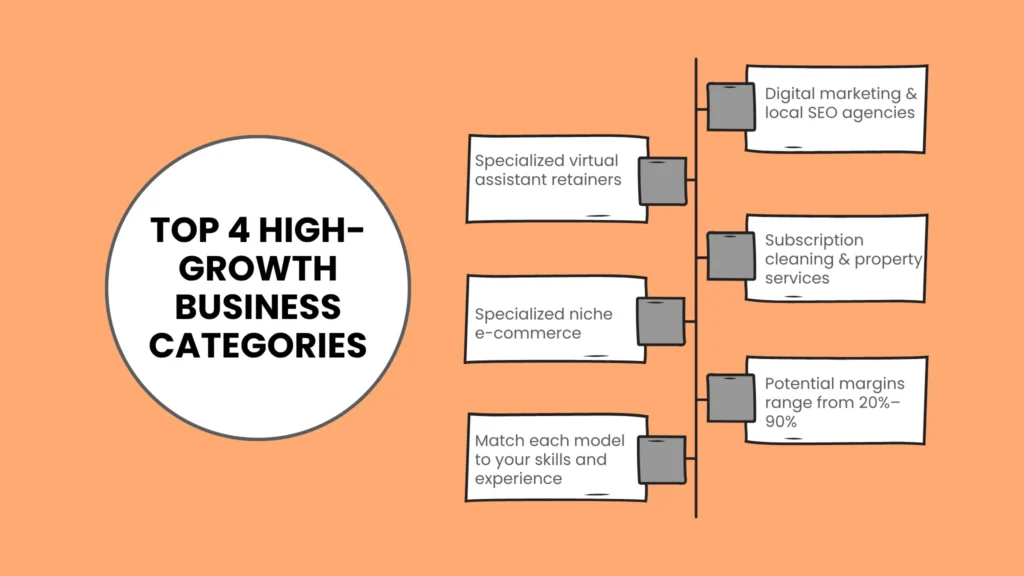
1. Digital Marketing & Local SEO Agencies
Local businesses constantly need more customers but lack the time to manage digital channels. Focusing on one high-value outcome, such as Google Business Profile rankings or Google Ads management allows you to secure monthly retainer fees.
Startup Cost: $300 – $1,500
Potential Margin: 70% – 85%
Best For: Communicators, analytical thinkers, and digital marketers
2. Specialized Virtual Assistant (VA) Retainers
General VAs compete on low hourly rates. However, specialized VAs who handle specific operational workflows (like CRM updates, executive calendar management, or billing) command premium pricing.
Startup Cost: Under $500
Potential Margin: 80% – 90%
Best For: Highly organized individuals with administrative experience
3. Subscription Cleaning & Property Services
Cleaning services offer unmatched recurring revenue. Once you build a base of 15 to 20 weekly home or office accounts, your monthly cash flow becomes highly predictable.
Startup Cost: $200 – $1,500
Potential Margin: 40% – 60%
Best For: Hands-on operators focused on reliability and detail
4. Specialized Niche E-commerce & Print-on-Demand
Rather than trying to build a massive online marketplace, target a narrow audience with clear needs Such as accessories for a specific hobby. Print-on-demand suppliers fulfill orders as they come in, eliminating inventory risk.
Startup Cost: $500 – $3,000
Potential Margin: 20% – 40%
Best For: Product-minded founders and creative designers
4-Step Blueprint to Launch Your Small Business
Launching a business does not require months of planning. Following a lean validation framework ensures you secure paying clients before spending large amounts of money.
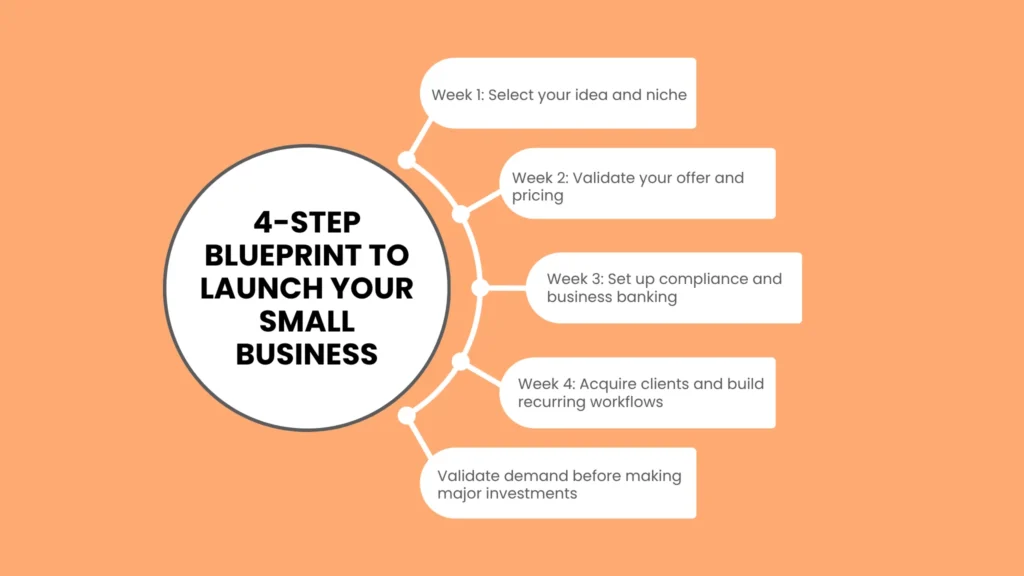
| Stage | Action Steps | Timeframe |
| 1. Idea Selection | Audit your skills, pick a niche, and select a business model | Week 1 |
| 2. Offer Validation | Interview potential clients, test pricing, and secure your first pre-sale | Week 2 |
| 3. Setup & Compliance | Register your LLC, open a business bank account, get insured | Week 3 |
| 4. Client Acquisition | Launch outreach, request referrals, and establish recurring workflows | Week 4 |
When you reach the registration stage, understanding the right business structure for startup: LLC vs C-Corp will help you avoid costly legal restructuring later.
Essential Step: Validate Before You Spend
Never buy expensive equipment or branding design before confirming demand. Reach out directly to 10 prospective buyers and offer your service at an introductory rate to confirm they are willing to pay.
Final Thoughts on Starting Your Journey
Choosing the best small business to start comes down to finding the intersection between your core strengths, market demand, and realistic startup costs. By keeping your overhead low, prioritizing recurring revenue models, and focusing on quality execution, you can build a highly profitable business this year.
Take action today: choose an idea from this list, speak with prospective clients, and validate your offer. To explore more startup frameworks, operational guidebooks, and business growth strategies, visit reliablestartup.
Frequently Asked Questions
What is the best small business to start in 2026 with no money?
The best small business to start with minimal capital is a service-based or digital business, such as virtual assistant services, freelance writing, local SEO consulting, or home cleaning. These models rely on your time and skills rather than upfront inventory investments.
Which small businesses have the highest profit margins?
Digital service businesses, specialized consulting, and online course businesses boast the highest profit margins—often between 70% and 90%—because they carry minimal physical operating expenses.
How do I choose between a product or service business?
Choose a service business if you want to start quickly with low capital and direct control over your income. Choose a product business if you have capital to invest upfront and want to build a brand that scales independently of your direct labor hours.
Is 2026 a good year to start a business?
Yes, 2026 is an exceptional time to start a business. Modern software tools allow solo operators to handle marketing, operations, and administrative work efficiently, keeping overhead at all-time lows.