Coworking Space Rental Business: Real Profit Numbers From WeWork Era Operators
The commercial real estate world has completely changed over the last decade. The era of reckless, venture-backed expansion that defined early industry giants has been replaced by a much smarter, more stable alternative. Today, local entrepreneurs are quietly building highly lucrative portfolios by launching a focused coworking space rental business.
Based on available industry data from early 2026, the U.S. flexible office footprint has climbed past 8,900 active locations. Unlike the older corporate models that hemorrhaged money on speculative long-term leases, modern independent operators are achieving profitability rates of over 58 percent. By optimizing layouts and targeting regional professionals, localized operations are generating predictable six-figure returns.
The New Era of Flexible Office Space
The shift toward remote work has transformed the traditional corporate structure. Massive companies no longer want to sign restrictive, multi-year commercial commitments for skyscrapers. Instead, they require regional hubs where their distributed hybrid teams can gather, collaborate, and focus. This structural evolution has created a massive wave of demand for agile operators in secondary cities and suburban markets.
A modern shared office rental usa facility thrives because it prioritizes cash flow over market valuation. Independent operators are no longer trying to out-design luxury hotels or offer free flowing beer taps. Instead, they provide reliable, distraction-free environments featuring lightning-fast internet, ergonomic seating, and functional conference rooms.
The customer base has shifted radically as well. Freelancers and solopreneurs remain an important piece of the puzzle, but corporate-sponsored enterprise memberships now drive more than 40 percent of total market demand. Companies willingly pay top dollar to give their workers premium regional satellite workstations without taking on building maintenance risks.
Calculating Your Real Coworking Startup Cost
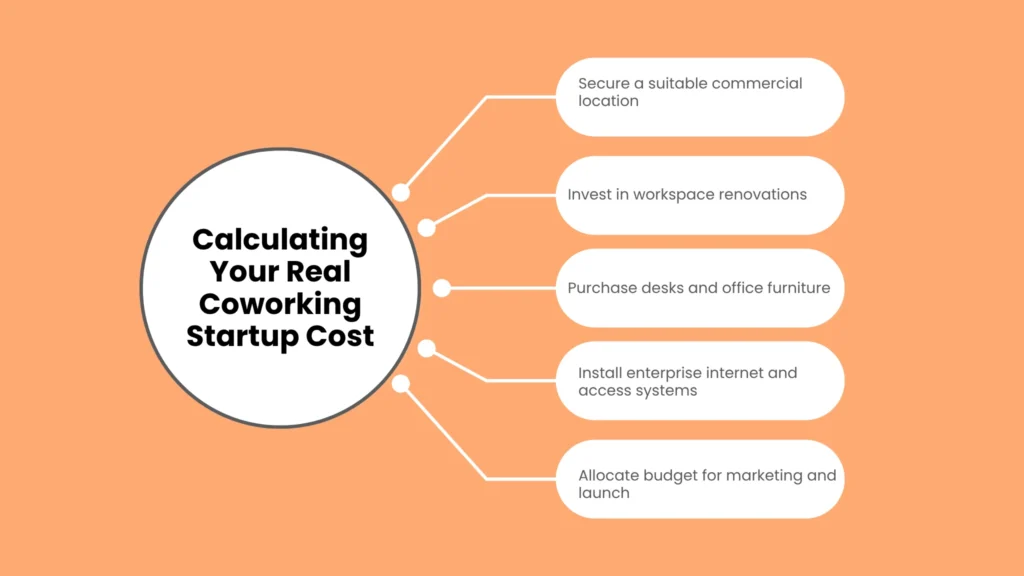
Launching a shared office space requires balancing upfront renovation expenses with ongoing operational overhead. Your total coworking startup cost depends on the condition of your commercial space and the specific deal structure you negotiate with the building landlord.
The most successful operators are avoiding traditional commercial leases entirely. Instead, they utilize management agreements. In this framework, the property owner partners directly with the space operator, funding the initial build-out while splitting the monthly membership profits. If you want to see how these localized asset launch footprints map against other high-yield rental infrastructure frameworks, read our previous step-by-step master guide on starting a pop up shop rental business to scale your commercial real estate strategy.
Below is an estimated capital breakdown required to launch a profitable 10,000-square-foot flexible office location.
| Expense Category | Traditional Lease Startup (Operator Funded) | Landlord Management Agreement Structure |
| Lease Deposit & Advanced Rent | $15,000 – $30,000 | $0 (Shared Revenue Model) |
| Interior Renovation & Build-Out | $120,000 – $250,000 | $20,000 – $40,000 (Owner Absorbs Bulk) |
| Furniture, Standing Desks & Pods | $45,000 – $75,000 | $45,000 – $75,000 |
| Enterprise Wi-Fi, AV Tech & Smart Access | $12,000 – $20,000 | $12,000 – $20,000 |
| Marketing, Launch PR & Soft Software | $5,000 – $10,000 | $5,000 – $10,000 |
| Total Estimated Startup Capital | $197,000 – $385,000 | $82,000 – $155,000 |
The Financial Blueprint: Maximizing Coworking Space Income
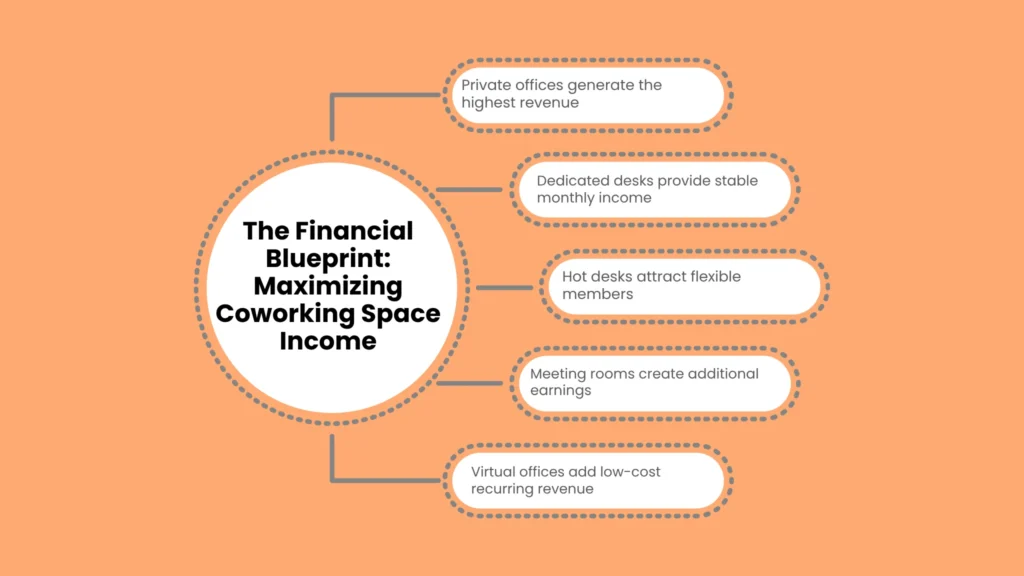
To extract maximum coworking space income from your physical footprint, your spatial design must be highly optimized. Relying purely on cheap open desks is a losing strategy. The most profitable operators allocate less than 30 percent of their floor plan to hot desks, dedicating the remaining square footage to higher-margin private office suites and meeting facilities.
Let us break down a realistic monthly revenue scenario for a mature 10,000-square-foot facility operating at a standard 80 percent capacity level.
High-Margin Revenue Streams
Private Office Suites (35 Units): Fully enclosed, lockable spaces catering to teams of two to six people. These drive 60 percent of total facility revenue, renting for an average of $800 per month per unit.
Dedicated Desks (40 Units): Reserved desks in a shared open-plan room where members can leave their equipment overnight. These retail for roughly $320 per month.
Hot Desks / Open Memberships (50 Units): Flexible unassigned seating access in the main lounge area. These bring in a steady $215 per month per member.
Ancillary Services: Virtual office business addresses, hourly conference room rentals for non-members, and automated beverage concessions.
Monthly Profit and Loss Example
If your underlying monthly expenses, including building rent, premium utilities, cleaning labor, and community management, total $28,000, your net take-home profit sits at $18,890 per month. That translates to an impressive annual net income layer from a single localized hub.
Actionable Steps for a Coworking Business Plan 2026
If you want to build a sustainable workspace brand, your coworking business plan 2026 must avoid the mistakes of past operators. You cannot simply build a beautiful room and assume people will pay to sit there. You must run a tight, technology-driven hospitality enterprise.
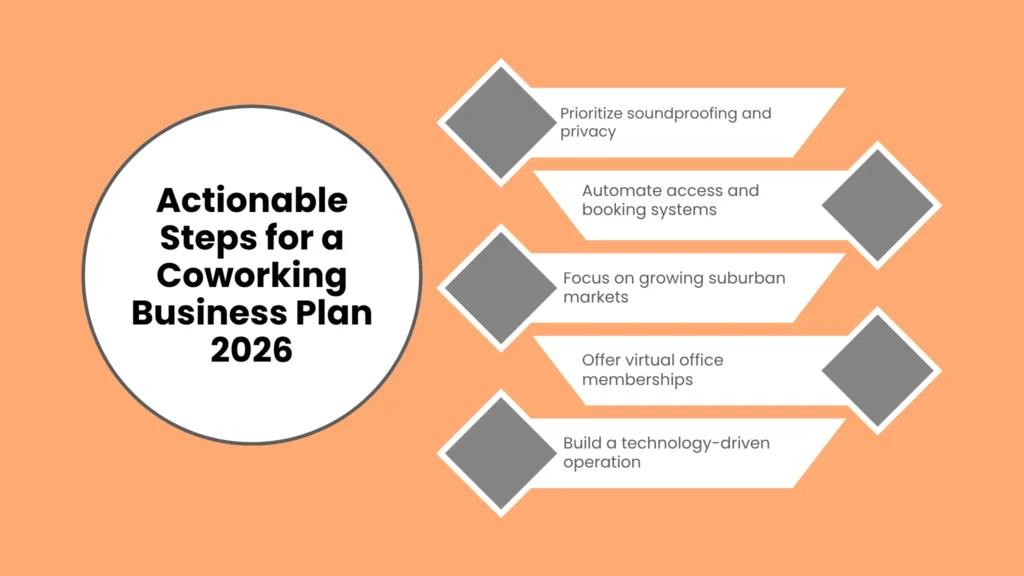
1. Prioritize Soundproofing and Acoustic Design
The number one complaint from shared workspace users is noise pollution. If your private offices are divided by thin, uninsulated drywall, your customer retention rates will drop rapidly. Invest heavily in double-pane glass walls, acoustic ceiling baffles, and solid-core doors to ensure complete conversational privacy.
2. Automate Access Controls and Bookings
Keep your labor expenses lean by using modern facility management apps. Software systems like Nexudus, DropDesk, or Archie allow members to unlock the front doors using their smartphones, reserve conference rooms automatically, and process their monthly subscription invoices without any manual intervention from your staff.
3. Tap Into the Suburban Migration
Do not try to compete in crowded, hyper-expensive downtown metropolitan financial centers. Look for prosperous secondary markets, affluent commuter suburbs, and historic neighborhood centers where professionals live. Saving your members from a stressful highway commute gives you an immediate competitive advantage, making your brand a prime asset within the local shared office rental usa landscape.
4. Offer Diverse Virtual Office Packages
Not every paying customer needs to physically sit in your building. Hundreds of local contractors, online e-commerce brands, and remote consultants simply require a prestigious, compliance approved commercial mailbox address. Offering digital mail scanning services for a flat fee of $50 to $90 per month creates a pure-profit income layer that requires zero physical square footage.
To keep track of broader labor laws, physical workplace spacing metrics, and remote workstation guidelines outlined for corporate team safety, you can check out official compliance updates on the Occupational Safety and Health Administration portal to keep your site fully regulatory-compliant.
Maximizing Customer Lifetime Value
Maintaining a healthy bottom line relies heavily on controlling member churn, which should ideally hover around 5 percent or less per month. Focus on building an organic, professional community rather than hosting awkward forced social mixers.
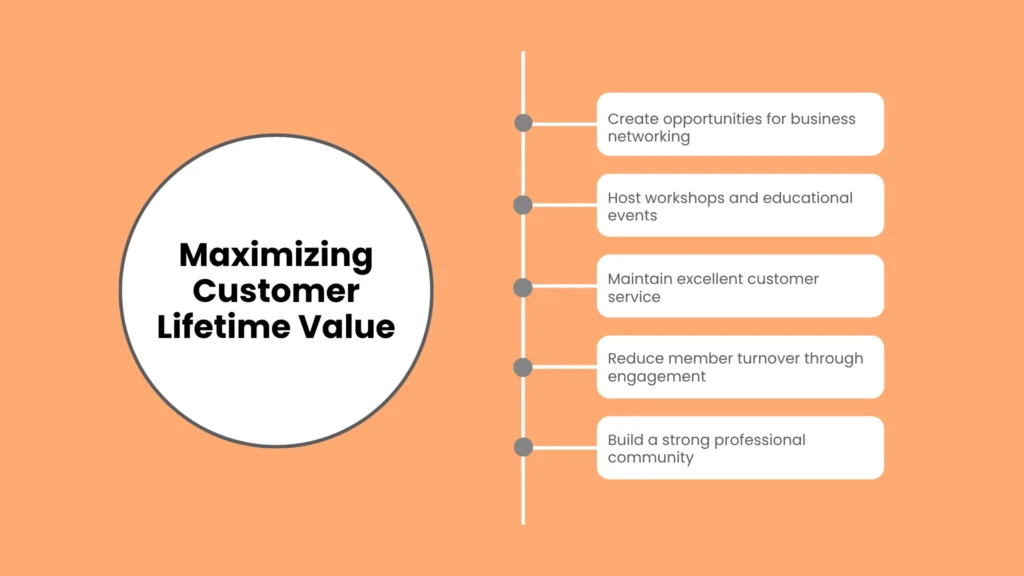
Encourage local networking by offering free educational seminars, professional workshops, or local business panel discussions during quieter mid week evening hours. When your members form genuine business connections and find new clients inside your building walls, they will remain loyal subscribers for years to come, stabilizing your baseline coworking space income long-term.
Final Summary on Launching Your Space
Building a modern coworking space rental business is a highly efficient way to capture premium returns from the changing commercial real estate landscape. By moving away from massive corporate overhead structures and focusing on high-density private offices, suburban accessibility, and automated technology, independent owners are unlocking resilient cash flow streams.
Execution excellence, careful spatial layout planning, and strong cost control form the foundations of a profitable flexible workspace. If you are ready to explore comprehensive, step-by-step startup frameworks and cutting-edge operational strategies, visit our platform at the official Reliablestartup homepage to launch your next enterprise today.
Frequently Asked Questions
How long does it take for a new coworking space to become profitable?
Based on current industry performance data, mature flexible workspaces typically reach their financial break-even point within 6 to 9 months of active opening. Achieving full operational profitability, where the venue hits an optimal 80 percent or higher occupancy level, generally requires 12 to 18 months of consistent localized marketing and community building.
What is the biggest ongoing monthly expense for an operator?
Apart from base commercial property rent or mortgage payments, premium utilities and ongoing high-frequency cleaning labor represent the highest operational expenditures. Because remote workers consume high volumes of electricity for multi-monitor setups, climate control, and enterprise lighting, implementing energy-efficient LED configurations is crucial for saving up to 50 percent on monthly utility bills.
Do I need to build an expensive kitchen or coffee bar?
No, the era of excessive amenities is over. Modern remote professionals simply expect a clean, functional break room equipped with a high-capacity commercial coffee brewer, filtered water dispensers, a commercial refrigerator, and a fast microwave. Providing premium, fresh local coffee beans is far more effective than maintaining complex drink taps.
What is a commercial management agreement in flexible real estate?
A management agreement is a profit-sharing partnership between a property landlord and a workspace operator. Instead of the operator paying a risky fixed monthly rent check, the landlord funds the expensive structural renovation costs to make their vacant building attractive. The workspace entrepreneur then runs the daily operational logistics, and both parties split the resulting monthly membership profits based on a pre-negotiated percentage.