Cloud Kitchen Business Ideas That Are Growing Fast in the USA
Starting a cloud kitchen business USA venture is one of the smartest moves a food entrepreneur can make right now. Why? Because millions of Americans are ordering delivery every single day, and they honestly do not care if their meal comes from a fancy dining room or a 300-square-foot kitchen tucked inside an industrial park.
The US cloud kitchen market is estimated to reach $27.47 billion by 2032, and that number keeps climbing. So if you have been looking for a low-cost way to break into the food industry, this guide walks you through the ghost kitchen ideas that are actually making money in 2026.
Why the Cloud Kitchen Business USA Model Is Growing So Fast
To put it simply, three forces are colliding at the same time.
- Delivery app usage keeps climbing. DoorDash, Uber Eats, and Grubhub have made ordering food as easy as tapping a screen. Consumer habits that locked in during the pandemic have not reversed either. People now order delivery on regular weekday nights, not just weekends.
- Opening a traditional restaurant in the USA is brutally expensive. Between lease deposits, interior buildouts, staffing, and licensing, you are looking at $250,000 to $500,000 before serving a single plate. A delivery only restaurant strips most of that away. You need a kitchen, a small crew, packaging, and the right platform listings.
- The technology has caught up. Modern POS systems, kitchen display screens, and multi-platform order aggregators now let a small team handle dozens of simultaneous orders without chaos. As a result, running an online food business USA operators once thought impossible is now completely realistic on a tight budget.
In short, the combination of high consumer demand, low startup costs, and mature delivery infrastructure is exactly why the cloud kitchen business USA market keeps expanding year over year.
Cloud Kitchen Business USA Ideas That Are Working Right Now
Not every ghost kitchen concept performs equally. However, the ideas below are the ones gaining real traction across American cities in 2026 based on delivery trends, consumer spending, and operator profitability data.
Smash Burgers and Loaded Fries
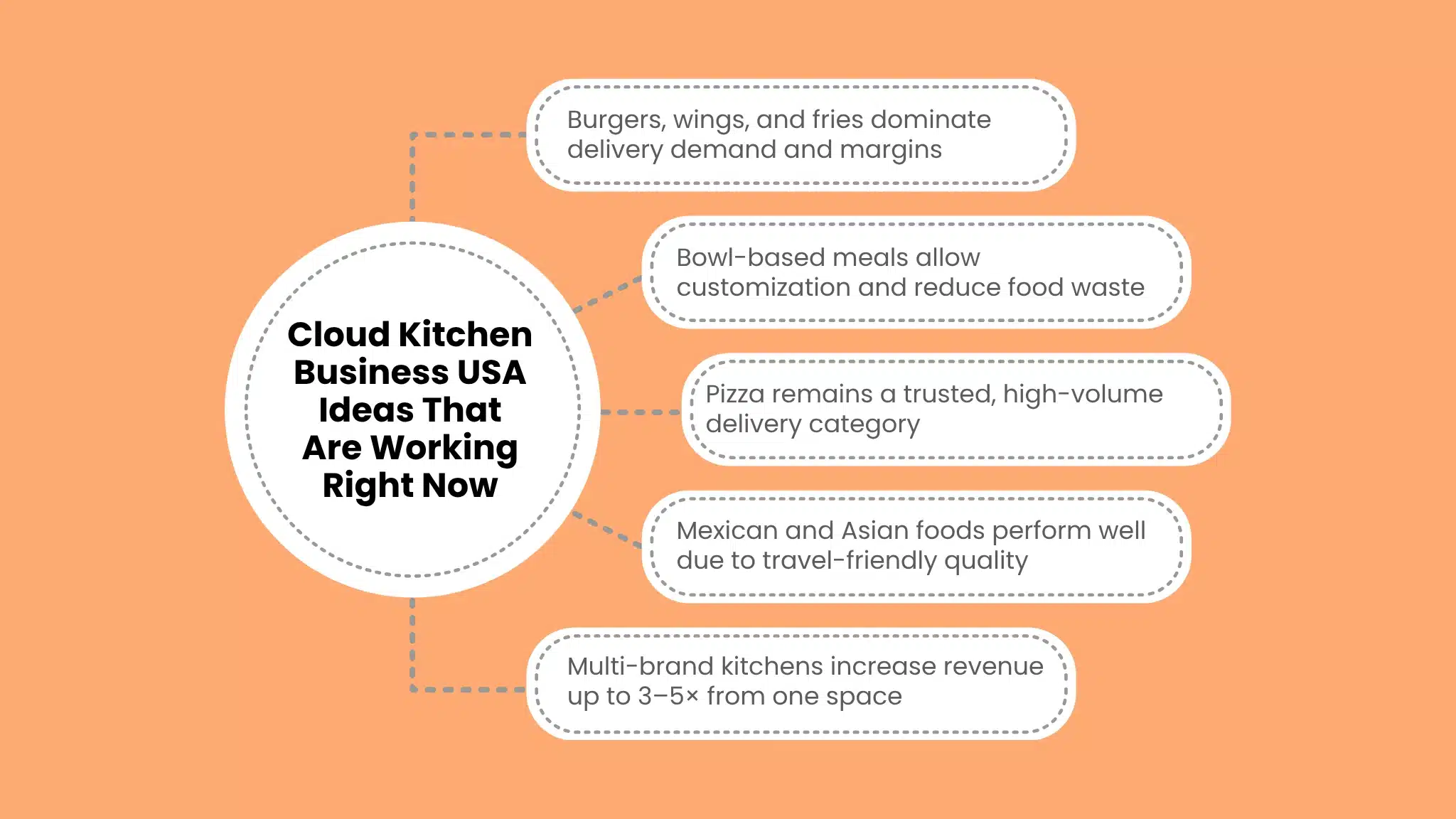
Burgers and sandwiches make up roughly 25 percent of all cloud kitchen orders globally, and that share is even higher in the USA. Smash burgers travel well, hold temperature during delivery, and carry strong margins because ingredient cost per unit stays low.
This is one of the easiest virtual kitchen startup ideas for first-time operators because the prep is straightforward and the cuisine appeals to nearly everyone. Pair burgers with loaded fries or shakes and a two-person kitchen can execute at serious volume.
Bowl-Based Concepts: Poke, Grain Bowls, and Acai
Health-conscious eating is no longer a trend. It is a permanent shift in how a large segment of Americans eat. Bowl concepts work perfectly for delivery because they are layered rather than stacked, which means they arrive looking exactly how the customer expects.
Additionally, poke bowls, grain bowls, and acai bowls allow for high customization through delivery apps. That increases average order value. Ingredient costs scale well and food waste stays low when you batch-prep bases and rotate toppings weekly.
Wings and Tenders
Chicken wings are one of the most delivery-friendly foods in America. They hold heat, absorb sauces well, and lend themselves to variety without expanding your ingredient list. A single kitchen can run 8 to 12 sauce flavors using the same base protein.
Consequently, operators in cities like Atlanta, Houston, and Phoenix have built profitable ghost kitchen ideas around wings alone. Some even scale into multi-brand models by launching a separate virtual brand for tenders or chicken sandwiches from the exact same kitchen.
Virtual Pizza Brands
Pizza has been a delivery staple for decades, so consumer trust is already built in. What is new is how cloud kitchen business USA operators are launching niche pizza brands Detroit-style deep dish, wood-fired Neapolitan, or specialty vegan pizza all running from the same oven under different brand names on delivery apps.
This multi-brand approach lets you capture multiple customer segments without adding square footage or staff. CloudKitchens, the ghost kitchen company founded by former Uber CEO Travis Kalanick, has been helping operators run exactly this kind of setup across dozens of US cities.
Mexican and Asian Fusion Delivery
Mexican food and Asian cuisine are the two fastest-growing cloud kitchen segments behind burgers, based on available market data. Burritos, tacos, and quesadillas from the Mexican side. Bao buns, ramen kits, and teriyaki bowls from the Asian side.
Both cuisines share a key trait for delivery success the food tastes just as good 20 minutes after it leaves the kitchen. Furthermore, operators who lean into fusion concepts are carving out unique positioning that traditional restaurants struggle to replicate.
Cloud Kitchen Business USA: Startup Costs at a Glance
Before jumping in, you need to know what the real numbers look like. Here is a breakdown based on available industry data for a single-brand operation:
| Cost Category | Estimated Range (USD) |
|---|---|
| Commercial kitchen lease (monthly) | $1,500 — $5,000 |
| Kitchen equipment (if not included) | $5,000 — $15,000 |
| Licensing and permits | $500 — $2,000 |
| Initial food inventory | $1,500 — $3,000 |
| Packaging and supplies | $500 — $1,500 |
| POS system and tech setup | $500 — $2,000 |
| Marketing and launch budget | $1,000 — $3,000 |
| Total Estimated Startup Cost | $15,000 — $50,000+ |
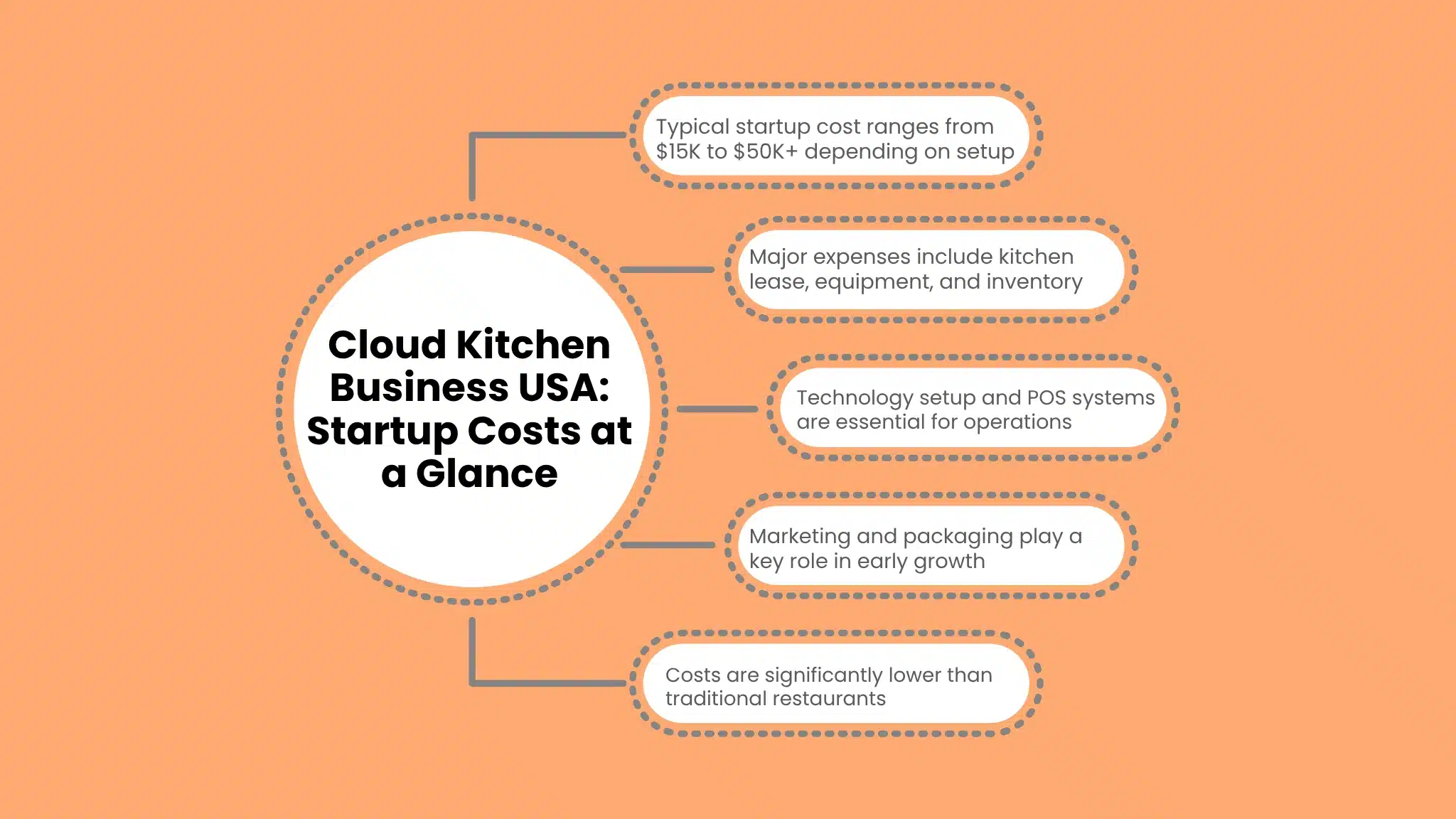
In expensive markets like New York, Los Angeles, and San Francisco, expect to land on the higher end. In secondary markets like Austin, Nashville, Tampa, or Phoenix, you can get operational for significantly less.
For funding, USA-specific options include:
- SBA microloans for small food businesses
- ROBS (Rollovers for Business Startups) if you have retirement savings
- Community bank credit lines from lenders familiar with food service ventures
Licensing and Permits You Need for a Cloud Kitchen Business USA
Getting legal is not complicated, but you cannot skip it. Here is what you need:
- Business license through your local SBA office: registration fee around $50, filing fee between $25 and $500 depending on your city
- EIN (Employer Identification Number) from the IRS: free, issued same day online
- Food handler’s permit for every kitchen employee: requires a state-approved safety course
- Health department inspection before you open: includes HACCP compliance review
- Zoning clearance: not every commercial or residential zone permits ghost kitchen operations, so check local rules before signing any lease
Some states also have cottage food laws, but these typically do not cover sales through third-party delivery platforms. As a result, most delivery only restaurant operators need a fully licensed commercial kitchen to operate legally.
The Platform Strategy That Protects Your Margins
Delivery platforms are your storefront in a virtual kitchen startup, but they come at a cost. DoorDash, Uber Eats, and Grubhub charge commission rates between 15 and 30 percent per order. That is a significant cut and the single biggest margin pressure most operators face.
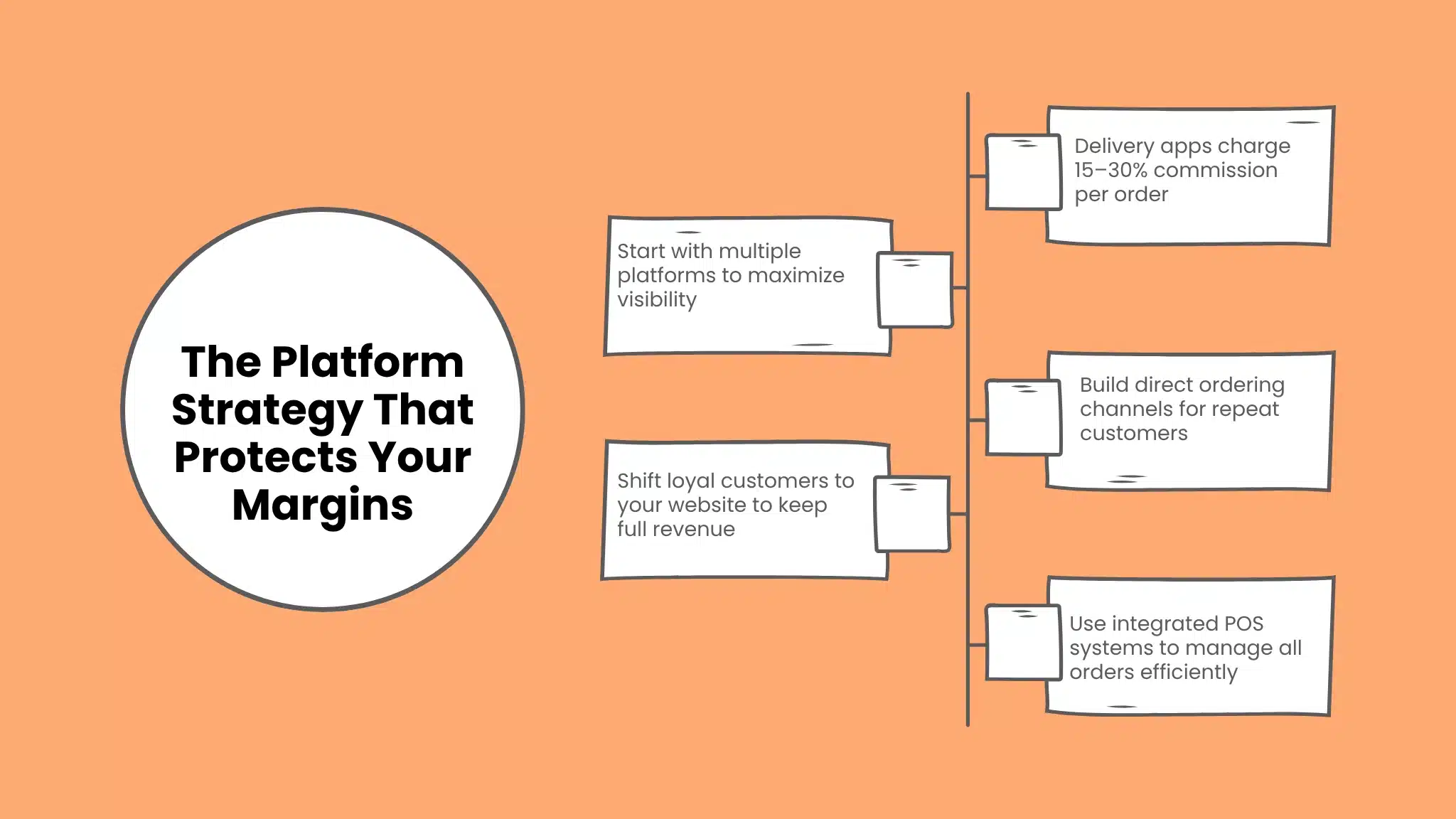
The smart play looks like this:
- Phase 1: List on all three major platforms for maximum visibility and early customer acquisition
- Phase 2: Use SMS and email marketing to push repeat customers toward direct ordering through your own website
- Phase 3: Gradually shift your highest-value customers off third-party apps where you keep 100 percent of revenue
On the operational side, invest in a POS system that integrates with multiple delivery platforms and a kitchen display system that shows all incoming orders on one screen. Managing three separate tablets during a dinner rush is a recipe for missed orders and bad reviews.
Conclusion
The cloud kitchen business USA market is not just growing it is reshaping how Americans eat. Whether you choose smash burgers, bowls, wings, or fusion cuisine, the opportunity to build a profitable delivery only restaurant with low overhead has never been more accessible.
What matters most is starting with a focused concept, getting your licensing right, choosing the right platforms, and treating every order as a data point that helps you improve. The operators who win in this space are not the ones with the biggest budgets. They are the ones who stay lean, move fast, and obsess over delivery quality.
If you want more actionable startup guides, business ideas, and growth strategies tailored for new entrepreneurs in the USA, head over to Reliable Startup.
Frequently Asked Questions
How much does it cost to start a cloud kitchen business in the USA?
A single-brand cloud kitchen business USA typically costs between $15,000 and $50,000 to launch. The main cost drivers are your commercial lease, kitchen equipment, licensing, initial inventory, and tech setup. Secondary markets tend to be significantly cheaper than major metros.
Can you run a ghost kitchen from home in the USA?
In most states, no. Health departments generally require food sold to the public to be prepared in a licensed commercial kitchen. While some states have cottage food laws, these usually do not cover sales through delivery apps like DoorDash or Uber Eats. Therefore, most ghost kitchen ideas require a commercial space.
What is the most profitable food to sell from a delivery only restaurant?
Based on available market data, smash burgers, chicken wings, pizza, bowls, and Mexican or Asian cuisine perform best. These items travel well, hold quality during delivery, and offer strong ingredient margins. Keeping your menu focused on 8 to 12 items rather than 30 also helps control food waste and speed up kitchen output.
Which delivery platform is best for an online food business in the USA?
DoorDash currently holds the largest market share in US food delivery. Most online food business USA operators list on DoorDash, Uber Eats, and Grubhub simultaneously for maximum reach. However, building a direct ordering channel over time is critical for protecting your profit margins.
How long does it take for a virtual kitchen startup to become profitable?
Most virtual kitchen startup operators reach profitability within 6 to 12 months, depending on location, menu efficiency, and marketing spend. The key factors are controlling food costs, managing delivery platform commissions, and building a base of repeat customers who order directly from your website or app.