Food Truck Business Plan 2026: How to Start, Finance, and Grow a Profitable Food Truck
The mobile dining industry has transformed into a multi-billion dollar segment of the food economy. Meanwhile, traditional restaurant leases and utility bills continue to climb. Therefore, writing a detailed food truck business plan is the best step toward building a low-overhead, high-growth brand.
A strong business plan guides your daily kitchen operations. In addition, it serves as a necessary document to secure bank loans, private investors, or equipment leases. In this complete guide, you will learn how to estimate food truck startup costs, review local food truck requirements, explore top food truck business ideas, and boost your overall food truck profit margin for lasting growth.
Executive Summary: Defining Your Mobile Food Concept
An executive summary gives lenders, city boards, and commercial partners a quick overview of your food truck enterprise. Although brief, it must clearly define your food concept, target audience, and profit goals before you buy equipment.
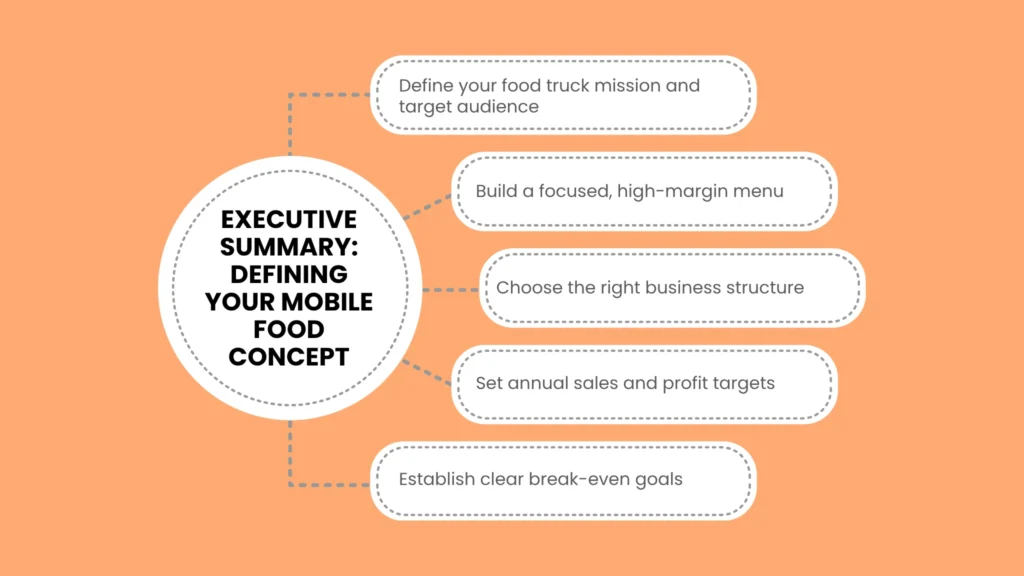
Your executive summary needs to cover four core areas:
Mission and Vision: A short summary of your food style, main audience, and local brand identity.
Core Menu Offerings: The specific food items you serve, focusing on fast prep time, simple packaging, and strong profit margins.
Ownership Structure: Your legal business setup (such as an LLC or S-Corp) along with key leadership background.
Financial Goals: Clear targets for annual sales, profit margins, break-even timelines, and investment returns.
Setting these basic points early keeps your daily team routines aligned with your big goals as you grow.
Market Analysis and Creative Food Truck Business Ideas
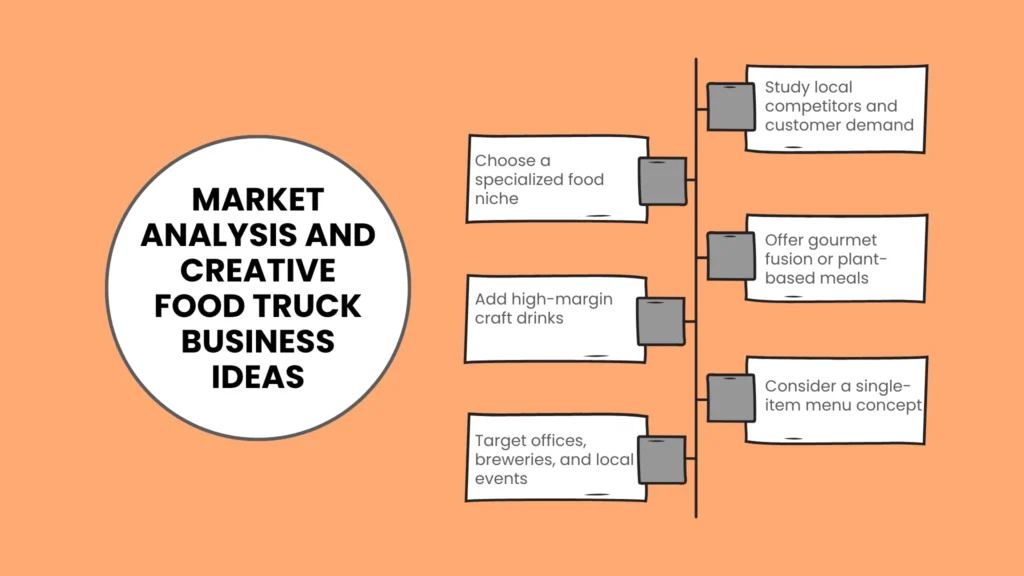
Launching a successful mobile kitchen requires a clear view of your local market. Selecting a specific food niche helps you stand out in busy city spots, office parks, and seasonal event grounds. Selecting a specific food niche helps you stand out in busy city spots, office parks, and seasonal event grounds, our roundup of innovative food business ideas can help you narrow down a concept that fits local demand.
Top Food Truck Business Ideas for 2026
When picking a menu, choose items that need short prep times and basic raw ingredients. Great choices include:
Gourmet Street Fusion: Combining classic comfort foods with global spices, such as Korean BBQ tacos or birria ramen.
Specialty Plant-Based Meals: Serving vegan or gluten-free options to attract health-conscious workers and diners with diet limits.
Craft Drinks: Focusing on high-margin espresso, cold brews, specialty boba, fresh lemonade, or craft mocktails.
Single-Item Mastery: Perfecting one main item—like smash burgers, personal pizzas, or gourmet grilled cheese—to speed up service and cut food waste.
Serving near office buildings during weekday lunches, local craft breweries in the evening, and suburban weekend festivals builds steady daily sales.
Licensing, Permits, and Food Truck Requirements
Meeting local health codes and city rules is often the hardest part of starting a mobile kitchen. Thus, failing to get proper permits can lead to costly delays or heavy fines.
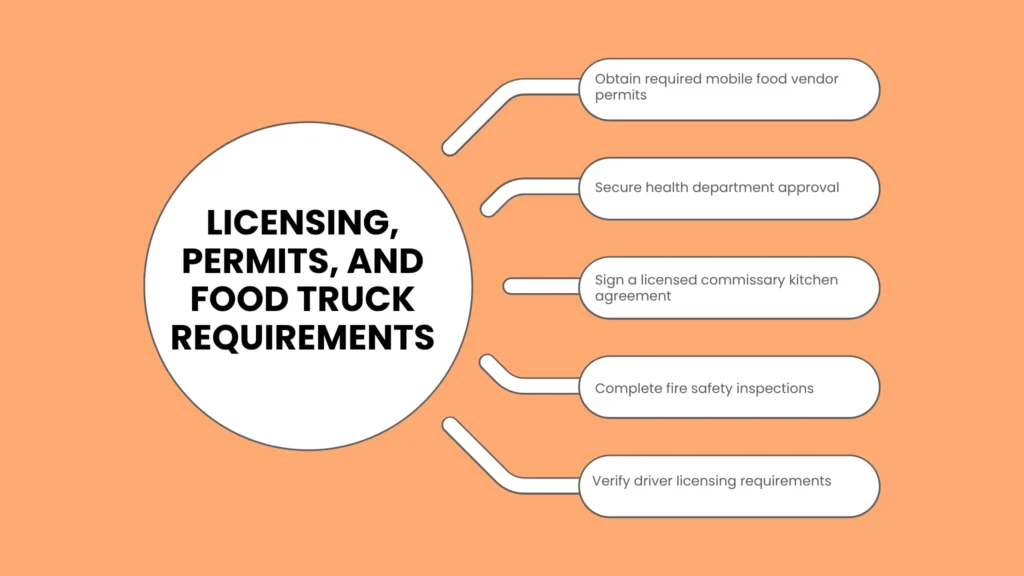
Primary Regulatory and Safety Checklist
Driver Licensing: Ensure all team members hold a valid driver’s license or commercial driver’s license (CDL) based on truck weight.
City Mobile Vendor License: Obtain local permits that allow commercial food sales on public streets and set vending spots.
Health Department Permit: Pass a mandatory health inspection covering food storage, refrigeration, hot water supply, and waste tanks.
Commissary Kitchen Agreement: Sign an official contract with a certified commercial kitchen to prep food and clean gear legally.
Fire Safety Clearance: Install required fire suppression hood systems, check gas lines, and keep fire extinguishers on board.
Driver Licensing: Ensure all team members hold a valid driver’s license or commercial driver’s license (CDL) based on truck weight, a requirement detailed by the Federal Motor Carrier Safety Administration for vehicles over certain weight thresholds.
Financial Planning: Food Truck Startup Costs and Profitability
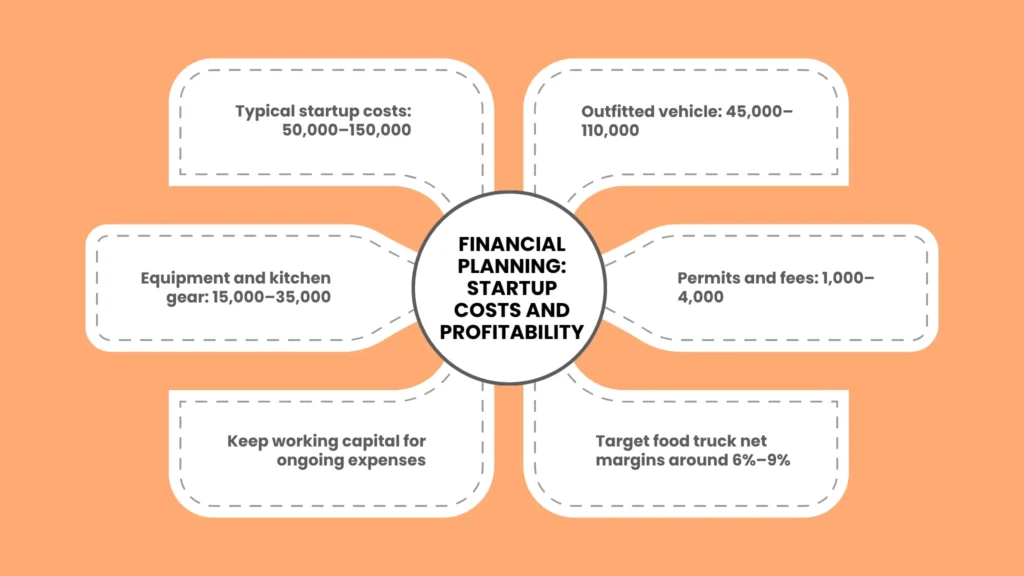
Smart financial planning prevents cash shortages during your initial launch phase. Although mobile kitchens need far less capital than traditional sit-down restaurants, controlling your early expenses remains vital.
Understanding Your Food Truck Profit Margin
The average food truck profit margin ranges between 6% and 9% net profit. As a result, mobile kitchens often outperform traditional restaurants because they carry lower monthly overhead.
| Expense Category | Target Percentage of Gross Sales | Strategic Optimization Method |
| Cost of Goods Sold (COGS) | 25% – 32% | Keep portion sizes equal and buy raw ingredients in bulk. |
| Labor Costs | 25% – 30% | Train small crews for multiple jobs and schedule extra help for peak hours. |
| Fuel & Vehicle Repairs | 5% – 8% | Group daily routes close together to cut driving distance and save gas. |
| Commissary & Location Fees | 5% – 10% | Negotiate flat monthly kitchen fees instead of paying high hourly rates. |
Vehicle Selection and Equipment Outfitting
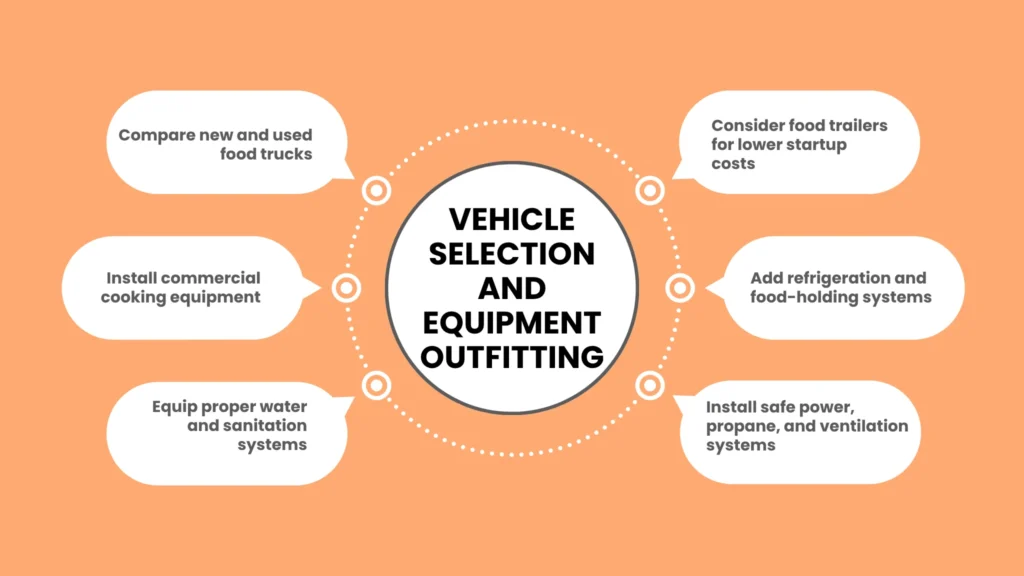
Selecting the right vehicle platform directly affects your kitchen output, prep speed, and crew safety.
Choosing Your Vehicle Platform
New Custom Food Truck: Provides total reliability and a custom layout, but requires large initial funds ($100,000 – $175,000+).
Used Outfitted Food Truck: Reduces early startup costs ($40,000 – $80,000), but carries higher vehicle repair risks.
Food Trailer: Offers a low-cost choice ($20,000 – $45,000) that hooks to a tow truck, making it ideal for fixed weekend spots.
Essential Kitchen Gear Checklist
Cooking Gear: Flat-top griddles, deep fryers, convection ovens, or specialized pizza ovens.
Refrigeration: Small under-counter fridges, salad prep tables, and warm holding cabinets.
Power & Air Systems: Quiet commercial generators, propane tanks, and stainless exhaust hoods.
Sanitation Tools: Three-compartment dish sinks, handwashing sinks, and fresh water storage tanks.
Marketing, Technology, and Customer Acquisition
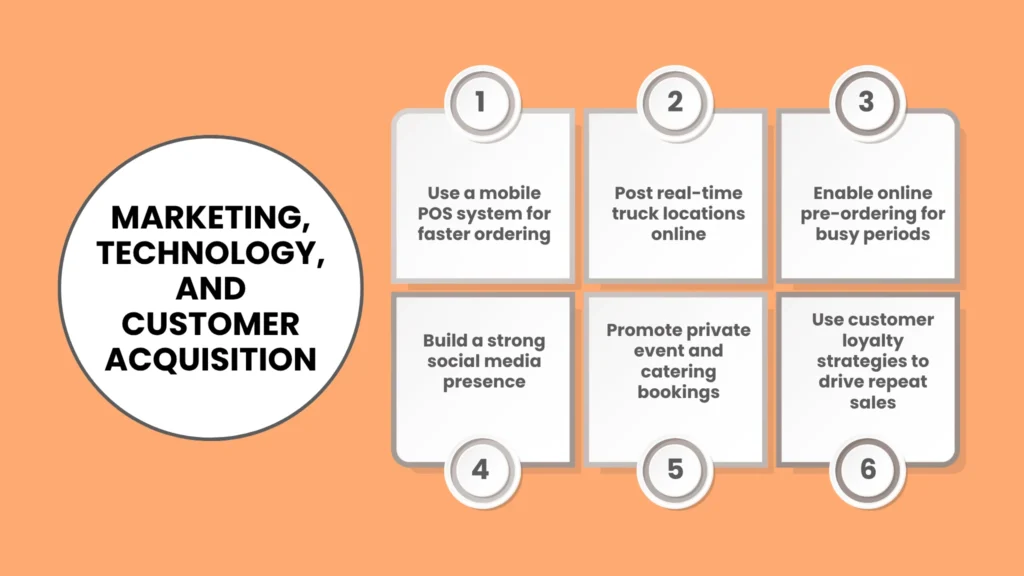
Modern mobile kitchens rely on easy software tools and digital marketing to build customer loyalty and speed up order processing.
Essential Digital Tech Stack
Mobile Point of Sale (POS): Modern cloud platforms (like Toast or Square) take card payments, track stock live, and ask for tips.
Real-Time GPS Tracking: Post live location maps on social media and Google Business Profile so fans can find your truck daily.
Online Pre-Ordering: Offer online order options to handle high customer volume during busy lunch rushes.
Private Event Booking: Build a simple web page to book lucrative private catering jobs for weddings and company parties.
Operations, Staffing, and Daily Workflows
Running a food truck involves organized daily tasks. Consequently, setting up clear standard routines ensures high food quality and fast service.
Daily Operational Timeline
Morning Prep at Commissary (2 Hours): Accept ingredient orders, chop vegetables, marinate meats, and stock the truck fridges.
Transit and Setup (1 Hour): Drive to your assigned spot, park safely, level the truck, start equipment, and test food temps.
Service Window (3–4 Hours): Cook orders fast, keep customer wait times under 5 minutes, and take payments smoothly.
Teardown and Clean (1.5 Hours): Turn off cooking gear, secure supplies, return to the kitchen, wash all surfaces, and restock supplies.
Final Thoughts on Building Your Mobile Food Brand
Building a profitable food truck business requires a mix of cooking skill, clear operating habits, and active cost control. By writing a strong food truck business plan, studying your local market, managing overhead, and using modern POS tech, you can launch a resilient and profitable food brand.
Start taking practical steps today: finalize your menu concept, map out local permit rules, secure initial launch funds, and build your online audience. To explore more startup blueprints, operational financial templates, and business guides, visit reliablestartup.
Frequently Asked Questions
What are the average food truck startup costs?
Total food truck startup costs generally range from $50,000 to $150,000. Final costs depend on whether you buy a new custom truck, purchase a used vehicle, or pick a food trailer.
What is a realistic food truck profit margin?
A well-run food truck usually nets a profit margin between 6% and 9%. However, gross margins on individual menu items can reach 65% to 75% through strict food portion controls.
What are the main legal food truck requirements before launching?
Key food truck requirements include a driver’s license, city vending permits, health department approval, fire safety checks, and a commercial kitchen lease.
How do food trucks prep food in small spaces?
Operators do heavy prep work, chopping, and bulk cooking at a licensed commercial kitchen. Therefore, the truck acts mainly as a fast cooking, assembly, and service spot during work hours.
Should I buy a food truck or a food trailer?
Food trailers cost far less to start, which makes them great for set event locations. On the other hand, food trucks offer better mobility in crowded city centers, though vehicle repair costs are higher.