A Preventive Maintenance Schedule for a Rental Fleet
A preventive maintenance schedule for a rental fleet is a structured plan of routine service, inspections, and component replacements executed at set intervals, such as operating hours, mileage, or calendar time, to keep rental equipment in peak working condition. Unlike customer-owned assets, rental machinery endures varied operator skill levels, rigorous jobsites, and heavy usage cycles. Establishing a rigorous preventive maintenance program protects equipment reliability, reduces unexpected breakdowns, ensures customer safety, and maximizes asset resale value.
Unplanned downtime in a rental operation leads directly to lost revenue, dissatisfied clients, and premature capital expenditure. By shifting from reactive repairs to a structured preventive maintenance strategy, rental managers turn asset servicing into a predictable, value-generating routine.
For operators planning to establish or expand an equipment rental business, investing in preventive maintenance from the beginning helps protect valuable machinery and maintain consistent rental operations.
Why Preventive Maintenance Matters for Rental Fleets?
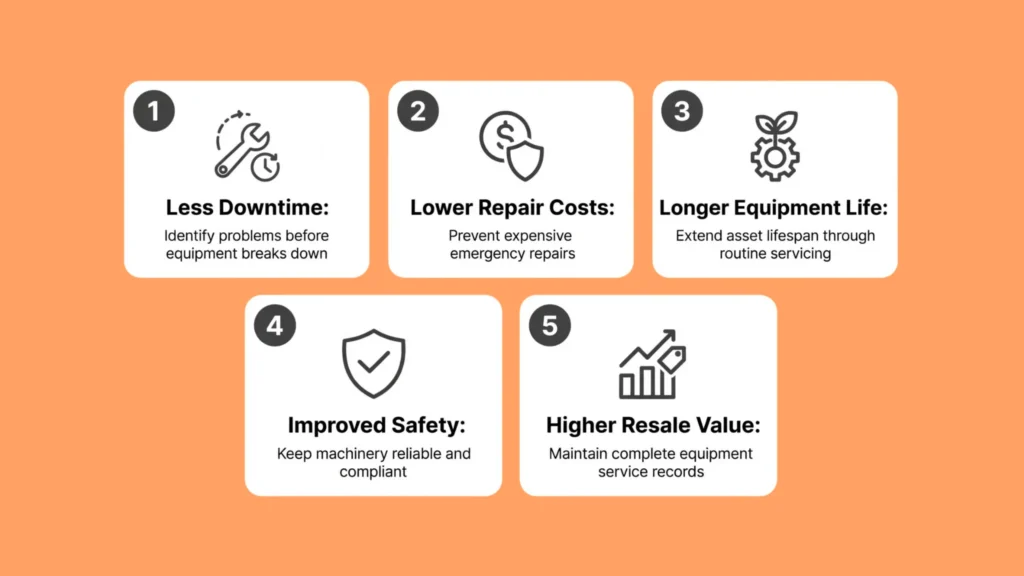
Rental fleets operate under unique demands. Equipment transitions frequently between operators with varying skill levels, jobsite environments, and intensity of use. A disciplined preventive maintenance strategy provides several core advantages:
Minimized Unplanned Downtime: Catching worn belts, low hydraulic fluids, or compromised seals early prevents catastrophic failures on active jobsites, protecting customer project timelines.
Lower Overall Repair Costs: Routine servicing like oil changes and filter replacements costs a fraction of emergency engine overhauls or hydraulic pump replacements.
Extended Asset Lifespan: Consistent maintenance slows depreciation, helping machines achieve maximum operating hours before retirement. Consistent servicing also improves the condition of machinery when evaluating or acquiring existing equipment rental businesses, where maintenance history can influence asset valuations.
Enhanced Safety and Compliance: Properly maintained equipment meets regulatory safety standards, reducing liability exposure and protecting jobsite workers.
Higher Resale and Remarketing Value: Comprehensive service records prove asset care, commanding higher returns when retiring units from the fleet.
Maintenance expenses should also be included when calculating rental business startup costs, as routine servicing and unexpected repairs can significantly influence long-term operating budgets.
Core Service Intervals for Rental Equipment
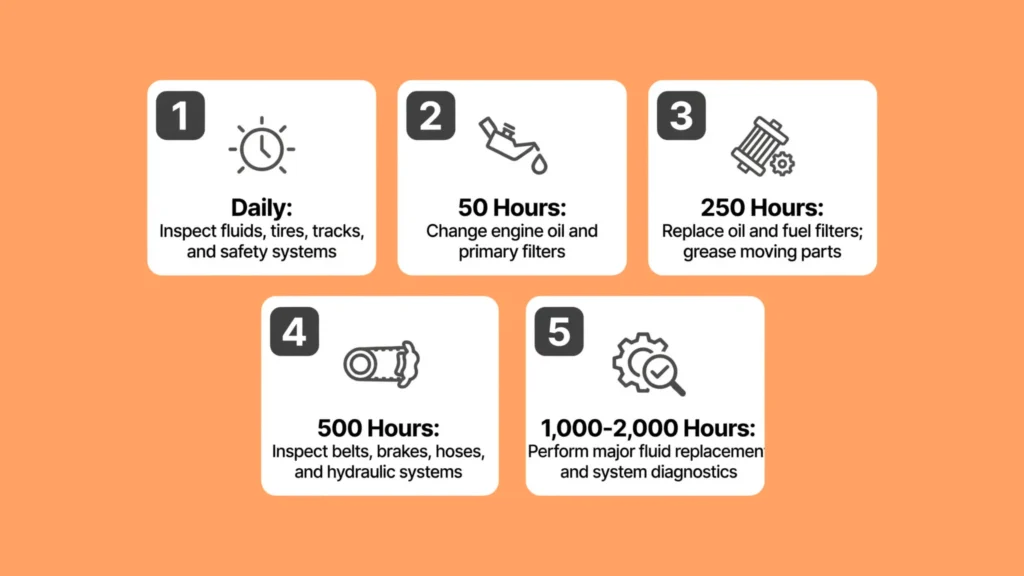
To manage preventive maintenance effectively, service schedules are divided into clear intervals based on operating hours, mileage, or calendar duration. Below is a standard framework for heavy and light equipment rental fleets.
1. Daily / Pre-Rental & Post-Rental Inspections
Every unit must undergo a visual and operational check before leaving the yard and upon return from a rental customer.
Fluid levels: Engine oil, coolant, hydraulic fluid, brake fluid, and fuel.
Tires and tracks: Check tire pressure, tread depth, and track tension; inspect for cuts or deep wear.
Safety systems: Test seatbelts, horns, back-up alarms, emergency shut-offs, and safety switches.
Structural check: Inspect pins, bushings, welds, and hitches for visible cracking or excess play.
Cleanliness: Remove dirt, mud, and debris build-up around cooling fans, engines, and moving joints.
2. Initial / Break-In Interval (50 Hours)
For brand-new assets entering the fleet, an initial service clears out metal shavings and wear particles from manufacturing break-in.
Change engine oil and primary filters.
Inspect fluid lines and hydraulic fittings for leaks.
Re-torque wheel lug nuts and structural mounting bolts.
3. Minor Service Interval (250 Hours or 3 Months)
Minor service focuses on routine fluid upkeep, filtration, and operational checks.
Replace engine oil and oil filter.
Replace fuel filters and water separators.
Inspect air intake systems and clean or replace primary air filters.
Check battery terminals, electrolyte levels, and charging performance.
Grease all pivot points, grease fittings, and steering joints.
4. Intermediate Service Interval (500 Hours or 6 Months)
Intermediate servicing addresses wear items that experience steady stress over medium usage cycles.
Replace secondary fuel filters and secondary air filters.
Inspect drive belts, alternator belts, and cooling hoses; replace if cracked or soft.
Inspect brake pads, rotors, drums, or wet disc brake systems.
Test hydraulic pressures and inspect lines for chafing.
Perform coolant system checks (freeze point, pH balance, and corrosion inhibitors).
5. Major Service Interval (1,000–2,000 Hours or Annually)
Major service involves deep component inspections, fluid flushes, and system recalibrations.
Drain and replace hydraulic fluid and hydraulic filters.
Change gear oil in final drives, axles, and differentials.
Flush and replace engine coolant.
Perform engine performance diagnostics and valve adjustments if required.
Recalibrate electronic controls, sensors, and safety load systems.
Key Components of an Effective Rental Fleet Maintenance Schedule
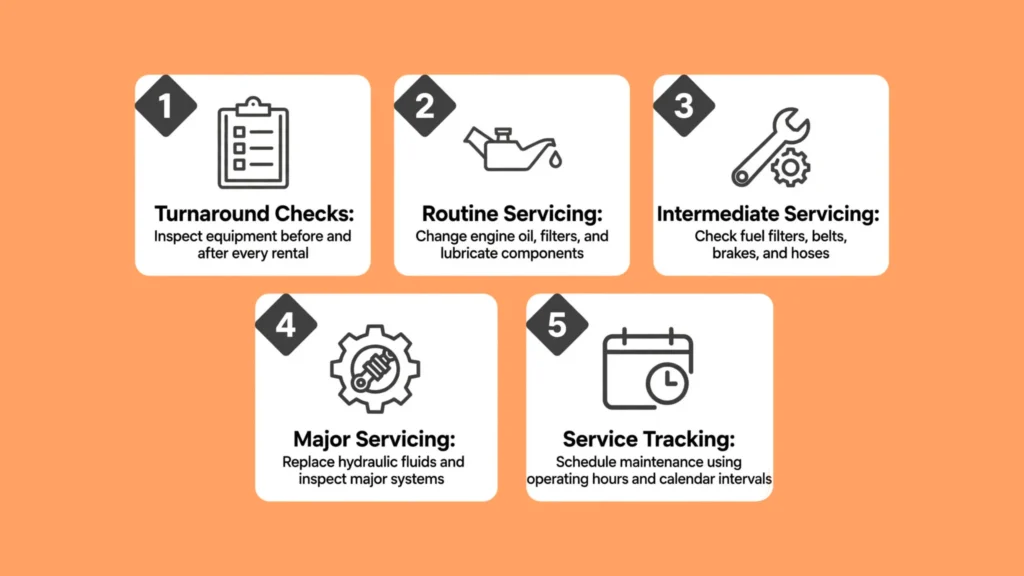
| Servicing Category | Key Service Items | Recommended Frequency |
| Turnaround Check | Fluid levels, safety systems, tire/track condition, visual leak check | Before and after every rental |
| Routine Servicing | Engine oil, oil filter, grease points, battery test | Every 250 operating hours / 3 months |
| Intermediate Servicing | Fuel filters, air filters, belt tension, brake check, hose inspection | Every 500 operating hours / 6 months |
| Major Servicing | Hydraulic fluid flush, final drive oil, cooling flush, safety recalibration | Every 1,000–2,000 hours / Annually |
Best Practices for Maintaining a Maintenance Log
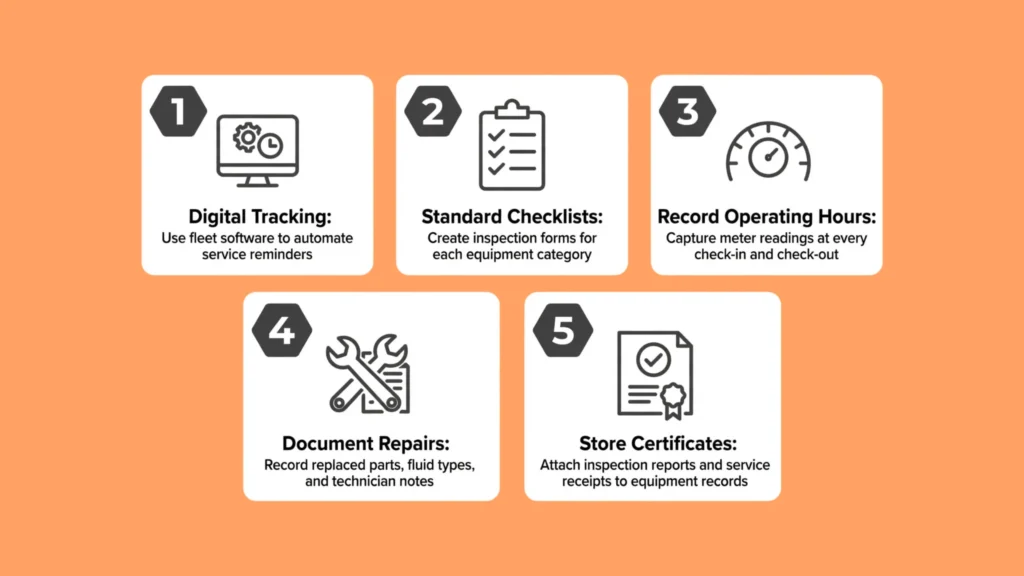
A preventive schedule is only as strong as its tracking system. Maintaining an accurate, accessible maintenance log ensures accountability and asset transparency.
Implement Digital Tracking: Transition from paper binder systems to fleet management software or telematics. Digital logs capture operating hours automatically, trigger automatic service alerts, and track historical repairs.
Standardize Inspection Checklists: Provide technicians with uniform digital or physical checklists customized by asset class (e.g., excavators, aerial lifts, generators).
Log Hours Immediately at Turnaround: Capture hour meters and mileage every time equipment is checked out or checked in. This ensures service alerts trigger based on real usage rather than calendar guesswork.
Document Part Numbers and Work Performed: Record specific part replacement numbers, fluid types, and technician notes. This accelerates future servicing and helps identify recurring defect trends.
Attach Receipts and Inspection Certificates: Keep complete records of third-party annual inspections (such as ANSI/OSHA aerial lift certifications) attached directly to the unit’s digital profile.
Common Rental Fleet Maintenance Mistakes to Avoid
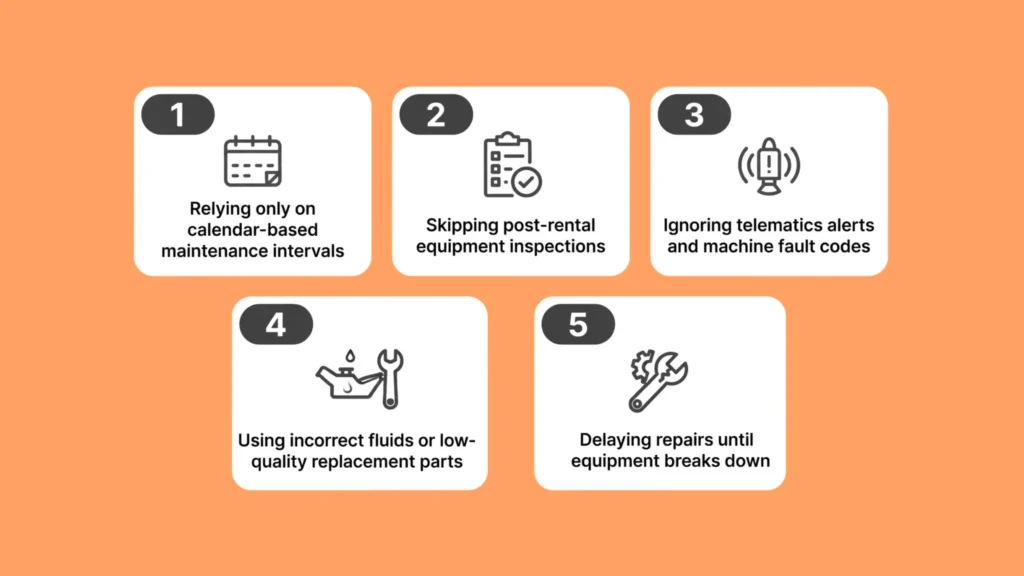
Relying Solely on Calendar Intervals: Tracking maintenance purely by calendar weeks or months leads to over-servicing idle equipment and under-servicing units running double shifts. Base schedules primarily on operating hours or telematics data.
Skipping Post-Rental Inspections: Failing to inspect equipment immediately upon return allows customer-inflicted damage to go unnoticed, delaying repairs until the next rental order arrives.
Ignoring Telematics Alerts: Modern equipment telematics provide early fault-code warnings. Ignoring minor sensor alerts often leads to severe secondary damage.
Using Incorrect Fluids or Low-Grade Parts: Substituting non-OEM filters or improper oil viscosities can void manufacturer warranties and cause premature component failure.
Frequently Asked Questions
What is the difference between preventive maintenance and reactive maintenance?
Preventive maintenance involves planned servicing and inspections performed at scheduled intervals to prevent equipment failure. Reactive maintenance occurs only after a machine breaks down or malfunctions on the jobsite.
How do telematics help with a rental fleet maintenance schedule?
Telematics automatically track operating hours, GPS location, engine health data, and fault codes in real time. This allows fleet managers to schedule maintenance based on exact machine usage rather than estimated timeframes.
How often should safety checks be performed on rental equipment?
A basic safety check verifying brakes, lights, back-up alarms, emergency stops, and seatbelts should occur before every single rental dispatch and immediately upon equipment return.
What should be included in a digital maintenance log?
A comprehensive maintenance log should record the unit ID, date of service, current hour meter reading, technician name, specific services performed, parts replaced, fluid types added, and any follow-up repairs recommended.
How does preventive maintenance impact rental fleet ROI?
Preventive maintenance increases return on investment (ROI) by extending equipment lifespan, decreasing costly emergency repair bills, reducing revenue lost to downtime, and preserving higher machine resale values.
Final Thoughts
A well-structured preventive maintenance schedule for a rental fleet is fundamental to operating a profitable rental business. By establishing clear service intervals based on operating hours, enforcing thorough turnaround inspections, and keeping accurate digital logs, rental operators protect their capital investments and deliver dependable equipment to their customers.
Consistently maintaining fleet assets drives higher customer satisfaction, reduces operating costs, and maximizes long-term profitability.
About The Author