Liberty Recycling Guide: Services, Recycling Options, and Business Opportunities
Every single day, mountain loads of metal, cardboard, and commercial waste end up sitting in local landfills. That is a massive waste of resources and a huge financial loss. Tons of discarded machinery, copper wiring, and bulk packaging could easily be melted down, re-pulped, and turned into new products. That is where a dedicated facility like Liberty Recycling comes into play. Operations like these form the backbone of the local circular economy, taking what looks like everyday trash and prepping it to go back into the manufacturing pipeline.
Whether you are a homeowner trying to clean out a cluttered garage, a contractor looking to turn job site waste into extra cash, or an entrepreneur thinking about starting a new venture, knowing how processing facilities work gives you a major edge. The recycling business is steady, resilient, and surprisingly accessible if you know how to sort your loads and build a working relationship with a local recycling center.
This guide breaks down core Liberty Recycling services, what items you can bring to the scale, and straightforward strategies for starting your own scrap recycling business.
What Is Liberty Recycling and How Does It Work?
At its simplest, Liberty Recycling operates as a commercial waste recovery center. Instead of dumping trash into a pit, a processing yard accepts, sorts, cleans, and packages recyclable materials so mills and factories can reuse them.
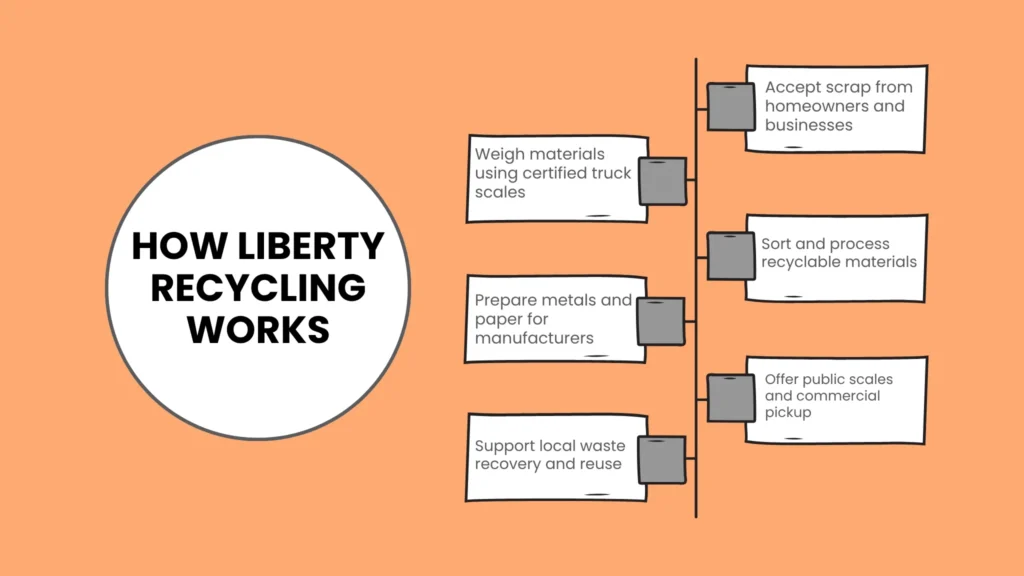
When you drop off copper pipes, aluminum cans, or heavy steel beams, the yard does not leave them sitting in a messy pile. Teams use certified truck scales, magnetic sorters, industrial shears, and high-density balers to break the materials down into clean, uniform grades. Once processed, those materials are shipped out to domestic steel mills, foundries, and paper plants.
Primary Functions of a Processing Center
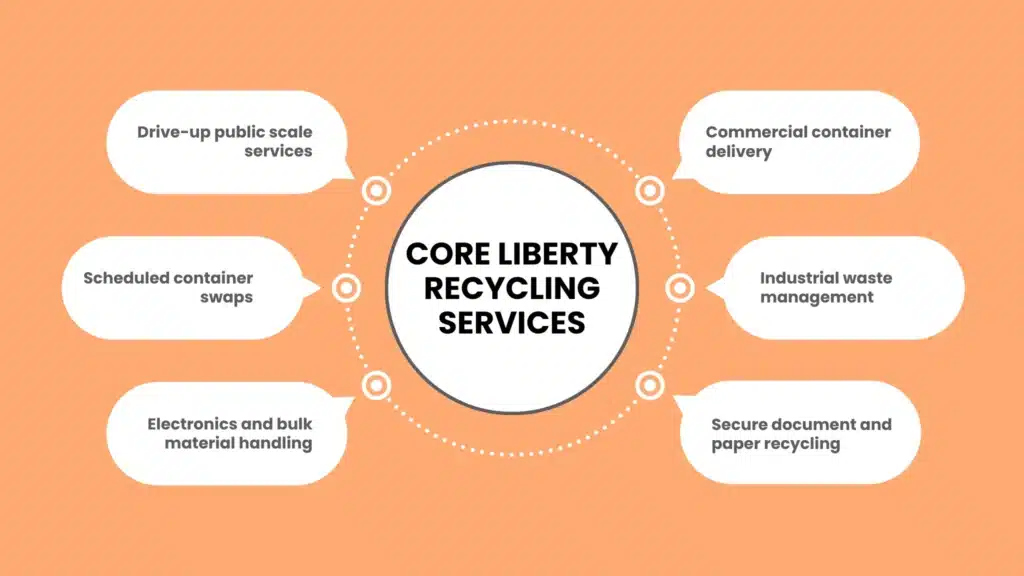
Public Scale Services: Allowing homeowners, tradespeople, and independent haulers to weigh in, unload scrap, and get paid on the spot.
Commercial Pickup: Placing roll-off dumpsters and heavy collection bins directly at job sites and manufacturing plants for scheduled swaps.
Industrial Material Processing: Sorting and shipping high-grade metals and paper directly to manufacturing plants in massive bulk loads.
Why You Should Work with a Local Recycling Center
Taking your scrap to a professional recovery yard gives you financial, operational, and environmental advantages over standard trash disposal.
Direct Cash Income
Throwing away heavy metal or bulk packaging costs money in dumpster rentals and landfill tipping fees. Taking those same materials to a processing yard turns an expense into an immediate cash payout based on certified scale weights.
Support for Local Industry
Recycling processed metal takes far less energy than mining raw ore. For example, recycling aluminum saves roughly ninety-five percent of the energy required to make it from scratch. Supplying clean scrap to regional mills helps keep production costs lower across the board.
Real Environmental Protection
Diverting scrap metal, vehicle batteries, and electronic components away from landfills keeps harmful toxins out of local soil and groundwater. Facilities run under strict environmental regulations to handle hazardous materials safely.
Core Liberty Recycling Services Available to the Community
Processing facilities offer several distinct service options to accommodate different customer needs, from everyday walk-in visitors to industrial factories.
Drive-Up Public Scales
For homeowners, handymen, and independent haulers, using the public scale is the most common option. You drive your vehicle or trailer onto a certified truck scale, weigh in, unload your items in designated sorting bays, and drive back onto the scale. The weight difference determines your payout based on current market rates.
Commercial Container Delivery
For active construction crews and repair shops, hauling small loads every day wastes valuable work hours. Processing yards deliver heavy roll-off containers directly to your job site and swap out full boxes whenever you hit capacity.
Industrial Waste Management
Large factories generate complex waste streams, including specialized steel alloys and bulk cardboard. Processing specialists audit job sites to help factories set up simple sorting routines right on the shop floor, maximizing the resale value of their scrap.
Electronics and Bulk Handling
Many full-service centers also manage secure document destruction, paper baling, and specialized e-waste recovery, giving local businesses a single stop for all their non-hazardous waste.
Accepted Materials at a Scrap Yard
Knowing what items you can bring to a recycling center helps save time and secures top dollar for your haul. Materials generally fall into two primary groups: non-ferrous metals and ferrous metals.
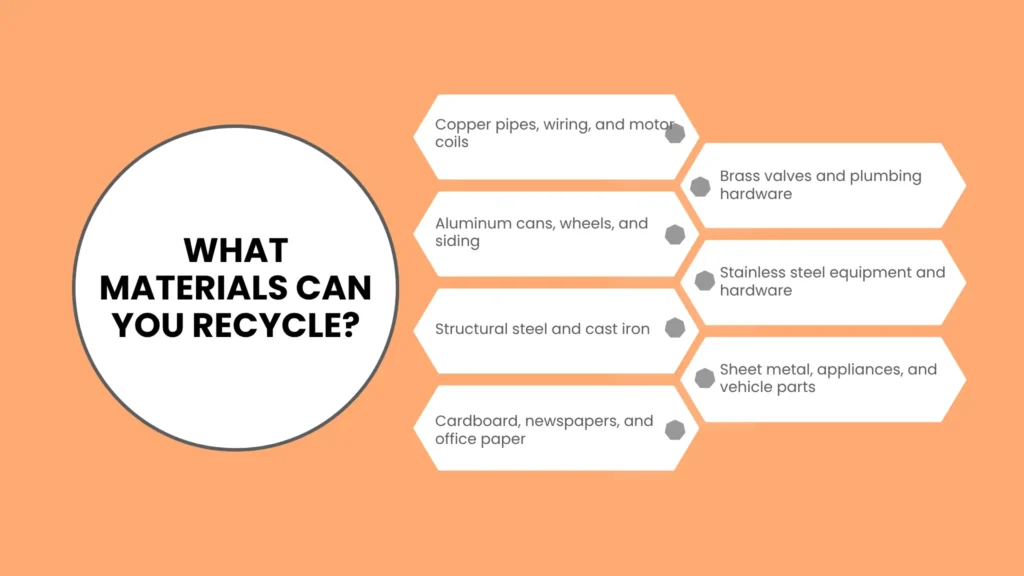
Non-Ferrous Metals (High-Value Items)
Non-ferrous metals do not contain iron. They are non-magnetic, resist rust, and bring in much higher prices per pound at the scale.
Copper: Found in electrical wiring, plumbing pipes, motor coils, and roofing sheets. It is the most valuable common scrap metal.
Brass: Common in plumbing valves, light fixtures, door hardware, and heat exchangers.
Aluminum: Found in beverage cans, car rims, window frames, outdoor furniture, and house siding.
Stainless Steel: Found in commercial kitchen equipment, chemical tanks, and marine hardware.
Lead: Found in heavy vehicle batteries and wheel weights.
Ferrous Metals (Bulk Quantity Items)
Ferrous metals contain iron, which makes them magnetic. While they bring in a lower price per pound than non-ferrous metals, they are easy to find in large quantities.
Structural Steel: Heavy beams, channels, and plates from construction tear-downs.
Cast Iron: Old radiators, engine blocks, heavy drain pipes, and machinery bases.
Sheet Iron: Home washing machines, clothes dryers, metal roofing, car body panels, and fencing.
Materials Acceptance Reference Guide
| Material Category | Accepted Items | Prohibited Items |
| Plumbing & Piping | Copper pipes, brass valves, iron drains, water meters | Sealed pipes containing standing liquid or mud |
| Electrical Equipment | Insulated wire, electric motors, power supplies, circuit boards | PCB-filled transformers or light ballasts |
| Automotive Parts | Aluminum wheels, radiators, car batteries, steel frames | Sealed gas tanks containing residual fuel |
| Appliances & Sheet Metal | Stoves, washers, dryers, water heaters, steel panels | Refrigerators with unrecovered freon gas |
| Paper & Bulk Packaging | Baled cardboard, newspapers, office paper, magazines | Wet, moldy, or oil-soaked paper products |
How to Build a Profitable Scrap Recycling Business
Starting an independent scrap collection business is one of the most practical, low-cost ways to jump into the waste management sector. You do not need a college degree or massive funding to start making money. All you need is a reliable work truck, basic hand tools, and a strong work ethic.
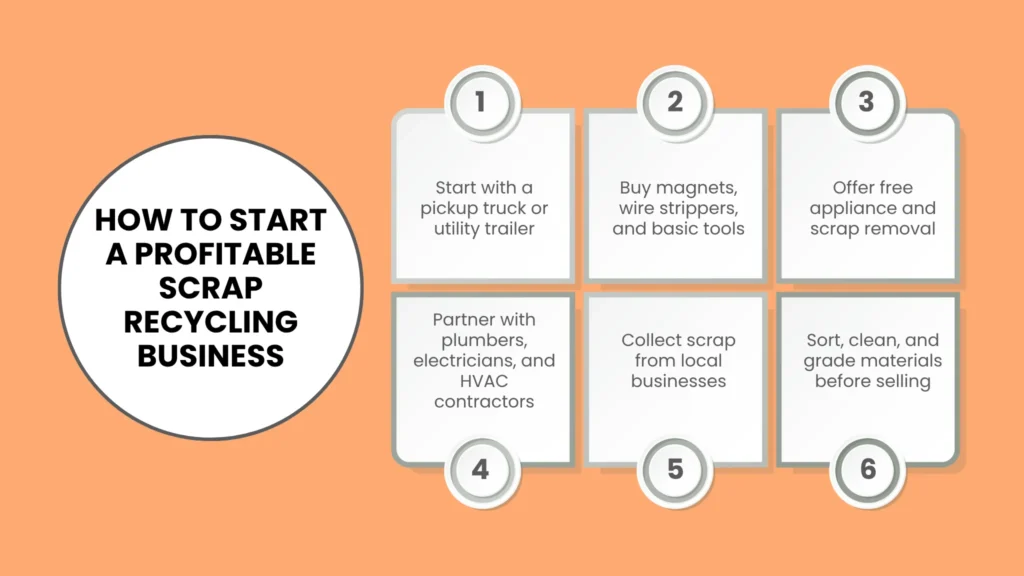
Step 1: Get Basic Hauling Equipment
Start out with a sturdy pickup truck or an open utility trailer. Adding wooden sideboards to your trailer lets you haul larger loads of lightweight sheet metal safely without losing items on the road.
Essential tools to buy right away include:
A Pocket Magnet: To quickly check whether a metal is valuable non-ferrous material or basic steel.
Wire Strippers: To peel plastic insulation off copper cables and double their scale value.
An Angle Grinder: To cut long pipes, metal frames, and bulky items down to fit in your truck bed.
Safety Gear: Heavy leather gloves and steel-toe boots to protect yourself from sharp steel edges.
Step 2: Source Low-Cost and Free Material
High profit margins come from finding free scrap or buying items cheap from people who just want their space cleared out.
Offer Free Appliance Removal: Post flyers and online messages offering to pick up unwanted washers, dryers, and stoves. Homeowners appreciate avoiding the heavy lifting.
Partner with Local Tradespeople: Plumbers, electricians, and HVAC technicians accumulate copper wire, brass fittings, and old heaters every week. Offer regular weekly pickups to keep their shops clear.
Clean Out Small Businesses: Visit auto repair shops and small factories to offer free haul-aways for broken car parts, steel drums, and metal cutoffs.
Step 3: Clean and Grade Your Materials
Never bring uncleaned, mixed loads to the scale. If you bring copper pipe with plastic fittings and iron valves attached, the yard will grade the entire load as lower-value dirty copper. Taking time in your garage to cut off plastic ends, remove steel screws, and strip insulation dramatically increases your final payout.
Emerging Business Ideas in the Recycling Sector
Once you get comfortable with basic metal hauling, you can expand your operation into specialized, higher-margin niches in the broader recycling business.
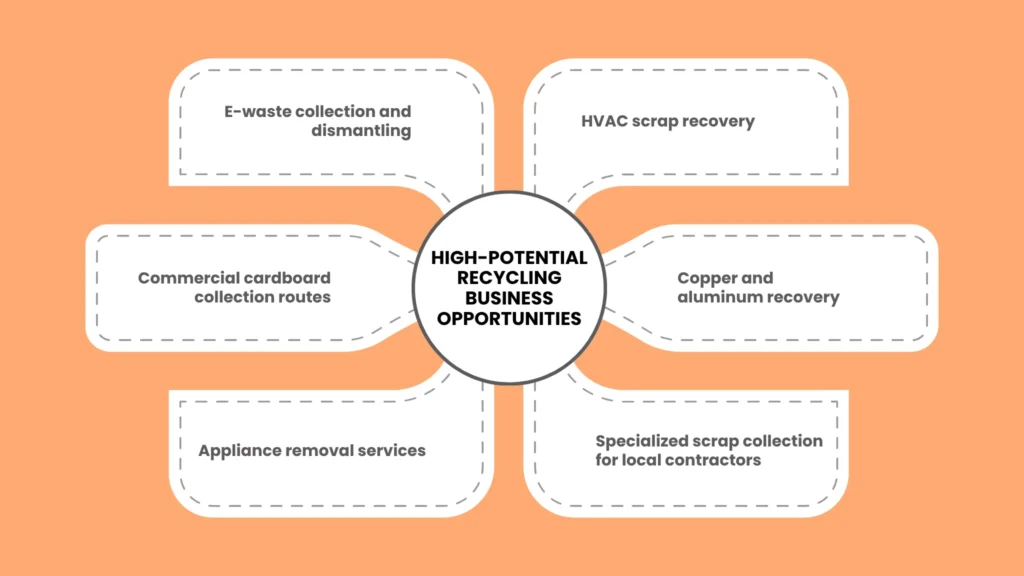
E-Waste Collection and Dismantling
Old office computers, servers, and monitors contain high concentrations of gold, silver, and high-grade copper. You can charge local businesses a fee to haul away obsolete electronics safely, dismantle the gear, sell the circuit boards to specialized refiners, and drop off the steel cases at your local recovery center.
HVAC Scrap Recovery
Commercial heating and cooling units reach the end of their lifespan after ten to fifteen years. Working with HVAC installers lets you haul away heavy commercial rooftop units. These systems contain large copper-aluminum coils, heavy electric motors, and thick steel frames that bring in substantial payouts at the scale.
Bulk Paper and Cardboard Routes
Commercial stores throw out dozens of cardboard boxes every single day. Setting up a route to collect clean, baled cardboard from local retail shops lets you supply paper recycling operations while charging stores a small monthly pickup fee.
Daily Tips for Maximum Profits
Track Commodity Prices: Metal values shift based on industrial supply and market demand. Keep an eye on local rates so you know when to hold onto valuable copper and when to sell off bulk iron.
Protect Customer Property: Lay down heavy plywood boards under trailer tires and jack stands whenever you pick up scrap on paved driveways to prevent concrete damage.
Keep Honest Records: Most states require scrap buyers and haulers to record photo identification to prevent scrap theft. Running a fully documented operation keeps you in good standing with local law enforcement and scale managers.
Final Thoughts
Partnering with Liberty Recycling makes it easy to handle bulk scrap responsibly while unlocking steady economic opportunities. The waste recovery industry is built on simple, solid principles: gathering material, sorting it cleanly, and supplying manufacturers with raw materials to build new goods.
By applying simple sorting habits, learning material grades, and building strong local relationships, you can build a reliable cash-flowing business in the green economy.
For more practical step-by-step business guides, reviews of emerging startup models, and strategies for managing operational growth, visit reliablestartup.
Frequently Asked Questions
What scrap item pays the most per pound?
Clean bare bright copper wire brings in the highest price per pound at almost every processing yard. It consists of clean, unalloyed wire free of solder, paint, or plastic insulation.
Do I need a special license to haul scrap metal?
Rules vary by city and state. Most areas require a general business license and commercial auto policy. Some states also require a dedicated scrap transportation permit to prevent material theft.
Why do scale operators use magnets on my material?
Workers use strong magnets to separate non-ferrous metals from ferrous metals quickly. If a magnet sticks, your item contains iron and receives basic steel pricing. If it does not stick, it gets graded as higher-value aluminum, brass, or copper.
Can I drop off refrigerators that still have freon?
Most recycling yards require freon gas to be professionally drained by a certified technician before accepting refrigerators or air conditioners.