Trailer Rental Business in 2026: Startup Costs, Profits, and How to Get Customers
AI Overview
A trailer rental business involves purchasing utility, dump, or enclosed trailers and renting them out to local customers, contractors, and movers. With estimated startup costs between $5,000 and $25,000, it offers strong trailer rental profit margins. Success relies on choosing high-demand types of trailers to rent, creating a solid trailer rental business plan, and marketing locally to secure consistent bookings.
Key Takeaways
Low entry barrier with high ROI potential
Estimated startup costs range from $5,000 to $25,000
High demand for utility, dump, and enclosed trailers
Simple marketing strategies attract steady local clients
Smart maintenance keeps long-term overhead low
Thinking about launching your own business this year? If you want something practical that generates steady cash flow, starting a trailer rental business might be your best move.
You do not need a massive warehouse or millions in venture capital to get going. With a small fleet and a clear game plan, you can start earning passive to semi-passive income fast. In this guide, we will break down the startup costs, real profit estimates, the best trailers to buy, and proven ways to find customers in 2026.
At reliablestartup we love straightforward business models that deliver real results, and this one sits right at the top of the list.
Why Start a Trailer Rental Business in 2026?
Ever tried renting a utility trailer on a Saturday morning? If you have, you know they are almost always fully booked at major rental yards. People are moving houses, cleaning out garages, landscaping, and hauling equipment every single day. Most folks do not want to drop $4,000 to buy a trailer they only use twice a year.
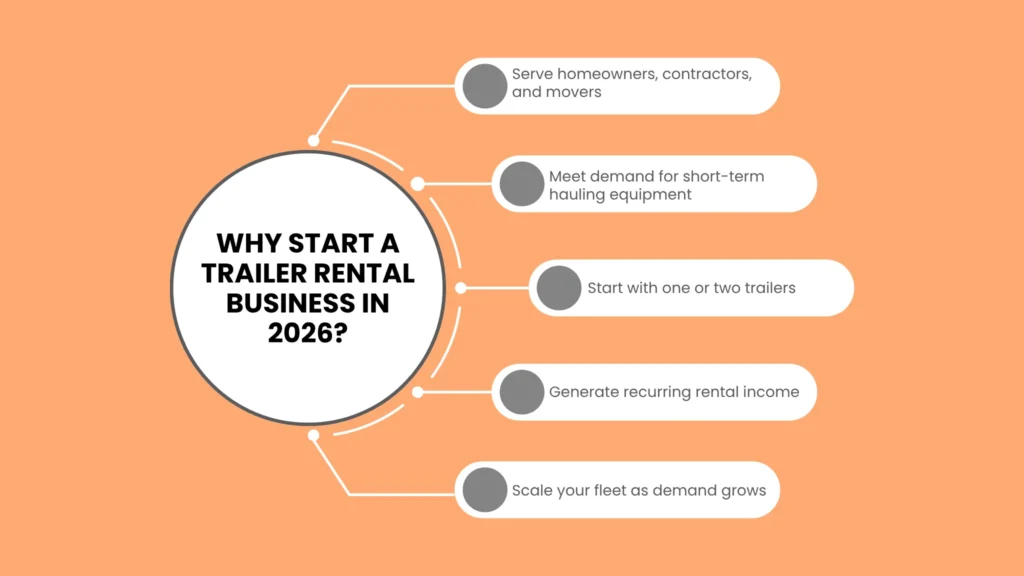
That is where you come in. Renting equipment fills a massive gap in local markets. It gives homeowners and small businesses a cheap solution while giving you a high-return asset.
According to research from reliablestartup, localized asset-sharing businesses are seeing steady growth as more people prefer renting over buying heavy equipment.
Understanding Your Trailer Rental Startup Costs
Let us talk money. What does it actually take to get off the ground? Your total trailer rental startup costs will depend on whether you start with one trailer or buy three at once.
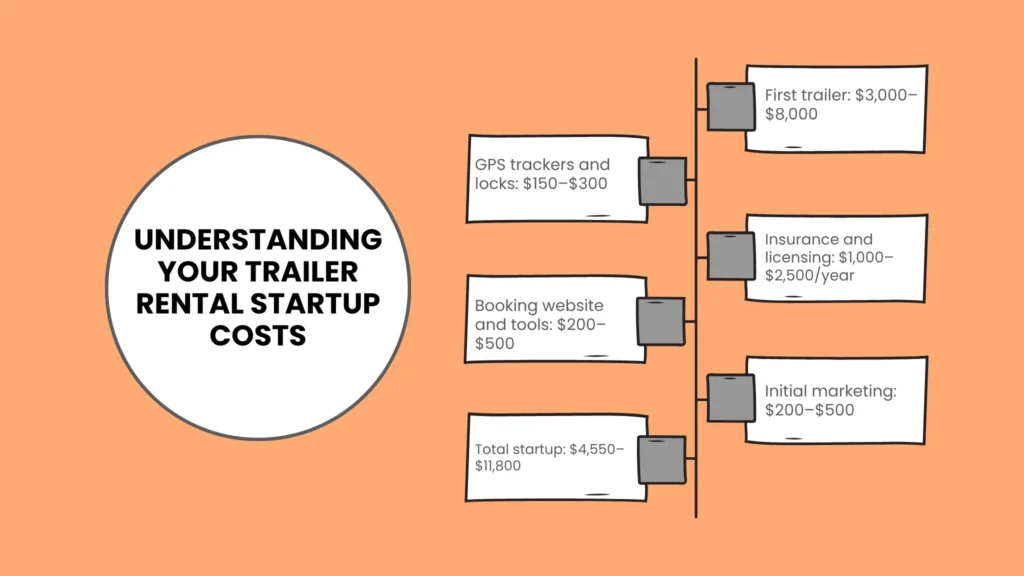
Here is a simple breakdown of what to expect for your initial investment.
| Expense Category | Estimated Cost (USD) | Notes |
| First Trailer (Single Unit) | $3,000 – $8,000 | Utility, enclosed, or light dump trailer |
| GPS Trackers & Locks | $150 – $300 | Essential security for every unit |
| Insurance & Licensing | $1,000 – $2,500 per year | Commercial liability and trailer registration |
| Booking Website & Tools | $200 – $500 | Simple online reservation system |
| Initial Marketing | $200 – $500 | Local ads, flyers, and yard signs |
| Total Estimated Startup | $4,550 – $11,800 | Based on available industry data |
Starting small keeps your risk low.
In most cases, starting with one or two trailers lets you test local demand before scaling up your fleet.
What Is the Real Trailer Rental Profit Potential?
You are probably asking: How much money can I actually make? Your trailer rental profit depends on rental rates, local demand, and how often your equipment is out on the road.
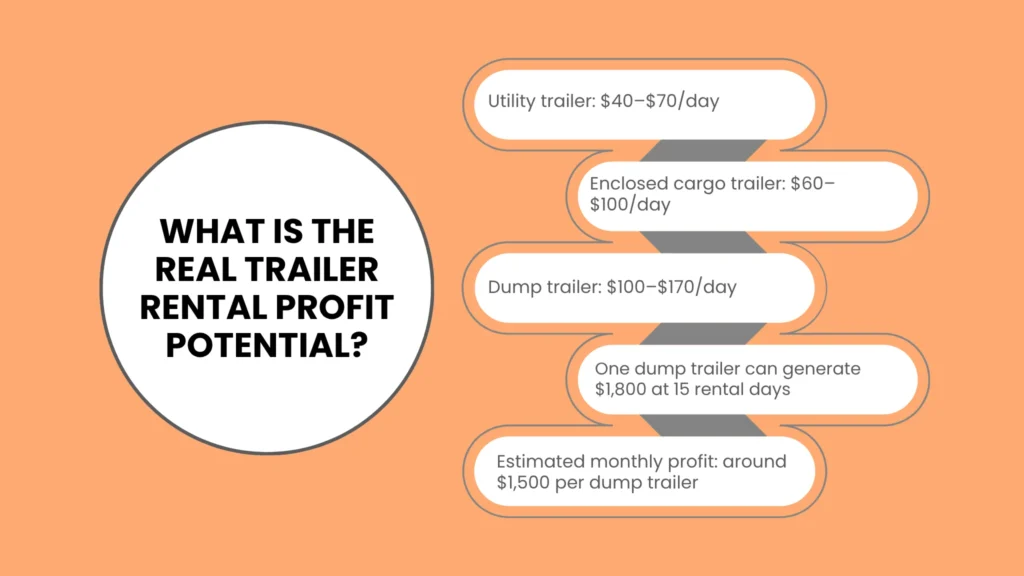
Let us look at standard daily rates in 2026:
Utility Trailer: $40 – $70 per day
Enclosed Cargo Trailer: $60 – $100 per day
Dump Trailer: $100 – $170 per day
If you own one dump trailer and rent it out for just 15 days a month at $120 per day, that is $1,800 in gross revenue from a single asset. Subtract about $300 for monthly insurance, routine wear-and-tear, and software fees. Your net trailer rental profit sits around $1,500 per month for very little hands-on labor. Multiply that across three or four trailers, and you have built a serious income stream.
Choosing the Best Types of Trailers to Rent
Not all trailers earn the same return. Picking the right types of trailers to rent is the most critical decision you will make early on.
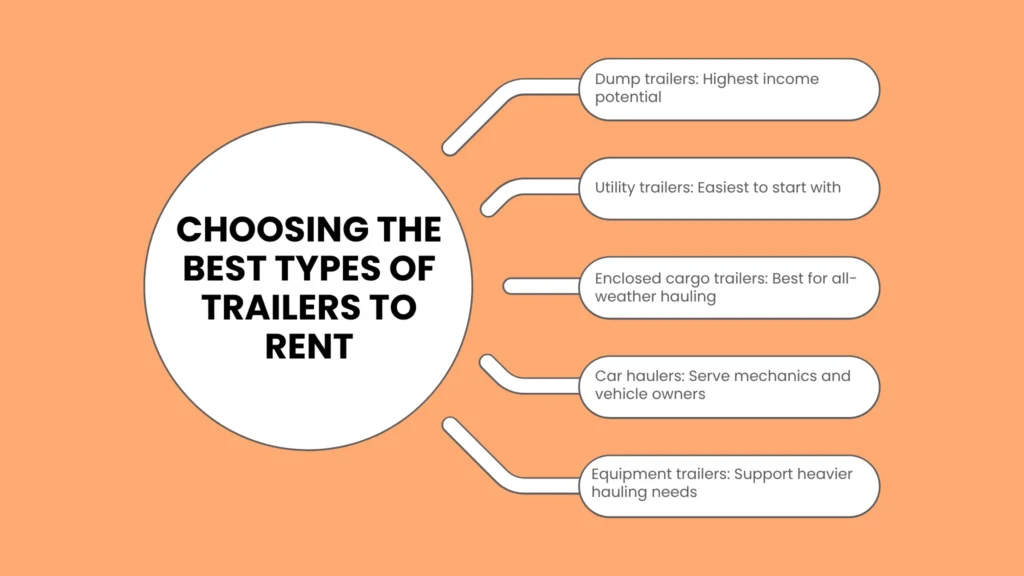
1. Dump Trailers (Highest Income Potential)
Contractors, roofers, and DIY renovators love dump trailers. They are perfect for hauling dirt, gravel, and construction debris. They command higher daily rates because they save workers hours of manual unloading.
2. Utility Trailers (Easiest to Start With)
These are open-bed trailers with low sides. They are cheap to buy and simple to maintain. Homeowners use them for moving furniture, picking up riding mowers, or hauling yard waste.
3. Enclosed Cargo Trailers (Best for All Weather)
Enclosed trailers keep cargo safe from rain and theft. They are hugely popular for long-distance moves, band gear transport, and valuable equipment hauling.
4. Car Haulers & Equipment Trailers
Car haulers cater to mechanics, car enthusiasts, and towing needs. They require heavier hitches and sturdy axles, but they stay in constant demand.
How to Build a Simple Trailer Rental Business Plan
You do not need a 50-page corporate manual to launch. However, drafting a clear trailer rental business plan keeps you focused and prevents costly mistakes.
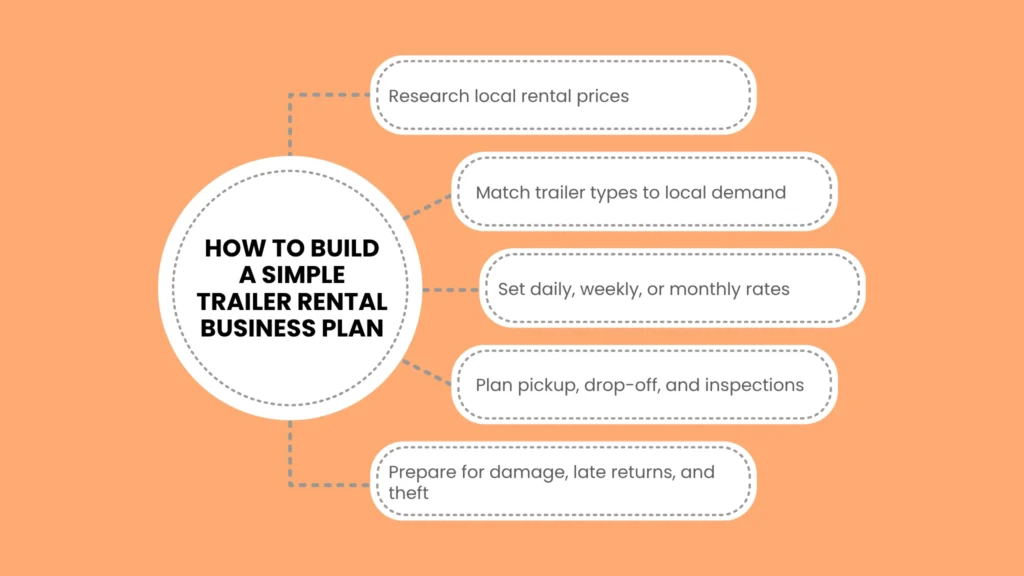
Here are the key elements your plan should cover:
Market Research: What are local rental companies charging near you?
Equipment Strategy: Which types of trailers to rent match your local demand best?
Pricing Model: Will you offer daily, weekly, or monthly rates?
Operations: How will pick-ups, drop-offs, and hitch inspections work?
Risk Management: How will you handle damages, late returns, or stolen property?
Writing down these details helps you calculate your exact trailer rental startup costs and timeline before spending a single dollar.
5 Practical Steps to Launch Your Business
Ready to get moving? Here is how to take your business from an idea to a working fleet. First, form a legal entity like an LLC to separate your personal assets from your business liability. Next, purchase your first trailer. Look for high-quality used units or new models with strong warranties.
Once you have the trailer, install a reliable GPS tracker hidden inside the frame. Add high-security wheel locks and hitch locks. After securing commercial insurance, list your trailer online so clients can reserve and pay automatically.
How to Get Your First Rental Customers
Having great trailers means nothing if no one knows you exist. Getting customers for a trailer rental business is surprisingly straightforward if you focus on local search and community outreach.
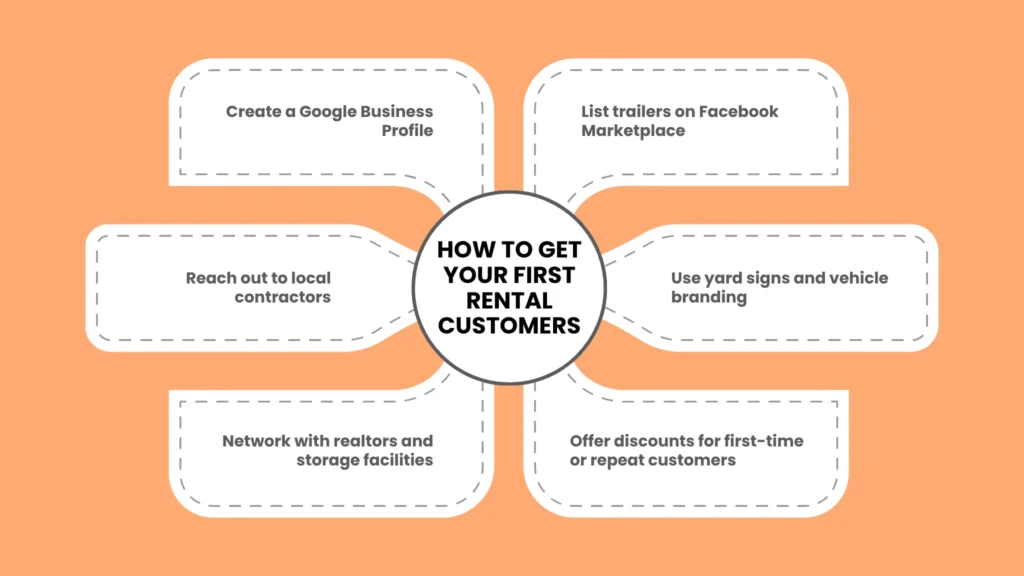
Top Ways to Market Your Trailers:
Google Business Profile: Set up a free Google map listing right away. When locals search “trailer rental near me,” you want your name to show up.
Facebook Marketplace & Local Groups: Post clean pictures of your trailers with rental rates and availability.
Contractor Outreach: Visit local landscaping companies, roofers, and home remodelers. Hand them your card and offer a discount on their first week.
Yard Signs & Vehicle Wraps: Put simple magnet signs on your personal truck and stickers on the trailers themselves.
Real Estate & Moving Networks: Connect with local realtors and self-storage facility managers who frequently talk to people who need moving equipment.
If you want more detailed growth guides for home-based services, reliablestartup offers simple toolkits for new entrepreneurs.
Keeping Your Fleet Safe and Running Smoothly
Protecting your assets is the secret to keeping your trailer rental profit margins high year after year.
If a trailer sits in a shop broken, it is costing you money instead of making it.
Essential Safety & Maintenance Rules:
Inspect tires, lights, and wheel bearings after every single rental.
Keep standard rental contracts that clearly state renter liability for damages.
Require a valid driver’s license, proof of tow vehicle insurance, and a security deposit.
Use smart GPS devices to track your equipment location in real time.
Taking small maintenance steps keeps your overhead low and keeps your customers safe on the road.
Building Your Rental Income Stream
Starting a trailer rental business is one of the most practical ways to launch a profitable business in 2026.
By calculating your initial trailer rental startup costs, choosing the right types of trailers to rent, and following a solid trailer rental business plan, you build a reliable asset base that generates steady income.
Focus on great customer service, protect your equipment, and keep your maintenance up to date.
With consistency, your first single trailer can quickly grow into a full fleet that fuels your financial independence.
Frequently Asked Questions
Do I need a special license to run a trailer rental business?
In most states, a standard driver’s license is fine for basic trailers, but you need standard business licenses, local permits, and proper commercial insurance.
What insurance do I need for renting out trailers?
You need commercial general liability insurance and specific policy coverage that protects rental equipment against theft, physical damage, and third-party accidents.
How do I prevent my trailers from getting stolen?
Hide heavy-duty GPS trackers on every unit, use high-security hitch coupler locks, and verify driver credentials before releasing equipment.
Can I run this business part-time while keeping my main job?
Yes, using smart locks, remote check-ins, and online payment systems lets you manage pick-ups and drop-offs around your daily work schedule easily.