Camper Rental Business in 2026: How to Turn Your Camper Into a Profitable Rental
The outdoor travel and experiential tourism market has experienced explosive growth over the past several years, turning what was once a niche hobby into one of the most lucrative asset-backed business opportunities available today. Today’s travelers increasingly choose flexible, self-contained road trips over crowded airports and traditional hotel stays. Because of this structural shift in consumer behavior, starting a camper rental business allows vehicle owners and aspiring entrepreneurs to convert an underutilized asset into a dependable source of cash flow.
Whether you intend to rent out a single family travel trailer on weekends or build a multi-vehicle fleet, navigating this industry requires a deep understanding of operational logistics, risk management, and market positioning. Below is a complete guide to understanding potential earnings, structuring startup investment, mitigating risks, and building a sustainable rental enterprise.
Camper Rental Income: Realistic Financial Expectations and Revenue Models
Evaluating potential camper rental income requires analyzing seasonal booking dynamics, geographical demand, and vehicle classifications. While owning a camper carries recurring maintenance costs, strategic pricing and high-margin add-ons allow hosts to generate impressive gross profit margins.
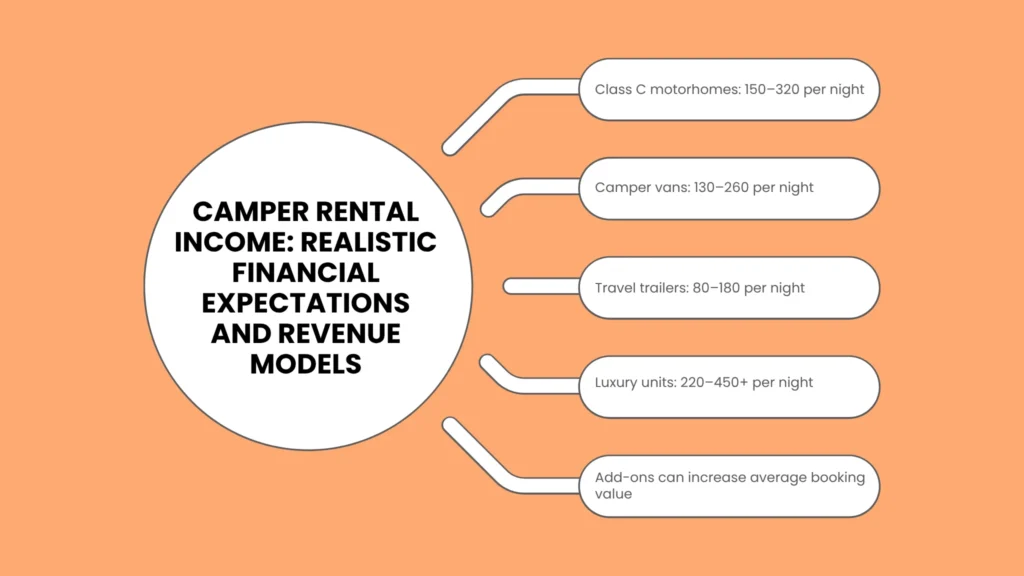
1. Nightly Rate Benchmarks Across Vehicle Classes
Your camper’s classification heavily influences your base pricing power. Modern renters prioritize comfort, ease of driving, and aesthetic appeal.
Class C Motorhomes ($150 – $320 per night): Built on a van or truck chassis with an overhead cabin, these units are easy to drive and highly popular among families seeking a self-contained motorhome.
Class B Camper Vans & Sprinter Conversions ($130 – $260 per night): Highly sought after by couples and solo travelers. They offer superior fuel efficiency, easy parking, and high aesthetic appeal for social-media-driven travel.
Travel Trailers & Toy Haulers ($80 – $180 per night): Towable units carry lower initial purchase costs. While nightly rates are lower than driveable RVs, their high Return on Investment (ROI) makes them ideal for lean operations.
Luxury Fifth-Wheels & Class A Motorhomes ($220 – $450+ per night): High-end units cater to glamping markets, extended road trips, and stationary luxury rentals at events or festivals.
2. Annual Gross vs. Net Income Projections
A single camper rented for 100 to 140 nights per year typically generates between $12,000 and $32,000 in gross booking revenue. However, calculating true net profit requires factoring in platform commissions, insurance premiums, storage, routine wear and tear, and cleaning supplies.
3. Maximizing Revenue with High-Margin Add-Ons
Base nightly rates represent only the foundation of your revenue model. Successful operators significantly increase their Average Order Value (AOV) by offering targeted upsells:
Delivery and Full Set-Up Service ($150 – $350): Many renters lack tow-capable vehicles or feel anxious about towing a large trailer. Delivering the camper directly to a designated campsite and setting up sewer, water, and electrical connections turns reluctant prospects into paying customers.
Generator Rentals ($20 – $40 per day): Essential for renters planning off-grid “boondocking” trips without electrical hookups.
Outdoor Comfort Bundles ($50 – $150 per trip): Supplying portable fire pits, camping chairs, outdoor rugs, kayaks, or electric bikes saves renters the hassle of packing heavy gear.
Pet Accommodation Fees ($50 – $100 non-refundable): Allowing pets expands your customer base, as over 60% of leisure travelers prefer bringing their dogs along.
Prepaid Dumping and Interior Cleaning Packages ($75 – $125): Offering renters the convenience of skipping black water tank dumping or deep cleaning upon return creates an effortless checkout experience while generating easy margin.
Camper Rental Startup Costs: Complete Budget Breakdown
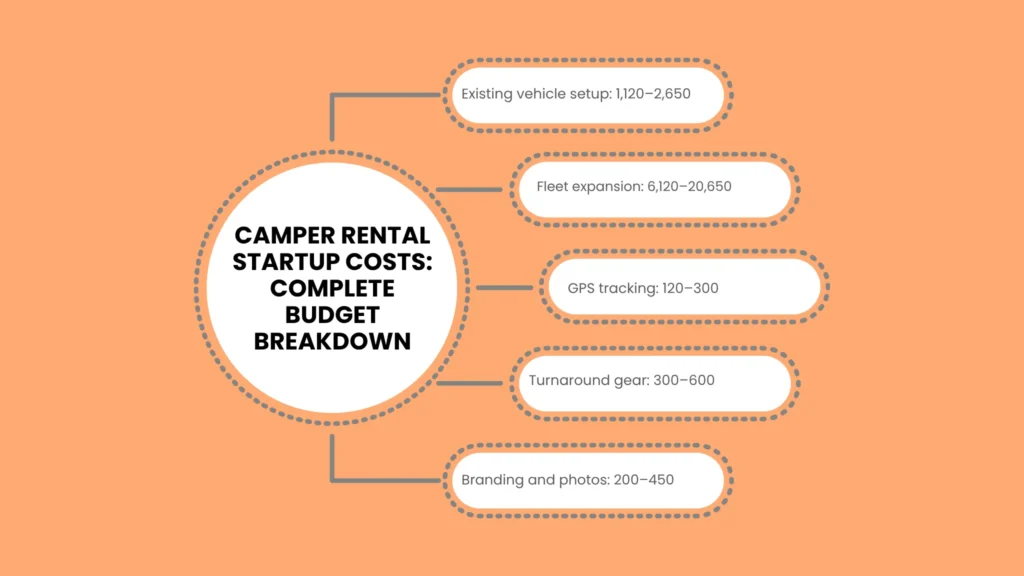
Understanding your initial camper rental startup costs prevents unexpected cash flow bottlenecks during your first season. Expenses vary significantly based on whether you are monetizing an existing vehicle or acquiring new inventory specifically for commercial rental operations.
| Expense Category | Existing Vehicle Setup | Purchased Fleet Expansion | Operational Purpose & Value |
| Vehicle Down Payment / Capital | $0 | $5,000 – $18,000 | Equity acquisition for a reliable, low-mileage camper or trailer. |
| GPS Tracking & Telematics | $120 – $300 | $120 – $300 | Real-time location monitoring, speed alerts, and theft recovery security. |
| Turnaround Gear & Linens | $300 – $600 | $300 – $600 | High-grade mattress protectors, kitchen sets, sewer hoses, and leveling blocks. |
| Commercial Inspection & Tuning | $250 – $500 | $250 – $500 | Pre-season brake checks, roof seal audits, tire recaps, and appliance tests. |
| Legal Entity & LLC Setup | $100 – $300 | $100 – $300 | Separates personal assets from commercial liabilities and secures state tax IDs. |
| Direct Booking Website & Tech | $150 – $500 | $150 – $500 | Custom domain, online calendar booking software, and digital waiver collection. |
| Branding & Professional Photos | $200 – $450 | $200 – $450 | Staged photography significantly boosts listing conversion rates on rental apps. |
| Estimated Startup Investment | $1,120 – $2,650 | $6,120 – $20,650 | Excludes ongoing monthly vehicle financing payments. |
How to Rent Out a Camper: Step-by-Step Execution Plan
Knowing how to rent out a camper requires building robust operational workflows. Standardizing your handoff procedures, guest communications, and maintenance checks prevents accidental damage and ensures consistent 5-star reviews.
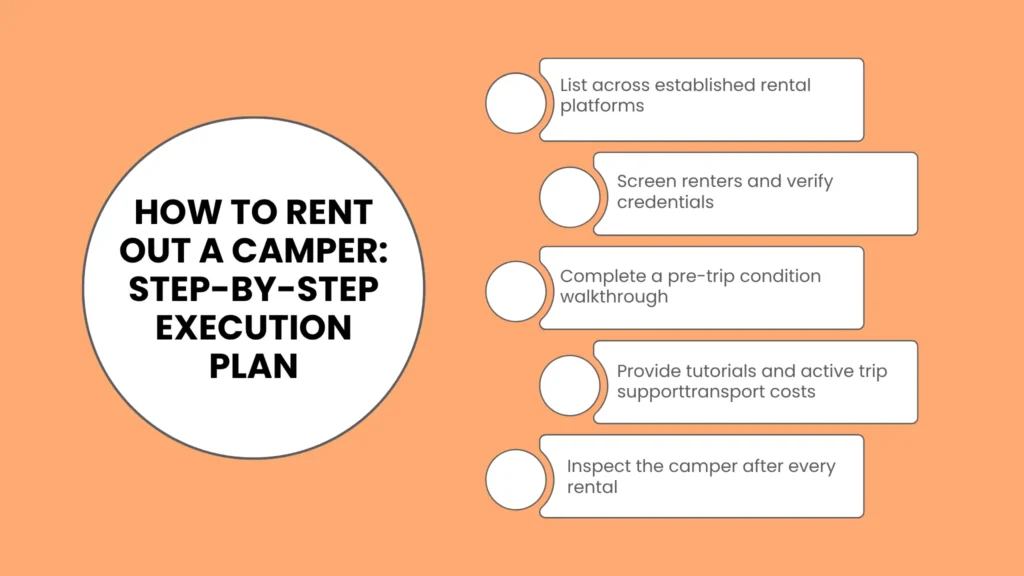
Step 1: Select the Right Distribution Platforms
To capture maximum booking volume, launch your vehicle across established peer-to-peer marketplaces before building your direct booking funnel:
Outdoorsy: The industry’s premier peer-to-peer marketplace. It provides built-in DMV driver verification, comprehensive commercial insurance coverage during rental periods, and integrated payment processing.
RVshare: A massive customer-facing platform with strong search traffic across North America. Excellent for targeting families and first-time RV campers.
Direct Booking E-Commerce Storefront: Once you build a customer base, hosting your own booking website allows repeat guests to rebook directly, eliminating 15% to 20% platform commission fees.
Step 2: Ensure Comprehensive Insurance and Liability Protection
Personal auto or RV insurance policies almost universally exclude coverage during commercial rental activities. This gap is well documented by the National Association of Insurance Commissioners, which advises consumers that standard personal auto and RV policies typically exclude commercial use without an added endorsement. Operating without proper commercial coverage leaves your personal assets completely exposed.
Peer-to-Peer Platform Policies: Listing on platforms like Outdoorsy or RVshare automatically provides up to $1 million in liability coverage and physical damage protection during active reservation windows.
Commercial Fleet Insurance: If you choose to rent directly to customers outside third-party platforms, you must obtain a dedicated commercial rental insurance policy (such as MBA Insurance or Roamly) specifically designed for RV rental operations. Insurance requirements vary significantly by rental category our detailed guide to rental business insurance policies breaks down coverage types across different asset classes.
Step 3: Master the Guest Departure Handoff
First-time renters often feel intimidated by complex RV systems. Creating an educational handoff routine reduces operational mistakes like burning out water heater elements or damaging power awnings.
Record Video Tutorials: Film short 1-to-2-minute video clips showing how to operate the slide-outs, turn on the propane water heater, manage electrical breakers, and dump the waste tanks. Send a link to these videos to guests 48 hours before arrival.
Document Physical Condition: Perform a thorough 15-minute walkthrough with the renter using a digital departure form. Take clear, timestamped photos of all four exterior sides, the roof, tire treads, windshield condition, and interior upholstery.
Collect a Security Deposit: Always hold a refundable security deposit ($500 to $1,500) through your booking system to cover minor interior scuffs, un-dumped waste tanks, or missing gear.
Developing a Scalable Camper Rental Business Plan
Treating your rental operation like a real business rather than a passive hobby requires a forward-looking camper rental business plan. Structuring your legal entity, risk reserves, and maintenance protocols early ensures sustainable expansion.
1. Business Legal Structure & Risk Isolation
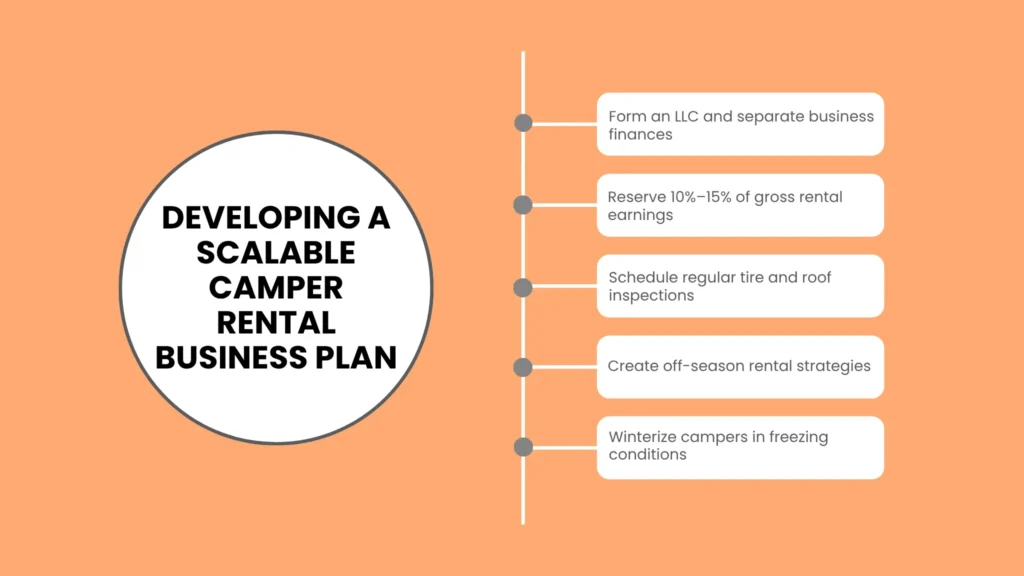
Forming a Limited Liability Company (LLC) isolates your personal bank accounts, primary home, and personal investments from potential liabilities arising from accidents, guest injuries, or property damage during rentals. Open a dedicated commercial bank account to handle all revenue, fuel costs, maintenance, and vehicle loan payments. Not sure if a formal license or permit applies to your setup? Check our guide on whether you need a license for a rental business.
2. Establishing a Dedicated Maintenance Reserve
RVs feature multiple moving components, plumbing lines, electrical systems, and household appliances exposed to continuous road vibrations. Allocate 10% to 15% of all gross rental earnings into a dedicated high-yield reserve account.
Routine maintenance items to plan for include:
Tire Replacement: RV tires degrade due to UV exposure and standing weight even if tread levels look healthy. Replace tires every 3 to 5 years regardless of mileage.
Roof Seal Inspections: Inspect and reseal roof lap sealant every 6 months to prevent water leaks—the single most destructive threat to a camper’s structural frame.
Appliance Servicing: Regularly clean air conditioner filters, flush water heaters to clear mineral deposits, and test propane leak detectors.
3. Off-Season Utilization and Winterization Strategies
In colder geographic regions, camper rentals peak during late spring, summer, and early autumn. To offset seasonal winter slumps:
Offer Stationary Long-Term Rentals: Rent your camper as a temporary housing unit for traveling nurses, construction managers, or seasonal workers.
Relocate Fleet Inventory: Move trailers to warmer southern markets during winter months to capture snowbird travel demand.
Winterize Properly: If storing vehicles during freezing months, drain all plumbing lines completely and fill systems with non-toxic RV antifreeze to prevent cracked pipes and water manifold ruptures.
Conclusion
Building a camper rental business provides a practical path to generating passive income from an underutilized asset or building a scalable fleet. By pricing competitively, maintaining strict handoff and sanitation procedures, securing comprehensive commercial insurance, and delivering exceptional customer service, you can establish a thriving rental brand.
For detailed startup frameworks, financial modeling templates, and step-by-step growth strategies for your next venture, visit reliablestartup to access practical resources for growing entrepreneurs.
Frequently Asked Questions
Is renting out a camper worth the wear and tear?
Yes, provided you establish clear usage limits, charge appropriate security deposits, and maintain a dedicated repair reserve. The high profit margins typically outweigh routine cosmetic wear, and major accidental damage is covered by commercial platform insurance.
Do renters need a special commercial driver’s license?
In most regions, a standard driver’s license allows individuals to drive Class C or Class B motorhomes and tow travel trailers under standard weight limits (typically up to 26,000 lbs combined weight). Always verify guest driving credentials through automated platform verification tools.
What type of camper offers the best return on investment?
Lightweight travel trailers generally offer the highest ROI relative to capital outlay because purchase prices and maintenance expenses are significantly lower than driveable motorhomes. However, Class C motorhomes and camper vans generate higher absolute dollar profits per booking night.