How to Market a Vacation Rental Business Without Airbnb
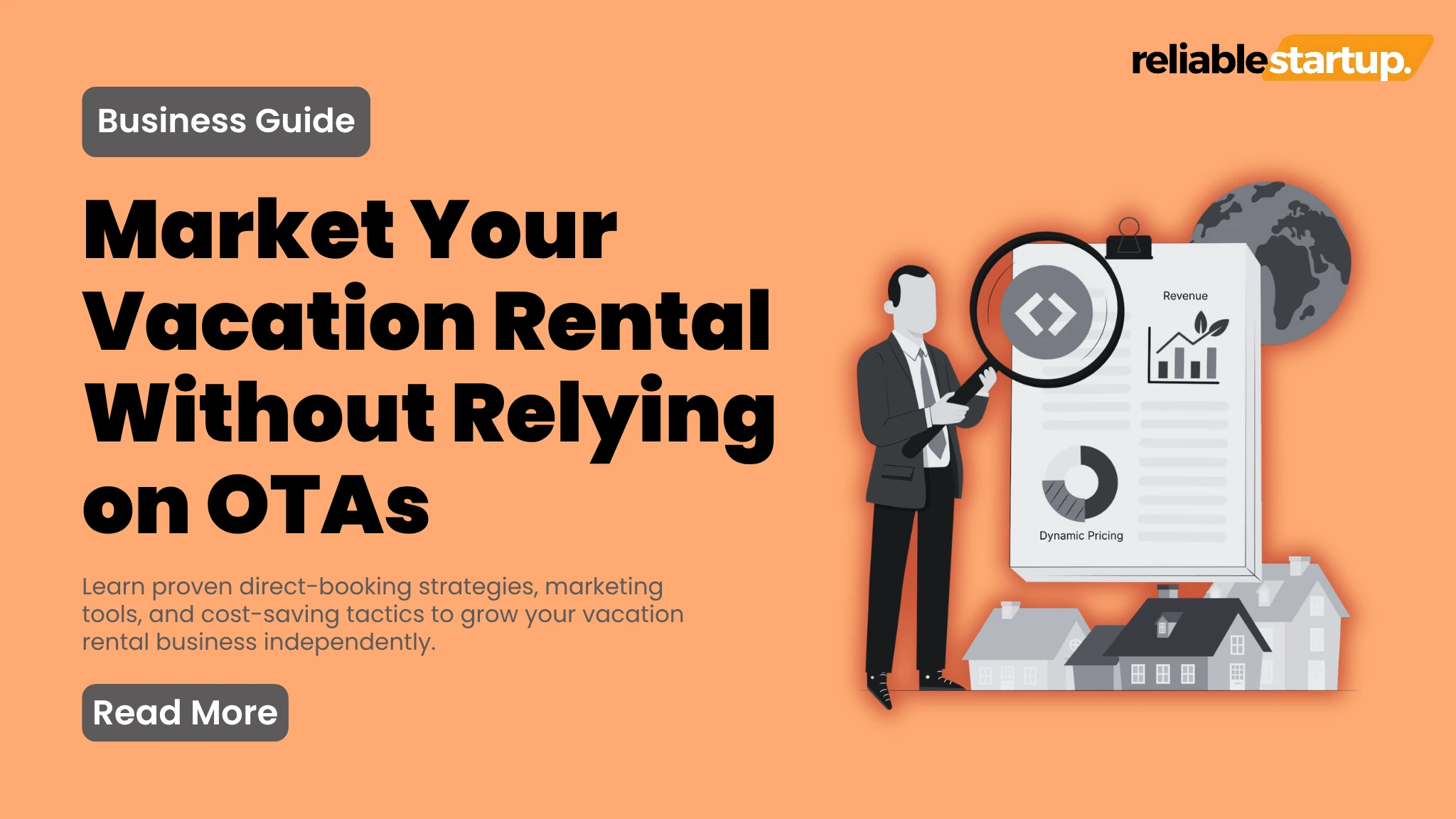
Relying entirely on short-term rental Online Travel Agencies (OTAs) like Airbnb means you are building your hospitality business on rented land. Sudden algorithm shifts, strict cancellation overrides, and heavy host platform fees can instantly slice into your revenue.
Learning how to market a vacation rental business independently gives you complete operational control. Before diving into marketing, it’s worth revisiting the basics of starting a vacation rental business, since your marketing strategy will only work as well as your operational foundation. By bypassing the corporate middleman, you establish direct lines of communication with your guests, capture valuable first-party marketing data, and build a lasting brand asset that you actually own. This comprehensive guide covers the essential vacation rental marketing tips required to generate steady bookings off-platform, outlines the initial setup expenses, and explores the financial reality of running an independent direct-booking brand.
Foundational Market a Vacation Rental Business Requirements
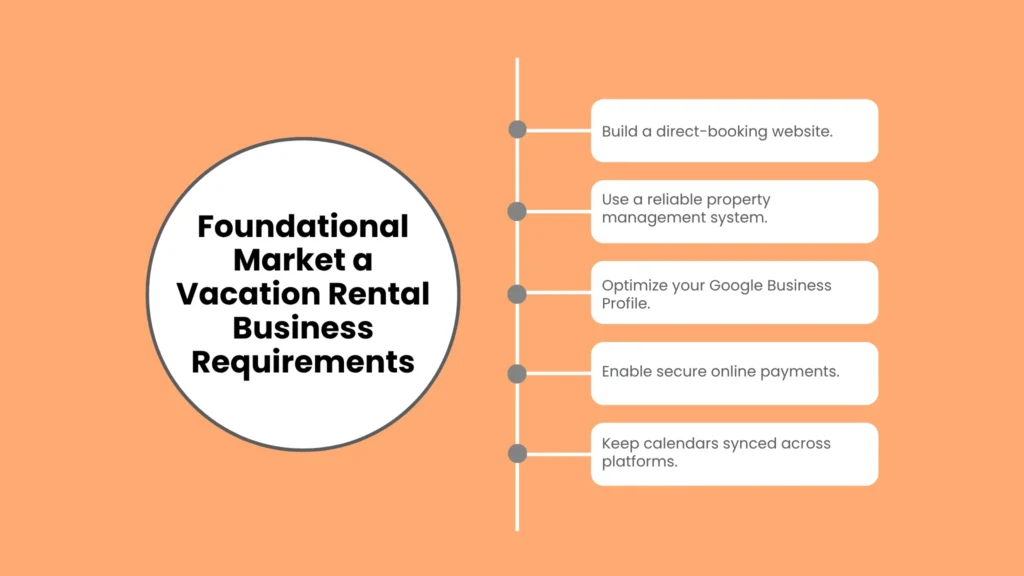
Stepping away from listing platforms requires replacing their built-in traffic with your own digital infrastructure. To successfully market a vacation rental business on your own terms, you must secure a few foundational tech pieces and legal items:
1. A High-Converting Direct-Booking Website
Your website is your digital storefront, and it must look and operate professionally. It cannot simply be a static gallery page with an email contact form. Modern travelers expect a fast, mobile optimized experience with real-time calendar availability and a secure checkout gateway. Building your site on content systems like WordPress, Squarespace, or Webflow and integrating it with dedicated booking engines is a standard step to capture immediate guest intent.
2. A Centralized Property Management System (PMS)
Without a listing platform to handle your calendar, you need an independent backend system to prevent double-bookings. Choosing the right rental management software, such as Lodgify, Guesty, or Hostaway orchestrates your reservation calendars, automates check-in messaging, handles secure card processing via Stripe or PayPal, and automatically alerts your local cleaning staff the moment a guest books a stay.
3. Google Business Profile & Local Map Optimization
When travelers plan trips, they regularly bypass listing platforms and search Google Maps directly for “vacation rentals near [City Name].” Registering a verified Google Business Profile for your property allows your direct-booking website to surface in local map packs for free. You can also connect your booking engine to Google’s Free Booking Links, which displays your direct pricing alongside major corporate travel channels at zero cost.
Before you finalize your tech stack, make sure you have a reliable online booking system fully integrated with your website and PMS, this single step eliminates manual back-and-forth with guests and prevents lost bookings due to slow response times.
Real World Market a Vacation Rental Business Cost Breakdowns
Stepping outside a major platform shifts your cost structure. Instead of paying a flat 3% to 15% booking commission on every single reservation, you swap those variable fees for predictable, fixed software and advertising expenses. Let’s break down the realistic launch and ongoing market a vacation rental business cost points for independent operations.
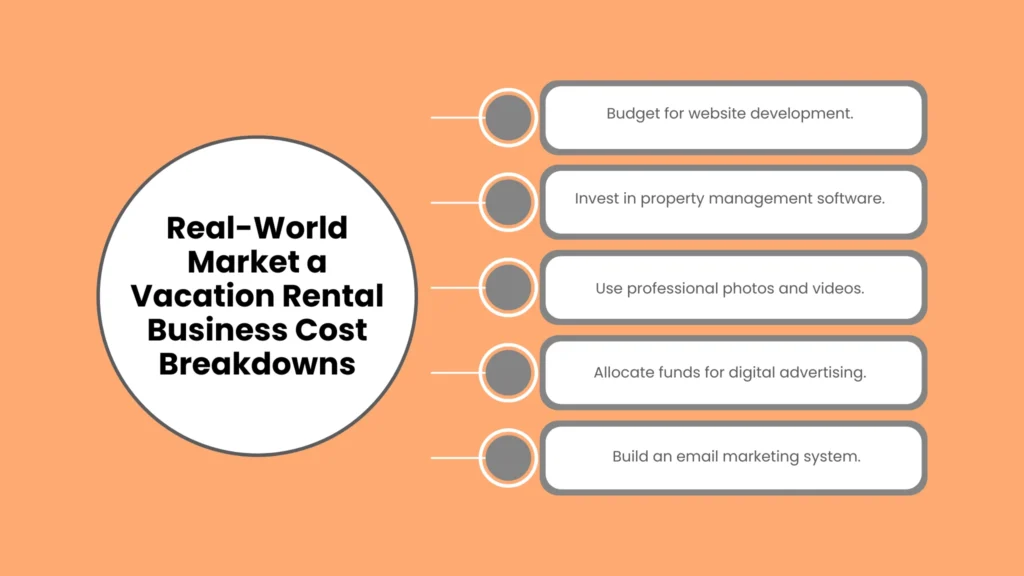
Estimated Setup and Annual Distribution Expenses
| Marketing & Tech Expense Category | Initial Launch Investment | Annual Recurring Expense | Strategic Purpose |
| Direct-Booking Website Design | $200 to $1,500 | $120 to $360 | Eliminates platform host fees entirely |
| Property Management Software (PMS) | $0 Setup | $300 to $720 | Centralizes calendar and guest messaging |
| Professional Photography & Drone Video | $400 to $800 | $0 (One-time asset) | Maximizes visual trust on social media |
| Hyper-Local Google/Facebook Paid Ads | $0 (Optional) | $600 to $2,400 | Targets high-intent local vacationers |
| Email Marketing Platform (CRM) | $0 Setup | $150 to $400 | Drives recurring, zero-cost repeat stays |
| Total Estimated Marketing Outlay | $600 to $2,300 | $1,170 to $3,880 | Total capital required to launch independently |
Is an Independent Vacation Rental Business Profitable?
Many property owners wonder if they can maintain high occupancy rates without a platform’s massive audience, asking: is market a vacation rental business profitable on its own?
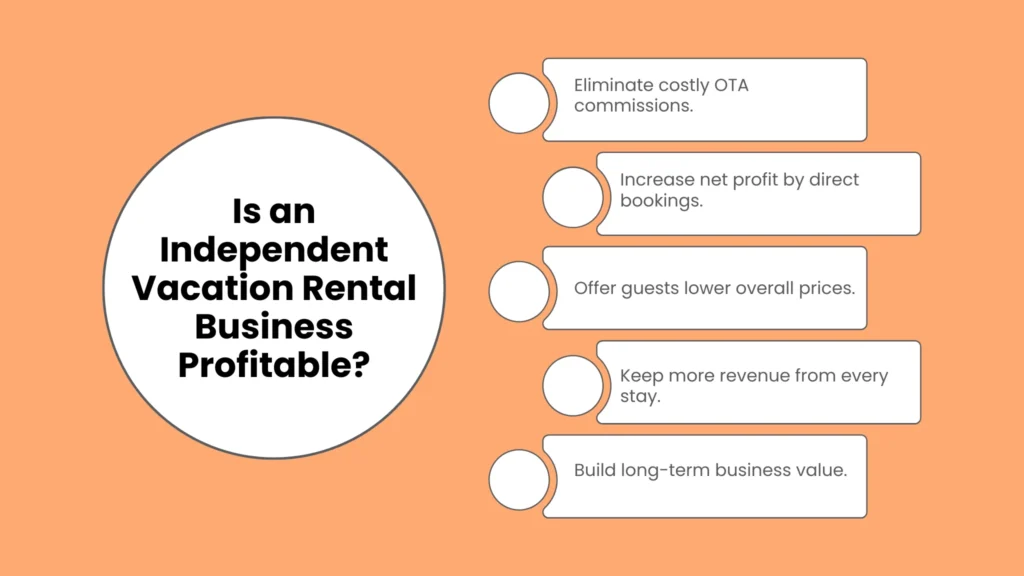
The data indicates that independent marketing is highly lucrative for operators who actively build an audience. When you do not pay a chunk of your top-line revenue to a booking platform for every reservation, that saved capital flows straight back into your business cash reserves.
Your Independent Vacation Rental Business Profit Margin
Operating a direct-booking model regularly pushes a property’s net vacation rental business taxes profit margin up by 10% to 15% compared to platform-dependent models.
Because travelers are also hit with substantial “guest service fees” on booking platforms, your direct-booking site can offer a slightly lower overall cost to the guest while still yielding a higher net payout for you. This pricing arbitrage creates a clear win-win scenario that dramatically improves your cash flow.
Proven Vacation Rental Marketing Tips for Direct Bookings
To consistently attract travelers without relying on third-party platforms, focus your energy on these organic and paid marketing strategies:
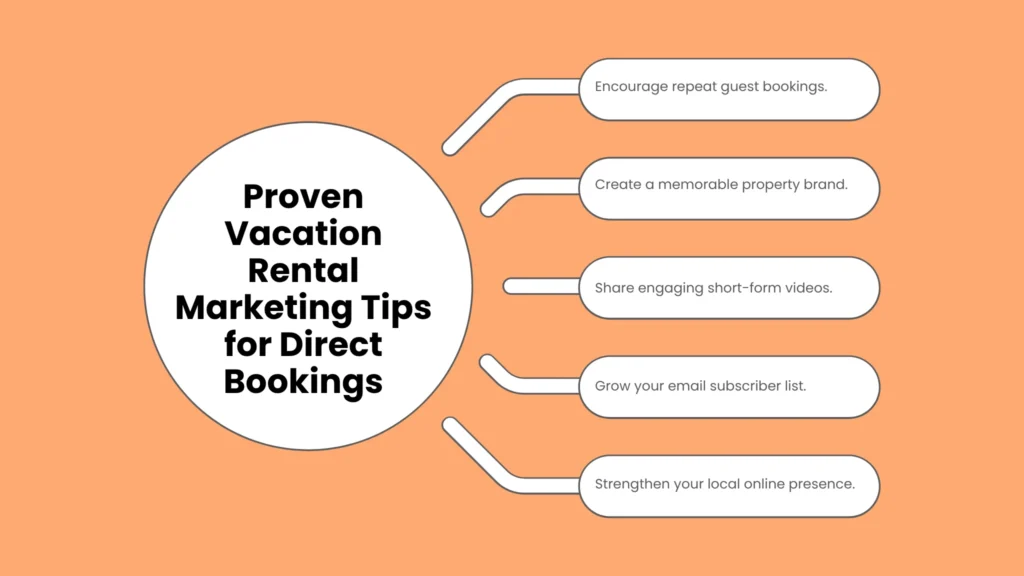
Turn Past Guests Into Repeat Bookings: Your highest-ROI marketing channel is your existing guest list. Collect email addresses during check-in, and use a regular email newsletter combined with a customer loyalty program to offer exclusive loyalty discounts, off-season booking deals, or early-access holiday dates.
Leverage the “Billboard Effect” Strategically: You don’t have to quit listing platforms cold turkey. Use a platform profile as a high-visibility billboard. Give your property a distinctive, easily searchable name (e.g., “The Whispering Pines Cabin”) and a custom logo. Savvy travelers will frequently spot your property on a platform, search for your custom brand name on Google, and book directly through your website to save money.
Produce Scroll-Stopping Short-Form Video Content: Platforms like Instagram and TikTok are massive discovery engines for travel destinations. Post high-definition cinematic Reels and short tours showing off your property’s signature experiences—such as lighting a fire at golden hour, pouring coffee on an alpine deck, or exploring a nearby hidden trail. Link your booking site directly in your social bio.
Step-by-Step Direct Marketing Implementation Sequence
To move away from third-party platforms without experiencing a sudden drop in monthly occupancy, implement your independent marketing strategy in this deliberate chronological order:
Establish a standalone brand name and launch a mobile responsive, direct-booking website integrated with a secure payment processor and automated calendar sync.
Register your verified Google Business Profile. Add your direct website link to Google Free Booking Links to capture high-intent travelers looking at local maps.
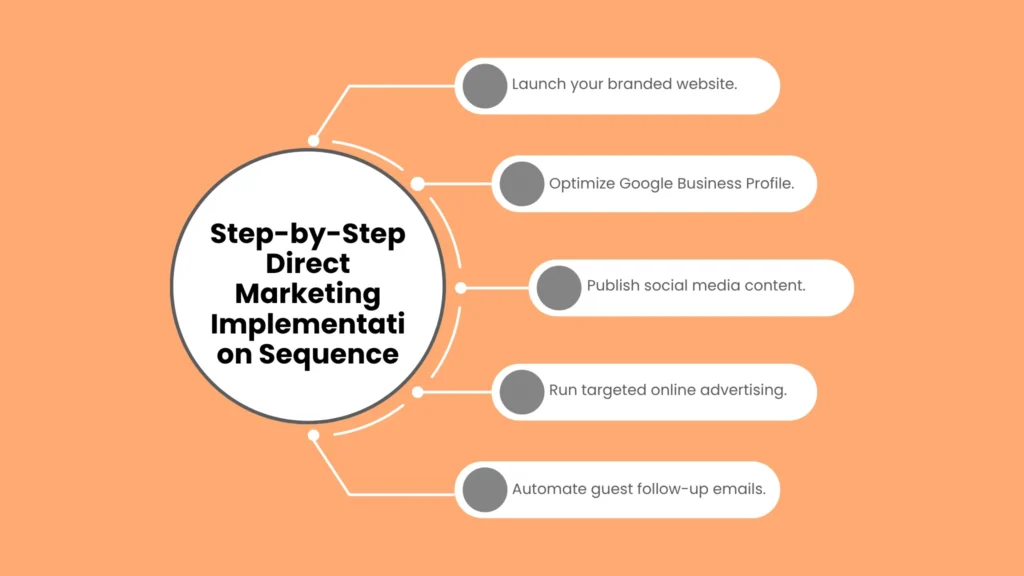
Publish professional high-resolution photos and short-form video tours across Instagram, TikTok, and Pinterest to show off your property’s unique amenities and local lifestyle.
Run hyper targeted Facebook or Google Search Ads aimed at regional vacationers, weddings, or corporate retreats looking for specific accommodations in your city.
Collect guest email data during check-in. Implement an automated post-stay email loop that requests local reviews and sends automated incentives to secure direct repeat bookings.
Final Takeaways on Independent Marketing
Stepping away from third-party listing platforms is one of the most reliable ways to maximize your hospitality revenue, protect your asset data, and build genuine brand equity. By focusing heavily on professional local SEO, cultivating a dedicated email database of past guests, and utilizing short-form video to highlight your location, you can break free from costly platform constraints.
If you are looking for step-by-step digital blueprints, local SEO checklists, and direct-booking website templates to scale your independent hospitality company, explore our full strategy guides at reliablestartup.
Frequently Asked Questions
Is marketing a vacation rental business independently safe regarding payments?
Yes. By integrating established enterprise payment processors like Stripe or PayPal directly into your property management system, you get the exact same level of fraud screening and data encryption used by global e-commerce sites. You retain complete control over your specific security deposits and custom cancellation policies.
How do I build trust with travelers who find my direct website?
The easiest way to close the trust gap is by showcasing prominent social proof. Use widgets inside your PMS to import and display verified reviews directly from your past listings. Displaying clear high-resolution videos, clear contact numbers, and professional local business integrations immediately signals to guests that your site is fully legitimate.
Can I completely replace my booking platform traffic over time?
Yes. Many seasoned property managers use a staggered migration strategy. They initially secure 80% of bookings from platforms and 20% from direct traffic. Over a year or two of building an email list and growing local search engine optimization (SEO), those percentages regularly flip—allowing them to run completely self-sufficient lodging brands.