Frozen Vegetables: Complete Guide to Nutrition, Storage, Cooking, and Food Business Opportunities
Managing nutritional needs while maintaining a practical kitchen routine poses a challenge for households and commercial food establishments alike. Fresh produce begins losing vital nutrients immediately after harvest, requiring fast consumption to avoid spoilage. Choosing quality food frozen vegetables provides a reliable solution to this problem. Modern flash-freezing technologies preserve peak nutritional profiles, extend shelf life, and eliminate prep work. At the same time, expanding demand for convenient plant-based meals creates profitable avenues within the frozen food business sector. Below is an operational guide covering nutritional science, proper storage techniques, professional cooking methods, and a complete blueprint for launching a successful frozen vegetable business.
The Nutritional Reality: Fresh vs. Frozen Vegetables
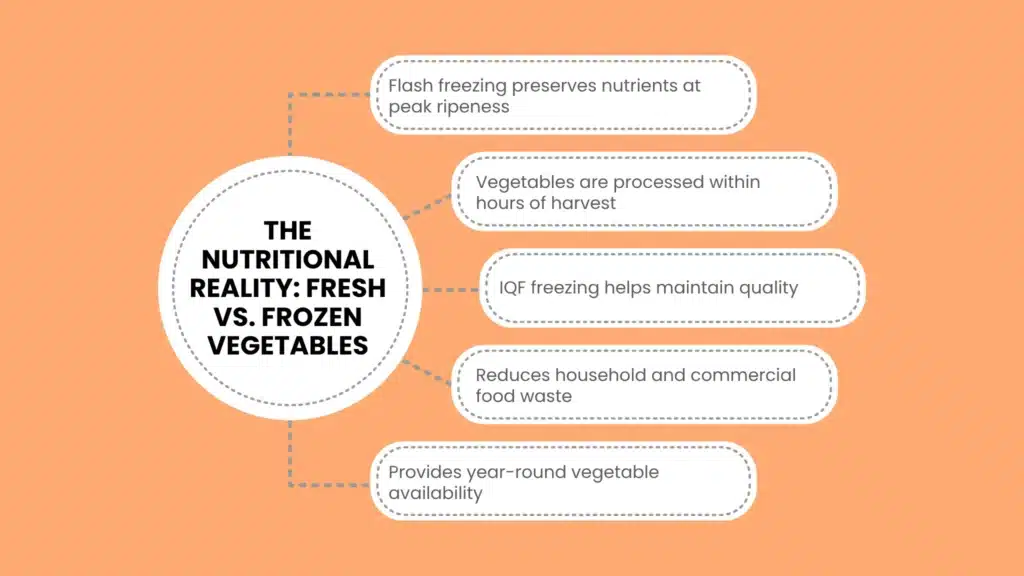
A widespread misconception exists that fresh produce is naturally superior to frozen alternatives. However, the industrial process of flash freezing alters this dynamic significantly. Fresh vegetables are often harvested before reaching full maturity to survive long transport times. Throughout transportation and retail display, exposure to light, oxygen, and ambient heat degrades volatile vitamins. Conversely, frozen vegetables are picked at peak ripeness and processed within hours. Commercial processors blanch the produce briefly in hot water or steam to neutralize enzymes that cause decay, then submit it to Individual Quick Freezing (IQF).
Key Frozen Vegetables Benefits
Higher Nutrient Retention: Flash freezing preserves essential antioxidants, folate, and water-soluble B vitamins that otherwise degrade in fresh produce over several days.
Reduced Food Waste: Pre-portioned frozen items allow home cooks and commercial kitchens to use exact amounts without discarding spoiled ends.
Year-Round Availability: Consumers get access to out-of-season produce with consistent quality and price stability.
Zero Additives Required: The freezing process itself acts as a natural preservative, eliminating the need for added sodium or chemical agents.
Science-Backed Frozen Vegetable Storage Practices
To preserve texture, color, and nutritional density, proper frozen vegetable storage protocols must be maintained. Moisture control and temperature stability are critical to preventing quality loss.
Preventing Freezer Burn and Moisture Damage
Freezer burn occurs when moisture inside the vegetable migrates to the outer surface, sublimating directly from ice into water vapor. This leaves behind dry, discolored pockets on the produce.
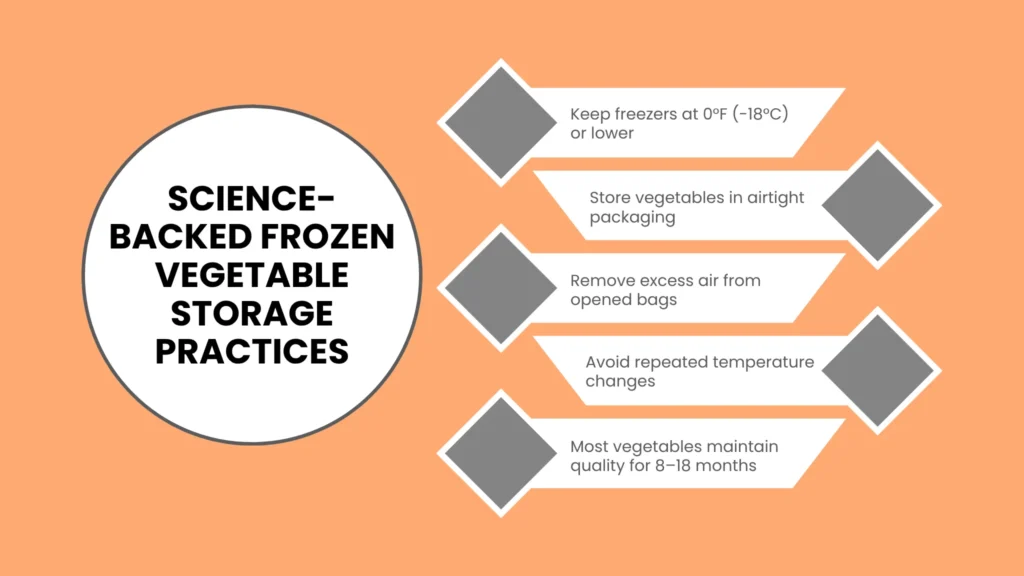
Maintain Sub-Zero Temperatures: Keep home and commercial freezers set consistently at 0°F (-18°C) or lower.
Seal Airtight: Transfer partially used bags into vacuum-sealed pouches or heavy-duty freezer bags with all excess air pressed out.
Avoid Thermal Shock: Do not leave frozen bags on ambient countertops while prepping other ingredients. Return unused portions to the freezer immediately.
Recommended Shelf-Life Expectations
While frozen items remain safe indefinitely if kept continuously at sub-zero temperatures, optimal flavor and texture profiles follow distinct storage windows. Peas and sweet corn retain moisture best due to thick outer skins and last between 12 and 18 months. Leafy greens like spinach and kale are highly sensitive to air exposure, requiring airtight sealing to maintain quality across an 8 to 12 month window. Cruciferous vegetables such as broccoli and cauliflower hold up well for 10 to 12 months, though users should watch for ice crystal accumulation in the florets. Root vegetables like carrots and squash maintain a firm cellular structure over long periods, lasting between 12 and 14 months at continuous sub-zero temperatures.
Professional Culinary Techniques: Cooking Without Sogginess
The primary complaint regarding frozen produce is soggy, watery textures after heating. When water freezes, it expands into ice crystals that rupture plant cell walls. Applying the correct cooking method mitigates moisture release and preserves a crisp bite.
Essential Cooking Rules
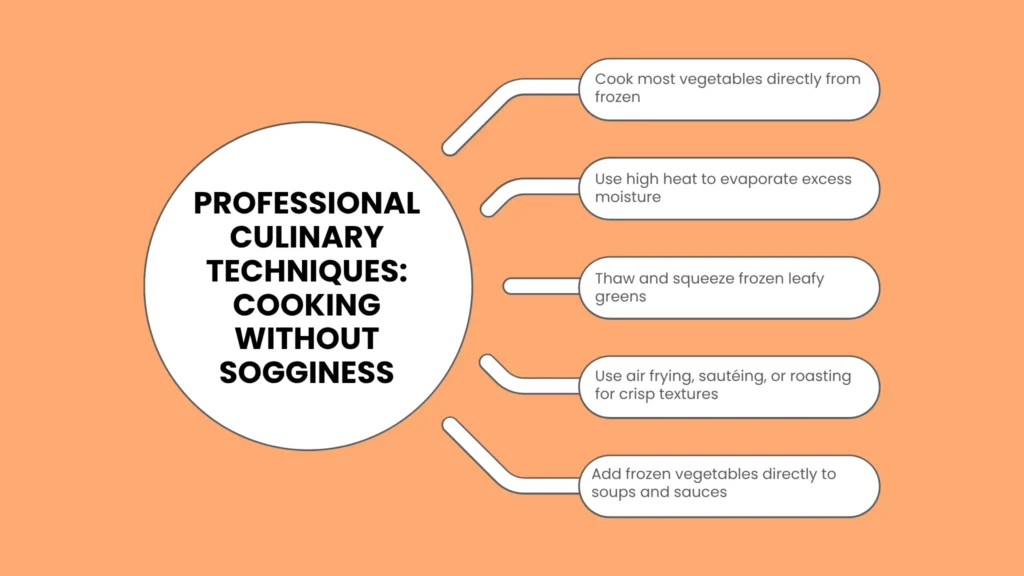
Skip Thawing for Most Varieties: Cook frozen corn, peas, broccoli, and green beans directly from frozen. Thawing before cooking releases trapped water, causing the vegetables to turn mushy during heating.
Use High Heat: High temperatures evaporate surface moisture rapidly, allowing the vegetables to brown rather than boil in their own juices.
Thaw and Squeeze Leafy Greens: Unlike firm vegetables, frozen spinach and kale absorb excess moisture. Always thaw leafy greens in cold water and press them inside a clean kitchen towel to squeeze out excess liquid before adding them to fillings or sauces.
Direct Dry Heat Methods: High-heat sautéing in a cast-iron skillet or wok, dry air frying to promote rapid surface evaporation, high-temperature sheet pan roasting, and microwave steaming for quick nutrient locking yield the crispest textures.
Moist Heat Applications: Soups, stew stocks, curries, pasta sauces, and braised vegetable dishes integrate frozen vegetables seamlessly without worrying about loss of crispness.
Commercial Opportunities: How to Start a Frozen Food Business
Driven by busy lifestyles and increased demand for plant-based nutrition, the global market for processed and frozen vegetables continues to expand rapidly. Launching a frozen vegetable business offers strong revenue opportunities across retail, food service, and direct-to-consumer distribution channels.
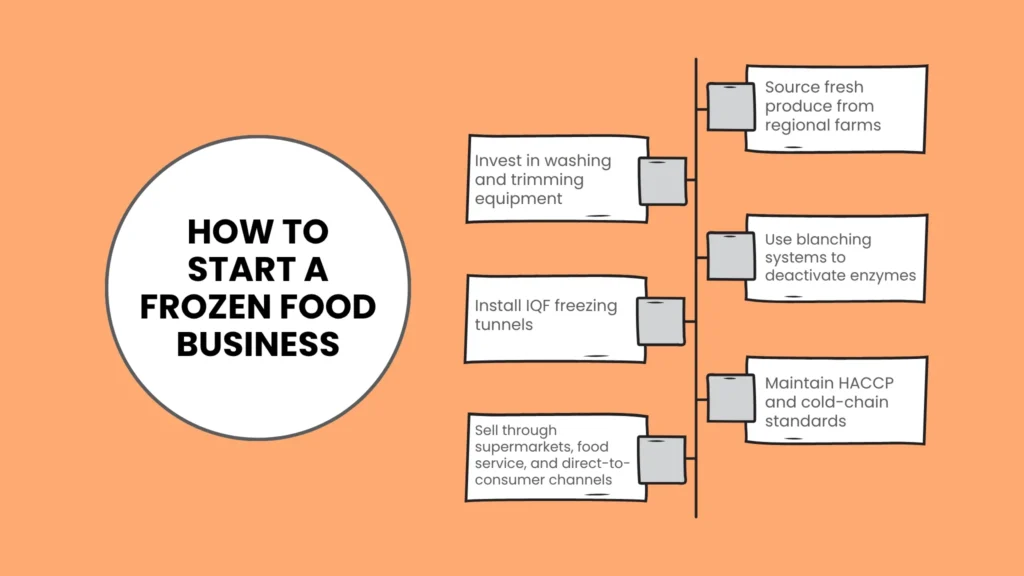
Step 1: Secure Supply Chains and Sourcing
Building a sustainable product line depends on consistent raw materials. Partner directly with regional farms or agricultural cooperatives to secure fresh produce at peak harvest windows, keeping raw acquisition costs low.
Step 2: Invest in Industrial Processing Infrastructure
Converting fresh produce into marketable frozen goods requires specialized equipment:
Washing and Trimming Stations: Automated lines that clean soil, remove stems, and slice vegetables into uniform pieces.
Blanching Units: Steam or hot-water systems that briefly heat vegetables to deactivate enzymes while setting bright natural colors.
IQF Freezing Tunnels: Individual Quick Freezing technology moves produce along a fluid bed exposed to sub-zero air streams (-40°C), freezing individual pieces instantly without clumping.
Step 3: Ensure Regulatory Compliance and Cold Chain Logistics
Food safety regulations for processed frozen goods are strict. Operators must implement Hazard Analysis Critical Control Point (HACCP) programs, maintain continuous temperature monitoring, and utilize certified cold-chain logistics to prevent product degradation during transit.
Step 4: Expand Distribution Channels
Growing a sustainable market presence requires diversifying your sales routes. Target local and regional supermarket chains, secure institutional food service accounts with schools or hospital networks, and explore direct-to-consumer meal kit or subscription box partnerships.
Deep Dive into Frozen Vegetable Processing Technology
Understanding the industrial physics behind flash freezing helps both culinary professionals and business operators appreciate why the process works so effectively. In conventional home freezers, the freezing process occurs slowly over several hours. This extended timeline allows water molecules inside the plant cells to form large, jagged ice crystals. These large crystals act like microscopic blades, puncturing the delicate cellular walls of the produce. Consequently, when the vegetable is thawed or cooked, the damaged cell walls collapse and spill their structural water, resulting in a limp, mushy texture.
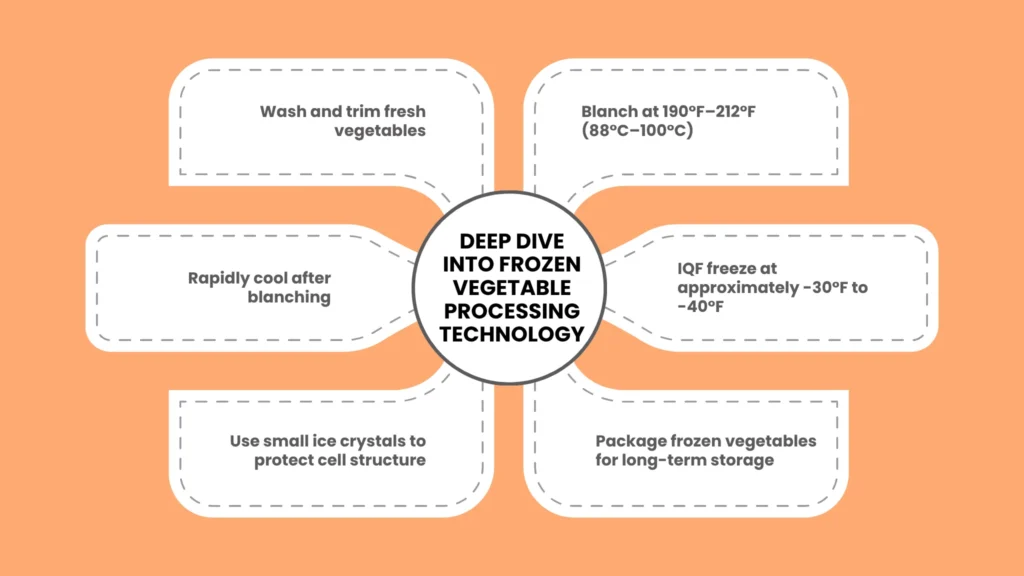
Commercial Individual Quick Freezing (IQF) technology completely bypasses this issue by freezing produce within seconds or minutes. IQF systems expose small, separated pieces of vegetables to intense cold air streams, typically moving at high velocities at temperatures between -30°F and -40°F (-34°C to -40°C). Because the transition from liquid water to solid ice happens almost instantaneously, the resulting ice crystals remain microscopic in size. These tiny crystals form inside the cell walls without puncturing the structural membrane. As a result, when the vegetable is cooked using high-heat methods, the cellular integrity remains intact, preserving the natural crunch, vibrant color, and firm bite of the fresh vegetable.
Furthermore, blanching plays a non-negotiable role in industrial preparation. Vegetables contain active enzymes, such as catalase, peroxidase, and polyphenol oxidase, which break down plant tissues and cause off-flavors, brown discoloration, and nutrient decay even at low temperatures. Brief steam or hot water blanching at temperatures ranging from 190°F to 212°F (88°C to 100°C) deactivates these enzymes instantly. Once blanched, the vegetables are plunged into ice-cold water to halt the cooking process before entering the IQF freezing tunnel. This precise combination of blanching and instant freezing is what allows commercial frozen vegetables to maintain their fresh appearance and taste for well over a year.
Economic and Financial Framework of a Frozen Food Startup
Starting a commercial frozen vegetable enterprise requires a clear understanding of capital expenditures, operating costs, and margin structures. While the barrier to entry involves significant equipment investments, the long-term profitability remains robust due to strong consumer demand and high shelf-life stability.
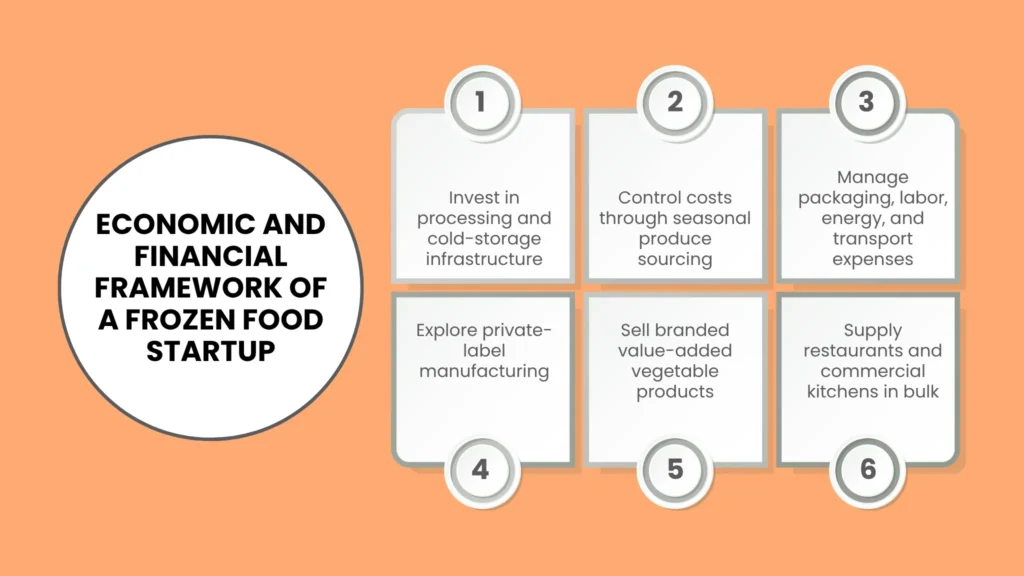
Initial capital costs center primarily on processing machinery and cold storage infrastructure. A entry-level commercial processing facility requires automated washing units, mechanical cutters, a steam blanching belt, an IQF freezing tunnel, and automated bagging and sealing systems. In addition to processing equipment, establishing a climate-controlled warehouse or leasing dedicated cold-storage space represents a primary setup expense.
Variable costs include raw produce procurement, packaging materials, electrical utility consumption, labor, and refrigerated transport logistics. Procuring raw vegetables directly from farmers during peak seasonal gluts allows processors to lock in low commodity prices. For example, buying sweet corn or green peas at the height of their local harvest season drastically lowers raw ingredient costs compared to buying year-round.
Revenue models generally fall into three distinct tiers:
Private Label Manufacturing: Producing packaged frozen vegetables for established supermarket brands or grocery chains. This model offers lower profit margins per unit but delivers high-volume consistency and guaranteed off-take contracts.
Branded Value-Added Products: Selling proprietary branded lines that feature unique selling propositions, such as certified organic produce, pre-seasoned stir-fry blends, or steam-in-bag vegetable mixes. Branded goods command higher retail price points and significantly better profit margins.
B2B Commercial Supply: Supplying bulk frozen vegetables in large multi-pound bags to commercial kitchens, restaurants, meal preparation companies, and institutional food service providers. This channel eliminates expensive retail packaging costs while maintaining steady, high-volume recurring orders.
Conclusion
Food frozen vegetables deliver exceptional nutritional value, long-term shelf stability, and unmatched kitchen convenience. By preserving fresh produce at peak maturity through flash freezing, consumers get nutrient-dense ingredients year-round while minimizing household waste. For food entrepreneurs, the expanding market for convenient, healthy foods makes launching a specialized frozen vegetable business a strong venture. Maintaining strict cold-chain practices and focusing on high-demand product lines establishes a solid foundation for long-term growth.
For more operational guides, business startup strategies, and market frameworks, visit reliablestartup.com.
Frequently Asked Questions
Are frozen vegetables lower in fiber than fresh ones?
No, the freezing process has no impact on dietary fiber content. The structural carbohydrates that make up plant fiber remain completely intact throughout blanching and flash freezing.
Why do some frozen vegetables get covered in thick white ice?
Thick ice accumulation inside a bag indicates temperature fluctuations during storage or transit. When temperatures rise slightly, moisture inside the vegetables escapes. When temperatures drop again, that moisture freezes into large surface ice crystals, which can cause freezer burn.
Can you air-fry frozen vegetables successfully?
Yes, air frying is one of the best methods for preparing frozen vegetables. Tossing frozen broccoli, cauliflower, or Brussels sprouts with a small amount of oil and cooking them at 400°F (200°C) promotes rapid water evaporation and yields crispy edges.
What is the most profitable niche in a frozen vegetable business?
High-margin niches include certified organic vegetable blends, specialty pre-seasoned stir-fry mixes, value-added riced vegetables such as riced cauliflower, and pre-portioned smoothie additions.
Do frozen vegetables lose nutrients over time in the freezer?
While nutrient degradation is dramatically slowed down by sub-zero temperatures, extremely long storage periods beyond 12 to 18 months can lead to slow oxidation and minor losses of sensitive vitamins like Vitamin C. Maintaining a constant 0°F (-18°C) environment minimizes this loss.
Is it safe to refreeze frozen vegetables that have thawed?
It is safe to refreeze vegetables if they have thawed inside a refrigerator and remained cold at or below 40°F (4°C). However, refreezing will cause a noticeable loss in moisture and texture quality because the secondary slow-freezing process damages the cell walls, leading to sogginess upon cooking.