How to Get a Dumpster Rental Business License and Permits
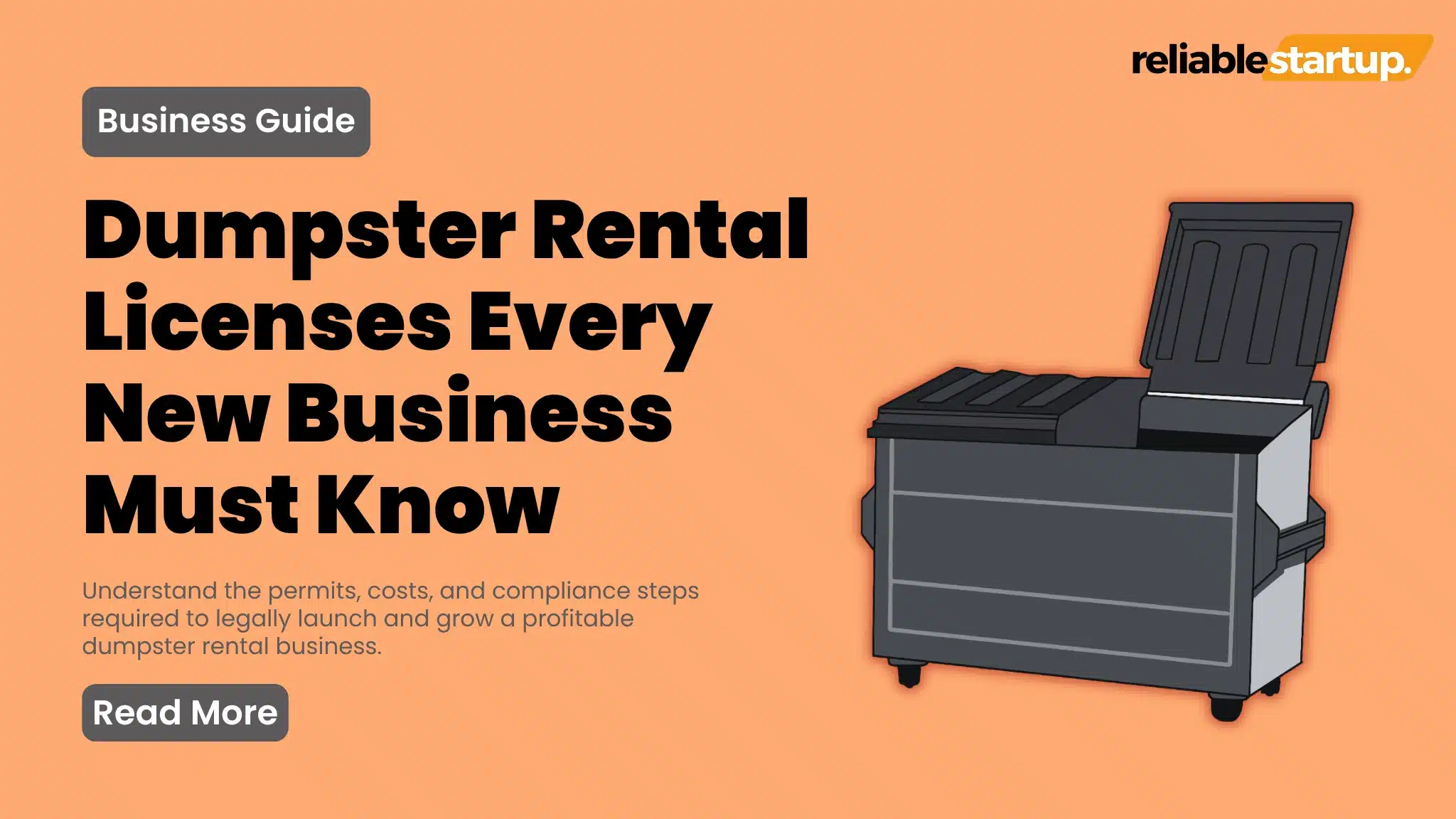
Starting a dumpster rental business is an incredible way to build a profitable, asset-backed company. The market demand for waste management never disappears because construction crews always need containers, homeowners regularly look for ways to clean out their garages, and people remodeling their kitchens require heavy debris removal. However, before you can drop your very first roll-off container on a customer’s driveway, you have to get your paperwork sorted out completely. Getting a dumpster rental business license stands as the single most important step to launching your company legally and avoiding massive municipal fines.
Navigating local government rules can feel overwhelming at first, but the process does not have to be stressful. In this comprehensive guide, we will break down the exact steps you need to take this year. Additionally, we will look closely at the dumpster rental business license cost, and we will answer the big question on every entrepreneur’s mind: is dumpster rental business license profitable?
Detailed Dumpster Rental Business License Requirements
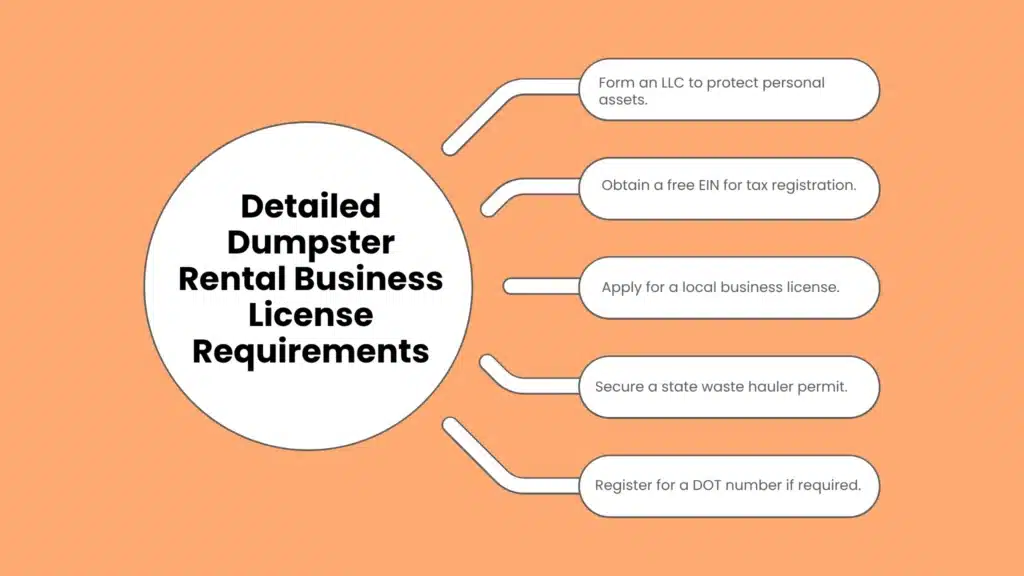
You cannot just buy a heavy truck and start hauling garbage immediately. Because your fleet will deal directly with regional waste disposal, local and state governments want to make sure you handle everything safely. There is no single permit that covers your entire operation. Instead, you have to satisfy a few different levels of government to meet all the dumpster rental business license requirements. If you’re still deciding on your business structure and setup basics, our full dumpster rental business guide covers everything from equipment to first customers.
1. Setting Up Your Legal Business Entity
Before you apply for any industry-specific licenses, you need to form a legal business structure. Most operators choose to form a Limited Liability Company (LLC) for this venture. An LLC protects your personal assets, such as your home or personal savings, if your business ever faces a lawsuit. After your state approves your LLC paperwork, you will grab a free Employer Identification Number (EIN) from the IRS website. This identifier works like a Social Security number for your commercial enterprise.
With your legal entity fully established, you will visit your local city or county clerk’s office to get a general local business license. This basic registration allows you to legally operate a commercial storefront or service business within city limits.
2. State Waste Hauler Permits
The most critical permit for your daily operation is the waste hauler permit. Typically, your state’s Department of Environmental Protection or your county’s solid waste division issues this document. This specific approval grants you legal permission to transport solid waste over public roads.
To secure this permit, you will usually need to show:
Proof of ownership or active lease agreements for your trucks and dumpsters
An official, signed agreement with a licensed local landfill or transfer station
A clear list of the specific types of waste you plan to haul, such as construction debris or yard waste
3. Department of Transportation (DOT) Numbers
If you are driving a medium-duty or heavy-duty truck, you must pay close attention to your vehicle weight ratings. For example, if your truck and loaded dumpster weigh more than 10,001 pounds, the law requires you to get a USDOT number. Furthermore, if your business crosses state lines, a federal DOT number becomes completely mandatory. Even if you plan to stay entirely within one state, many local jurisdictions still require an intrastate DOT registration. Managing multiple trucks and permits gets easier with the right tools, see our picks for dumpster rental software built for exactly this kind of compliance tracking.
Essential Permits Needed for Dumpster Rental Business Operations
Beyond your general business licenses, your day-to-day operations will require situational permits needed for dumpster rental business success.
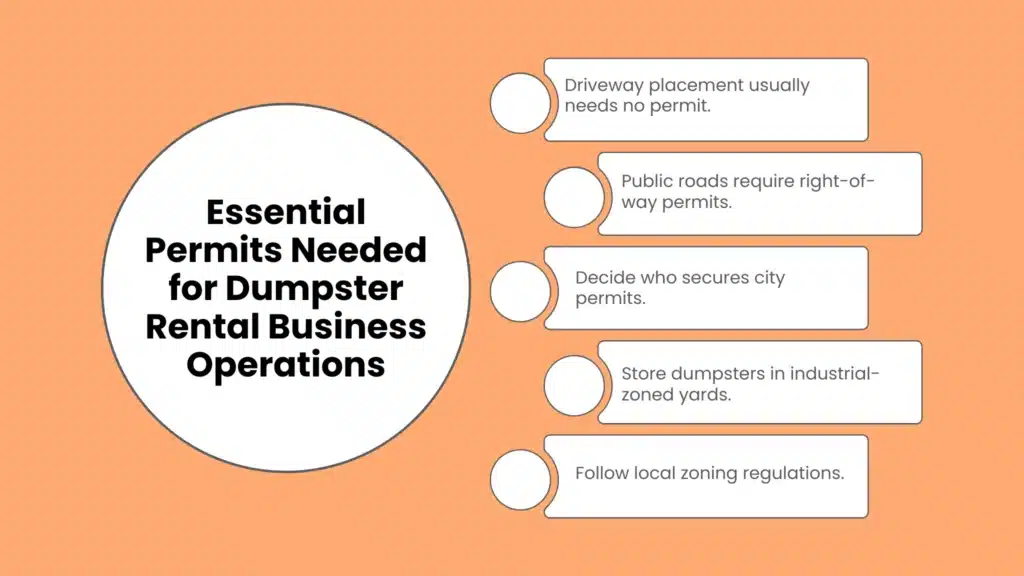
Street Placement and Right-of-Way Permits
When a customer rents a dumpster, they usually want it placed on their driveway or private property. If the dumpster sits entirely on private land, you do not need to worry about any special drop permits.
However, things change quickly if a customer lives on a busy street with no driveway and needs the dumpster placed on a public road, sidewalk, or city easement. In this scenario, a public right-of-way permit becomes mandatory.
Therefore, you must decide early on if your business will handle pulling these permits for customers. Alternatively, your rental agreement can state that the customer must secure the city permit before your truck arrives for delivery.
Zoning and Storage Yard Permits
You absolutely need a safe place to park your trucks and stack your empty steel containers when they are not out on jobs. Naturally, you cannot just park 20 massive dumpsters in a residential neighborhood. Consequently, you will need to lease or buy a commercial yard that local officials zone specifically for industrial or waste-management use.
Break Down of Dumpster Rental Business License Cost
How much money do you need to set aside for legal compliance? The truth is, fees vary wildly based on your specific city and state. However, we can look at industry averages to help you plan your startup budget accurately.
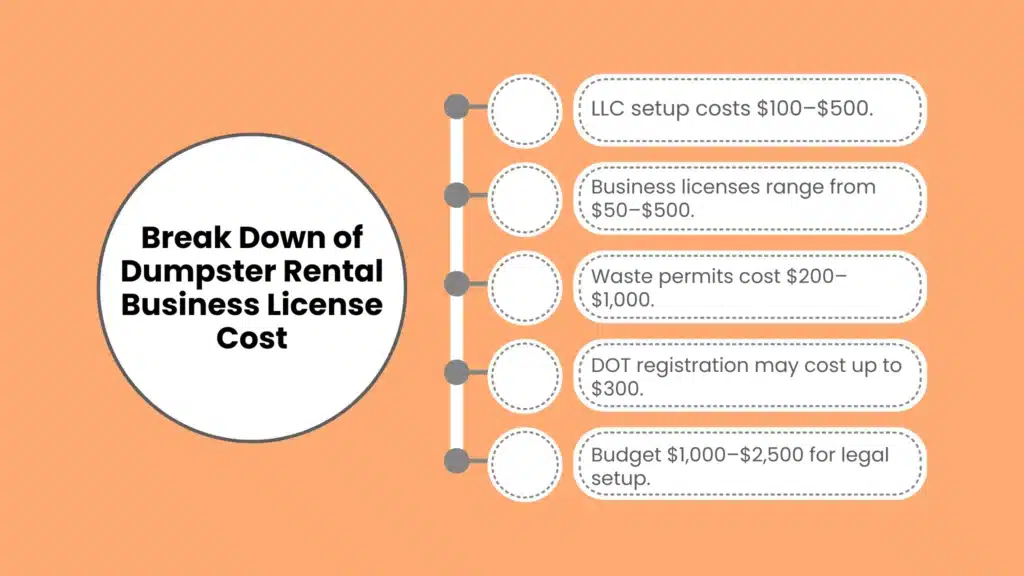
Estimated Licensing and Permit Expenses
| Expense Type | Estimated Cost Range (Annual) | Who You Pay |
| LLC Formation | $100 to $500 | Secretary of State |
| Local General Business License | $50 to $500 | City or County Clerk |
| State Waste Hauler Permit | $200 to $1,000 | Environmental Protection Agency |
| USDOT Registration | $0 to $300 | Department of Transportation |
| Public Street Permits (Per Drop) | $10 to $100 | Municipal Public Works |
| Commercial Auto & Liability Insurance | $2,500 to $6,000 | Small Business Insurance Broker |
Based on available data from real fleet owners, a new independent operator should budget an estimated $1,000 to $2,500 for initial legal setup and licensing. Please keep in mind that this estimate does not include your commercial truck insurance, vehicle registration, or equipment asset purchases. Speaking of insurance, our detailed insurance policies for rental businesses guide breaks down exactly what coverage you’ll need beyond licensing.
Is the Dumpster Rental Business Profitable?
Is dealing with all this red tape actually worth your time and money? Let’s take a look at the earning potential of a waste hauling business to see if the effort makes sense.
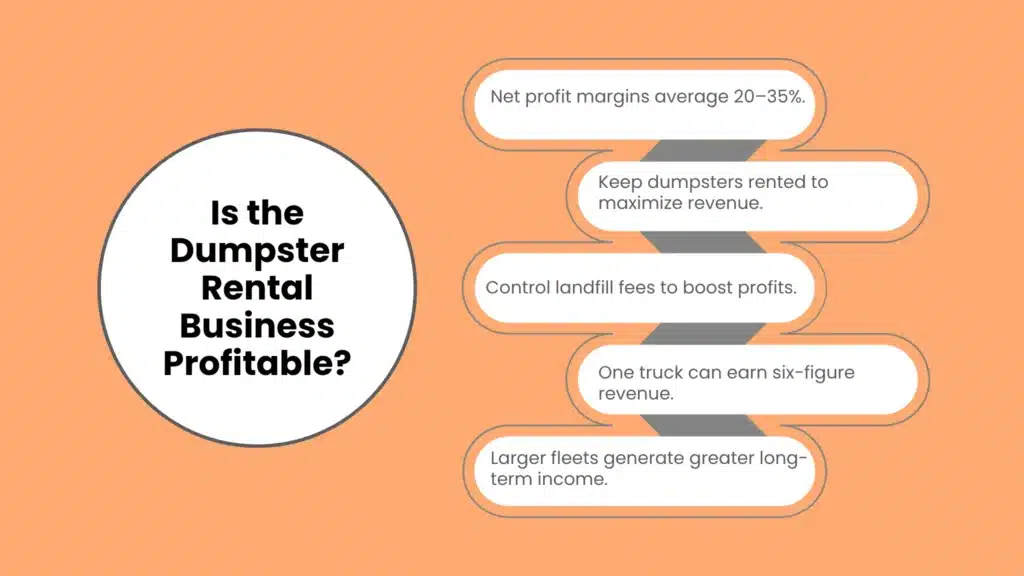
Your Expected Dumpster Rental Business License Profit Margin
The average dumpster rental business license profit margin ranges from 20% to 35% for net owner profits. At the individual order level, gross margins often reach as high as 40% to 55%.
Your overall profitability depends heavily on two distinct factors:
Keeping Dumpsters Moving: An empty dumpster sitting in your yard makes zero dollars. Conversely, a dumpster sitting on a contractor’s job site or a homeowner’s driveway generates daily or weekly rental revenue.
Landfill Tipping Fees: This represents your highest ongoing operational cost. Landfills charge you a fee per ton to dump your waste. Therefore, the better you manage your load weights, the higher your margins will be.
Real-World Revenue Potential
A lean, owner-operated startup with one truck and 15 dumpsters can realistically bring in between $120,000 and $250,000 in gross revenue in its first full year of operation.
As you build relationships with roofing companies, general contractors, and local clean-out services, you can scale your fleet easily. A mature dumpster business with 3 trucks and 60 containers can cross $500,000 to $900,000 in annual revenue. Because your assets, meaning the trucks and steel dumpsters, hold their value remarkably well, you are building an incredibly stable, valuable business.
Step-by-Step Compliance Timeline
To get up and running without pulling your hair out, follow this simple chronological order to secure your licenses.
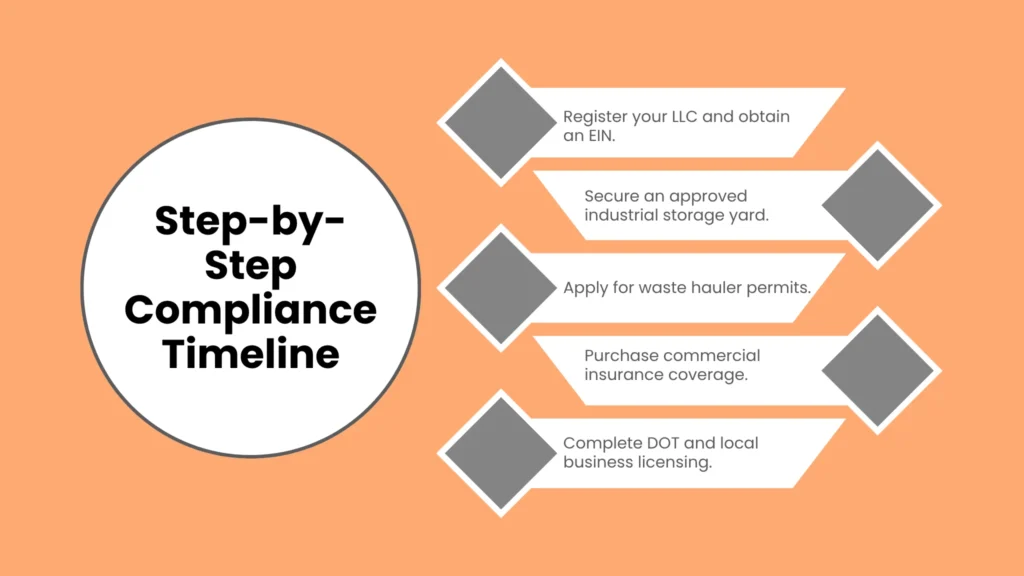
Step 1: File Your LLC (Days 1 to 10) – First, register your name and business entity online with your state. Next, grab your free EIN from the IRS website.
Step 2: Secure Your Industrial Yard (Days 11 to 25) – Find your truck and container parking lot. Then, confirm with the local zoning office that waste hauling storage is allowed on that exact parcel.
Step 3: Apply for Waste Hauler Permits (Days 26 to 45) – Submit your truck details, VINs, and targeted landfill locations directly to your state’s environmental agency.
Step 4: Get Insured (Days 46 to 55) – Purchase comprehensive general liability and commercial auto insurance. Make sure your policy covers debris hauling and environmental hazards.
Step 5: Finalize DOT and Local Licenses (Days 56 to 65) – Apply for your DOT numbers online. Finally, pay your local city business tax fee to receive your official business tax receipt.
Common Licensing Pitfalls to Avoid
The biggest mistake new owners make is jumping the gun too early. Never pick up trash for a paying customer until your state waste hauler permit is fully approved. If local code enforcement officers catch you hauling commercial waste without a permit, they can fine you thousands of dollars and impound your truck on the spot.
Another common mistake involves ignoring local weight limits. DOT officers frequently pull over heavy trucks to check their weights. Because of this risk, make sure your customers know exactly how much weight they can safely put into the container. Additionally, include strict overage fees in your contracts to cover any extra landfill costs.
Final Thoughts
Starting a roll-off rental business offers a fantastic, high-earning path to entrepreneurship. While dealing with local permits and state environmental rules takes some patience, setting your business up the right way protects your wallet, your reputation, and your brand.
If you are looking for practical start-up checklists, operational blueprints, and real business guides to help launch your next venture successfully, visit us at reliablestartup.
Frequently Asked Questions
What happens if I run a dumpster rental business without a license?
If you operate without the proper permits, you risk facing massive city fines, mandatory court appearances, and truck impoundment. Furthermore, reputable local landfills check your permits regularly and will turn your trucks away if your business lacks proper registration.
Do I need a CDL to drive a roll-off dumpster truck?
Not necessarily. If your truck’s Gross Vehicle Weight Rating (GVWR) stays under 26,000 pounds, you do not need a Commercial Driver’s License (CDL). Many beginners start out using medium-duty trucks with hook-lift mechanisms, which allows them to easily drive and hire employees without needing a special CDL.
How long does it take to get all my dumpster business permits?
On average, expect the process to take between 30 and 75 days. The longest wait time almost always involves your state’s environmental agency reviewing your waste hauler application, so apply as early as possible.
Can I throw away any type of debris in a standard dumpster?
No, because your standard waste hauler permit does not cover hazardous materials. Items like asbestos, car batteries, wet paint, chemicals, and industrial oils must be handled exclusively by specialized hazardous materials transport companies.