RV Rental Prices in 2026: Average Costs, Fees, and Ways to Save
Planning an outdoor getaway requires a clear understanding of your total financial commitment. Across the country, baseline estimates show that overall rv rental prices average around $198 per night. However, the actual sticker price on your reservation invoice represents only one part of the total expenditure. Final trip budgets shift dramatically based on vehicle class, seasonal demand, unexpected mandatory line items, and campsite setup fees.
Understanding how to calculate your true out-of-pocket costs ensures you can plan an enjoyable road trip without financial surprises. This detailed breakdown covers standard nightly pricing, hidden expenses, variable platform charges, and practical strategies to secure cheap RV rentals.
Baseline RV Rental Rates by Vehicle Class
The primary factor driving your total bill is the style of rig you select. Vehicles split into two distinct categories: drivable motorhomes and towable trailers. Drivable units integrate living quarters directly onto a truck or custom chassis, commanding higher baseline prices. Towable units require a capable towing vehicle but provide significantly lower daily costs.
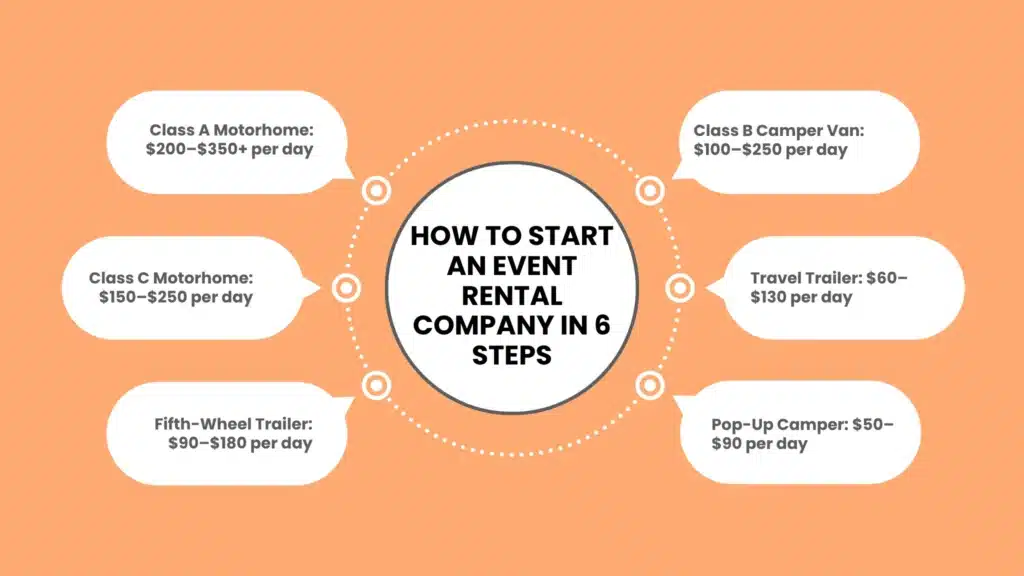
The following table breaks down average baseline figures across all major recreational vehicle categories.
| RV Category | Vehicle Style & Features | Average RV Rental Cost per Day | Peak Season Nightly Rate |
| Class A Motorhome | Bus-sized luxury rig with full amenities | $200 – $350+ | $340 – $450 |
| Class B Camper Van | Compact conversion van, easy to drive | $100 – $250 | $220 – $350 |
| Class C Motorhome | Mid-size rig with over-cab sleeping bed | $150 – $250 | $225 – $300 |
| Travel Trailer | Towable camper requiring a hitch setup | $60 – $130 | $120 – $180 |
| Fifth-Wheel Trailer | Heavy towable requiring a pickup truck bed | $90 – $180 | $180 – $300 |
| Pop-Up Camper | Lightweight expandable tent trailer | $50 – $90 | $90 – $125 |
Class A Motorhomes
Class A rigs are the largest drivable options on the market. Measuring anywhere from 26 to 45 feet in length, these vehicles resemble commercial buses and feature full residential kitchens, master bedrooms, multiple slide-outs, and spacious bathrooms. The high average RV rental cost for a Class A rig reflects its premium comfort, but travelers must also budget for significant fuel consumption.
Class B Camper Vans
Often referred to as campervans or conversion vans, Class B units are built within standard van frames. They range from 18 to 24 feet and offer easy maneuvering through city streets and tight national park roads. Despite their smaller footprint, high demand for van-life travel keeps RV rental rates for Class B models relatively high, making them ideal for couples or solo travelers who prioritize mobility over interior elbow room.
Class C Motorhomes
Class C units serve as the classic choice for family vacations. Ranging between 20 and 33 feet, they are built on a truck chassis with a distinctive cab-over sleeping alcove. They hit the ideal sweet spot for many travelers by providing comfortable accommodations for up to eight people without reaching the massive size or extreme rental cost of a Class A rig.
Towable Travel Trailers and Pop-Up Campers
Travel trailers and pop-ups represent the most affordable entry point for road trips. Because these units do not contain engines or complex mechanical drivetrains, their base RV rental cost per day remains low. However, renters must ensure their personal SUV or truck possesses adequate towing capacity, payload limits, and proper trailer brake controllers.
Hidden Fees and Added Invoice Expenses
Focusing strictly on daily rental quotes can lead to budget miscalculations. Additional line items, mandatory fees, and operational costs typically add 25% to 50% to your initial checkout total.
Mileage Overages
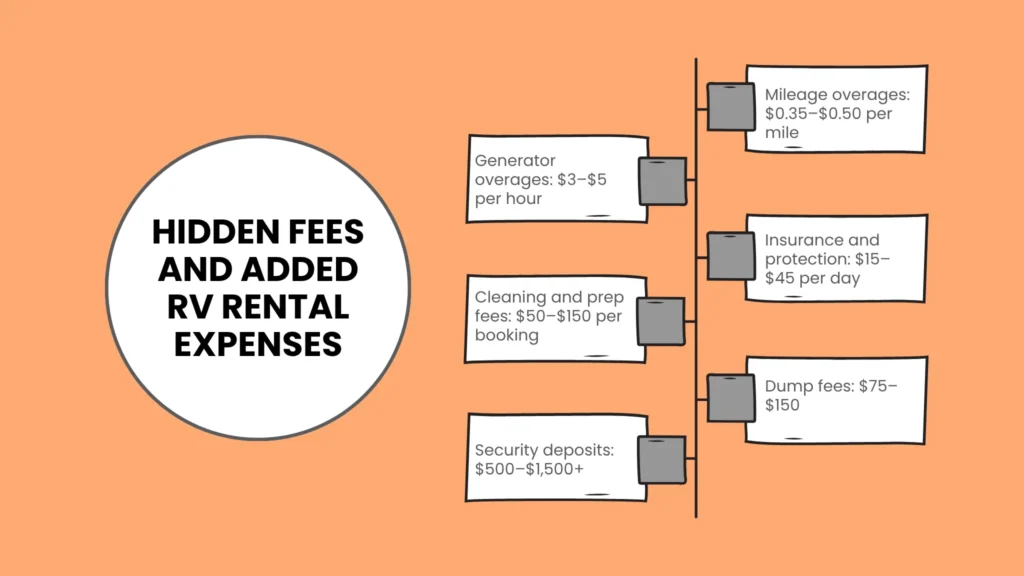
Unlike traditional car rental agencies that offer unlimited driving, motorhome rentals usually cap your daily distance. Peer-to-peer hosts and commercial fleets frequently include 100 to 150 free miles per day. Beyond that limit, overage fees range from $0.35 to $0.50 per mile. On a cross-country route covering 2,000 miles over seven days, extra mileage charges alone can add hundreds of dollars to your final bill.
Generator Operating Hours
If you plan to dry-camp or boondock without electrical hookups at a campsite, you will rely on the vehicle’s onboard generator to power air conditioning, microwave ovens, and wall outlets. Rentals generally grant 3 to 4 free generator hours per day. Additional operating time is billed at $3.00 to $5.00 per hour.
Mandatory Insurance and Protection Packages
Insurance coverage is non-negotiable across commercial outlets and peer-to-peer platforms like Outdoorsy or RVshare. Basic state minimum liability coverage combined with interior damage protection adds between $15 and $45 per day to your total cost. Premium packages with lower deductibles command higher daily surcharges.
Cleaning, Prep, and Sanitation Fees
Owners and commercial rental depots routinely assess mandatory preparation or administrative fees. Ranging from $50 to $150 per booking, these charges cover vehicle safety inspections, exterior washing, and system checks prior to departure. Furthermore, if you return the rig without dumping the black and gray water holding tanks, platforms will deduct an extra $75 to $150 dump fee from your security deposit.
Kitchen Kits and Linen Packages
To save packing space, many travelers opt for optional convenience packages. Kitchen supply kits containing pots, pans, plates, and utensils average $50 to $100 per trip. Linen packages providing pillows, sheets, and bath towels generally run $20 to $40 per person.
Mandatory Security Deposits
When picking up your vehicle, rental providers place a temporary authorization hold on your credit card. Security deposits range from $500 for small trailers to $1,500 or more for luxury motorhomes. While this money is fully refunded upon returning the vehicle undamaged, you must factor this temporary credit limit hold into your overall travel budget.
Secondary Operational Expenses to Plan For
Beyond the rental contract itself, several essential real-world operating expenses directly impact your final travel spend.
Fuel Consumption
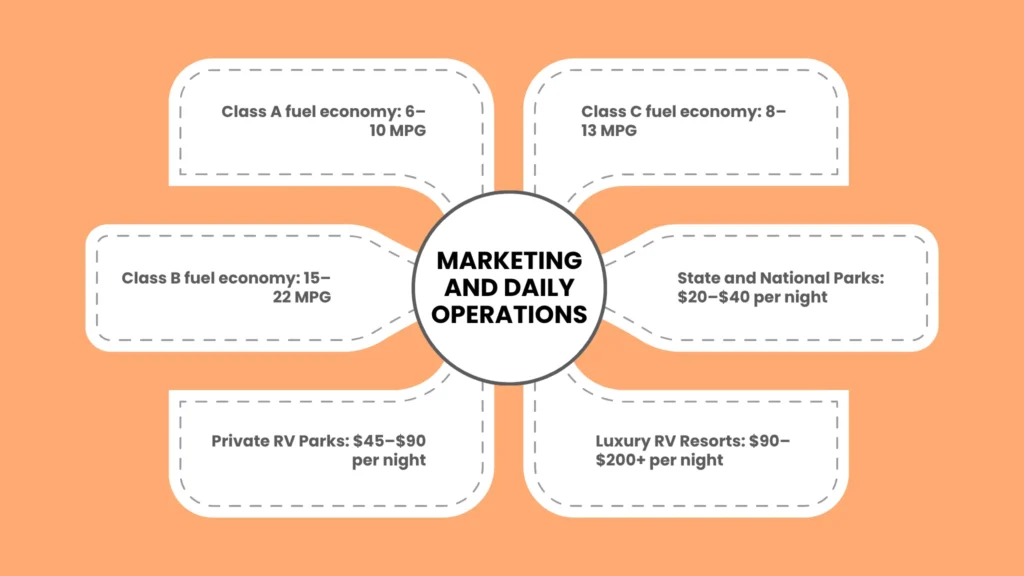
Fuel expenses represent one of the largest secondary costs of any road trip. Heavy Class A motorhomes typically average only 6 to 10 miles per gallon. Class C rigs achieve roughly 8 to 13 miles per gallon, while smaller Class B campervans reach 15 to 22 miles per gallon. Towing a heavy travel trailer also reduces your tow vehicle’s standard fuel economy by 30% to 50%.
Campground and Hookup Rates
Nightly parking prices vary depending on the destination and level of service required:
State and National Parks: $20 to $40 per night. These locations offer scenic settings but often feature primitive sites with limited or no electrical hookups.
Private RV Parks: $45 to $90 per night. These spots include full hookups (water, sewer, and 30/50-amp electricity) alongside amenities like Wi-Fi, swimming pools, and laundry facilities.
Luxury RV Resorts: $90 to $200+ per night. Designed for large rigs, these resorts feature premium concrete pads, clubhouse access, private hot tubs, and resort-style recreational facilities.
5 Practical Strategies to Secure Cheap RV Rentals
Keeping your travel costs manageable requires planning ahead and using smart booking practices. Here are five effective methods to lower your overall expenditure.
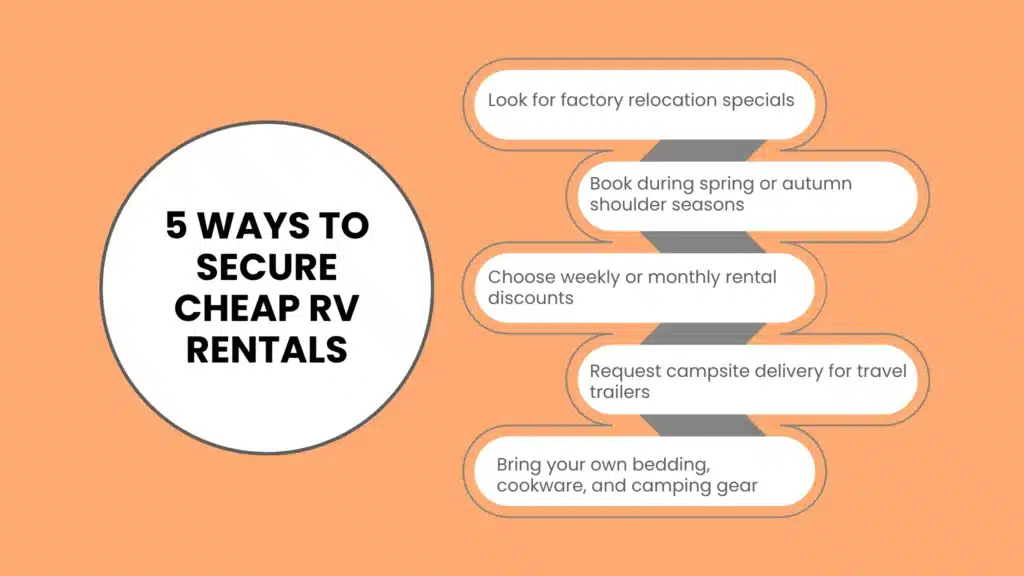
Leverage Factory Relocation Specials
Commercial rental companies frequently need to move brand-new vehicles from manufacturing plants to rental depots across the country. During spring and autumn, suppliers offer factory relocation deals for as low as $1 to $25 per day. These bookings often include generous mileage allowances, making them an incredible value for flexible travelers.Book During Shoulder Seasons
Peak demand occurs from Memorial Day through Labor Day, driving nightly prices to their highest levels. By scheduling trips during the shoulder seasons of spring or autumn, you can secure lower rv rental prices, reduced campground fees, and emptier national parks. Nightly rental rates drop by 20% to 35% during these off-peak months.Take Advantage of Weekly and Monthly Discounts
Longer bookings generally offer better daily rates. Peer-to-peer hosts and commercial suppliers regularly apply 10% to 15% discounts for stays of seven nights or longer. Monthly rentals often feature price drops of up to 30% to 40% compared to standard daily rates.Request Campsite Delivery
If you lack a high-capacity tow vehicle, consider selecting a travel trailer owner who offers campsite delivery. The owner hauls the rig to your chosen campground, sets up the leveling jacks, connects the utilities, and retrieves the trailer at checkout. This setup eliminates the need to rent an expensive towing vehicle while avoiding driving mileage charges.Supply Your Own Gear
Avoid opting for add-on convenience bundles at checkout. Packing your own bedding, bath towels, cookware, and outdoor camp chairs saves $100 to $200 in optional service fees.
Sample Total Trip Cost Comparison
To illustrate how these variables combine in practice, consider two common seven-night, 1,000-mile vacation scenarios.
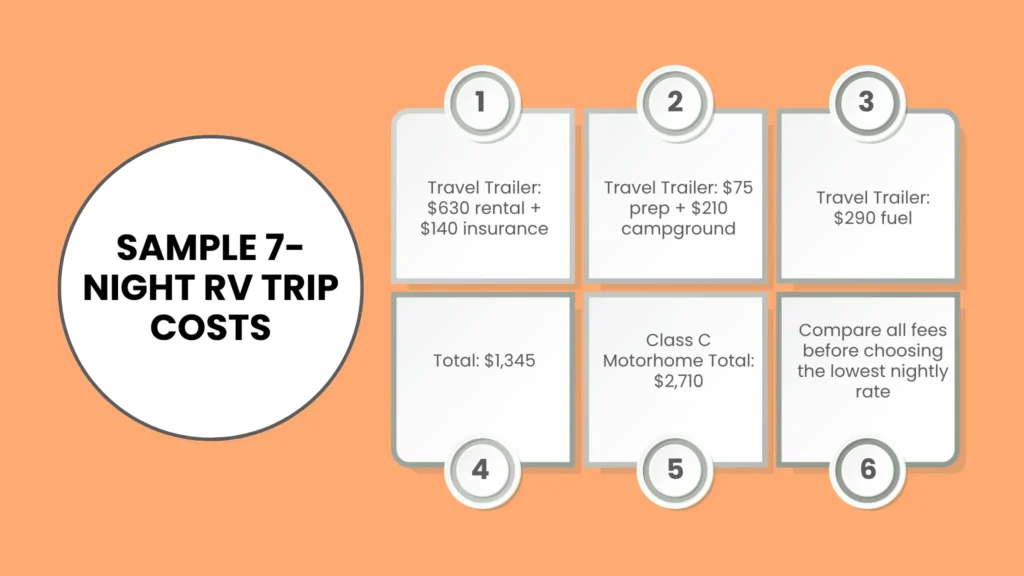
Budget Scenario: Towable Travel Trailer
Nightly Rental Rate: $90/night × 7 nights = $630
Mandatory Insurance: $20/day × 7 days = $140
Prep & Cleaning Fees: $75 (one-time)
Campground Costs (State Parks): $30/night × 7 nights = $210
Fuel (Towing with Personal SUV): 1,000 miles at 12 MPG = $290
Total Out-of-Pocket Expense: $1,345
Mid-Range Scenario: Class C Family Motorhome
Nightly Rental Rate: $200/night × 7 nights = $1,400
Mandatory Insurance: $35/day × 7 days = $245
Prep & Admin Fees: $125 (one-time)
Mileage Charges: 300 excess miles over allowance at $0.45/mile = $135
Campground Costs (Private RV Parks): $65/night × 7 nights = $455
Fuel (Class C Motorhome): 1,000 miles at 10 MPG = $350
Total Out-of-Pocket Expense: $2,710
Summary of Key Takeaways
Understanding rv rental prices comes down to looking beyond the initial nightly quote. While baseline figures show an average RV rental cost of $198 per night, your final invoice depends heavily on vehicle type, insurance coverage, mileage limits, and campsite fees. Opting for travel trailers, booking during shoulder seasons, and bringing your own gear remain the most effective ways to secure cheap RV rentals.
For more comprehensive travel planning resources, financial guides, and small business insights, visit reliablestartup.
Frequently Asked Questions
What is the average RV rental cost per day for a standard family vacation?
When factoring in baseline rates across popular mid-sized options like Class C motorhomes and travel trailers, average nightly base charges fall between $100 and $225 per day. Once insurance, fuel, campground fees, and service charges are included, total daily expenses average $200 to $380 per day.
Are travel trailers cheaper to rent than drivable motorhomes?
Yes, travel trailers cost roughly 50% less per night than drivable motorhomes. However, you must factor in the capabilities of your personal vehicle. If you need to rent a heavy-duty truck to tow the trailer, the combined daily cost often equals or exceeds the price of a self-contained Class C motorhome.
Do RV rental rates include fuel and utility hookups?
No, rental quotes cover only the right to use the vehicle. You are responsible for returning the motorhome with a full tank of fuel and gas. Campsite reservation fees and utility usage are paid directly to the campgrounds you visit.
How far in advance should I book an RV rental?
For peak summer travel, holiday weekends, or trips to popular national parks, it is best to book 3 to 6 months in advance. Early booking ensures access to the best vehicle choices, prevents last-minute rate hikes, and secures your preferred campground sites before they fill up.