Small Business Rental Space: How to Find Affordable Commercial Space in 2026
Securing the right physical location is one of the most critical decisions an entrepreneur can make. Whether you operate a retail boutique, a service-based agency, or an order fulfillment hub, finding a functional small business rental space directly influences your brand exposure, customer access, and operational margins.
Navigating the commercial real estate market requires strategic planning. In 2026, rising operational expenses and shifting landlord expectations mean that finding an affordable business space involves more than scanning local listing boards. This comprehensive guide walks you through calculating total lease costs, identifying low-cost location models, negotiating tenant-friendly leases, and finding the right commercial space for rent without straining your startup budget.
Understanding Commercial Space Types and Costs
Not all commercial properties share the same pricing structure. The total rent you pay depends heavily on how property owners classify their buildings and structure their lease contracts.
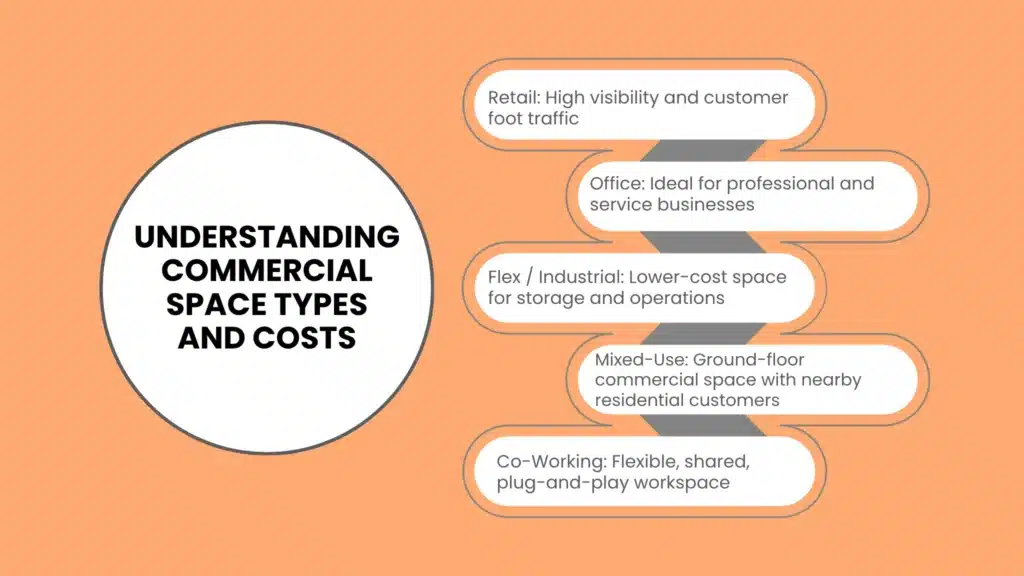
Common Commercial Space Categories
Retail Space for Rent: Properties located in shopping centers, strip malls, or downtown street fronts. These spaces offer high pedestrian visibility and customer foot traffic but command the highest square-footage pricing.
Office Space: Professional suites, medical offices, or converted administrative spaces designed for corporate desk operations, client consultations, and business meetings.
Flex and Industrial Space: Hybrid warehouse facilities featuring loading docks, high ceilings, and small office areas. These locations offer lower per-square-foot rates, making them ideal for assembly, light manufacturing, and e-commerce distribution.
Mixed-Use Developments: Modern urban properties that feature ground-floor retail or service spaces with residential units built above.
Decoding Commercial Lease Structures
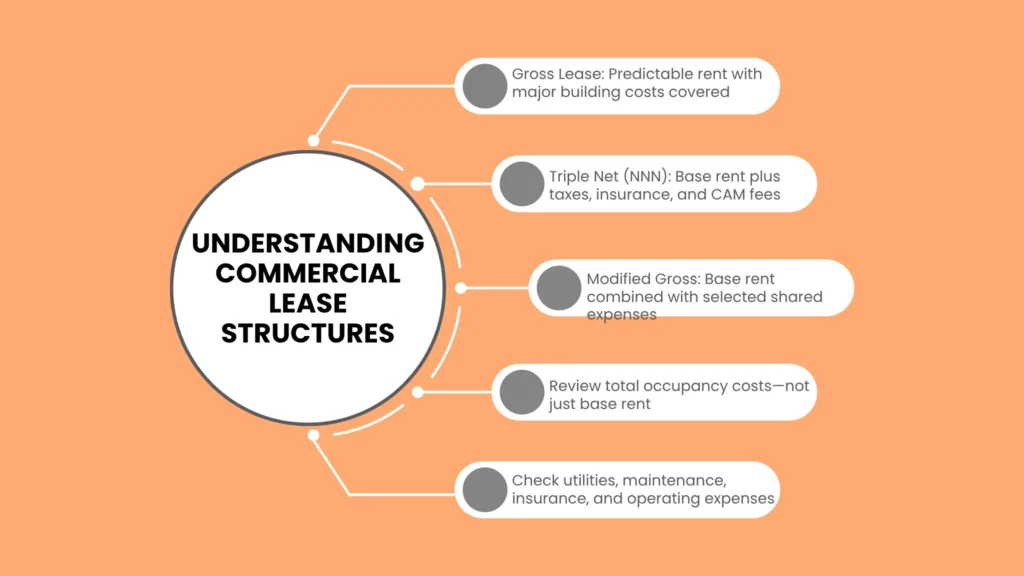
When evaluating a small business space for rent, looking strictly at the base monthly rent can lead to major budget errors. Commercial lease agreements generally fall into three common structures:
Gross Lease (Full Service): You pay a flat monthly rate, and the landlord covers property taxes, building insurance, structural maintenance, and utility bills. This model offers predictable monthly expenses for new business owners.
Triple Net Lease (NNN): You pay a lower baseline rental rate, but you are also responsible for paying your proportional share of property taxes, building insurance, and common area maintenance (CAM) fees.
Modified Gross Lease: A balanced compromise where you pay a fixed baseline rent along with a shared portion of utility expenses or building maintenance costs.
Average Rental Expectations Across Space Types
Understanding market averages helps you identify fair pricing and recognize when a landlord is overcharging.
| Space Category | Primary Use Case | Average Monthly Rent Structure | Cost Factors to Watch |
| Retail Street Front | Boutiques, Salons, Bakeries | High Base Rate + NNN Fees | Foot Traffic, Parking Availability |
| Suburban Strip Mall | Retail, Service Agencies | Moderate Base Rate + Shared CAM | Parking Ratio, Anchor Tenant Stability |
| Commercial Office Suite | Tech Agencies, Consulting | Gross or Modified Gross Rate | Utility Caps, After-Hours HVAC Access |
| Flex Warehouse Hub | E-Commerce, Light Assembly | Lower Base Rate + NNN Fees | Loading Dock Access, Ceiling Clearances |
| Co-Working Office | Freelancers, Small Teams | All-Inclusive Flat Monthly Rate | Shared Amenity Limits, Desk Allocations |
4 Low-Cost Alternatives for Finding Affordable Business Space
If traditional high-street storefronts or dedicated office towers exceed your operational budget, consider alternative commercial space options designed to reduce overhead costs.
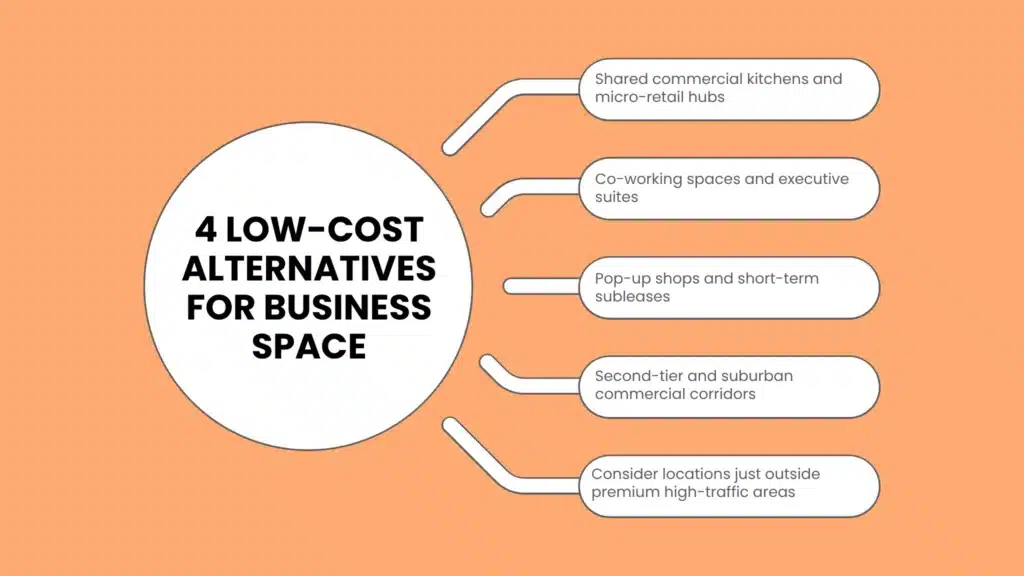
1. Shared Commercial Kitchens and Micro-Retail Hubs
For food producers and artisan retailers, renting dedicated retail real estate can be cost-prohibitive. Shared commissary kitchens and community retail hubs allow multiple merchants to split base rent, utility connections, and maintenance expenses, giving you access to professional infrastructure at a fraction of standard market rates.
2. Co-Working Spaces and Executive Suites
Services-based businesses often do not need dedicated private office suites. Co-working platforms offer flexible monthly memberships, shared conference rooms, high-speed internet, and mail handling services. This setup eliminates long-term lease commitments and allows you to scale space upward as your team expands.
3. Pop-Up Shops and Short-Term Subleases
Testing a physical market before signing a multi-year lease minimizes financial risk. Subleasing excess space from an established business or renting a short-term pop-up location lets you evaluate local customer demand, analyze weekend foot traffic, and build brand recognition before entering into a binding long-term contract.
4. Second-Tier or Suburban Commercial Corridors
Properties situated directly on primary downtown avenues command top-tier rental rates. Selecting a space located just two blocks off the main thoroughfare or within secondary suburban business corridors often lowers your square-footage costs by 20% to 40% while preserving convenient access for local clients.
Step-by-Step Guide to Securing a Small Business Space
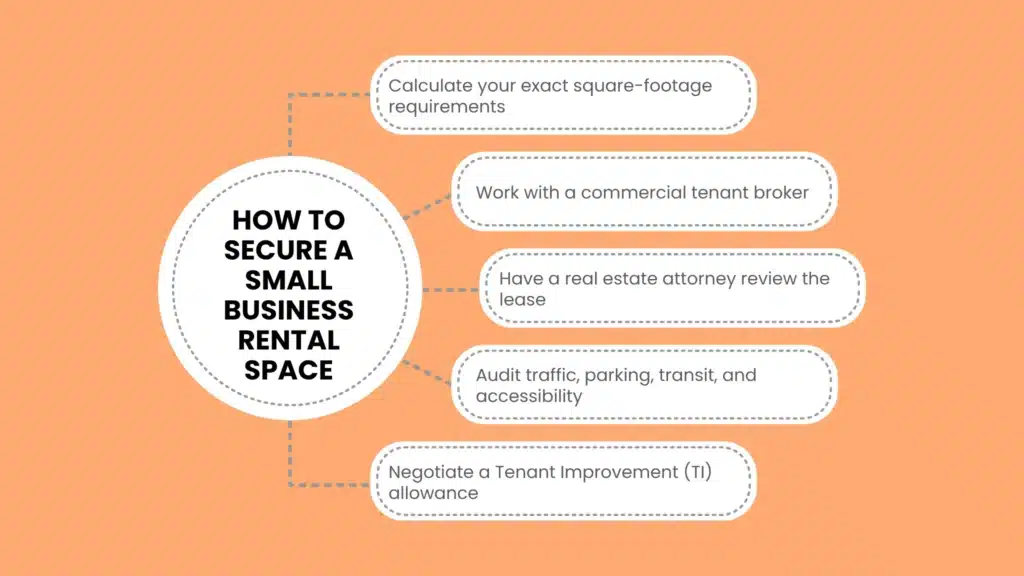
Step 1: Calculate Your True Space Requirements
Avoid over-renting square footage. Measure your exact operational needs for inventory storage, desk layouts, customer waiting areas, and specialized equipment. Multiplying required square footage by the local market rate ensures you establish a realistic budget before touring properties.
Step 2: Assemble Your Professional Advisory Team
Partnering with a licensed commercial real estate broker who specializes in tenant representation gives you access to off-market listings and detailed local rental comps. Tenant brokers are typically compensated by the property owner, providing you with professional negotiation guidance at no direct charge. Additionally, hire a real estate attorney to review lease contracts prior to signing.
Step 3: Conduct On-Site Foot Traffic and Accessibility Audits
Visit potential properties at various times during the day and week. Observe vehicle traffic patterns, pedestrian volume, public transit proximity, loading zone access, and customer parking. A low-rent location quickly becomes expensive if poor visibility or limited parking prevents customers from reaching your business.
Step 4: Request a Comprehensive Tenant Improvement (TI) Allowance
When renting a space that requires interior modifications, flooring updates, or custom partitioning, negotiate a Tenant Improvement (TI) allowance with the landlord. Property owners often supply a set dollar amount per square foot to cover renovation costs in exchange for a longer lease commitment.
Key Clauses to Negotiate in Your Commercial Lease
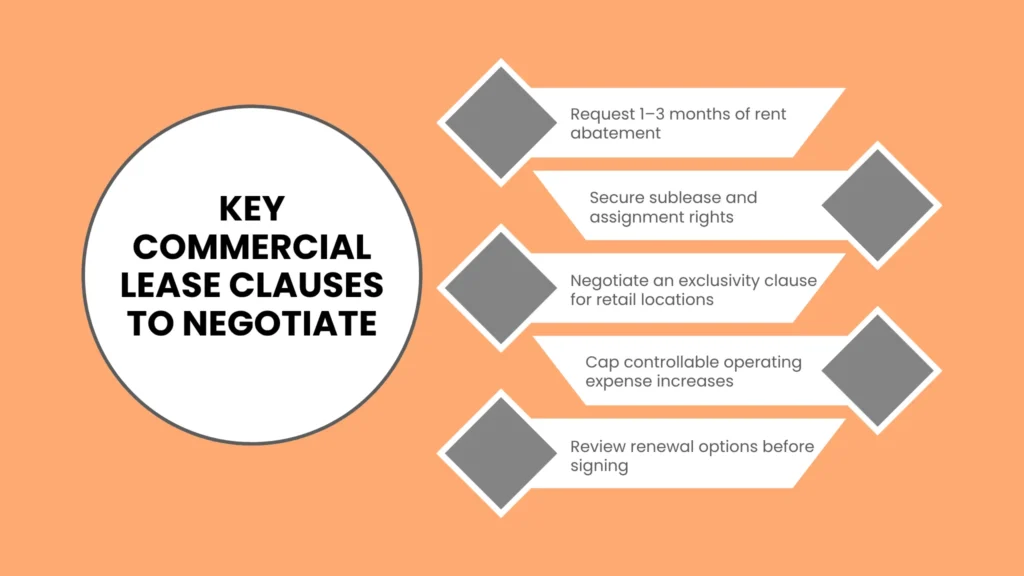
Rent Abatement Period: Request one to three months of free rent at the beginning of your lease term to offset build-out delays and initial startup setup work.
Sublease and Assignment Rights: Ensure your contract permits you to sublease excess space or transfer the agreement if your company gets acquired or requires a larger facility.
Exclusivity Clause: If leasing a retail storefront in a commercial plaza, secure an exclusivity clause preventing the landlord from leasing adjacent spaces to direct business competitors.
Cap on Operating Expense Increases: In NNN lease structures, negotiate an annual percentage cap (such as 3% to 5%) on increases to controllable common area maintenance charges.
Summary of Key Takeaways
Finding an affordable business space requires balancing location visibility with strict cost management. By understanding lease structures, exploring shared or suburban alternatives, and negotiating tenant-friendly contract terms, you can secure a location that supports long-term operational growth.
For more practical step-by-step business guides, emerging startup frameworks, and operational strategies, visit reliablestartup.com.
Frequently Asked Questions
What is the typical length of a small business commercial lease?
Standard commercial leases generally range from 3 to 5 years. While landlords prefer longer commitments, new startups should aim to negotiate 1-year or 2-year leases with flexible renewal options to maintain agility.
What is the difference between usable square feet and rentable square feet?
Usable square feet represents the exact physical space your business occupies exclusively. Rentable square feet includes your usable space plus your proportional share of shared building facilities, such as hallways, lobbies, restrooms, and elevator banks.
How much should a small business spend on rent each month?
As a general rule, small businesses should aim to keep total occupancy costs (base rent, NNN fees, utilities, and building insurance) between 5% and 10% of gross monthly revenue, depending on your industry and profit margins.