How to Price Your Rental Items: A Step-by-Step Guide
Figuring out exactly what to charge your customers is one of the hardest parts of running a rental business. Price your items too high, and customers will flock to your competitors. Price them too low, and you leave massive amounts of money on the table while struggling to cover your basic overhead. Learning how to price rental items correctly is the ultimate balancing act between keeping your customers happy and protecting your cash flow.
The good news is that pricing does not have to be a guessing game. By using a data-driven rental pricing strategy, you can confidently set rates that cover your expenses, beat out local competitors, and scale your business quickly.
Let let us break down the exact formulas, expenses, and market factors you need to consider to ensure your rental business stays highly rewarding.
The Core Question: Is Price Rental Items Profitable?
When evaluating a new business model, entrepreneurs always ask: is price rental items profitable?
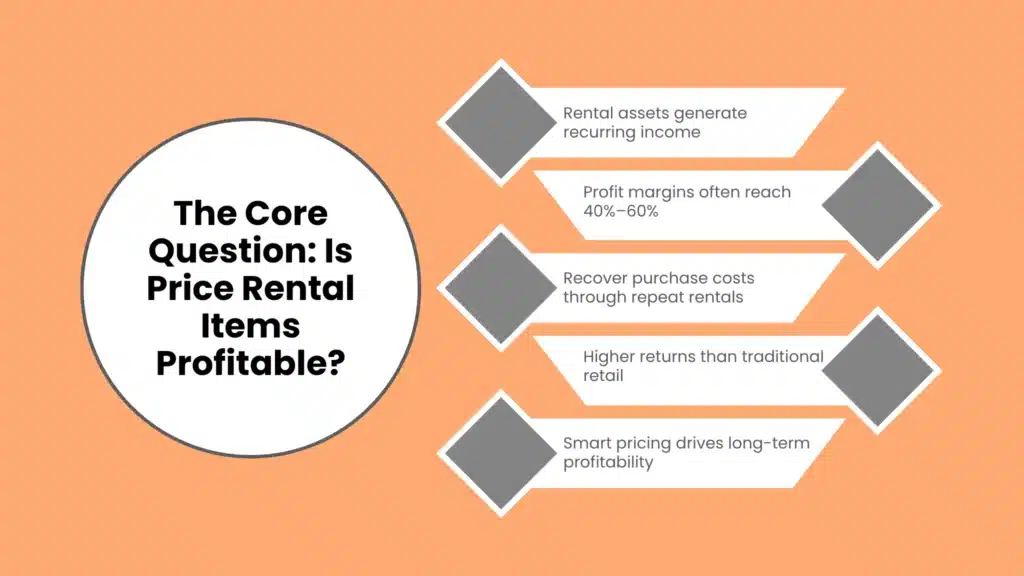
The short answer is that the rental industry offers some of the highest returns of any business model today, but only if your pricing structure is sound. The true power of this model lies in the price rental items profit margin, which routinely averages between 40% and 60%. Unlike traditional retail where you sell an item once and lose the inventory, a rental asset allows you to recoup your entire initial purchase price within the first few bookings. Every single rental transaction after that baseline break-even point is almost pure profit.
4 Main Factors That Determine Your Rental Prices
To build a flawless pricing model, you cannot just look at the purchase price of your inventory. You must look at the total price rental items cost structure. Four core elements dictate what you should charge.
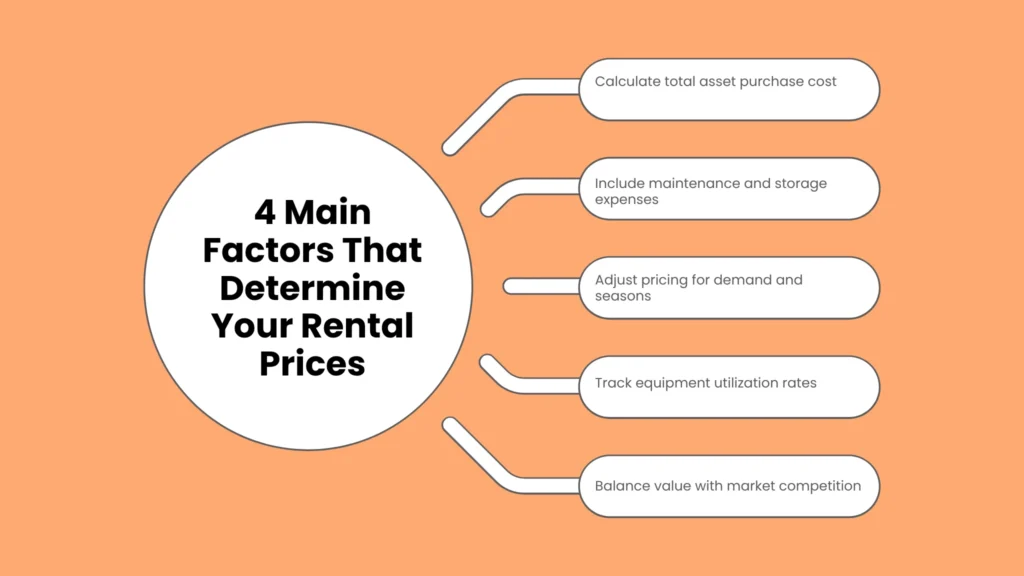
1. Initial Asset Acquisition Cost
This is the baseline amount you paid to buy the item, including tax, shipping, and assembly. If you bought a commercial-grade pressure washer for $600, that $600 is your baseline asset cost. If you’re building out a tool-focused inventory, our complete guide on starting an equipment rental business covers how to choose your first assets and price them by category.
2. Maintenance, Sanitization, and Storage
Every time an item goes out, it experiences wear and tear. Your pricing must account for the time and money it takes to clean, test, tune up, and safely store the item between customer bookings.
3. Market Demand and Seasonality
If you rent out backyard party tents, you can command premium rates during the sunny summer wedding season. However, you might need to offer steep discounts or bundled deals during the winter months to keep your inventory moving. Seasonal swings hit tents and event gear especially hard, which is why our guide on running a party rental business spends extra time on off-season pricing tactics.
4. Utilization Rate
Your utilization rate is the percentage of time your gear is actually out on rent versus sitting on your shelves. If a piece of equipment only rents out four days a month, you have to charge a higher daily rate to break even compared to an item that rents out twenty days a month.
The Industry-Standard Rental Pricing Formulas
To make your life easier, most successful rental companies rely on a few proven mathematical baselines. The table below outlines how standard daily and weekly rates are calculated across the industry based on available market averages.
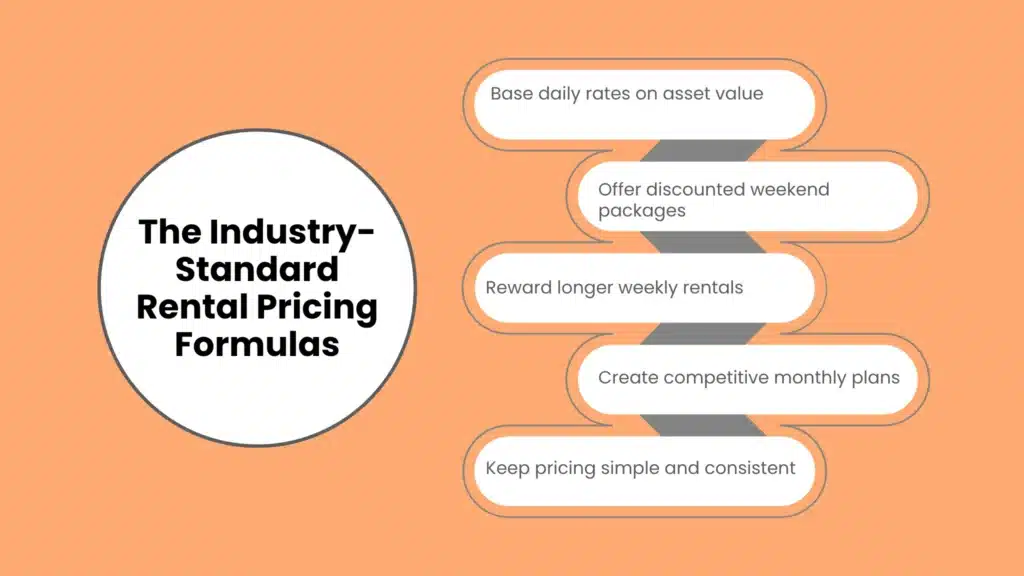
| Rental Tier | Standard Pricing Formula | Real-World Example ($500 Asset) | Best Used For |
| Daily Rate | 3% to 5% of total acquisition cost | $15 to $25 per day | Short-term DIY projects, weekend parties |
| Weekend Rate | 1.5x to 2x the standard daily rate | $30 to $50 for Friday-Sunday | Weddings, graduations, casual camping trips |
| Weekly Rate | 3x to 4x the standard daily rate | $60 to $100 per week | Traveling families, extended home renovations |
| Monthly Rate | 10% to 15% of total acquisition cost | $500 to $750 per month | Corporate accounts, long-term construction |
Step-by-Step Guide to Pricing Your Inventory
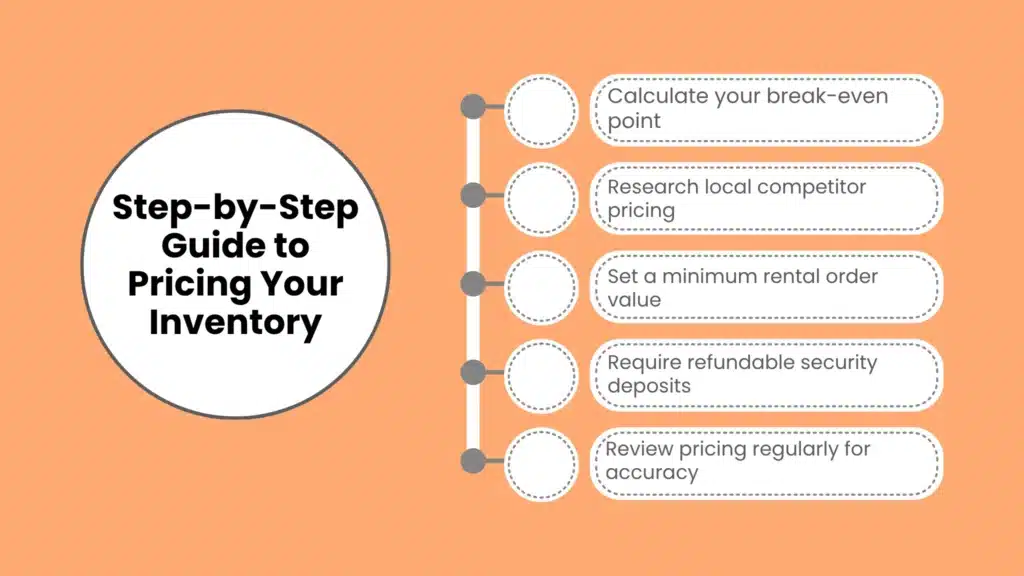
Setting your rates requires a structured approach. To satisfy all price rental items requirements, follow this step-by-step process for every new asset you add to your catalog.
Smart Pricing Strategies to Increase Your Average Order Value
Once you establish your baseline rates, you can use psychological pricing levers to get customers to spend more money per booking.
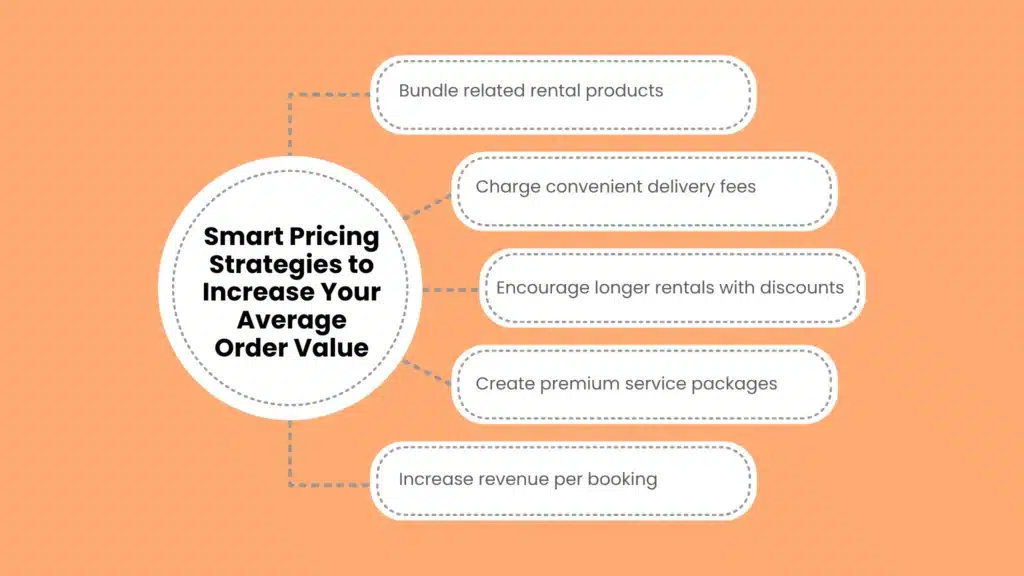
The Power of Tiered Bundles: Instead of renting out a single camping tent, offer a “Complete Family Campout Package” that includes a tent, four sleeping pads, a cooler, and a camp stove for a combined discounted rate. Bundles provide massive value to the user while quickly driving up your total transaction size.
Implement Convenience Delivery Fees: Many customers value their time far more than their money. Offer a low base rate for warehouse or garage pickup, but offer tiered, premium delivery and setup services. This convenience fee can easily add an extra 20% to your monthly revenue.
Offer Multi-Day Discounts: Encourage longer rentals by making each subsequent day progressively cheaper. If day one costs $50, price day two at $35, and day three at $20. This keeps your inventory utilized and reduces the logistical work of processing constant returns.
Conclusion
Nailing your rental pricing is the secret to moving from a stressful side project to a highly organized, highly profitable business. By understanding your total operating costs, analyzing local market demand, and using consistent pricing formulas, you can easily protect your bottom line while offering clear, irresistible value to your community.
For more actionable business blueprints, revenue calculators, and operational checklists built for modern rental entrepreneurs, dive into our latest guides over at reliablestartup.
Frequently Asked Questions
What should I do if a competitor is severely undercutting my prices?
Do not immediately drop your prices to match them. Competing solely on price is a race to the bottom. Instead, focus on outperforming them on service. Offer cleaner equipment, faster delivery times, seamless online booking, or friendlier customer service to justify your premium rates.
How do I adjust my pricing for worn or older equipment?
As equipment ages and gathers cosmetic scuffs, you can transition it into a “budget” tier on your website or use it exclusively for high-volume corporate accounts where aesthetics matter less than pure functionality. This keeps the asset generating cash without hurting your premium brand image.
Should I charge customers a cleaning fee upfront?
For standard rentals, it is best to build the cost of basic cleaning directly into your daily rental rate. However, your contract should state that an additional, heavy-duty cleaning fee will be charged if the item is returned with excessive mud, stains, or neglect.
How often should I review and update my rental pricing?
You should audit your pricing strategy at least twice a year. Review your maintenance logs, track your asset utilization rates, and analyze your competitors’ current rates ahead of your local peak season to see if you have room to increase your margins.