Paddle Boat Rental Business: How to Choose the Right Location
Finding the absolute best location for paddle boat rental operations is the most important decision you will make. Unlike mobile water sports businesses, a leisure craft company relies entirely on steady foot traffic. You need visible water access and immediate docking convenience to succeed. Securing the perfect paddle boat rental business location is what transforms casual park visitors into immediate, high-paying customers.
The physical space you choose dictates your daily customer volume. It also impacts your operational requirements and your seasonal revenue potential. Consequently, this extensive guide breaks down how to source a highly profitable spot. We will also look at how to navigate local municipal restrictions and balance your upfront real estate expenses against your long-term earnings.
The Critical Factors for a Prime Waterfront Spot
You cannot simply set up shop on any random shoreline. On the contrary, a successful commercial launch site requires a very specific mix of natural water conditions, heavy foot traffic, and consumer convenience.
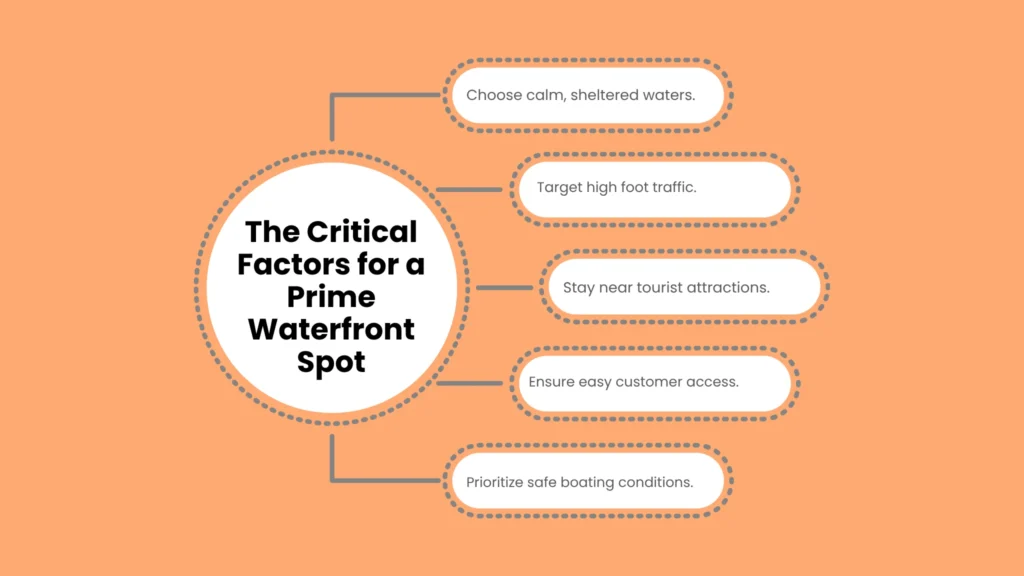
First, look closely at the water conditions. Paddle boats are heavy, foot-powered vessels designed for calm, slow-moving waters. Therefore, sheltered public park lakes, tranquil harbor basins, historic canals, and calm river inlets are ideal. You must avoid any areas with strong currents, frequent motorized boat wakes, or heavy winds. This is because these rough conditions make pedaling incredibly difficult and unsafe for families.
Second, prioritize high-density foot traffic. For example, the ideal spot is situated directly next to existing attractions like storefront boardwalks, popular public parks, beachside resorts, or busy outdoor dining districts. Your rental dock acts as its own visual billboard. As a result, it naturally draws in families, couples on dates, and tourists who are already looking for fun local activities. Following the U.S. Coast Guard’s recreational boating safety guidelines can help you evaluate whether a potential site meets safe water-condition standards before signing a lease.
Strict Paddle Boat Rental Business Location Requirements
Securing a beautiful piece of land is only half the battle. In addition, you must ensure the site is fully compliant with local zoning laws, environmental protections, and maritime safety standards.
Review these foundational paddle boat rental business location requirements before signing any commercial lease or partnership agreement:
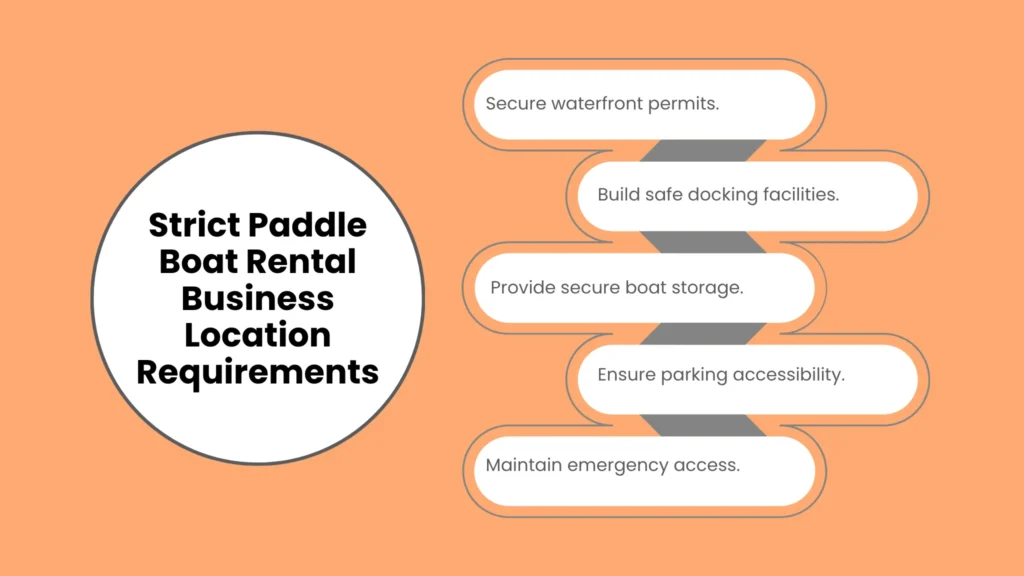
Commercial Waterfront Zoning and Permits: The area must be explicitly zoned for commercial water sports. Therefore, you will need launch permits from local parks and recreation boards or port authorities.
Sturdy Docking Infrastructure: You need dedicated dock space or a stable, low-incline shoreline launch zone. This setup allows customers of all ages to safely board the watercraft.
Secure Nighttime Storage: The location must feature a secure, fenced perimeter, a locking dock gate, or an on-site storage shed to protect your fleet from vandalism. Protecting your fleet doesn’t stop at storage, our guide on insurance policies for rental businesses covers coverage options for outdoor water sports operations.
High Customer Accessibility: Your site needs nearby public parking, visible directional signage, and smooth pathways that comply with local accessibility standards.
Proximity to Emergency Services: The launch zone must allow easy vehicle access for emergency personnel and clear sightlines for your safety staff.
Failing to secure proper municipal permits before launching can result in immediate shutdown orders and massive fines. Thus, you should work closely with local city councils to establish mutually beneficial public- partnerships. For a broader look at legal setup requirements before launch, our guide on licensing requirements walks through what permits most rental businesses need.
Analyzing the Finances: Rent Costs vs. Operational Profits
Your physical address is your largest recurring overhead expense. For this reason, you must weigh the high cost of prime real estate against the massive volume of traffic that a top-tier spot generates.
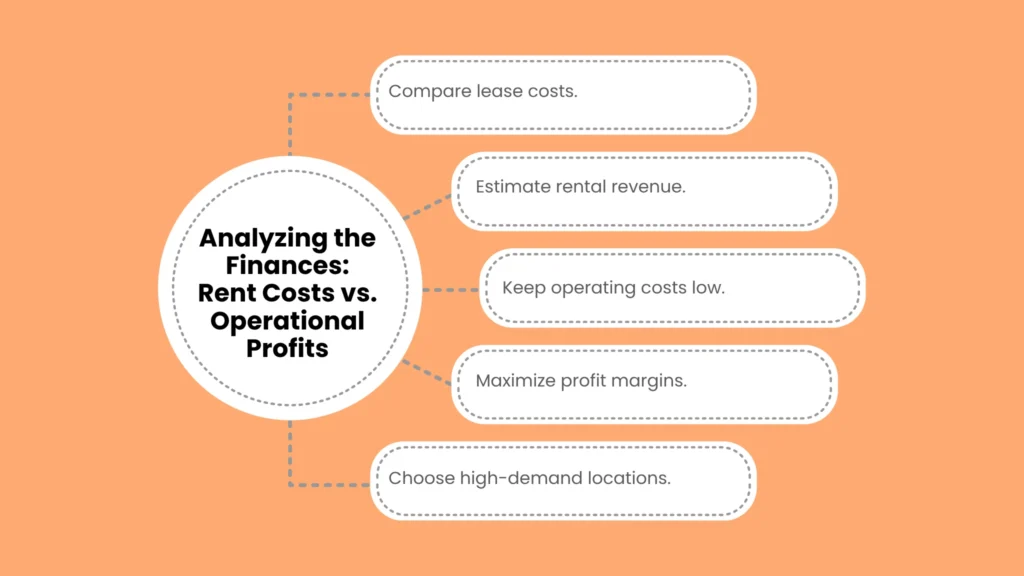
The specific paddle boat rental business location cost changes drastically based on local real estate demand and the style of your setup. For instance, leasing a modest dock space or a small shoreline kiosk from a municipal park system generally requires an estimated $500 to $2,500 per month. However, if you position your business in a high-end tourist marina or next to a luxury downtown boardwalk, monthly lease rates can easily reach an estimated $4,000 to $8,000.
Despite these real estate expenses, the financial model remains incredibly lucrative. The standard paddle boat rental business location profit margin generally averages between 60% and 75%. Because human-powered pedal boats do not require expensive fuel, your variable operational costs are strictly limited to basic cleaning, minor mechanical maintenance, and hourly staff wages. Furthermore, a highly visible spot allows you to consistently command premium pricing and maintain high utilization rates.
So, is paddle boat rental business location profitable over the long run? Based on available industry data, a prime location is exceptionally profitable. Charging a rental rate of $30 to $50 per hour means a small fleet of 12 boats operating at solid weekend capacity can generate an estimated $12,000 to $18,000 in weekly revenue. Consequently, this consistent cash flow easily covers your monthly lease costs within the first few days of operation. If you’re comparing water sports models, our breakdown of whether a kayak rental business is profitable offers useful benchmark numbers for similar leisure craft operations.
Location Tier Revenue & Expense Comparison
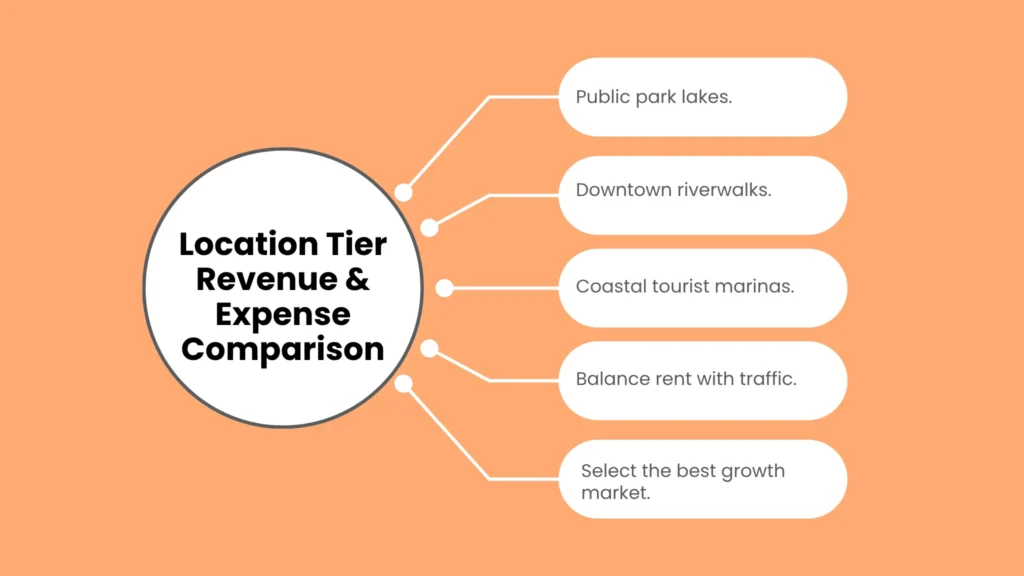
| Location Tier Classification | Estimated Monthly Lease | Expected Foot Traffic | Projected Profit Potential |
| Tier 1: Suburban Public Park Lake | $500 to $1,500 | Moderate (Mostly Locals) | Steady, predictable seasonal income. |
| Tier 2: Downtown Urban River Walk | $2,000 to $4,500 | Very High (Mixed Crowds) | High weekday lunch and evening volume. |
| Tier 3: Elite Coastal Tourist Marina | $5,000 to $8,500+ | Extreme (High-Spending Tourists) | Maximum hourly rental rates and fast growth. |
Negotiating Your Lease for Seasonal Success
If your water sports business operates in a region with clear winter seasons, a standard twelve-month commercial lease can completely destroy your profit margins during the cold off-season months. Therefore, you need to negotiate smart, flexible lease terms that match your actual operational reality.
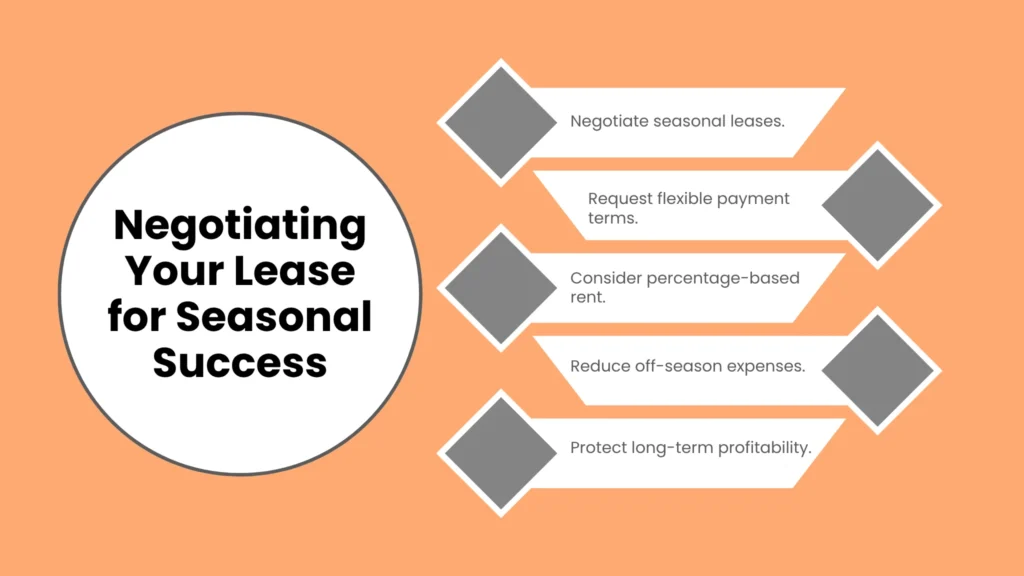
First, try to secure a seasonal lease agreement that aligns perfectly with your active months. This period typically runs from May through October. If the landlord insists on an annual contract, negotiate a tiered payment structure instead. This means you pay higher rent during peak summer months and a minimal, reduced storage rate during the winter season.
Another highly effective strategy is negotiating a percentage lease with local municipalities or park boards. Under this framework, you pay a lower base monthly rent combined with a small, agreed-upon percentage of your gross monthly ticket sales. This structure protects your business cash flow during rainy weeks or unseasonably cold months. Meanwhile, it ensures the city shares in your financial success during peak holiday weekends.
Conclusion
Choosing where to station your fleet is the ultimate foundation of your business growth. By targeting calm waters, prioritizing dense pedestrian traffic, and securing fair, seasonally adjusted lease terms, you position your water sports brand for maximum financial success. If you are looking for more actionable business blueprints, financial calculators, and step-by-step launch strategies, visit our website at reliablestartup to build and scale your next venture today.
Frequently Asked Questions
Can I run a paddle boat business without a permanent dock?
Yes, you can. While a permanent floating dock is the most convenient option, you can successfully operate directly from a smooth, sandy beach or a gently sloping pebble shoreline. You will simply need a small, weather-resistant shore kiosk to house your point-of-sale system, safety equipment, and life jackets.
How much water depth do commercial paddle boats require?
Commercial paddle boats have a very shallow draft. This means they can safely operate in water as shallow as 12 to 18 inches. However, your launch zone should ideally maintain a consistent depth of at least two to three feet to prevent the boat hulls and paddle wheels from grinding against rocks, mud, or underwater debris.
Should I rent space inside a state park or a private marina?
State and municipal parks generally offer much larger built-in crowds of families and outdoor enthusiasts. As a result, they are excellent for high-volume walk-in traffic. On the other hand, private marinas often feature superior security, sturdier dock infrastructure, and wealthier customers, but they typically charge significantly higher monthly lease fees.
How do I protect my location from local competitors?
When negotiating your commercial lease with a private landlord or a city park board, always request an exclusive use clause. This legal clause ensures that the property owner cannot lease a nearby dock space to any other water sports rental company for the entire duration of your contract.