The Ultimate Guide: How to Start a Bike Rental Business in a Tourist City
For millions of travelers, renting a bicycle is the absolute best way to experience a new city. It bypasses heavy traffic, cuts down on pricey rideshare costs, and offers an intimate, pace-your-own-adventure way to sightsee. For an entrepreneur, this represents a massive, highly scalable opportunity.
If you want to capture this market, learning how to start a bike rental business in a bustling tourist city can lead to an incredibly lucrative venture. But successfully launching requires more than just buying a dozen bicycles and locking them to a fence. From calculating your upfront bike rental business cost to navigating local zoning laws and maximizing your bike rental business profit margin, you need a concrete strategic blueprint.
1. Market Research: Is a Bike Rental Business Profitable?
Before investing a single dollar into inventory, you have to answer the ultimate question: is a bike rental business profitable in your target area?
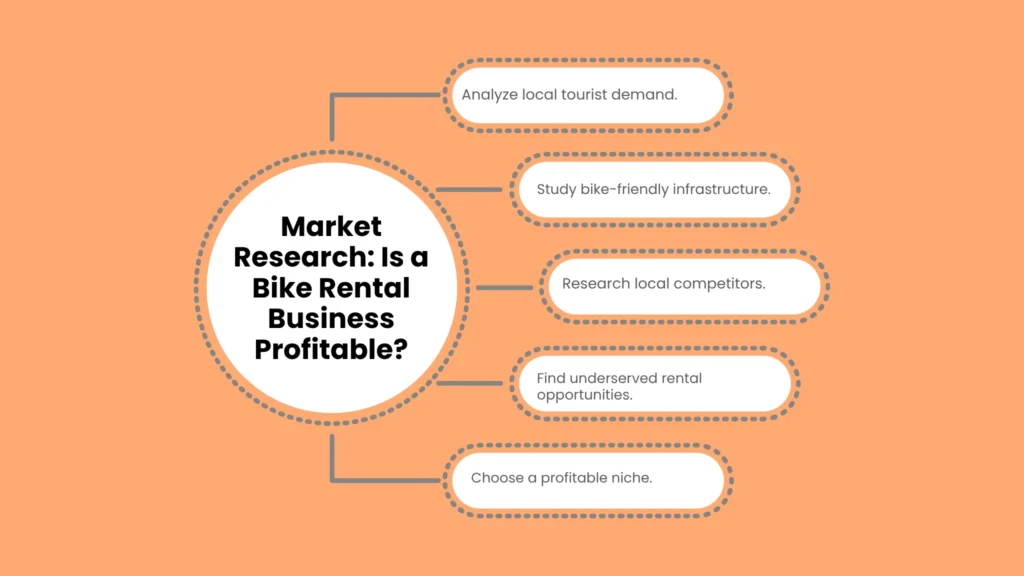
In a high-foot-traffic tourist hub, the answer is generally a resounding yes. However, ReliableStartup.com emphasizes that profitability depends entirely on three local variables:
Tourism Seasonality: Does your city get year-round travelers, or will you need to make 100% of your revenue in a frantic four-month summer window?
City Infrastructure: Are there dedicated bike lanes, scenic beach boardwalks, or expansive park trails? A city that is hostile to cyclists will drastically suppress your rental numbers.
Competitive Density: Who else is renting wheels? Look closely at existing mom-and-pop rental shops, high end hotel fleets, and municipal app-based rideshare bikes (like Citi Bike or Lime). Your job is to find a gap they are missing such as guided tours, premium electric bikes (e-bikes), or seamless delivery straight to a tourist’s Airbnb. In markets where micro-mobility competition is dense, some operators diversify by also offering a scooter rental business model alongside bikes to capture a wider share of short-distance tourist traffic.
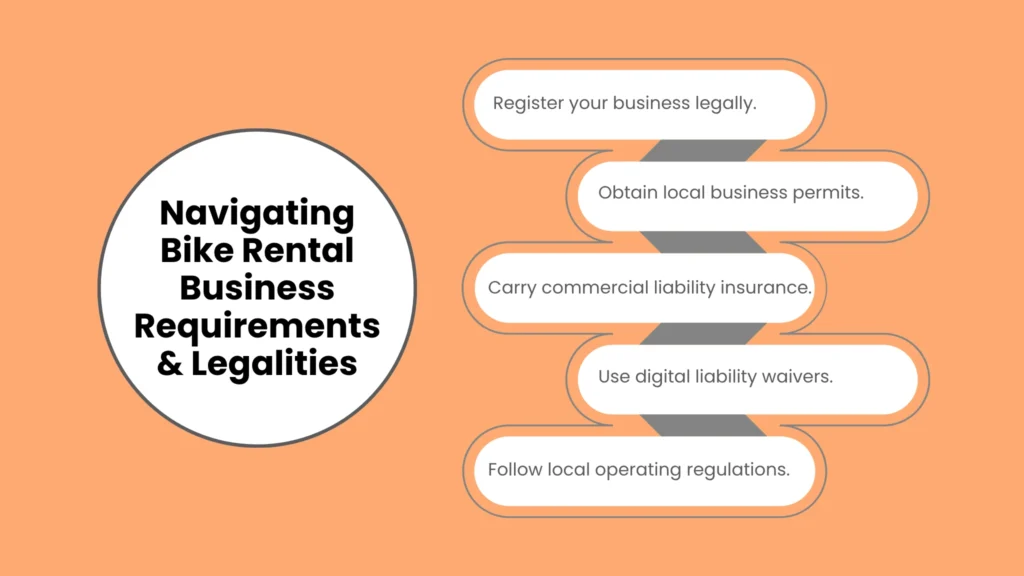
2. Navigating Bike Rental Business Requirements & Legalities
Operating a commercial enterprise that puts tourists on active city streets comes with strict legal responsibilities. Skipping these steps can result in massive fines or shut-down orders before your first season ends.
Business Registration and Licensing
First, you must establish a legal business entity (such as an LLC) to protect your personal assets. Following that, you will need a general business license from your city or county. For a full breakdown of local, state, and federal requirements, the SBA’s guide on applying for business licenses and permits is a reliable starting point. If you plan to operate a mobile pop-up or deliver bikes directly to public parks or docks, you may require special vendor permits from the local parks and recreation department. Similar legal groundwork applies across other rental niches our guide on kayak rental business legal requirements & permits walks through comparable licensing and waterway-permit steps.
Liability Waivers and Insurance
This is the most critical component of your bike rental business requirements. Customers will get flat tires, scrape their knees, or occasionally collide with obstacles.
Commercial General Liability Insurance: This protects your business if a renter gets injured or damages someone else’s property while riding your equipment.
Digital Liability Waivers: Every single customer must sign a legally binding liability waiver before a bike leaves your shop. ReliableStartup.com recommends using digital waiver software (like WaiverSign or SmartWaiver) integrated into your booking system to track and store these effortlessly.
3. Calculating the Upfront Bike Rental Business Cost
Your initial capital investment will vary wildly depending on whether you are launching a brick-and-mortar storefront or starting as a lean, delivery-only mobile operation.
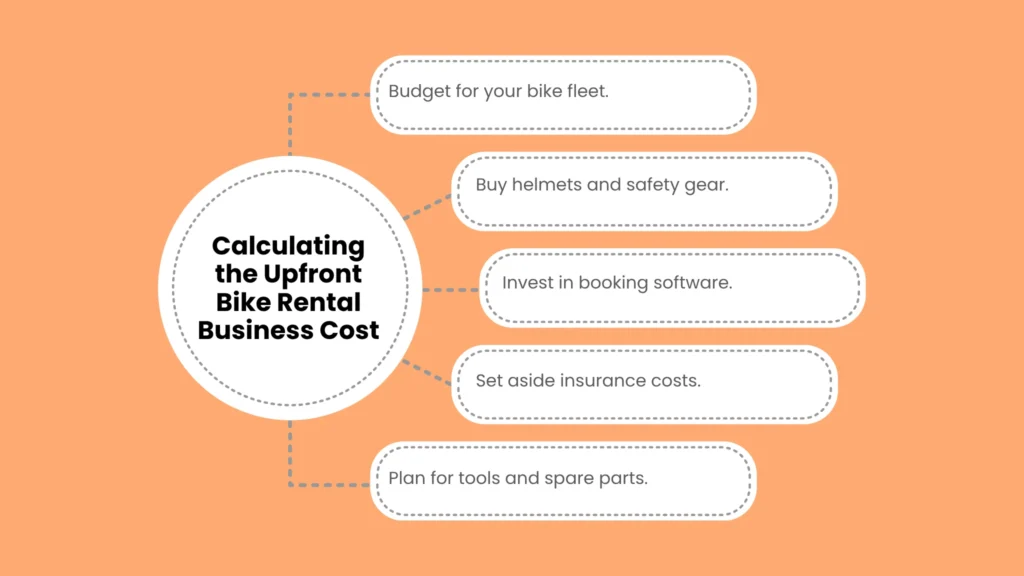
To help you budget, ReliableStartup has outlined a breakdown of the typical capital expenditures required to start a modest, high-quality fleet of 30 inventory units in a tourist city:
| Expense Category | Estimated Upfront Cost (USD) | Details & Recommendations |
| Fleet Inventory | $18,000 – $35,000 | Mix of durable city cruisers ($500/each) and e-bikes ($1,500+/each). |
| Safety & Accessories | $2,500 – $4,000 | Helmets, heavy-duty U-locks, phone mounts, and attachable baskets. |
| Retail Space Lease & Buildout | $5,000 – $12,000 | Security deposit, first month’s rent, racks, counters, and signage. |
| Software & Tech Stack | $1,000 – $2,500 | Booking platform, POS hardware, website development, and GPS trackers. |
| Tools & Spare Parts | $1,500 – $3,000 | Commercial bike stands, pumps, spare tubes, chains, and specialized tools. |
| Legal, Licensing & Insurance | $2,000 – $4,500 | LLC formation, permits, and your initial commercial insurance premium. |
| Total Estimated Initial Investment | $$30,000 – \$61,000$$ | Can be scaled down significantly if starting as a delivery-only model. |
4. Building Your Fleet: Choosing the Right Inventory
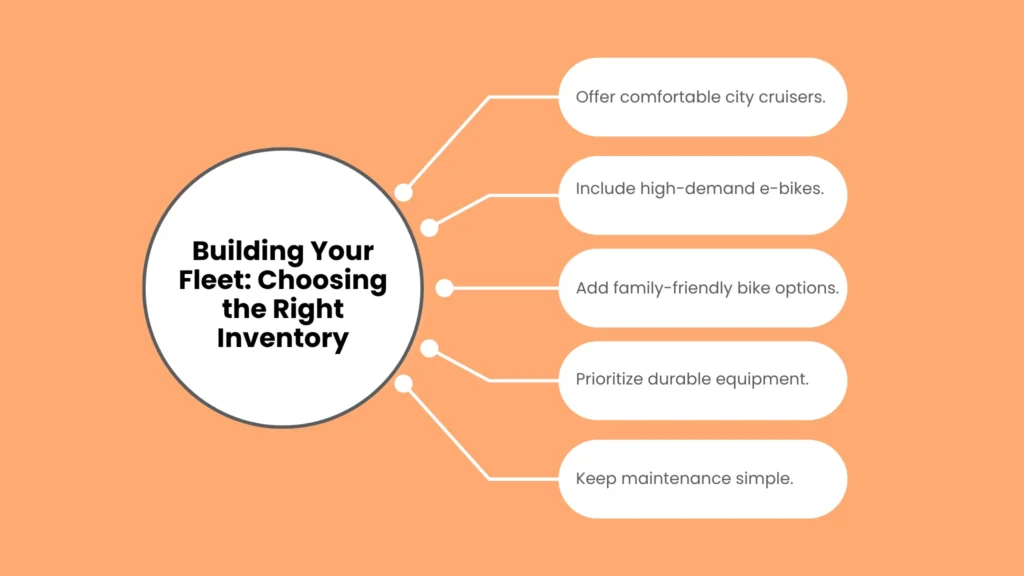
Tourists prioritize comfort, reliability, and ease of use over performance. Unless your city sits directly at the base of a hardcore mountain biking trail system, you should avoid complex, fragile carbon-fiber road bikes or high-maintenance mountain bikes. Instead, build your inventory around these three staples:
Step-Through City Cruisers
These are the backbone of any tourist fleet. Look for aluminum frames (to prevent rust if you are near a coast), puncture-resistant tires (like Schwalbe Marathon), internal gear hubs (which rarely break or drop chains), and a comfortable, upright riding position.
Electric Bikes (E-Bikes)
Do not skimp on e-bikes. Tourists love them because they allow people of all fitness levels to tackle long distances or steep city hills without breaking a sweat. While they carry a higher upfront bike rental business cost, you can easily rent them out for double or triple the daily rate of a standard acoustic cruiser. If e-bikes become a core part of your fleet strategy, our dedicated guide on how to start an e-bike rental business covers battery logistics, charging infrastructure, and pricing models in more depth.
Specialized and Family Options
Tourist cities attract families. To maximize your reach, include a small selection of tandem bikes, kids’ bikes, pull-behind trailers, and mountable child seats.
5. Location and Operations: Storefront vs. Mobile Delivery
When figuring out how to start a bike rental business, choosing your operational model determines your fixed monthly overhead.
Option A: The Prime Retail Storefront
If you choose a brick-and-mortar location, it needs to be positioned directly within the tourist zone—near major hotels, popular beaches, historic trailheads, or transit hubs. High foot traffic means organic walk-in customers. The downside is that retail rent in tourist districts is notoriously expensive, eating into your early profits.
Option B: The Mobile/Delivery Model
If retail space is cost-prohibitive, ReliableStartup.com highlights an emerging alternative: operating out of a cheaper commercial warehouse or a secure garage. You build a sleek website and offer to deliver and pick up bikes directly from customers’ hotels or vacation rentals. This drastically lowers your overhead, reduces staffing needs, and offers an ultra-premium convenience angle that competitors might ignore.
6. Software, Booking, and Fleet Tracking
In 2026, a seamless digital experience is non-negotiable. Tourists expect to book a bike from their smartphones in under two minutes.
Rental Management Software: Implement specialized rental platforms like Booqable, BRM (Bike Rental Manager), or Rentle. These tools handle live inventory tracking, prevent double-bookings, automate credit card payments, and handle digital waiver signing in a single workflow.
Asset Security: Bikes are high-value targets for theft. Equip every single bike—especially your high-dollar e-bikes—with a concealed GPS tracker (like Apple AirTags or smart commercial GPS units embedded inside the frame or battery compartment).
7. Understanding Revenue & The Bike Rental Business Profit Margin
Once your fleet is rolling, a bike rental operation can yield exceptional returns due to low ongoing variable costs. Once a bicycle is fully paid off, your only recurring expenses are minor maintenance parts, software subscriptions, insurance, marketing, and labor.
The Profit Margin Breakdown
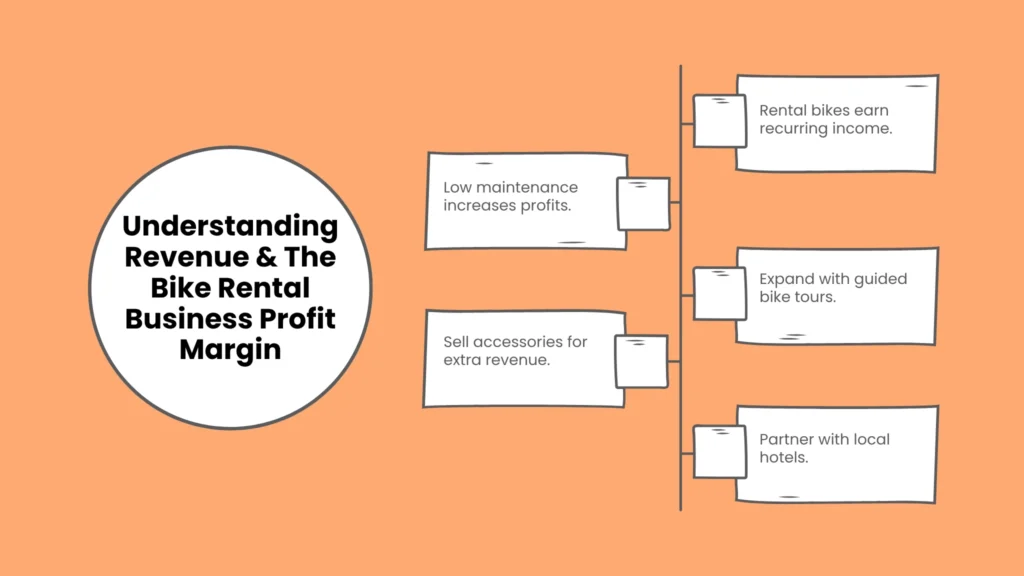
A well-run tourist-facing bike rental business typically operates at an enviable bike rental business profit margin of 60% to 80% on direct rental operations.
Consider this math provided by ReliableStartup.com:
A quality cruiser bike costs $600 upfront. If you rent it out for $40 per day, it fully pays for itself in just 15 days of rental use. Over a 150-day tourist season, that single bike can generate $6,000 in gross revenue, requiring less than $100 in replacement tubes, brake pads, and chain lube.
Diversifying Your Revenue Streams
To supercharge your profitability, expand your offerings beyond basic point-A-to-point-B rentals:
Guided and Self-Guided Tours: Charge premium prices per head to guide tourists through historic areas, brewery districts, or hidden scenic routes.
Retail Up-Sells: Sell cold bottles of water, sunscreen, local maps, branded t-shirts, and energy snacks at checkout.
Hotel Partnerships: Offer a revenue-share model with local boutique hotels or bed-and-breakfasts where they market your fleet to their guests for a small commission percentage.
8. Marketing Strategy: Capturing the Tourist Rush
Tourists do not search for bike rentals until they arrive in your city—or right before they board their flight. Your marketing strategy must place your brand exactly where they are looking during that narrow decision window.
Master Local SEO and Google Maps
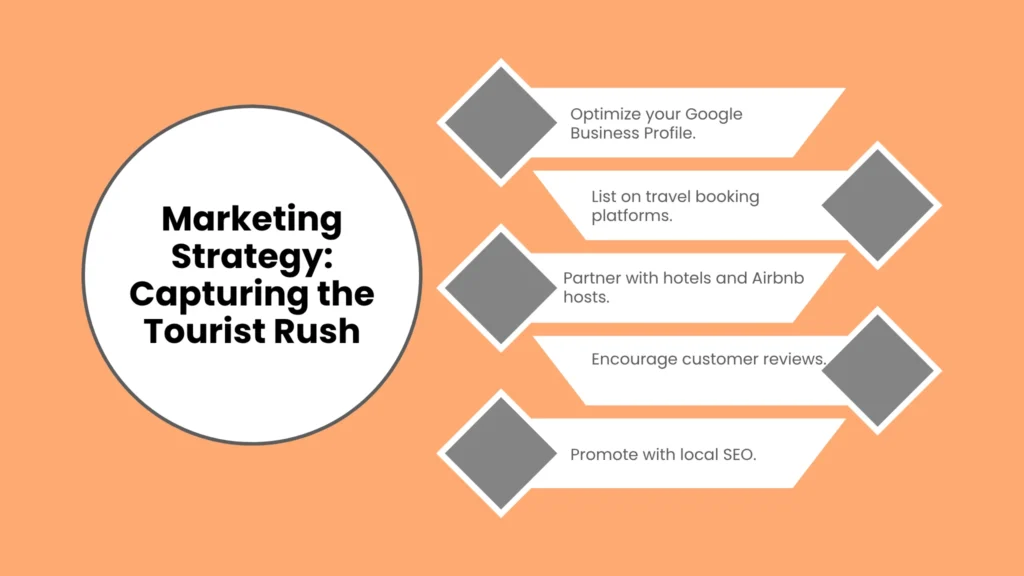
Your absolute highest priority is setting up a comprehensive Google Business Profile. Optimize it completely with the primary keyword “Bike rental in [City Name]”. Collect positive five-star reviews aggressively by offering customers a tiny discount or a free bottle of water upon return if they leave an honest review.
Dominate OTAs (Online Travel Agencies)
Tourists flock to platforms like TripAdvisor, Viator, GetYourGuide, and Airbnb Experiences to plan their itineraries. List your rental packages and guided tours on these platforms. While they take a commission cut, the massive volume of global traffic they send to your booking engine is well worth it.
Strategic Physical Partnerships
Go old-school. Print high-quality, scannable rack cards with a QR code linking directly to your booking page. Deliver these cards to hotel concierges, Airbnb hosts, local visitor centers, and popular coffee shops. Offer the staff a referral kickback for every customer they send your way.
Execution Checklist
Starting a successful bike rental business requires careful orchestration across multiple moving parts. To keep your launch on track, follow this chronological sequence of action steps compiled by ReliableStartup:
Final Thoughts: Rolling Toward Success
Learning how to start a bike rental business is a fantastic path to entrepreneurial freedom in an active, exciting industry. By focusing on durable fleet assets, prioritizing an effortless digital booking experience, and aggressively optimizing your local digital presence, you can build an incredibly efficient cash-flowing business model.
For more actionable business guides and startup breakdowns, keep following ReliableStartup. Do your homework, secure your permits, safeguard your assets with insurance, and get ready to help travelers experience your favorite tourist city on two wheels.
Frequently Asked Questions (FAQs)
Is a bike rental business profitable in a smaller tourist city?
Yes, a bike rental business can remain highly profitable in smaller tourist towns, provided there is scenic infrastructure (like vineyards, historical zones, or beach paths). In smaller markets, your storefront lease costs will be significantly lower, allowing you to maintain a strong bike rental business profit margin even with lower seasonal volume.
What are the ongoing bike rental business requirements for fleet maintenance?
Your recurring maintenance routine should include weekly tire pressure and brake checks, monthly chain lubrication, and deep-clean inspections every quarter. Keeping up with these minor maintenance tasks extends the lifespan of your inventory to 3-5 years, maximizing your overall return on investment.
How do I protect my business from bike theft?
In addition to installing hidden GPS trackers on every unit, you should require all customers to leave a valid credit card on file for a security deposit block. Always provide high-quality steel U-locks with every rental and clearly outline in your liability waiver that the customer is financially responsible if the bike is left unlocked and stolen.
What type of electric bikes are best for a rental fleet?
For a tourist city, Class 1 e-bikes (pedal-assist only, up to 20 mph) are the safest and most widely accepted under local city ordinances. Avoid Class 3 or throttle-heavy e-bikes for general rentals, as they increase your liability risk and are frequently banned from pedestrian boardwalks and public bike paths.