Party Rental Business Equipment List for First-Time Owners
The global event industry is growing rapidly today. Therefore, entering the equipment market offers a reliable and lucrative business opportunity for new entrepreneurs. Think about it realistically. Families, businesses, and community groups rarely want to spend thousands of dollars buying large, bulky items for a single weekend celebration. Instead, they look for a dependable local supplier to rent from.
For an ambitious entrepreneur, choosing the right party rental equipment list makes perfect sense. Starting with a lean selection of high-demand items forces you to keep your storage overhead exceptionally low. Consequently, this focused approach allows you to fund your future asset expansion entirely out of your actual customer revenue. In this guide, we will break down the exact operational assets you need to buy. Additionally, we will dive deep into the real-world party rental equipment list cost, and we will look closely at the math to answer the big question: is party rental equipment list profitable?
Detailed Party Rental Equipment List Requirements
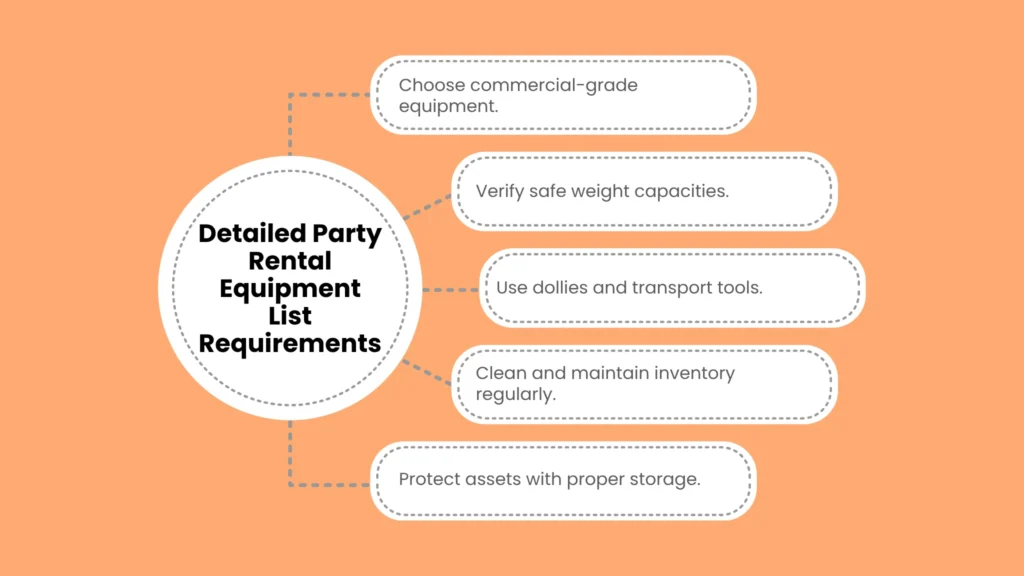
You do not need an expensive commercial warehouse to store your venture’s gear right away. Similarly, you do not need an army of employees to manage your first batch of inventory. However, you must meet a specific set of foundational asset standards. If you’re still deciding on your overall business model, our guide on how to start a party rental business covers the complete setup process from licensing to first bookings. Skipping on heavy-duty commercial grades to save a few dollars early on is a dangerous trap. Cheap consumer-grade gear will break quickly, and it can easily end your business before it even starts. To operate with confidence, you must satisfy a few basic party rental equipment list requirements to protect your brand and your customers.
1. Structural Commercial-Grade Certification
Before you spend a single dollar on inventory, you must understand the difference between residential and commercial assets. Most successful party rental operators choose high-density polyethylene plastic or steel frames for their chairs and tables. Commercial-grade items are built to withstand frequent stacking, rough transport, and heavy weight limits. If a piece of residential equipment fails during a party, your business faces massive legal liabilities.
After you source your initial batch of assets, you must verify their structural weight limits. For example, a quality commercial folding chair should safely support at least 300 to 500 pounds. Buyers can verify these weight-rating standards directly through ANSI/BIFMA furniture testing guidelines, which set the industry benchmark for commercial-grade seating durability.
2. Transport and Handling Logistics Asset Requirements
You absolutely cannot skip out on handling gear when running an equipment rental business. Moving 100 chairs and 20 tables by hand one by one is a daily physical nightmare.
Therefore, you must include heavy-duty rolling carts, chair dollies, and ratcheting tie-down straps on your equipment manifest. Fortunately, a basic hand truck or specialized table dolly is quite affordable. It usually costs between $80 and $150. Additionally, having a formal enclosed utility trailer or a secure pickup truck bed is mandatory because regional weather changes can completely ruin unprotected wood or fabric assets during transport.
3. Inventory Cleaning and Maintenance Supplies
Your maintenance setup stands as the most important behind-the-scenes part of your entire operation. You need an organized toolkit to clean and sanitize every asset before it goes back out on delivery. This inventory toolkit should include commercial pressure washers, magic erasing sponges, heavy-duty degreasers, and vinyl-safe disinfectants.
Furthermore, you should include a clear touch-up kit containing replacement plastic feet caps for your chairs. This section ensures that your equipment never scratches a homeowner’s expensive hardwood floor or indoor venue tile.
The Ultimate Essential Party Rental Supplies Breakdown
How much gear do you realistically need to set aside to launch a party rental business from home? The total volume depends entirely on your initial product strategy. If you attempt to buy giant commercial wedding tents on day one, you will need a massive storage yard.
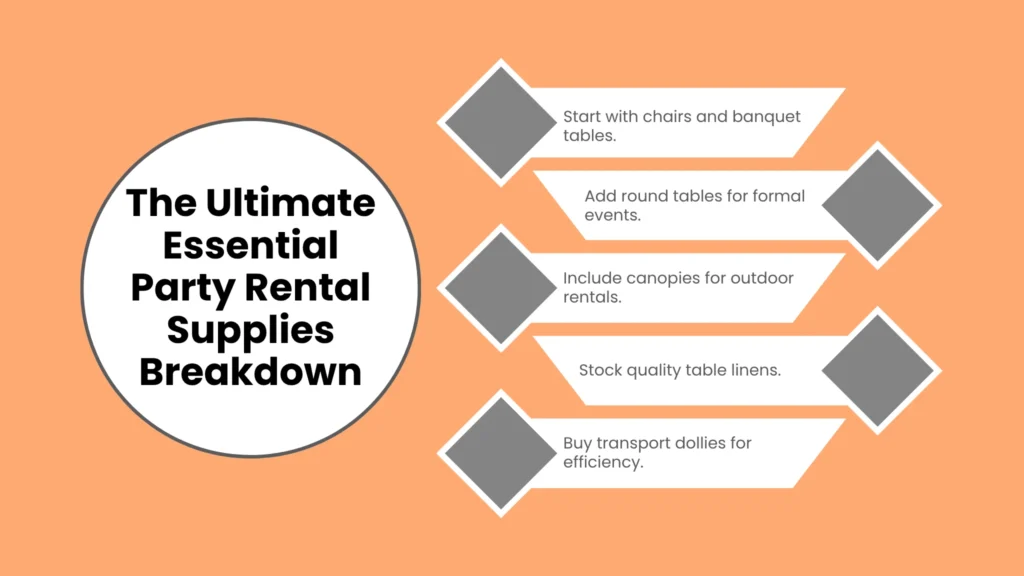
However, if you focus on essential party rental supplies, your initial startup inventory can easily stay compact. Let’s take a look at a realistic inventory breakdown of your estimated first-purchase gear.
Estimated Asset Purchasing and Setup Costs
| Equipment Item Description | Lean Startup Quantity | Estimated Cost Range | Primary Purpose |
| Commercial White Folding Chairs | 50 to 100 Chairs | $750 to $1,500 | Main seating for backyard events |
| 6-Foot Rectangular Banquet Tables | 10 to 15 Tables | $600 to $1,100 | Food, gifts, and guest seating |
| 60-Inch Round Dining Tables | 4 to 6 Tables | $350 to $700 | Formal weddings and galas |
| Heavy-Duty Commercial Rolling Dollies | 1 Chair / 1 Table Dolly | $150 to $300 | Rapid loading and unloading |
| Professional Pop-Up Canopies (10×20) | 1 to 2 Tents | $300 to $800 | Sun and light rain protection |
| Basic Fitted Polyester Linens | 20 to 30 Pieces | $150 to $450 | Covering raw rental table surfaces |
| Total Estimated Initial Inventory | Lean Package Floor | $2,300 to $4,850 | Total Equipment Budget |
Based on available industry data from successful bootstrapped operators, starting on the lean end of this spectrum allows you to achieve profitability incredibly fast. By avoiding heavy debts and unnecessary specialty items early on, you ensure that every single reservation dollar goes toward paying off your initial party rental equipment list cost.
Is a Pro Party Rental Equipment List Profitable?
Anxious entrepreneurs frequently look at the low rental price of an individual chair or table and ask: is party rental equipment list profitable over the long haul? The answer becomes obvious once you look at the math behind inventory asset utilization.
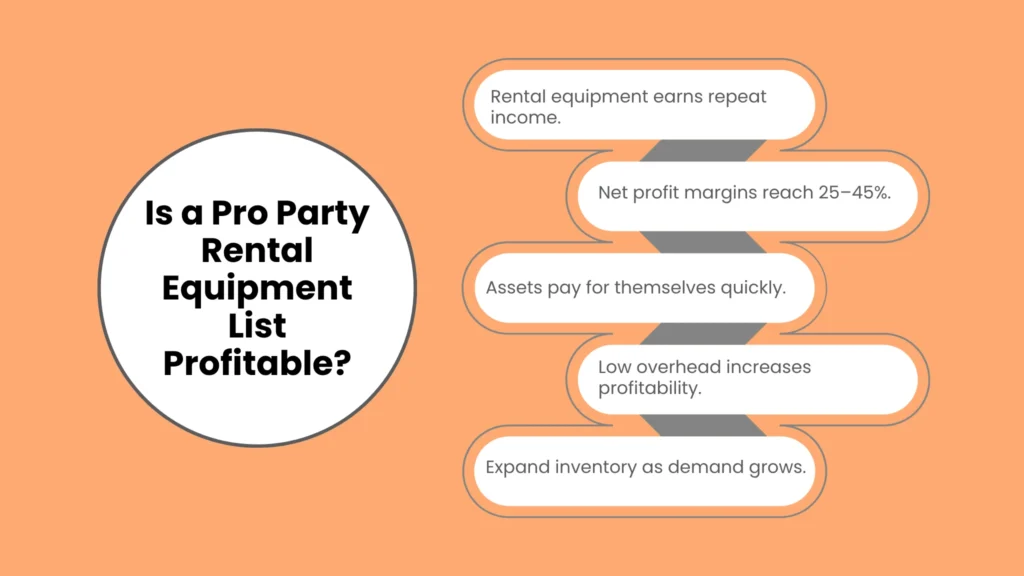
Unlike a traditional retail store where you buy inventory, sell it once, and make a small margin, a rental business allows you to monetize the exact same physical asset hundreds of times over its operational lifespan.
Your Expected Party Rental Equipment List Profit Margin
A well-run party rental company can achieve an outstanding net party rental equipment list profit margin of 25% to 45%. If you operate out of your garage or backyard shed and handle early deliveries yourself, your overhead remains virtually nonexistent. This allows your net profit margins to surge even higher.
Most baseline rental items like tables, plastic folding chairs, and linen packages completely pay for themselves within their first 5 to 10 bookings. Once an asset clears that initial financial floor, every future rental generates pure profit, minus a tiny fraction for cleaning and routine maintenance.
Revenue and Scaling Potential
Let’s look at a simple, real-world example of a lean inventory package. Suppose you buy 50 commercial-grade white folding chairs and 8 rectangular banquet tables for a total cost of roughly $1,350. If you rent this basic backyard party package out for $150 per weekend, you will completely recover your initial equipment investment in just 9 weeks.
As your local reputation grows, you can easily reinvest that cash into high-margin add-ons. These additions include commercial bounce houses, portable dance floors, or luxury photo booths. A single independent operator working part-time on weekends can realistically generate $15,000 to $40,000 in gross annual revenue. As you scale to a dedicated truck and a small storage space, the business can easily expand into a full-time operation pulling in six figures.
Step-by-Step Inventory Acquisition Sequence
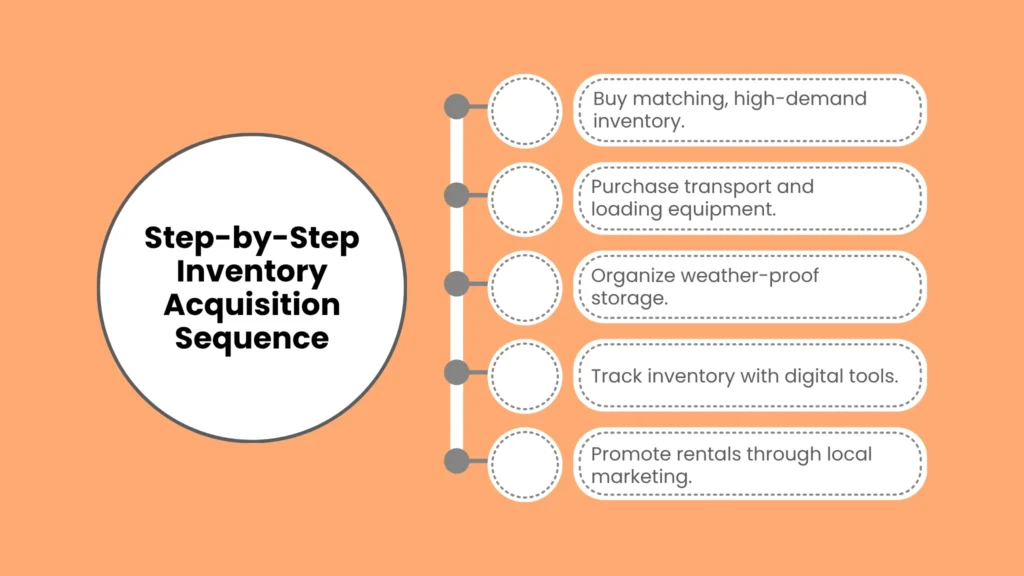
To build your event rental manifest without making costly financial mistakes or getting overwhelmed by logistics, follow this clear chronological order to secure your very first asset batch. List your packages on local classifieds, and join regional community groups to connect directly with parents, graduation planners, and local neighborhood associations. For a starter-friendly approach with minimal upfront cost, check out our guide on starting a party rental business on a small budget.
Common Rental Asset Pitfalls to Avoid
The biggest mistake new party rental owners make is neglecting inventory cleaning logs. You do not need to purchase an expensive automated washing system right away, but you must have a reliable cleanup routine. Many beginners successfully wipe down chairs immediately upon return. If you pack away wet linens or muddy tents, mold will destroy your assets within days.
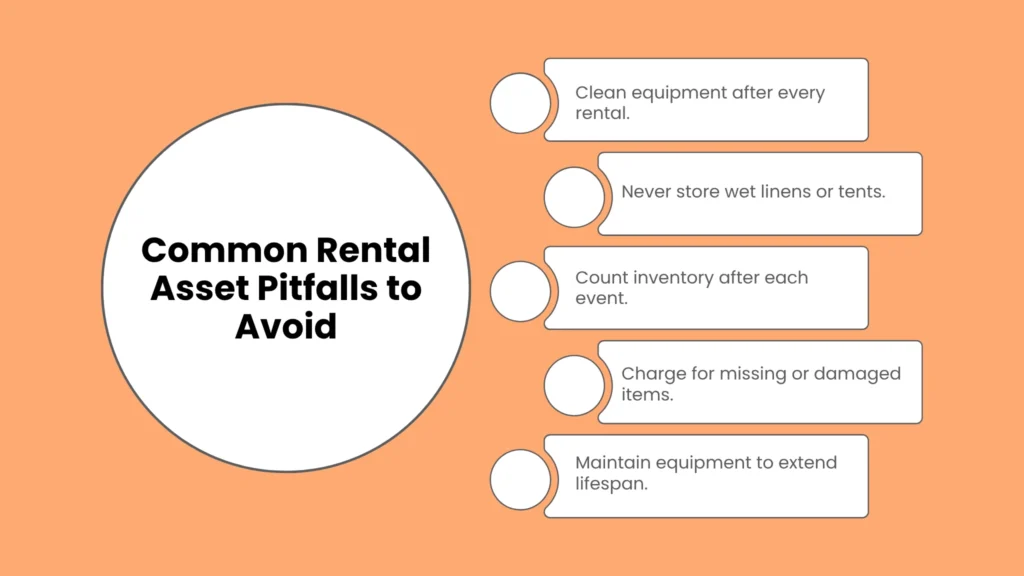
Another critical error is failing to enforce a clear tracking system for missing pieces. Losing small items like table feet caps or linen clips will slowly erase your profit margin over time. Therefore, you must establish a strict post-event count checklist during every single pickup. Additionally, charge a clear replacement fee for any missing components before returning the security deposit.
Closing Thoughts on Asset Selection
Building an event equipment service remains one of the most accessible, high-yielding paths to independent entrepreneurship. By narrowing your focus to a high-demand core asset list, keeping your storage overhead at zero, and using digital marketing to reach local event planners, you can build a highly resilient business. Focus on providing flawless equipment quality and arriving precisely on time. Consequently, your inventory will naturally generate the revenue required to scale your venture.
If you are looking for practical startup checklists, downloadable rental contract templates, and operational blueprints to grow your service company, explore our complete start up library at reliablestartup.
Frequently Asked Questions
What are the most profitable items to start a party rental business with?
While high-end wedding tents command large single-day dollar amounts, commercial plastic folding chairs and heavy-duty banquet tables offer the highest long-term return on investment for beginners. They are highly affordable to purchase, incredibly durable, easy to stack, and experience non-stop year-round demand.
How should I handle customers who return damaged or extremely dirty equipment?
Your rental contract must clearly state that customers are financially responsible for any gear that is lost, stolen, or structurally damaged during their rental window. To protect your inventory, collect a refundable security deposit at checkout. Alternatively, implement a mandatory credit card authorization hold that you can legally charge if the equipment requires professional deep cleaning or total replacement.
Is the party rental industry highly seasonal?
Yes, the demand for party equipment spikes significantly during the spring graduation season, summer weddings, and early autumn block parties. To keep your cash flow strong during the slower winter months, shift your marketing focus toward indoor holiday corporate events, church fundraisers, school dances, and themed indoor children’s sleepover parties.
Should I buy brand new rental inventory or look for used items?
When you are operating on a tight budget, sourcing high-quality used commercial equipment from closing rental companies, banquet halls, or Facebook Marketplace is an excellent move. However, you must inspect every item carefully before buying. Avoid plastic chairs that show signs of sun bleaching and brittleness, and reject metal frames with significant structural rust.