How to Start a Property Rental Business With No Money
The real estate market remains one of the most reliable vehicles for building long-term wealth and generating passive income. However, many aspiring entrepreneurs stay on the sidelines because they believe you need tens of thousands of dollars in down payments to buy your first investment property. The truth is, modern real estate strategies allow you to launch a cash-flowing venture without owning physical buildings. Learning how to start property rental business with no money is entirely possible if you leverage other people’s properties, use creative financing, or provide strategic management services.
Navigating this industry requires resourcefulness, hustle, and a clear understanding of local housing laws. In this comprehensive guide, we will break down the exact strategies for beginners, analyze the actual property rental business with no money cost, and answer the big question: is property rental business with no money profitable?
Detailed Property Rental Business With No Money Requirements
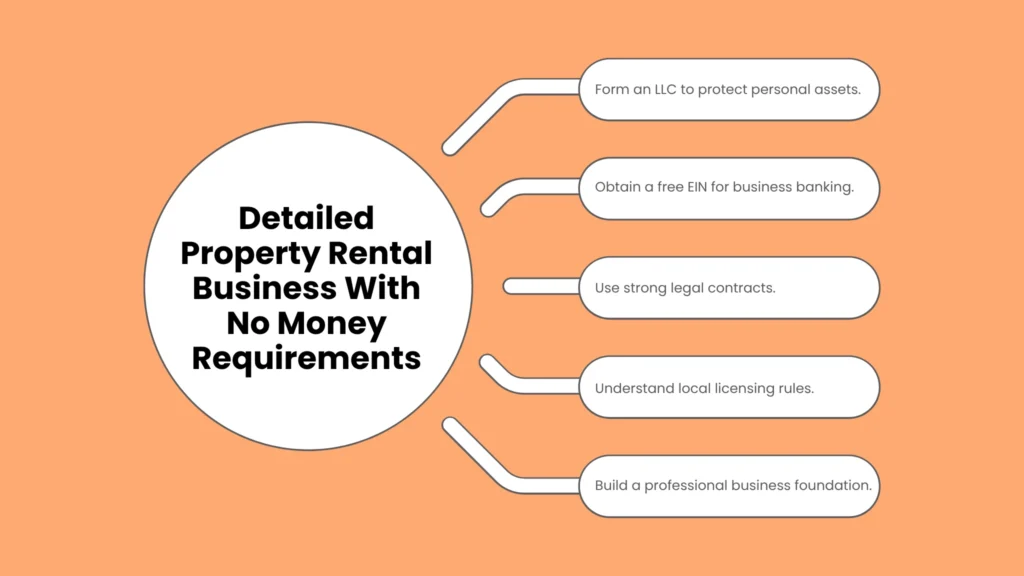
You do not need a massive bank account to launch a real estate venture, but you do need to bring other valuable assets to the table. Sweat equity, local market expertise, and strong negotiation skills replace traditional cash down payments. To build a solid foundation, you must meet a few basic property rental business with no money requirements to protect your business legally.
1. Setting Up Your Legal Business Framework
Even if you start out using zero-down strategies, you must treat your venture like a legitimate company. Most successful operators form a Limited Liability Company (LLC) right away. An LLC acts as a legal shield, protecting your personal assets from any business liabilities or tenant disputes. Once your state approves your LLC, you can grab a free Employer Identification Number (EIN) from the IRS website to open a dedicated business bank account. Not sure this model is right for you yet? Compare it against our broader beginner’s guide to rental business to see how it stacks up against other rental models.
2. Contracts and Legal Agreements
Because you are not buying the physical real estate, your business relies entirely on the strength of your legal contracts. Depending on your chosen strategy, you will need professionally drafted corporate leases, management agreements, or co-hosting contracts. These documents must clearly define your responsibilities, outline how profits are split, and protect you from unexpected property damage.
3. Real Estate Licensing Rules
Depending on your location, some zero-money strategies might require a real estate salesperson or property management license. For example, if you manage long-term tenants for a landlord and handle rent collection, many states require you to operate under a licensed broker. However, strategies like short-term rental arbitrage or co-hosting often fall outside traditional licensing laws, making them a perfect property rental business for beginners who want to avoid extra schooling.
The Three Best Zero-Down Rental Business Strategies
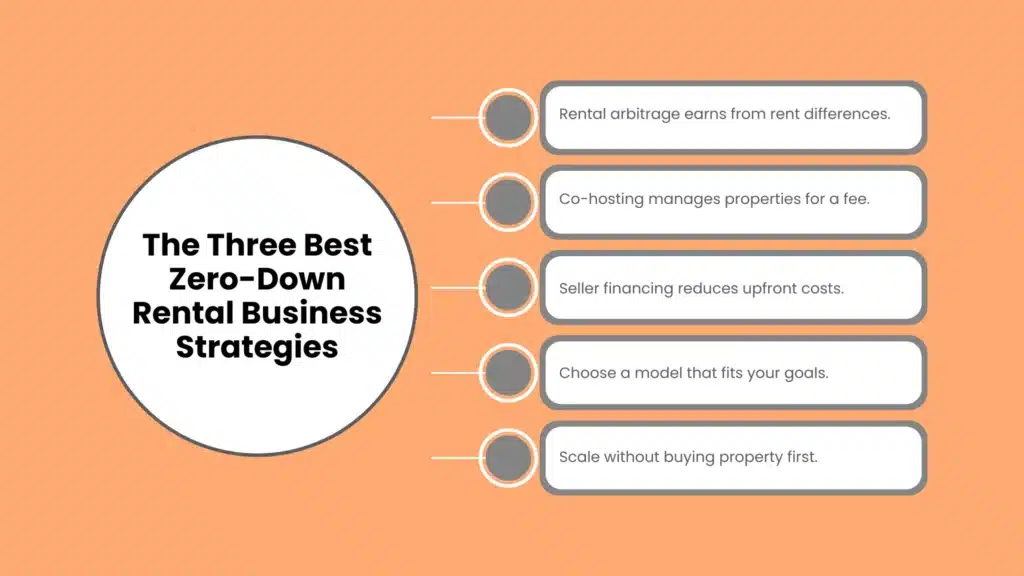
If you are not buying real estate with a 20% down payment, how do you actually control properties and collect rent? Successful entrepreneurs use three primary business models to get started.
1. Short-Term Rental Arbitrage
Rental arbitrage is the process of leasing a residential property long-term from a landlord, furnishing it, and then relisting it as a short-term vacation rental on platforms like Airbnb or VRBO. You pay the landlord their fixed monthly rent, and you keep the remaining nightly profits.
While furnishing a property usually costs money, beginners can scale this with zero out-of-pocket cash by utilizing 0% introductory APR business credit cards or partnering with local furniture rental companies. If furnishing costs are your biggest hurdle, our guide on the furniture rental business shows how these companies operate and how you might partner with one.
2. Short-Term Rental Co-Hosting
Co-hosting is essentially high-end property management for vacation rentals. Many property owners want the high income of short-term rentals but do not want to manage guest communication, cleanings, or platform listings. As a co-host, you handle all the daily operations for the owner in exchange for a percentage of the gross booking revenue, usually ranging between 10% and 25%. This strategy requires absolutely zero cash to start.
3. Subject-To and Seller Financing
For long-term rentals, creative financing allows you to acquire physical properties without traditional bank loans or down payments. Under a “Subject-To” agreement, you buy a property from a motivated seller by taking over their existing mortgage payments.
With seller financing, the owner acts as the bank, allowing you to pay them back in monthly installments over time, often with little to no money down if the property needs repairs that you agree to handle yourself.
Real Breakdown of Property Rental Business With No Money Cost
Launching a business with “no money” does not mean your operating expenses will always be zero. It means you are avoiding the massive upfront capital required to buy real estate. Below is an estimated breakdown of the minimal property rental business with no money cost structure during your first year.
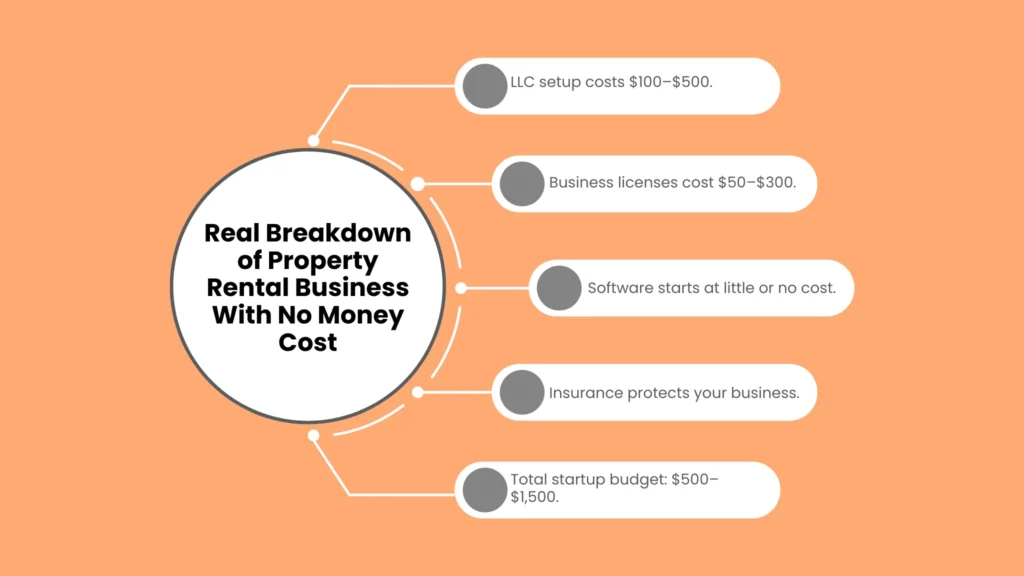
Estimated Startup and Software Expenses
| Expense Category | Estimated Cost Range | Frequency | Who You Pay |
| LLC Formation & Setup | $100 to $500 | One-time | State Secretary of State |
| Local General Business License | $50 to $300 | Annual | City or County Clerk |
| Property Management Software | $0 to $60 | Monthly | Guesty, Hostaway, or Buildium |
| Legal Contract Templates | $0 to $200 | One-time | Real Estate Attorney |
| Professional Liability Insurance | $300 to $800 | Annual | Small Business Insurance Broker |
Based on available industry data, an industrious entrepreneur can achieve full legal compliance and tech setup for an estimated $500 to $1,500. By choosing zero cost strategies like co-hosting, you can easily cover these initial business launch expenses using your very first client deposit. For a deeper look at protecting yourself financially from day one, see our guide on insurance policies for rental businesses.
Is a Zero-Money Property Rental Business Profitable?
Can you actually generate significant income when you do not own the underlying real estate? Let’s analyze the earning potential and long-term financial viability of these low-capital models.
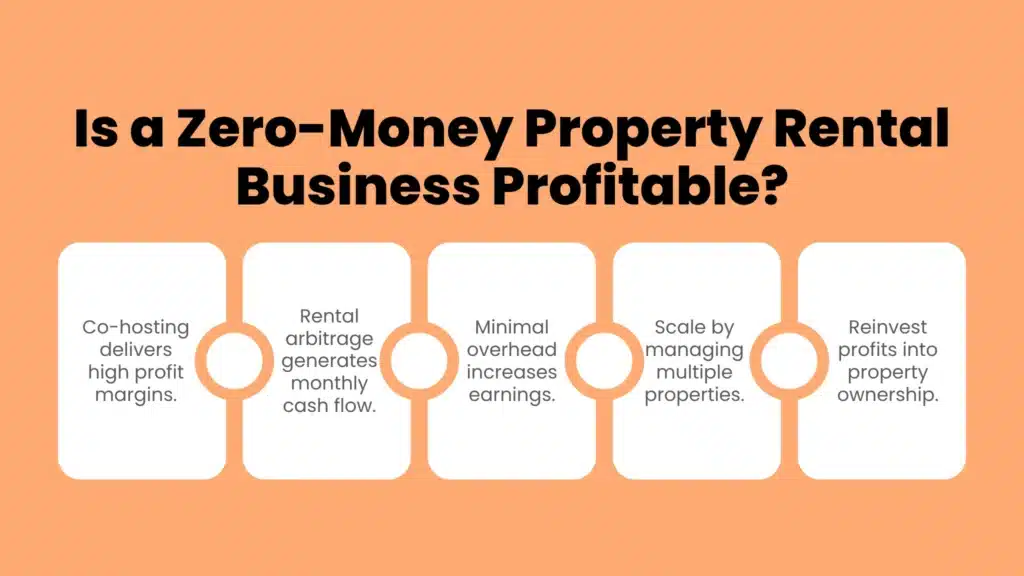
Understanding Your Property Rental Business With No Money Profit Margin
Because you do not have massive mortgage obligations hanging over your head, your property rental business with no money profit margin can be incredibly high. For co-hosting businesses, your net profit margins often hover between 70% and 90% because you have almost no overhead besides your time and basic management software.
For rental arbitrage, your gross margins generally sit between 25% and 40%, depending entirely on local tourism demand and how well you manage your utility costs and cleaning turnarounds.
Growth and Scaling Potential
A single well-managed short-term rental arbitrage unit can realistically generate between $500 and $1,500 in net profit every single month.
If you focus on the co-hosting model and secure 5 luxury properties averaging $5,000 in monthly booking revenue, a 20% management fee brings in $5,000 per month in pure management income. As you build a strong local reputation, you can continuously scale your portfolio, reinvesting your profits into purchasing your own cash-flowing physical properties down the road.
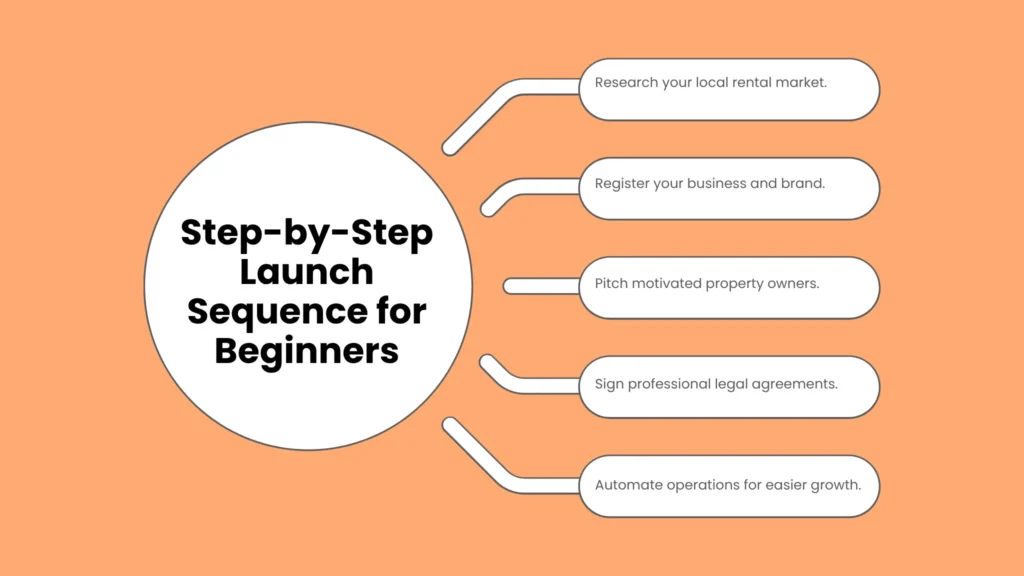
Step-by-Step Launch Sequence for Beginners
To launch your new real estate venture without making costly legal mistakes, follow this clear chronological order to secure your first property contract.
Common Pitfalls to Avoid
The single biggest mistake new operators make is hiding their business model from property owners. Never try to secretly sublease a property or run an Airbnb without the landlord’s explicit written consent. Sneaky operations will eventually get caught by neighbors or code enforcement, resulting in immediate lease termination, loss of your setup, and potential lawsuits.
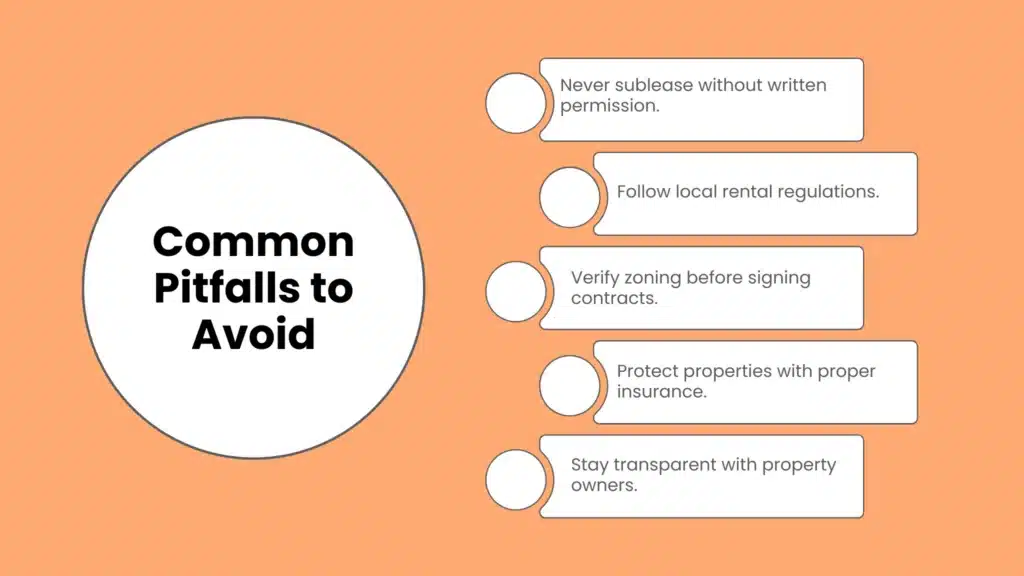
Another frequent error is failing to check local zoning laws. Many cities have strict rules regarding short-term rentals, requiring specific permits or banning them entirely in certain residential zones. Always verify regional compliance rules before signing any contract.
Closing Advice for Aspiring Entrepreneurs
Breaking into the real estate market does not require a massive inheritance or a perfect credit score. By focusing on asset-light strategies like co-hosting and rental arbitrage, you can build a highly profitable rental portfolio using resourcefulness and dedication. Focus on solving problems for tired landlords, and you will naturally unlock reliable, long-term streams of passive income.
If you are looking for practical start-up checklists, downloadable contract templates, and operational blueprints to scale your next venture, explore our complete entrepreneur library at reliablestartup.
Frequently Asked Questions
Is starting a property rental business with no money actually legal?
Yes, strategies like rental arbitrage, co-hosting, and creative financing are fully legal, provided you operate transparently. You must have explicit written agreements with property owners that grant you subleasing or management rights, and you must comply with all local municipal zoning and lodging tax laws.
How do I convince a landlord to let me do rental arbitrage?
Focus your pitch on the unique benefits they receive. Landlords love corporate tenants because you provide guaranteed monthly rent, professional cleaning after every guest, zero eviction risk, and immediate handling of minor maintenance issues that traditional tenants usually ignore.
What happens if a tenant or short-term guest damages the property?
If you are co-hosting or using arbitrage, you should protect yourself with commercial insurance policies like proper short-term rental coverage. Additionally, booking platforms provide built-in host protection programs that cover property damage, while smart home tech like noise monitors helps prevent party damage before it starts.
How much time does it take to manage a zero-down rental business?
Initially, expect to spend 5 to 10 hours a week per property handling guest messages, coordinating cleaners, and monitoring listings. However, as you implement automated channel managers, smart locks, and automated messaging templates, you can reduce your active working time significantly.