Starting a Box Truck Business Without a CDL: What Is Allowed?
Key Takeaways
Earn solid income without a Commercial Driver’s License
Master the 26000 lbs rule for hassle-free operations
Access lucrative freight for box trucks easily
Get your box truck authority step-by-step
Scale your trucking business with reliable strategies
Have you ever wondered if you can jump into the trucking world without spending months in driving school? The short answer is a big yes! You can legally start and run a box truck business without cdl requirements holding you back.
Many people think you need a commercial driver’s license for every commercial vehicle on the road. That is simply a common myth in the freight industry. As long as your vehicle meets specific weight requirements, you can hit the highway and start earning money right away.
Starting your own logistics venture gives you independence, steady income, and full control over your work schedule. Learning how to run a box truck business without cdl driver requirements is one of the quickest paths to becoming your own boss in trucking.
You can legally operate a box truck business without cdl credentials if your vehicle stays under federal weight limits. As long as your gross vehicle weight rating is 26,000 pounds or less, a standard driver’s license is completely sufficient. You will still need proper insurance, business registration, and cargo access to run legally. This path offers a lower barrier to entry for aspiring owner-operators nationwide.
Understanding the 26000 Lbs Rule in Modern Freight
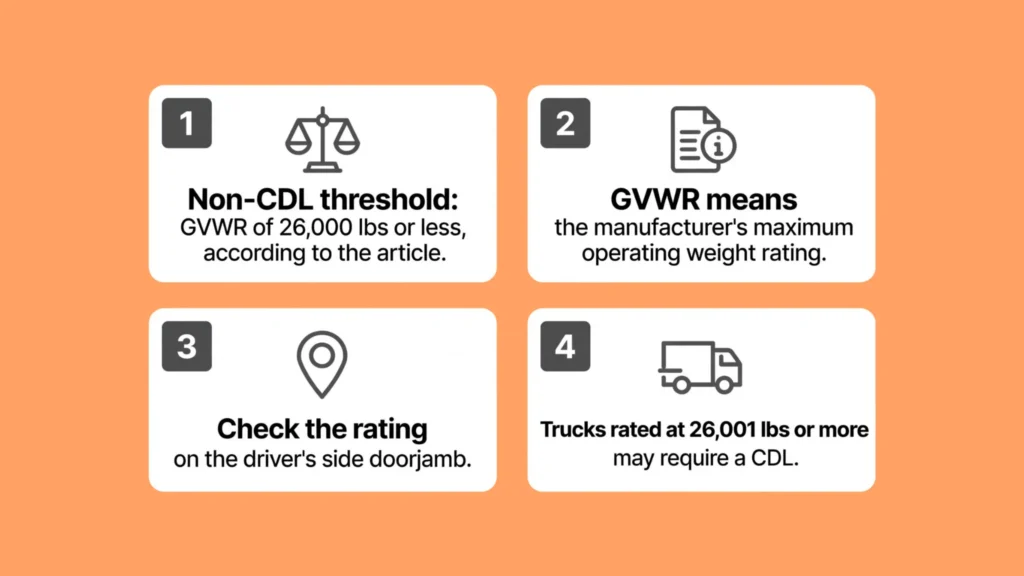
The entire non-CDL trucking industry revolves around federal weight guidelines. The Federal Motor Carrier Safety Administration sets clear boundaries on commercial motor vehicle classifications. The main policy you must understand is the 26000 lbs rule. If your vehicle has a Gross Vehicle Weight Rating of 26,000 pounds or less, you do not need a commercial license.
What Does GVWR Really Mean?
Gross Vehicle Weight Rating is the maximum operating weight specified by the manufacturer. It includes the weight of the truck, fuel, passengers, and cargo combined. You must check the safety sticker on the driver’s side doorjamb to confirm the rating. Never guess your truck’s rating, because exceeding the threshold brings heavy fines.
Non-CDL vs CDL Weight Classifications
| Truck Category | Weight Limit (GVWR) | License Required | Typical Vehicle Type |
| Non-CDL Class | 26,000 lbs or less | Standard Driver’s License | 16ft to 26ft Box Trucks |
| Heavy CDL Class | 26,001 lbs or more | Class A or Class B CDL | Semi-trucks, Heavy Freight |
Operating within non-CDL limits keeps your startup costs significantly lower. You avoid expensive training programs while staying totally legal on state and federal highways.
How to Set Up Your Own Box Truck Authority?
Running a legitimate trucking company requires proper registration with federal and state agencies. Getting your box truck authority gives you the legal right to transport freight for payment. Even without a commercial license, your business must comply with standard transportation regulations. Setting up your box truck authority properly ensures you avoid costly delays and legal headaches down the road.
Step-by-Step Authority Registration
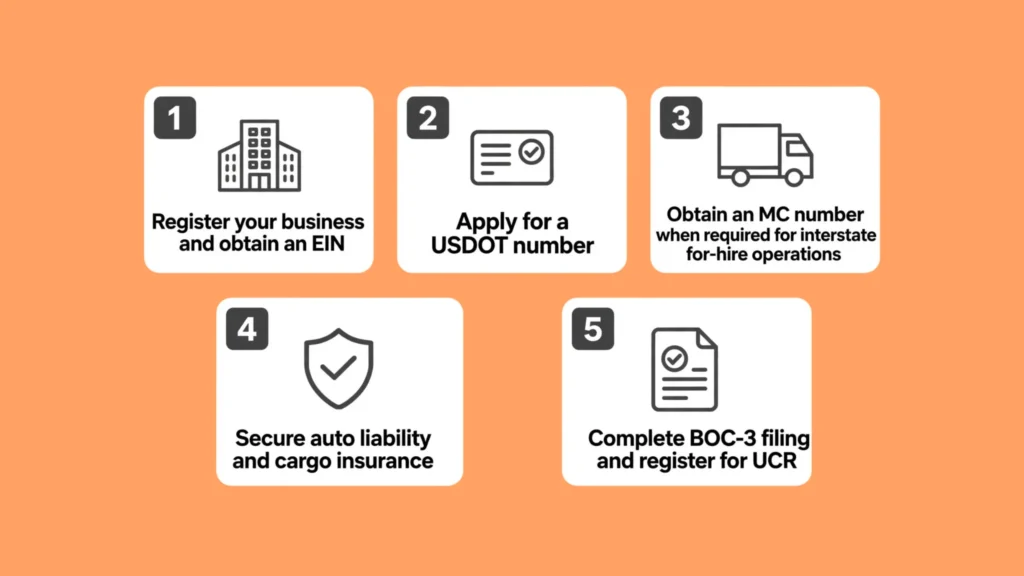
First, you need to register your business entity with your state government. Most owners choose a Limited Liability Company structure to protect personal assets. Next, you will apply for your USDOT number through the FMCSA website. If you plan to haul goods across state lines, you must also obtain Operating Authority, also known as an MC number.
Register your LLC and get an Employer Identification Number from the IRS.
File for your USDOT and MC numbers online through the official FMCSA portal.
Secure adequate primary auto liability and cargo insurance coverage.
Complete your BOC-3 process agent filing and register for UCR.
Following these administrative steps carefully builds a strong foundation for your venture. Platforms like reliablestartup.com offer great insights for streamlining your business setup without unnecessary stress.
Securing High-Paying Freight for Box Trucks
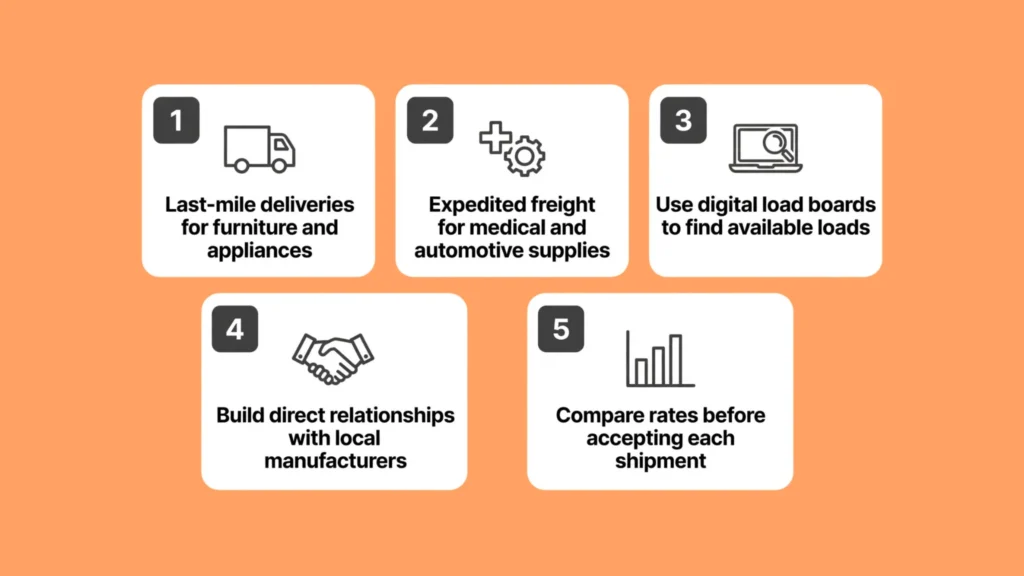
Once your business is legally established, your main goal is finding steady cargo. Securing consistent freight for box trucks is the true secret to long-term profitability. Many shippers specifically seek out non-CDL operators for regional and local deliveries. You can build a very lucrative route schedule by connecting with the right brokers and dispatchers.
Popular Types of Non-CDL Freight
Last-mile delivery is currently exploding due to the continuous growth of e-commerce. Big-box retailers constantly need local drivers to deliver appliances, furniture, and large home goods. Expedited freight is another high-paying option for non-CDL drivers. Medical supplies, automotive parts, and emergency manufacturing components often need immediate transportation in medium-sized trucks.
Finding Loads Efficiently
Digital load boards make finding cargo easier than ever before. You can filter loads by vehicle size, weight, destination, and pay rate to find the best match for your schedule. Building direct relationships with local businesses is another brilliant strategy.
Local manufacturers often prefer working with reliable local carriers rather than large national transport companies. For helpful guides on negotiating rates and building carrier relationships, check out resources on reliablestartup.com to jumpstart your career.
Choosing the Right Truck for Your Business
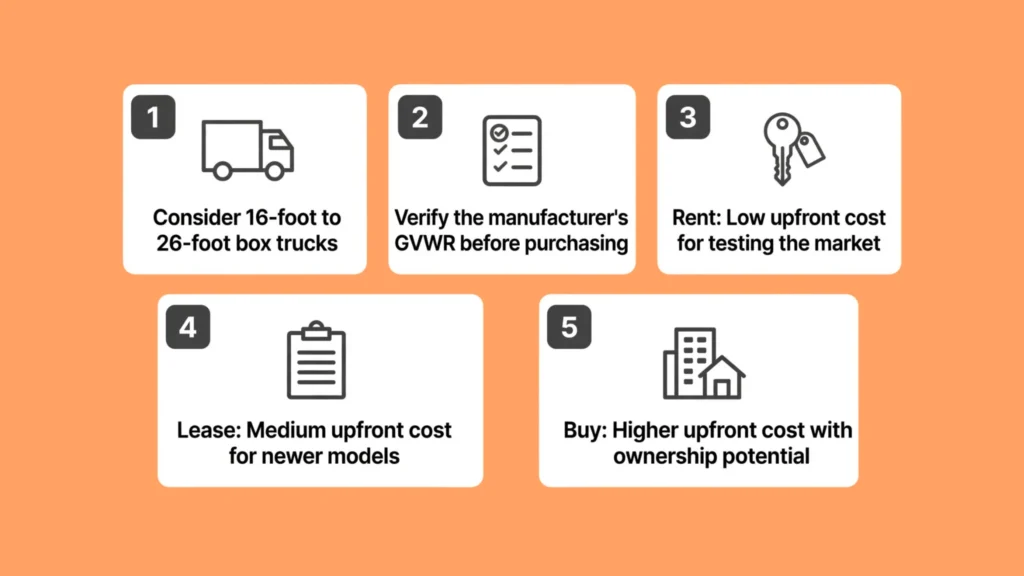
Selecting the ideal vehicle determines how smoothly your daily operations will run. Most non-CDL operators prefer 16-foot to 26-foot box trucks with a GVWR of exactly 25,999 pounds. This specific rating allows you to maximize cargo space without crossing into CDL territory. Always inspect the vehicle thoroughly before buying or leasing to prevent surprise repair bills.
Renting vs Leasing vs Buying
| Business Model | Upfront Cost | Maintenance Responsibility | Best Suited For |
| Rental | Low | Rental Company | Beginners testing the market |
| Lease | Medium | Varies by contract | Drivers wanting newer models |
| Direct Purchase | High | Owner | Established operators building equity |
Renting a vehicle initially helps you test your local market without long-term commitment. Once your cash flow stabilizes, purchasing a reliable truck creates long-term value for your company.
Essential Operating Costs to Budget For
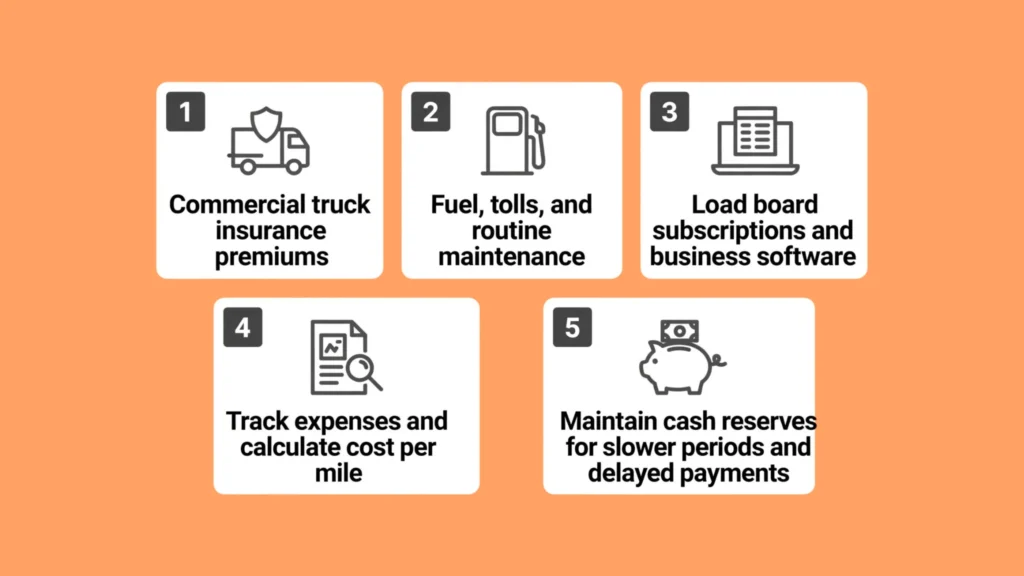
Running a box truck business without CDL credentials still comes with regular operational expenses. Preparing a realistic budget keeps your cash flow healthy through slower seasons. Insurance costs represent one of your largest monthly expenses as a new carrier.
Insurance providers generally assess higher premiums for brand-new operating authorities. Fuel, vehicle maintenance, tolls, and load board subscriptions also require regular funding. Keeping detailed financial records ensures you stay profitable on every single trip you accept.
Staying Compliant with Transportation Rules
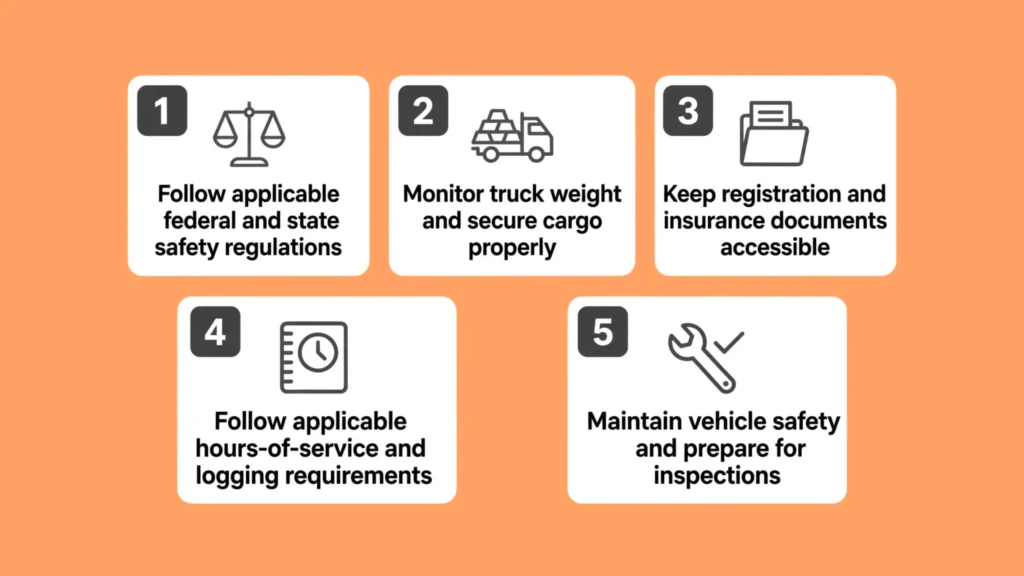
Even though you do not need a CDL, you must obey general commercial motor vehicle safety laws. State inspectors treat non-CDL commercial trucks with the same seriousness as big rigs. You must strictly obey the federal 26000 lbs rule during every single haul. Overloading your truck can lead to heavy fines, impoundment, and damage to your business reputation.
Weight Stations and Inspections
Non-CDL commercial vehicles must pull into open weigh stations in most states. Inspectors will check your gross weight, cargo security, and basic vehicle safety conditions. Keep your cab clean and carry all required documentation at all times. Having your registration, insurance cards, and medical examiner’s certificate ready makes inspections fast and stress-free.
Hours of Service Rules
Commercial drivers must monitor their driving hours to prevent fatigue-related accidents. Electronic Logging Devices or paper logbooks may be required depending on your travel distance. If you operate strictly within a 150 air-mile radius, you may qualify for local short-haul exemptions. Understanding these rules protects your business from unnecessary safety violations.
Essential Tools to Scale Your Trucking Company
Modern software makes managing a box truck business remarkably straightforward. Utilizing smart tools saves valuable time and helps you secure better rates on your routes. Load board applications allow you to search for available freight for box trucks directly from your smartphone. You can bid on loads and communicate with dispatchers in real time.
Digital accounting software keeps your fuel receipts, maintenance bills, and invoices organized. Staying organized makes tax season stress-free while giving you clear visibility into your profits.
Route planning apps designed specifically for commercial vehicles to avoid low bridges.
Digital load boards to easily find local and regional freight options.
Invoice factoring services to get paid immediately after completing deliveries.
Expense tracking tools to monitor fuel costs and daily profits effortlessly.
Investing in reliable technology pays off quickly through improved efficiency. Visiting helpful industry hubs like reliablestartup.com can point you toward the best digital tools for small fleet owners.
Common Mistakes New Box Truck Owners Should Avoid
Starting a new venture is exciting, but jumping in blindly leads to costly mistakes. One major error is taking low-paying loads out of sheer impatience. Calculate your exact cost per mile before accepting any freight offer. Accepting rates that do not cover fuel, wear, and insurance will quickly drain your bank account.
Another frequent mistake is neglecting regular vehicle maintenance. Simple oil changes, tire rotations, and brake checks prevent expensive breakdowns that ruin your delivery schedules. Just as regular maintenance keeps your truck in good condition, services like a mobile car detailing business highlight the value of keeping vehicles clean and well-maintained.
Finally, never ignore the importance of building your credit and cash reserves. Having emergency savings keeps your business floating when client payments are delayed.
Conclusion
Starting a box truck business without cdl qualifications is a practical and profitable path into the logistics industry. By respecting the 26000 lbs rule and securing your box truck authority, you can build a successful enterprise on your own terms.
Focus on finding consistent freight for box trucks, managing your daily operating costs, and keeping your vehicle safely maintained. Keeping accurate records of fuel, repairs, and other expenses is equally important, and learning about a bookkeeping business from home can provide additional insights into managing business finances effectively. With persistence and smart planning, your new business will thrive in today’s booming delivery market.
Frequently Asked Questions
Can I operate a 26-foot box truck without a CDL?
Yes, you can operate a 26-foot box truck without a CDL as long as its Gross Vehicle Weight Rating is 25,999 pounds or less based on manufacturer specifications.
Do non-CDL box trucks need a USDOT number?
Yes, non-CDL commercial vehicles engaged in interstate commerce generally require an active USDOT number and proper federal operating authority to operate legally on public roads.
How much weight can a non-CDL box truck legally carry?
A non-CDL box truck typically carries between 6,000 to 10,000 pounds of cargo, depending on the actual empty weight of the vehicle itself.
What insurance is needed for a non-CDL box truck business?
You generally need primary auto liability insurance, cargo insurance, physical damage coverage, and general liability coverage to secure freight from reputable brokers.
About The Author