Luxury Car Rental Business: How Much Capital Do You Need
The global high end mobility market is expanding rapidly, with the luxury car rental sector estimated to surpass $60 billion. For ambitious operators, launching a high-end fleet offers an incredibly lucrative alternative to traditional car hire. High-profile clients, corporate executives, and wedding parties are rarely satisfied with basic economy vehicles; they actively pay a premium for status, performance, and elite experiences.
However, mapping out your luxury car rental business capital before purchasing vehicles is critical. Scaling an exotic fleet shifts your financial dynamics away from high-volume turnarounds toward high-ticket asset management. To build a resilient brand, you must structure your capital stack to handle unique commercial risks, specialty maintenance cycles, and strict regional compliance guidelines. Let’s break down the upfront setup expenses, recurring outlays, and total financial architecture required to succeed in the premium automotive space.
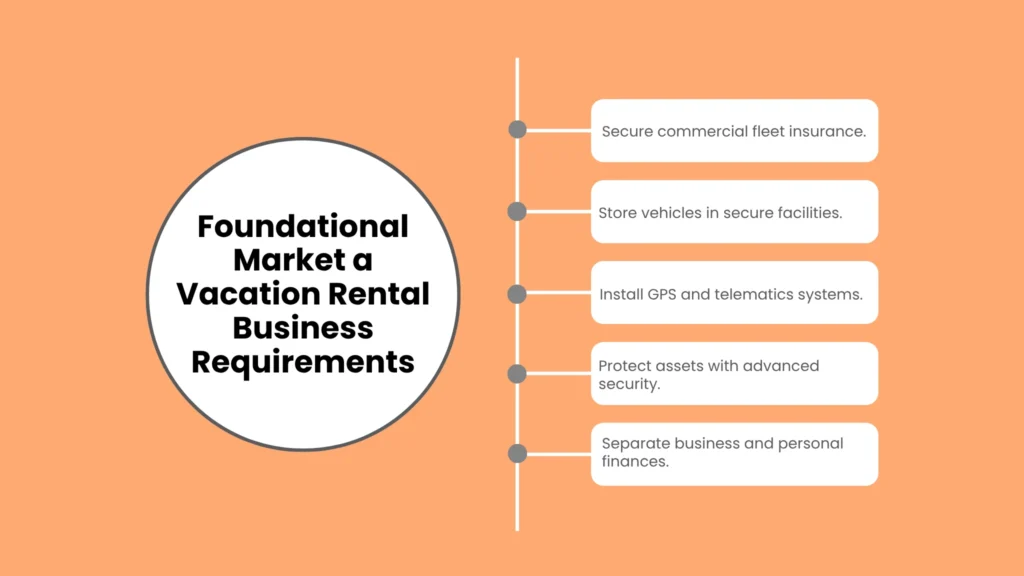
Foundational Luxury Car Rental Business Capital Requirements
You do not need to purchase a 50-car showroom floor to enter the high-end automotive tier immediately. In fact, many successful modern operators choose to validate local luxury demand by incubating their business with just one or two highly desirable vehicles. If you’re weighing broader options in this space, our guide on how to start a luxury rental business covers asset types beyond just vehicles, like yachts and vacation homes. However, transitioning into a full-scale commercial operation requires meeting strict legal, physical, and technological luxury car rental business capital requirements:
1. Specialized Commercial Fleet Insurance Line
Securing proper insurance is the most critical hurdle in the exotic automotive industry. Traditional personal auto policies explicitly ban commercial peer-to-peer or public subletting, and violating this clause results in total policy cancellation.
You must secure a dedicated commercial fleet liability and collision framework. Because high-performance vehicles carry significant replacement values, insurers require substantial upfront security deposits and highly rigorous driver-screening protocols before issuing active coverage.
2. High-Security Storage Infrastructure
Unlike economy fleets that can sit in open public lots, exotic assets require climate-controlled, highly secure commercial real estate. Your physical location capital must account for advanced multi-layer security systems, 24/7 video monitoring, and pristine indoor storage. This infrastructure protects low-tolerance vehicle paint finishes, performance tires, and high-value internal electronics from severe weather degradation or vandalism.
3. Advanced Telematics and Asset Tracking Tech
Protecting your capital means knowing exactly how your vehicles are being treated in real time. Every vehicle in your fleet must be outfitted with professional telematics tracking hardwired directly into the OBD-II port.
These advanced monitoring systems give your dispatch team live data streams regarding vehicle location, top speed thresholds, aggressive braking events, and mechanical engine alerts, allowing you to intercept abusive driving behaviors before structural damage occurs.
Real-World Luxury Car Rental Business Capital Cost
Exactly how much money to start luxury car rental fleets depends heavily on your vehicle acquisition model. If you use commercial asset financing, you can spread your capital out efficiently through strategic down payments.
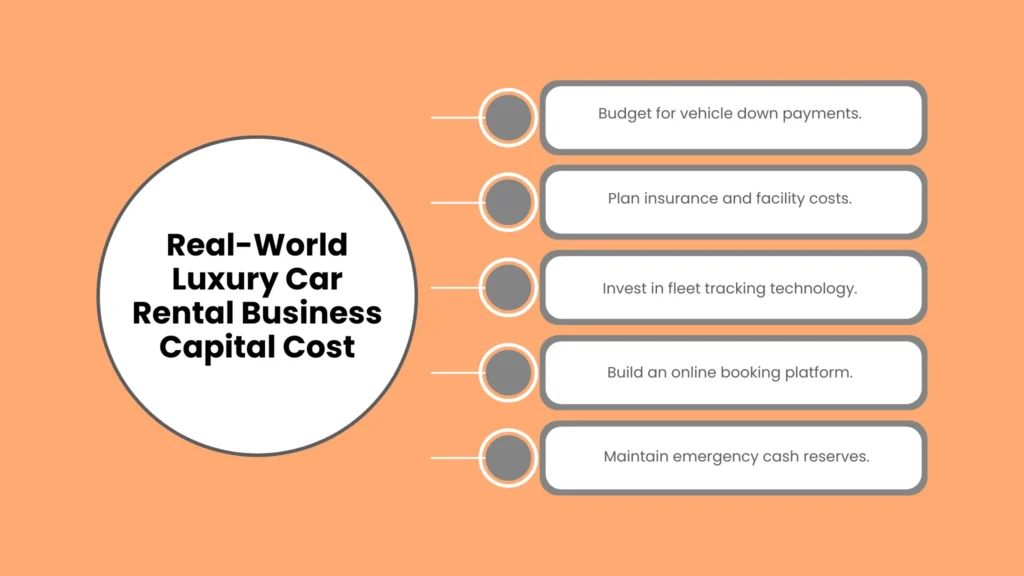
However, if you buy your sports cars or premium SUVs outright, your initial cash requirement will scale significantly. For a broader breakdown of entry-level costs and legal setup, our guide on how to start a car rental business walks through the fundamentals step by step. Let’s analyze a realistic, data-backed look at your estimated independent launch and operational luxury car rental business capital cost parameters.
Estimated Startup Capital Stack & Fleet Launch Allocations
| Capital Expense Category | Small Lean Fleet Setup (2 Premium Sports/SUVs via Financing) | Mid-Tier Scaled Setup (5+ High-End Exotics & Chauffeur Services) | Primary Capital Destination |
| Fleet Down Payments (20-30%) | $30,000 to $60,000 | $120,000 to $250,000+ | Commercial Auto Lenders |
| Commercial Insurance Escrow | $5,000 to $10,000 | $15,000 to $40,000 | Fleet Liability Underwriters |
| Secure Facility Lease & Deposit | $4,000 to $8,000 | $15,000 to $45,000 | Commercial Real Estate Landlords |
| Fleet Telematics & GPS Hardware | $600 to $1,500 | $2,500 to $7,000 | Security & Fleet Tracking Vendors |
| Advanced Booking Engine & App | $1,500 to $5,000 | $8,000 to $20,000 | Enterprise Custom Dev / Rental SaaS |
| Corporate Legal & Rental Contracts | $1,000 to $3,000 | $4,000 to $9,000 | Specialized Transportation Attorneys |
| Working Capital Cash Reserves | $15,000 to $30,000 | $50,000 to $120,000 | Business Emergency Checking Account |
| Total Capital Investment Floor | $57,100 to $117,500 | $214,500 to $491,000+ | Total Cash Capital Needed to Launch |
Is an Exotic Fleet Capital Strategy Profitable?
When looking at the steep costs of high-end vehicle maintenance, parts, and specialized storage, many prospective operators ask: is luxury car rental business capital profitable after covering depreciation?
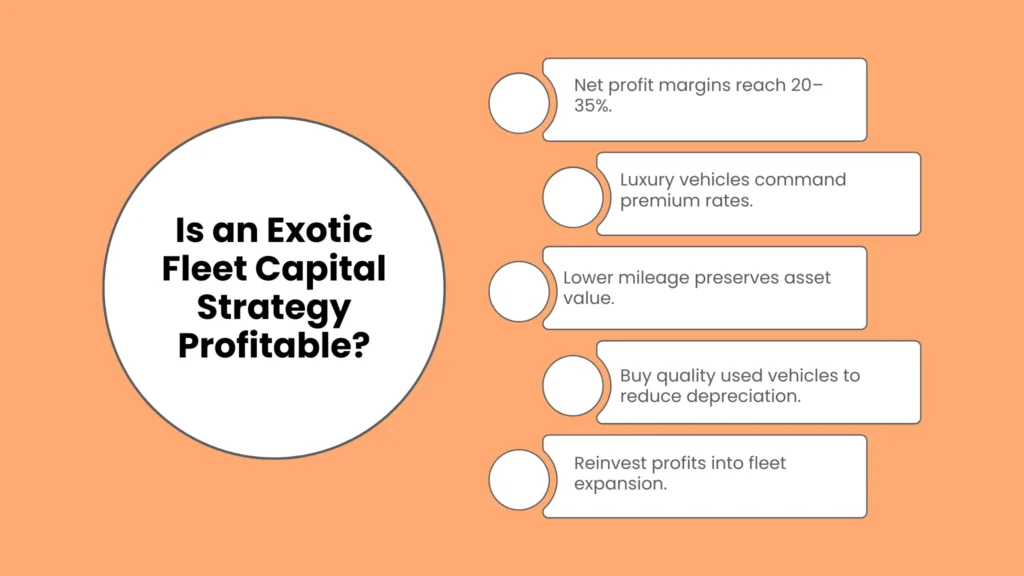
The underlying financial data proves that when you position your brand correctly, the premium car sector yields significantly higher returns per asset than standard car rental agencies.
Capital Optimization & Net Profit Margins
A properly managed luxury fleet can generate an exceptional net luxury car rental business capital profit margin of 20% to 35% after factoring in active debt service, routine maintenance, and vehicle asset depreciation.
Because exotics command an average daily rate (ADR) ranging anywhere from $500 to over $1,500 per day—compared to a modest $60 to $120 per day for standard passenger sedans—a luxury asset requires significantly less total road usage and lower overall mileage to break even each month.
Strategic Depreciation & The Arbitrage Model
The secret weapon of highly profitable luxury car rental brands is depreciation curves optimization. Experienced fleet managers minimize capital losses by acquiring vehicles that have already moved past their steepest initial first-year showroom depreciation drop.
By purchasing pristine, low-mileage vehicles that are 2 to 3 years old, you capture a premium aesthetic asset at a deep discount. This allows your business to command maximum daily rental rates while keeping your underlying vehicle capital value relatively stable. When you eventually rotate the vehicle out of your active fleet after 18 to 24 months, the resale value remains high, allowing you to recapture your primary capital and roll it cleanly into your next fleet addition.
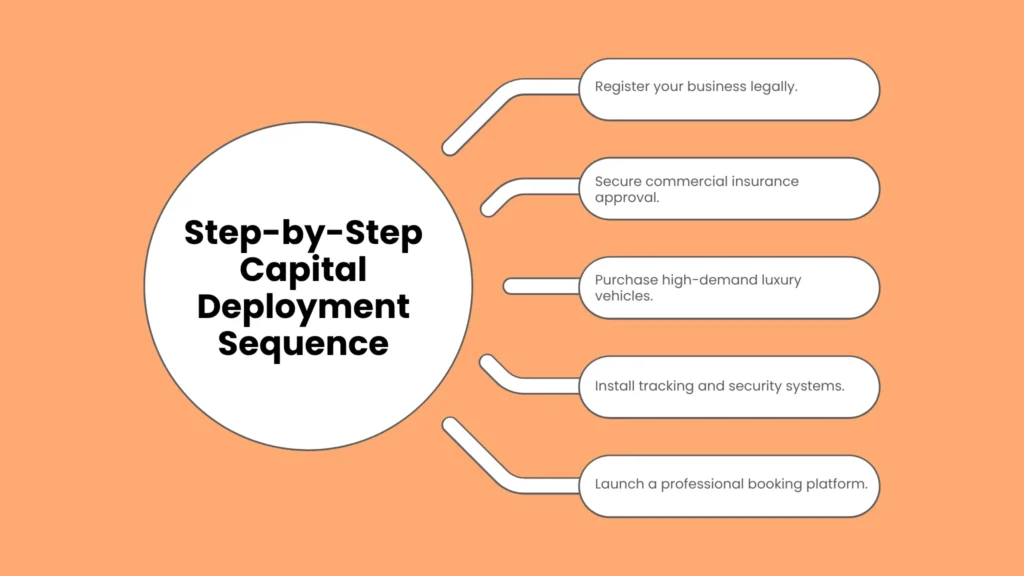
Step-by-Step Capital Deployment Sequence
To safely allocate your initial investment capital without triggering critical cash flow crunches or overextending your fleet debts, deploy your capital in this exact chronological order:
Common Capital Pitfalls to Avoid
The single most destructive financial mistake new fleet operators make is failing to maintain an adequate cash cushion for mechanical downtime. If a luxury sports car suffers a transmission issue or a minor collision, the specialized replacement parts must often be imported directly from European manufacturers. This can leave the vehicle completely grounded for 3 to 6 weeks. If you allocate 100% of your starting capital toward vehicle down payments without holding back cash reserves, a single prolonged repair window can break your cash flow and cause you to miss your monthly fleet loan obligations.
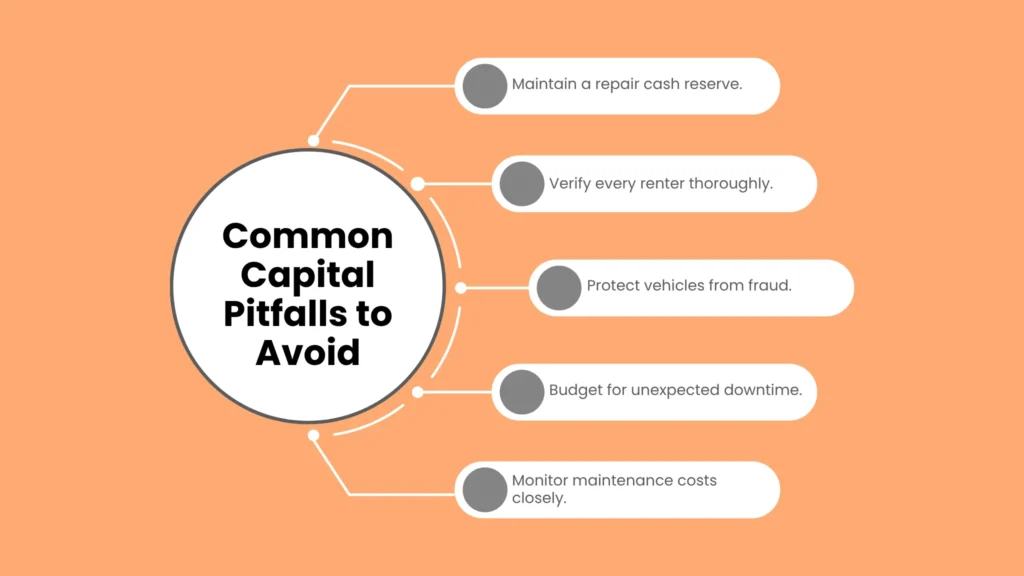
Another critical error is neglecting strict, automated renter identity and credit verification. Trusting a customer based on appearance alone without running advanced background and insurance checks exposes your asset capital to massive fraud and theft risks. Therefore, you must use modern software integrations that automatically verify domestic driver’s licenses, check active auto liability insurance coverages, and run comprehensive background checks before releasing any keys.
Final Thoughts on Fleet Investment Strategy
Building an elite automotive rental brand is an incredible, fast-paced vehicle for generating significant cash flow and long-term equity. By protecting your core capital stack with ironclad commercial insurance, maintaining disciplined cash reserves for mechanical downtime, and focusing on high-yielding vehicle niches, you can scale a highly resilient mobility enterprise. Focus on providing an flawless, high-touch client experience and maintaining strict operational guardrails. Consequently, your fleet will naturally generate the premium revenue required to steadily expand your venture.
If you are looking for practical capital deployment sheets, downloadable rental contract templates, and advanced fleet management blueprints to grow your independent car company, explore our complete start up library at Reliablestartup.
Frequently Asked Questions
Is it smarter to buy or lease luxury vehicles for a rental fleet?
For a commercial rental business, utilizing specialized commercial auto loans or purchasing assets outright is almost always the superior choice. Traditional consumer leases contain strict anti-subletting clauses that completely void your warranty and insurance if the vehicle is rented to a third party. Commercial financing gives you full title ownership, unrestrained mileage options, and complete control over the eventual liquidation of the vehicle.
How do you protect your fleet capital from reckless drivers?
Beyond standard GPS tracking, your primary line of defense is a mandatory high-value credit card security deposit hold (typically $1,000 to $3,000) executed before the keys are handed over. Furthermore, your digital rental contracts must explicitly state that violations of safety parameters—such as track racing, drifting, or exceeding preset speed limits—will result in immediate vehicle shutdown via remote telematics and total forfeiture of the guest’s security deposit.
Which luxury vehicle segments yield the highest return on capital?
High-end, multi-passenger luxury SUVs (such as the Cadillac Escalade, Mercedes-Benz G-Wagon, or Range Rover) regularly generate the most reliable return on investment. They experience high demand from corporate executives, touring artists, and families, resulting in far more stable year-round occupancy rates than temperamental, low-clearance exotic supercars.
How much capital should I set aside for routine vehicle maintenance?
You should allocate roughly 10% to 15% of your gross monthly rental revenue straight into a dedicated fleet maintenance reserve account. Premium performance vehicles require expensive high-performance tires, specialized synthetic oil changes, and high-end brake pads that cost significantly more than standard passenger car equivalents.