E-Bike Rental Business: Profitability and Startup Costs (Full Guide)
The global shift toward sustainable transportation and micro-mobility has created a massive opportunity for entrepreneurs. If you are wondering is e-bike rental business profitability profitable, the direct answer based on current market data is yes. An electric bicycle rental operation is highly lucrative, typically yielding an average e-bike rental business profitability profit margin of 40% to 50% after covering expenses. Because electric bikes appeal to a broad demographic including tourists, daily urban commuters, and older adults—a well-located fleet can achieve full investment payback in just 12 to 18 months.
However, achieving high e-bike rental business profitability requires a clear understanding of your initial capital outlays and local regulatory frameworks. While the financial returns are attractive, managing fleet depreciation, battery life cycles, and localized seasonal demand dictates your ultimate success.
This comprehensive guide breaks down the true e-bike rental startup cost, hidden operational fees, revenue projections, and local requirements needed to launch a successful venture.
The True E-Bike Rental Startup Cost Breakdown
Launching a micro mobility company involves both immediate capital expenditures and essential operational launch costs. Your total initial investment depends heavily on your fleet size and whether you operate out of a physical storefront or a digital, app-based dockless system.
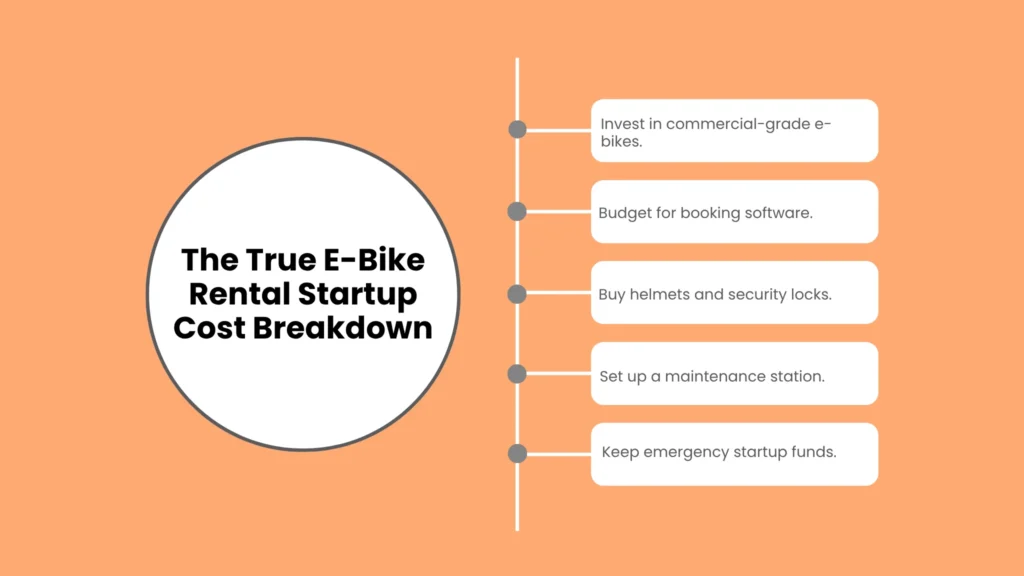
For a standard, localized operation launching with a fleet of 25 commercial-grade electric bicycles, you can expect an estimated startup cost ranging from $45,000 to $95,000.
Core Investment Assets
Commercial electric bikes are significantly different from consumer models. A retail electric bicycle is not built to survive the daily wear and tear of multiple users. Fleet-grade units equipped with heavy-duty frames, integrated GPS Internet of Things (IoT) trackers, and tamper-resistant components cost between $1,500 and $3,000 per unit.
Software and Operations Setup
You cannot run a modern rental service manually. You need a dedicated booking engine or a white-label mobile application that handles user registration, digital waivers, secure payment processing, and real-time GPS fleet tracking. For a full comparison of platforms built for two-wheeled fleets, our roundup of the best bike rental software breaks down pricing and features side by side. Additionally, initial commercial space leases, safety accessories like helmets and high-security locks, and mechanical tools must be financed before your first customer rents a bike.
Detailed Capital Expenditure Estimates
The table below outlines the realistic capital requirements for a standard 25-bike fleet configuration based on recent industry averages:
| Expense Category | Low-End Estimate | High-End Estimate | Budget Details & Notes |
| Commercial Fleet (25 Units) | $37,500 | $75,000 | Heavy-duty frames with built-in IoT trackers. |
| Safety Gear & Accessories | $1,500 | $3,000 | Fleet helmets, smart locks, and baskets. |
| Retail Lease & Deposit | $3,000 | $9,000 | First/last month plus security deposit. |
| Fleet Management Software | $500 | $2,000 | Booking platform setup and initial integration. |
| Tools & Maintenance Station | $500 | $1,500 | Stand, battery testers, and spare parts inventory. |
| Licensing, Permits, & Legal | $500 | $2,500 | Local business registration and city permits. |
| Initial Marketing & Signage | $1,000 | $4,000 | Local SEO setup, grand opening, and storefront signs. |
| Emergency Contingency Cash | $5,000 | $10,000 | Cash runway for initial operational surprises. |
| Total Estimated Startup Capital | $49,500 | $107,000 | Average initial investment lands around $75,000 |
E-Bike Rental Business Profitability: Profit Margins and Revenue
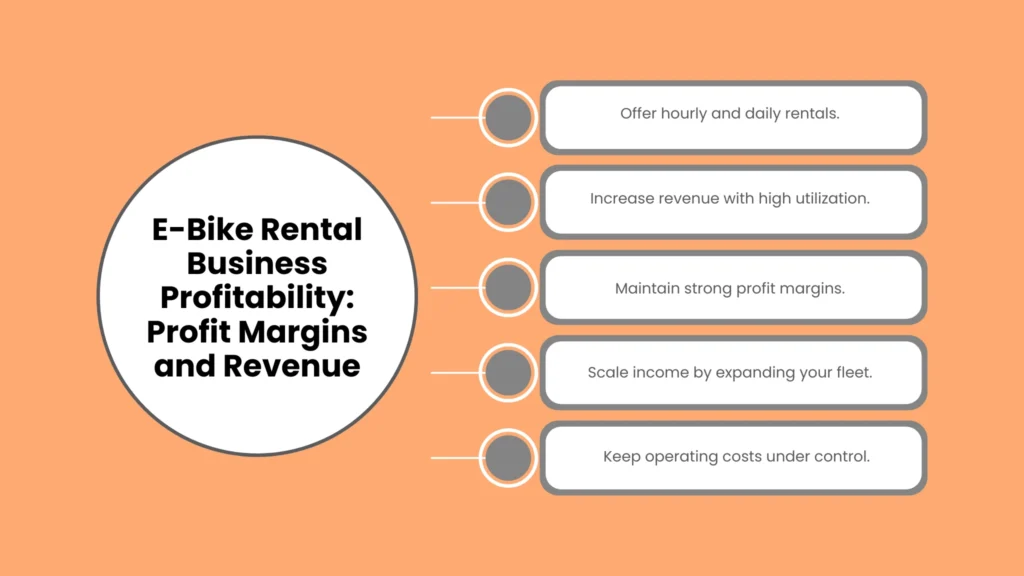
Once your initial upfront expenses are covered, the financial mechanics of a micro-mobility business become highly favorable. The core driver behind strong e-bike rental business profitability cost dynamics is the low variable cost associated with each individual rental trip.
Pricing Strategies and Utilization Rates
Most successful operators utilize a tiered pricing structure to capture different consumer segments. You can offer hourly rates for casual sightseers, daily rates for tourists, and weekly or monthly subscription passes for local commuters.
Hourly Rentals: $25 to $35 per hour.
Half-Day Rentals (4 Hours): $50 to $70.
Full-Day Rentals: $65 to $100 per day.
Your total monthly revenue is determined by your fleet utilization rate, which represents the percentage of time your bikes are actively rented out. In high-traffic tourist areas or dense urban hubs, top operators maintain a consistent 50% to 60% daily utilization rate during peak seasons.
Realistic Revenue Example
Let us look at a practical, data-grounded scenario. If you own a modest fleet of 25 electric bicycles and achieve a conservative 40% average utilization rate, each bike is rented out for approximately 12 days per month.
At a flat daily rental rate of $75, a single bicycle generates $900 in gross revenue each month. Scaled across your entire 25-bike fleet, your business brings in $22,500 in monthly gross revenue.
Monthly Ongoing Operational Costs
To calculate your net cash flow, you must deduct your regular monthly operating costs from your gross intake. Your recurring costs typically consist of the following items:
Commercial Rent: $1,500 to $4,000 for a retail storefront or storage depot.
Commercial General Liability Insurance: $150 to $350 per month to protect against accidents and rider injuries.
Software Subscriptions: $200 to $500 for GPS tracking, app hosting, and booking tools.
Fleet Maintenance Reserve: $500 to $1,000 allocated for replacement brake pads, tires, inner tubes, and lithium-ion battery degradation.
Marketing & Local Outreach: $300 to $800 for ongoing local SEO optimization and hotel concierge referral commissions.
Utilities & Electricity: $100 to $300 for charging depleted battery packs daily.
If your total fixed and variable monthly operating costs average roughly $6,500, subtracting this from your $22,500 gross revenue leaves you with a net monthly profit of $16,000. This yields a net profit margin of over 70% before factoring in labor costs or initial corporate taxes, confirming that the business model is exceptionally lucrative when scaled properly.
Critical E-Bike Rental Business Profitability Requirements
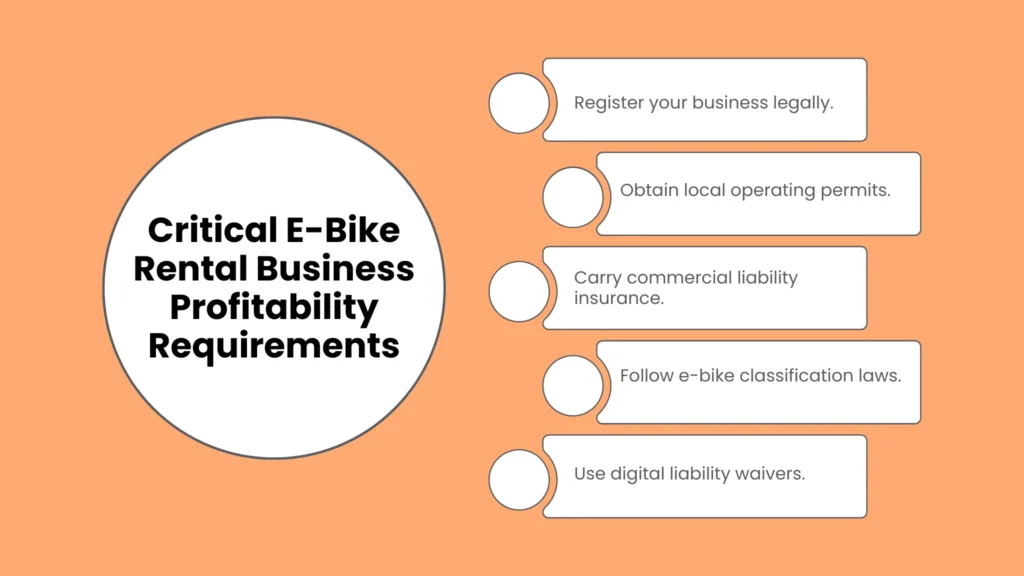
You cannot simply buy a collection of electric bicycles, leave them on a public sidewalk, and start collecting payments. Navigating local municipal compliance and logistics is a fundamental component of your operational setup. Failing to fulfill these essential e-bike rental business profitability requirements can result in severe municipal fines or total operational shutdown.
1. Municipal Permits and Encroachment Laws
Local city governments heavily regulate how public spaces are utilized. If you plan to operate a dockless system where users drop off bikes anywhere within a specific zone, you must secure a shared micro-mobility permit. Similar municipal and waterway permitting logic applies across other rental niches our guide on kayak rental business legal requirements & permits walks through comparable steps. If you run a storefront business, you must ensure that displaying your fleet on the sidewalk does not violate local zoning laws or pedestrian encroachment ordinances.
2. Comprehensive Liability Insurance
Because riders will operate motorized vehicles in mixed traffic or on crowded bike paths, insurance is non-negotiable. You must secure a robust commercial general liability policy that explicitly covers recreational rentals. Most municipalities require a minimum policy limit of $1 million per occurrence. You must also integrate clear liability waivers directly into your digital checkout process.
3. E-Bike Classification Compliance
Make sure you understand the legal classifications of electric bicycles in your operating region. Most territories break e-bikes down into three distinct tiers: Class 1, Class 2, and Class 3. For an authoritative, state-by-state breakdown of these classifications, the NCSL’s legislative primer on electric bicycle laws is a reliable reference point.
Class 1: Pedal-assist only, with a maximum assisted speed of 20 mph.
Class 2: Throttle-assisted, with a maximum speed of 20 mph.
Class 3: Pedal-assist only, but capable of reaching speeds up to 28 mph.
Many scenic state parks, beach boardwalks, and municipal bike paths completely ban Class 2 or Class 3 models. To protect your investment, select Class 1 pedal-assist fleets if you target casual tourists, as they face fewer local riding restrictions.
Strategic Tips to Maximize Fleet Profitability
To outpace local competitors and optimize your return on investment, you must focus heavily on asset longevity and diverse marketing channels.
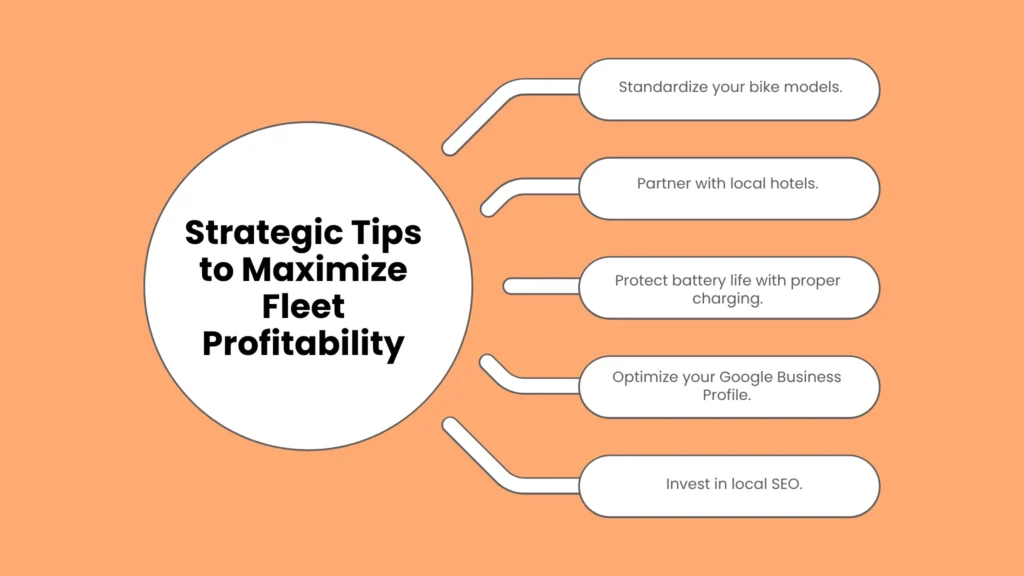
Standardize Your Mechanics: Purchase identical e-bike models across your entire fleet. This allows you to bulk-buy replacement parts like brake pads and tires, keeping your maintenance expenses low and ensuring your repair workflow is incredibly fast.
Form Local B2B Alliances: Do not rely exclusively on random walk-in customers. Establish structured commission partnerships with nearby hotels, bed-and-breakfast properties, and local tour guides. Operators looking to complement their e-bike fleet with a lighter, cheaper entry point often add a scooter rental business line to capture short-distance riders who aren’t ready for the e-bike price tier.
Implement Strict Battery Care: The single most expensive component of an electric bicycle is its lithium-ion battery pack. Train your team to avoid leaving batteries completely drained for extended periods, and store them in temperature-controlled spaces to maximize their total lifespan.
Optimize for Local SEO: Most travelers search for things to do right from their smartphones upon arriving at a destination. Claim your Google Business Profile immediately, collect positive customer reviews consistently, and optimize your web site around localized keywords like “e-bike rentals near me” to ensure a steady stream of high-intent web traffic.
Conclusion
Launching an electric bicycle rental venture presents a highly lucrative path into the rapidly expanding green transportation sector. While your initial e-bike rental startup cost will require a notable capital deployment for high-quality commercial hardware and tracking software, the resulting e-bike rental business profitability is remarkably resilient. If traditional pedal bikes also fit your target market, our companion guide on how to start a bike rental business covers the non-electric fleet model side by side for comparison.
For more practical business blueprints, cost calculators, and proven startup roadmaps to help you launch your next venture successfully, explore our actionable guides over at reliablestartup.
Frequently Asked Questions
How long do fleet e-bike batteries last before needing replacement?
Commercial-grade lithium-ion batteries generally last between 800 and 1,200 full charge cycles before their capacity drops significantly. For a busy rental business, this translates to roughly two to three years of daily operational use before a replacement pack is required.
Is a storefront absolutely necessary to launch an e-bike rental business?
No, a physical retail store is not mandatory. Many modern operators run successful dockless or hub-based models by leveraging smart IoT locks and mobile applications. However, operating without a storefront requires a reliable cargo van to pick up, drop off, and swap out depleted batteries across your service zone daily.
What is the average lifespan of a commercial electric bicycle?
With consistent, preventative maintenance, a high-quality, fleet-grade electric bicycle will last between three and five years. Regularly replacing wearable parts like tires, chains, and brake pads is key to maximizing the lifespan of your core investment assets.